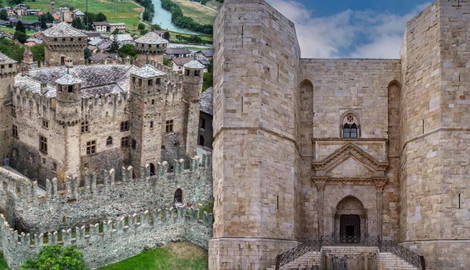

Today, Italy boasts one of the densest concentrations of castles per square mile (or kilometer) in Europe. Many date back to the Middle Ages, when rulers, popes, emperors, and condottieri built fortresses to defend their territory, assert their power, or secure their dynastic ambitions. A testament to the centuries-long fragmentation of the Italian peninsula, most of these castles are still standing. The 12 in the list below, spanning across Italy and more than eight centuries of history, offer insight into specific moments in the medieval past of the Italian peninsula, long before it became a unified nation.
1. Castel Sant’Angelo, Rome, Lazio
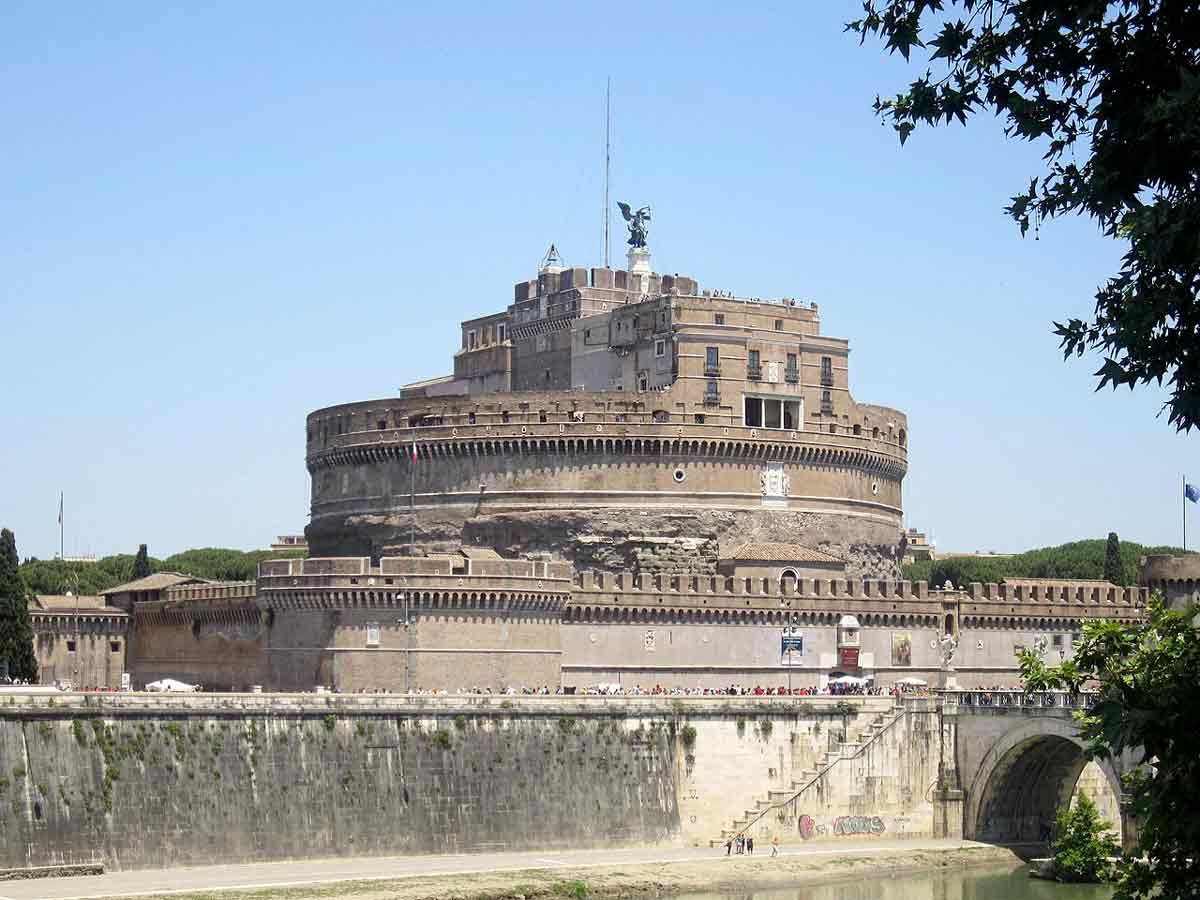
Standing on the right bank of the Tiber River, Castel Sant’Angelo originally was a mausoleum for the Roman Emperor Hadrian (AD 117-138). Composed of a central circle surrounded by a square, the building also served as the resting place of the Antonine emperors up until Caracalla.
In the 5th century, the Roman mausoleum was reconverted into a fortress, gradually becoming a key military stronghold for the popes. The name Castel Sant’Angelo comes from a vision by Pope Gregory I, who, in AD 590, during a penitential procession, reportedly saw the Archangel Michael holding a sword atop the structure. The pope interpreted the vision as a sign heralding the end of the plague. After the fortuitous event, Gregory I changed the name of the fortress and replaced the quadriga surmounting the entrance with a marble statue of the archangel.
In the 13th century, Castel Sant’Angelo was connected to the Vatican with the Passetto di Borgo, an 800-meter-long private elevated passageway. In the following centuries, it became an important escape route for the popes. It was through this secret corridor that Pope Clement VII fled from his residence when Charles V’s mutinous troops sacked Rome in 1527.
During the Renaissance period, the interior of Castel Sant’Angelo was substantially rearranged and decorated. One of the rooms in the apartments is attributed to Raphael’s workshop. Subsequently used as a prison and a prison barrack, the building now houses the Museo Nazionale di Castel Sant’Angelo. The rooftop terrace offers visitors a view of the Tiber and St. Peter’s dome.
2. Castello di Fénis, Fénis, Aosta Valley
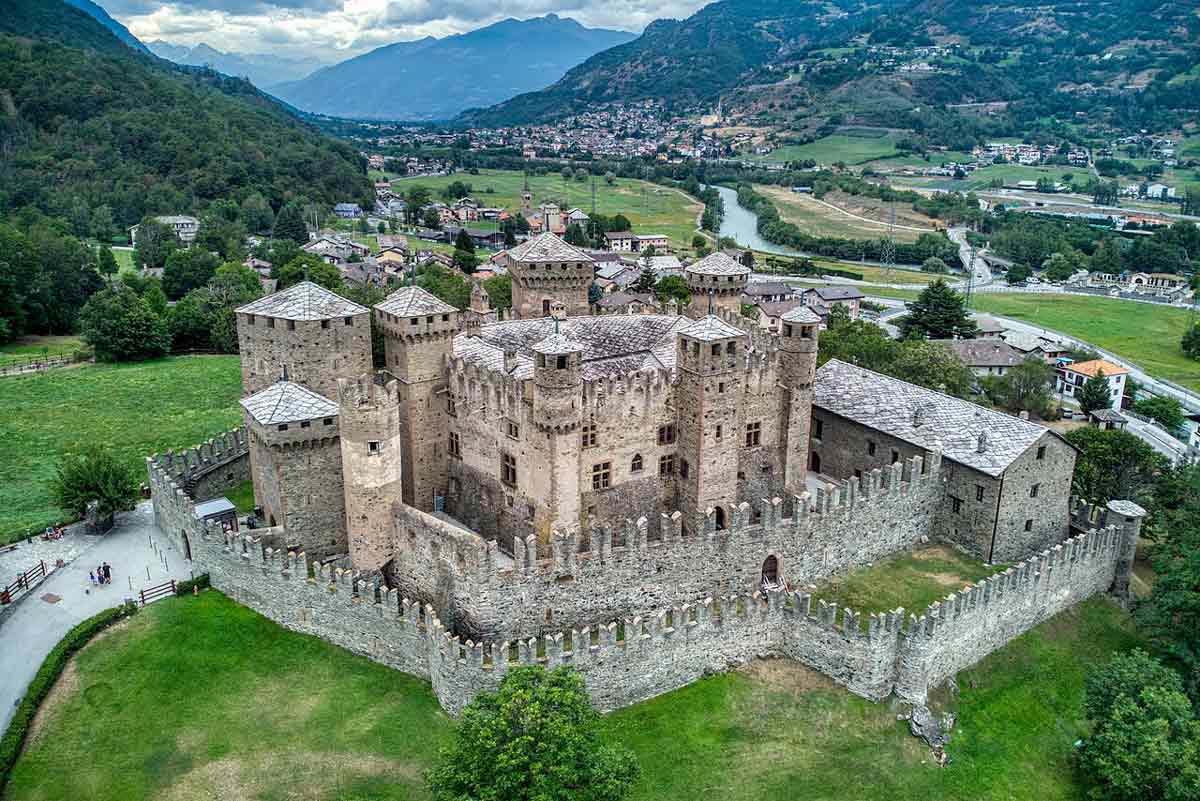
Located on a small promontory in the Aosta Valley (northern Italy), the Castello di Fénis is one of the most famous castles in the region. Its history dates back to the 12th century, when it became the home of the Challants, the powerful lords of the fiefdom.
Its imposing appearance, featuring arrow loops and corbels, semicircular towers, and crenellated walkways, makes the building a classic example of a medieval castle and was meant to compensate for the lack of natural defenses in its surroundings.
The defensive concentric walls of the Castello di Fénis, completed in its current form in the mid-14th century by Aymond de Challant, enclose an elegant residence featuring a frescoed interior courtyard with Gothic arches, semicircular stairs, a fenced garden, and a chapel.
As the importance of the Challant family began to decline, the castle gradually fell into disrepair. Restored by the regional government between the late 19th and early 20th century, the Castello di Fénis now houses the Museum of Furniture of the Aosta Valley.
3. Castello Sforzesco, Milan, Lombardy
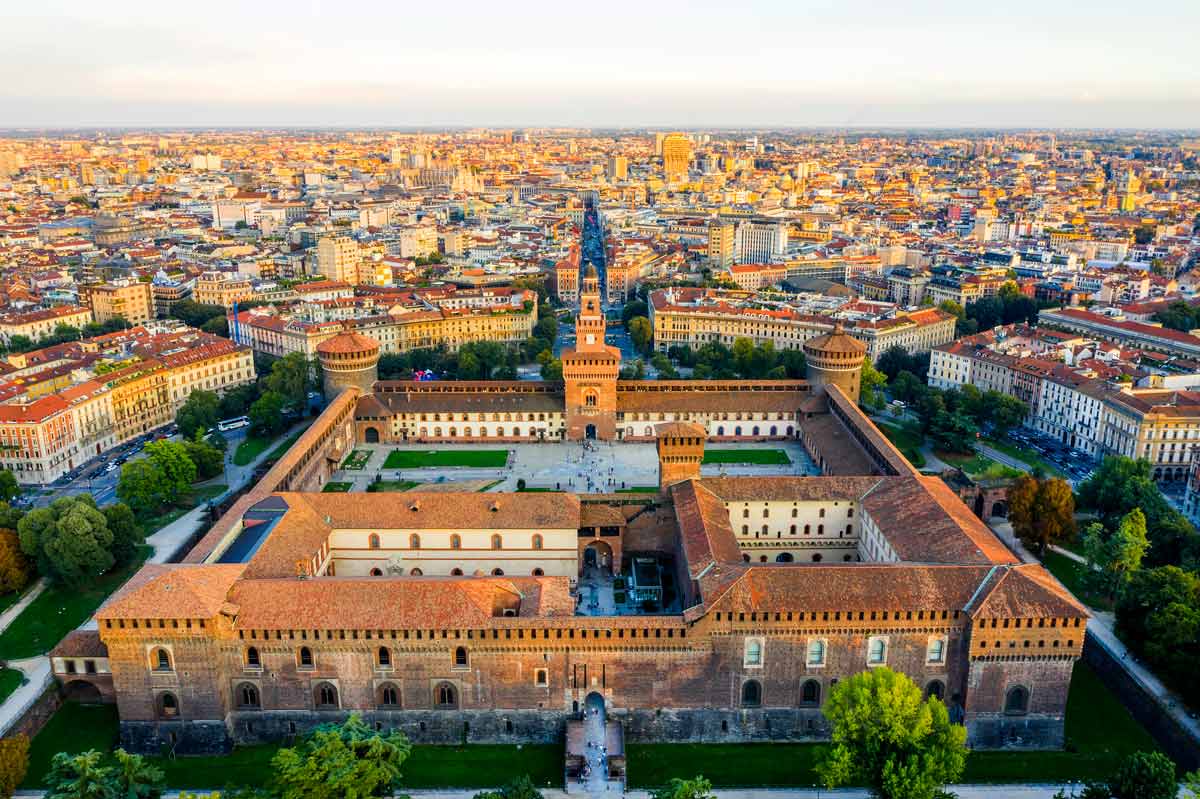
The stronghold known as Castello Sforzesco was built between 1360 and 1370 at the order of Galeazzo II Visconti. The vast complex is located in the heart of Milan and became the ducal residence during the Visconti era.
The structure visible today is largely the work of Francesco Sforza, who began rebuilding almost immediately after taking power of the Lombard city in 1450. The circular tower over the main entrance, the Torre del Filarete, is named for the Florentine architect who designed it. Filarete, however, was soon replaced by the military architect Bartolomeo Gadio, who reinforced the stronghold’s defenses, making them better suited for artillery.
During the time of Francesco’s successors, Maria Galeazzo Sforza and Ludovico il Moro, the Castello Sforzesco housed one of the most elegant European courts, with renowned artists as stable visitors. Under Ludovico Sforza, for example, Leonardo da Vinci frescoed the ceiling of the Sala delle Asse.
In the following centuries, however, the complex was extensively damaged, especially during the French and Spanish occupations. It was then used as a military barracks and partially demolished in the 19th century. After major restoration works in the late 19th and early 20th centuries, the Castello Sforzesco houses 12 civic museums.
4. Castel del Monte, Andria, Apulia
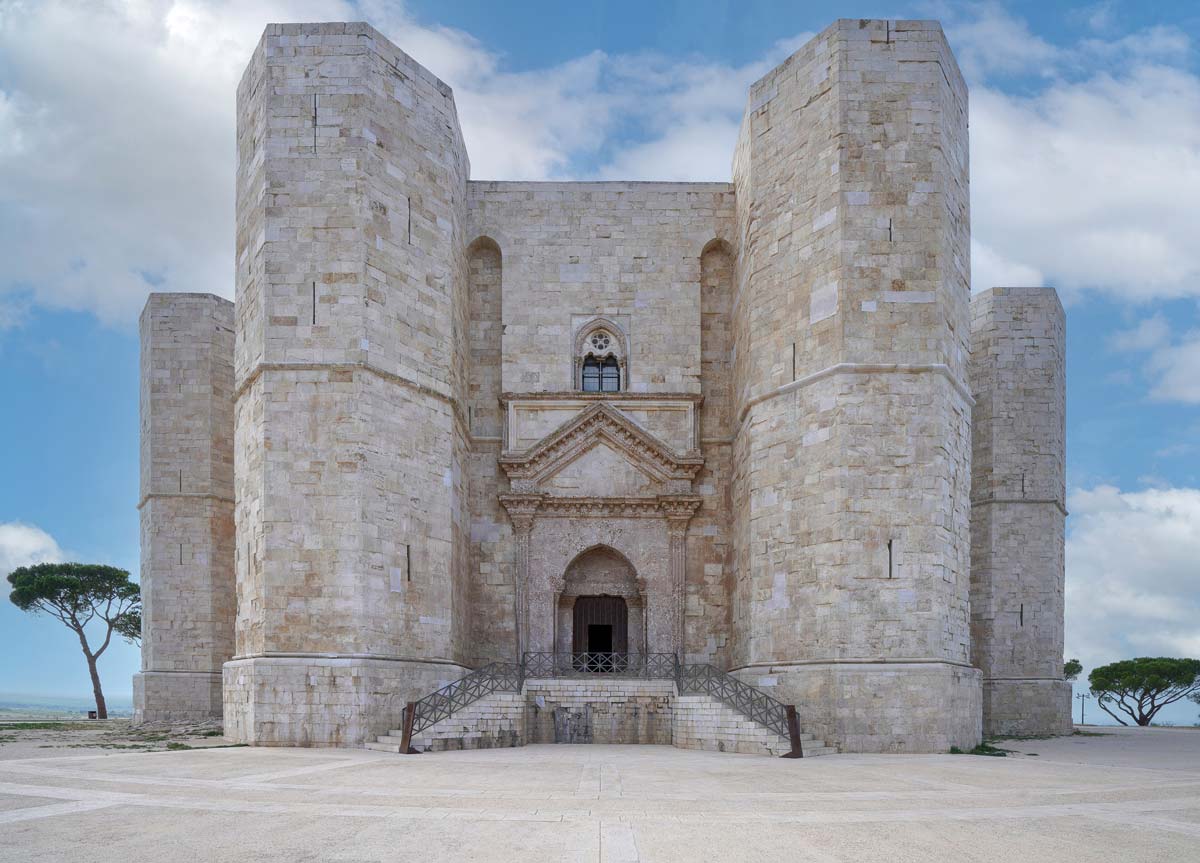
Located in the “heel” of the Italian peninsula, Castel del Monte was built by Holy Roman Emperor Frederick II around 1240. Today, the castle, known for its octagonal shape, appears to stand alone on a rocky surface in the Apulian scrubland. However, in the 13th century, it was located not far from a strategic axis of the communication system designed by Frederick II.
For a long time, it was unclear whether the structure was intended as a military stronghold, as the term castrum may suggest, or served a residential and representative purpose. Featuring eight towers in local limestone, each with eight sides, the castle once featured rich sculptural furnishing, today unfortunately strongly depleted.
After Frederick’s death in 1250, Castel del Monte was briefly turned into a prison by the Angevines, who had seized the south of Italy. By the 16th century, it was abandoned entirely, stripped of its interior furnishings and used as a sheepfold. Restored in the 19th and 20th centuries, it was added to the UNESCO World Heritage Site list in 1996.
5. Castello dell’Imperatore, Prato, Tuscany
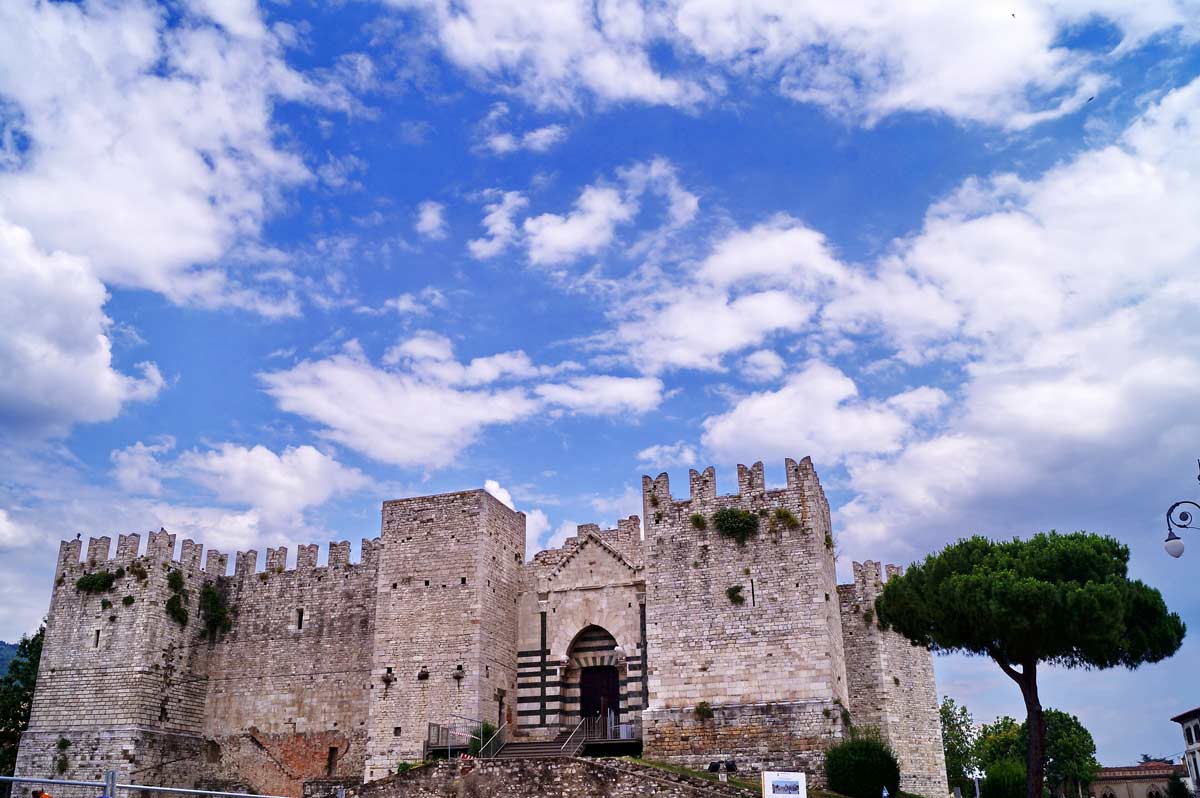
Like Castel del Monte, Castello dell’Imperatore was also built by order of Frederick II after 1240 to a design by the architect Riccardo da Lentini. The building is the only example of a Hohenstaufen castle in northern-central Italy and one of the best-preserved medieval castles in Italy.
During the Hohenstaufen rule in Italy, Castello dell’Imperatore, a square fortress with corner towers and thick walls in alberese stone, stood on the route connecting the emperor-controlled northern and southern territories and became the headquarters of the emperor’s vicar. The “swallowtail” merlons atop the walls signaled the structure’s imperial allegiance during the Guelph-Ghibelline feud.
After the end of the Hohenstaufen rule in the peninsula, Castello dell’Imperatore changed hands repeatedly, from the Angevins to the comune of Florence. In the 14th and 15th centuries, it was held by a series of condottieri. During King Charles VIII of France’s 1494 Italian campaign, it was used to store the army’s luggage.
In recent decades, restoration work has made the castle accessible to the public. Today, the walkways offer visitors a sweeping view of the city of Prato and its surroundings.
6. Castello Normanno-Svevo, Bari, Apulia
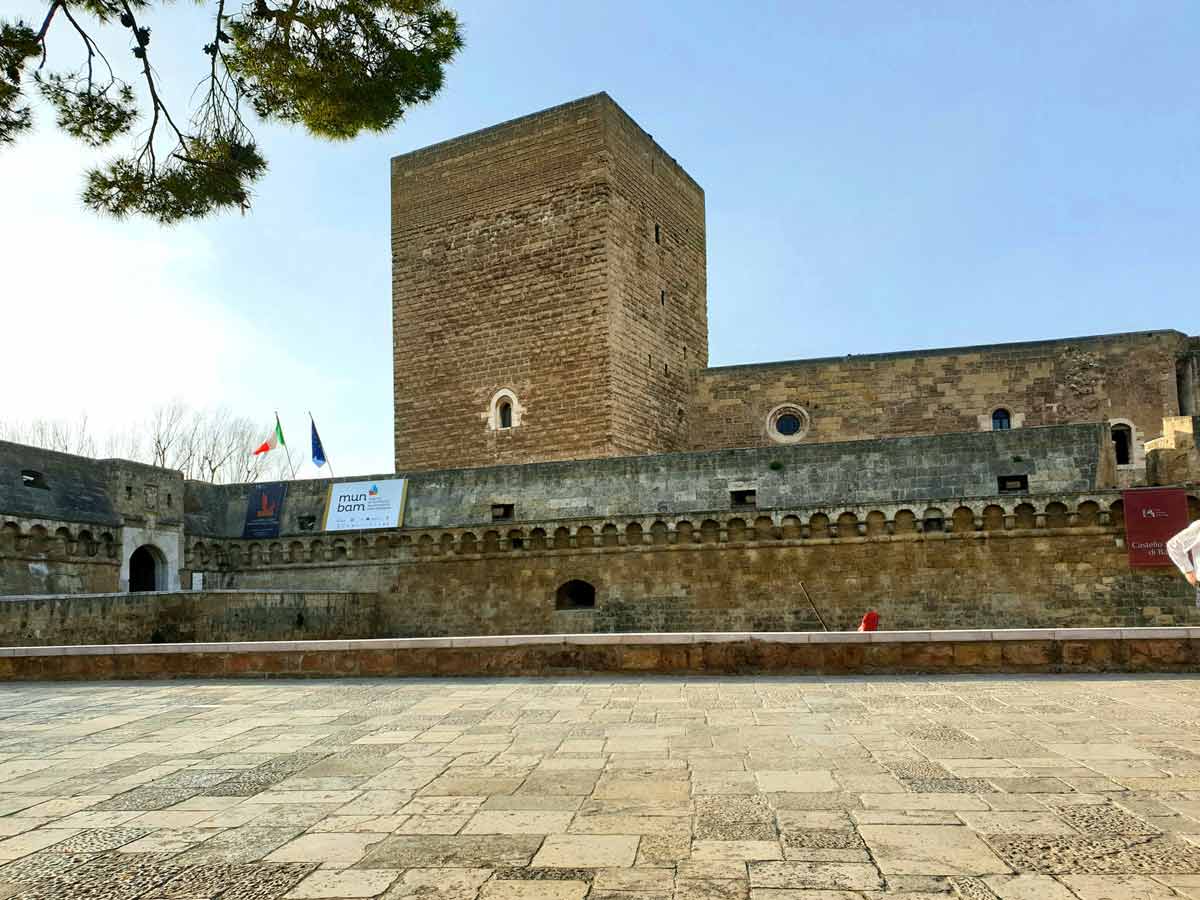
Built on a pre-existing structure dating back to the Byzantine time, the Castello Normanno-Svevo was erected around 1131 by King Roger II (Ruggero) of Sicily. In the 13th century, Frederick II took control of the castle and began a series of reconstructive works, adding the characteristic Hohenstaufen towers.
With the arrival of the Aragonese in southern Italy, the castle in Bari became the setting of the court of Duchess Isabella of Aragon and took on the appearance of a princely Renaissance residence.
After a period of abandonment, the structure became a prison and then a barracks site during the Bourbon period. Opened to the public for the first time in 1957, the Castello Normanno-Svevo now houses the Soprintendenza Archeologica, Belle Arti e Paesaggio and a permanent museum of Apulian history.
7. Castelvecchio, Verona, Veneto
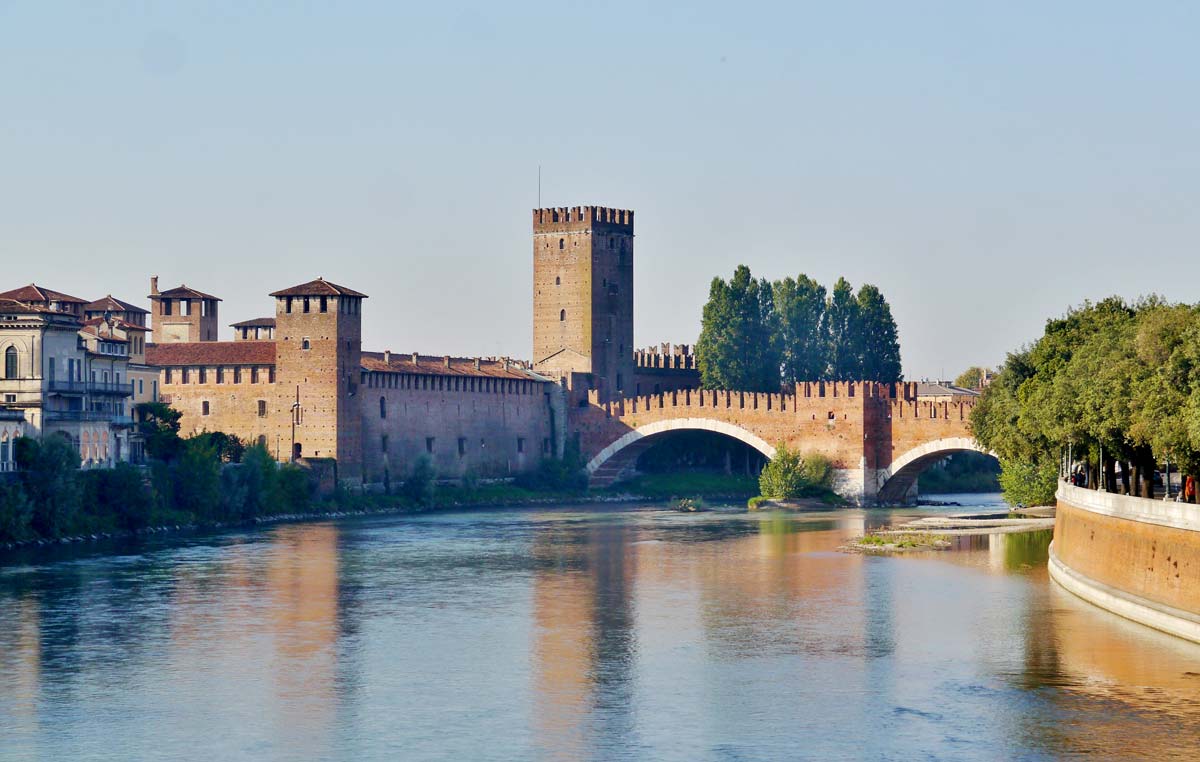
Originally known as San Martino in Aquaro, this castle was built by order of Cangrande II della Scala in 1354 on the Adige River. The building was later referred to as Castelvecchio (Old Castle) to distinguish it from earlier fortifications. Its “swallowtail” merlons reveal that, at the time, Verona belonged to the pro-imperial Ghibelline faction.
A tyrannical and paranoid ruler (his nickname was can rabbioso, or “rabid dog”), Cangrande commissioned the erection of Castelvecchio because he no longer felt safe in his residence in Piazza dei Signori. It is not surprising, then, that the new building was designed so that the ruler could escape across the Ponte Scaligero, a fortified bridge attached to its western wall, directly out of Verona toward the Tirolo.
After the Scala family fell out of power, Castelvecchio passed to the Visconti dynasty and then, in the 15th century, to the Republic of Venice. Partially dismantled during the Napoleonic era, the structure was restored and radically transformed in the mid-20th century by the Italian architect Carlo Scarpa.
Today, the Old Castle houses the Museo di Castelvecchio, a collection of medieval and Renaissance art, including works by Pisanello, Mantegna, and Tintoretto.
8. Castello di Lagopesole, Avigliano, Basilicata
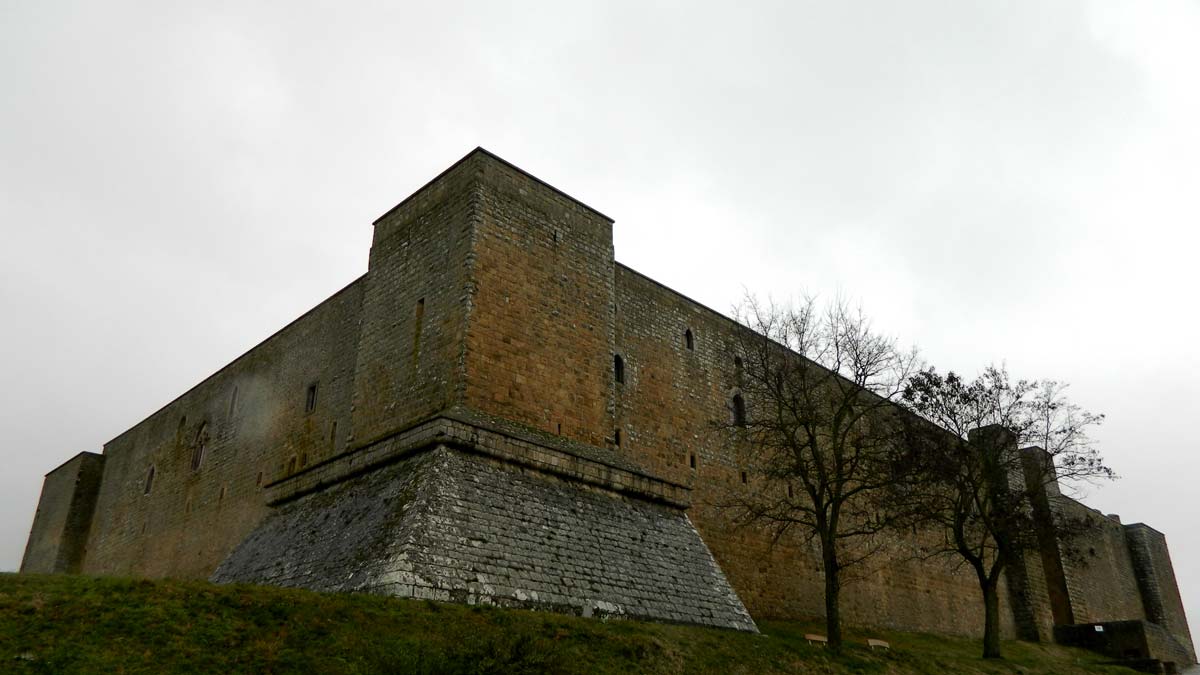
Located atop a hill that dominated the Vitalba Valley in the Basilicata highlands, the Castello di Lagopesole dates back to the 13th century, when it was erected by order of Frederick II, Holy Roman Emperor.
A massive rectangular structure with four corner towers, the castle became a residence of the Angevin kings of Naples after the emperor’s death. In 1861, after the unification of Italy, the Castello di Lagopesole was briefly used as a refuge by the brigands (briganti) headed by Carmine Crocco in their fight against the Kingdom of Italy’s army.
Today, the castle is owned by the FAI (Italian National Trust) and hosts seasonal visits and cultural programs. Thanks to its ridge location, it offers visitors a sweeping view of the Apennine landscape.
9. Castello di Poppi, Poppi, Tuscany
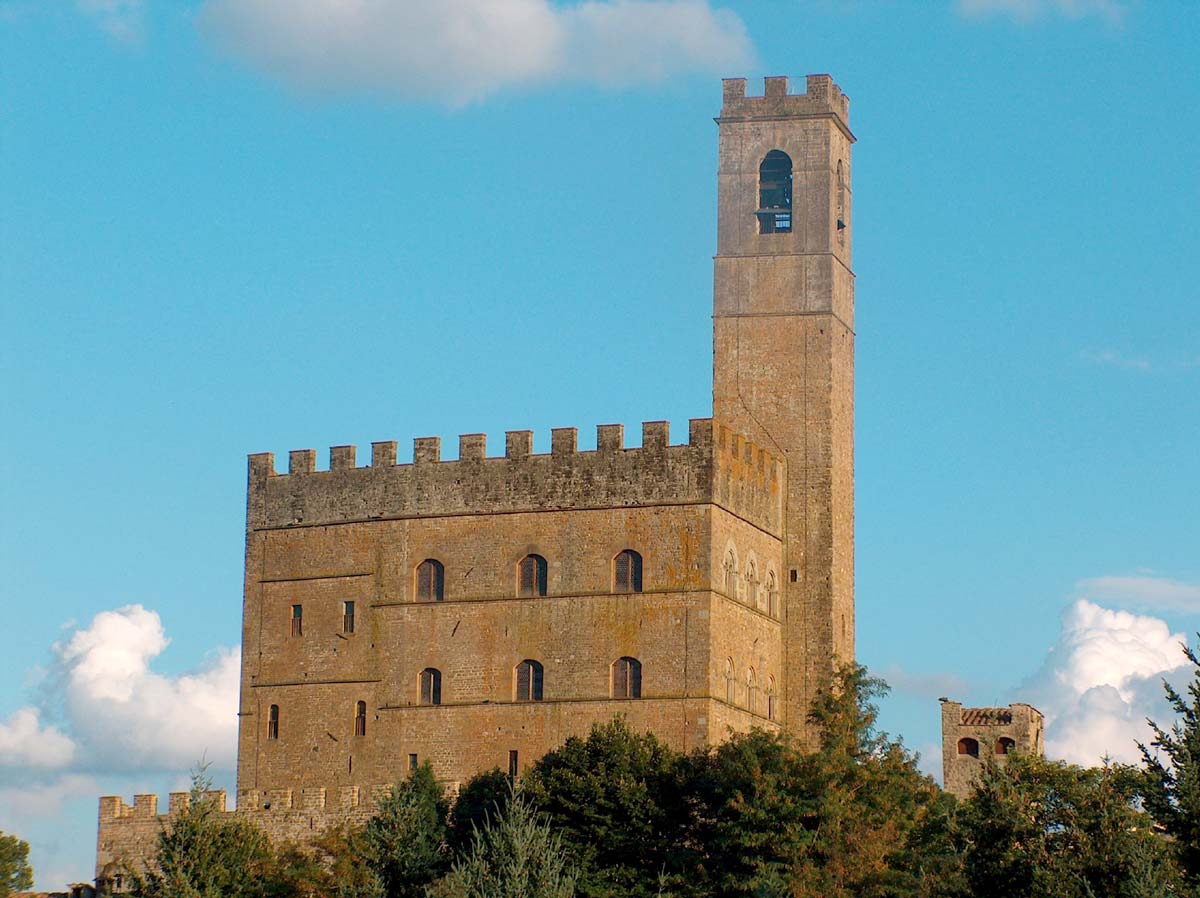
Located in the Casentino Valley in eastern Tuscany, the Castello di Poppi belonged to the Guidis, the most influential feudal family in the Casentino. Hence, it is also known as the Castle of the Counts Guidi. Its tall tower is visible for miles away across the Tuscan landscape.
The first written mention of the structure dates to the 1190s, but its foundations are older, likely dating back to the time of the Longobard and French invasions. In the 13th century, at Campaldino, just below the hill of the Castello di Poppi, the Florentine Guelph forces defeated the Ghibellines of Arezzo. Among the Florentine soldiers who fought near Poppi was, most likely, Dante Alighieri, who later mentioned the fight in his Divina Commedia.
The present structure was largely built between the 13th and 14th centuries, and it is generally attributed to Arnolfo di Cambio. The resemblance between the castle’s tower and that of the Palazzo della Signoria in Florence has led some to believe the architect used the Poppi tower as an inspiration for the Florentine one.
As the Guidi family lost their political influence, the castle passed to the city of Florence and was used as the seat of its government in the valley. During WWII, the Uffizi and other Florentine museums stored their works of art in the building for protection. Today, the Castello di Poppi also houses a library of medieval manuscripts.
10. Castello Aragonese, Ischia, Campania
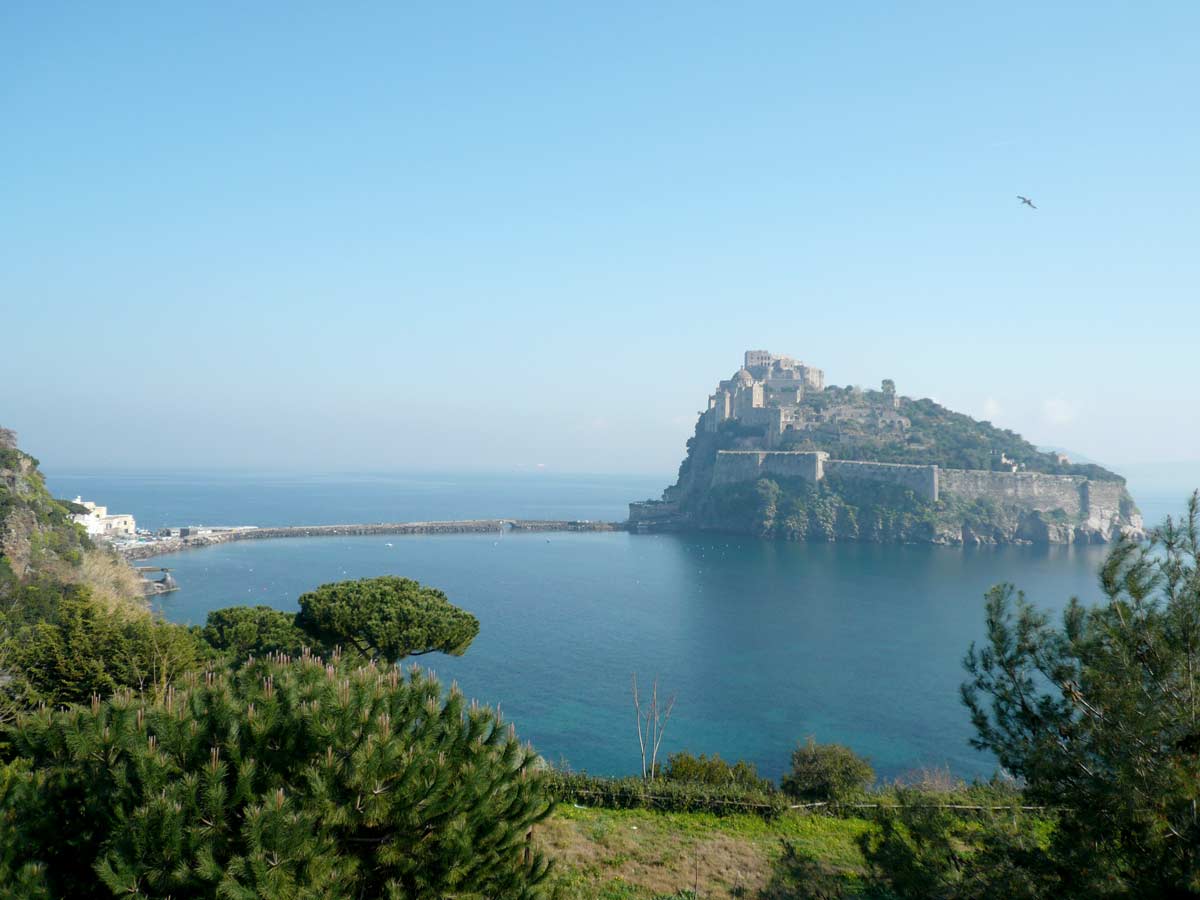
Located on an islet of volcanic rock near the picturesque island of Ischia in the Bay of Naples, the present-day castle dates back to the 15th century, when it was built by Alfonso I of Aragon, hence the name “Aragonese.”
The Aragonese castle, however, was not the first structure to be erected on the rock. Indeed, in the 5th century, the Syracusans of Sicily built a watchtower there. They were followed by Romans, Visigoths, Saracens, and Normans. Then, in the 13th century, the Angevins took control of the islet and built a bridge to connect it to the larger island of Ischia. When Alfonso I seized the region, the castle served both as a military stronghold and royal residence.
Over the centuries, the Aragonese building evolved into a small fortified town, housing a cathedral, a Benedictine convent, several chapels, prisons, and a network of internal passages cut through the volcanic rock.
In the 16th century, nearly 2,000 people resided in the castle, which became a gathering point for poets and Humanists. It was there that poet Vittoria Colonna, a close friend of Michelangelo, married the Marquis of Pescara and spent her early years of widowhood.
Today, the castle is privately owned and opens to visitors year-round.
11. Rocca di Gradara, Gradara, Marche
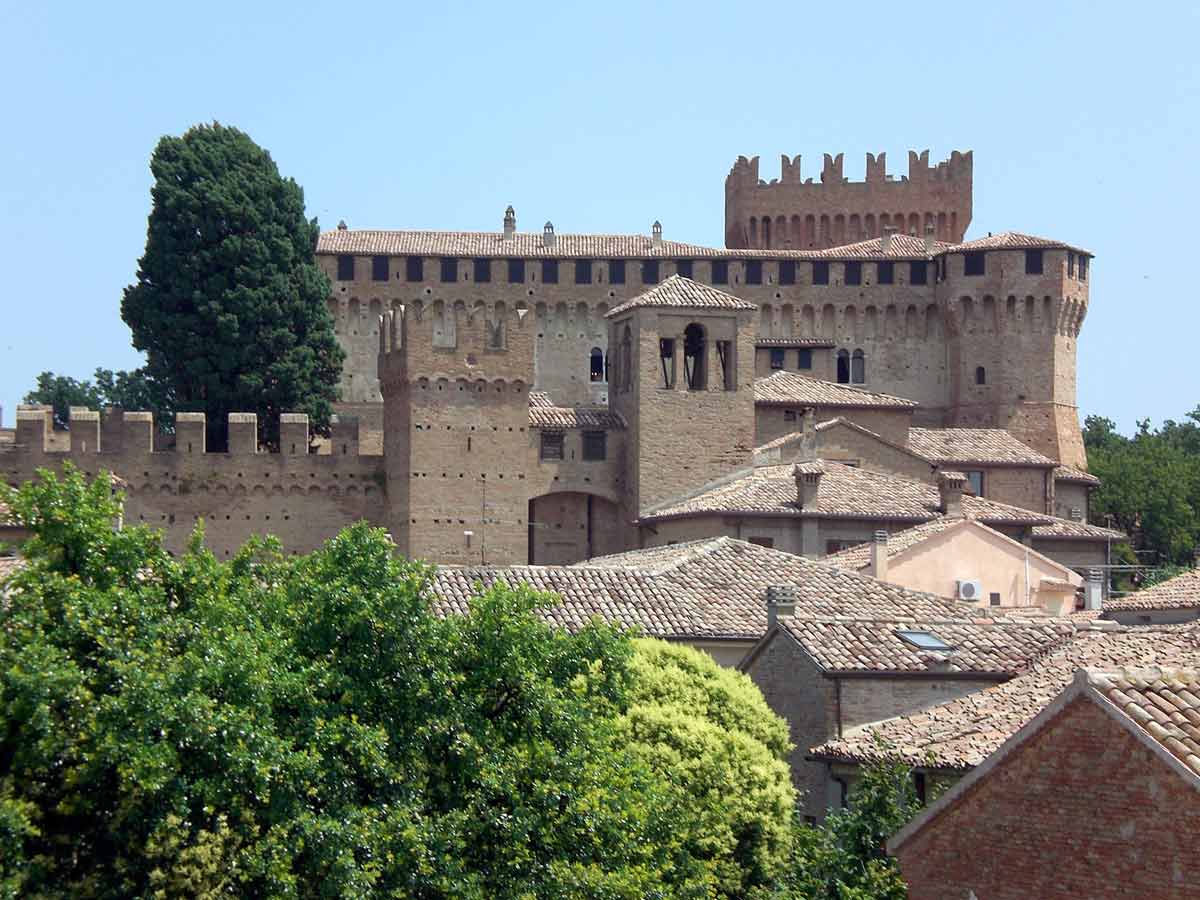
Located on the hills above the Adriatic coast of the Marche, central Italy, the castle of Gradara’s original core dates back to the 12th century. Surrounded by a double ring of medieval walls, the structure, a self-sufficient military stronghold, underwent a series of restorations throughout the centuries.
In the 14th century, the building was owned by the Malatesta family. It is on this connection that the castle rests its fame. In Inferno V, Dante meets Francesca da Rimini, who married Gianciotto Malatesta but fell in love with his younger brother, Paolo. Upon discovering the young lovers, Gianciotto kills them both. According to legend, the crime took place at the Rocca di Gradara.
12. Castello di Lombardia, Enna, Sicily
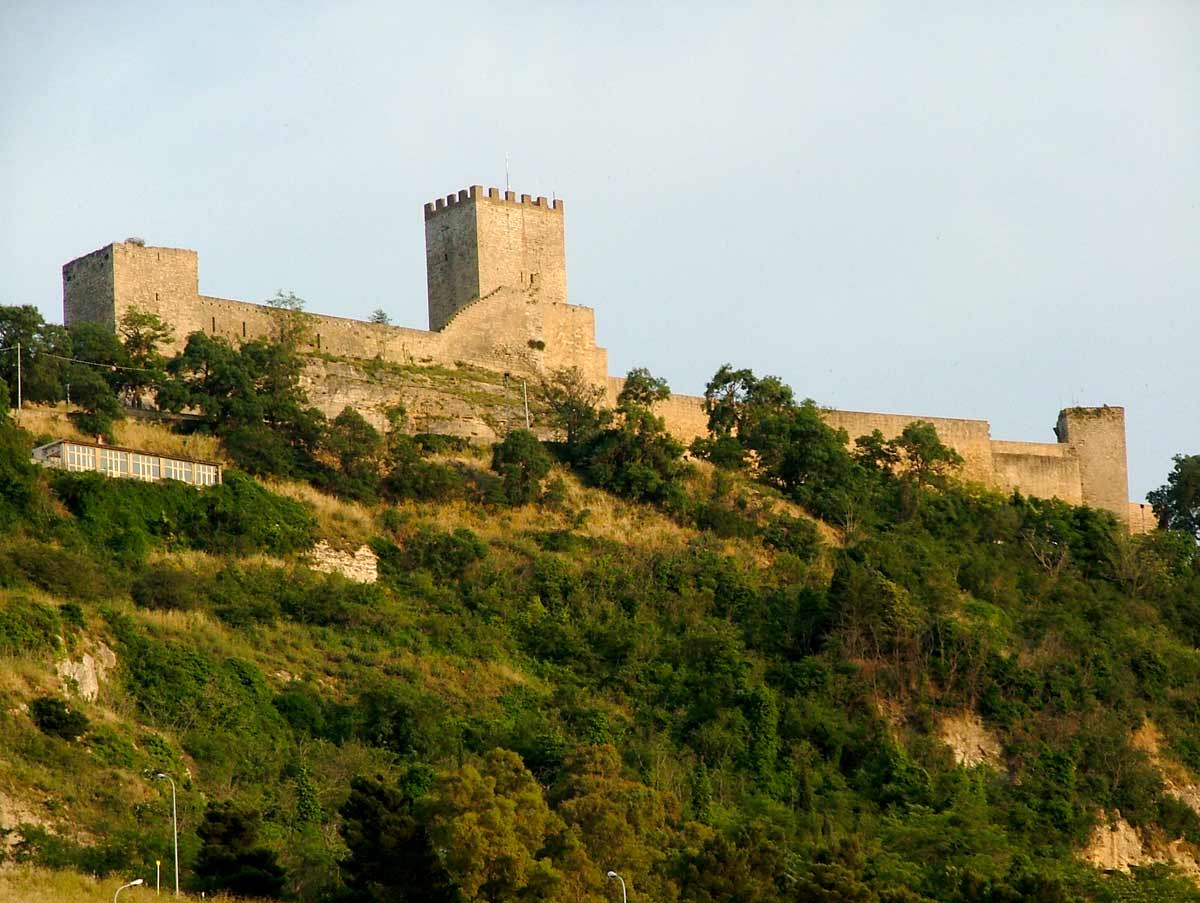
Like many castles mentioned in this list, the Castello di Lombardia was also erected at the order of Frederick II in the 13th century. The building was built on previous Byzantine, Arab, and Norman fortifications. Its name, literally meaning “Castle of Lombardy,” likely derives from a Lombard garrison stationed there during the Norman period.
Due to its location at the geographical center of Sicily, Enna was the key to controlling the island’s interior and the center of the military defense. The Torre Pisana, the tallest tower of the building, still offers a 360-degree view of Sicily, from Etna to the northern coast.
Today, the castle houses open-air events in the summer months.