In the courtroom, justice usually hinges on a simple, human question: did the defendant know what they were doing? For centuries, our legal system has relied on folk psychology, the common-sense belief that we are rational agents in control of our actions. However, what happens when a tumor or a brain scan tells a different story? As neuroscientific evidence becomes more prevalent, it is challenging our definition of accountability, forcing us to ask if we are masters of our own minds or merely products of our biology.
The Case of Mr. Oft and the Biological Argument for Innocence

Perhaps the most quoted case of neuroscience interacting with law is that of Mr. Oft, a 40-year-old teacher who developed acquired pedophilia and sexual deviancy. He tried to conceal his activities, knowing they were wrong, yet continued with them. Eventually, he made advances on his stepdaughter, who informed her mother. He was convicted of child molestation and sentenced to rehabilitation, where he took a sexual addiction test and failed (Morse, 2011).
Before the sentencing hearing, Oft was admitted to a hospital emergency room with a headache. Doctors discovered a brain tumor. When it was removed, he returned to normal and passed the test. The tumor later returned, and so did the sexual deviance. With its second removal, the acquired pedophilia disappeared again.
Mr. Oft’s executive functioning while the tumor was present seemed normal. He knew that what he was doing was wrong and would express discomfort with his feelings. The tumor seemingly created an urge too strong to suppress, which manifested clearly in behavior as the tumor grew.
This case is so commonly cited in neurolaw precisely because it is such a cleanly demarcated instance of a brain disorder causing moral and criminal misbehavior. Over time, a clearly observable change in disposition, that is, inappropriate sexual behavior and advances, distinguished itself from his normal conduct, and that change could be confirmed with a test.
It is also a removable condition imposed by an external source. After its removal and a period of probation, it became clear that recidivism was not a risk. Oft was no longer a threat. The case is also clean-cut in that the criminal behavior produced by the tumor was largely reversible.
When Biology Is Not the Whole Story
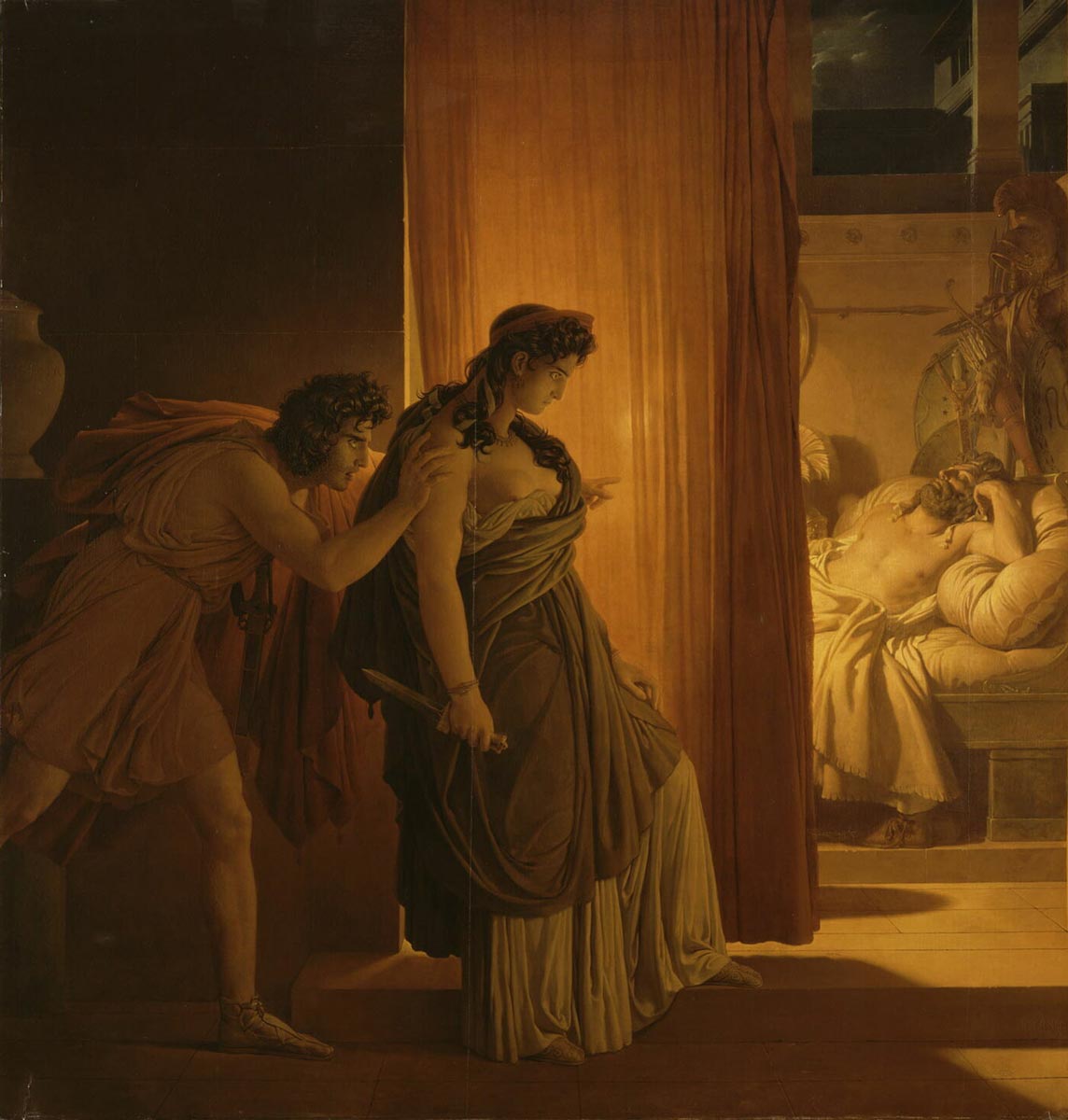
A similar case shows that the interaction between neuroscientific evidence and law is rarely so clearly demarcated.
Herbert Weinstein was an ordinary, kind, mild-tempered man who, in his 60s, strangled his wife after a fight, then tried to dispose of her body by throwing it from the balcony to make it look like a suicide. When questioned, he admitted his guilt and the attempt to cover it up, with an apparent lack of emotion.
He had no previous history of mental disorder, but a PET scan found an unremovable tumor. The neuroimaging was admissible to support an insanity defense, marking one of the first times a court allowed PET scans to demonstrate a brain defect to a jury (Jones et al., 2014).
Since there was no way to know when the tumor had started, it was difficult to assign the cause of the crime to it. Weinstein committed no additional crimes or misdemeanors during his remaining 12 years of life, suggesting the tumor could not have been the sole cause. His actions to dispose of the body also showed that he was not outside the bounds of control and rational thinking.
What Is the Difference Between Legal Lack of Control and Biological Causation?

The case of Herbert Weinstein is much more representative of the reliability of neuroscientific evidence than the case of Mr. Oft. It is usually difficult to know that a disorder caused an action or even induced the feelings behind it. Not every criminal action is caused by a disorder, even when one is present.
Even when a tumor is causing legal insanity, it is likely to show up as behavior rather than purely as biological evidence, as was the case with Weinstein, where the behavior, not the biology, determined the verdict.
The law does not determine guilt based on cause. Someone who is drunk will not be excused because they were not in control, since they are still deemed responsible for becoming intoxicated. Involuntary intoxication is treated differently.
Causes, in general, do not designate responsibility in law. Biology underlies everything we do, so that neuroscientific evidence can explain our mental states. If we follow that argument to its end, we can claim we are not responsible for anything, especially when we consider evidence of decisions being made before we are consciously aware of them, like Libet’s experiments, or more recently Soon et al. (2008), where researchers could predict with 60% accuracy an arbitrary choice from brain imaging alone.
Still, lack of control is a component of the law. We consider those less capable of control, namely children, the elderly, and the mentally disabled, to be less culpable. We also admit temporary loss of control, as in crimes of passion or provocation.
Why Criminal Law Refuses to Let Go of Folk Psychology

Criminal responsibility requires actus reus (a voluntary act) and mens rea (a culpable mental state). To deny responsibility, one can deny either of these requirements: that one was not acting voluntarily, which means outside one’s control as in an epileptic seizure, a reflex, an action evoked by someone else, or sleepwalking, or that one did not have a culpable mind, meaning one did not intend the outcome, was not aware of what was happening, or was not in a state of mind to know what one was doing.
Criminal responsibility, then, requires a guilty action and a guilty mind. Weinstein seemingly had a guilty mind, but also showed he had rational capacity by trying to hide the crime, trying to make it look like a suicide. The act was apparently impulsive and evoked by a fight, yet due to the evidence presented, was able to plead guilty to first-degree manslaughter. Oft had a guilty mind, but a compulsion driving his actions.
Nevertheless, could we not take both actions to be evoked by an irresistible urge? To start with, taking all causation to be simply a fact of the brain, and therefore neither morally nor criminally accountable, is a nonstarter for law. However, how is it determined whether someone acted voluntarily or was compelled? The alternative to being compelled in law is rational agency.
What underlies this view is folk psychology, that is, the commonsensical view that we are rational agents capable of forming intentions, beliefs, and desires, and that these mental states can explain behavior.
Folk psychology rationality is most likely wrong. For one, it is rather arbitrary as to what counts as a sufficient urge. Folk psychology is largely based on behavior, since that is typically what we epistemically have available to us. Still, at least for now, neuroscience would struggle to do better, aside from recreating scenarios and observing where the control threshold lies, which is unlikely.
Neuroscientific Determinism Is Not the Threat to Law

The argument typically advanced for neuroscience’s challenge to law is that of determinism and the challenge to free will. This is not a particularly strong attack on its own against current legal proceedings. One can accept that we are not morally responsible without thereby concluding anything about legal responsibility.
As put by the legal scholar Rebecca Dresser: “Proof that a biological (or environmental) condition influenced someone’s behavior does not necessarily defeat the legal presumption that most people are sufficiently rational to be held accountable for their actions” (Dresser, 2008).
What we can take from this position is that law is normative, whereas neuroscience is descriptive. So, even if free will is an illusion, as long as this illusion persists, the folk-psychological system can operate. What the law rather takes into consideration is whether the subject is capable of acting rationally enough. It is also whether they acted intentionally, which indicates rational behavior.
Final Verdict: Can Neuroscience Reshape the Law Slowly?

According to law professor Stephen Morse, the result that neuroscience would need to produce in order to upend the law would be proof that mental causation is itself an illusion. If mental causation falls, mens rea would fall with it, meaning that mental states would no longer affect criminal culpability (Morse, 2011).
This is how neuroscience differs from other deterministic attacks on law. It does not simply imply determinism, which is something genetics, physics, and behaviorism have already done. Showing semi-predictable markers of preconscious decision-making does not prove the non-causality of mental events, nor does it prove determinism.
Morse concludes that unless neuroscience disproves mental causation, it is unlikely to change our folk psychology or our normative laws dramatically.
Moreover, as a social construct, law is upheld essentially by a social contract. A revision of laws in accordance with deterministic, physicalistic, neuroscientific notions may amount to breaking that contract. Our society still operates on folk psychology
It is unlikely that neuroscience would directly revolutionize law, but it may do so indirectly by changing folk psychology, as suggested by the neuropsychologists Greene and Cohen (2004). We can already see this through the evolving public ideas of the chemical imbalances and dopamine addiction. So while these popular ideas do not constitute correct neuroscientific belief, they shape folk-psychological thinking.
Democratic laws are traditionally conservative. They impose incremental changes in parallel to societal changes. What neuroscience can change are the categorical definitions on which law operates, such as control and compulsion. It may shape our folk psychology and provide supporting evidence in the form of biological data and methods such as lie detection. However, these are unlikely to become primary evidence; rather, they will be supplementary.
In the future, neuroscientific evidence may be a significant addition to law, but it is unlikely to revolutionize the legal system. The system will still primarily operate on behavioral evidence, which, being post hoc, is difficult to ground in neuroscientific evidence. For now, laws are normative, and so neuroscience plays a limited part in them.
Sources
- Dresser, R. (2008). Neuroscience’s Uncertain Threat to Criminal Law (SSRN Scholarly Paper 1763293). Social Science Research Network. https://papers.ssrn.com/abstract=1763293
- Greene, J., & Cohen, J. (2004). For the law, neuroscience changes nothing and everything. Philosophical Transactions of the Royal Society B: Biological Sciences, 359(1451), 1775. https://doi.org/10.1098/rstb.2004.1546
- Jones, O. D., Schall, J. D., & Shen, F. X. (n.d.). Law & Neuroscience: What, Why, and Where to Begin.
- Lost in Translation?: An Essay on Law and Neuroscience by Stephen Morse: SSRN. (n.d.). Retrieved November 14, 2024, from https://papers.ssrn.com/sol3/papers.cfm?abstract_id=1904488