Summary
- The oldest known instrument is the Divje Babe flute, made from a cave bear femur around 60,000 BC.
- The oldest known written melody is the Hurrian Hymn Text H6, a 1400 BC prayer from ancient Syria.
- Sumerian harps called the Lyres of Ur are the oldest stringed instruments, dating back to approximately 2500 BC.
- A mammoth bone called the “Mousterian Skiffle” may be the oldest percussion instrument, dating to around 60,000 BC.
The oldest written music has several categories. The earliest musical notation is from around 1950 BC, Sumeria. It is a tuning interval and scale for a hymn called Lipit-Ishtar A, a king from the Dynasty of Isin, a predecessor of the First Babylonian Empire. Lipit-Ishtar’s rule is known from one of the earliest written legal codes as well. It would have been sung as part of a festival praising the gods and their servant, the king. The oldest known written melody is the Hurrian Hymn Text H6.
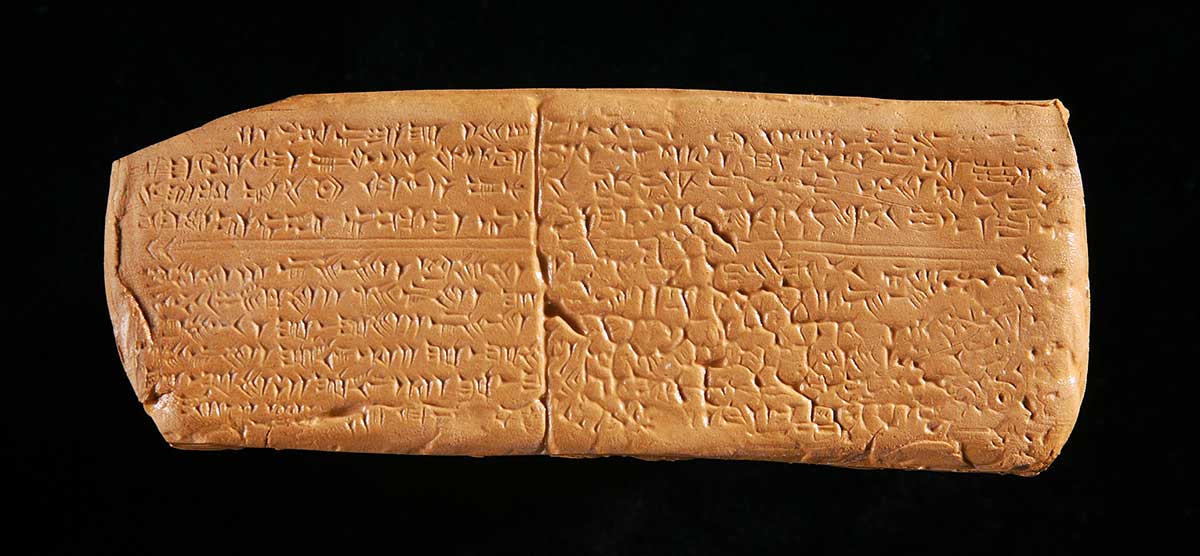
The Hurrian Hymns are from the city of Ugarit in northern Syria from about 1400 BC. Hymn H6 is a zaluzi-prayer to the goddess of orchards Nikkal, wife of the moon-god Yarikh. The notations for the hymn are both for singing and on a type of 9-stringed lyre called the sammum. The song has been reconstructed and performed, though precisely how it sounded may never be known. The oldest complete melody with notation is the Seikilos Epitaph from around 100 AD.
The Seikilos epitaph is on a stele with both musical notation and poetry, discovered in the Greek town of Tralles, near Aydin in Turkey. The music on the stele has been reconstructed, and we know generally how it can be sung. It is possibly a memorial from Seikilos to a woman, or a commemoration of his own musical talent.
The Oldest Musical Instrument
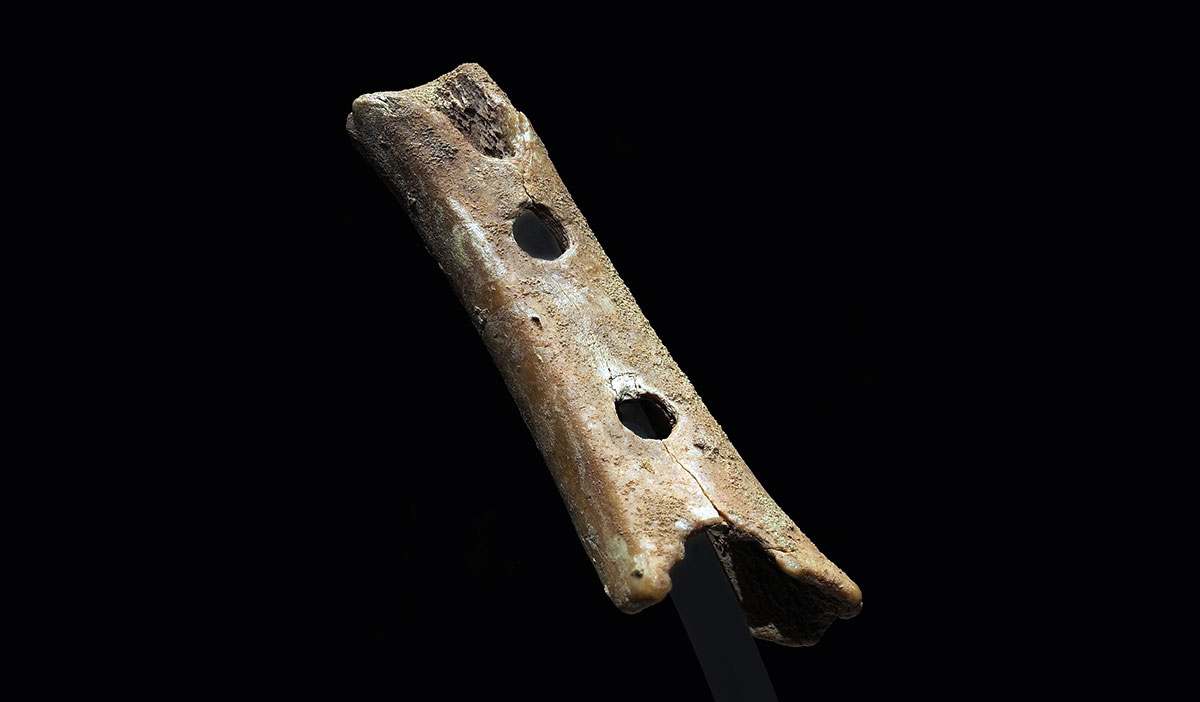
The oldest known instrument is known as the Divje Babe flute. It is a flute made from the femur of a cave bear cub, possibly made by Neanderthals. It dated to about 50,000-60,000 BC, during the middle paleolithic era, also known as the stone age. Another interesting ancient instrument is a stone age flute from about 40,000 BC.
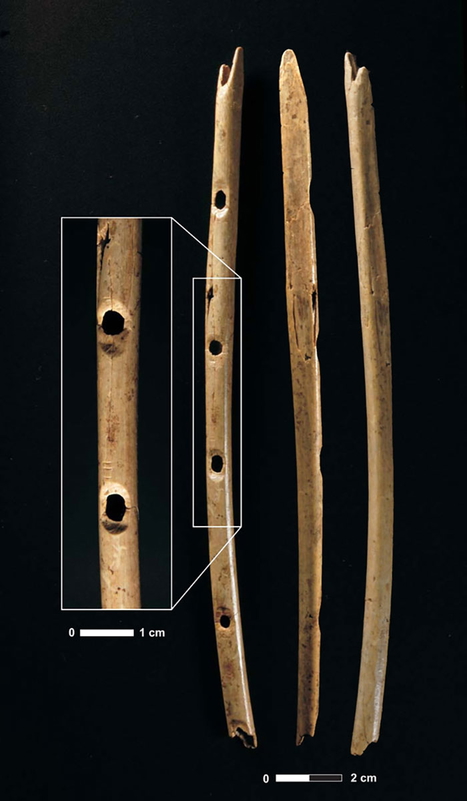
The Hohle Fels flute is a flute made from vulture bone, discovered in Germany. It may be the oldest known human-made flute, and speaks—or in this case, plays—to how early humans made and enjoyed music.
The Oldest Stringed Instrument
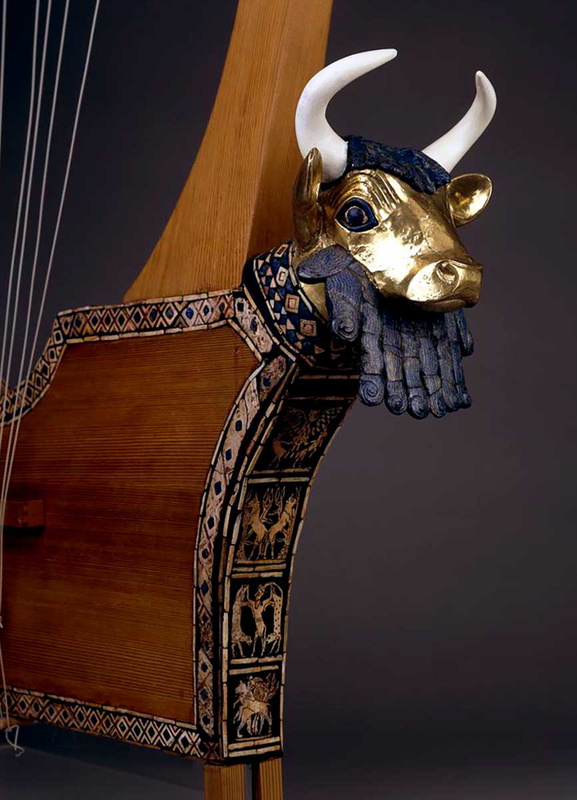
The oldest stringed instruments are Sumerian harps known as the Lyres of Ur, dating to around 2500 BC. While the wood on the lyres had deteriorated, the gold, silver, and other jewels and decorations survived, and the lyres were able to be recreated. In all, two harps and nine lyres were found together at Ur, the only stringed instruments from that time period. Cuneiform tablets like the one found for Lipit-Ishtar were prevalent in Mesopotamia on how to tune and play the instruments.
The Oldest Forms of Percussion
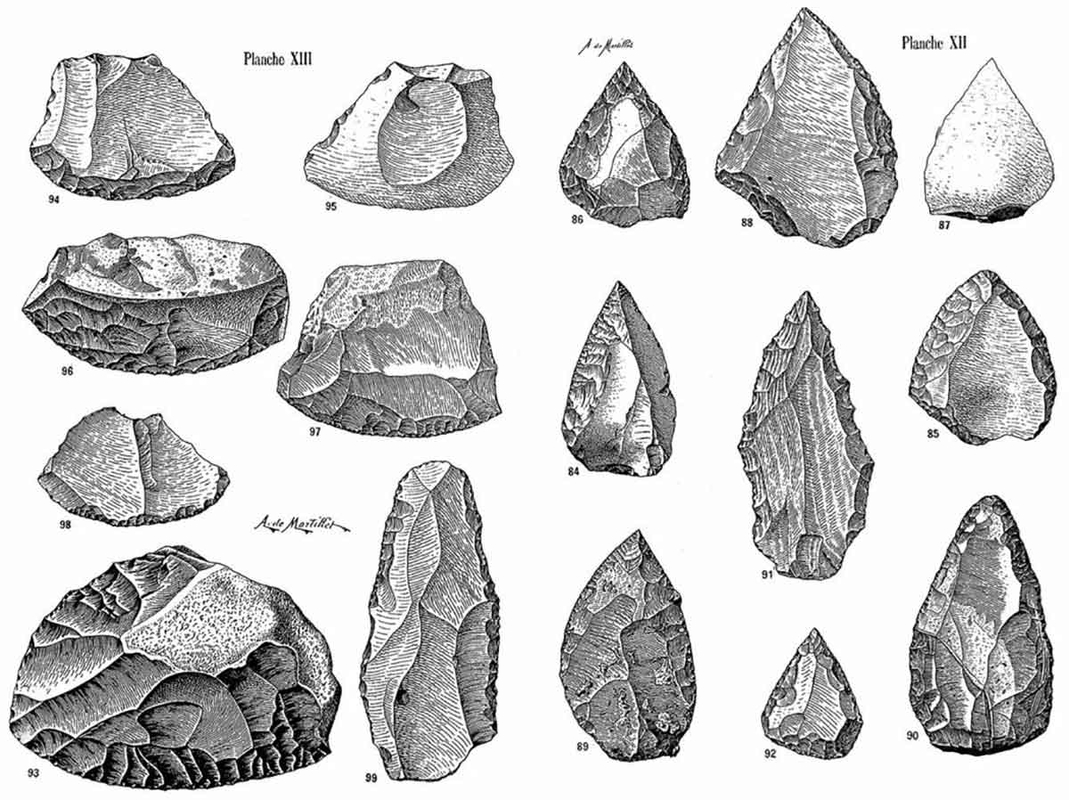
The oldest percussion instrument known may be the “Mousterian Skiffle,” found near other Neanderthal tools, possibly from around 60000 BC. It is a piece of mammoth bone with about a dozen grooves that would have been scraped like a washboard to create music.
Probably the first true “drums” known are the Alligator Drums of neolithic China. While the drums are difficult to date, they tend to range from about 5500-2350 BC throughout various parts of China. They were constructed similarly to modern drums; animal skin stretched over a clay shell, and struck with the hand or a stick to produce a rhythmic sound, useful not just for music, but communication over long distances.