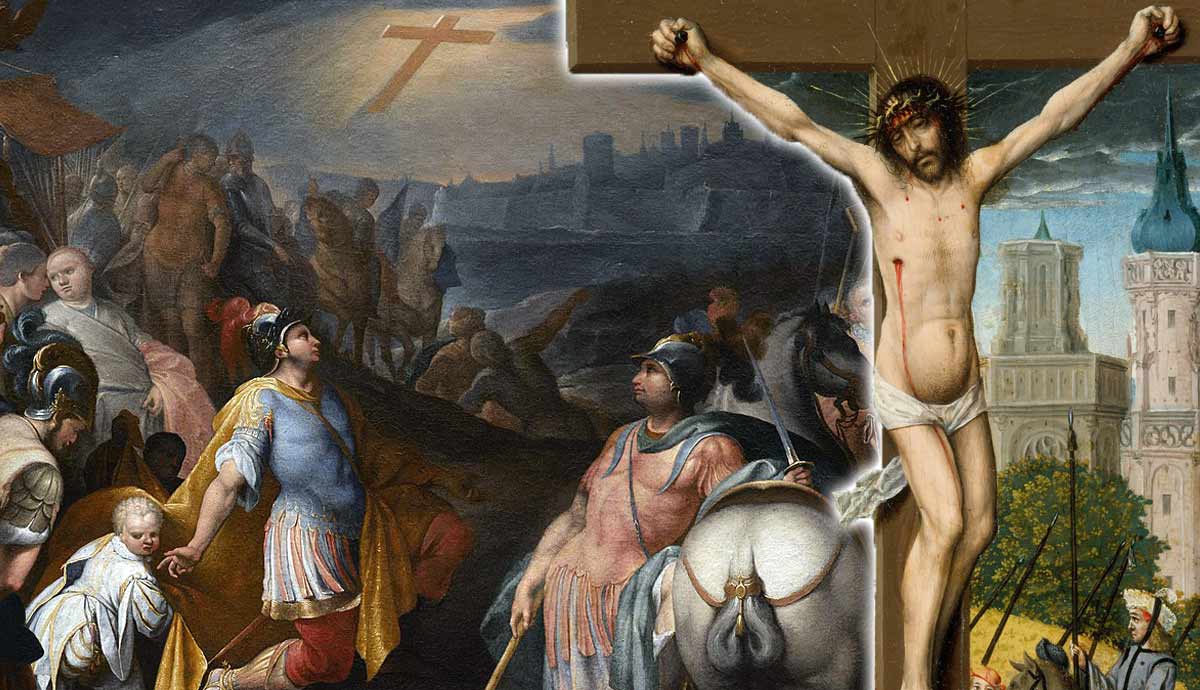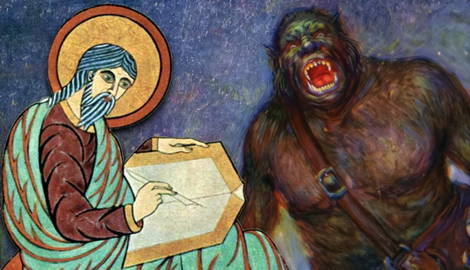

The Old English epic poem Beowulf is set in a pre-Christian world, but was written by a Christian author. This creates a complicated mix between pagan and Christian elements that are present in the poem, and scholars have debated how to understand the religiosity of the poem without coming to a clear consensus. This article will attempt to sort through how to think about Beowulf and religion.
The Pagan Setting
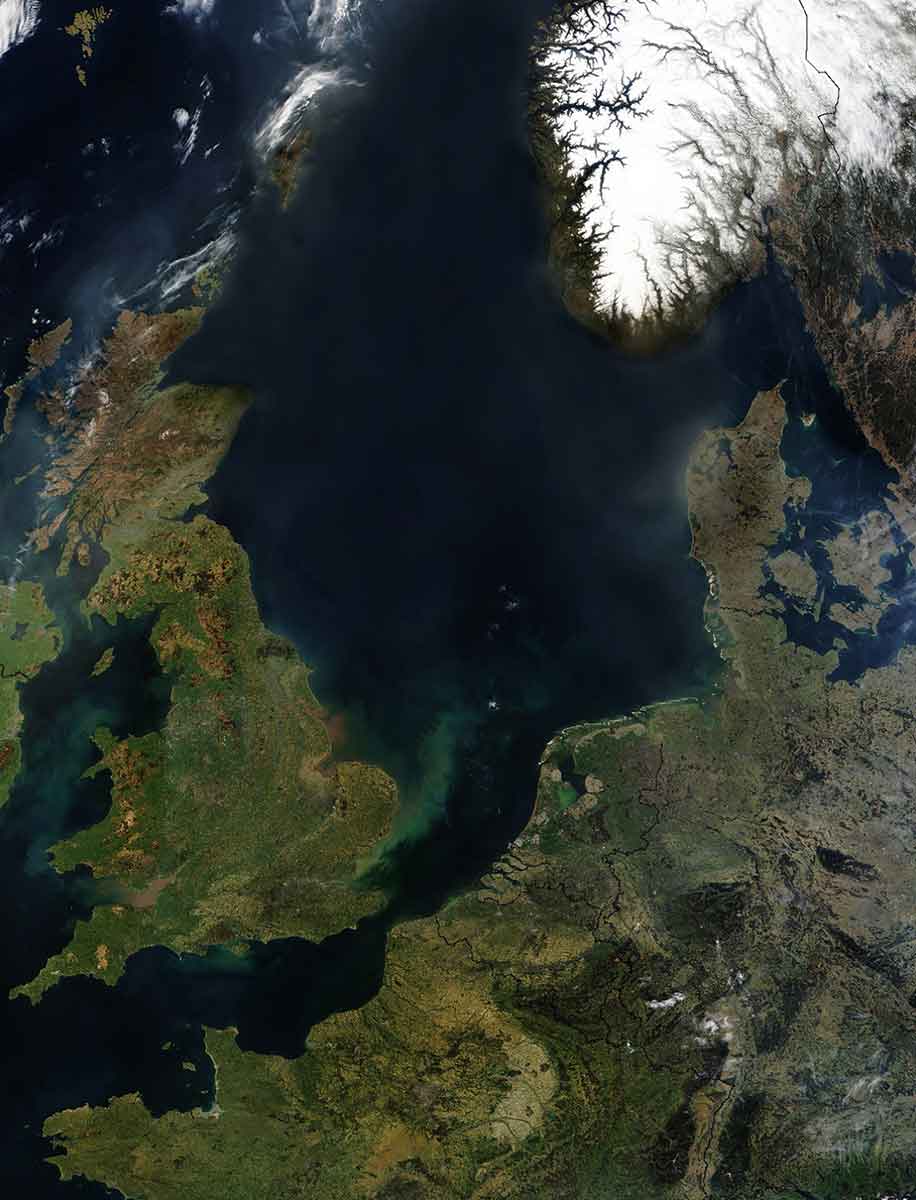
The epic poem Beowulf takes place in a pagan world. The Geats, Danes, Swedes, and other peoples that surround the North Sea in the poem inhabit a land that has not yet been touched by the Christianity that had spread for centuries under the Roman Empire. Yet, Christianity is an important presence in the poem. It enters the poem through the anonymous author, who makes it clear to us that he is a Christian.
Religious and spiritual practices are not explicitly described in Beowulf. Yet a pagan aesthetic dominates the poem, and we can get a sense of a pre-Christian worldview from the characters. The pre-Christian character of the world is specifically confirmed by the poet in a stark line in which it is said that “Almighty they knew not.”
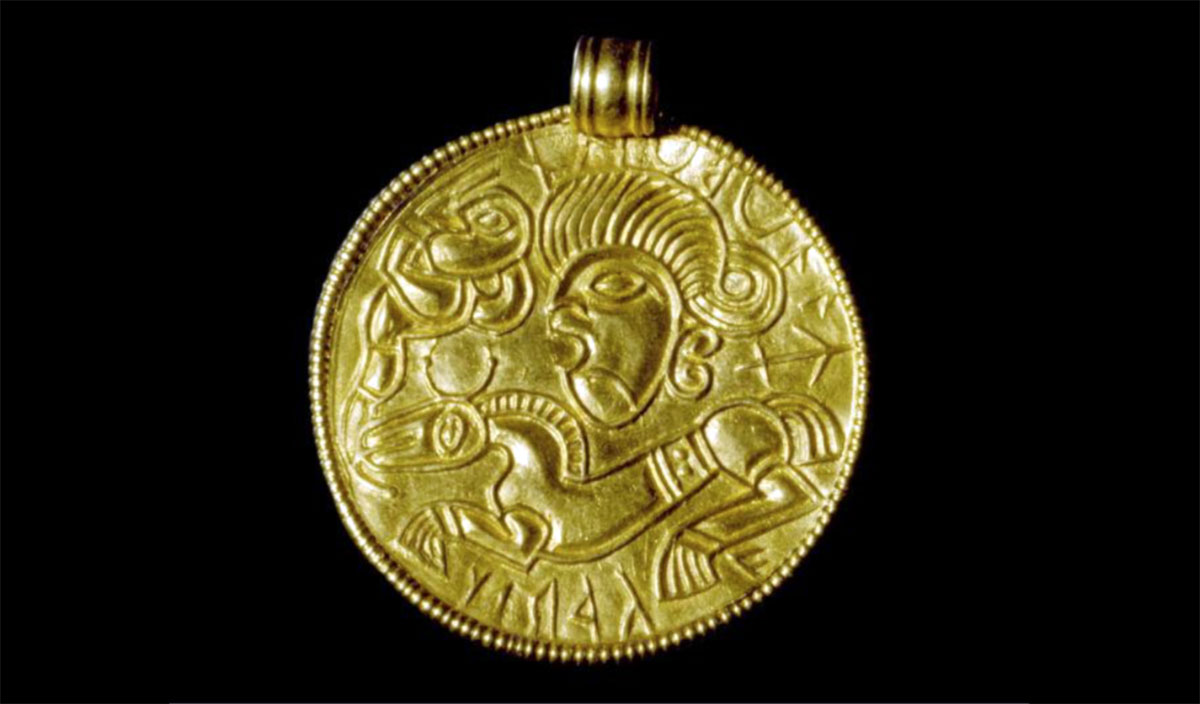
The place of religion in Beowulf is a highly contested and uncertain topic. Explicit references to the pre-Christian practices of the characters combine with frequent allusions that the characters make to a God that sounds very much like the monotheistic Christian God. The pagan historical context of the poem’s origins contrasts with the fact that the author was certainly Christian. These contrasts leave us in an uncertain place.
Neither study of the context of the poem’s composition nor study of the content of the poem itself provides a clear sense as to the place or the nature of religion and spirituality in Beowulf.
Themes and Ethos
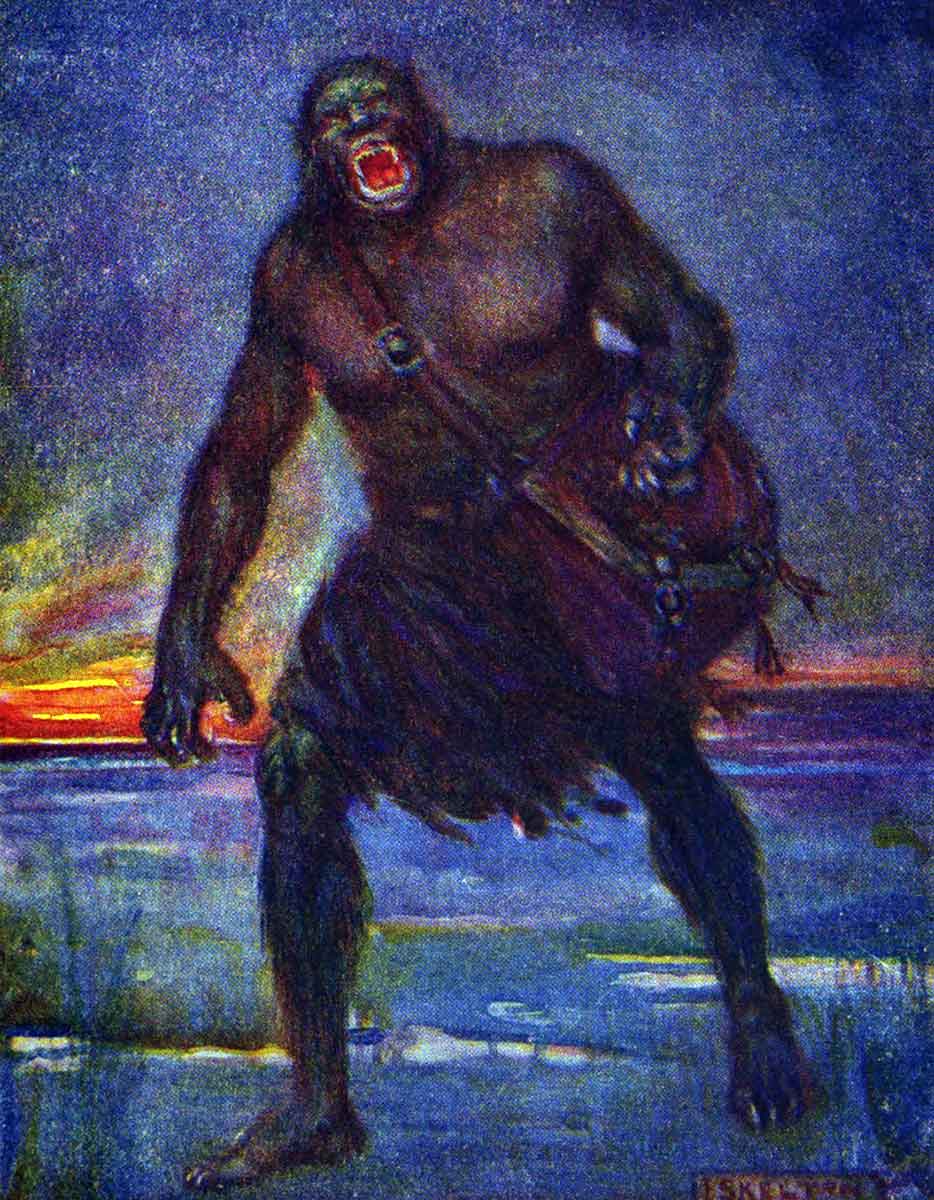
If there is a moral strain that runs through the poem, it is not an ethos typically associated with Christianity and its teachings. Beowulf’s greatness and his heroism come from his martial prowess and his desire for glory and fame. Though there are some comparisons that can be made between the poem’s protagonist and Jesus Christ, the poet does not shy away from the point that Beowulf’s heroism is a product of his violent strength and not of his suffering. The inflexible logic of the blood-feud is also central to Beowulf. That the violent death of one’s kin must and will be met with retributory violence and war is taken as natural.
Moreover, Beowulf does not seek to reject vanity or worldly goods like a typical Christian saint. Beowulf triumphs in the treasures and weaponry that he wins from his battles with the monsters. He glories in his own strength and martial prowess, extolling his own heroism to others and basking in others’ praise of him. The poet does not condemn this. Indeed, the final line of the poem eulogizes the dead Beowulf as “the keenest for fame.”
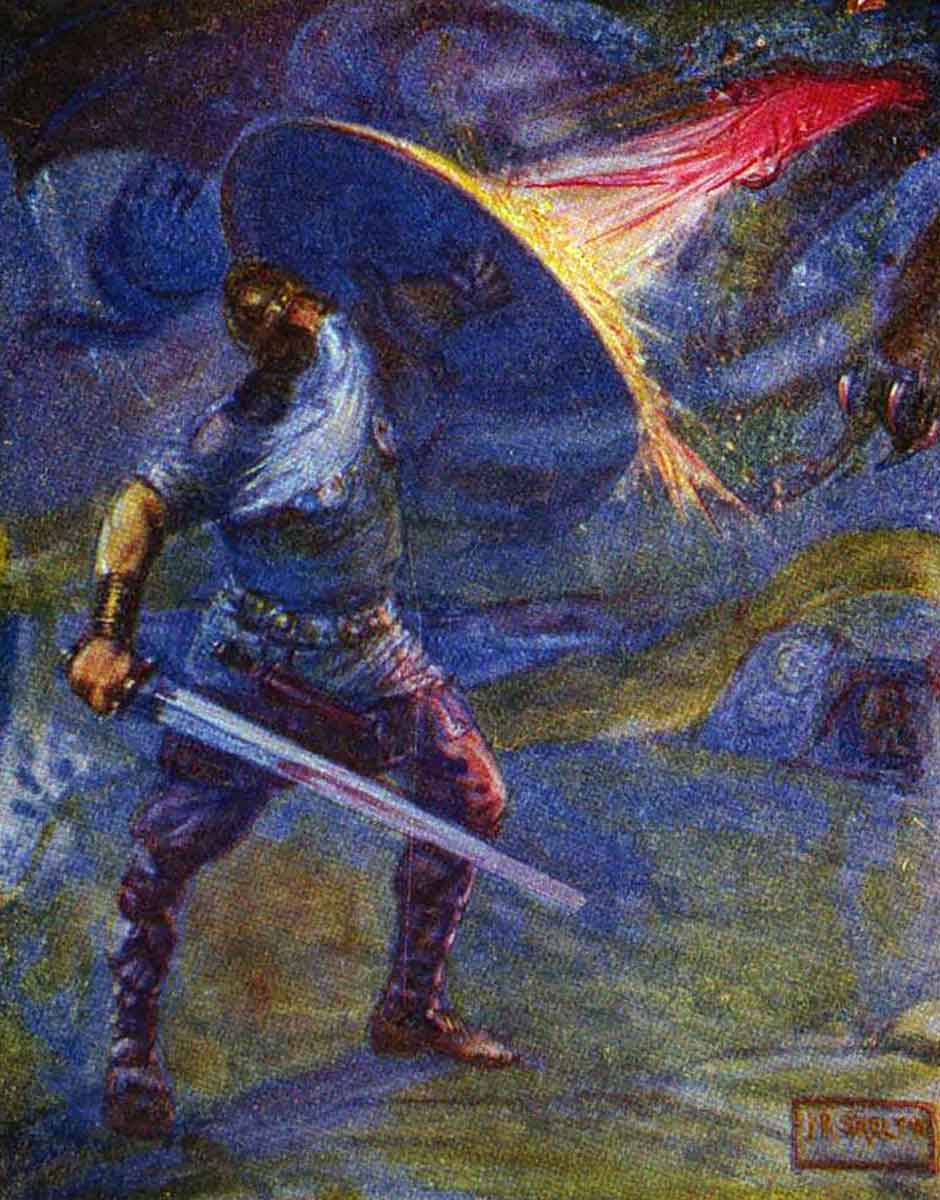
Yet, whether the centrality of violence and feud in the poem represents a genuinely pre-Christian ethos, preserved by the poet, or whether it reflects the Christian martial culture that remained central in northern Europe throughout the early Middle Ages is unclear. The frequent references to God that are made by characters throughout the poem could suggest that the poet is actually conveying the sensibilities of his own time in the 8th or 9th centuries AD, rather than conveying any kind of pagan understanding of morality and the divine.
Moreover, Beowulf’s fight with demonic monsters is not difficult to interpret in a Christian framework. Heroic figures fighting and banishing demons and devils have been a constant theme in Christian literature over the centuries. Beowulf’s dramatic sacrificial death after defeating the Dragon and saving his people has unmistakable resonances with the death of Jesus. Meanwhile, Hrothgar, king of the Danes, fits neatly into the mold of an aged patriarch who counsels Beowulf in ways that are reminiscent of a sermon.
The “Heathen Poem” Interpretation
Victorian scholars tended to dismiss the religious language in parts of the poem as essentially window-dressing by the Christian poet added onto what was essentially a pagan, pre-Christian tale. This view emphasizes that the frequent uses of the term “God” in the poem are vague enough in their context not to have to be referring to the Christian God, and could easily be replaced with a word such as “fate” and have the same meaning. It also stresses the extent to which themes that are central to Christianity (such as Christ, the cross, the trinity, etc.) are not mentioned at all.
Perhaps most controversially from a modern perspective, this theory views the parts of the poem in which unmistakably Christian references are made as later glosses to the core text of the poem. Thus, there is a core pre-Christian story, and a later poet, or poets, who wrote the poem down, added the Christian elements on top of the heathen core. Most later scholars have rejected this theory, seeing the poem as a single work rather than a text that has been glossed by later Christian authors.
This theory was largely replaced in the later 20th century by the so-called “dramatic irony thesis,” which suggests a gulf between the narrator and the characters. The former can comprehend a spiritual dimension to the actions of Beowulf and his battles with the monsters, but the characters themselves are ignorant of this higher significance amidst their heathen conception of the world.
This interpretation is supported by a section of the poem in which the poet describes the reaction of the Danes to the assaults of Grendel upon their hall, Heorot. The poet states:
“They prayed aloud, promising sometimes, on the altars of their idols unholy sacrifices (…) Such was their practice, a heathen hope; Hell possessed their hearts and minds: the Maker was unknown to them (…) the Almighty was unheard of “ (translation by Michael Alexander).
This passage suggests a profound disconnect between the poem’s narrator and the characters and the world that he is narrating. One can then interpret the frequent references to God by the poem’s protagonists as the poet’s insertion, who uses the vague term “God” as a stand-in to represent the characters’ essentially pre-Christian understanding of the divine. This would make sense considering the fact that Christian writers in the Early Medieval Period rarely make reference to pagan gods or beliefs in any kind of detail.
The Christian understanding possessed by the poet is also demonstrated in a line about a third of the way through the poem. The narrator reminds his listeners that God “guided then the dealings of mankind, as he does even now,” suggesting that, whether or not Beowulf and his comrades were aware, the Christian God was overseeing their actions and guiding their battles.
The poet makes a point of demonstrating the limits of the characters’ knowledge at other times as well. Most notably, when describing Grendel’s approach to Heorot, where Beowulf lies in wait, the poet foreshadows that Grendel will meet his fate in the coming encounter.
A Christian Poem?
However, there is a different interpretation that views the entire poem as deeply influenced by a Christian ethic, to the extent that Beowulf and the other characters themselves are essentially Christian figures.
It is striking the extent to which Beowulf calls upon God in a way akin to a saint from a medieval hagiography (i.e., the life of a saint). He does so before his fight with Grendel, and after his fight with the Dragon, and at various points throughout the poem, he thanks God for his good fortune. It is also worth noting the context in which Beowulf was written. Saints’ lives were extremely popular in early-medieval England and had great influence in literary circles at that time.
Another notably religious character is Hrothgar, king of the Danes. Hrothgar talks to Beowulf about God and warns him not to indulge in arrogance and worldly gain, in a speech that is reminiscent of a Christian sermon. When Beowulf first arrives at Heorot, Hrothgar thanks the grace of “Holy God” for sending Beowulf to the Danes, reinforcing the idea that characters within the poem might understand people and events as being guided by a single deity.
Even background characters are often spoken of as though they were in touch with a Christian understanding of their world. In describing the death of the despairing king of the Geats, Hrethel, the poet states that he “chose God’s light.” Do we infer from this that a king whom we would assume to be pagan actually had an understanding of the poet’s Christian God somehow? Or is the poet simply speaking in Christianized language in the absence of an understanding of pagan spirituality?
It is also important to note how often the poet emphasizes Grendel’s lineage from Cain in the Old Testament. Grendel’s ostracism from society is explained as originating from when his ancestor Cain “warred with God.” That Grendel is a descendant of the fratricidal biblical character is one of the only things that the poet tells us about the monster’s background and origins. But if we see the poet as framing Beowulf as a saintly Christian hero, then Grendel’s origins, coming from one of the foundational sins of mankind in the Bible, add a spiritual dimension to their conflict that a contemporary Christian audience would have appreciated.
A Complicated Picture
Some writers have suggested that the Beowulf poet expresses a common sentiment in medieval literature, which is the curiosity as to whether pagan heroes of the past have a chance at eternal salvation. Perhaps the poet wants to believe that some virtuous pagans might be able to attain eternal salvation, and toys with the idea that men like Beowulf and Hrothgar might have their souls saved, despite living in a pre-Christian North Sea world.
Debate around the place of religion and Christianity in Beowulf will continue. Part of what makes the epic poem so appealing is its enigmatic character, its refusal to be fit perfectly with any one theme or concept. It is a shifting, complicated story whose characters can seem at once pagan heroes of old, and yet also Christianized figures who engage in a spiritual battle with demonic evil. The poet is one of the greatest mysteries. Is this narrator shaping the narrative themselves, or simply telling a pre-existing story? What is the distance between the poet and the characters that they explore? Is the Christian poet crafting a Christian story? Or are they preserving pagan folklore?
Every reader will decide for themselves how to interpret the spiritual aspects of Beowulf. The poem retains its hold on our imagination today precisely because it crafts a world that defies easy interpretation and forces us to immerse ourselves in its mysteries and explore its murky depths.