
After the Persians sacked Athens in 480 BC, the Athenians vowed to rebuild the sacred hill of their city only if they defeated their enemy. That happened in the mid-5th century BC, also known as the Golden Era. This period was important for Athens due to political shifts that led the city toward democracy and for the creation of many public buildings that still reflect the city’s glory. Athens achieved political supremacy over other city-states of the Greek world. It established itself as a center of culture and political power, with a flourishing economy and strong military influence.
The Creation of the Parthenon
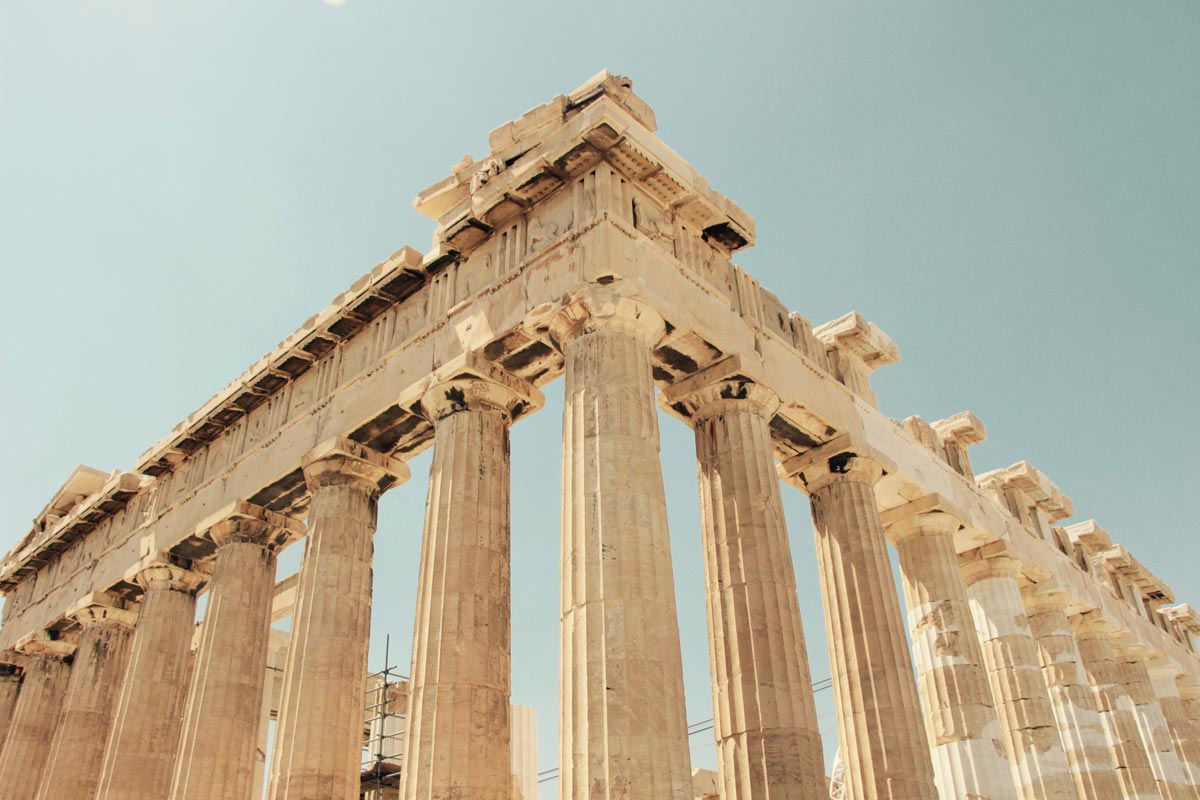
During Pericles’s leadership, an ambitious plan to redevelop the hill began. In 447 BC, architects Iktinos and Kallikrates, together with the sculptor Phidias, were assigned to design the largest building on the Acropolis, the Parthenon. They chose to use the old Doric style as a conscious link to Athens’s past and its enduring power, and designed the temple entirely of Athenian marble from Mount Pentelicus. This marble is among the most expensive in Greece, with a fine texture and white hue that sparkles in daylight. The material was prepared and crafted in pieces at the quarry to minimize the risk of damage during transportation. It was then carried to the top of the hill by oxen, a process possible only in the spring or summer, when there was no rain.
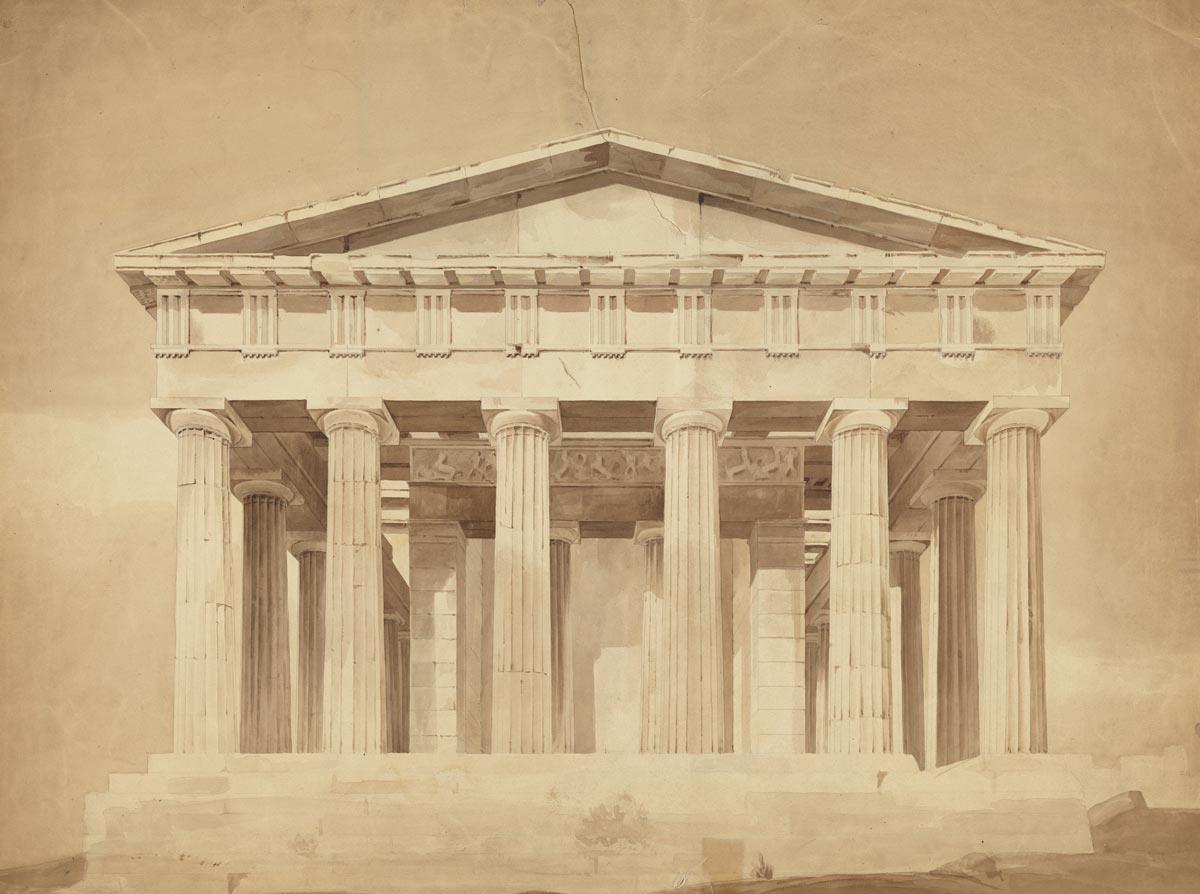
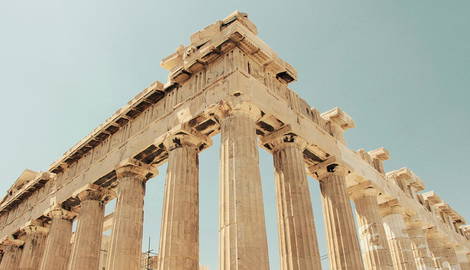
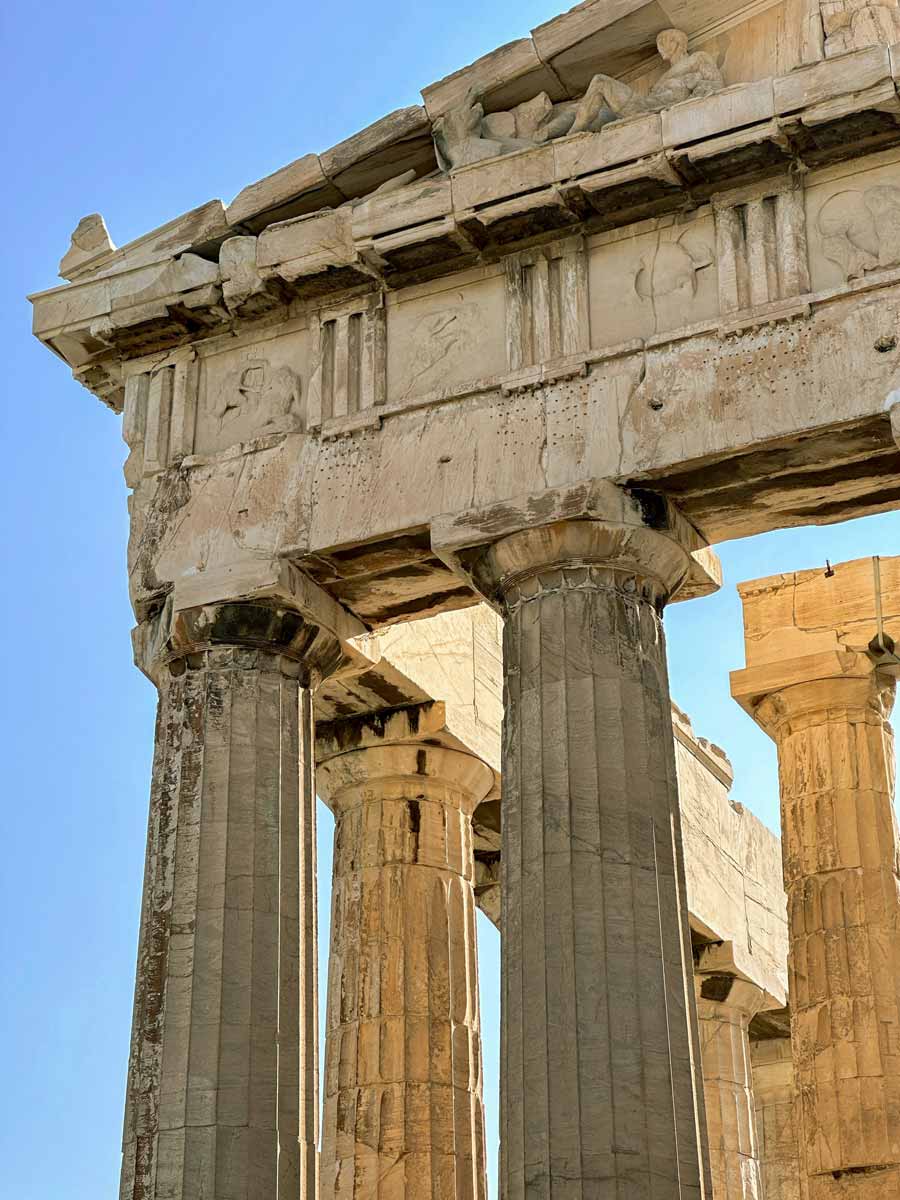
The Parthenon is one of few all-marble temples, with all of its metopes in relief. It uses a combination of Doric design with the Ionic feature of an interior frieze. This combination was intentional. It served as a reminder to Athens’s Ionian allies of the homeland of their common ancestors. The construction process was long, and the reliefs of the frieze were carved in place after they had been set in their positions on the temple.
In terms of layout, the temple features a dense arrangement of columns, with eight columns on the short sides and 17 on the long sides, while the facades include a row of six columns creating inner corridors. The metopes depict scenes of Gigantomachy, Centauromachy, Amazonomachy, and the Trojan War. The frieze depicts the Panathenaic procession, the religious celebration honoring the goddess Athena. It is a combination of religion and real life in Athens, reflecting how the Athenians intertwined their beliefs, civic values, and historical memory into every aspect of the Parthenon’s design.
Despite the temple’s large proportions, its mass, and the dense layout, the building still conveys a sense of grace, even with the visual “weight” of its architectural elements. The temple is associated with a simplicity that commands attention without any unnecessary details. Its design symbolizes harmony and symmetry and has inspired architecture throughout history.
What Is the Parthenon’s Illusion?
When we think of harmony and symmetry, especially in architecture, we often imagine perfectly straight and even features. In the case of the Parthenon, the Doric style and its simplicity often bring to mind straight vertical columns, linear façades, evenly spaced features, flat surfaces, and precise right angles. This is a common illusion associated with temples.
However, if we look more carefully at each feature of the temple, we notice that the columns are not perfectly straight. Each column has a slight swelling called an “entasis.” The platform, called the stylobate, curves gently upward instead of being completely flat, and all columns lean slightly inward. The columns at the corners are slightly thicker and set closer together.
The horizontal beams above the columns, called the entablature, also curve slightly upward. All these features are curved rather than perfectly straight. Scholars debate whether these adjustments were made for technical or aesthetic reasons. But the real question is why we should choose one of these purposes when both aspects are important, especially for such a monumental and costly building as the Parthenon, visible to all from far away.
Where Did These Imperfections Come From?
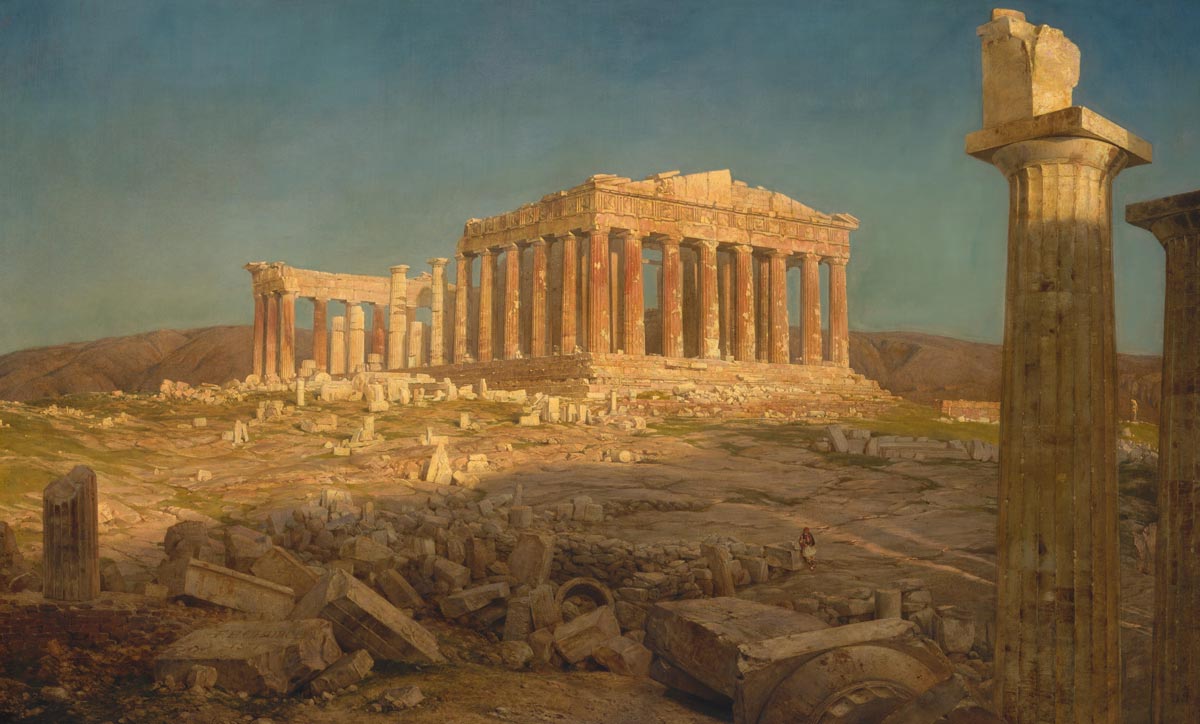
The imperfections originate from technical aspects but are inseparably linked with visual choices. Everything begins with the base floor of the temple, which curves upward. This is a well-crafted feature to drain away the rainwater of the temple, considering that it stands in an open-air space on the top of a hill. Following that, a big problem arises for the structural stability of the columns, especially in the corners. If technical aspects alone were considered, builders would solely avoid any structural problems without focusing on symmetry and harmony.
The appearance of a linear, symmetrical design was important. Subtle corrections were applied to enhance the structure’s stability, while also creating a visual effect that makes the temple appear perfectly proportioned. This was done through the careful adjustment of angles where the colonnades meet. They created slightly curved lines instead of perfect corners, and they positioned the corner columns closer together. At the same time, uniformity is maintained, and this adjustment is concealed by making the corner columns slightly thicker. The reduction of the metopes from the center toward the edges resulted in the façades appearing consistent and harmonious from the viewer’s perspective.
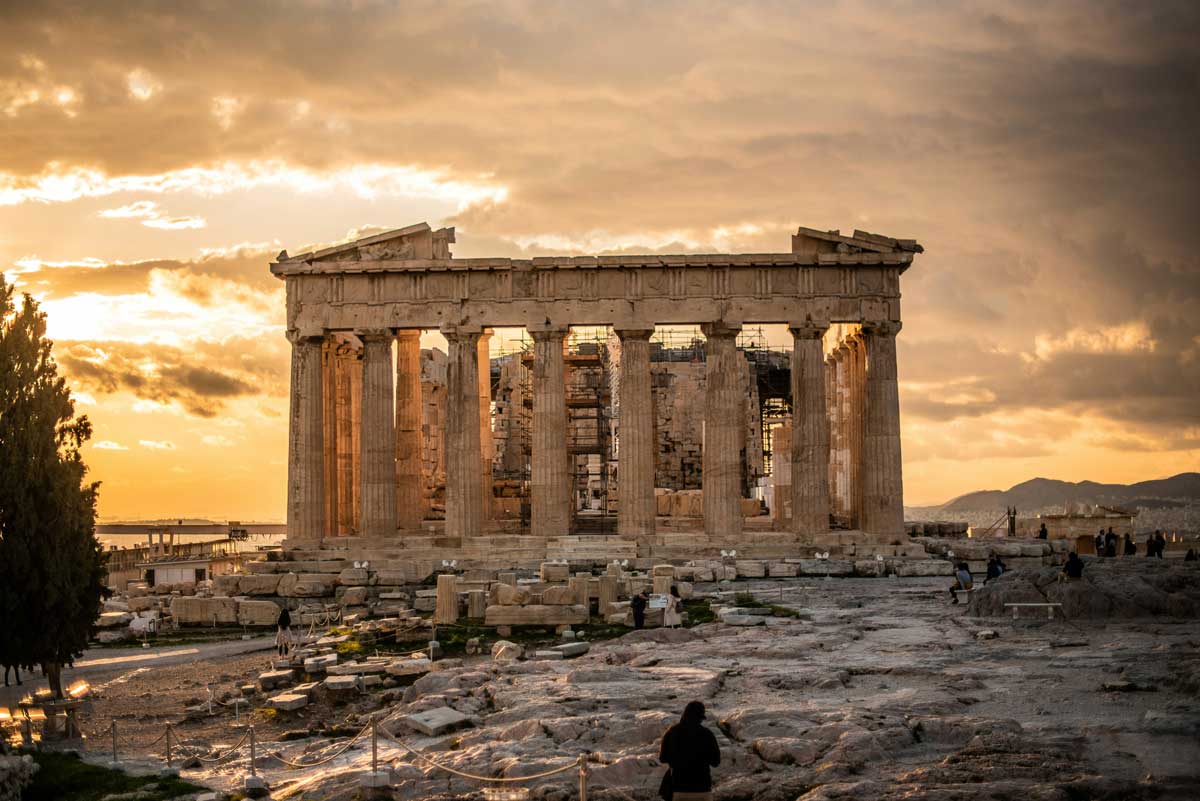
An optical correction to the curved stylobate is combined with a curved entablature at the top. The horizontal beams above the columns follow the platform’s curvature for harmony, creating an optical illusion for the viewer. The entasis of the columns reduces the visual difference between the interior and exterior edges, making the columns appear balanced and symmetrical. All these imperfections were applied as a chain of technical to aesthetic actions.
They may feel like problems occurring in a domino effect, one after another, creating chaos. However, in the case of the Parthenon, everything seems to have been well considered.
How Can Imperfection Look Perfect?
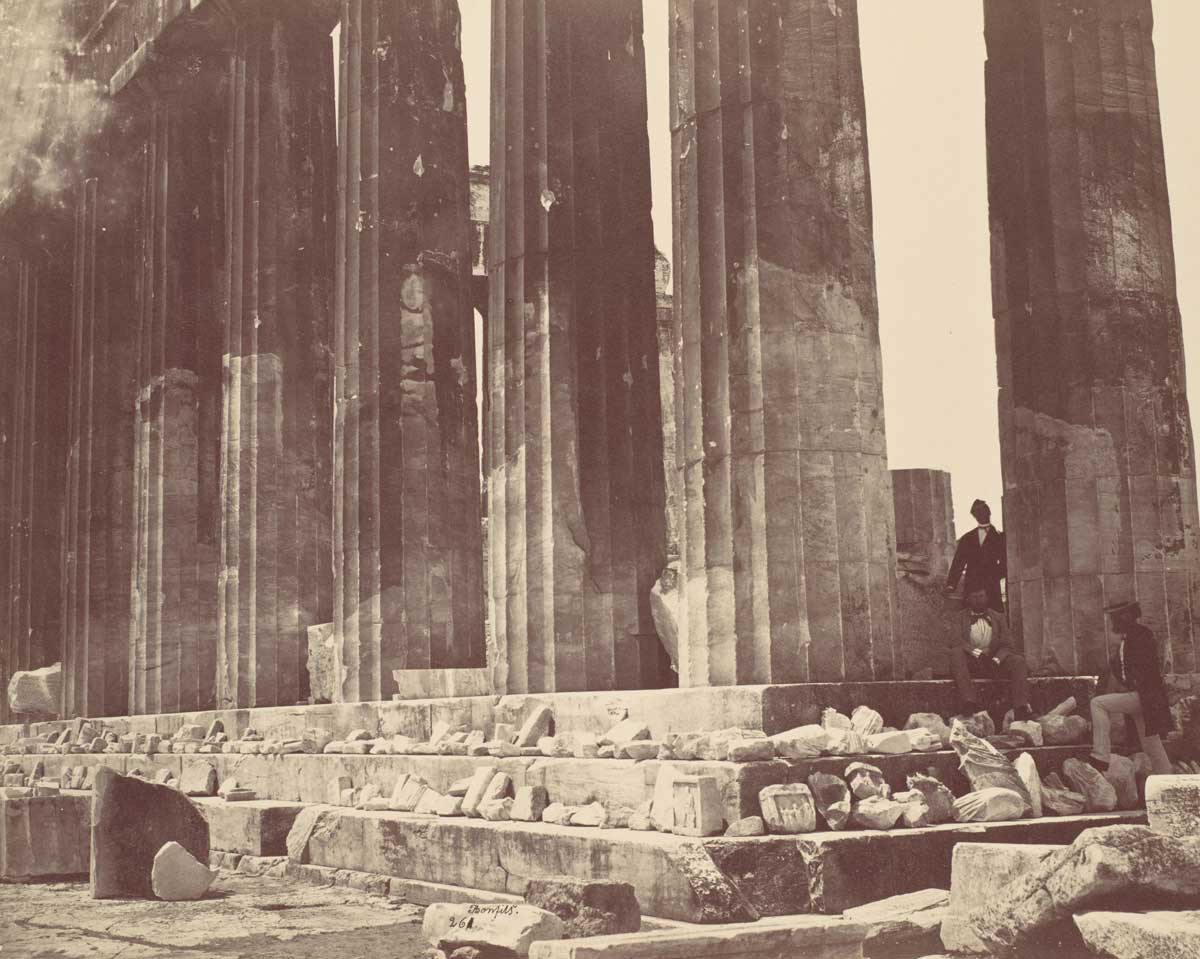
The temple’s subtle curves, entasis, and inward-leaning columns are not obvious at first glance. They create a visual harmony that appears natural. Our understanding of these adjustments comes from many measurements, studies, scholars’ notes, and comparisons with other well-preserved temples from different periods. All these subtle corrections appear perfect precisely because they are so carefully considered. It is impressive how every detail was meticulously planned, solving both technical and aesthetic concerns.
The Parthenon’s construction lasted at least nine years, based on the official ceremonial opening of the temple in 438 BC, while other refinements possibly continued afterward. The entire construction process involved thousands of workers simultaneously. Inscriptions inform us about master architects, sculptors, stonemasons, laborers, supervisors, and even firms. Considering the Parthenon’s proportions, symmetry, the time invested, and the number of people who worked on it, the final result seems even more remarkable.
The Parthenon demonstrates precise mathematical understanding and advanced engineering knowledge while remaining visually pleasing to our eyes, even after so many years. Everything fits together harmoniously, like pieces of a puzzle. These curves are the result of clever solutions to numerous architectural and visual problems, addressing every aspect of the temple’s design. These well-considered “imperfections” are what make the Parthenon appear perfect!