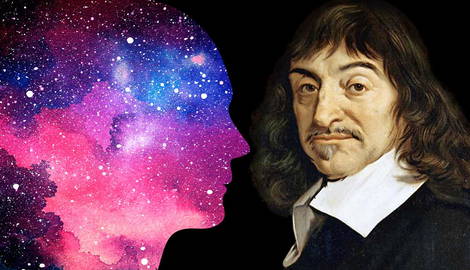

Philosopher and mathematician René Descartes (1596-1650) famously argued that the mind and the brain are different kinds of things. Minds are immaterial and indivisible entities, while bodies are material and divisible. But this view, known as “substance dualism,” poses a challenge to attempts in cognitive science to explain mental states in terms of brain states. This is because substance dualism challenges the scientific method itself: if minds are irreducible to brains, how can they be scientifically studied?
Substance Dualism: An Ancient Philosophical Puzzle

Descartes is arguably the most famous mind-body dualist, but he is not the first. The philosophical discussion of how the mind relates to the body dates back to ancient Greece, where the philosopher Plato presented one of the earliest systematic treatments of this question.
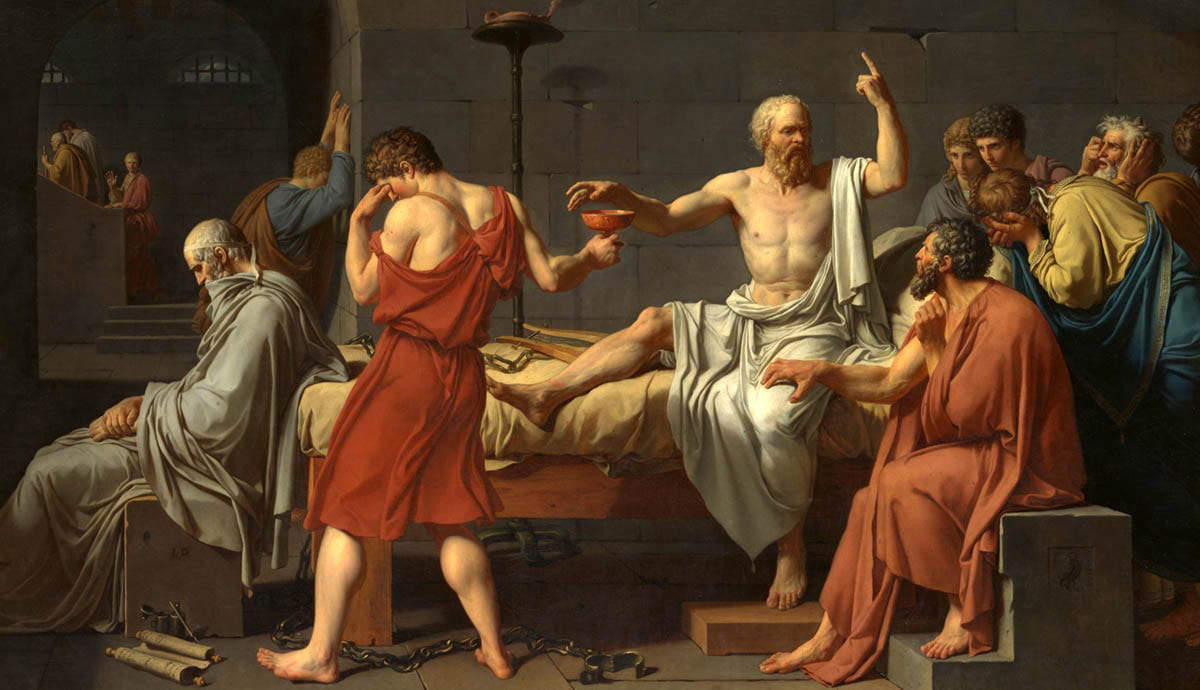
In Plato’s dialogue Phaedo, Socrates sets out to determine whether “the soul” (psuchê), that which separates living and dead things, is immortal. For if an argument can be found to show that the soul has this property, then it must be distinct from the body, which is perishable.
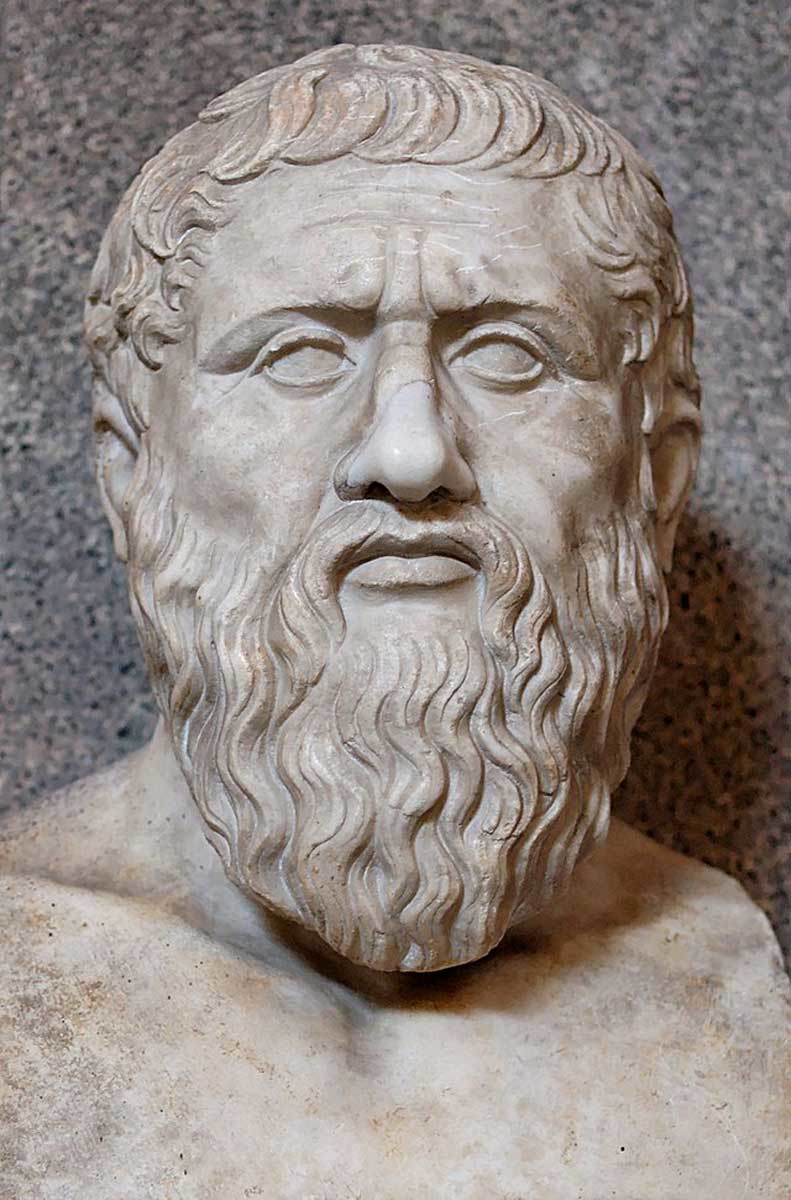
Socrates explores a few different arguments for this claim. The one most germane to our discussion is the Affinity Argument (Phaedo, 78b-84b). The basic idea is straightforward: things that are perceptible, like bodies in space, are perishable because they are composed of parts. On the other hand, things that are intelligible, like what Socrates calls ‘The Forms’ of Beauty and Justice, are imperishable because, as invariant entities, they are not composed of parts.
But if the soul can uniquely grasp the Forms as objects of knowledge, then it bears more affinity to intelligible things than to perceptible things. In other words, if knowledge of the Forms is possible, then the soul bearing this knowledge must be immortal.
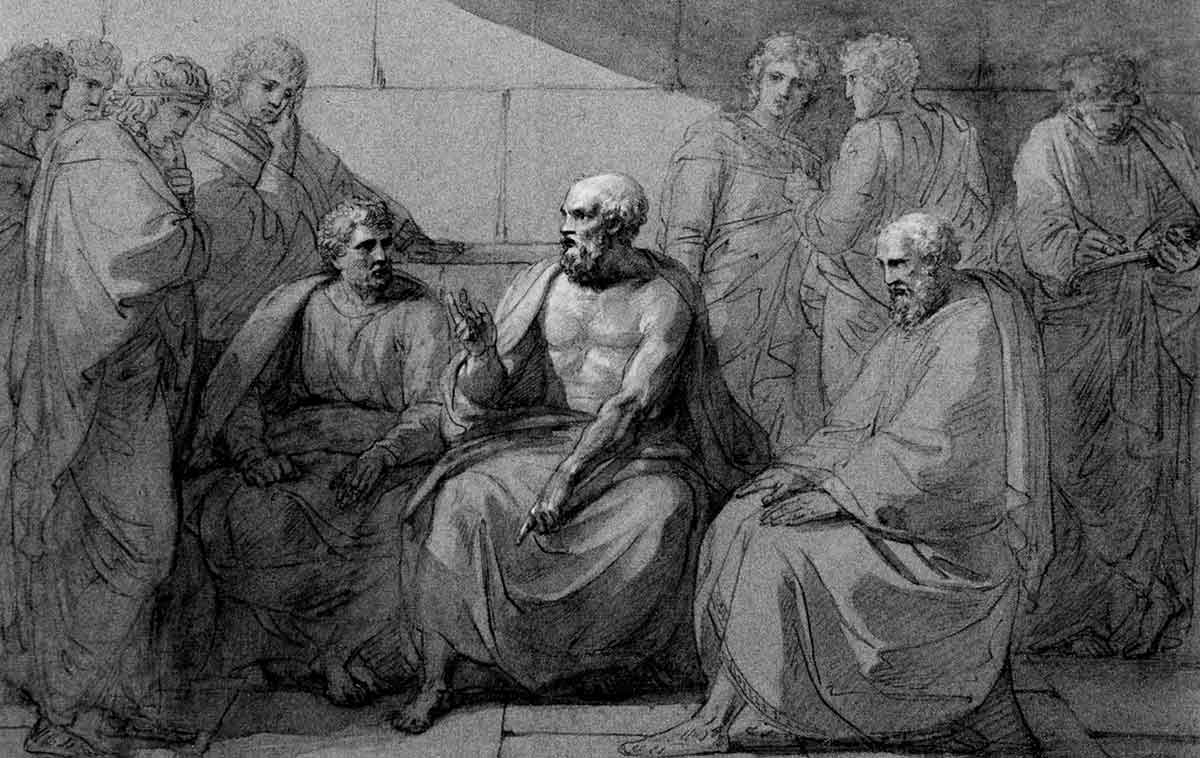
This argument is not decisive, relying as it does on the hypothesis that knowledge of the Forms is possible. But it sows the seed of a feature of arguments for substance dualism that Descartes, more than two thousand years later, will reap: any two things that do not share all the same properties must be metaphysically distinct.
Cogito Ergo Sum: I Think, Therefore I Am

In his Meditations on First Philosophy (1642), Descartes uses “the method of doubt” to establish a secure foundation for knowledge. This method encourages him not to believe any claim about which he can raise any suspicions, no matter how implausible these suspicions might be. His goal is simple: if he can find at least one claim that is “indubitable,” invulnerable to all doubt, then it may be a secure foundation for knowledge.
Descartes offers the cogito as this indubitable claim:
So after considering everything very thoroughly, I must finally conclude that this proposition, I am, I exist, is necessarily true whenever it is put forward by me or conceived in my mind.
Imagine this radical doubt: the entirety of your conscious experience, your perceptions, your memories, your emotions, and so on, is an illusion. Perhaps a deceptive God made you wholly fallible, or your experiences are engineered in a vat, divorced from the real world. Either way, Descartes claims the cogito remains unscathed because one could be radically deceived only if one exists. “I exist” is therefore a foundational article of knowledge because it survives Descartes’ method of doubt.
Descartes’ Substance Dualism

If the cogito is a foundational piece of knowledge, can we extract from it a standard by which to evaluate other knowledge claims, like substance dualism? Descartes thinks so:
I am certain that I am a thinking thing. Do I not therefore also know what is required for my being certain about anything? In this first item of knowledge, there is simply a clear and distinct perception of what I am asserting.
So, Descartes believes that the cogito is a foundational piece of knowledge because its truth can be clearly and distinctly perceived.
What does this have to do with substance dualism? The answer is simple: if Descartes clearly and distinctly perceives the separation of his mind and body, then substance dualism must be true. Clear and distinct perception is a mark of knowledge. He writes:
…I have a clear and distinct idea of myself, in so far as I am simply a thinking, non-extended thing; and on the other hand, I have a distinct idea of body, in so far as this is simply an extended, non-thinking thing. And accordingly, it is certain that I am really distinct from my body, and can exist without it.
Descartes believes that the mind and body are different things, different substances, because he clearly and distinctly perceives that they have different properties. Minds are essentially non-extended, thinking things, while bodies are essentially extended, non-thinking things. And the lynchpin of this distinction is the cogito: Descartes cannot conceive of himself without a mind that is one whole, but he can conceive of himself without a body that has multiple parts.
The mind and the body are metaphysically distinct because they do not share all the same properties.
Descartes 2.0: David Chalmers “Easy” and “Hard” Problems of Consciousness

One might wonder whether Descartes has gotten away with a bit too much here. Can we not be mistaken about what we clearly and distinctly perceive? And even if we can’t be mistaken, why should a clear and distinct perception of one thing entail that it is distinct from another, like Descartes maintains it does about mind and bodies?
Issues here become complicated, and Descartes does attempt to address them. But jumping ahead a few hundred years, let’s consider how the philosopher David Chalmers (1966-), perhaps the most famous contemporary dualist about mind and body, thinks through these questions.
Chalmers distinguishes between “easy” and “hard” problems of consciousness. He maintains that easy problems of consciousness, like explaining the mind’s ability to integrate information, control behavior, or focus attention, can be solved by the cognitive sciences. The hard problem of consciousness cannot.
For example, if a cognitive scientist wants to explain how a mind integrates information, Chalmers believes there is no puzzle about identifying the neural mechanism “by which information about internal states is retrieved and made available for verbal report”. His crucial claim is that this neural mechanism is a satisfactory functional explanation of how a mind integrates information. There is nothing left to know. The explanation is complete.
The hard problem of consciousness has no such luck. Suppose a cognitive scientist wants to explain why the integration of information should be accompanied by experience, that is, the way it subjectively feels to integrate information. In this case, Chalmers believes she will come up empty. For there remains an open question of why any cognitive function should be accompanied by experience. An “explanatory gap” lies between cognitive function and conscious experience.
Tying Plato, Descartes, and Chalmers Together
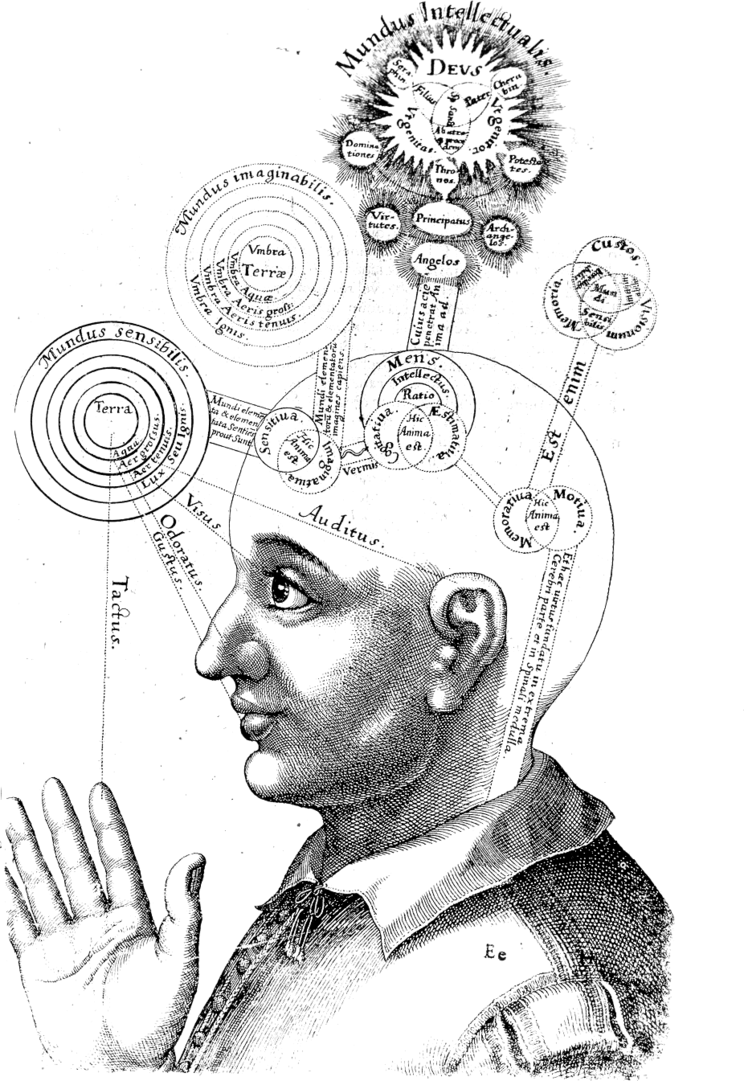
Through Socrates in Phaedo, Plato suggests that the mind is likely immortal and therefore distinct from the perishable body, because it bears affinity to the invariant, unchanging Forms that are its proper objects. Similarly, Descartes’ argument for dualism says the mind is not the body because it can be clearly and distinctly perceived apart from the body. In both cases, we see a move from a kind of knowledge the mind can have to the kind of thing a mind is.
Chalmers’ hard problem of consciousness develops this in more detail by suggesting a connection between conceivability and explanation. If we can conceive of a neural mechanism, like one responsible for integrating information, without consciousness, then this mechanism does not explain consciousness.
In other words, we find in Chalmers’ dualism the very same insistence that consciousness is, in some way, a different kind of thing than the body (or brain), and this is because we can conceive of bodies (or brains) without consciousness being an essential part of them.
How René Descartes’ Substance Dualism Haunts Cognitive Science
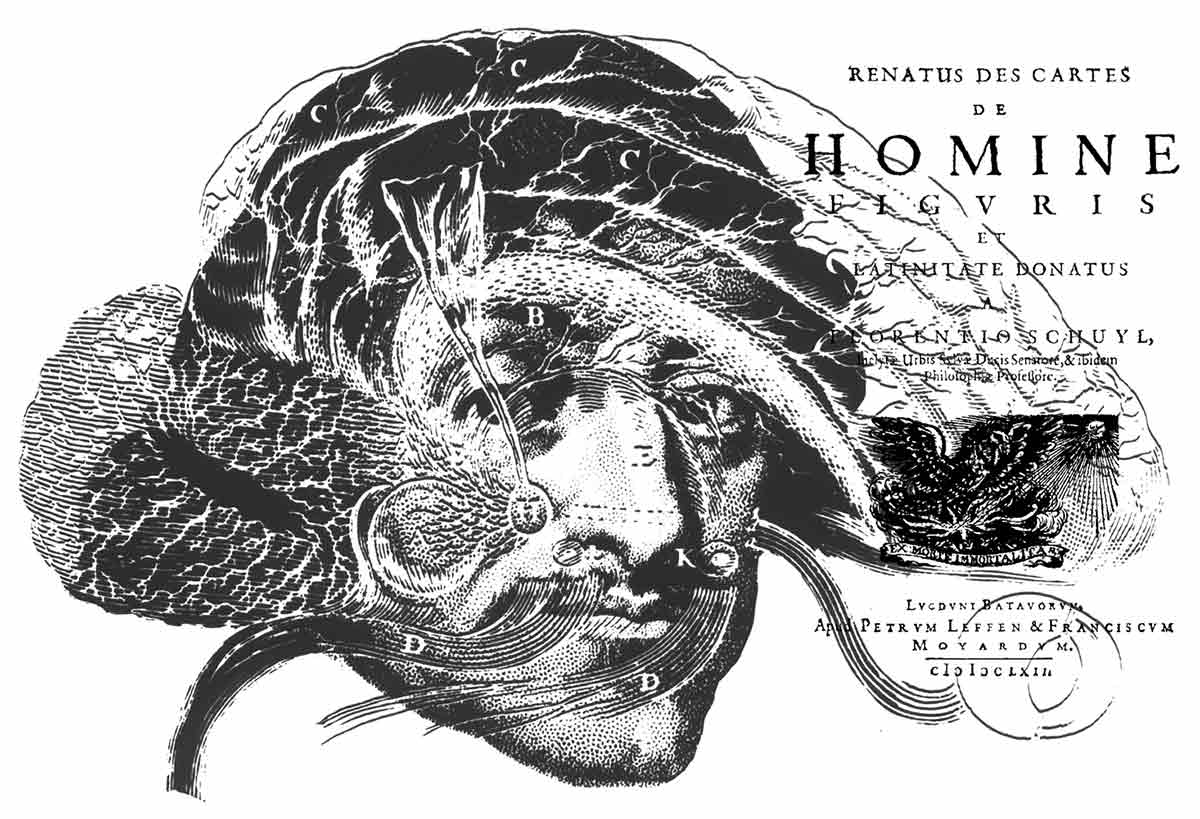
If we agree with Chalmers’ distinction between easy and hard problems of consciousness, the cognitive sciences are by no means without hope. His so-called “easy” problems of consciousness fall well within their purview. Researchers should find no conceptual obstacle preventing them from explaining cognitive functions, like integrating information or focusing attention, in mechanistic neural terms.
But the hard problem, the problem of explaining why any of these functions should be accompanied by conscious experience, bedevils cognitive science. If Chalmers is right, the kind of explanations cognitive sciences can offer, namely, functional explanations of cognitive phenomena, are ill-suited to explaining consciousness. There will always be an explanatory gap forcing us to ask, “But why should this function be accompanied by experience?”
Therefore, the problem of consciousness is not necessarily a scientific problem; it is a metaphysical problem.
Sources
- Chalmers, David (1995). Facing Up to the Problem of Consciousness. Journal of Consciousness Studies. 2(3), 200-19.
- René Descartes, Cottingham, J., & Arthur, B. (1996). Rene Descartes: meditation on first philosophy: with selections from the Objections and Replies. Cambridge University Press.