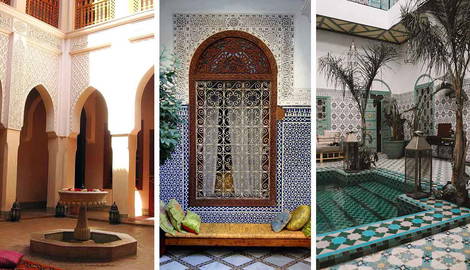
Staying in a riad is one of the most memorable experiences you can have in Morocco—a chance to soak up history while enjoying an intimate, cultural stay. These traditional homes, once owned by wealthy merchants and noble families, were built with the finest materials and craftsmanship of their time. The most historic are found in Marrakech and Fez, but you’ll find stunning riads all over the country. Many have been restored into boutique hotels, blending old-world charm with modern amenities and even luxury.
But first, there’s something you might be wondering…
What Is a Riad?
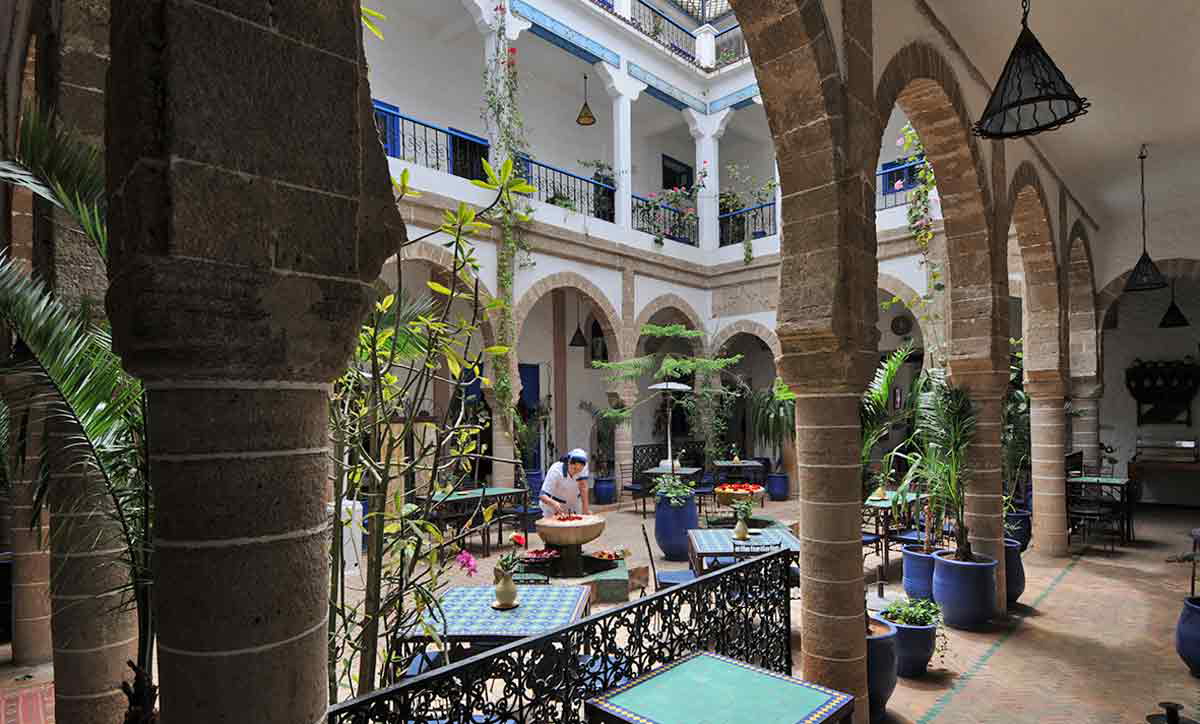
A riad is a traditional Moroccan house built around a central courtyard. Unlike modern buildings that face outward, riads are inward-focused, with thick walls and few exterior windows. Their design keeps out the heat and dust of the bustling medina outside while maintaining a cool, quiet atmosphere inside. They also offer privacy and an escape from the medina’s ubiquitous noise.
The word “riad” comes from the Arabic Riyad, meaning “garden,” reflecting the lush greenery and fountains often found inside these homes. Moroccan riads date from the 17th to the 19th century and were mainly constructed for noble families, wealthy merchants, and high-ranking officials.
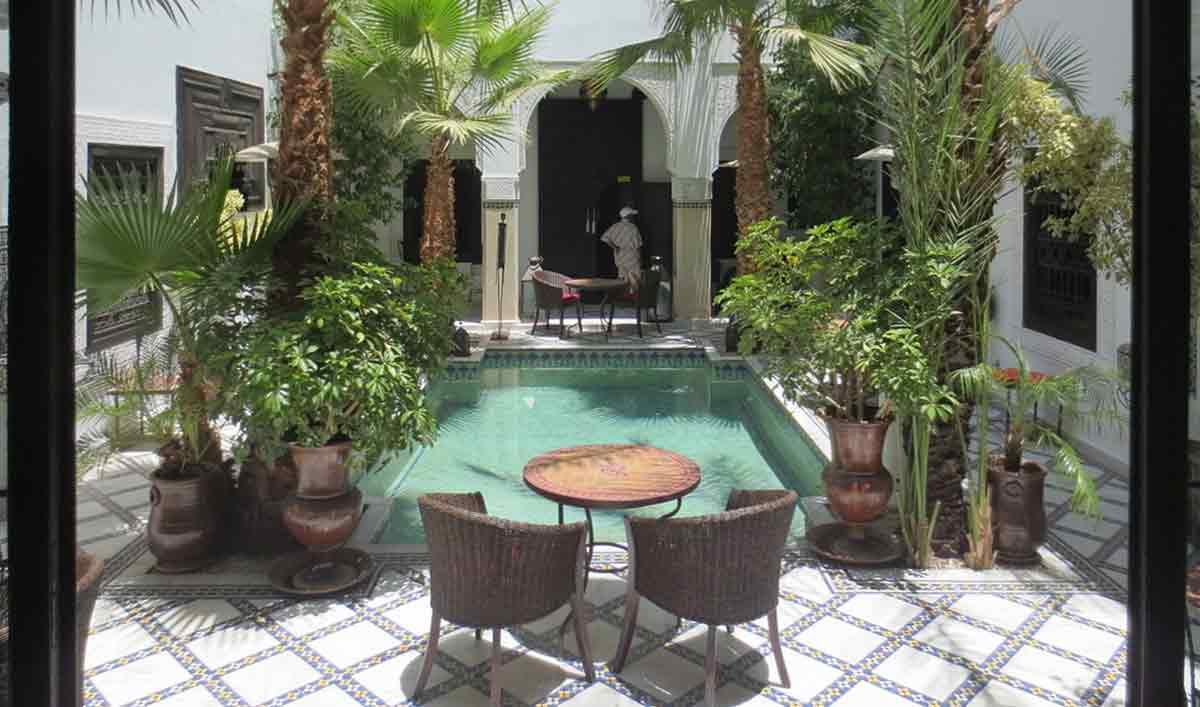
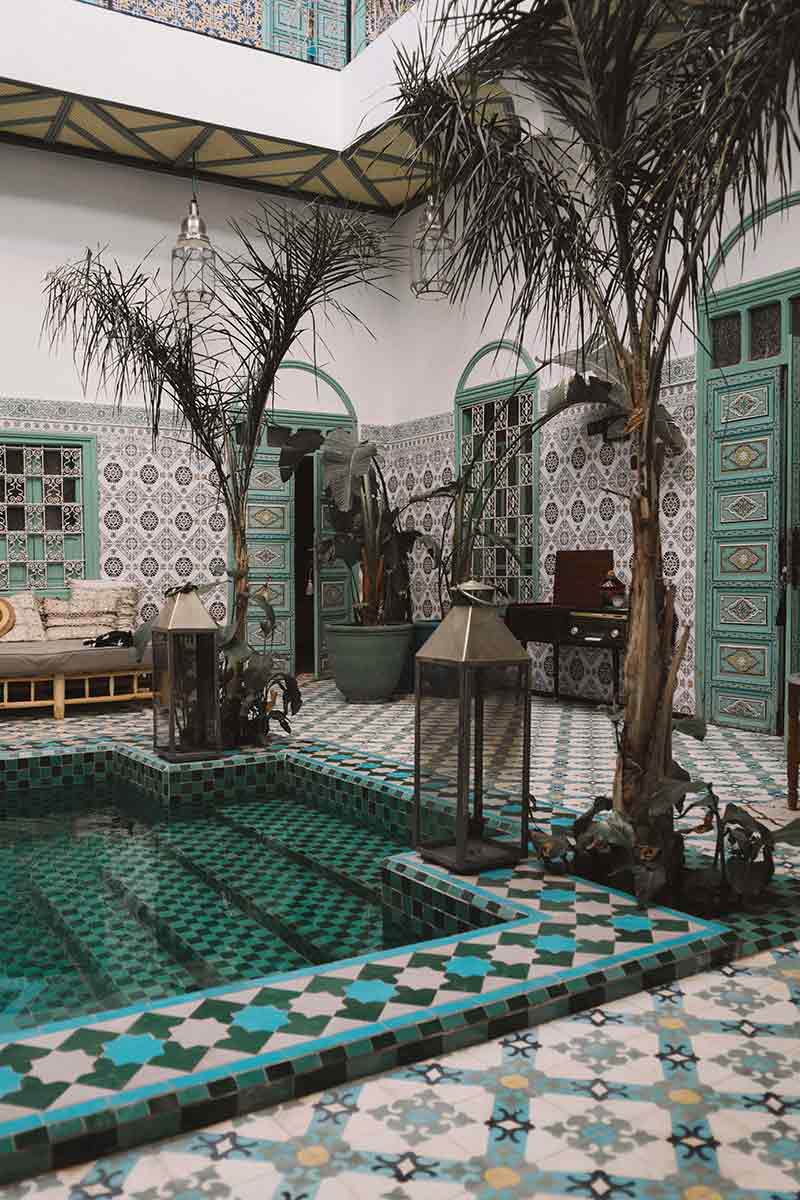
Riads were essentially status symbols, with owners showcasing their wealth through elaborate traditional tilework (zellij), carved cedarwood ceilings, marble floors, and detailed plasterwork (gebs). Some even had private hammams (bathhouses), large salons for entertaining, and rooftop terraces with views over the medina.
Interesting Fact: You might notice that some riad doors have two parts—one big, one small. The large one was for important guests, like nobility or merchants arriving with their goods. The smaller one was used for everyday entry, so the main door wasn’t constantly opened and exposed to the street and peeping eyes.
When and Why Riads Fell Out of Favor
By the 20th century, many riads were abandoned or fell into disrepair as wealthy families moved to modern homes with updated amenities. French colonial influence also introduced new architectural styles, and changing lifestyles made these large, traditional houses less practical. Some were divided into small rental units; others were left empty as owners moved abroad. Without regular upkeep, many simply crumbled.
In the 1990s and early 2000s, travelers and immigrants—especially from France, Spain, and Italy—began restoring these riads, turning them into boutique hotels and guesthouses. They saw the value in preserving Morocco’s architectural heritage while offering visitors an authentic place to stay within the medinas of Marrakech, Fez, and other historic cities. Some riads are still owned and run by Moroccan families who have adapted their ancestral homes into guesthouses, blending tradition with hospitality.
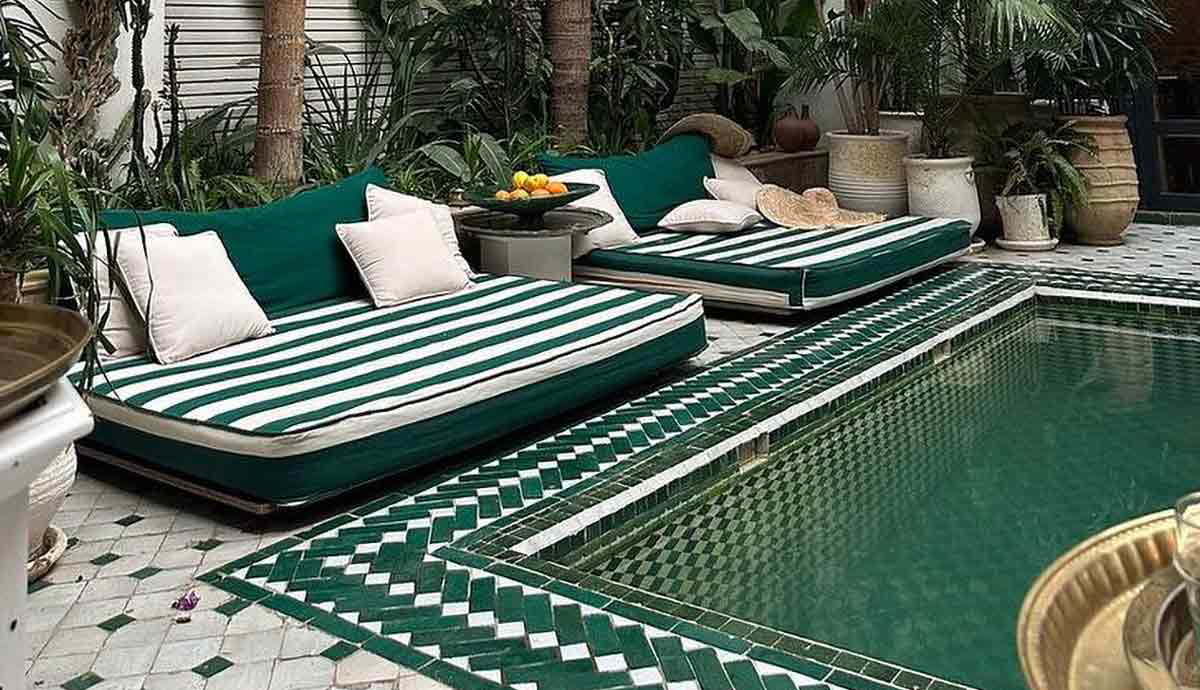
A riad stay is quite a distinct experience and it isn’t for everyone. At the end of the guide, you’ll find some insider tips on what to look for and expect when booking a riad stay in Morocco.
Interesting Fact: Ever stepped into a riad on a scorching summer day and felt instant relief? That’s centuries-old engineering at work! The courtyard design, thick walls, and shaded spaces trap cool air, while fountains and greenery keep humidity in check. Before air conditioning existed, this was Morocco‘s way of beating the heat.
Here are some of the most enticingly historic riads to stay in, in Morocco.
1. Riad Yasmine – Marrakech
Riad Yasmine might be one of the most photographed riads in Marrakech, but its appeal runs much deeper. This 19th-century home has a history tied to Moroccan traders who once lived here. While it has been extensively renovated, it still has its original courtyard design and hand-painted ceilings.
It is run by a small team led by a delightful French couple, who make guests feel more like friends than visitors. The rooftop is a highlight—perfect for morning coffee while listening to the city rise from its slumber.
2. Riad Dar Anika – Marrakech
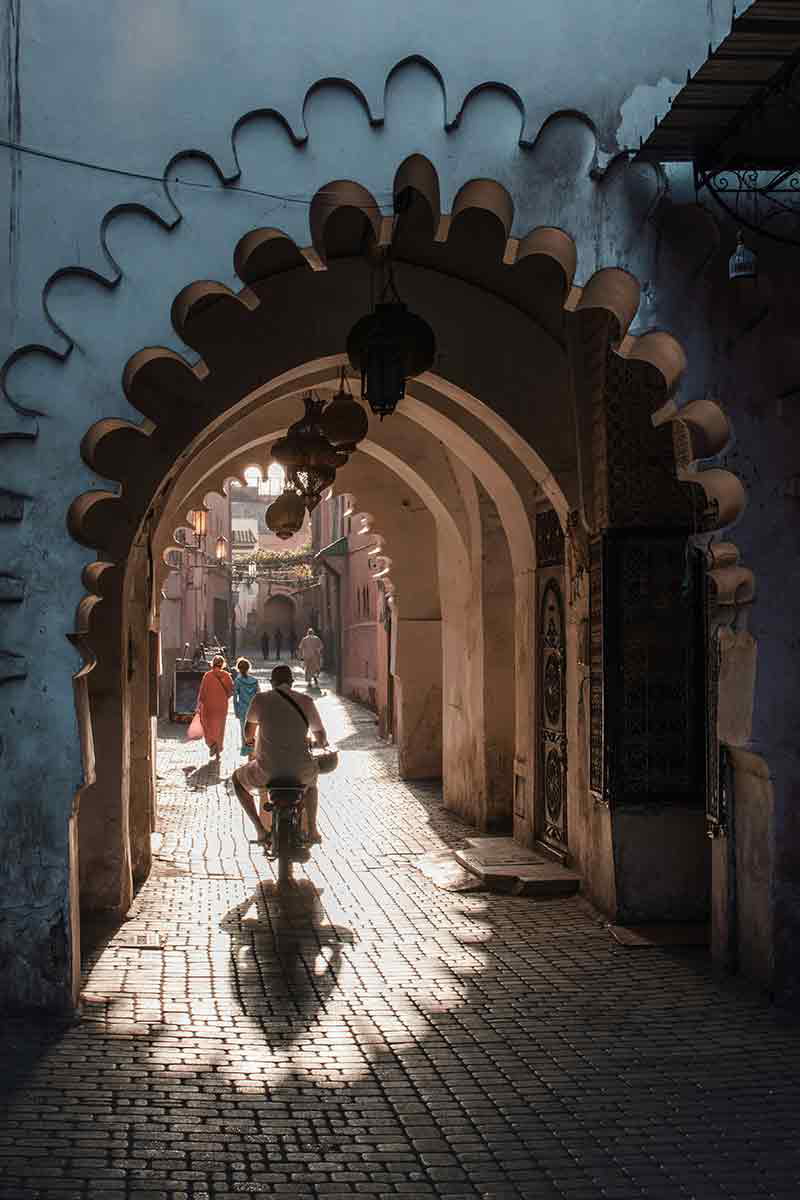
This riad has been around for nearly 200 years, originally owned by a noble family. Today, it is a small, welcoming hotel that blends old and new. The details—intricate woodwork, traditional Moroccan tiles, and old archways—are all reminders of its past. But the best part is the atmosphere. The owners and staff treat guests like family, offering mint tea on arrival and homemade breakfasts that go beyond the usual hotel fare.
Interesting Fact: The wealthiest families could afford the most detailed patterns, often featuring thousands of tiny hand-cut tiles arranged into elaborate geometric designs. The process is so complex that even today, only master artisans know how to do it properly.
3. Riad Laaroussa – Fez
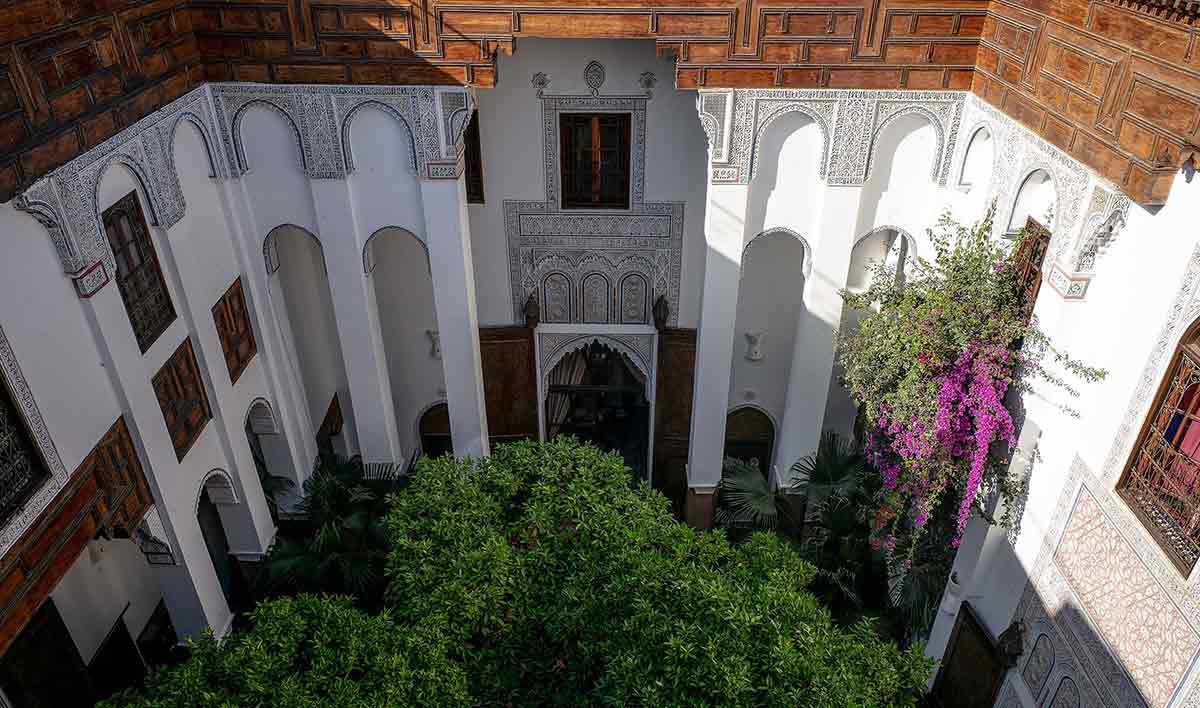
Fez is one of the most historic cities in Morocco, and Riad Laaroussa fits right in. This 17th-century palace was once home to an influential Fassi family. It has since been restored with care, keeping its original fireplaces, cedar doors, and hand-painted tiles.
Staying here feels like being in an old Moroccan movie set rather than a hotel. The owners are a Franco-Moroccan couple who fell in love with the city and turned the house into a riad while keeping its historic charm intact.
4. Riad Kniza – Marrakech
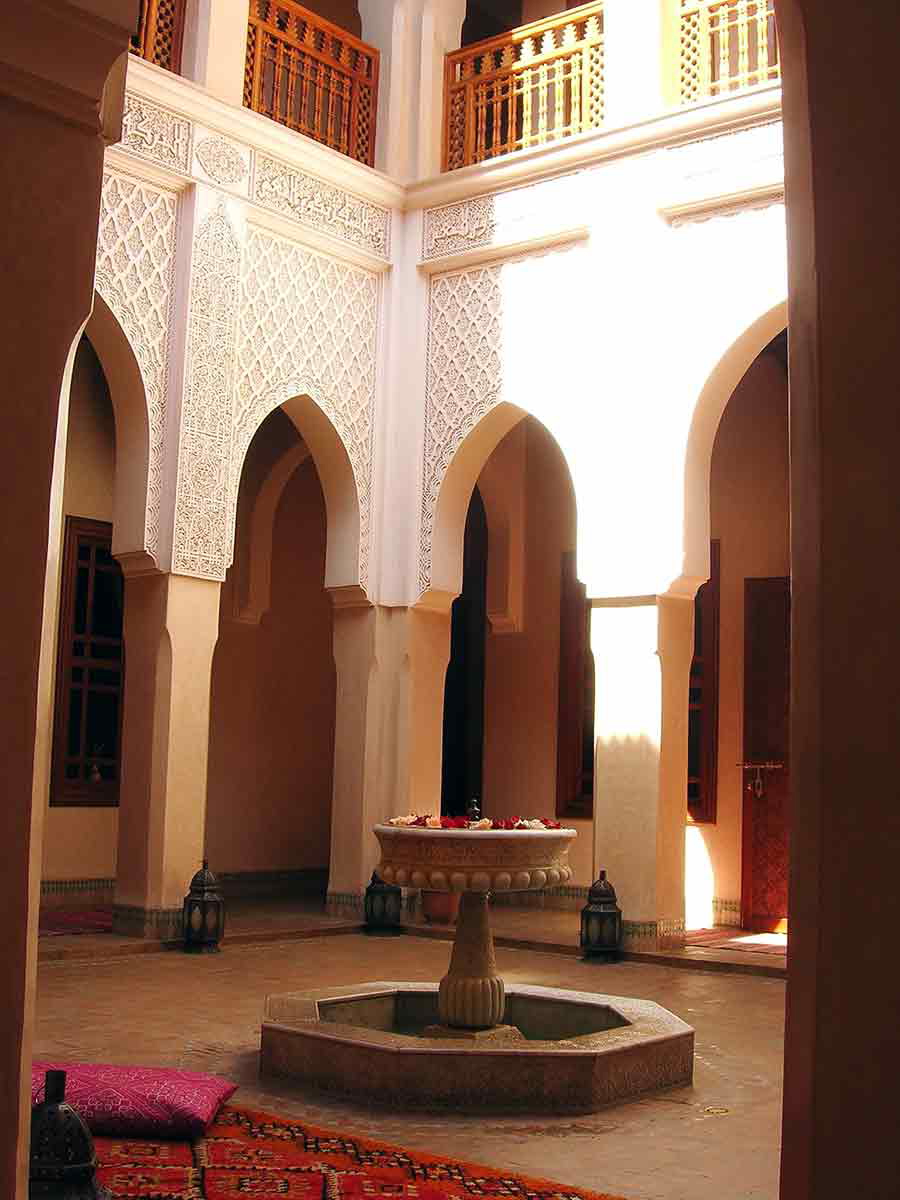
Riad Kniza has seen its fair share of illustrious history. It started out as a private residence in the early 1700s and was later used as a guesthouse for traders and diplomats passing through the city. The current owner, a well-known Moroccan antique dealer, has restored it with gorgeous, traditional decor. This is one of the luxury riads favored by today’s more modern elite (aka Hollywood actors and prominent politicians), all undoubtedly enticed by the spectacular, on-site hammam.
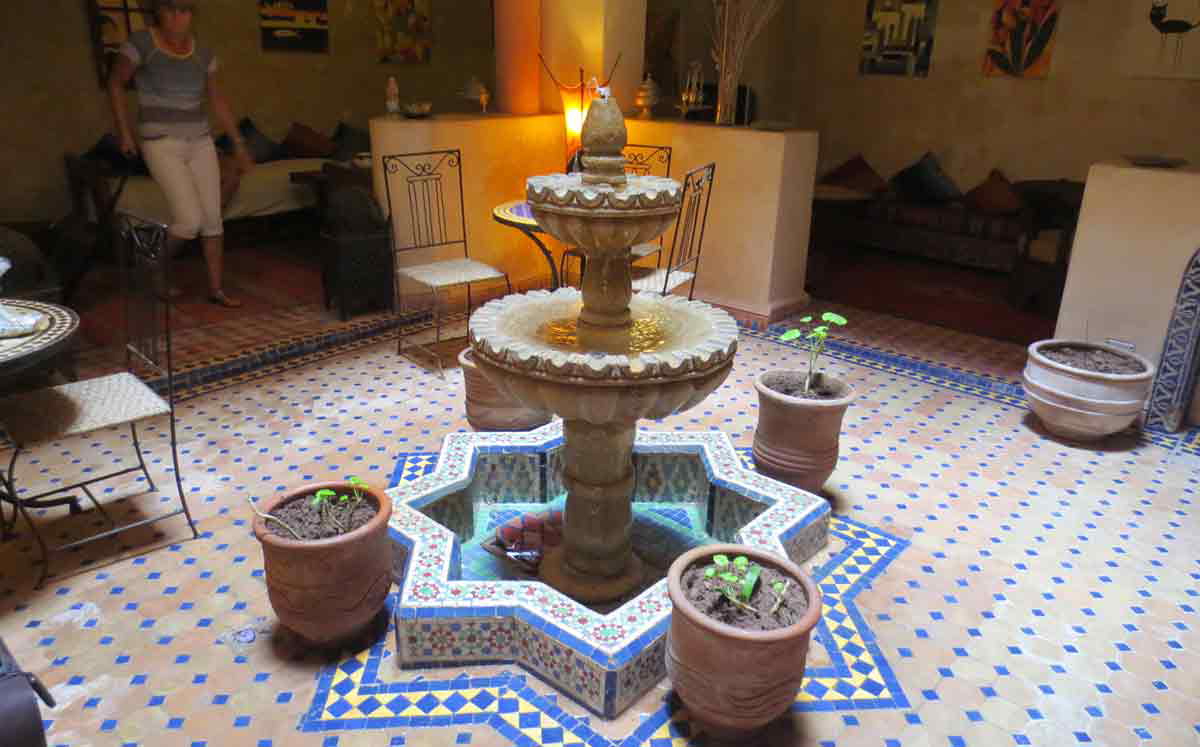
Interesting Fact: The sound of running water from central fountains in riads helped drown out the street noise, created a cooler microclimate in the courtyard, and symbolized prosperity and hospitality in Moroccan culture. The bigger the fountain, the richer the family!
5. Riad Fez – Fez
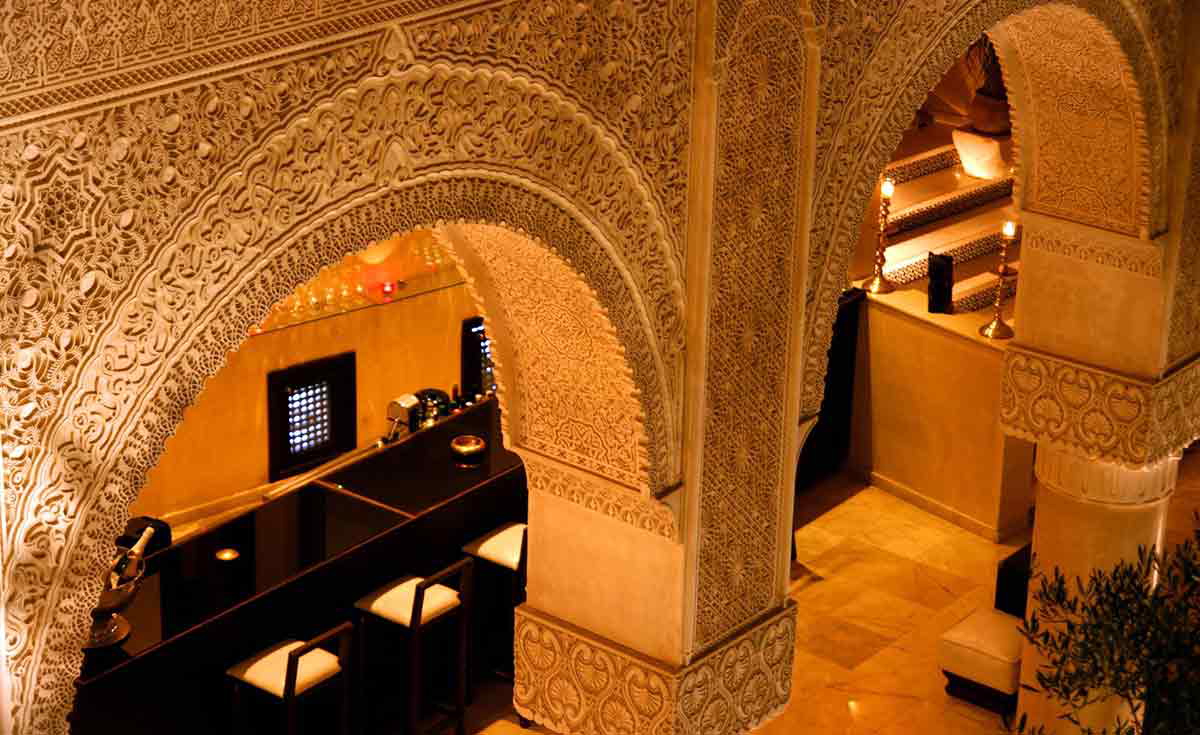
Here’s another Fez gem. This 19th-century home also belonged to a prominent Fassi family and still has its original architectural features—grand archways, mosaic floors, and detailed plasterwork that would have taken years to complete by hand. Unlike smaller riads, this one feels a bit more like a palace, with larger spaces and an enticing mix of Andalusian and Moroccan influences.
Interesting Fact: Moroccan families used to be big—really big—with multiple generations living under one roof. A proper riad had enough space for grandparents, parents, kids, aunts, uncles, and even a few cousins. Some were so large they had separate wings for different parts of the family.
6. Riad Maison Bleue & Spa – Fez
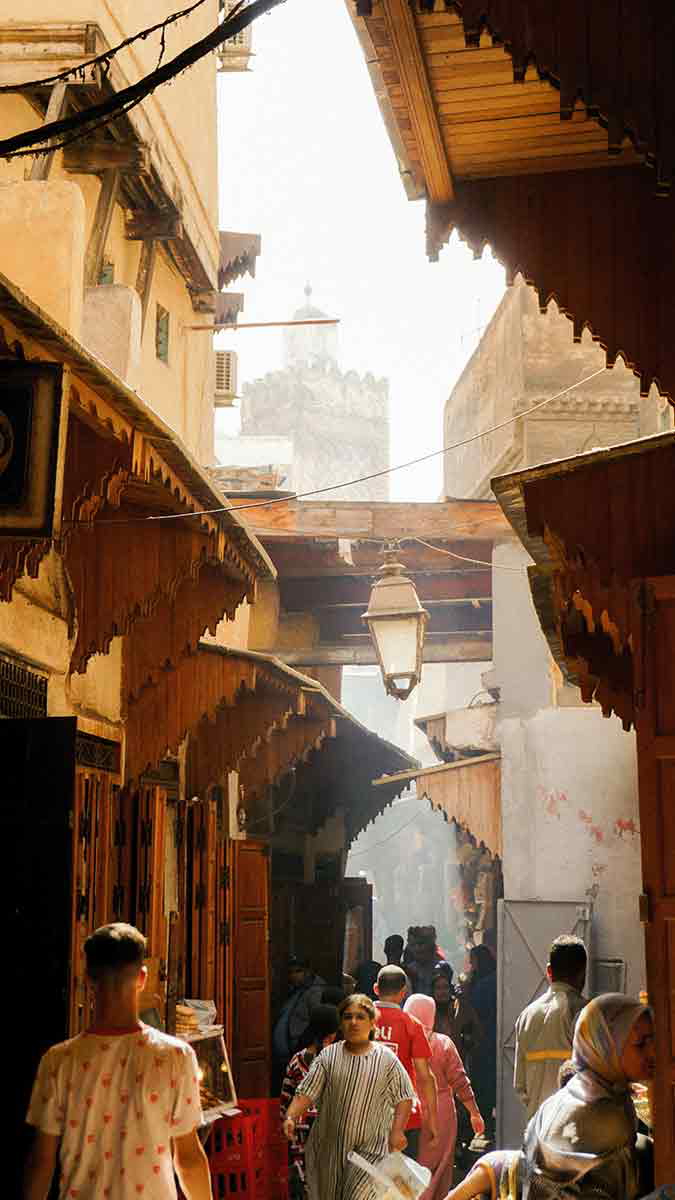
Maison Bleue has a long history—it was built in 1915 by Moulay Bel Arbi El Alaoui, a well-known judge and Sufi philosopher, and his family still owns it today. That family connection gives it a more personal feel than many other riads, making the overall atmosphere very relaxed.
It is a great choice if you want to soak up some riad charm without too much old-school formality. The riad boasts a pool, deluxe spa, hammam, restaurant, and bar.
7. Riad Enija – Marrakech
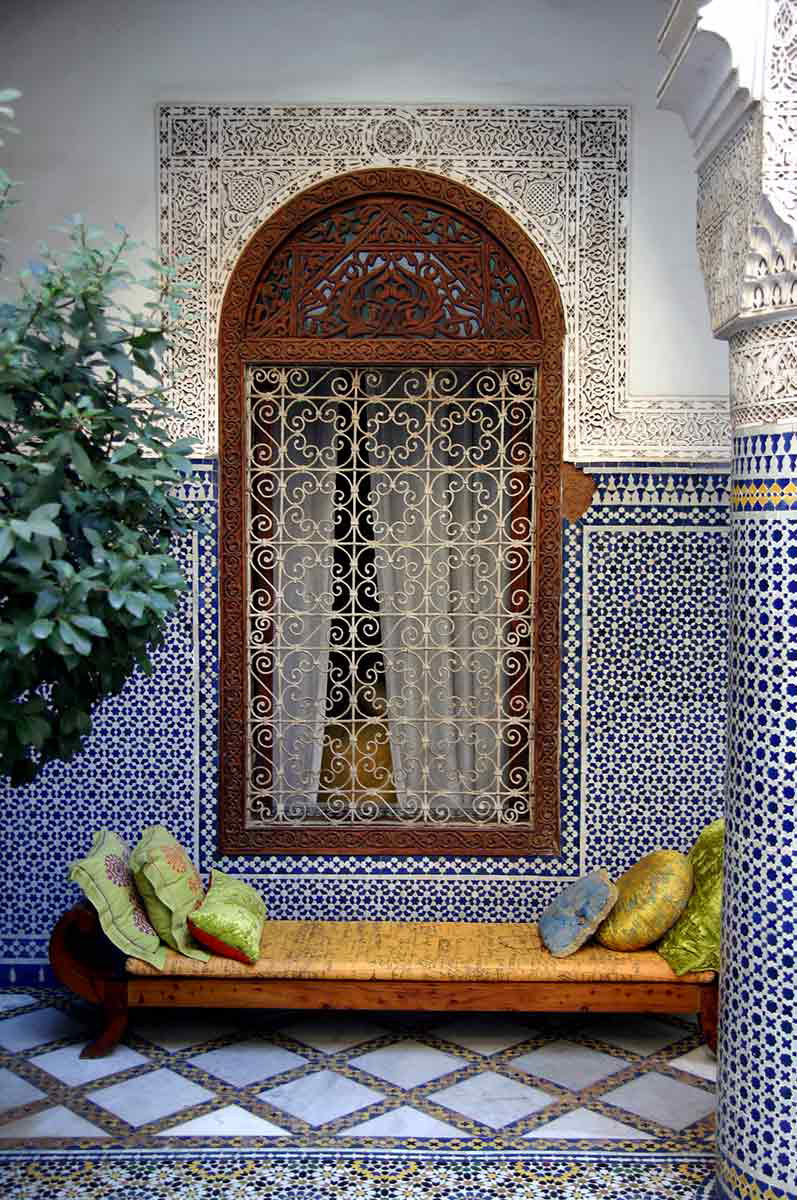
Originally a merchant’s house from the 18th century, Riad Enija has been carefully restored to keep its historic features. The current owners, a Swedish architect and a Swiss designer, took over the property and brought it back to life while keeping everything as authentic as possible.
The riad has an interesting mix of Moroccan tradition and European restoration, but without feeling overly polished or gentrified. It is quiet, laid-back, and full of character.
8. Riad Al Makan – Fez
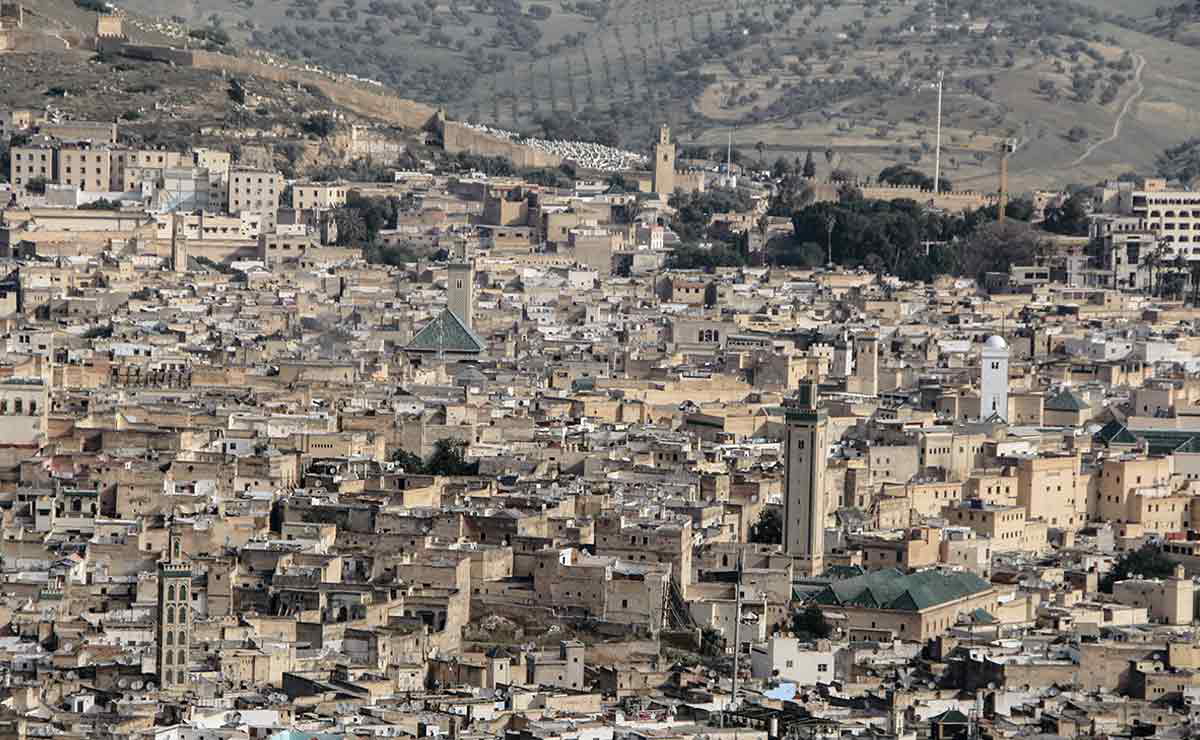
This riad is not as well known as some others, but it has a deep history. The building dates back to the 1800s, and much of its original woodwork and tilework remains intact. It was restored by a local family who now runs it, giving it a more homely feel than some of the larger riads in the city. The terrace has one of the best views of the Fez Medina, especially at sunset.
Interesting fact: While riad rooftops are excellent viewing platforms nowadays, they were traditionally used for drying clothes, growing herbs, and even sleeping on hot summer nights when the inside of the house was too warm.
9. Riad Ksar Ighnda – Near Ait Benhaddou
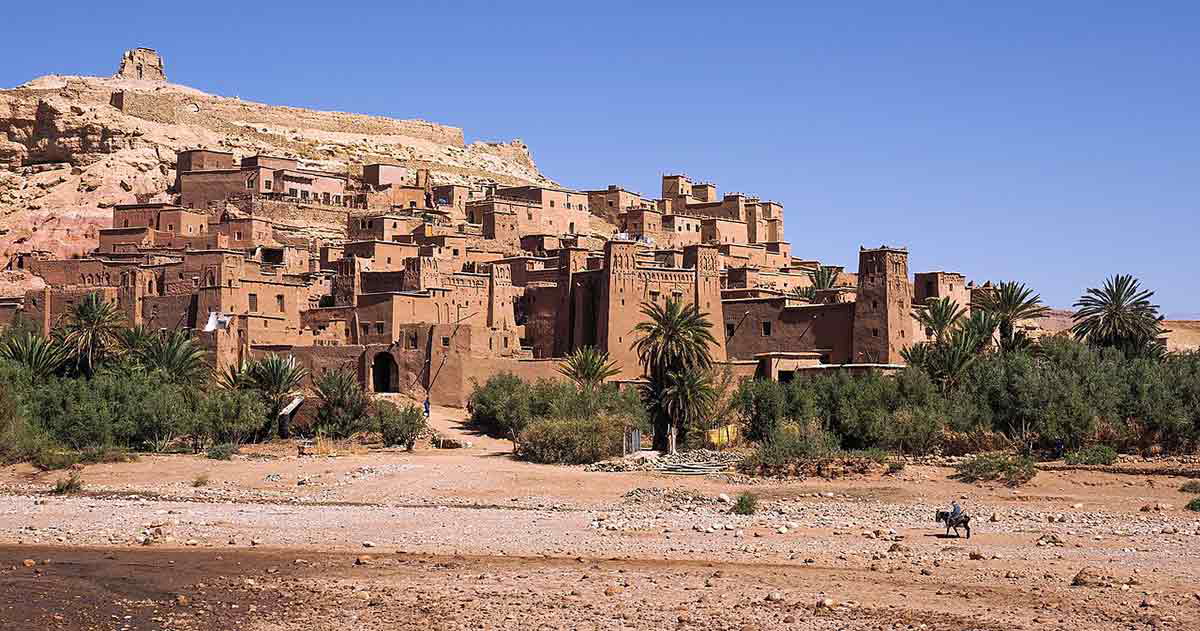
Unlike the others on this list, Riad Ksar Ighnda isn’t in a city—it is near Ait Benhaddou, a UNESCO-listed village that looks straight out of a movie (because it has been in many). The riad is built in a kasbah style, blending with the desert landscape.
While it has been renovated for modern comfort, it still feels like a step back in time. This is a good stop for a more traditional stay if you’re heading toward the Sahara.
10. Riad Le Calife – Fez
This small, family-run riad was built in the 19th century and has been carefully restored with all its original details. It is owned by a couple who personally welcome each guest, making the vibe very personal. The rooftop bar is a great place to relax after a day in the medina, and the atmosphere is more intimate than some of the larger riads in town.