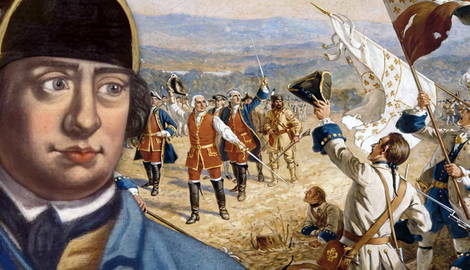

During the 1700s, warfare in North America exposed the weakness of conventional European military doctrine. Dense forests, vast distances, and resourceful enemies demanded new tactical responses. Rogers’ Rangers emerged during the French and Indian War as a revolutionary solution to this challenge. Operating far ahead of conventional forces, they conducted reconnaissance, raids, and ambushes using tactics adapted to the frontier environment. Their methods influenced British, American, and later global military practice. Find out how Rogers’ Rangers were formed, how they fought, and how they inspired modern light infantry and special operations forces.
European vs Frontier Warfare
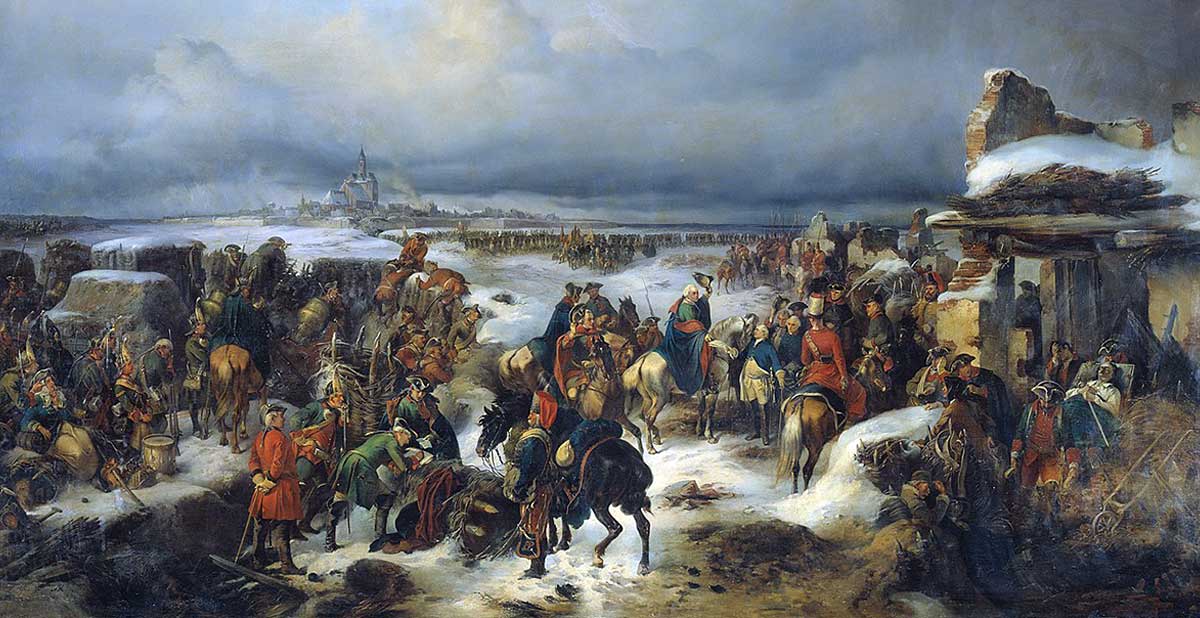
European armies that arrived in North America in the mid-18th century were trained for a style of warfare ill-suited for the continent they were fighting over. Linear tactics, rigid drill, and formal battlefield maneuvers were suited for open terrain, where disciplined volleys and massed formations could be decisive. In the forests of North America, however, visibility was limited, movement was slow, and regular formations quickly broke apart. Dense woodland, swamps, rivers, and harsh winters undermined conventional tactics and eroded the advantages of European discipline.
Logistics and intelligence further compounded these difficulties. Armies operated at the end of long and vulnerable supply lines, relying on rivers or narrow trails that were easily disrupted. Accurate maps were scarce, and commanders often lacked reliable information about enemy movements or terrain. Small bands of enemy warriors could disappear into the wilderness, striking supply convoys or isolated outposts before retreating back into the undergrowth. European officers trained for continental warfare struggled to adapt.
In contrast, Indigenous warfare emphasised mobility, concealment, and surprise. Small war parties moved quickly, exploited terrain, and relied on attritional ambushes rather than decisive battles. These methods were often adopted by French colonial forces and their Indigenous allies, giving them a marked advantage in frontier fighting. Early British campaigns suffered repeated setbacks as conventional units failed to protect settlements or secure lines of communication. The cumulative effect of these failures created mounting pressure for adaptation. Traditionalists reluctantly admitted a new type of soldier was needed.
Rogers’ Rangers
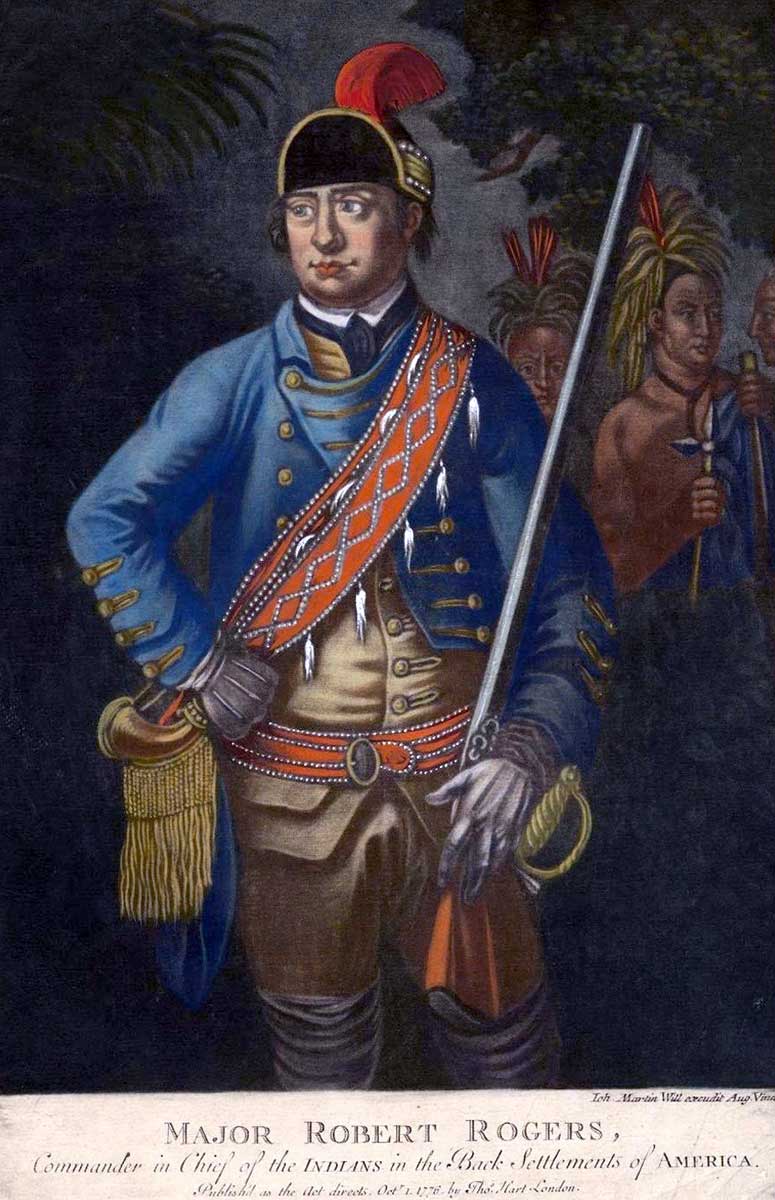
The creation of Rogers’ Rangers in 1755 was drawn from the experience of their founder, Major Robert Rogers. Born in New England and raised on the edge of the colonial frontier, Rogers grew up in a world shaped by wilderness travel, hunting, and intermittent conflict. Unlike many British officers, his familiarity with forested terrain and Indigenous modes of fighting was practical rather than theoretical. He understood that success in North America required adaptability, local knowledge, and initiative rather than rigid adherence to European drill.
Rogers recruited woodsmen, hunters, trappers, and frontier settlers. These men were accustomed to long-distance travel, marksmanship, and survival in harsh conditions. Physical endurance, fieldcraft, and independence were valued more than formal military appearance or parade-ground discipline. Equipped for mobility rather than spectacle, Rangers carried lighter loads and relied on speed, stealth, and self-sufficiency. This approach produced a force capable of operating deep in contested territory for extended periods without direct support.
Equally important was the unit’s semi-independent command structure. Rogers was granted autonomy by British authorities, allowing him to plan and execute operations with minimal interference from conventional commanders. Early British failures had demonstrated that traditional methods were ineffective on the frontier. While the British Army remained institutionally conservative, the pressures of colonial warfare created space for experimentation. Rogers’ leadership bridged this gap, translating frontier realities into a form the British military could employ.
The Rules of Ranging
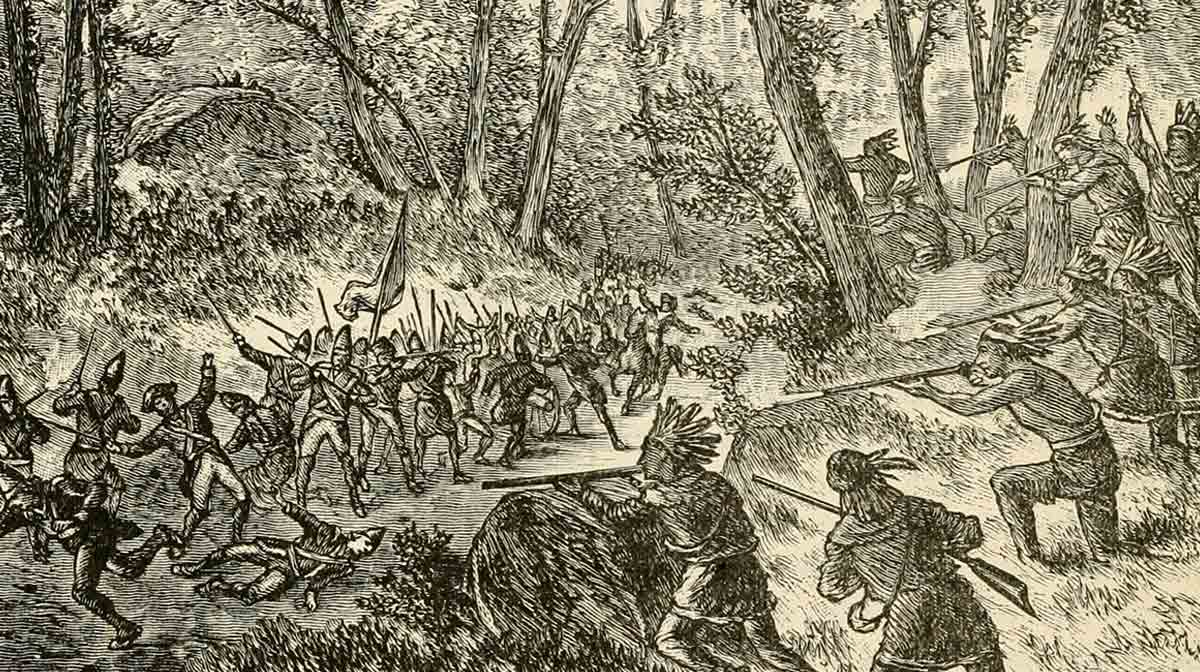
Rogers’ Rangers fought in small, flexible units designed for reconnaissance and independent action rather than pitched battles. Patrols ranged deep into contested territory, gathering intelligence on enemy movements, terrain, and supply routes. Unlike conventional troops, Rangers were expected to operate for days or weeks without support, navigating forests, rivers, and winter landscapes that defeated regular formations. This emphasis on reconnaissance allowed British commanders to anticipate enemy actions rather than react blindly.
Combat relied on surprise and speed. Rangers specialised in ambushes, raids on outposts, and attacks against supply lines, striking quickly before disappearing into the wilderness. Terrain was treated as a weapon: forests provided concealment, frozen rivers became roads, and darkness offered protection rather than danger. Camouflage, dispersed formations, and rapid movement replaced bright uniforms and close-order drill. These methods reduced casualties while maximising psychological impact, forcing enemies to remain constantly alert and defensive.
Training reinforced this approach. Rogers codified his experience in Rogers’ Rules of Ranging, a set of practical instructions covering movement, security, discipline, and survival. The rules stressed awareness and cooperation, encouraging Rangers to think independently while maintaining cohesion. Although simple by modern terms, they represented a radical departure from European military manuals of the period. By formalizing frontier warfare into doctrine, Rogers transformed ad hoc practices into a coherent system. The Rangers’ methods were revolutionary not because they were entirely new, but because they successfully integrated Indigenous tactics with European military organization, creating a model suited to the realities of North American warfare.
The French and Indian War
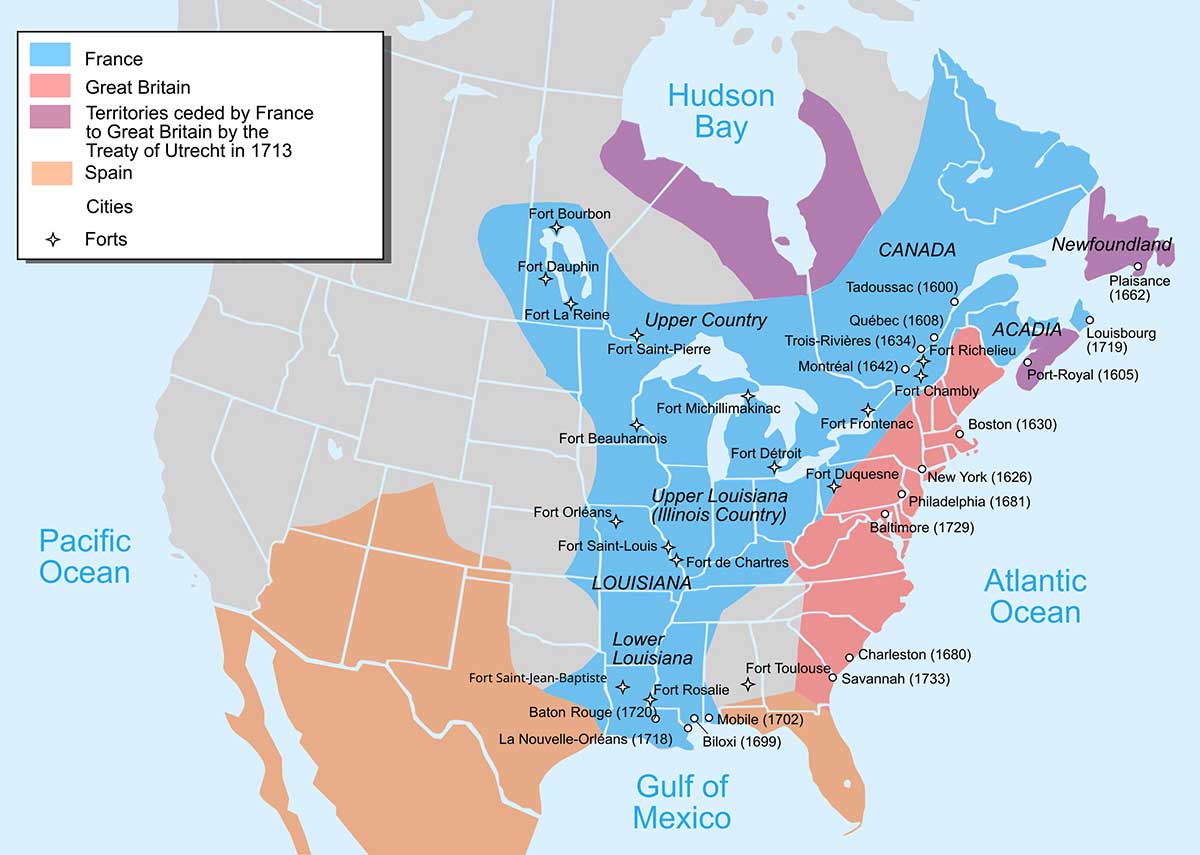
During the French and Indian War, Rogers’ Rangers saw continuous service along the contested frontier between New York and Canada, where British and French forces competed for control of forts, waterways, and Indigenous alliances. Operating forward of conventional units, the Rangers screened advances, scouted enemy positions, and disrupted French communications. Their ability to move quickly through difficult terrain made them especially valuable in regions where regular troops struggled to maneuver or even survive. Intelligence gathered by Ranger patrols often proved decisive in planning larger operations.
The Rangers frequently operated alongside Indigenous allies, drawing on their knowledge of terrain and warfare. The Ranger Rules seem like common sense to us now but in the context of the 1700s they were revolutionary. In combat against French regulars and their Indigenous allies, the Rangers proved highly effective in small-scale engagements, ambushes, and raids. However, they were never intended to replace conventional forces in major battles or sieges. Their successes depended on mobility, surprise, and favorable conditions. When drawn into prolonged fighting or poorly supported operations, Ranger casualties could be severe. Their battlefield impact was significant, but their role was specialized rather than universal.
Although praised by military historians for their fighting abilities, the Rangers were no stranger to controversy. They were involved in enforcing the expulsion of the Arcadian population from Nova Scotia as well as brutal attacks on Indigenous villages.
The St Francis Raid of 1759 was a dawn attack on an Abenaki village. The Rangers indiscriminately killed men, women, and children, before torching the village. The Rangers suffered heavy casualties on their retreat pursued by vengeful French and Abenaki forces.
Famous Actions
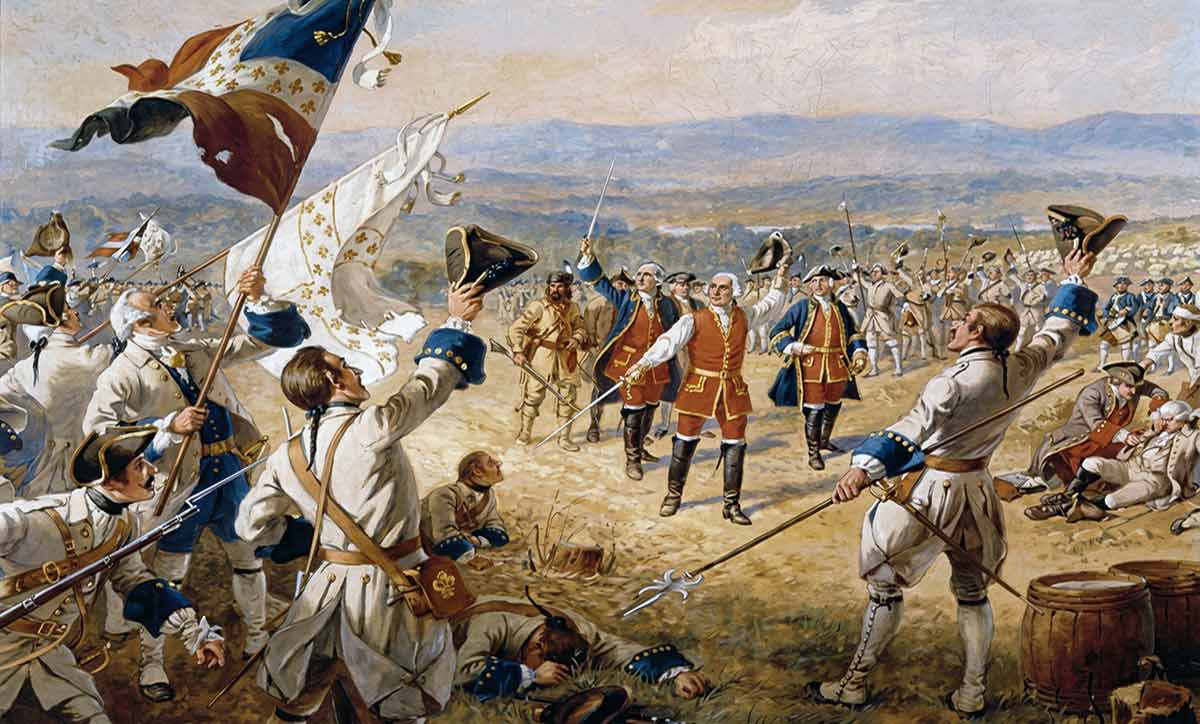
One of the earliest and most celebrated engagements involving Rogers’ Rangers was the Battle on Snowshoes in January 1757. While conducting a reconnaissance near Fort Carillon, Rogers’ force was ambushed by a larger French and Indigenous contingent. Despite heavy casualties, the Rangers executed a disciplined fighting withdrawal, repeatedly turning to ambush their pursuers. Although costly, the engagement demonstrated the Rangers’ ability to survive and cemented their reputation for resilience, leadership, and small-unit cohesion under extreme conditions. It was a marked contrast to Braddock’s defeat at the Battle of Monongahela two years prior.
Rogers’ Rangers also played a critical role in operations around Fort Ticonderoga and the Lake George–Lake Champlain corridor. They provided reconnaissance for British advances, mapped routes through difficult terrain, and screened larger forces from surprise attack. Ranger patrols disrupted French communications, captured prisoners for intelligence, and denied the enemy freedom of movement. These actions rarely produced decisive battlefield victories, but they consistently facilitated conventional operations by reducing uncertainty and protecting vulnerable columns.
Another notable episode was Rogers’ 1758 raid along Lake Champlain toward Montreal, a daring winter expedition that pushed the limits of endurance and logistics. Although the mission ultimately failed due to exhaustion and supply shortages, it highlighted both the strengths and limitations of ranger warfare. Rogers’ willingness to attempt deep penetration raids illustrated the offensive potential of light infantry, but also showed the risks when intelligence or resupply failed. These actions show that Rogers’ Rangers were most effective not as raiders alone, but as an integrated force supporting wider strategic objectives.
Legacy
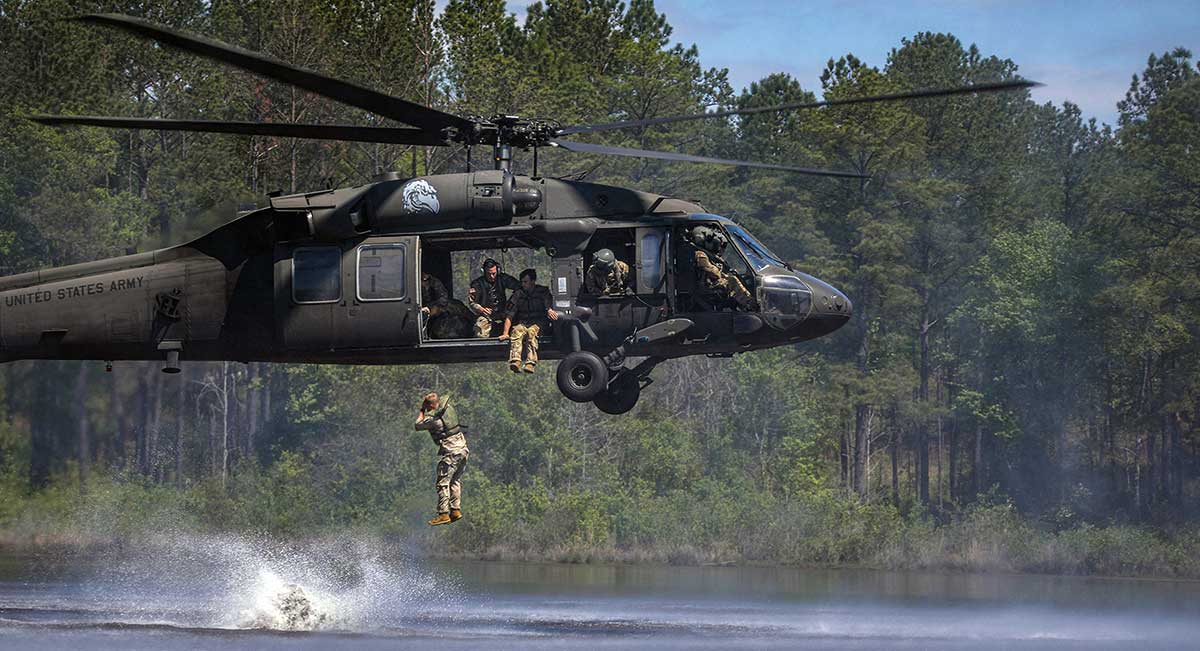
The influence of Rogers’ Rangers extended well beyond the French and Indian War, shaping the development of frontier and light infantry forces in North America. During the American Revolutionary War, both Patriot and Loyalist units adopted ranger-style tactics, employing small, mobile formations for reconnaissance, raiding, and counterinsurgency. In the centuries that followed, the ranger tradition became embedded in American military culture, most visibly in the United States Army Rangers, who continue to emphasise initiative, endurance, and small-unit leadership.
Within the British Army, the lessons of frontier warfare contributed to a growing appreciation for light infantry. Experiences in North America reinforced the value of skirmishers, scouts, and flexible formations operating ahead of the main force. By the late 18th and early 19th centuries, this thinking influenced the creation of dedicated light infantry units and rifle regiments, whose roles echoed many Ranger functions: screening, reconnaissance, and fighting in broken terrain. Although developed in different contexts, these units reflected the same shift away from rigid linear warfare.
The Rangers might be mythologized in the popular imagination but they left an enduring influence on modern soldiering. The 28 original Ranger Rules still have relevant knowledge in them. Many long range reconnaissance forces continue to use the techniques pioneered by Rogers and his men almost three centuries ago.