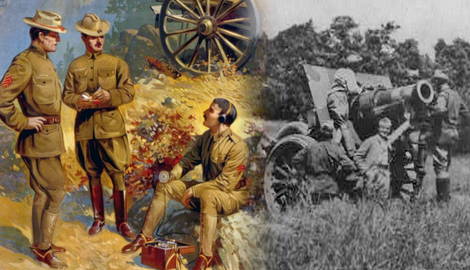

Global weapon capabilities skyrocketed during the 20th century; from individual machine guns capable of firing a thousand rounds per minute to city-flattening atomic bombs, the rapid development of destructive armaments can be attributed to two world wars that challenged world powers physically, emotionally, logistically, and existentially. During World War I, new advancements in chemical warfare, infantry soldier rifles, aerial bombings, and tanks threatened either side, but for the United States, battle-proven artillery remained a most crucial asset.
Technological Advancements
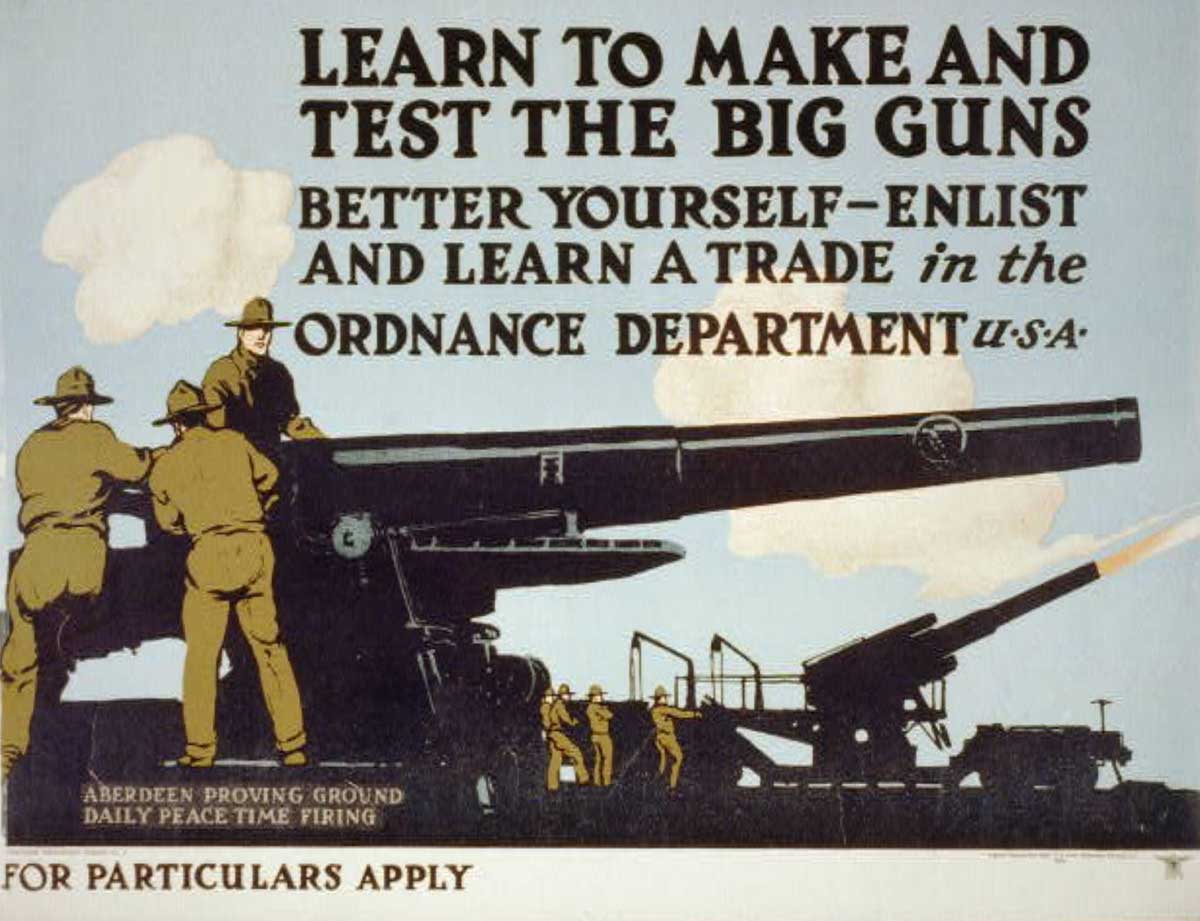
Although invented centuries earlier, howitzers saw their first widespread use during World War I. Categorized by an ability to fire projectiles at both low and high angles of trajectory, howitzers made use of short barrels and a range of projectiles during the Great War. Compared to horse-drawn guns, howitzers were driven to firing points by wheeled and tracked vehicles, greatly reducing emplacement and displacement times, thereby assisting pinned down troops and avoiding enemy counterfire. Improvements in internal and external ballistics transformed artillery from a crude tool to a precise instrument of war.
Internally, scientific advancements regarding propellants gave gun crews greater control over the force that projectiles were fired through gun barrels with. Externally, modern militaries first began to understand specific details of how environmental factors affect points of impact during World War I. With more powerful and accurate indirect fire, artillery barrages from both sides contributed to the deadliest war in human history at the time.
Compared to predecessors in the Spanish-American and American Civil War, United States artillery assets deployed a more diverse array of munitions during World War I. Instead of just striking a target, for example, high explosive shells burst upon impact, delivering additional blast effects on enemy defensive positions. Specialized artillery shells additionally released mustard gas or chlorine, causing previously non-experienced horrors to soldiers during World War I, often leading to burns, respiratory struggles, and mental detriment for years after the conflict’s end.
New Observation Methods
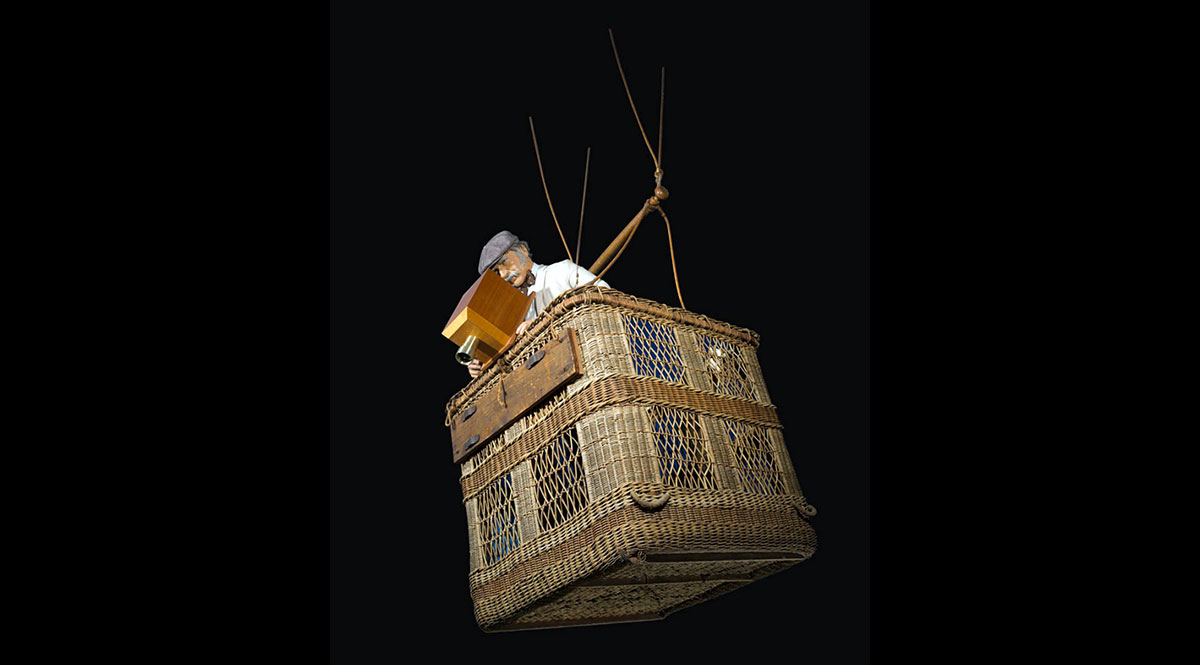
Aside from technological innovations, artillery crews during World War I benefited from refined observation practices. As an indirect fire asset without direct line of sight towards the enemy, artillery was useless without effective targeting procedures. New sighting systems expanded hot air balloon observation during the American Civil War. Forward observers located miles away from howitzer positions improved targeting capabilities by exploiting telecommunications and panoramic telescopes, allowing artillery units to decisively engage desired targets from greater distances.
Just as target identification was crucial, militaries on either side quickly recognized the need to locate and destroy enemy artillery positions. To accomplish this objective, forces used aerial photography, flash ranging, and sound ranging. While antiaircraft artillery jeopardized the safety of aviators and observers in the air, many of whom still used balloon-based platforms, the latter two methods exploited scientific discoveries to identify the points of origin of enemy projectiles.
Flash ranging permitted troops stationed at various observation points to use survey instruments to triangulate enemy artillery positions. This required skilled operators, hardwired communications, and effective coordination. Similarly, sound ranging measured time differences in the arrival of artillery echoes to observation posts to triangulate enemy indirect fire assets. These innovations began the modern era of signature-based counterfire which remains a pressing threat to howitzer crews over a century later. When the United States entered the war in 1917, flash and sound ranging were promptly introduced to General John J. Pershing, and the American Expeditionary Force rapidly adopted these counter-artillery procedures.
Trench Warfare
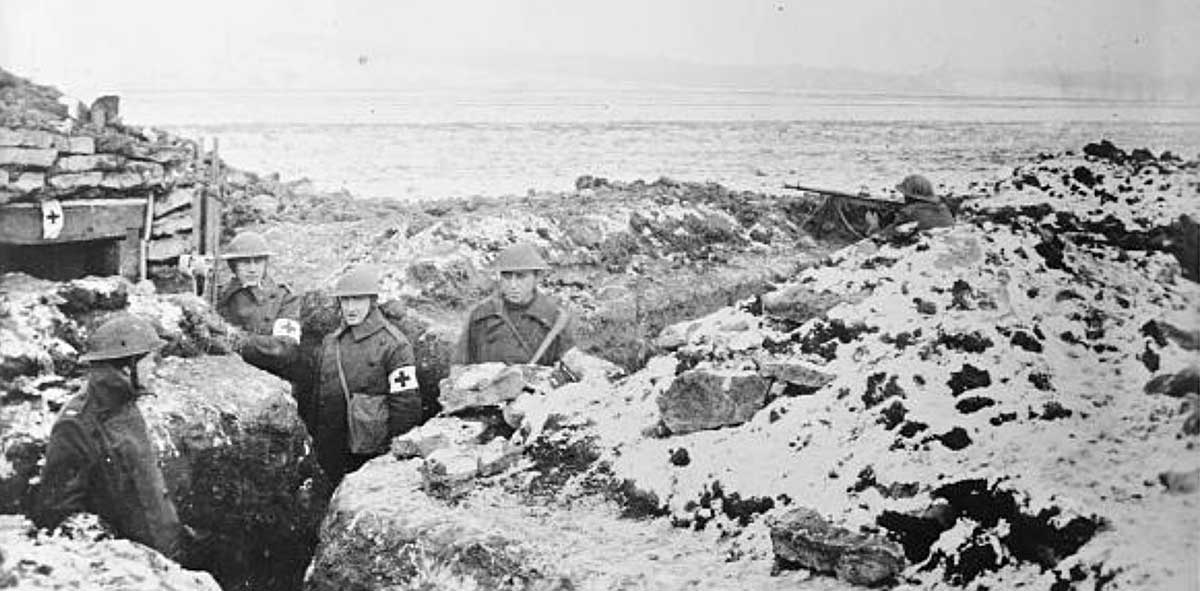
The trench warfare that defined World War I frequently led to prolonged stalemates between static infantry front lines. Originally designed to serve as protection from artillery bombardment, the style of battle instead enabled the widespread use of artillery. On the first day alone of the Battle of Verdun in 1916, the German Army fired over one million shells towards the French.
Now able to fire at high angles, American howitzers could rain down projectiles vertically on their adversaries who were protected from direct fire from rifles and machine guns. While senior commanders enjoyed the safety of bunkers or concrete pillboxes, soldiers inside trenches were protected only by sandbags and wooden planks and were vulnerable to indirect fire. Outside of trenches, artillery proved highly effective in countering enemy assaults in no man’s land, where indirect fire added to the challenges of maneuvering through obstacles and bullets.
On top of artillery, mortars represented a supplementary form of indirect fire. Often placed inside trenches, mortars exclusively fired at high angles with smaller projectiles to target the enemy without exposing troops to enemy direct fire. For line troops in range of artillery and mortar shells for weeks at a time, constant bombardment provided for unprecedented levels of traumatic stress which were compounded by the horrid conditions of trench warfare including starvation, rats, mud, disease, exposure to weather, and fallen comrades.
Significant Battles
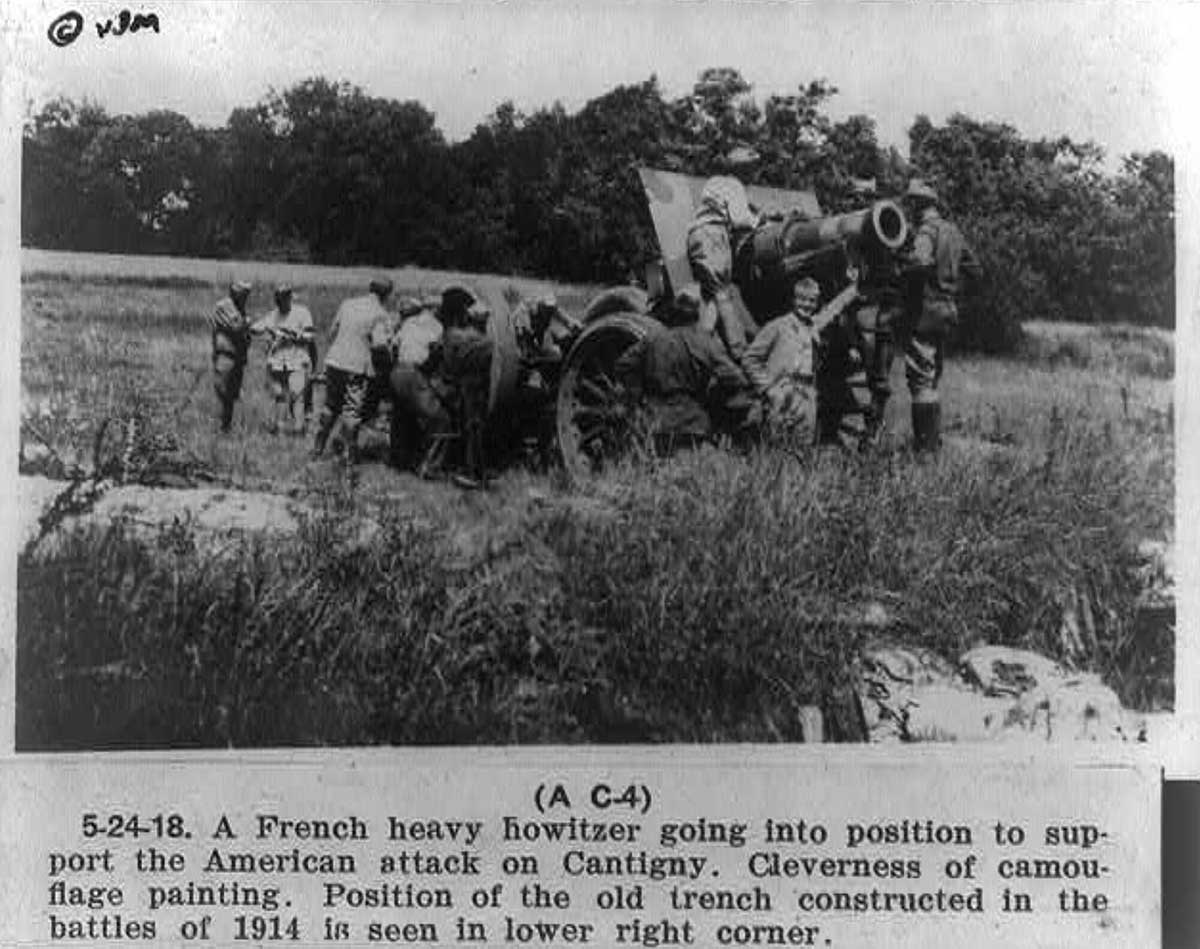
American artillery swiftly made a difference after the United States formally joined their allies on European battlefields. During the 1918 Battle of Cantigny, American and French indirect fire softened German defenses via an hour-long bombardment before the assault, offering a smokescreen to conceal friendly movement. As their infantry counterparts approached within close range, gun crews employed creeping fire tactics to maintain a constant wall of offensive artillery fire to disrupt German counterattacks. Combined with aerial effects, tanks, and engineers, the American infantry successfully captured enemy machine gun nests and artillery positions working in conjunction with French flamethrower squads. In the following days, artillery continued to play a vital role in maintaining control of the terrain against German counterattacks.
While superior artillery tactics and strategy led the United States to early successes, wisely understanding when not to use howitzers enabled a decisive victory during the Somme Offensive from August to November 1918. Prior to the initial assault, American, British, and French commanders decided to forego lengthy artillery barrages that traditionally preceded battle. They instead surprised German defenders by launching an infantry assault through abundant fog cover. Astonished to be attacked without the customary warning from artillery fire, 16,000 German prisoners surrendered. Forced to their original front line of 1915, the Germans sustained artillery bombardment by the United States’ 27th and 30th Divisions following the successful assault.
Harry Truman, Artillery Battery Commander
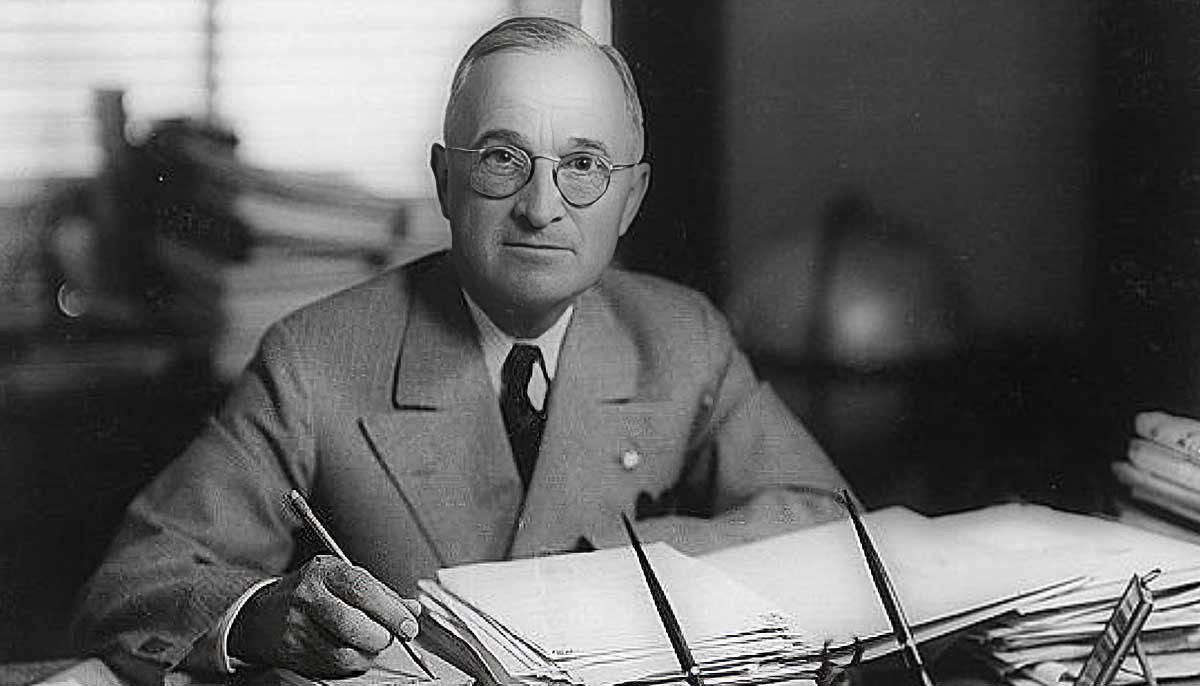
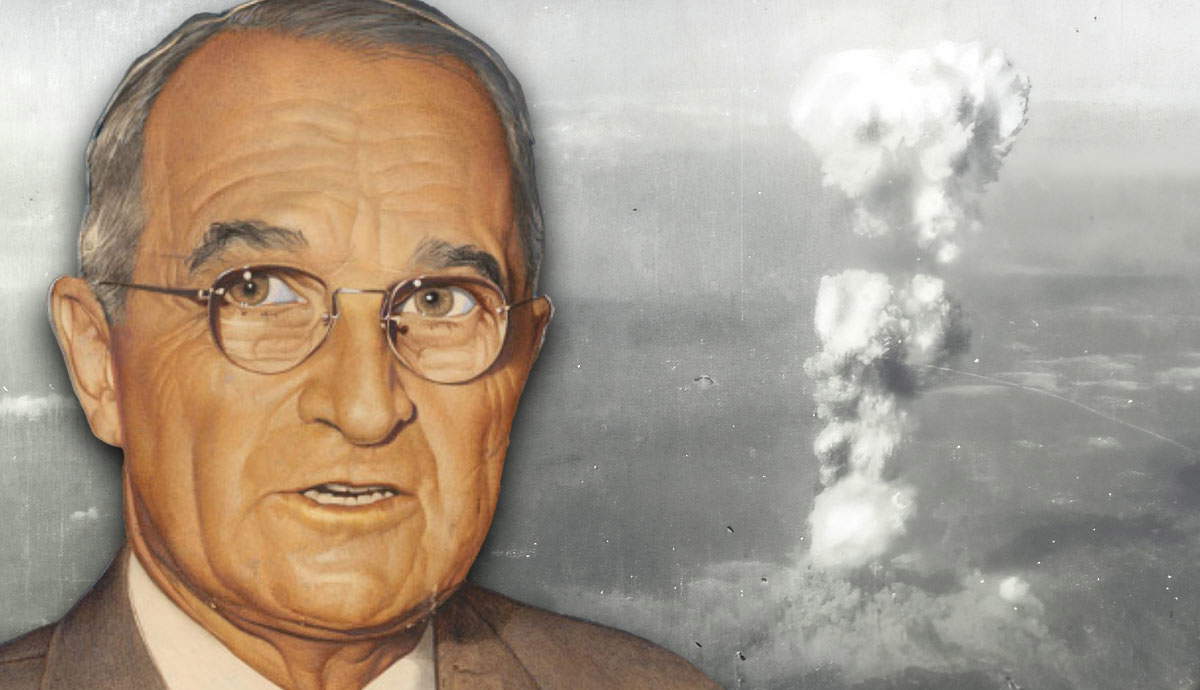
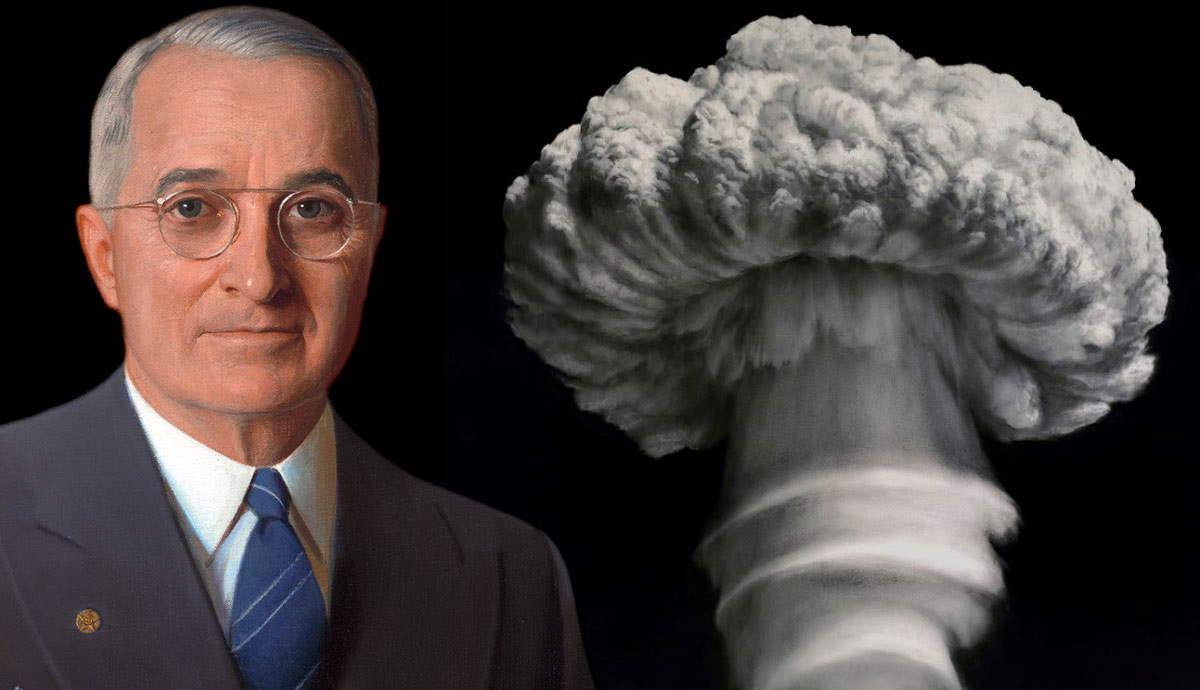
Despite a legacy as the president responsible for authorizing the deployment of atomic bombs against Japan to end World War II, Harry S. Truman’s wartime experiences began in World War I. As a new field artillery captain in the United States Army, Truman proved his worth at the Meuse-Argonne Offensive, the largest American operation during the war. Truman’s unit, the 60th Field Artillery Brigade, fired over 40,000 rounds during the battle’s initial bombardment. The future president’s command, Battery D, specifically supported then Lieutenant Colonel George S. Patton’s tank brigade as they charged towards the Germans.
In addition to its direct support to the future World War II hero, Truman’s Battery D reinforced the 35th Infantry Division’s flank. There, the young officer spotted a German artillery battery emplacing their howitzers towards American soldiers, but the enemy was in the 28th Infantry’s area of responsibility. Ignoring direct orders to focus his fire on the 35th’s specific sector, Truman fired on the German battery, destroying their guns and forcing the enemy to flee. Threatened with a court martial, Captain Truman continued to fight as he saw fit until the Army rescinded its restrictive policies on controlling indirect fire. Undoubtedly, Truman’s bravery, boldness, and experiences navigating the horrors of World War I shaped his decision-making as president.
Securing Victory
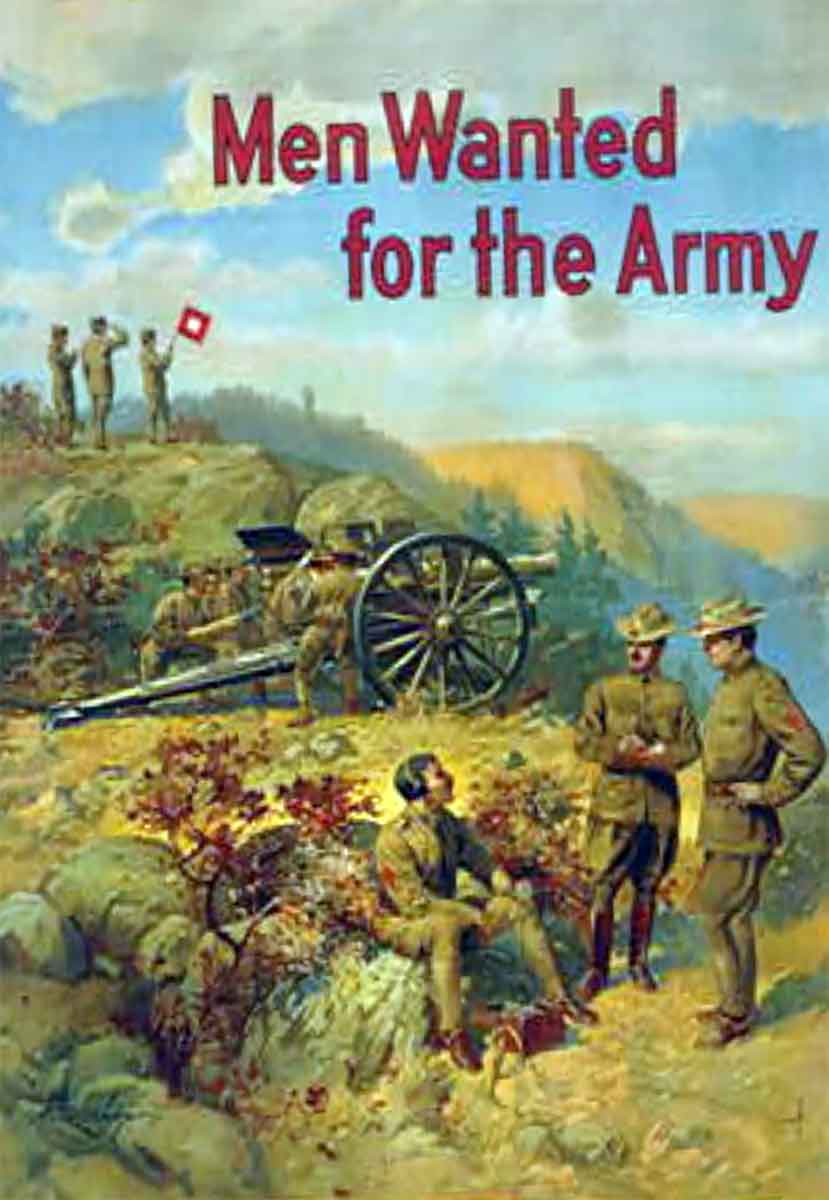
Aside from President Truman’s influential role in the final battle of World War I, American artillery overcame numerous challenges during the Meuse-Argonne Offensive. Namely, heavy rains turned the battlefield into mud, delaying efficient howitzer emplacement. Furthermore, issues in effective artillery and infantry coordination led many projectiles to fall short of their targets, and poor roadway quality delayed ammunition delivery times. Despite these setbacks, American artillery adapted and prevailed.
With over 2,700 howitzers, the United States overwhelmed German defensive positions, neutralized enemy obstacles, and suppressed enemy counterfire. Thanks to their part in the larger Hundred Days Offensive that broke the back of the German Army, American artillery elevated the United States military as a dominant player on the global stage.
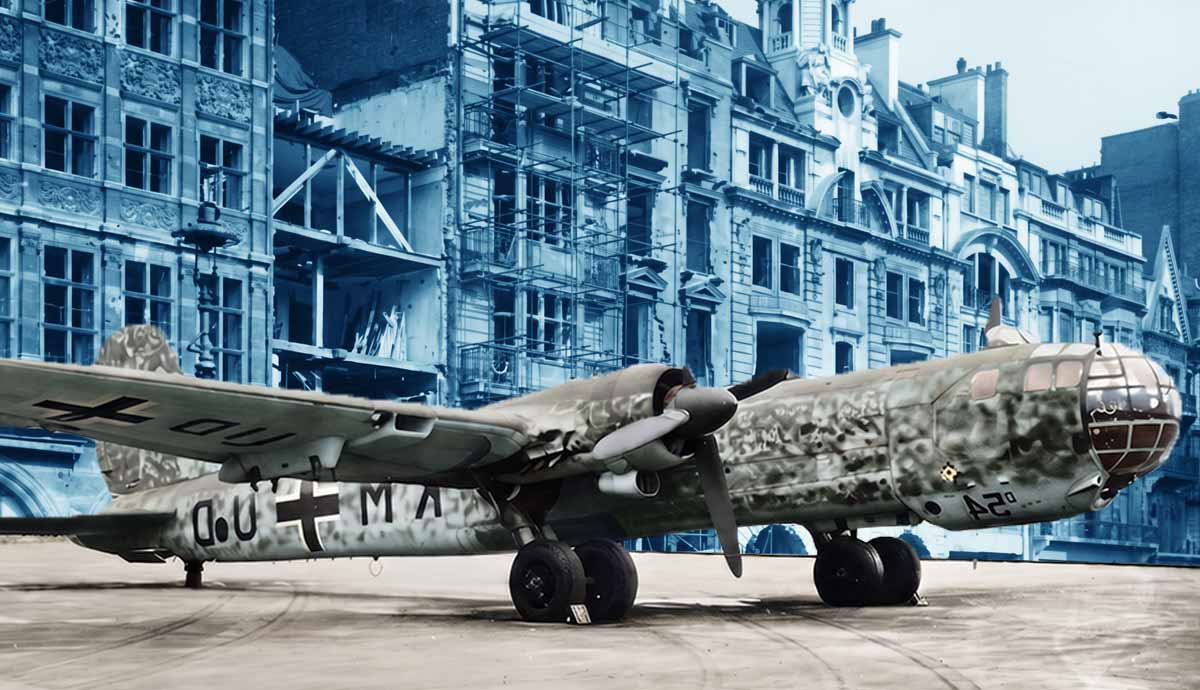
While American gun crews celebrated their long-awaited victory, the future of German artillery was severely restricted. The Treaty of Versailles, the agreement that ended the Great War, forced Germany to give up 5,000 indirect fire assets to the Allies. While the defeated country was allowed to keep a limited number for defensive purposes, strict limits on ammunition were imposed, and many German howitzers were destroyed. Although a seemingly logical disarmament to enforce the peace, the harsh terms of the Treaty of Versailles were later blamed for grievances among German nationalists.
Legacy
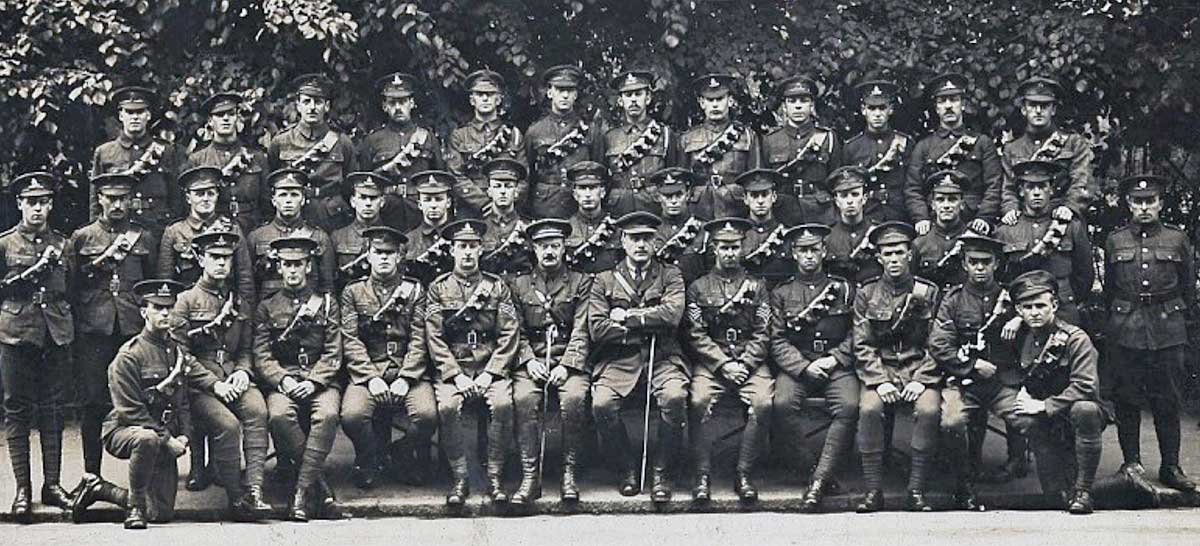
Responsible for approximately 60% of casualties during World War I, artillery played a significant role during one of the deadliest conflicts in modern human history. The physical and mental effects of artillery bombardments led many soldiers on both sides to suffer from post-traumatic stress disorder, then called shell shock, a fitting name given the immense quantity of artillery shells fired at them. Injuries caused by raining projectiles inspired a slew of medical advancements.
For the United States military, however, artillery’s successes in World War I set a strong foundation for growth. The Army’s famed 82nd Division, for example, was activated just four months into conflict. The unit’s artillerymen played a decisive role in the final stages of the Meuse-Argonne Offensive, setting the stage for storied military excellence in World War II and beyond.
When weighing the importance of American artillery during World War I, it is clear that technological and strategic advancements, battlefield deployments, and the experiences of artillerymen and their officers had a great impact on the United States. With World War II around the corner, it would not be long before America’s king of battle returned to combat external threats.