
The Romans engaged in numerous campaigns in Britain that aimed to push their influence north into modern-day Scotland. Perhaps most famously, just a few decades after the initial invasion in AD 43, the Roman general Agricola led a campaign through southern Scotland, and even led a fleet all the way around the northern coast. However, it is often believed that after Hadrian’s Wall was constructed around AD 122, except for some limited campaigns under Antonius Pius and Septimus Severus, this was the established northern border of Roman Britain. In fact, there is evidence of several forgotten attempts by the Romans to conquer Scotland in the 4th century AD, shortly before Rome lost Roman Britain and while it was hard pressed by Germanic tribes on the continent. What was the evidence, and why was Scotland suddenly a priority shortly before the fall of Roman Britain?
Rome’s Scottish Ambitions: Early Campaigns
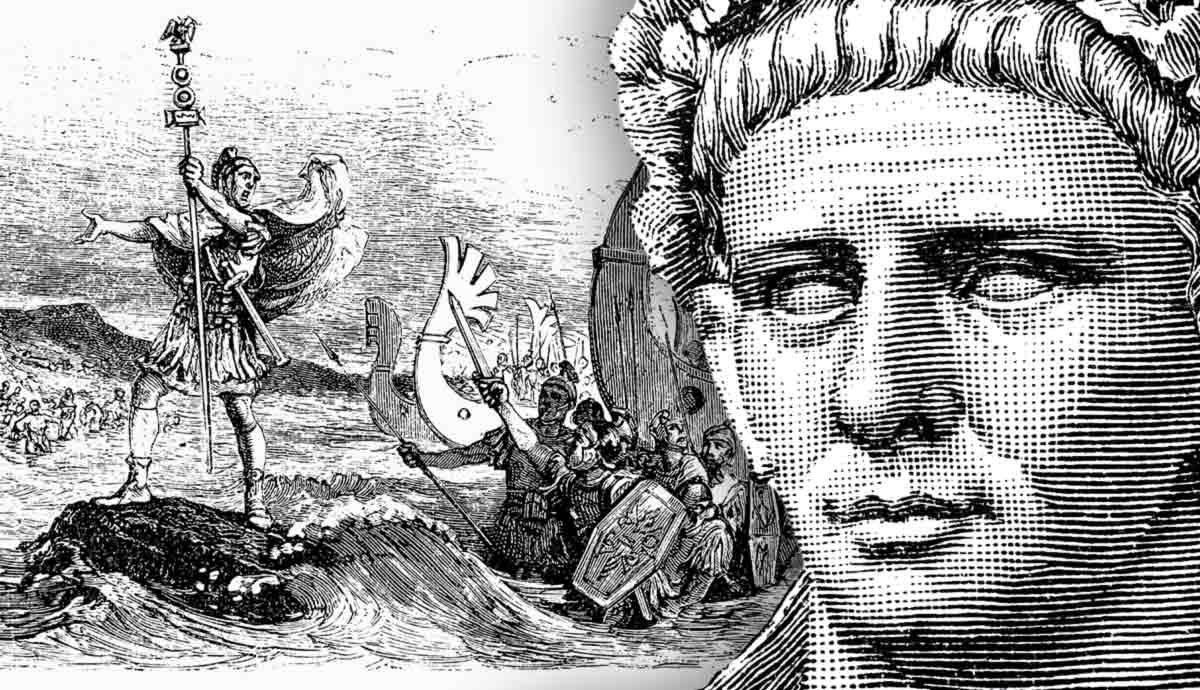
Following initial forays by Julius Caesar, Britain was officially “conquered” and incorporated into the Roman Empire in AD 43 under the emperor Claudius. While Britain was Romanized, the Romans never managed to incorporate Caledonia, modern-day Scotland, into their vast Empire. Attempts were made. Agricola campaigned in the north under the Flavians and had a great success at the Battle of Mons Graupius, but troops were pulled out by Domitian to deal with threats elsewhere in the Empire. Hadrian then ordered the construction of a wall to make the northern border of Roman Britain in AD 122, but there were forays north under Antoninus Pius, as evidenced by the remains of the more northerly Antonine Wall.
There was then a major push into Scotland in the early third century under Septimius Severus. Starting in AD 208, he reportedly had a massive force of 40,000 men and engaged in scorched earth tactics in an attempt to take the whole island. Despite the huge army, he suffered heavy losses due to the guerrilla warfare tactics and harsh climate. Severus died in York in AD 211 while preparing for another campaign, and his successor abandoned the endeavor. They withdrew to Hadrian’s Wall and maintained a permanent presence there. The area north of Hadrian’s Wall, although not under the control of the Romans, had been severely weakened during this campaign.
The Great Conspiracy: A Barbarian Revolt
In AD 367, an event known as the Great Conspiracy or the Barbarian Conspiracy broke out. This was a massive and allegedly organized series of raids by non-Roman peoples, such as the Picts, the Scots, and the Saxons. They overran almost all of Roman Britain, and the frontier regions to the north were the hardest hit. Theodosius the Elder, father of Theodosius the Great, was sent to Britain to put down these barbarian invasions. He did so with considerable success.
Based on a comparison between the account from Ammianus Marcellinus (27.8), a soldier turned scholar writing in the 4th century AD, and the Notitia Dignitatum from the early 5th century AD, there is reason to believe that Theodosius managed to re-establish Roman control over the area north of Hadrian’s Wall. This region, extending as far north as the Antonine Wall, may have been the Late-Roman era province known as Valentia.
Valentia: Roman Caledonia?
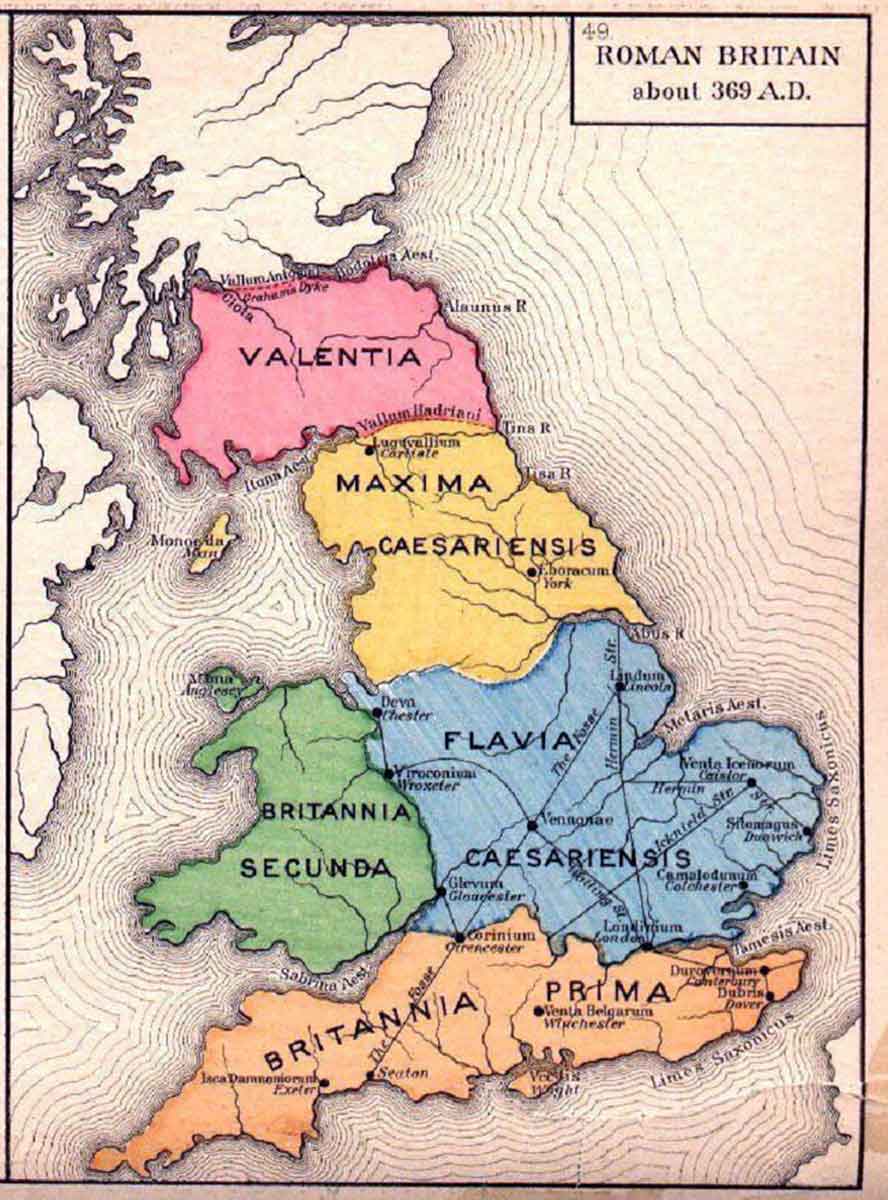
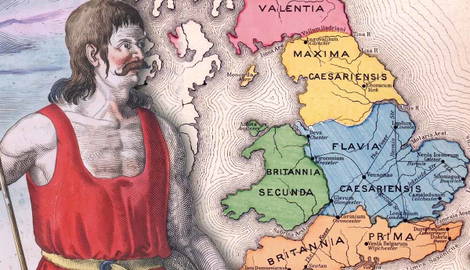
By the 4th century AD, administratively, Roman Britain was divided into four provinces: Britannia Prima, Britannia Seguna, Flavia Caesariensis, and Maxima Caesariensis. But the sources for the Great Conspiracy mention a fifth province, Valentia. This is often identified as the area north of Hadrian’s Wall.
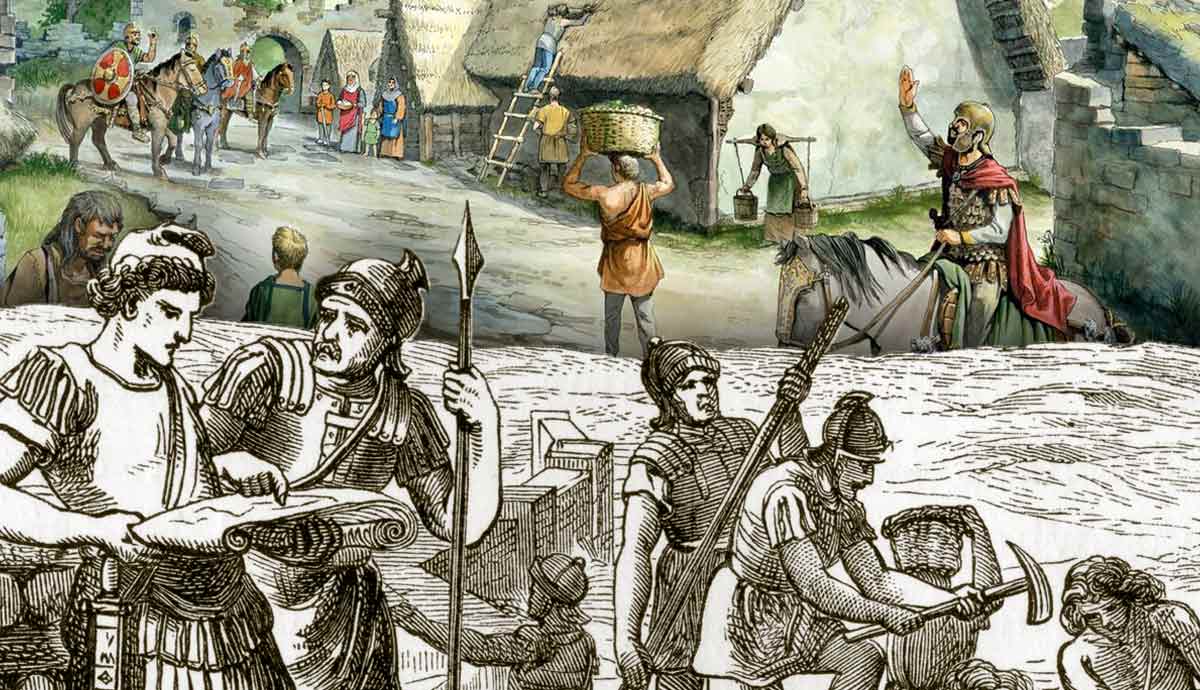
If Theodosius the Elder recovered the territory between Hadrian’s Wall and the Antonine Wall and formed another province out of it, it would make sense that the Romans had a greatly renewed interest in that territory in the final few decades of Roman Britain. It was no longer a barbarian region. It was, instead, part of their Empire, and thus an area worth defending.
It would be very strange indeed for the Romans to have engaged in several expansionist campaigns right at the time when their continental territories were under such threat from various Germanic tribes. Conversely, if southern Scotland was already part of the Empire, then it makes sense that the Romans may have campaigned there. But what is this evidence?
Evidence for Theodosius’ Scottish War

The primary evidence for these Scottish wars near the end of Roman Britain is a series of poems written by Claudian right around the turn of the 5th century AD. While poems composed to flatter the emperor rather than historical narratives, they are an invaluable contemporary source.
According to this source, the first Scottish wars of the period were fought by Theodosius the Great, son of Theodosius the Elder, and the last ruler of the united Roman Empire from AD 379 to 395. In the poem The Third Consulate of Honorius, we find the following statement regarding Theodosius the Great:
“He conquered the fleet Moors and the well-named Picts; his roaming sword pursued the flying Scot; his adventurous oars broke the surface of the northern seas.”
(Claudian, The Third Consulate of Honorius, lines 54-56)
According to this, Theodosius the Great fought, evidently successfully, against the Picts and the Scots. As this is a poem and not a chronicle, we cannot put a precise year on this event, but it apparently happened.
We can deduce that this Scottish war must have occurred after AD 388, since Britain was still in the hands of Magnus Maximus until that year. It also probably occurred before Eugenius became emperor in AD 392, since Claudian mentions that event in the following passage of his poem. However, we cannot be more specific than that based on the information provided by Claudian.
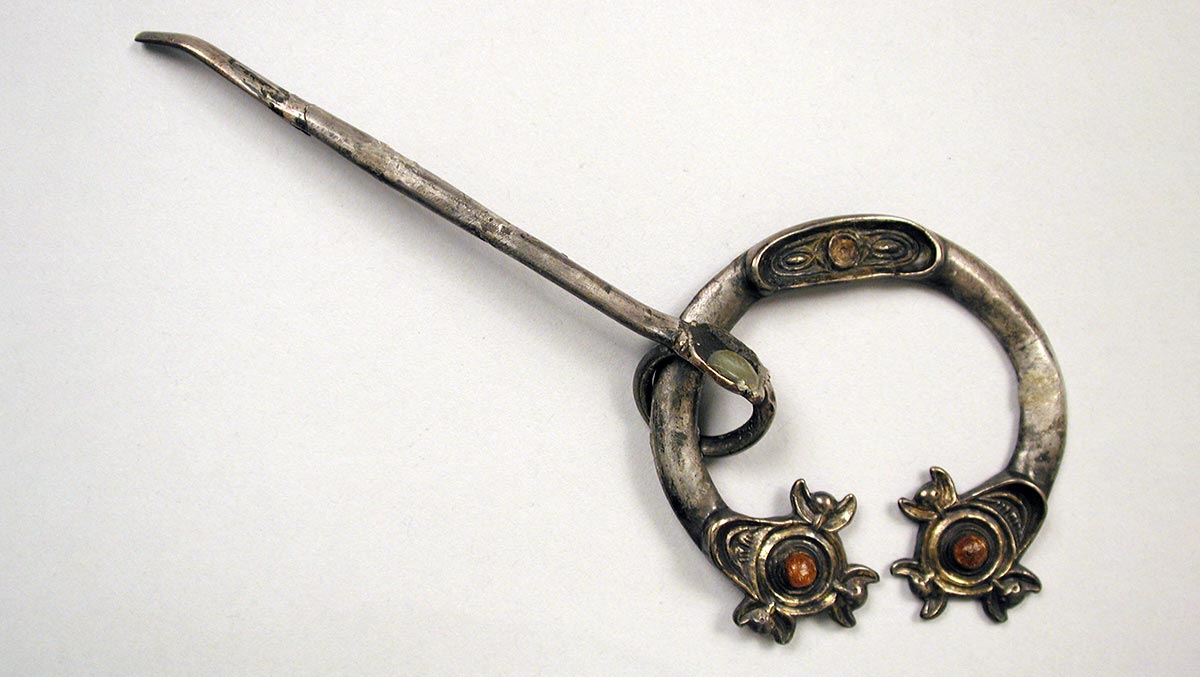
However, this passing remark by Claudian does not actually confirm that Theodosius campaigned into Scotland itself. All Claudian actually says is that Theodosius fought against the Picts and the Scots. This could easily be understood as a reference to him repelling an incursion somewhere within the territory south of Hadrian’s Wall. After all, there were multiple other occasions in which those tribes raided the more southerly territory of Britain.
Fortunately, another poem by Claudian clears up this issue. In the poem on the Fourth Consulate of Honorius, we find the following passage, again referring to Theodosius the Great:
“’Twas he who pitched his camp amid the snows of Caledonia, who never doffed his helmet for all the heat of a Libyan summer, who struck terror with the Moors, brought into subjection the coasts of Britain, and with equal success laid waste the north and the south.”
(Claudian, Fourth Consulate of Honorius, 24f.)
Just as in the previous poem, there is a reference to the Moors in conjunction with the Britons, indicating that Claudian is referring to the same event that he mentioned before. This time, Claudian specifically states that Theodosius “pitched his camp amid the snows of Caledonia.” Caledonia was the Roman term for Scotland. The exact part of Scotland designated by this in AD 400 is open for debate, but it certainly did not refer to any area south of Hadrian’s Wall. Therefore, this passage confirms that Theodosius did indeed lead the Romans in a campaign into Scotland itself near the end of the 4th century AD.
Evidence for Stilicho’s Scottish War

Theodosius’ mostly forgotten Scottish war is not the only one in this era. Claudian presents evidence for an additional war several years later, led by the powerful general Stilicho during the reign of Honorius, emperor of the Western Roman Empire from AD 395 to 423. In Claudian’s first poem Against Eutropius, written in the spring of AD 399, we find the following passage:
“Examples near at hand testify to the extent of my power now thou art emperor. The Saxon is conquered and the seas safe; the Picts have been defeated, and Britain is secure.”
(Claudian, Against Eutropius, 1.391-393)
This attests to a campaign which Stilicho engaged in against the Picts in Britain. That the war was successful is shown by the result that Britain was then “secure.” Unlike in the case of Theodosius’ campaign, we can tie this one down to a very specific period. It must have been a very recent event when Claudian wrote this poem in the spring of AD 399. We can be fairly sure about this because in a poem written in January of that same year, he refers to Britain as being disconnected from the world of the Romans. This suggests that the Romans were not, at that time, engaged in any campaigns in that area when Claudian was writing. Or at least, news of such wars had not yet reached Claudian. Therefore, the start of Stilicho’s Scottish war can most likely be dated to the end of 398 or the very beginning of 399.
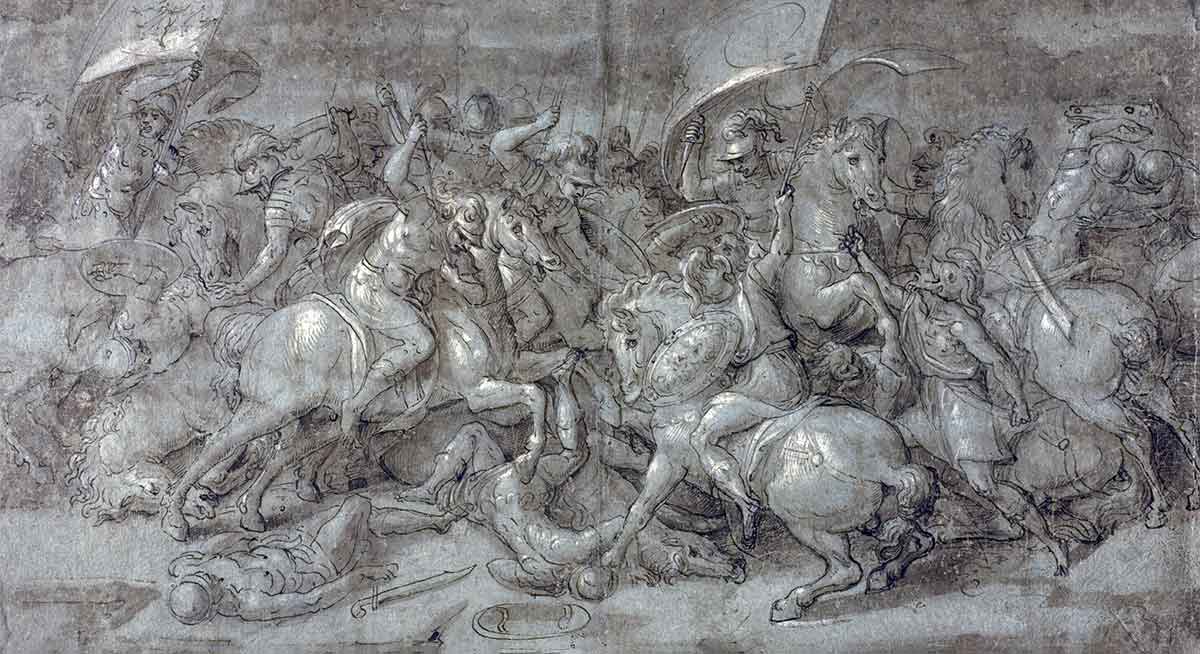
As in the case of the first reference to Theodosius’ campaign, Claudian does not explicitly say that Stilicho fought against the Picts in Scotland. They could potentially have been raiding south past Hadrian’s Wall. However, once again, another poem from Claudian clears up the matter. His poem on the Second Consulship of Stilicho contains the following passage:
“Then, wrapped in Caledonian garb, her cheeks tattooed, her azure train counterfeiting Ocean’s surge to unprint her footsteps, Britain spoke: ‘When neighbouring peoples would have killed me, Stilicho gave me forts—for the Scot stirred all Ireland against me and my sea foamed beneath the hostile oars. Stilicho took such care, I do not fear the Scottic javelin nor tremble at the Pict.”
(Claudian, Second Consulship of Stilicho 2.247-255).
The reference to a personified Britain saying this while wrapped in Caledonian clothing indicates that the quotation that follows is related to the region of Caledonia. The quotation in question indicates that Stilicho successfully defeated the raiding Picts and the Scots. Furthermore, this passage specifically mentions Stilicho establishing forts.
This poem was written in January, AD 400. Therefore, we can conclude that Stilicho’s Scottish war apparently did not last for very long. It evidently started at the end of 398 or the beginning of 399, and had already concluded by the beginning of the following year.
Rome’s Forgotten Wars in Scotland
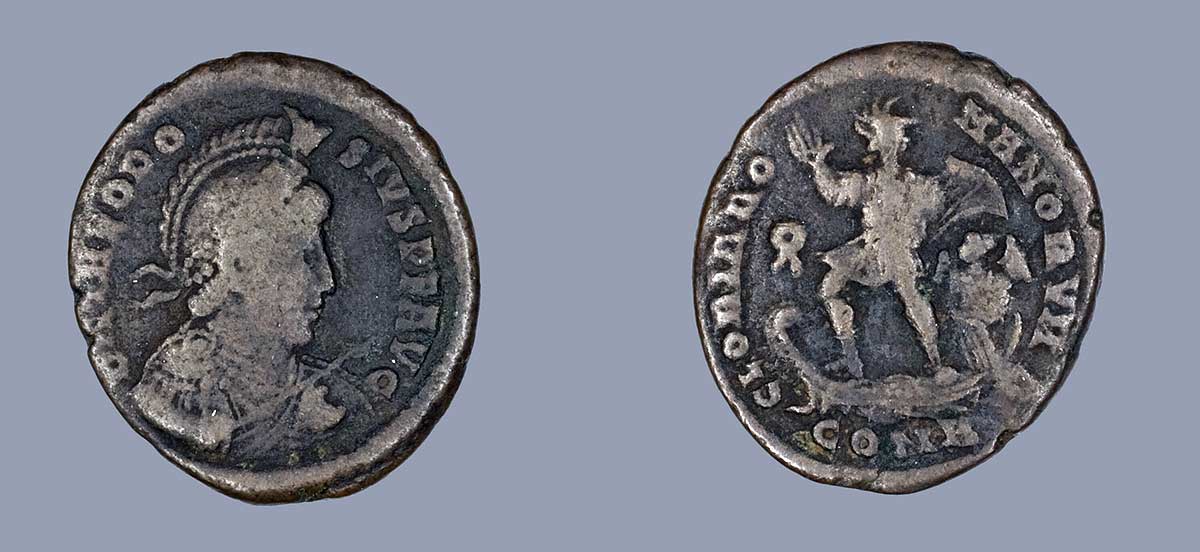
In conclusion, the contemporary poems of Claudian provide fascinating evidence for two Roman wars in Scotland that are generally forgotten today. The first was carried out by Theodosius the Great at some point between AD 388 and 392. The successful campaign was apparently against the Picts in Scotland itself.
The second campaign was likely waged from the end of 398 to the end of 399. This was carried out by the Roman general Stilicho. As in the case of Theodosius, his campaign against the Picts seems to have involved a war in Scotland, in the territory north of Hadrian’s Wall. In the case of this second war, forts are reported to have been established.
The fact that the Romans were engaged in multiple campaigns north of Hadrian’s Wall at such a delicate time for the Western Roman Empire is significant. It provides evidence (albeit non-conclusive) that at the end of the 4th century AD, the Romans considered Scotland part of their territory and worth defending.