Ancient Rome and Han China are separated by thousands of miles, and other than a few individuals, there was no contact between the nations. In spite of this, there are some who believe that a Roman legion traveled to and fought in China. What evidence supports this? Was there contact between the two most powerful nations on the planet, and if so, how did this come about?
The Myth

The origins of the theory begin in 1957, when American academic Homer Dubs published a paper theorizing the presence of a Roman legion in China. The story begins in 53 BCE when Marcus Licinius Crassus launched an invasion of Parthia to pad out his military reputation. He was killed, and his army was smashed at the Battle of Carrhae, where thousands were killed, and thousands more were taken prisoner.
The Parthians, not wanting to waste the manpower, found a use for the prisoners. The captured Romans were given back their weapons and equipment and pressed into service for the Parthians. It may seem strange to rely on an enemy for national security, but this practice was very common throughout history, especially in the ancient world. It is something the Parthians were known to do on a regular basis.
Obviously, stationing these troops on the western border with Roman territory was out of the question. The legionaries were shipped off to the east to the far-flung reaches of the Parthian empire. They would end up in central Asia, guarding against bandits and other threats in what is now Kazakhstan and Kyrgyzstan. Any direct mention of these soldiers ends there, but this is only the first part of the story.
Seventeen years later, the Romans may reappear in the historical record. Far to the east, Han China was expanding, spreading further and further west, setting up the Western Protectorate, areas under Chinese influence if not outright control. The Chinese would clash with Parthia at Zhizhi, modern-day Kazakhstan, and win a decisive victory. This secured Han China’s western flank, establishing Chinese presence in the region.
Were the Romans There?
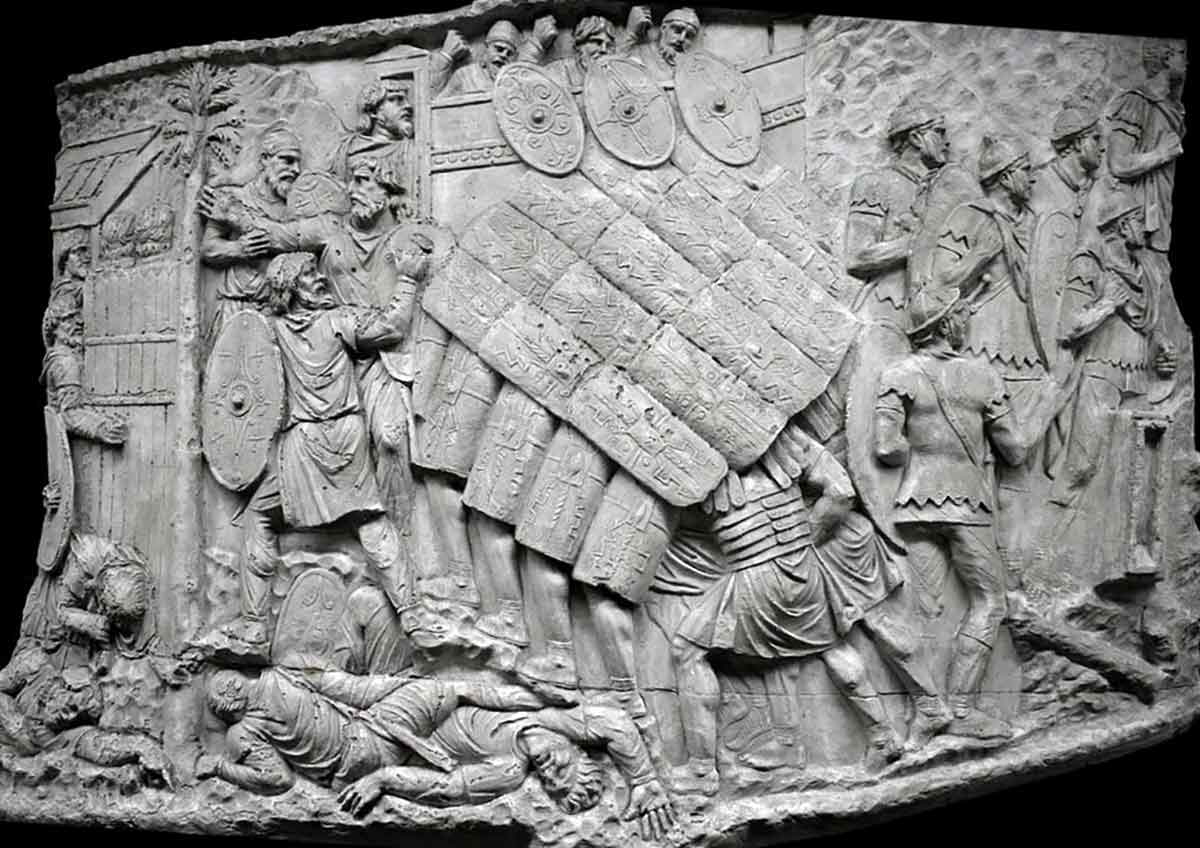
Chinese records of the battle make mention of something interesting. Some of the soldiers they fought against used what was described as a fish-scale pattern formation. Some scholars believe this is the famous Roman testeudo formation, which has the legionaries interlocking their shields to protect against missile attacks, and may resemble the overlapping scales of a fish.
The Chinese were impressed by these soldiers, and once again, the Romans were employed by their captors. They were moved even further east, along the Chinese-Tibetan border, to guard against raids. Specifically, they were moved to a place called Liqian, which shares the name the Chinese gave Rome, roughly translated as “people of the West.” Moreover, many inhabitants of Liqian today have Caucasian DNA and have traditionally European features, such as lighter skin and eyes, and prominent noses. They are also generally much taller than their ethnic Chinese countrymen. So, is this proof of the Romans reaching and fighting for the Han Chinese?
While all of this evidence may seem compelling, the theory falls apart under closer scrutiny. The name Liqian was the Han Chinese name for Rome, but it was also the same label given to the Greek kingdoms in central Asia founded by Alexander the Great and his successors. More than likely, with such limited contact between them, the name was more of a generic term for those of European descent, without any consideration for ethnic subdivisions. The fish scale formation does sound a lot like the testudo, but this is circumstantial, and though it may be Romans whom the Chinese fought at Zhizhi, it may have been soldiers who copied the Roman ways, or it may be something else altogether. A simple phrase is hardly conclusive evidence.
What About the DNA Evidence?
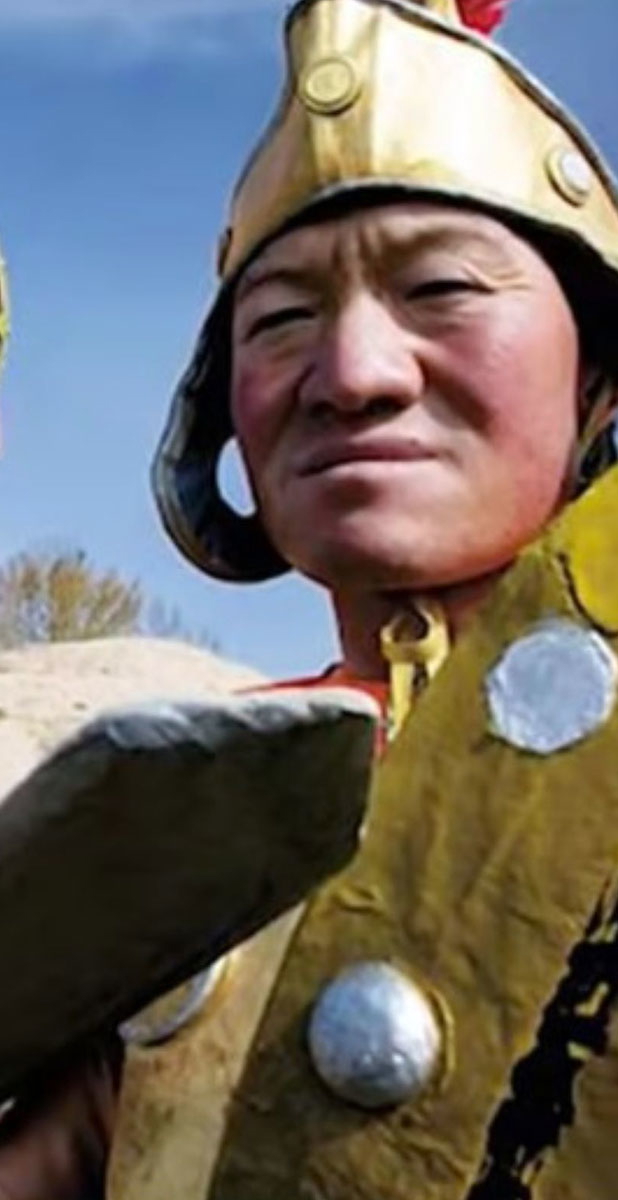
A significant portion of the locals indeed have Caucasian genes, but as was mentioned earlier, there were Greek kingdoms established in central Asia, and these people could have migrated along the well-established trade routes to Liqian. The nomadic peoples of the Eurasian Steppe, which runs from Hungary to Korea, are also a hodgepodge of ethnic groups, so having Caucasian genes from this source is not out of the question.
In truth, the absence of evidence is evidence of absence. To date, there have been no archaeological finds that support the idea of a Roman legion in central China along the Tibetan border. There have been no finds of Roman weapons, armor, or other military equipment, no coins, no religious votive offerings, or anything else that is associated with a large population from ancient Rome. Over the past few decades, Homer Dub’s theory linking the various pieces of evidence has been the cause of much debate among scholars and history enthusiasts, but as of right now, the evidence is circumstantial. The idea of the presence of Romans in China belongs more to the realm of fiction than fact.