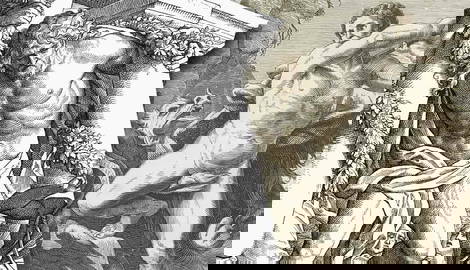
In the Bible, there is one character who is known for having superhuman strength. This is Samson, one of the judges of the Israelites in the Book of Judges. In Greek mythology, although countless characters are presented as obscenely strong, by far the most famous hero known for his strength is Heracles, more commonly known by his Roman name Hercules. Even in a world full of heroes, Hercules stood out as exceptional, even holding up the sky at one point. Considering cultural exchange between the ancient Israelites and the ancient Greeks, could Samson and Hercules be connected, with the former inspiring stories of the latter? Or are the similarities between the two only superficial?
Could Samson and Hercules Be Connected?
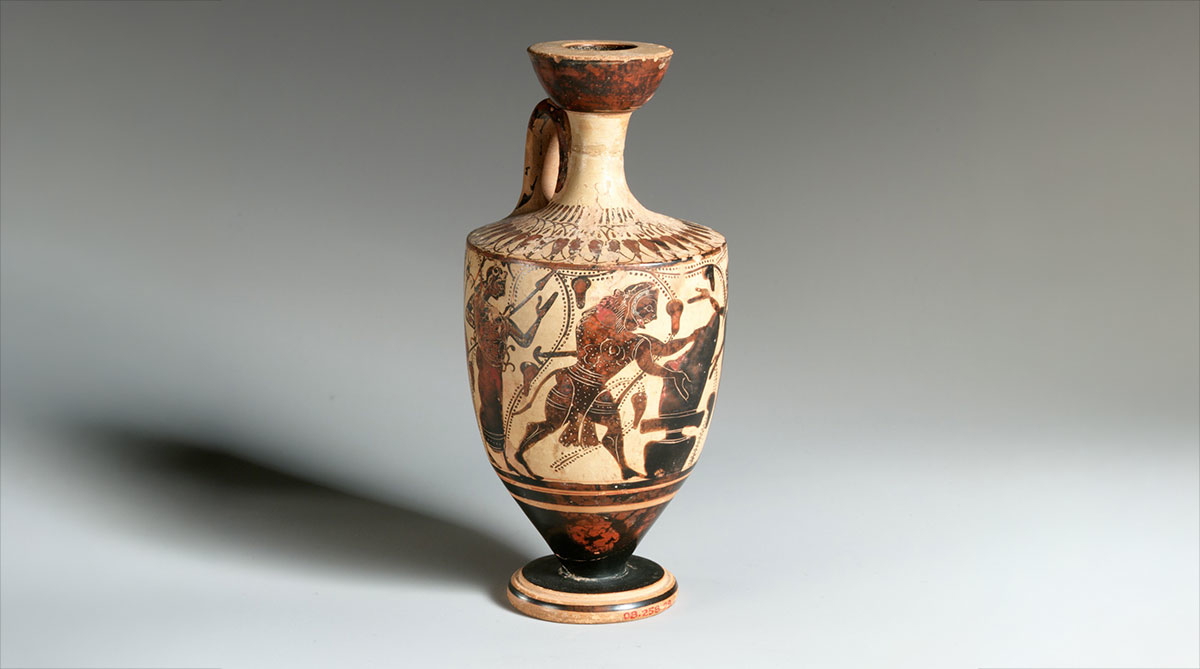
Is it reasonable to suggest a connection between legends of strongmen from ancient Greece and Israel? The two cultures were not neighbors, so how could there be a connection between their traditions? There are sufficient similarities between some stories in the Bible and in Greek mythology that they almost certainly have a common origin. For instance, the Bible’s account of Noah’s flood shares numerous specific similarities to the story of Deucalion’s flood in Greek mythology. Therefore, the suggestion that the stories of Samson and Hercules might also share a common origin is not extraordinary.
On the other hand, we do need to acknowledge that there are some differences between the story of Noah’s flood and the story of Hercules. Noah’s flood is an account set very early in the Bible, early in human history. It has clear parallels to accounts written even earlier, such as the Epic of Gilgamesh. Given its age, the distribution of this story among regional cultures is not surprising. On the other hand, the account of Samson is set within the Late Bronze Age in Israel, a much more recent setting. Therefore, its distribution among outside nations is not so inevitable.
Still, the Greeks were engaged in trade with Canaan (later Israel and Phoenicia) from as early as the Late Bronze Age, if not earlier. Furthermore, in the early Iron Age, the Phoenicians became the predominant traders of the eastern Mediterranean. Therefore, whether directly or through the Phoenicians, the Greeks could have become aware of the story of Samson.
Heroic Feats
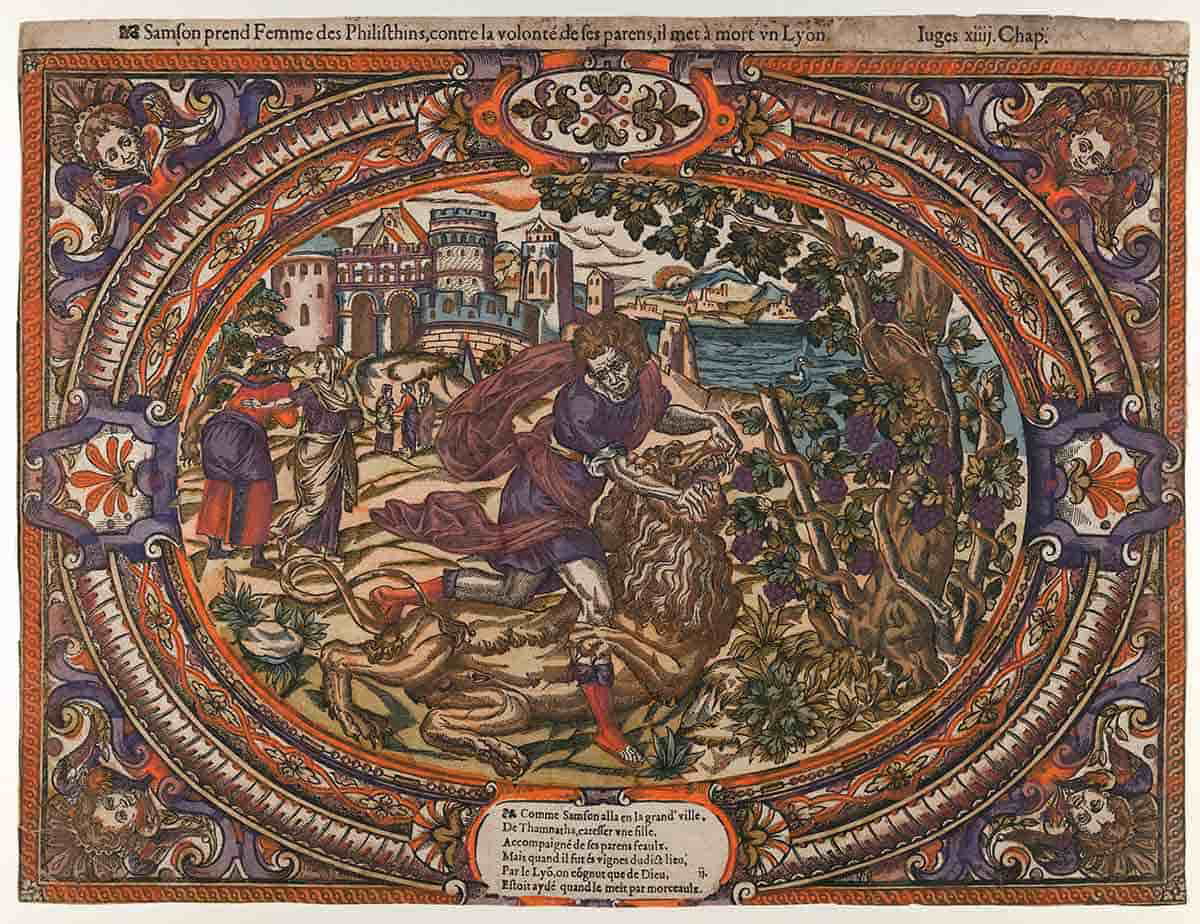
When we look at the respective careers of Hercules and Samson, we find that there are numerous similarities between the two men. The first and most obvious similarity is that they are both given superhuman strength by divine power. As we look at their specific deeds, we continue to find connections.
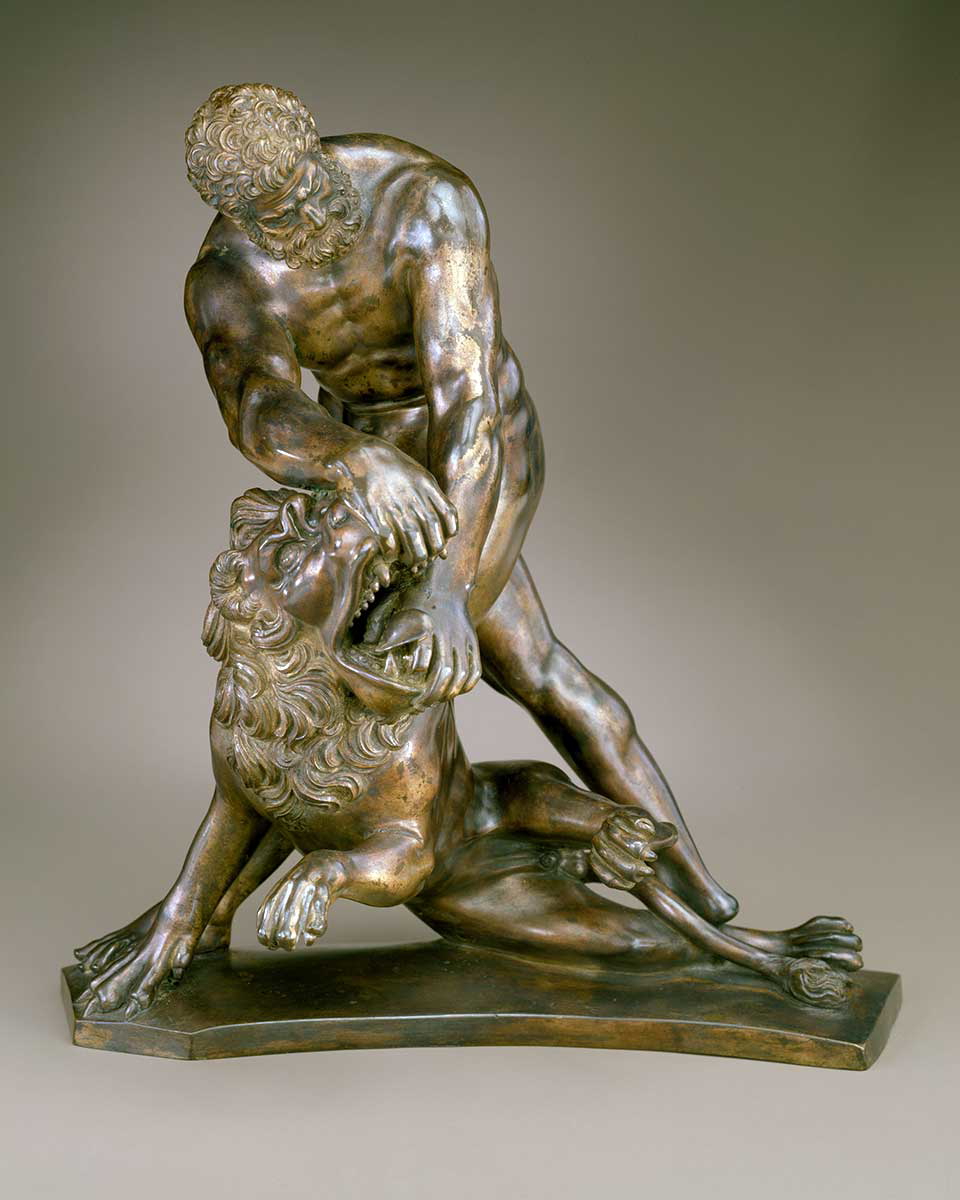
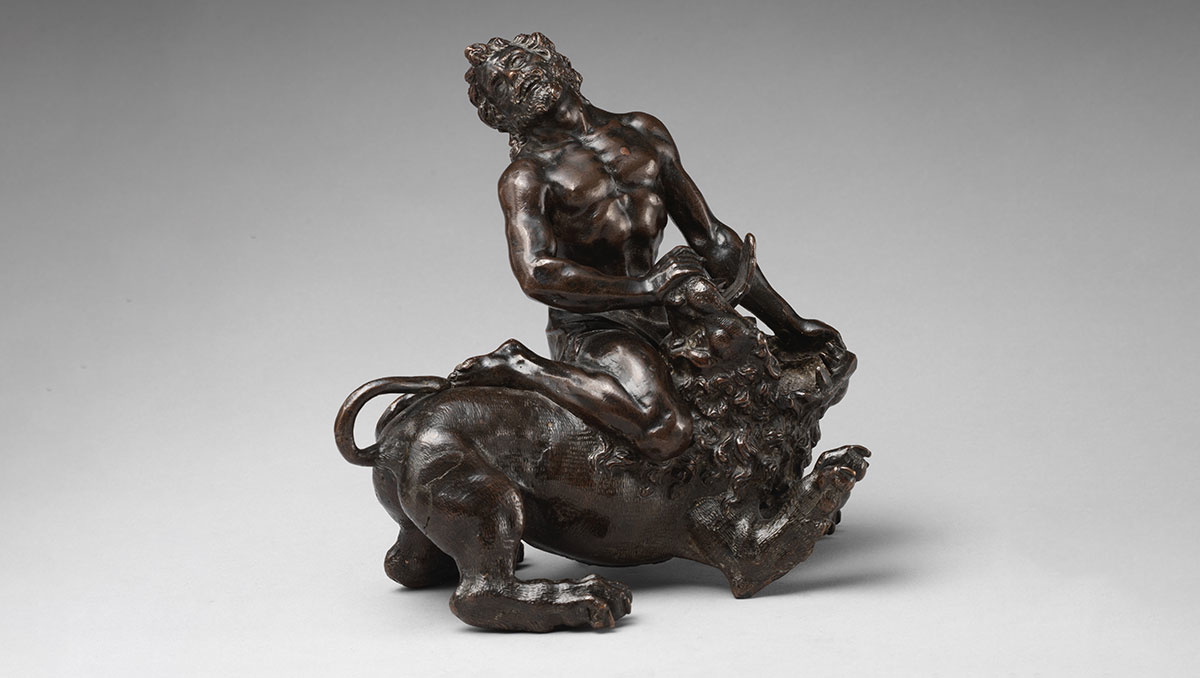
In Greek mythology, Hercules is said to have performed twelve labors. The first of these labors was to kill the Nemean Lion. Since its fur was impenetrable to human weapons, Hercules used his bare hands to strangle the creature. Similarly, in the Bible’s account, Samson’s first recorded feat was to kill a lion with his bare hands. While many heroes in ancient cultures are portrayed as hunting or subduing lions, doing this with one’s bare hands is particularly notable. Furthermore, we should note that this was the first of Hercules’ labors, just as it was the first of Samson’s feats.
Another impressive and famous feat of Samson was tearing the city gates off the Philistine city of Gaza and carrying them away. Hercules is recorded as doing something similar. In Herakles, a poem by Euripides in the 5th century BCE, Hercules declares that he will tear down the city walls of Mycenae. A moment later, he is presented as tearing down the doors and roof of a house in that city. While not exactly the same as Samson’s deed, a single man tearing down the defenses of a city is a rare concept, whatever the exact details.
Other Similarities
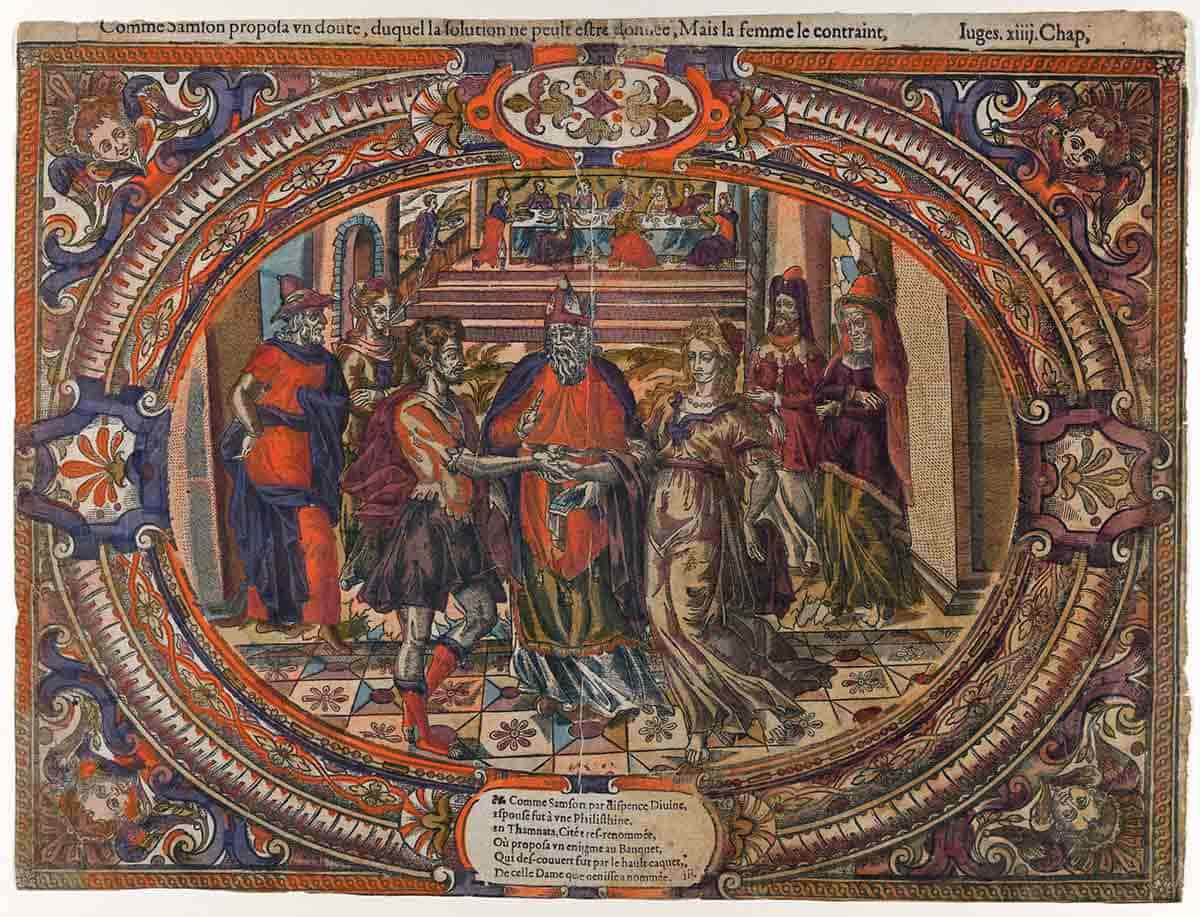
In addition to these two heroic feats, there are several other specific similarities between the lives of Hercules and Samson. In Greek mythology, Hercules is presented as being responsible for the death of his first wife. He was driven mad by the goddess Hera and ended up killing his family in a fit of rage. So, although he was responsible for his wife’s death, it was not something that he did intentionally.
Similarly, Samson is recorded as being responsible, in a sense, for his first wife’s death. During his seven-day wedding feast to a Philistine woman, Samson told some of the Philistine men a riddle. The events that followed as a consequence of that riddle eventually resulted in Samson’s wife being burned to death by the Philistines. Therefore, while not intentional, Samson’s actions could be described as causing the death of his first wife.
Another similarity that has been noted by some researchers is that Hercules was associated with a two-headed dog. This was Orthus, the monster who guarded Geryon’s cattle. In the case of Samson, he is said to have tied numerous pairs of foxes together with a lit torch attached to them to cause havoc for the Philistines.
An additional connection is that both men are described as miraculously receiving water. In the case of Hercules, the Argonautica describes an incident set next to Lake Triton in North Africa. He was said to have been very thirsty, so he kicked a rock next to that lake, and a stream of water came out. As for Samson, the Book of Judges describes how God miraculously caused a stream to flow from the ground to provide water for him when he was thirsty.
Downfall at the Hands of a Lover
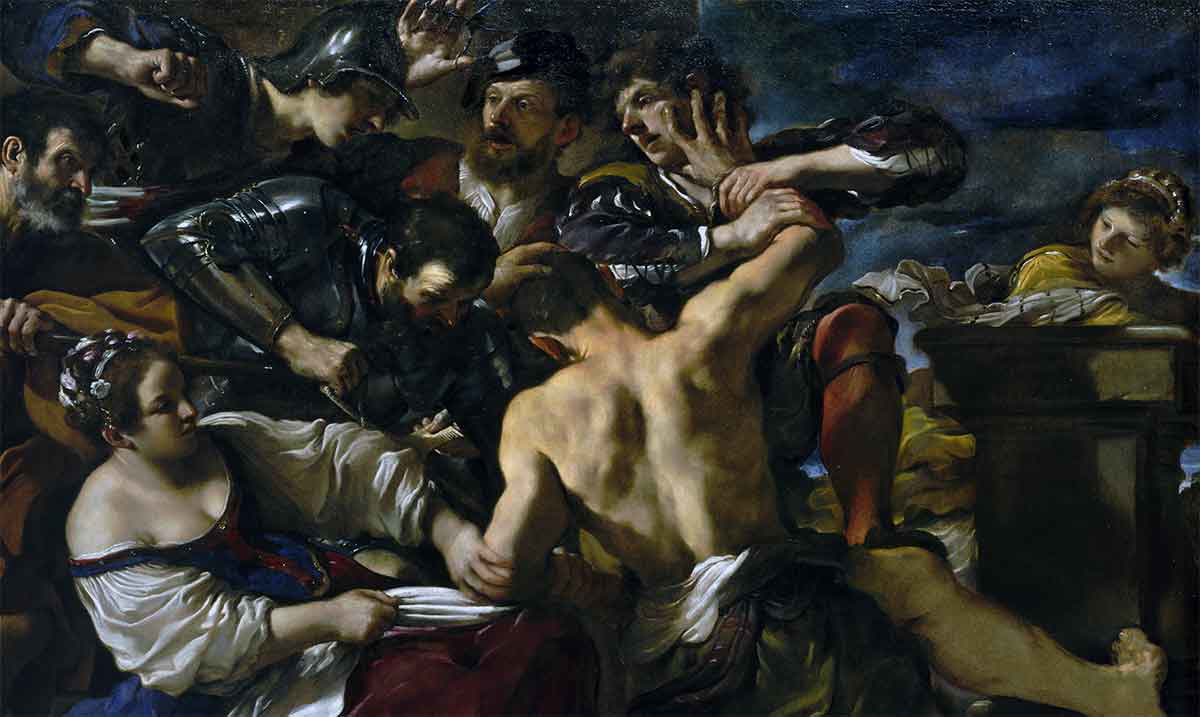
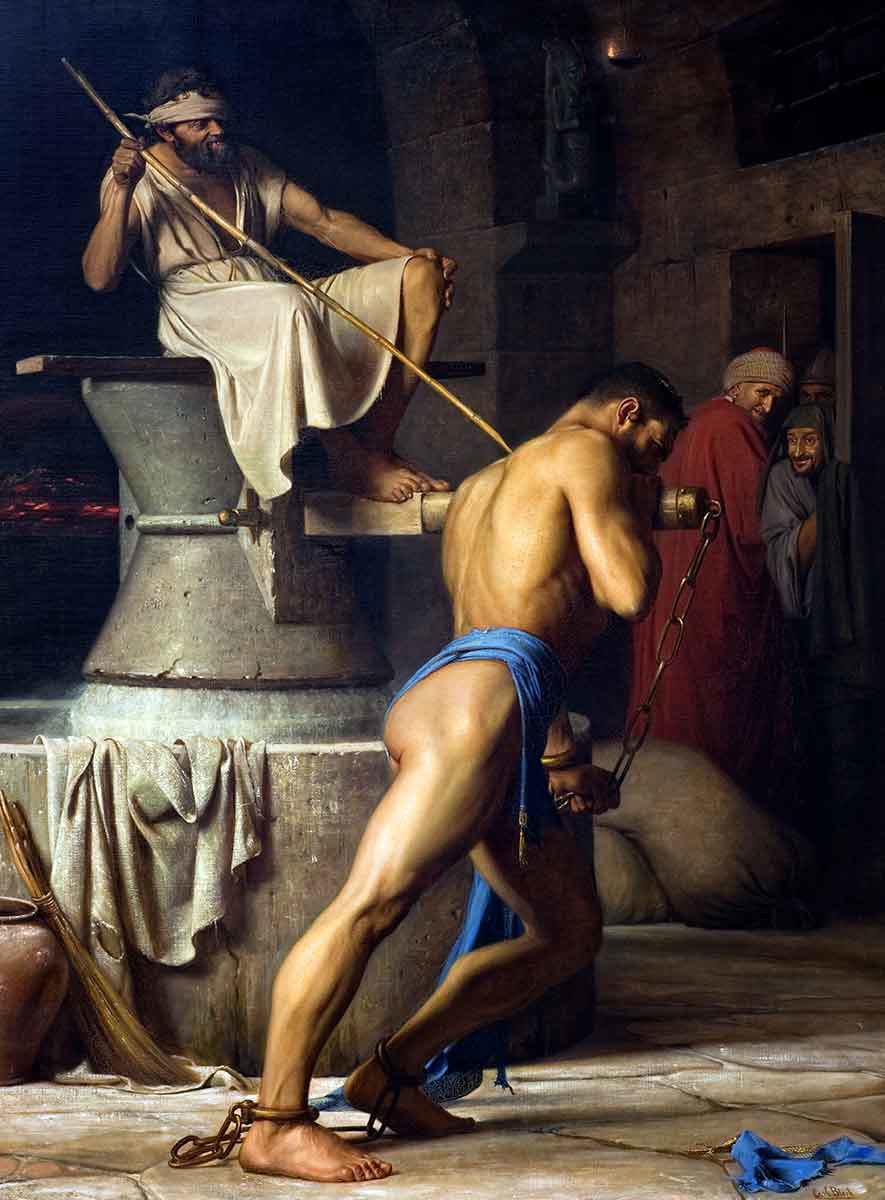
We continue to find similarities between them when we look at the stories of their respective downfalls. The story of Samson is particularly famous. In the Book of Judges, we read about how his downfall came at the hands of a woman named Delilah. She was the object of Samson’s love, although they never ended up marrying. During their relationship, Delilah pleaded with Samson to reveal to her the secret of his strength. When he eventually did so, revealing that it was his long hair, the Philistines ambushed Samson and cut off his hair. This was a trap; Delilah intentionally deceived Samson and betrayed his trust. Eventually, while being paraded before the Philistines at a festival inside a temple, Samson pushed the twin columns of the temple, causing it to collapse. This brought the whole building down on the Philistines, killing all who were present, including Samson himself.
Although the details differ significantly, the story of the end of Hercules’ life is somewhat similar. His final lover was named Deianira. She gave Hercules a tunic which she believed was soaked in a love potion. In reality, it was covered in the poisonous blood of the Hydra. This caused Hercules to experience such a torturous burning sensation that he threw himself upon a pyre to kill himself.
In both cases, the hero’s death is a result of his final lover’s actions, though it is the hero himself who ultimately decides to end his own life. Interestingly, even the very name of the woman involved is fairly similar. Could the Hebrew “Delilah” have been adapted into “Deianira” by the Greeks, intentionally altering it to mean “Man-Destroyer” in their language?
Who Was the Original?
There is strong evidence to suggest a connection between the legends of Samson and Hercules, and there was sufficient contact between the Israelites and the Greeks that they could have influenced one another’s traditions. But the idea that the Bible’s Samson inspired the Greek Hercules depends on the notion that the story of Samson predates the story of Hercules.
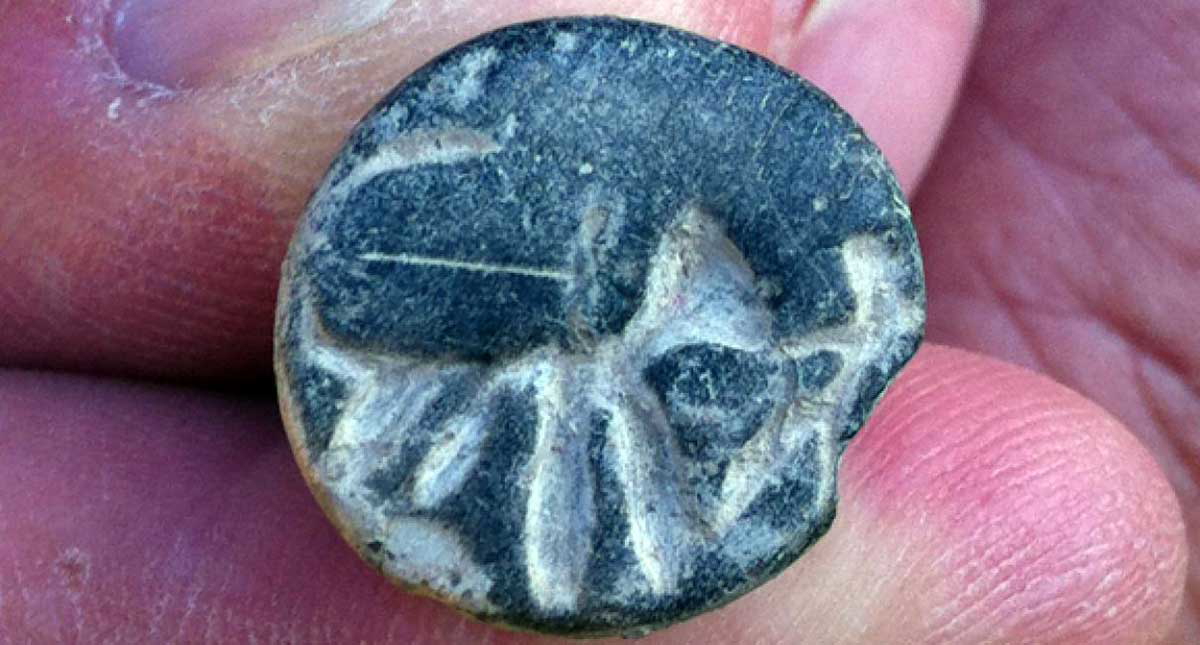
The Book of Judges is set mostly within the Late Bronze Age. Samson’s exact dates are uncertain, but he should likely be placed in approximately the 13th century BCE. Interestingly, an ancient artifact from that time period was discovered in Israel in 2012, and may well depict Samson. This artifact was a small stone seal that appears to depict a man next to a lion. The man is unarmed, just like Samson in the Bible’s account. What makes this especially notable is that it was found at Beth Shemesh, the very part of Israel in which Samson was said to have been active. Given that it dates to the 12th or 11th century BCE, shortly after the era in which Samson was said to have lived, this suggests that the story of Samson dates back to the Late Bronze Age.
In contrast, the earliest references to Hercules in Greece come from no earlier than the 8th century BCE.
Were Samson and Hercules Really the Same?
In conclusion, could there be a genuine connection between Hercules and Samson, or are their similarities just superficial? The simple answer is that we cannot say for sure one way or the other. Nevertheless, such a connection is not implausible. After all, the Greeks had regular contact with the Bronze Age and early Iron Age Israelites through trade. Furthermore, there is some evidence that the story of Samson significantly predates the Greek tradition of Hercules, and therefore could have inspired the Greek hero, at least in part.
Notably, we can see that most episodes in the life of Samson are reflected in the legend of Hercules. Still, these episodes and details make up only a small part of the larger legend of Hercules in Greek mythology, which was a much more complex story than that of Samson. It is likely that the stories of several different people, both historical and mythological, were incorporated into the Greek hero Hercules, with Samson being one of those figures.