William Hogarth was an influential English painter whose satirical paintings and engravings exposed the vices of the 18th century. Often regarded as a foundational figure in British visual culture, he forged a distinctly national artistic voice that distanced itself from European models. His work blended humor with acute observation, creating narrative cycles that captivated the public. Read on to explore his unique satirical style and its lasting historical and cultural influence.
Who Was William Hogarth?
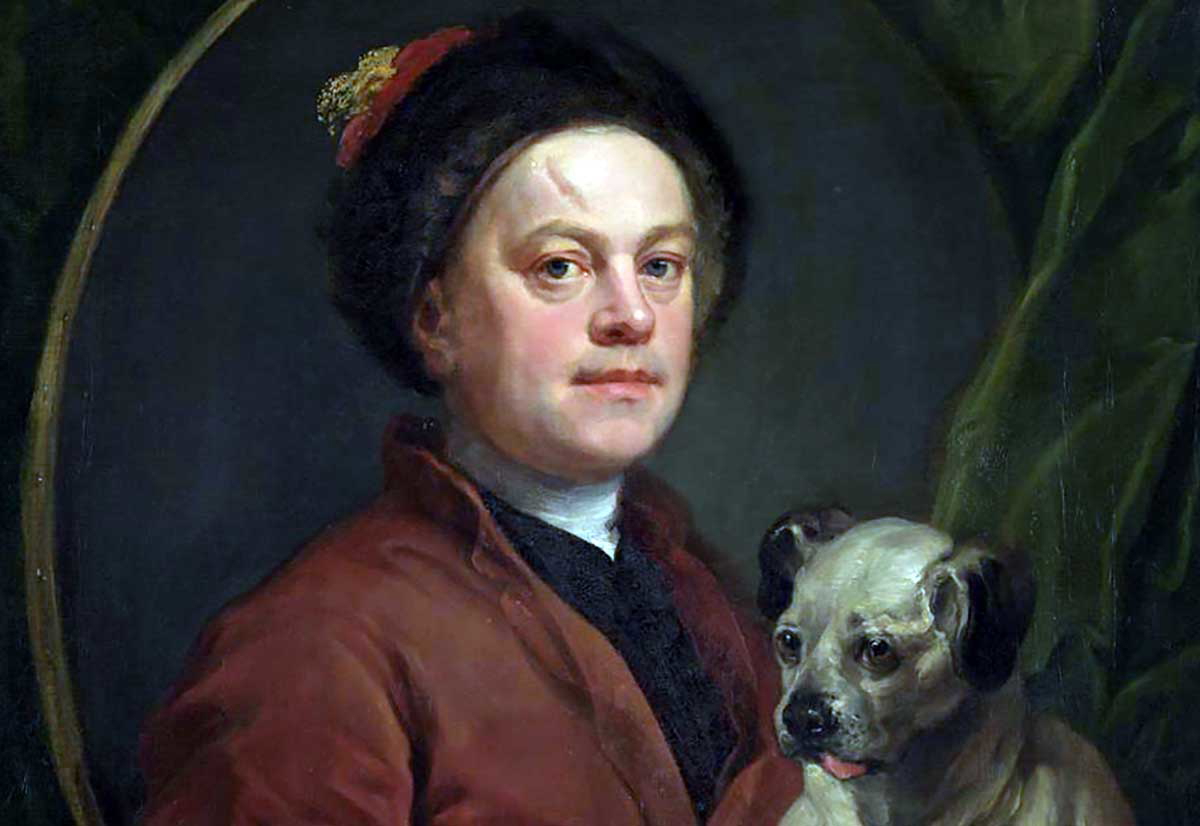
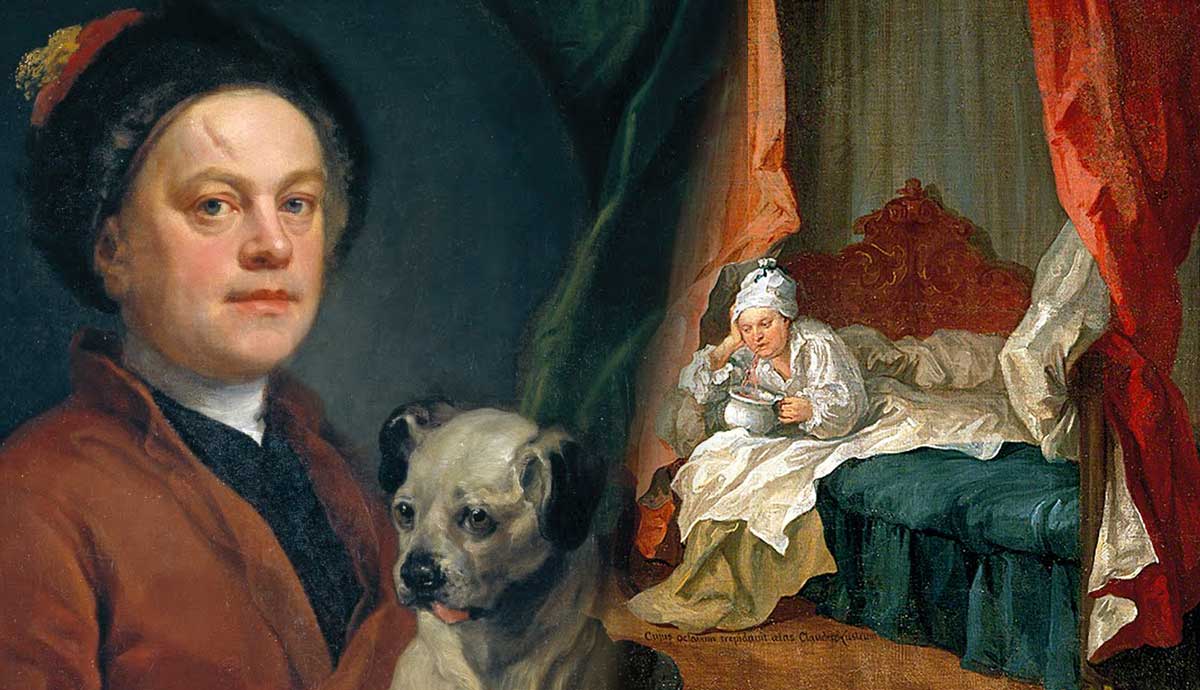
William Hogarth was a pioneering English artist and one of the most notable satirists of the 18th century. Born in London to a financially struggling family, he experienced hardship early in life, including his father’s imprisonment in Fleet Prison due to debt. These formative incidents shaped Hogarth’s sensitivity to themes of vice, injustice, and social hypocrisy, which would later become central to his artistic identity.
Hogarth began his career in 1718 as an apprentice engraver and later studied at the Academy of Fine Arts in St. Martin’s Lane, refining his technical skill and observational eye. By 1730, he had gained fame, helping to inspire the Copyright Act of 1735 to protect artists’ rights. He also published The Analysis of Beauty and was appointed Serjeant Painter to the Crown. His distinctive style profoundly influenced British art through his engravings, paintings, and portraits. Most notably, his narrative painting and visual satire paved the way for his series of Modern Moral Subjects, which satirized the manners and morals of his time.
A Harlot’s Progress: Plate One
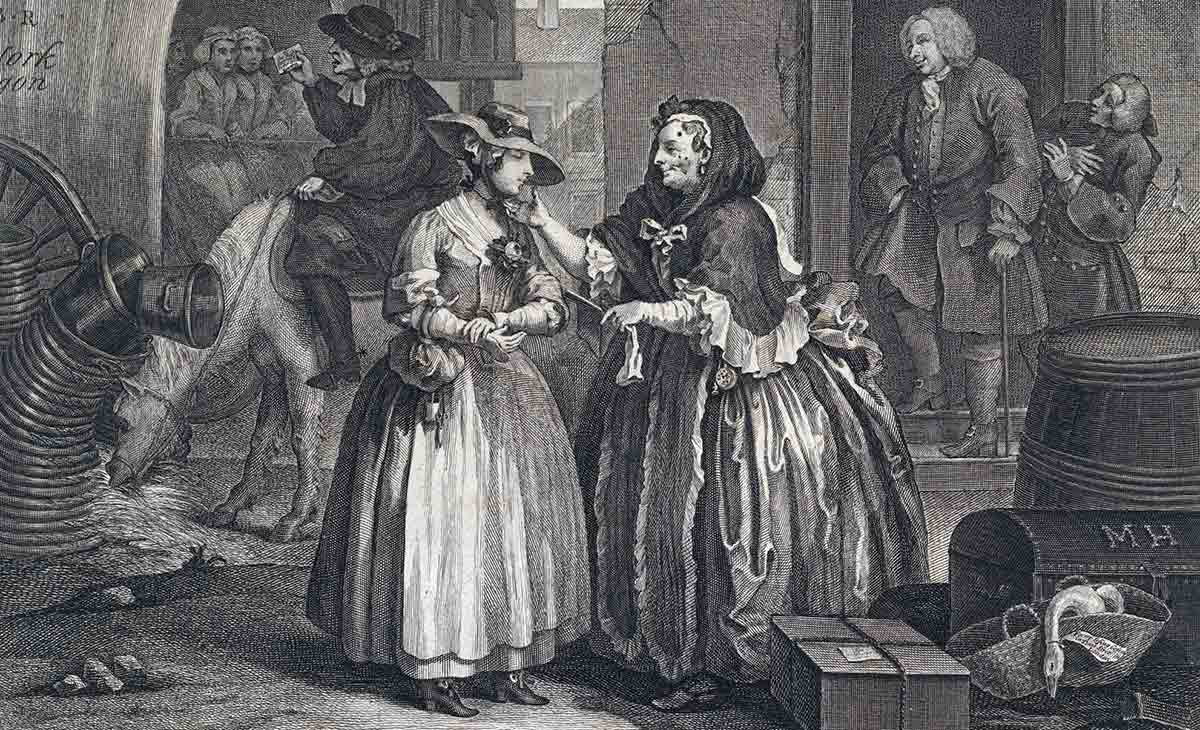
One of Hogarth’s earliest and most groundbreaking series, A Harlot’s Progress, marks the beginning of the Modern Moral Subject. In six scenes, he follows the tragic descent of Mary Hackabout, a young woman who arrives in London seeking opportunity but instead encounters exploitation and corruption. The series exposes a society that condemns vice while simultaneously sustaining it.
In the first plate, set outside the Bell Inn, Mary steps off the York Wagon and is immediately appraised by the infamous procuress Mother Needham, as a lecherous gentleman watches nearby. Her youthful innocence is framed against the chaotic energy of London’s streets. Through this interaction, Hogarth introduces the central theme of the cycle: how quickly vulnerability can be exploited in an urban environment driven by greed. This opening plate sets the tone for the harsher developments that will follow.
A Harlot’s Progress: Plate Three
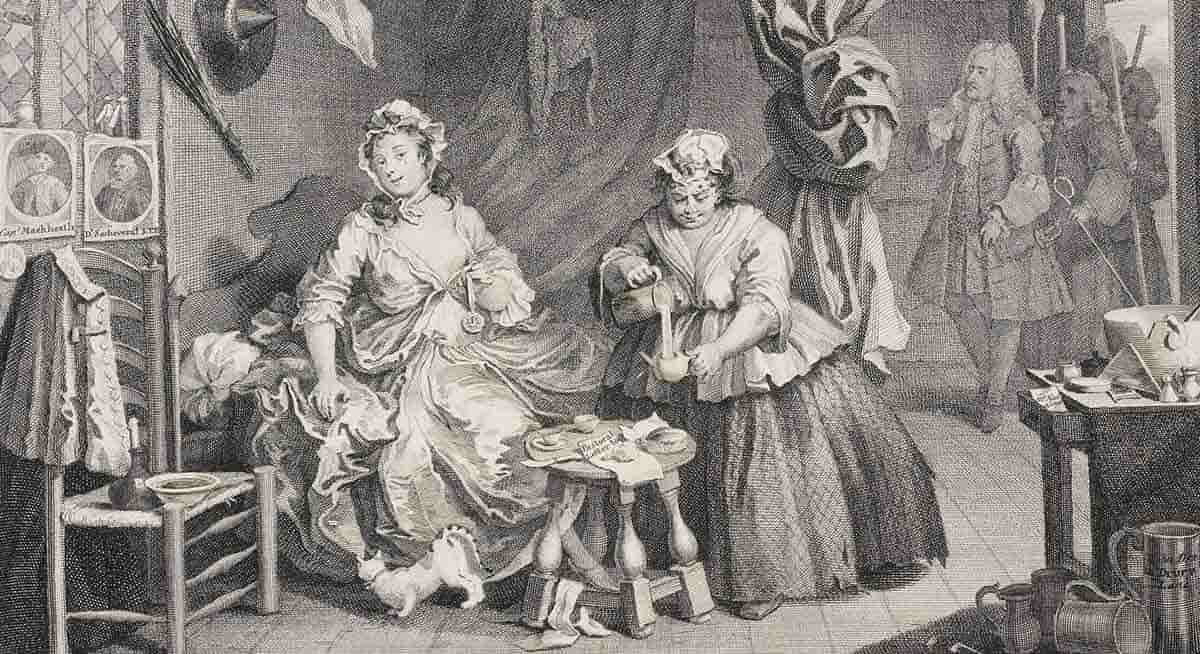
By Plate Three, Mary is firmly trapped in the world of prostitution. Hogarth places her in a cramped, disorderly room filled with scattered garments, a broken mirror, and mocking faces. Each detail signals her decline: the shattered mirror hints at lost integrity, while the surrounding chaos reflects her unstable life. This scene marks Mary’s transition from initial victimization to inevitable consequence, preparing the viewer for the somber ending of the series.
A Harlot’s Progress: Plate Six
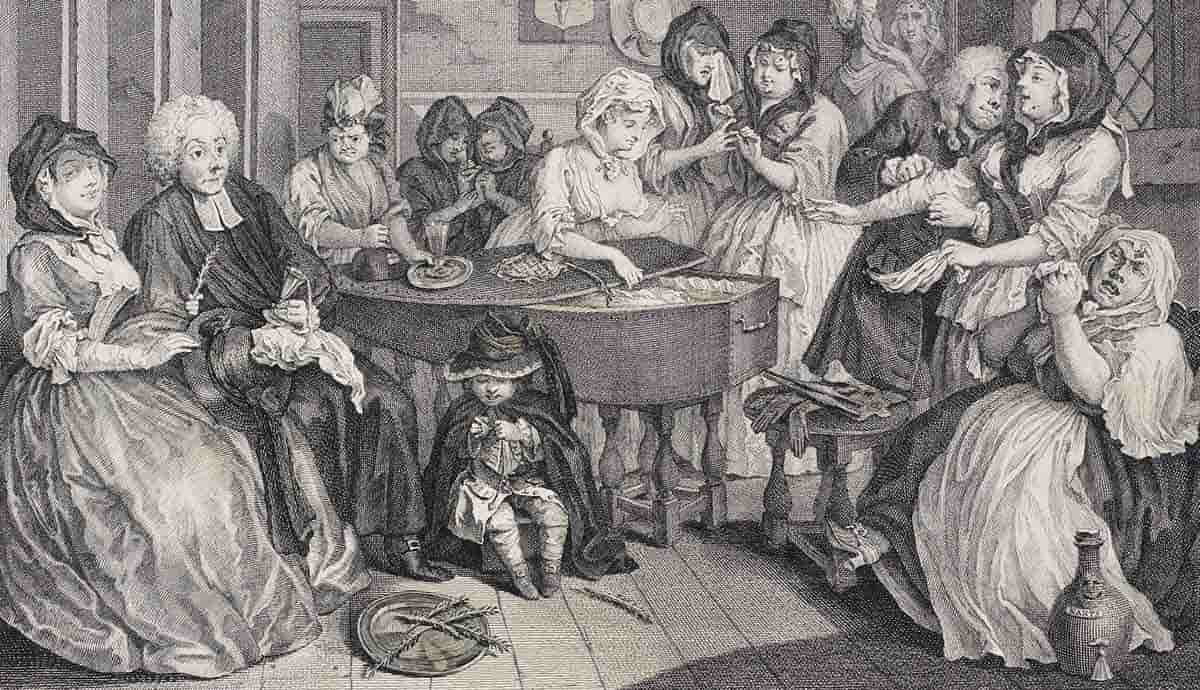
Plate Six concludes the cycle with Mary on her deathbed, surrounded by mourners and the stark effects of syphilis. Here, Hogarth highlights the brutal outcome of her life, underscoring how neglect and exploitation destroy vulnerable individuals. The final plate reinforces the series’ central message: moral decay is both personal and societal.
A Rake’s Progress: Plate One
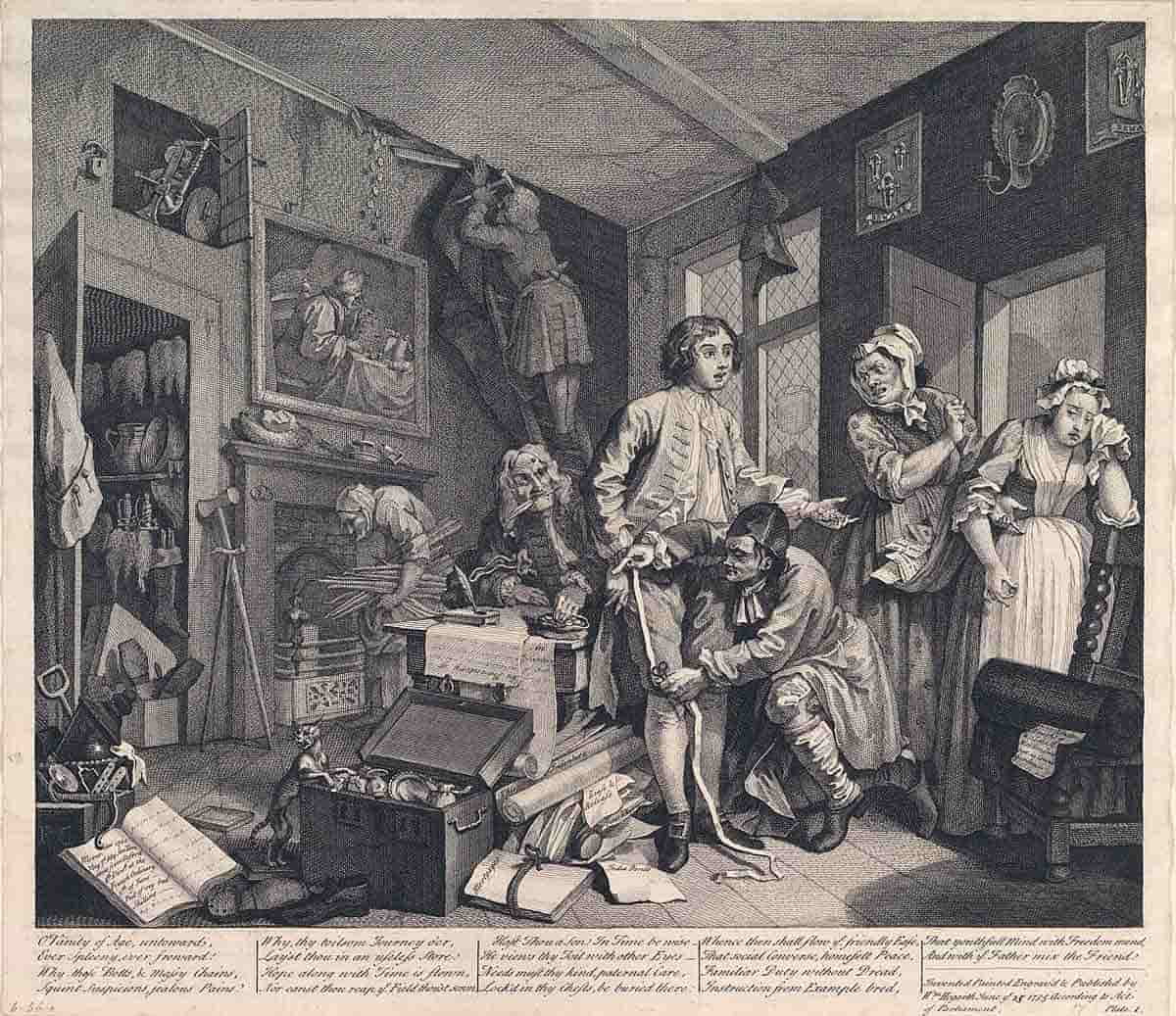
Following the success of A Harlot’s Progress, Hogarth created A Rake’s Progress, expanding his examination of vice through the story of a male counterpart. Across eight meticulously detailed scenes, Hogarth chronicles Tom Rakewell’s descent from sudden inheritance to madness and ruin. This series exemplifies Hogarth’s sequential narrative style, effectively telling a complete moral story through visual art—an innovative approach for its time. It reflects the realities of society, highlighting themes of luxury, vice, debt, and their consequences.
In the opening plate, Tom inherits his father’s estate, already revealing vanity and irresponsibility. Surrounded by servants, lawyers, and Sarah Young, his neglected pregnant fiancée, he begins his path toward moral corruption. Hogarth fills the scene with symbolic details—discarded household items, greedy faces, and gestures of excess—foreshadowing the reckless behavior that will ultimately lead to Tom’s downfall.
A Rake’s Progress: Plate Six
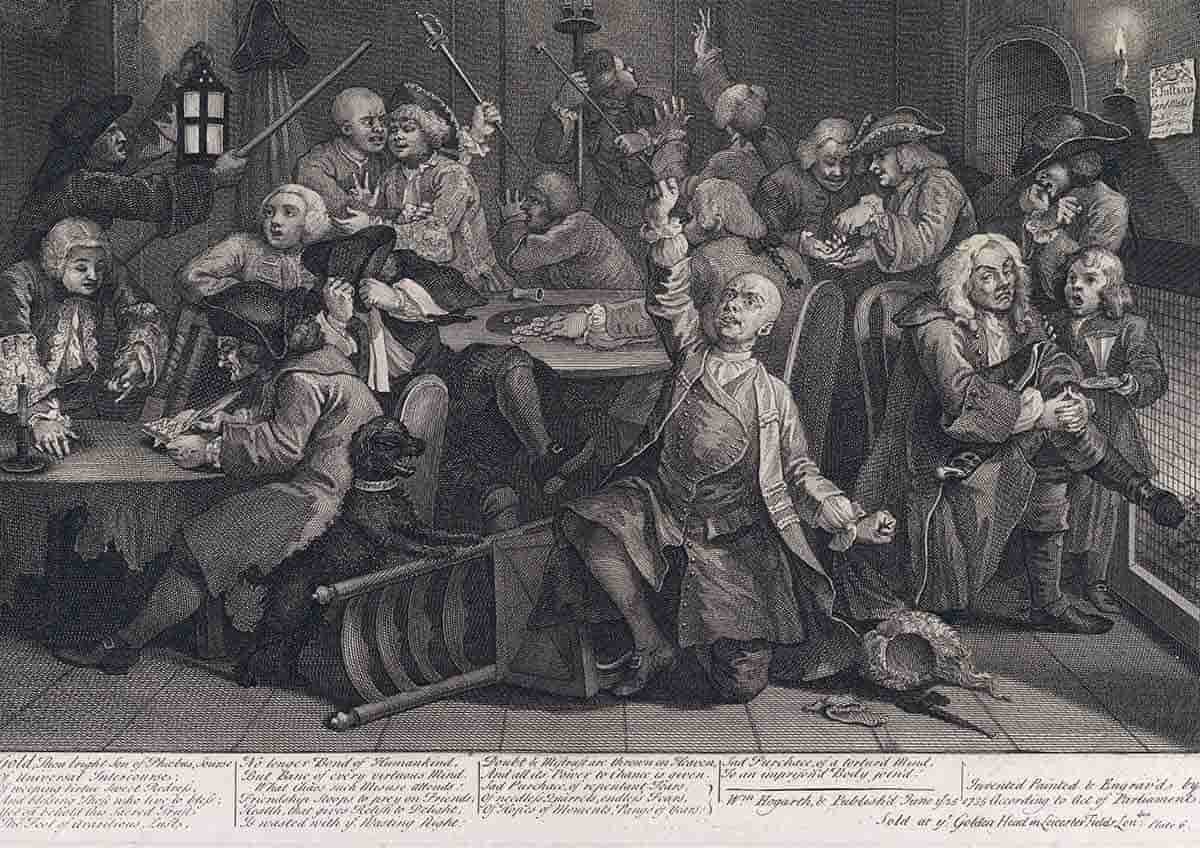
By Plate Six, Tom’s downfall has accelerated. He is depicted in a frenzied gaming den, surrounded by gamblers wholly absorbed in their wagers. At the center of the plate, he curses his misfortune as he realizes he has lost his remaining possessions. A fire rages nearby, yet the players ignore the danger—a vivid metaphor for their moral blindness. This scene not only heightens the drama but also reinforces Hogarth’s critique of reckless excess, addiction, and the social environments that encourage such destructive behavior. As the narrative progresses, the tragic end of the protagonist is revealed.
A Rake’s Progress: Plate Eight
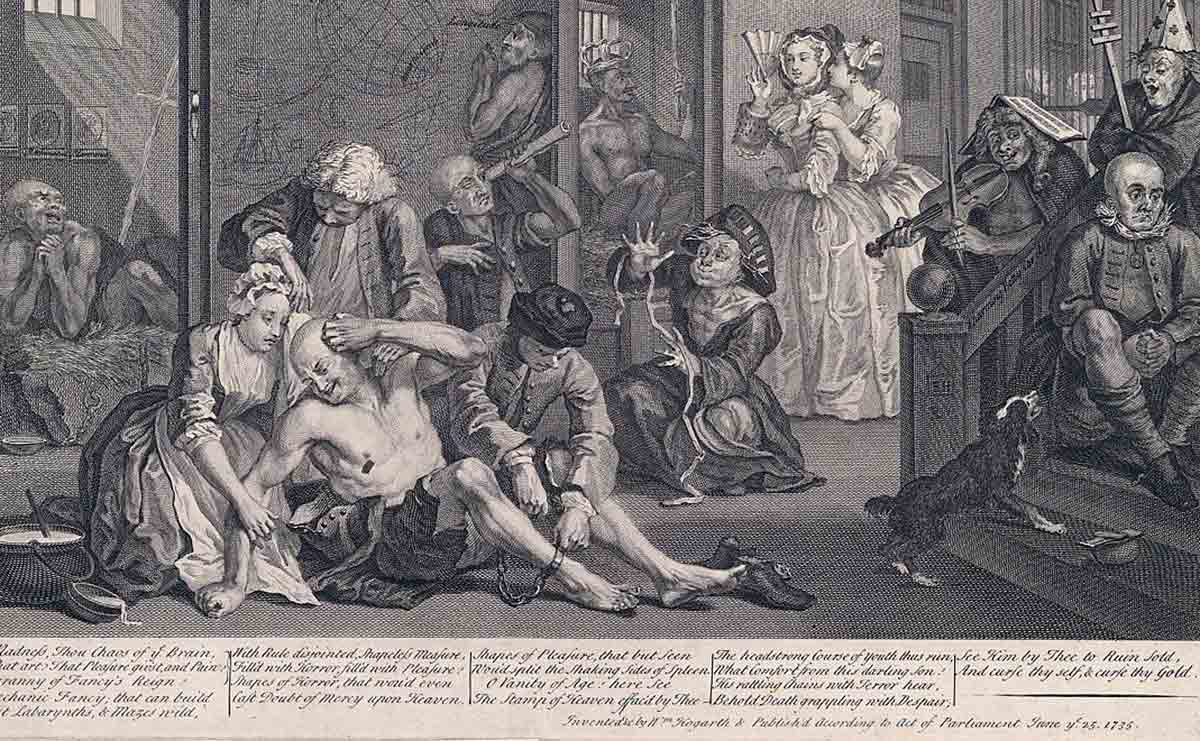
The series concludes in the notorious Bedlam asylum, where Tom, now destitute and mentally broken, is surrounded by other sufferers and gawking visitors who treat the inmates as entertainment. Sarah Young alone remains by his side, embodying compassion in contrast to the cruelty of the onlookers. Through this tragic conclusion, Hogarth’s message becomes clear: uncontrolled debauchery inevitably leads to destruction, regardless of wealth, gender, or social status.
Marriage a-la-Mode: Plate One
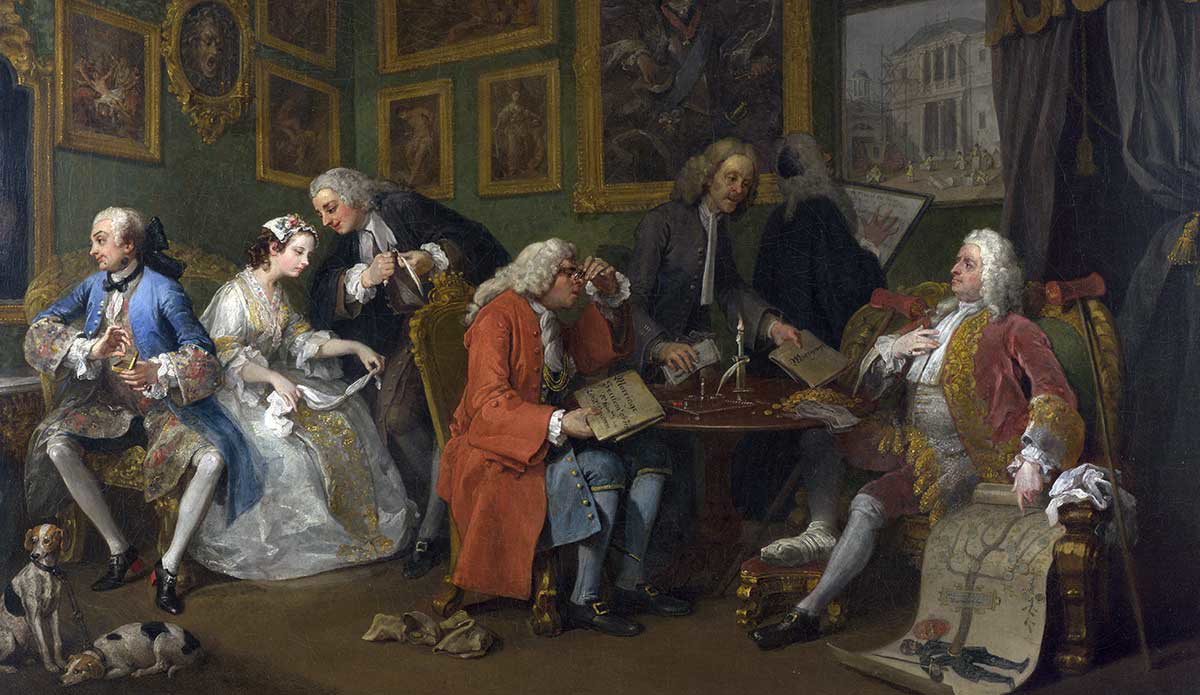
Marriage A-la-Mode is a six-part satirical series that exposes the greed, decadence, and moral emptiness of aristocratic marriages built on financial convenience rather than love. Painted around 1743 and later engraved, the series depicts the marriage between the son of the Earl of Squander and the daughter of a wealthy Alderman of the City of London.
In the first plate, the young Viscount, who is already infected with syphilis, admires himself in a mirror while his future wife talks with the lawyer Silvertongue. The chained dogs in the corner serve as a powerful metaphor for the oppressive bond they are about to enter. Hogarth fills the scene with symbolic details that critique the vanity, corruption, and self-deception underlying their union.
Plate Two: The Tête à Tête
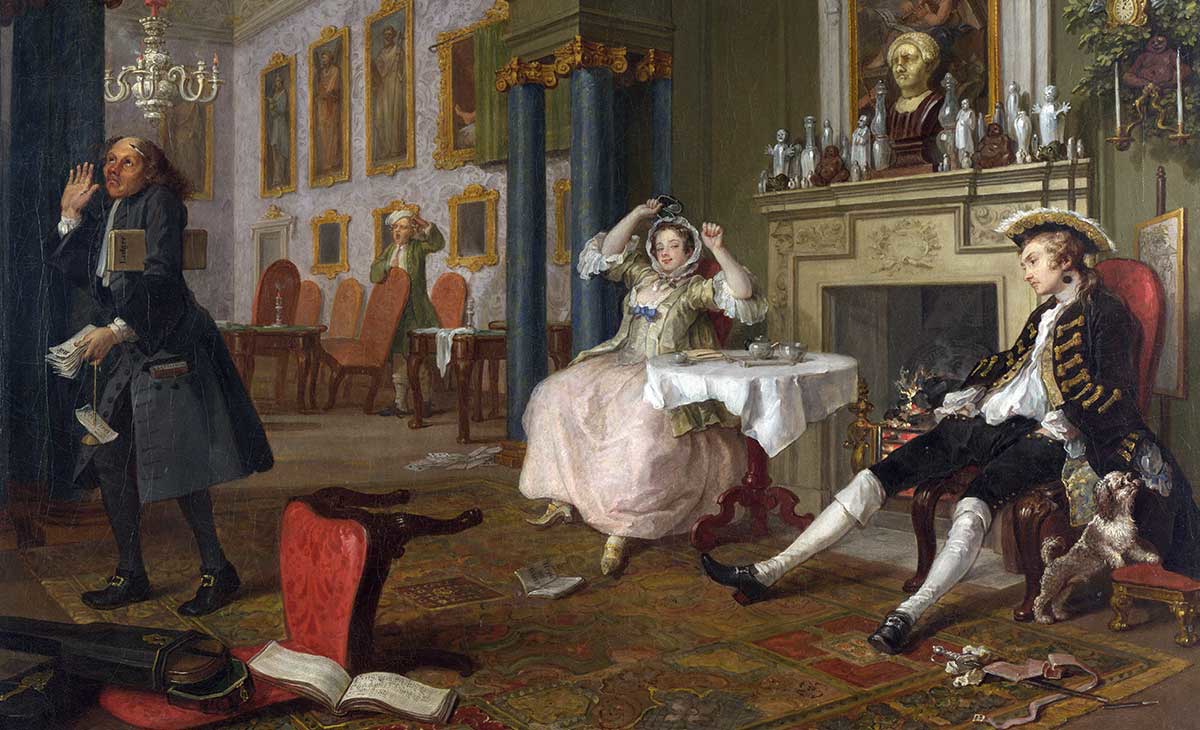
By the second plate, the marriage has deteriorated. The Viscount returns home after a night of debauchery, while the Countess lounges in boredom and indifference. The cluttered room, broken sword, and subtle erotic clues paint a picture of emotional estrangement and moral erosion.
Plate Five: The Bagnio
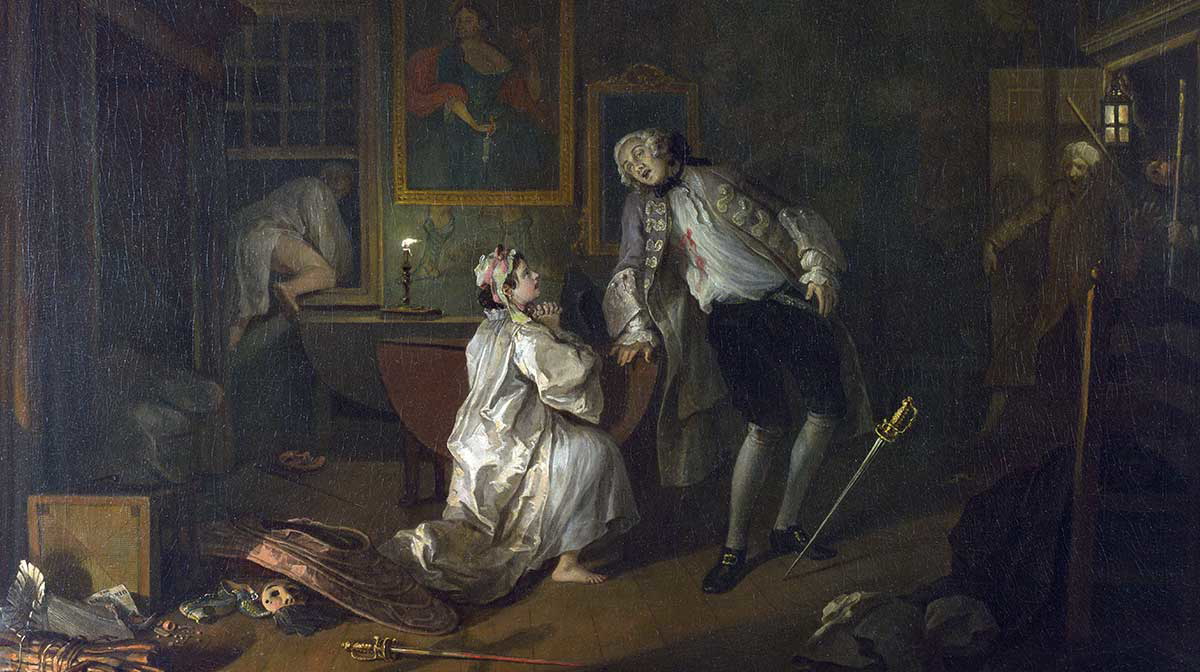
In the fifth plate, the story escalates dramatically. In the dim light of the candles in a bagnio, the Viscount confronts his wife and her lover, Silvertongue. A violent duel leads to the Viscount’s fatal wound, while the Countess pleads desperately for forgiveness. Silvertongue flees through the window. The scene is charged with tension and theatricality, encapsulating the personal tragedy born from social ambition and marital hypocrisy.
Plate Six: The Lady’s Death
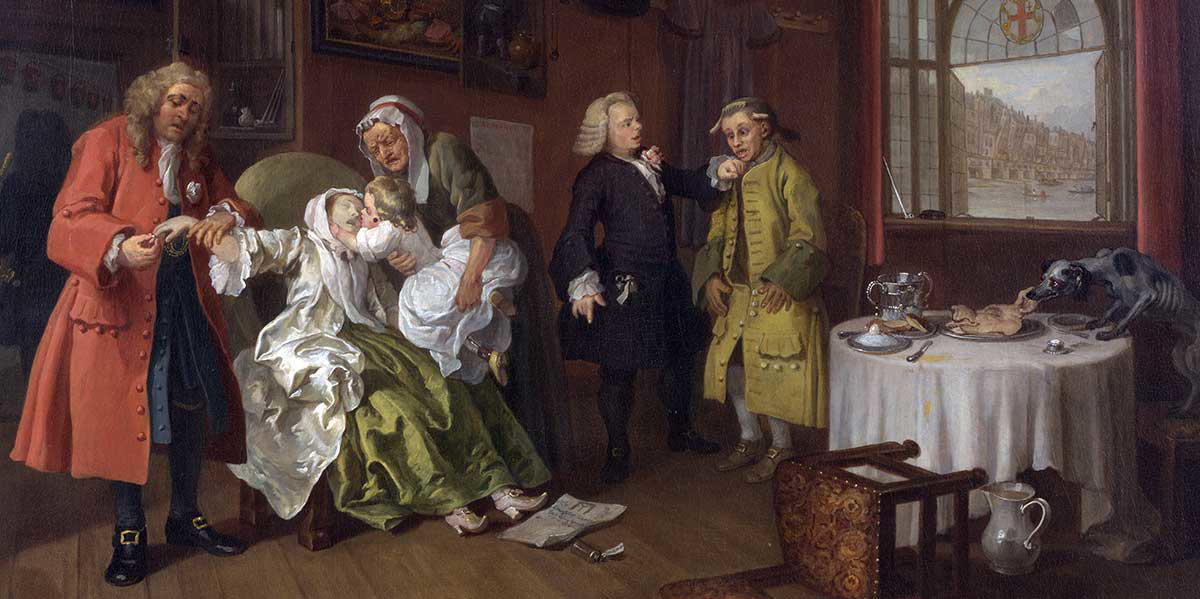
The final plate brings the story to its grim close. The Countess, disgraced and widowed, has taken poison after Silvertongue’s execution. Her disfigured child, suffering from congenital syphilis, clings to her in her last moments. Her father, rather than offering comfort, removes the wedding ring—the object that set her suffering in motion. Hogarth concludes with a powerful indictment of aristocratic corruption, revealing how privilege can mask but not prevent moral collapse.
Beer Street and Gin Lane
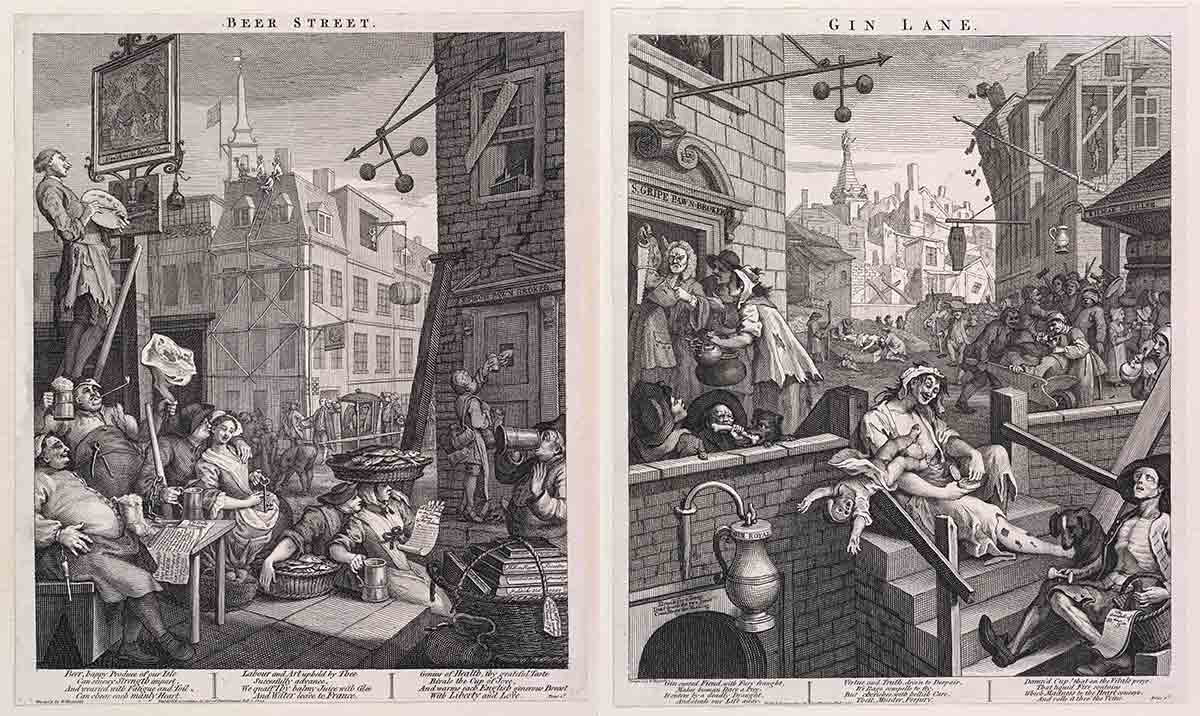
In contrast to the aristocratic focus of Marriage à la Mode, Hogarth shifts to the lower classes in his companion prints Beer Street and Gin Lane. Conceived as propaganda against the Gin Craze, the engravings present two starkly opposing visions of urban life. Beer Street celebrates industrious, contented citizens enjoying wholesome beer, depicted within a clean and lively environment. Gin Lane, its dark counterpart, portrays the devastating effects of gin addiction: starvation, neglect, madness, and death. Through this juxtaposition, Hogarth extends his broader concern for public virtue and social reform, emphasizing how civic health depends on personal moderation and responsible governance.
The Four Stages of Cruelty: Cruelty in Perfection
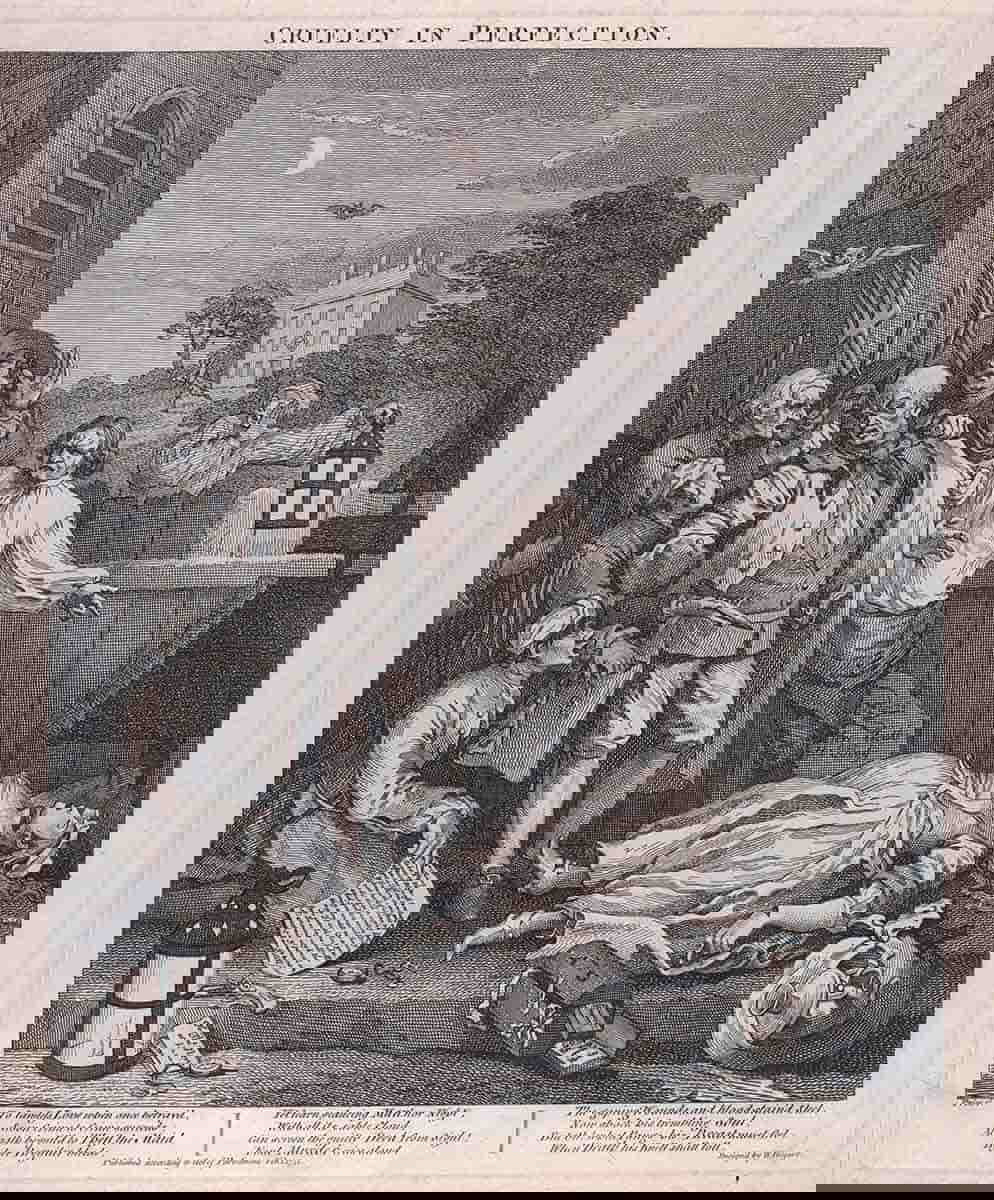
In The Four Stages of Cruelty, Hogarth addresses the evolution of violence and the moral dangers of unchecked brutality. The series follows Tom Nero, whose youthful maltreatment of animals escalates into severe crimes. By Plate III, Cruelty in Perfection, Nero has murdered his pregnant mistress and is apprehended in a rural churchyard. A pistol and stolen goods lie at his feet, signaling his descent into criminality. Hogarth surrounds him with an enraged crowd and the body of the woman he has killed, creating a composition filled with tension and moral accusation. The plate warns viewers that a society that tolerates small acts of cruelty fosters larger, more destructive ones.
The Reward of Cruelty
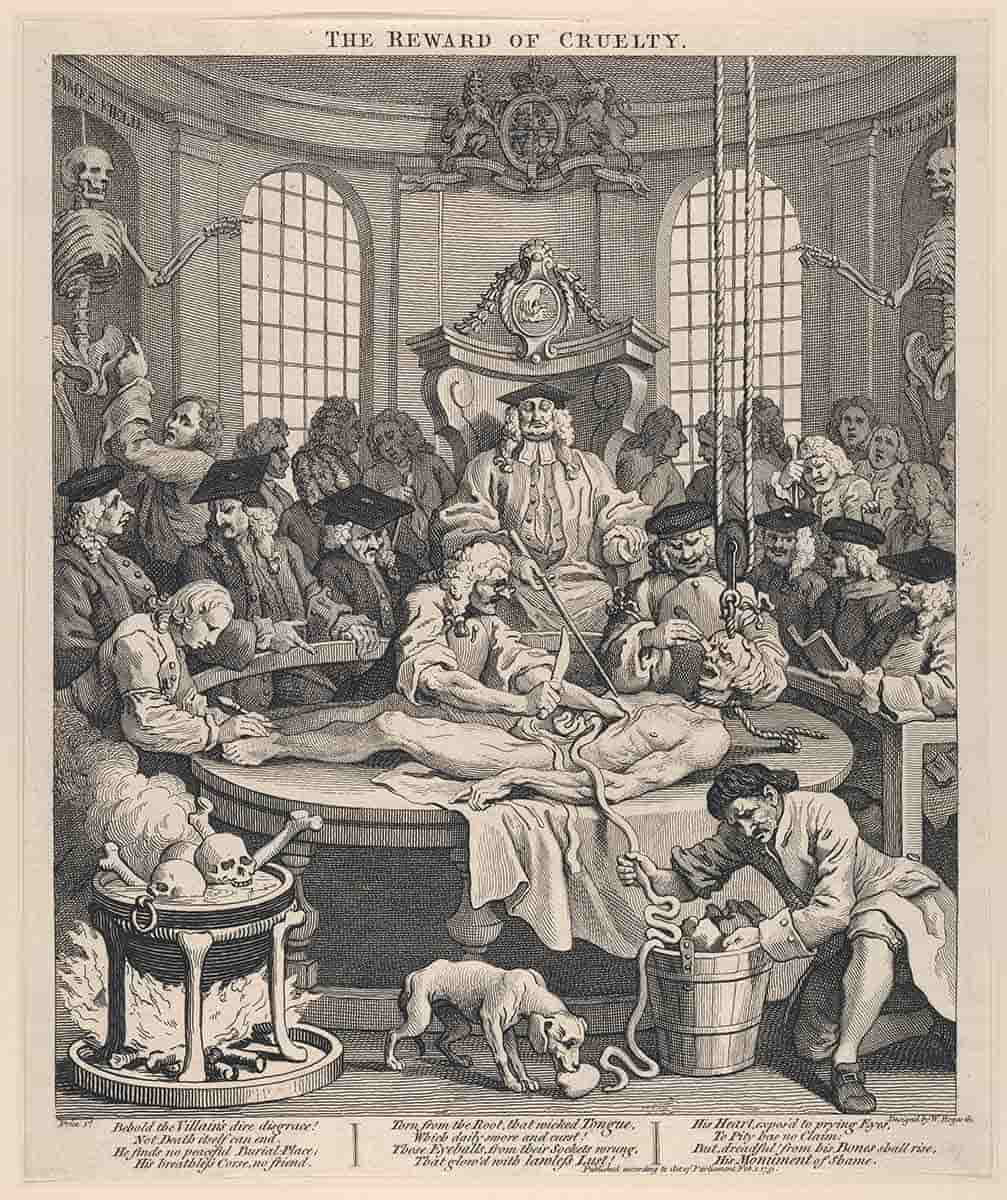
The final plate, The Reward of Cruelty, presents Nero’s dissected corpse in a surgical theater following his execution. Hogarth’s unflinching portrayal of the brutal post-mortem punishment mirrors the cruelty Nero inflicted on others. The scene functions as a grim moral lesson: a life steeped in violence ultimately leads to humiliation, suffering, and premature death. Hogarth uses the horror of the spectacle to reinforce his belief in moral responsibility and social deterrence.
An Election Entertainment
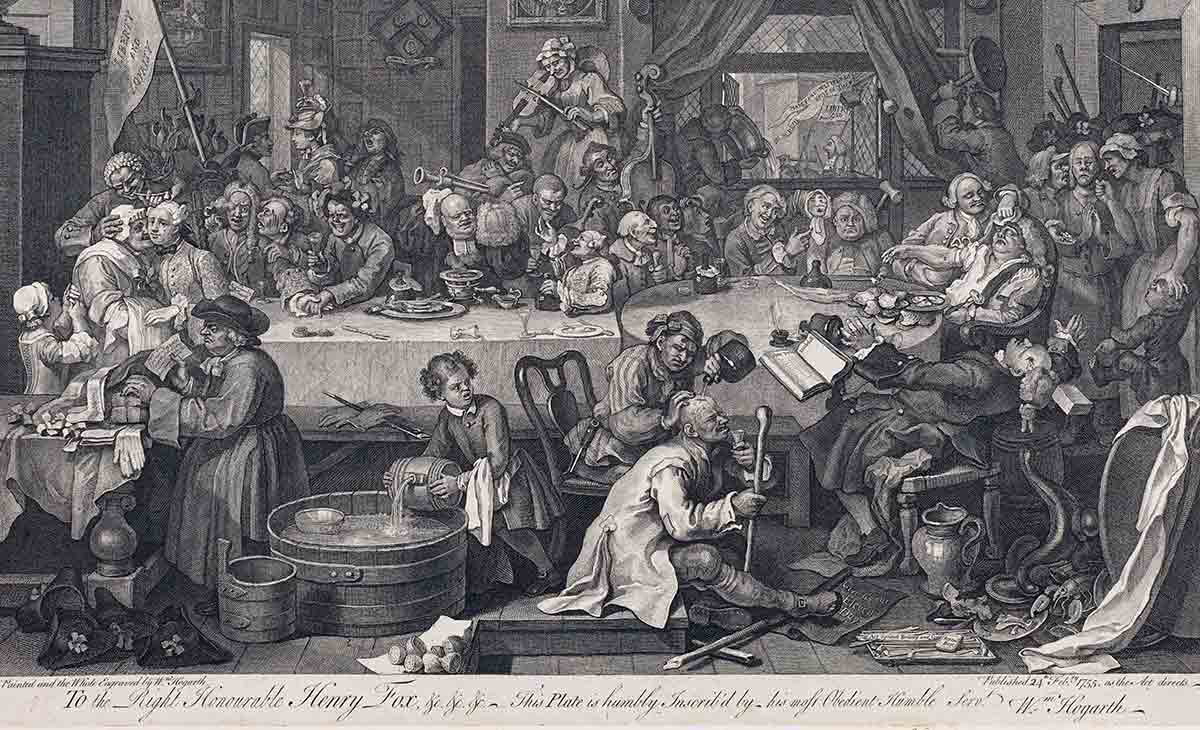
Political satire forms another significant facet of Hogarth’s oeuvre. An Election Entertainment, the first engraving based on Hogarth’s final painted cycle, The Humours of an Election, lampoons the corruption and disorder of 18th-century British politics. Inspired by the Oxfordshire election of 1754, the scene depicts Whig candidates courting votes amidst bribery, drunkenness, and chaos. Hogarth copies the painted composition with precision but enriches the print with sharper satirical emphasis. The work condemns political manipulation and highlights the fragility of civic virtue—concerns that echo across his entire career.
William Hogarth’s “Credulity, Superstition, and Fanaticism”
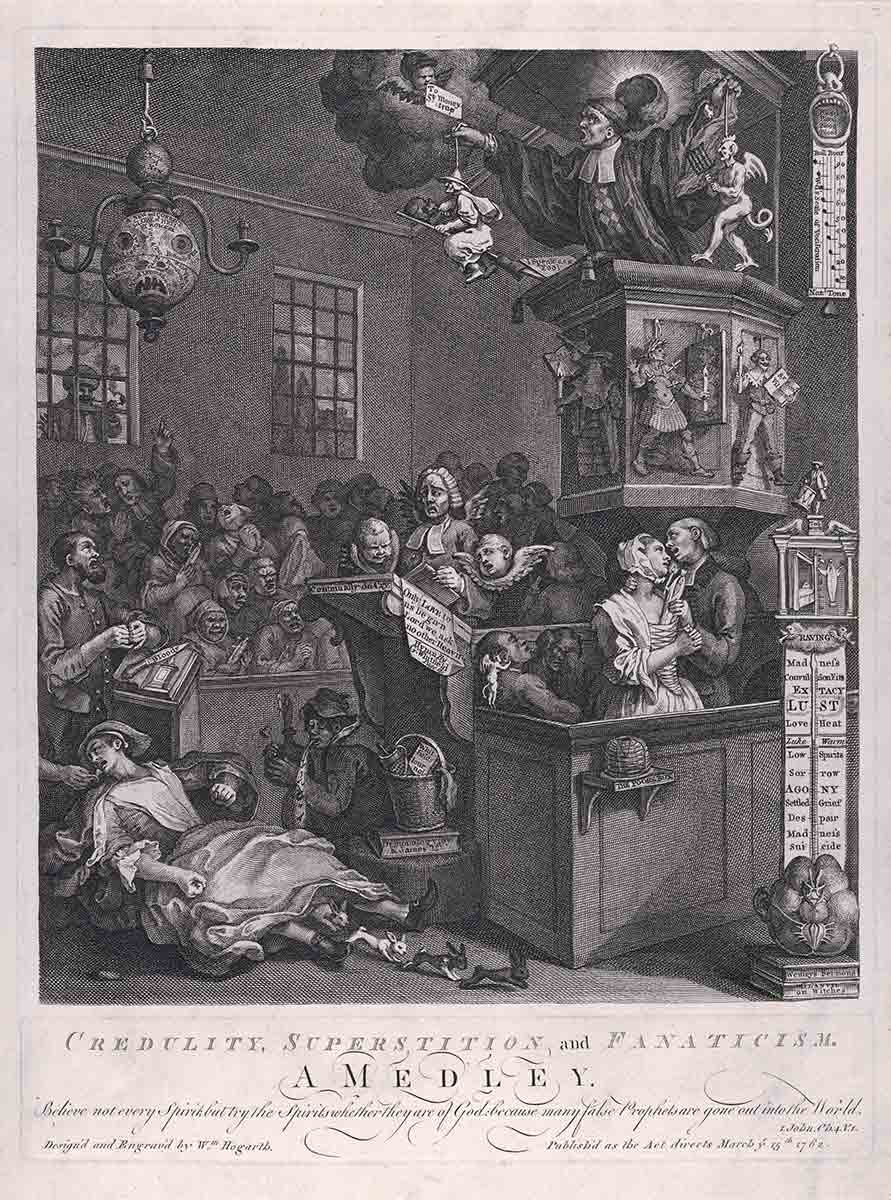
With Credulity, Superstition, and Fanaticism, Hogarth turns his satirical lens toward religion. The print presents a frenzied congregation overcome by hysteria, false visions, and clerical manipulation. Through exaggerated expressions and a crowded, turbulent composition, Hogarth critiques blind faith and the exploitation of religious devotion for personal or institutional gain. He suggests that fanaticism and ignorance are as harmful to society as the vices he condemns. Hogarth’s legacy remains as proof of the power of art that not only entertains but also reveals, provokes, and reforms the society it depicts. From political corruption to domestic hypocrisy and religious fanaticism, his works remain striking and relevant over time.