
Long before modern Halloween traditions took shape, real fears of dark magic and spiritual corruption left permanent marks on the American landscape. Decades before the famous panic in Salem, colonial towns executed women accused of witchcraft during forgotten epidemics, while Southern estates and Southwestern deserts accumulated tales of spirit women and shapeshifters. Across the United States, tales of witchcraft have clung to certain places, earning them a supernatural reputation. If you love the spooky season, here are five sites with witchy traditions worth visiting.
1. Hartford, Connecticut Had the First American Witch Execution

In May of 1647, Alse Young (sometimes called Achsah or Alice, thanks to spelling being more of a suggestion than a rule in those days) became the first person in America to be put to death for the practice of witchcraft. Poor Alse met her fate at the gallows in Hartford, Connecticut, near what is now the Old State House. Today, you can find a memorial brick engraved with her name beneath a flagpole near the Town Hall, a quiet reminder of a less-than-peaceful past.
While Salem is the baseline for American witchcraft, Connecticut’s witch hysteria started nearly four decades earlier and ran for several years. Alse was just one of many accused, and hers was not the only execution in the state. Over a dozen people were hanged, including Mary Johnson of Wethersfield, who confessed to making a pact with the devil in 1648, as many of the accused would do in hopes of receiving mercy in trade for confession and repentance. No matter that they had to lie to receive this mercy. Lying, to many of them, was preferable to dying. Even prominent members of the community, like Joan and John Carrington (who was a carpenter), weren’t safe from accusations. Both husband and wife were hanged in 1651.
In 2017, nearly 400 years after her death, Alse and fellow Connecticut resident Lydia Gilbert were exonerated by the town council. In 2023, Connecticut lawmakers passed a resolution officially proclaiming the innocence of all those convicted of witchcraft in colonial Connecticut. It may have taken centuries, but better late than never, presumably.

Historians have only two records documenting Alse’s tragic fate: a brief mention in John Winthrop Sr.’s journal and a line in Matthew Grant’s Old Church Record. Though the details of Alse’s life remain mostly lost to time, we know she lived with her husband, John, and their daughter, Alice.
While the cause of her witchcraft accusation is unknown, there was a devastating influenza epidemic in their town that quadrupled the local death rate in 1647. Living next to the Thornton family, who lost four children in the epidemic, didn’t help either. Thomas Thornton, the patriarch, later became a minister and was friends with none other than the infamous Cotton Mather, one of the strategists behind the Salem trials. We can assume that the accusations against Alse may have been nothing but bad luck and proximity. But in those days, with both illness and insinuations of devilry flying about, bad luck was just as dangerous as truly bad behavior.
2. Salem, Massachusetts Remains the Center of Colonial Hysteria
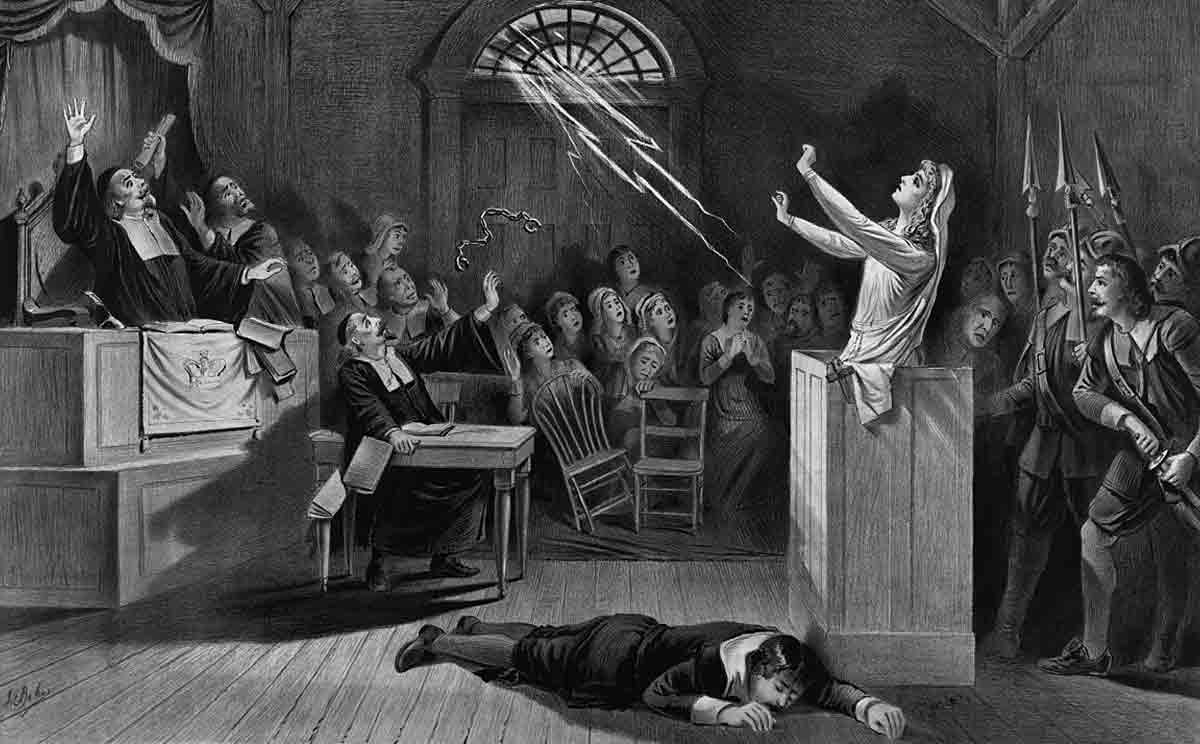
The name of this New England town alone conjures up images of pointy hats, broomsticks, and unfortunate souls who were accused of witchcraft in a frenzy of paranoia and petty grievances. However, there are fewer potions and portents in this tale than there are power plays.
In the late 1600s, Salem wasn’t just one place: there were actually two Salems. Salem Town, a bustling port where the money was, and Salem Village, a small farming community that was less prosperous and awash in social tensions. The feud between the wealthy Porters and the less fortunate Putnams only fanned the flames. Add in a dash of dogma, some bored teens with a flair for the dramatic, and a leadership vacuum, and voilà: you’ve got a recipe for mass hysteria.
It all started with whispers and rumors, and accusations flying around faster than you could say “witch.” Once someone was accused, it was a short trip from suspicion to conviction, and often, to a gruesome state-sanctioned murder. Between 1692 and 1693, the trials saw over 200 people accused, and 20 killed, including the infamous hanging of George Burroughs. Burroughs, a former minister, was dragged back from Maine and accused of leading the witches. As he stood on the gallows, he perfectly recited the Lord’s Prayer, something witches supposedly were barred from completing. A few onlookers had doubts, but those were quickly squashed by Cotton Mather, whose forceful personality moved the violence forward.
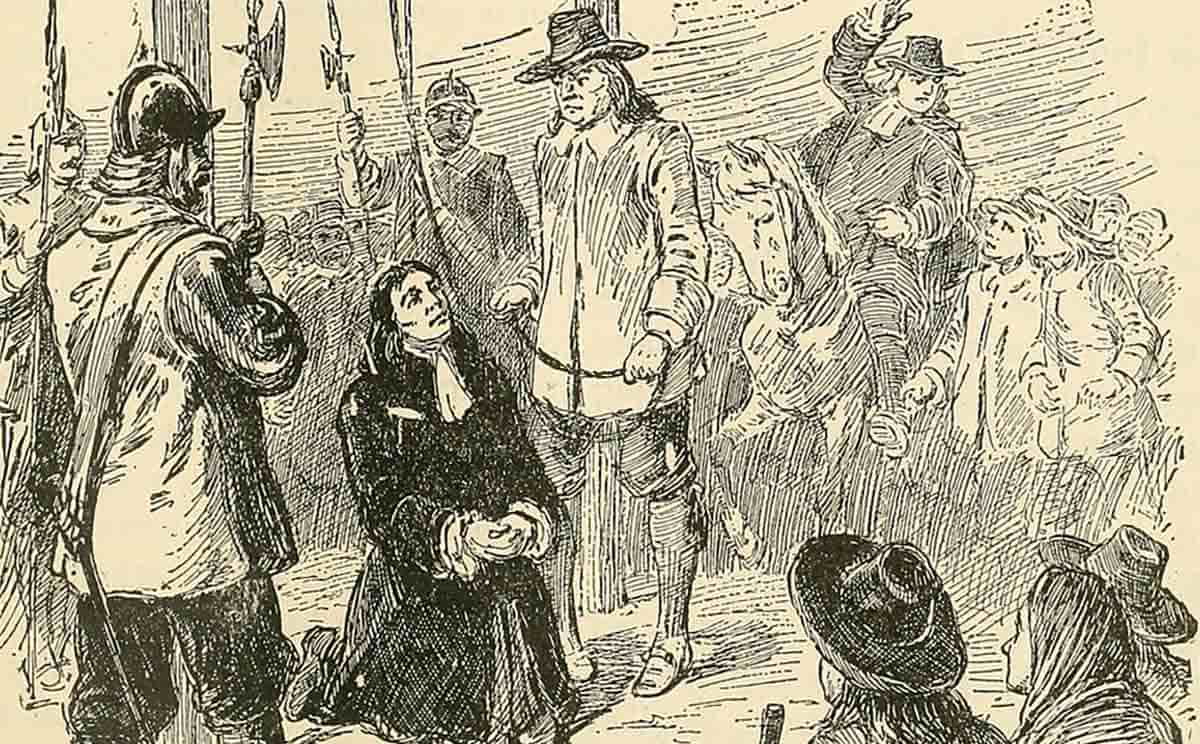
The trials didn’t just involve flying accusations; there were also some pretty horrific punishments. Take Giles Corey, for example, who refused to plead guilty or innocent and was pressed to death with heavy stones over two long, painful days. While he wasn’t a witch, this 81-year-old clung to life rather tenaciously. This wasn’t just a witch trial: it was a tragedy for a town that couldn’t get along and needed a mediator much more than a deathman.
But let’s not forget the people who came to regret their part in this witch hunt. Judge Samuel Sewall, one of the officials responsible for sentencing many to their deaths, made an extraordinary turnaround five years later. In a rare display of remorse, he publicly recanted his judgments and begged for forgiveness.
Then there’s Ann Putnam Jr., one of the accusers who, years later, joined the Salem Village Church and confessed that she had been “deluded by the devil.” She begged for forgiveness, too, but only after the damage had long been done.
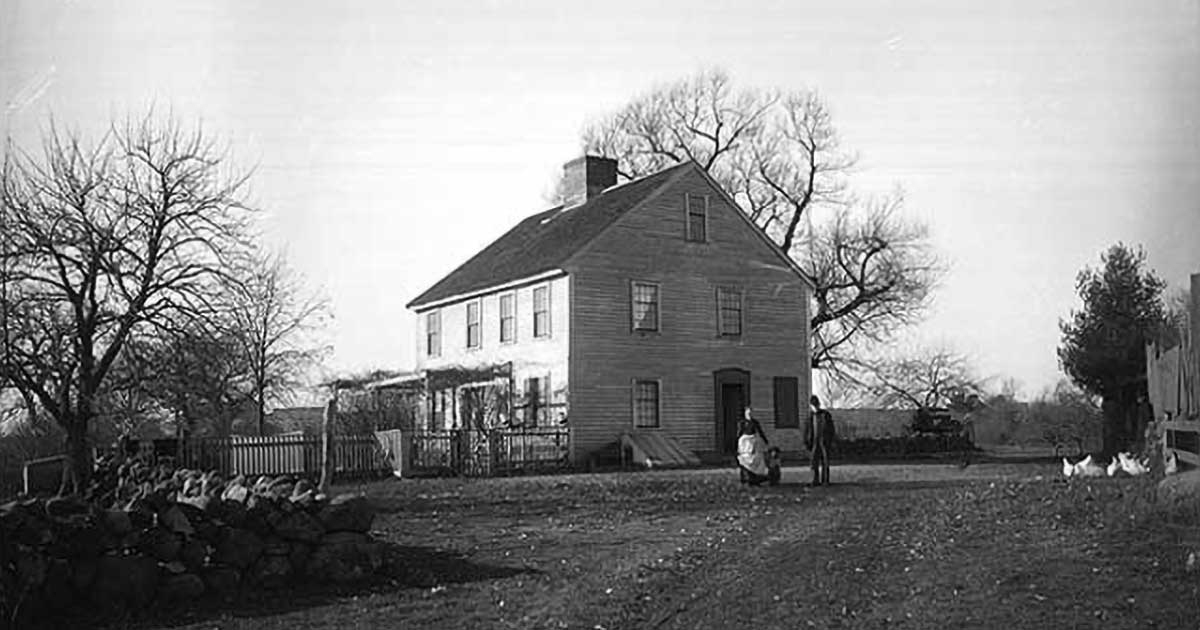
There is a reason Salem’s story lives on in the collective American memory. Several notable descendants of Salem’s key players include Ralph Waldo Emerson, Ray Bradbury, and even Walt Disney, who is descended from none other than minister George Burroughs himself.
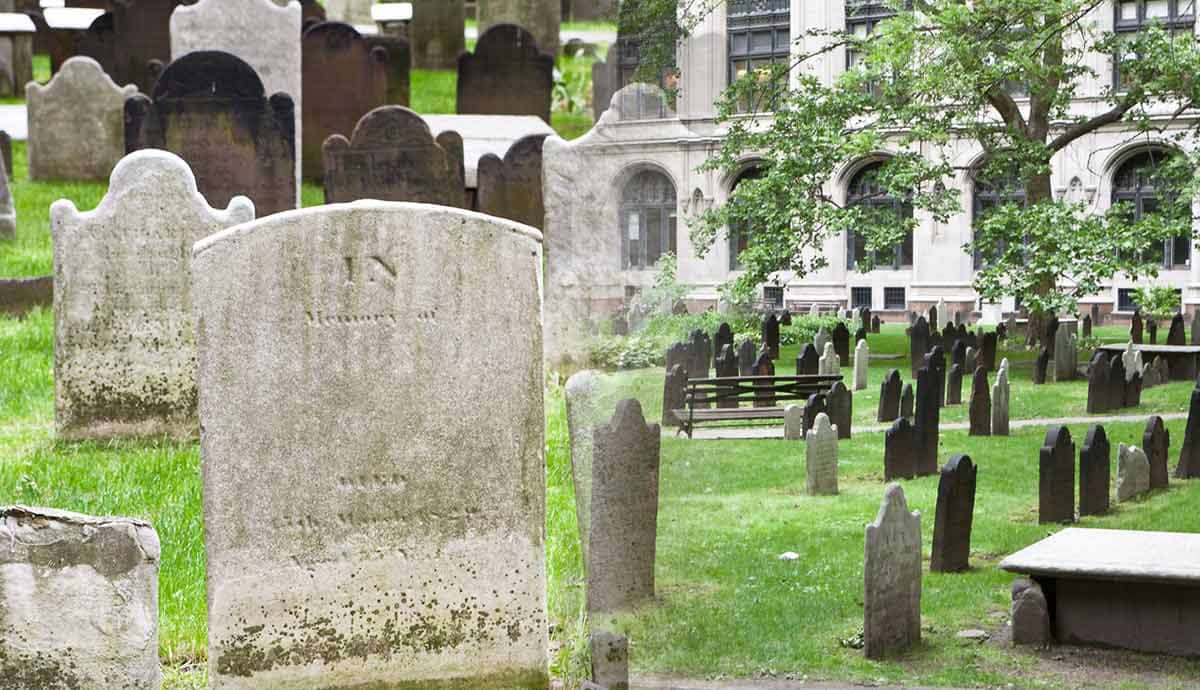
Visitors to Salem can traipse through the Old Burying Point Cemetery, the second oldest cemetery in the U.S. and a who’s-who of Salem history. It is home to Judge John Hathorne, the unapologetic witch trial judge, whose great-great-grandson Nathaniel Hawthorne added a “w” to his name to distance himself from his ancestor’s witch-punishing legacy. Also resting in Old Burying Point is Captain Richard More from the Mayflower and Simon Bradstreet, the last governor of the Massachusetts Bay Colony.
For those who hunger for tales of bad judgment and its consequences, Salem is the spot. Halloween in Salem is especially spooky, as the town goes all out to commemorate its eerie past, with haunted happenings, ghost tours, and more.
3. Myrtles Plantation Preserves Deep Southern Ghost Legends

Myrtles Plantation, a seemingly idyllic slice of Louisiana history, is actually a paranormal heavy hitter. While legend has it that “Chloe,” the spectral former slave with the green headscarf, haunts the plantation, skeptics have worked hard to debunk the myth. One can’t get too comfortable. Just because Chloe may not have existed doesn’t mean the place isn’t replete with specters of those who came before. Plenty of actual, verifiable tragedies occurred here, including one still unsolved murder.
Chloe’s story, though likely fabricated, is still based on a phenomenon that’s haunted generations of homeowners. For decades, members of the Stirling family reported sightings of a woman’s shadowy figure, and all of their stories contained an eerie similarity. The woman they saw was wearing some kind of green head covering.

Ghostly activity was commonplace here, especially near the location where William Winter was shot on the front porch in 1871. Winter, a well-known lawyer, succumbed to his injuries, and all the perp left behind was the sound of fading hoofbeats and a death that still reverberates in local lore. Add to that a slew of deaths, including several children perishing from fevers within the home, and you’ve got yourself a good, old-fashioned ghost hotspot that skeptics can’t fully explain away.
4. The Ably House in Galena Tells a Dark Midwestern Tale

Hopping over to Galena, Illinois, a one-time bustling riverboat port, where the Ably House has been giving people a serious case of the creeps for over a century. This one isn’t open for tours or peeks into the netherworld. Ably House is privately owned. At most, visitors can only spy it from the nearby road or loiter in the local general store. That hasn’t stopped the small town’s teenagers from sneaking onto the property in search of cheap thrills. Not many see a ghost, but a fair few have been warned off by local law enforcement.
The grim tale of the Ably family begins in the 1830s with Garrett Bias, his wife Polly, and their children. Soon, a young servant named Catherine joined the household. What followed was a string of suspicious deaths that began with Polly’s sudden illness and quick burial, followed by the death of the Bias’s daughter, who was also put in the ground with haste, making the town wonder why no one was able to appropriately give a farewell to their bodies. Only months after, Garrett married Catherine, arousing suspicions that the deaths may not have been as natural as they appeared.
Another hired person joined the household, Jacob. As the years passed, Garrett himself fell ill and died. Another sudden departure that met with raised eyebrows. After Garrett’s death, Catherine married Jacob Ably, a hired farmhand, and it is from this fellow that the house gets its name. Catherine’s death in 1877, ruled a suicide after her body was found hanging from a tree in the front yard, is perhaps the most unsettling aspect of the tale. Her children long believed she had been murdered, with fingers pointed at Jacob himself. Not long after, Jacob was also killed, shot dead under mysterious circumstances. One of the couple’s sons would later be found guilty of the crime.

The Ably House has its fair share of tragic history, with more than a few untimely deaths. The story that tends to unsettle even the boldest visitors involves Jacob Ably’s murder. According to lore, Jacob, known for his violent temper, was killed by one of his own sons who had had enough of watching their mother, Catherine, suffer and die at his hands. The murder may have put an end to Jacob’s reign of terror, but the violence didn’t stop there. Several more family members met tragic and mysterious ends within the house’s walls, further cementing its haunted reputation.
At the Ably house, past visitors have experienced cold spots and feelings of deep-seated but inexplicable unwelcomeness. Rumors say that cars stall on the roads and in the rather ominous tunnels that lead to the house as if even machines can’t function under such bad vibes.
Did Catherine truly take her own life, or was her death another act of brutality? Was Chloe’s tragic end the result of her desperate attempt to control her fate, or does her story carry a deeper warning about the lengths to which the oppressed will go to break free? Was she even real? And who shot William Winter while a classroom full of students awaited his return inside, and why, and how did no one see the assailant?
5. The American Southwest Holds Sacred Navajo Skinwalker Lore

The Navajo have long believed in shape-changing once-human beasts known as Skinwalkers, who can transform into animals and hide in plain sight. These creatures are not your average Halloween ghoulie. They’re said to gain their powers only after committing the worst crimes imaginable, like murdering a close family member.
Initiation into the Witchery Way, which involves these gruesome crimes, grants the newborn Skinwalker the ability to morph into anything from a wolf to a crow, making them both terrifying and elusive. If you’re ever in the Southwest, beware. Rumors of these tricksters include them seeking vengeance on anyone who crosses them and striking folks with terrible illnesses.
The name “Skinwalker” comes from the Navajo phrase yee naaldlooshii, meaning “he who walks on all fours.” Unsurprisingly, speaking about them openly in Navajo culture is a no-no: they’re associated with some seriously nefarious powers. These witches (mostly males with a shamanic bent) were feared for their ability to bring death and mayhem, often while slinking around as a coyote or owl.

In modern times, the idea of Skinwalkers has found a new home in paranormal lore, especially after the bizarre events that unfolded at Utah’s Skinwalker Ranch. Back in the mid-90s, ranch owners Terry and Gwen Sherman reported cattle mutilations, oversized wolf sightings, and mysterious crop circles on their land. However, many didn’t necessarily believe the Shermans’ claims. These owners didn’t last long, despite the sprawling lot in their name. 18 months after purchasing the ranch, they sold the property and moved.
Some skeptics’ minds were changed about the place when biochemist Colm Kelleher later alleged that he saw a “large humanoid creature” lurking in a tree, watching his research team in the area. This wasn’t just a one-time fluke either. Locals had been whispering about eerie happenings and warning each other away from the area for years before the Shermans arrived.
Whether you believe the stories or not, the tales of the Skinwalkers have endured for centuries, a mystery and a legend all rolled into one. One thing’s for sure: if you ever see a coyote acting weird on your desert road trip, maybe just keep driving.