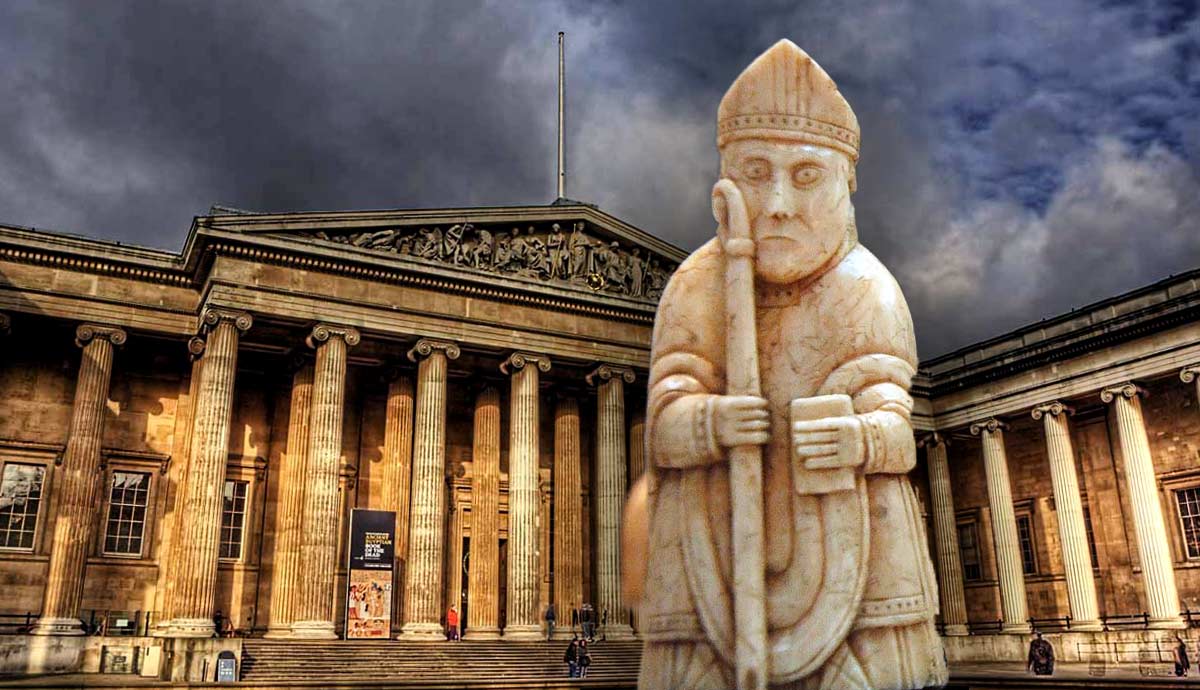
Behind most terrifying ghost stories are tragic histories of unjust death and unfinished business. Some of the world’s most famous historical landmarks were the sites of some of civilization’s worst tragedies, so is it any surprise that many visitors claim these sites are haunted? These six sites are considered among the most haunted landmarks. What happened there, and what paranormal imprint are these events reported to have left behind?
1. Valley of the Kings and the Royal Curses of Egypt
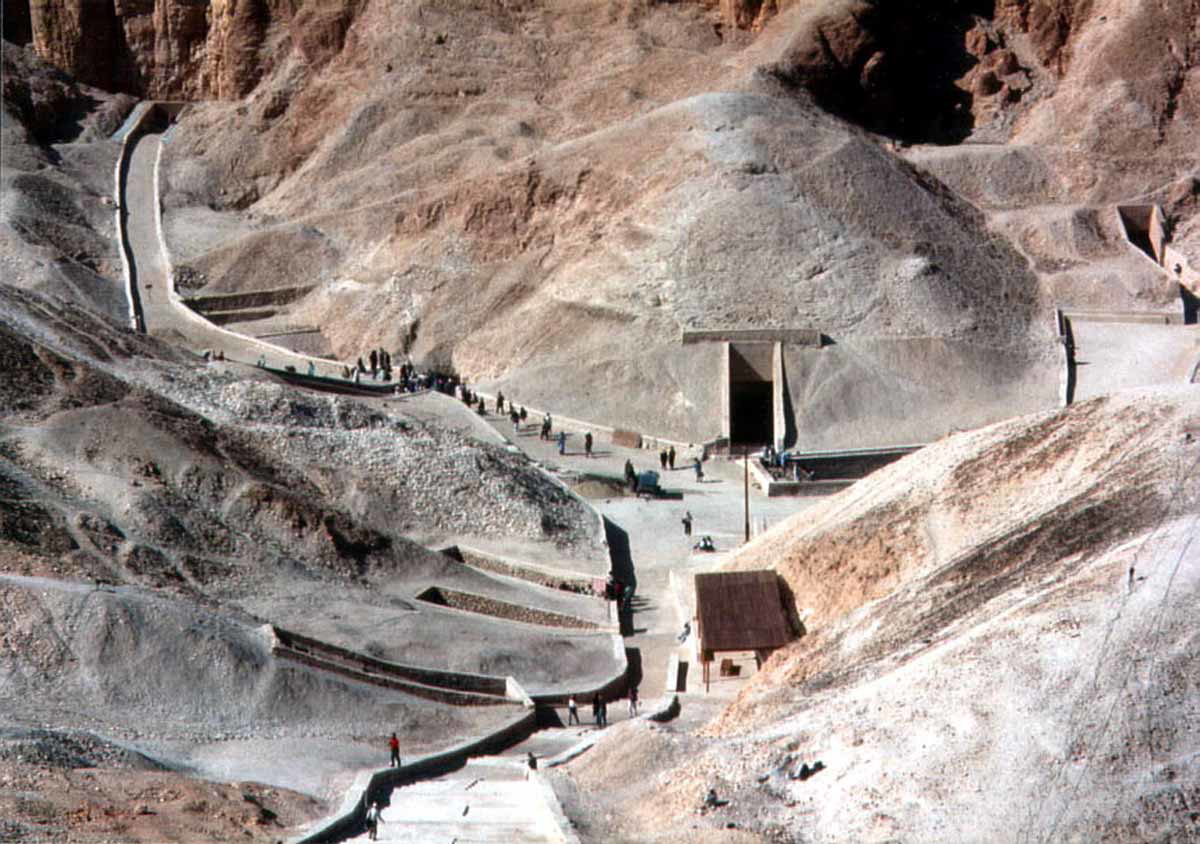
Across from the ancient Egyptian city of Thebes, modern Luxor, lies the Valley of the Kings. It is the resting place for many of Egypt’s New Kingdom pharaohs. This was a prosperous time for Egypt, and many of these rulers were powerful and wealthy and were laid to rest in rich and elaborate tombs.
The valley contains over 60 complete tombs and 20 unfinished ones. It was the final resting place for many famous pharaohs, including Ramses III, Seti I, Thutmose III, and the ever-famous “King Tut” (Tutankhamun), as well as many royal associates and priests. Many tombs have been excavated, and many are now open for tourists to visit.
The area is reportedly tormented by paranormal activity at night. Some have seen a pharaoh riding a chariot that is either fiery or black. The warrior pharaohs were chariot riders, and giant wall paintings depict them riding into battle in their chariots. Who knows which pharaoh’s ghost still believes he is on the battlefield?
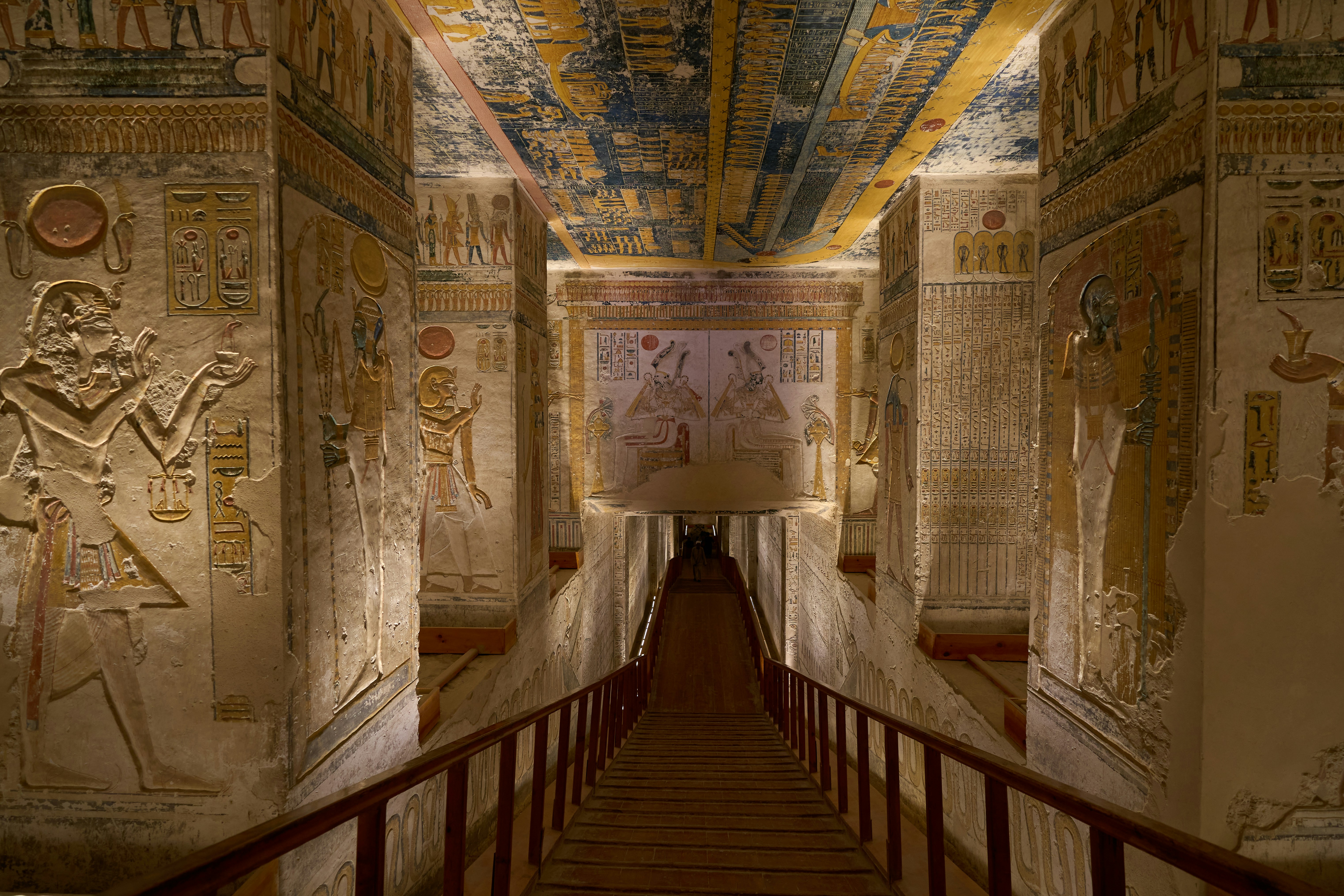
There are also reports of strange noises, including screams, footsteps, and screeching. Figures resembling ancient priests or royals are occasionally spotted standing near tomb entrances before vanishing into the rock. Bedouin and local Egyptian folklore holds that ancient priests placed protective spellwork over royal burial sites, summoning powerful desert spirits to guard against tomb robbers. Modern tomb workers and archaeologists have occasionally cited these legends when experiencing sudden equipment failures, unexplainable nausea, or intense feelings of dread—particularly inside notoriously unstable or controversial chambers like Tomb KV55, which belongs to an unidentified male who may be the father of Tutankhamun.
Of course, as movies, books, and oral history have stated over the years, King Tut’s tomb is said to be cursed. This curse is often blamed for the untimely deaths of many people involved in the initial excavation. The excavation funder Lord Carnarvon died months after the tomb was discovered and opened from an infected mosquito bite, sparking a worldwide sensation. Urban legends claimed Cairo suffered a mysterious power outage at the exact moment Carnarvon died, while his dog back in England reportedly howled and dropped dead at the same instant.
2. The Harem Purge and Fires of the Forbidden City

Located in the center of Beijing, the Forbidden City was once the seat of Chinese power. From 1416 to 1911, its buildings and beautifully landscaped gardens were centers of government and later a secondary capital for China’s royal families. Built by Ming dynasty emperor Zhu Di and home to 24 emperors over 505 years, its walls have seen a great deal of history.
Many have claimed that the palaces and gardens of the Forbidden City were cursed from the beginning. Zhu Di was known to some as the “evil emperor” for killing hundreds of members of his harem and staff to suppress a sex scandal in 1421. A few years later, a fire swept through the city as a result of lightning strikes, destroying over 250 buildings and killing many. Surrounded by so much tragedy, it is not hard to believe that teh Forbidden City could be haunted.

According to some, during heavy thunderstorms, the shadows of Qing dynasty court ladies walking in procession along the high outer walls can be seen. Legend holds that these figures are accompanied by the faint sound of ancient folk music. A popular local urban theory suggests the iron oxide in the walls’ red plaster acted like magnetic tape during a lightning strike centuries ago, “recording” and replaying the scene.
In 1900, as foreign troops entered Beijing during the Boxer Rebellion, Empress Dowager Cixi ordered her guards to throw her rival, the young Pearl Concubine (Zhen Fei), down a narrow well near the Palace of Tranquility and Longevity. Night watchmen and late-lingering visitors report hearing low weeping near the well head at dusk, occasionally accompanied by the sound of splashing water or a pale figure in imperial dress standing over the stone opening.
Local lore frequently ties the Palace Museum’s strict closing time 5of PM to paranormal activity. The legend claims the gates must lock before twilight because the complex’s ghostly energy overwhelms the living energy as the sun sets, returning the grounds to the spirits of the thousands of royal inhabitants, servants, and eunuchs who died within its walls.
3. Bloodshed and Field Hospitals at the Gettysburg Battlefield

Home to the bloodiest battle on American soil, the Gettysburg Battlefield hosted a major turning point in America’s Civil War. Not only were thousands of lives lost on the fields and hills of this Pennsylvania locale, but dozens of ghost stories were created in the aftermath, leading to Gettysburg’s reputation as one of the most haunted places in America.
Dozens of books have been written on the topic, and tourists can take one of several ghost tours of the battlefield and the surrounding locations. The jagged boulders of Devil’s Den are famous for a recurring apparition known as the “Ragged Soldier.” Visitors frequently report seeing a disheveled man wearing a floppy hat, a torn shirt, and no shoes. He usually approaches disoriented tourists, points toward the neighboring Triangular Field while saying “What you’re looking for is over there,” and then vanishes. This area is also notorious for unexplained electronic failures, where fully charged camera batteries suddenly drain completely.

Historical homes and businesses are part of the hauntings, including a home where a woman was shot by a stray bullet through her wall and a former orphanage where a horrible headmistress tortured children. Spirits of dead and dying soldiers are spotted on the battlefield as well as in buildings that served as campaign headquarters or field hospitals.
The basement of Pennsylvania Hall at Gettysburg College is believed to be haunted. In one famous encounter, two college staff members took the building’s elevator down to the basement. Instead of the expected storage area, the doors opened onto a silent, terrifying scene from 1863: spectral doctors operating on wounded soldiers amidst blood-soaked floors and piled limbs. When the panicked staff frantically pressed the button to close the doors, one of the phantom orderlies reportedly looked up directly at them.
4. The Antebellum Tragedies of the Myrtles Plantation

Louisiana is a place filled with many mysteries and hauntings. However, the Myrtles Plantation is perhaps one of the spookiest around. An Antebellum home built when slavery was omnipresent in the American South, stories of the cruelty that took place at the Myrtles are illustrative of the trauma that thousands of enslaved men and women endured.
According to the most famous story associated with the home, one of the early owners had a “house slave” named Chloe. Chloe suffered a great deal of abuse from her master and took to eavesdropping in hopes of “improving” her behavior and preventing future abuse. However, she was caught listening to her master’s conversations, and as punishment, he ordered her ears cut off. She was not, however, released from her duties and was forced by her boss to wear a turban so he wouldn’t have to look at her disfigurement.

Chloe decided to take revenge by placing poisonous oleander leaves in the cake of the master’s daughter on her birthday. She hoped to make the family sick and then nurse them back to health. Healers were among the most respected members of the enslaved community, and Chloe was still desperate to gain her evil master’s favor. However, the dosing was incorrect, and the mistress and the family’s two children died. Chloe was ordered to be hanged by the neck until dead when her misdeed was discovered, with all of the other enslaved people as witnesses; then, her body was weighed with rocks and thrown into the Mississippi River.
Is Chloe behind the ghostly activity that has taken place at the Myrtles since? Or perhaps the poisoned children? Visitors have reported strange figures in photographs, figures and handprints in mirrors that appear at random, furniture moving on its own, and seeing an apparition wearing a green turban.
5. Six Million Souls Beneath Paris in the Catacombs

Holding the bones of over six million people, moved from cemeteries in the 18th century to free up space, it seems pretty unlikely that the Paris Catacombs would not be haunted. Located below the streets of Paris, France, the catacombs are one of many in Europe but are perhaps the most famous. About 550,000 people visit the tunnels every year, and as a result, legends about associated hauntings have spread far and wide.

One of the most famous chilling stories from the ossuary is relatively recent, dating to the early 1990s. A group of explorers was walking in the catacombs when they found a video camera on the ground. To their amazement, it had footage on it, and it appeared that the man holding the camera was lost and had no idea how to leave the underground maze. As time went on, he seemed to be going mad until the video ended abruptly. No one ever learned who the man was or what became of him. Did he make it out alive, or did he become a victim of the speaking walls?
That’s right, talking walls. Rumor has it that if visitors are in the catacombs after midnight, the walls begin to speak. The disembodied voices of those who rest forever within them will speak to passersby and try to persuade them to venture deeper and deeper into the tunnels until they are lost forever.
6. British Penal Brutality at Tasmania’s Port Arthur

The island state of Tasmania is located about 150 miles south of mainland Australia. Known for its beautiful scenery, Tasmania is a popular destination for visitors. Serving as a cruise ship port and home to many vineyards, it is a bustling locale, particularly in the summer months.
However, the first humans to visit and inhabit Tasmania were not pleasure seekers but convicts. In 1833, Port Arthur began as a British penal colony. It held convicts shipped from England until it was abandoned in 1877. However, while in operation, the colony was deemed “inescapable,” with many prisoners dying during their sentences. It was officially preserved as a historical site in 1979 but has been a tourist destination since its abandonment. Documented ghost stories have been part of the legend of Port Arthur since 1870.

Port Arthur’s “Silent Prison Cell” was designed around total silence and psychological sensory deprivation; this building drove many convicts to insanity. Cell Four, where convict William Carter committed suicide in 1840, is notorious for a sudden, crushing atmosphere of grief that causes unsuspecting visitors to burst into tears. Night watchmen and tour groups routinely report hearing footsteps hurrying down empty corridors and frantic, phantom pounding on locked cell doors.
One of Port Arthur’s most famous apparitions is believed to be the spirit of a 19th-century accountant’s wife who died during childbirth. She is regularly spotted around the Accountant’s House and the nearby Gothic Church ruins, wearing a pale blue or gray crinoline dress and bonnet. Visitors report seeing her staring out windows, and toddlers visiting the site have reportedly claimed to play with a “nice lady” invisible to adults.
This tiny island off the coast of the main settlement contains over 1,000 graves, mostly unmarked convict mass burials. Visitors on night boat tours describe extreme temperature drops, phantom light orbs moving between the trees, and disembodied whispers echoing off the water from the unhallowed grounds.