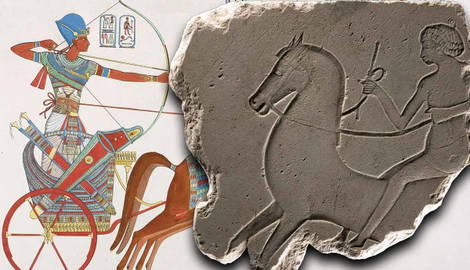

What we know about horses in ancient Egypt is shaped by what was recorded and what has been preserved. Nearly all surviving images of horses, found in temples, tombs, and on artifacts, associate them with chariots. It is easy to assume that was their only function in ancient Egypt. However, there are some rare depictions of mounted riders, despite no mention of horseback riding in the written record. These anomalies hint at what the record may not show, and suggest a more complex relationship between the Egyptians and their horses.
Horse Power in Ancient Egypt
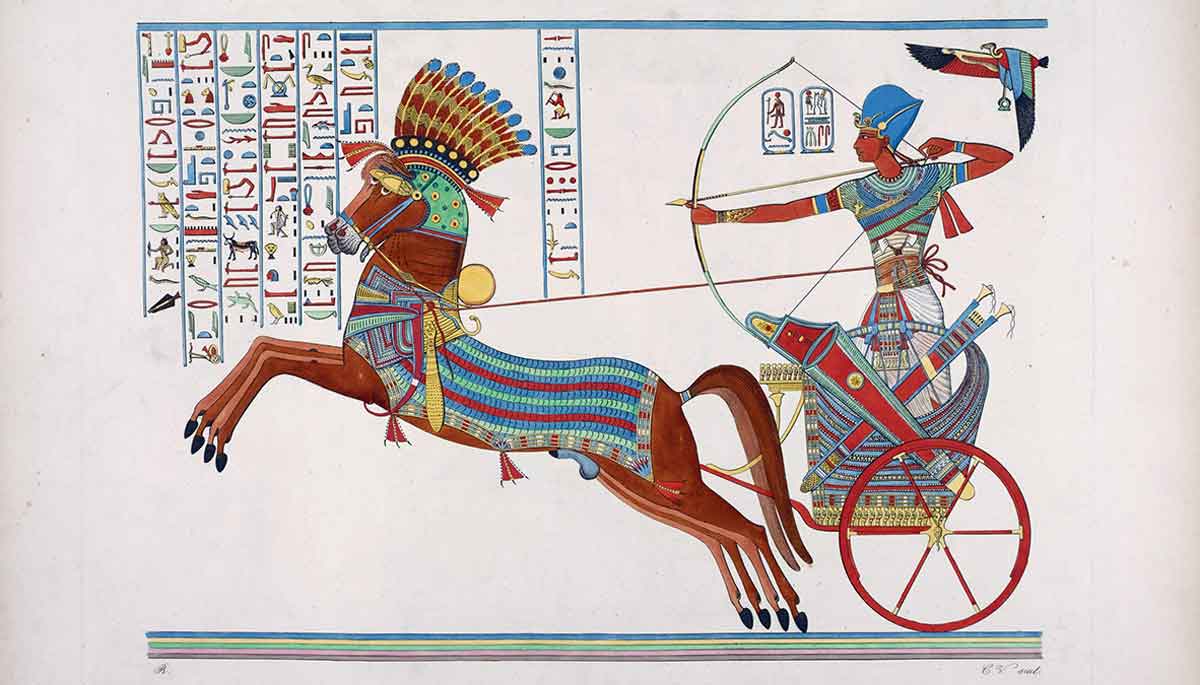
When you imagine horses in ancient Egypt, the image above is probably what comes to mind. It shows a pharaoh, Ramesses III, with his bow drawn, atop a chariot pulled by two fearless horses, charging into battle. There’s a good reason for this. After horses were introduced in the early New Kingdom, chariot scenes became ubiquitous in ancient Egypt. Chariots dominate temple walls and epic battle narratives. They have become synonymous with our understanding of Egyptian horsemanship.
The chariot reshaped Egypt’s military strategy and allowed the Egyptians to expand their empire farther than ever before. Compared with the heavier three-person chariots of the Near East, Egyptians developed a lighter, faster design. This style of chariot functioned as a moving platform for archers, creating an enormous amount of firepower on the battlefield.
However, not every Egyptian with a horse was driving a chariot. There are at least a few images of riders on horseback that have survived from the New Kingdom, a fact that tends to get lost in the spectacle of the chariot scenes.
Horses Beyond the Battlefield
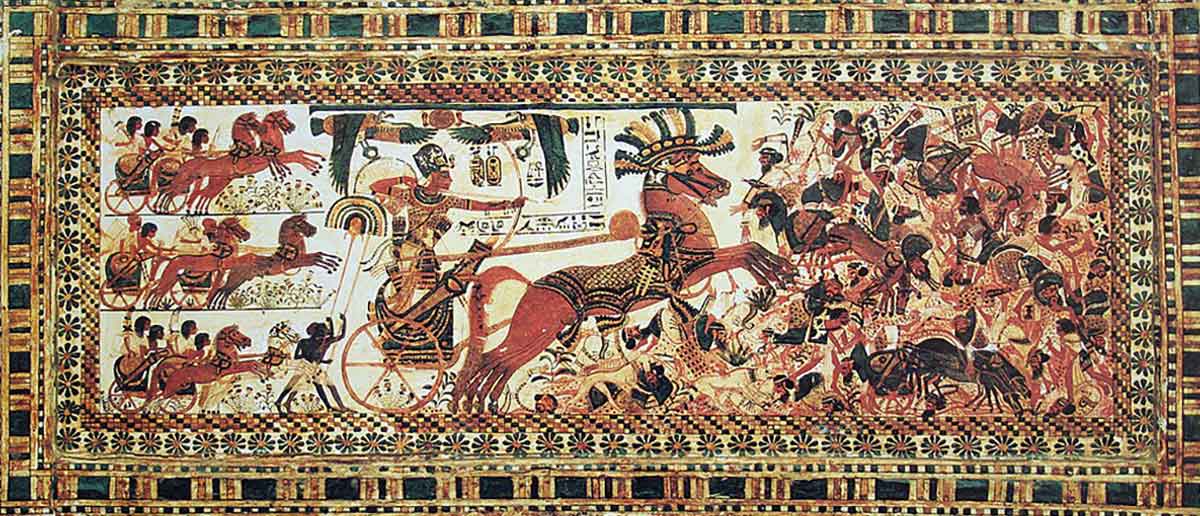
Horses also quickly grew in significance outside the military realm. The horse symbolized royal power. They were rare, costly, and associated with the military might and spectacle of the king’s public image. This is clear in the many depictions of pharaohs driving chariots on major temple reliefs and funerary objects, like the above decorated box of Tutankhamun.
In the story of Ramesses II’s triumph over the Hittites at the battle of Kadesh, the king’s chariot horses are referred to by name: “Victory-in-Thebes” and “Mut-is-content.” Thebes (modern-day Luxor) was the New Kingdom capital city, and Mut, the mother goddess, is one of the major deities in ancient Egyptian religion. These names demonstrate the prestige assigned to horses, which were valued enough to bear the names of gods and major cities. It seems that horses were not only personal favorites of the New Kingdom pharaohs; they were also useful in constructing the image of the warrior-king and furthering royal propaganda.
Not Just for Kings
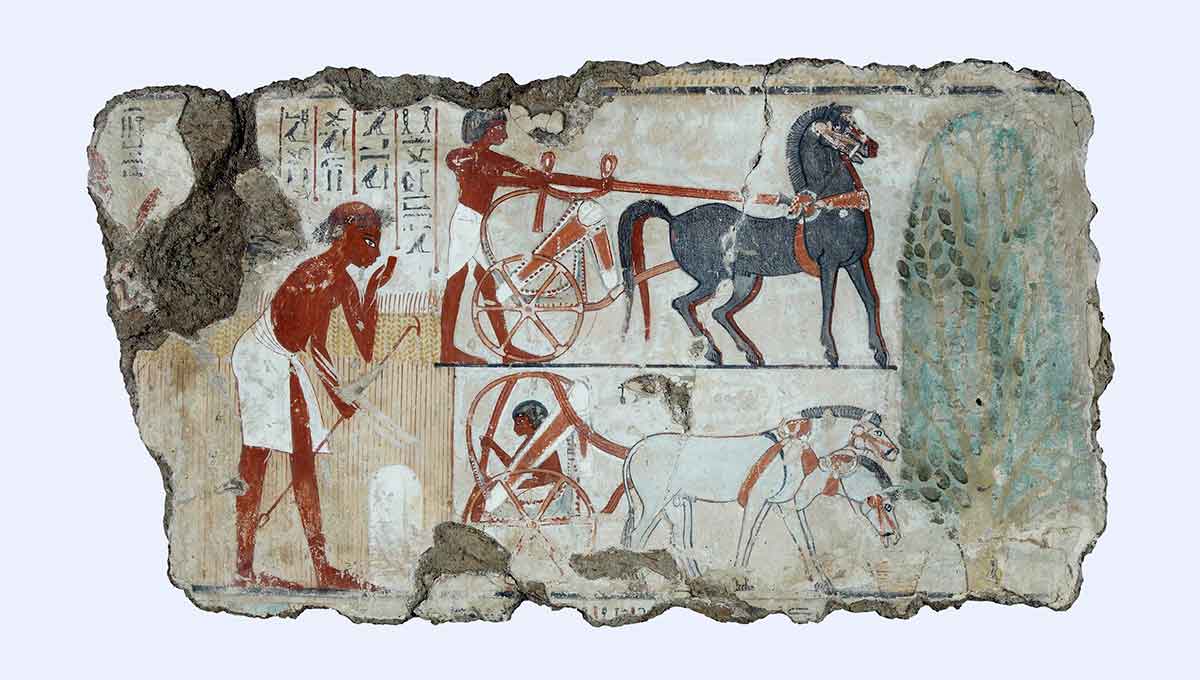
Owning a chariot team was not limited to the king. Horse-drawn chariots also became a status symbol for members of the royal family and elite officials in the New Kingdom. Like the king, princes were occasionally shown in chariots, as in the reliefs from Abu Simbel Temple of the sons of Ramesses II. There are also several reliefs showing Queen Nefertiti and the royal princesses of Amarna traveling in chariots. These are the only images we have that associate women and horses.
There are even more depictions of important officials with their chariot teams. Sometimes they are traveling by chariot, but there are also scenes of chariots being brought to a tomb in a funerary procession, and even officials transporting their horses and chariots by boat. In addition to what we see in the artistic record, royal family members and elite officials often held titles associated with the horse stables, like “Master of Horses” or “Stable Master.”
Horses Arrive, Chariots Take Center Stage
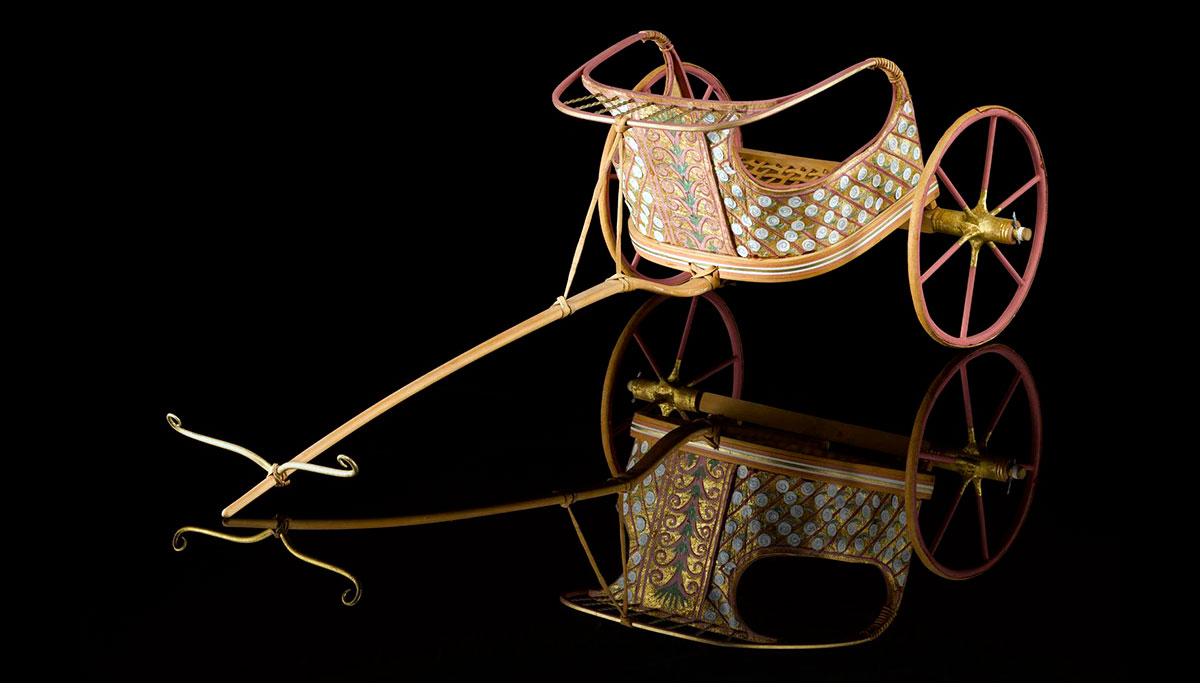
Given their importance, it is easy to forget that horses were introduced relatively late in Pharaonic history, most likely by the Hyksos. Although their origins are somewhat mysterious, the Hyksos are thought to have come from the Levant. They ruled northern Egypt during the Second Intermediate Period from about 1650–1550 BC. While there is no direct proof that the Hyksos introduced horses to Egypt, they are never mentioned before their arrival. The first known hieroglyph for “chariot” appears at the end of their rule, in the inscriptions of King Kamose. So, it is probable these foreigners brought not just horses, but chariots as well.
The ultimate defeat of the Hyksos by King Ahmose I led to the dawn of the New Kingdom, Egypt’s most powerful and wealthy era. After centuries without horses, the Egyptians adopted a chariot system that defined how horses would be used. While they did adapt and improve the design of the chariot, the historical evidence suggests that when the horse came to Egypt, it was only for the purpose of pulling chariots. Once that assumption took hold in the field of Egyptology, it was hard to look at the evidence any other way.
The Riding Problem
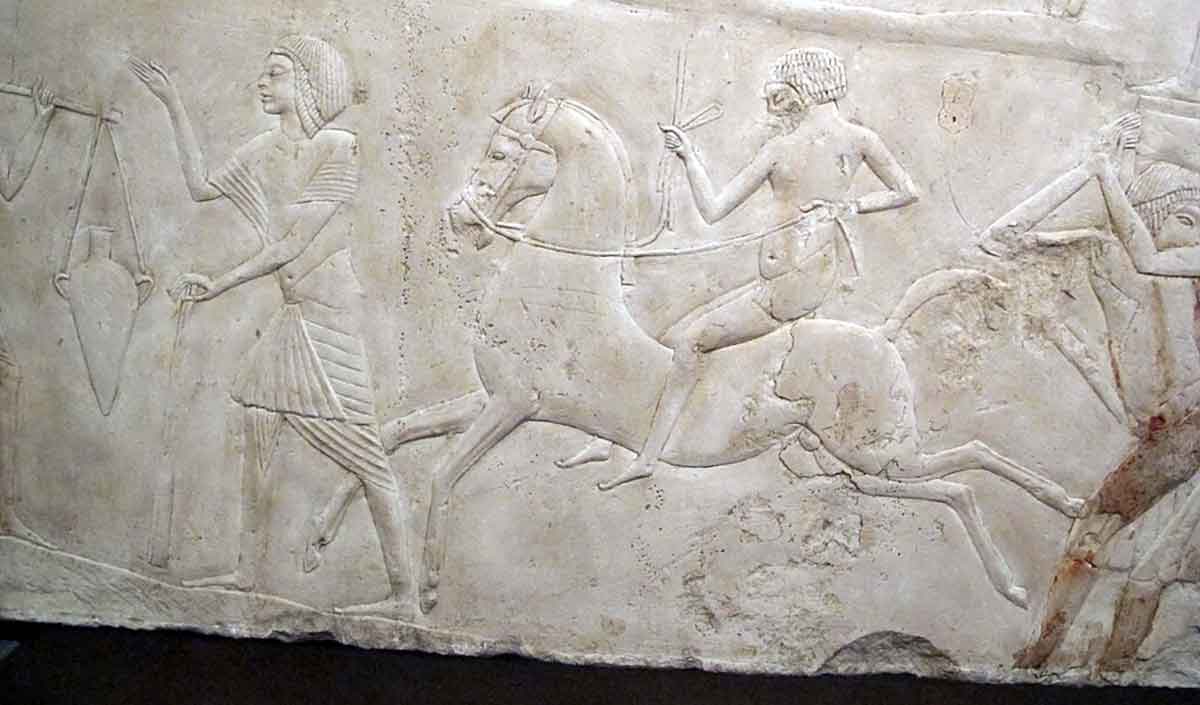
Because chariot scenes are everywhere in ancient Egyptian art, the academic consensus is that Egyptians never really rode horses. Yet this theory has holes. There are at least 16 known depictions of riders on horseback from the New Kingdom. These images appear in military contexts, but also on personal items, like wig curlers.
Most scholars dismiss these images as anomalies, interpreting them as grooms, messengers, and low-ranking soldiers. But these assumptions may simplify a more complicated reality. Was horse riding essentially non-existent in ancient Egypt? Or did riders exist quietly alongside the chariot teams? And if so, why were riders largely left out of the artistic and historic record? To answer that, we need to look at how Egyptian art was made and what it was meant to do.
Understanding Egyptian Art
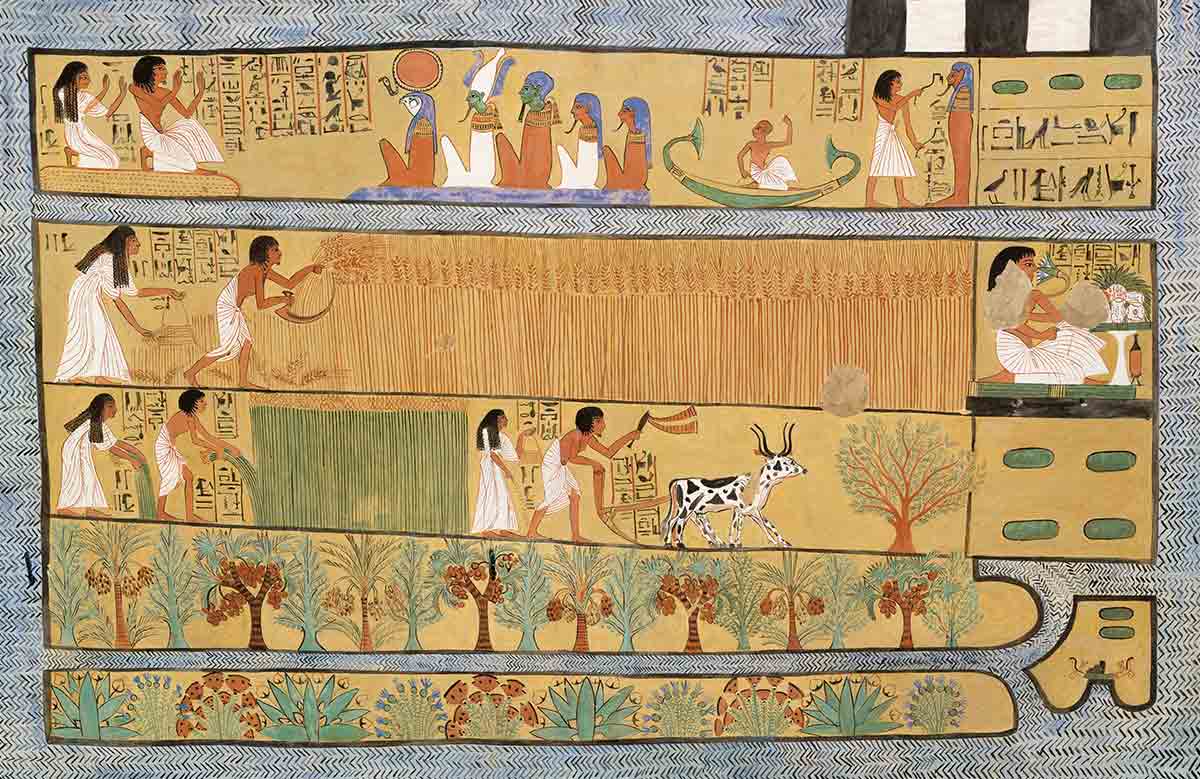
To understand ancient Egyptian art, we must first recognize that it was primarily functional, not just aesthetic. Today, we appreciate Egyptian art for its advanced craftsmanship, vibrant colors, and graphic qualities. But each piece was created to serve a specific purpose, communicated through a distinct visual language that prioritized order and idealism over realism.
One function of art was to maintain cults of the gods and the dead. For example, having images of yourself in the tomb was essential to ensure you would continue to live in the afterlife. Your likeness was also how your family would bring you offerings to enjoy. The artist wouldn’t create an actual portrait that looked like you, but a standardized image with the correct clothing and form, labeled with your name. While you would certainly prefer a beautiful, well-crafted image, aesthetics were not as important as being represented correctly. Then you could rest assured that you would be enjoying the afterlife.
Art also served as political propaganda, especially in places like temples, palaces, and on royal monuments. You did not have to be told about the king’s military victories or wonder if he was the divine son of Amun-Ra; it was represented right there on the wall in front of you. Because most art was created for the elite and not common people, it was a curated narrative rather than an objective record of day-to-day life. What the Egyptians chose not to depict is just as telling as what they did.
Reading Between the Lines
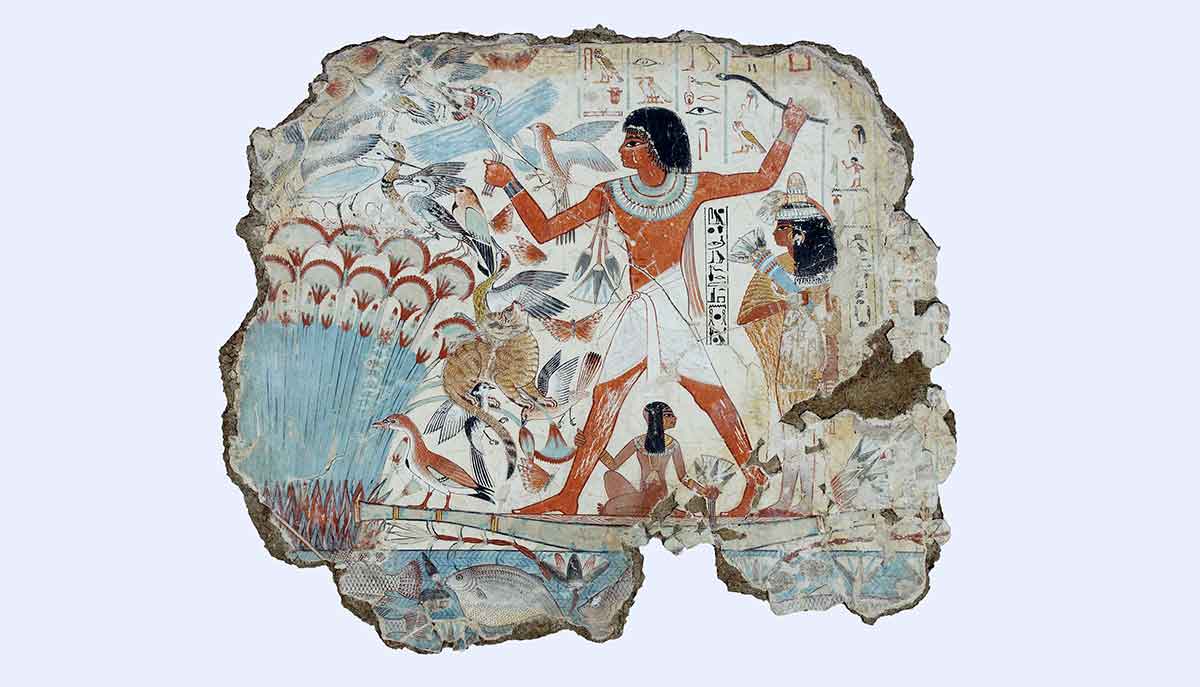
Egyptian art includes scenes of everyday life, like jewelry making, harvesting, bread-making, and trapping birds, particularly in non-royal tombs. But like a well-curated Instagram account, we cannot take these images exactly at face value because they actually served a different purpose. These tomb scenes were included for the owner to carry into the afterlife.
Animals were equally symbolic. From scarabs to lions, creatures represented specific deities, nature, property, and royal power. In the New Kingdom, horses were included in art for political branding. Because horses were costly, powerful, and intimidating, they projected an image of the king as an invincible warrior. They also represented wealth and status. Following the king’s lead, the elites also included horses in their tombs and on personal objects to signal their high social standing and success.
Even within this rigid system, artistic outliers exist. Rarer depictions, like the horse riders, still have to be read through this functional lens. Nevertheless, they may tell us more about how the Egyptians used horses beyond the official record.
The Riders That Do Not Fit the Narrative
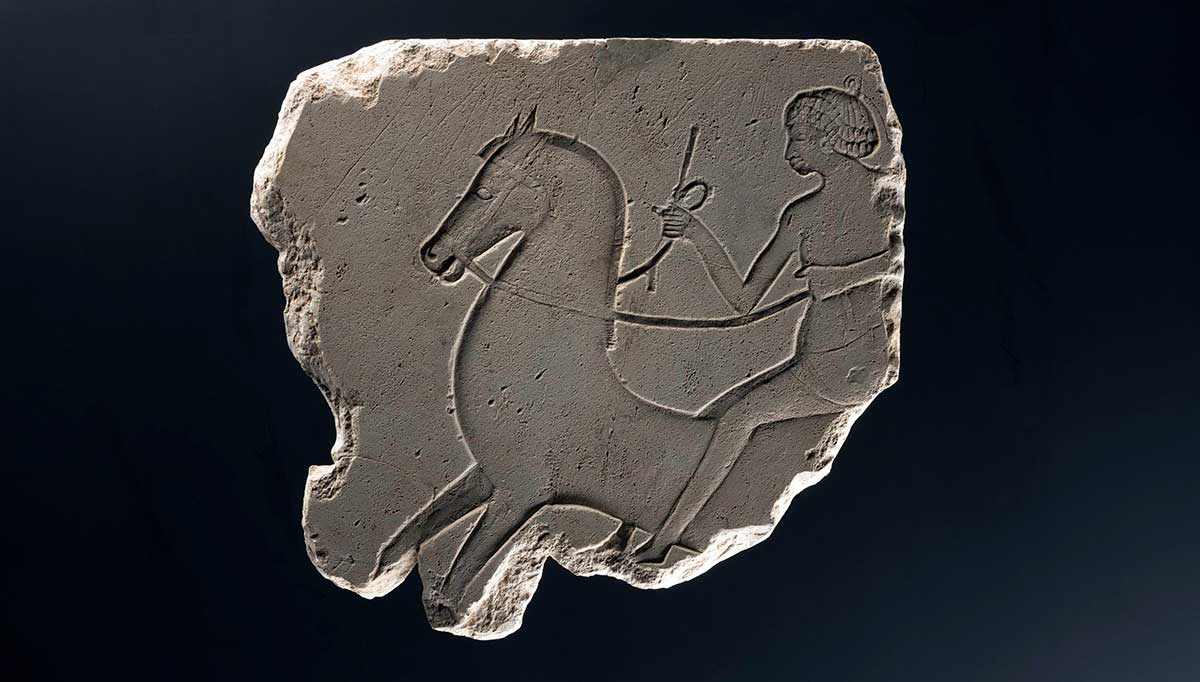
The surviving images of horse riders, while limited, are surprisingly diverse. They were created throughout the New Kingdom and appear on both 2D surfaces and 3D objects. Riders sometimes hold reins, whips, or weapons, and other times have nothing. Usually, they wear a kilt, but in some instances, they are nude. There are even a few examples of the riders sitting side saddle instead of astride a horse.
Despite the lack of cohesion, it is clear that the artists had some idea of what a person on horseback would look like, as the depictions are fairly realistic. The horses’ anatomy is correct, and the bridles are similar to what we see on chariot horses. The rider’s seat is sometimes a bit clunky-looking and perched too far back, but they generally reflect the look of a mounted rider.
Riders in Context: Warriors, Goddesses, and Wig Curlers
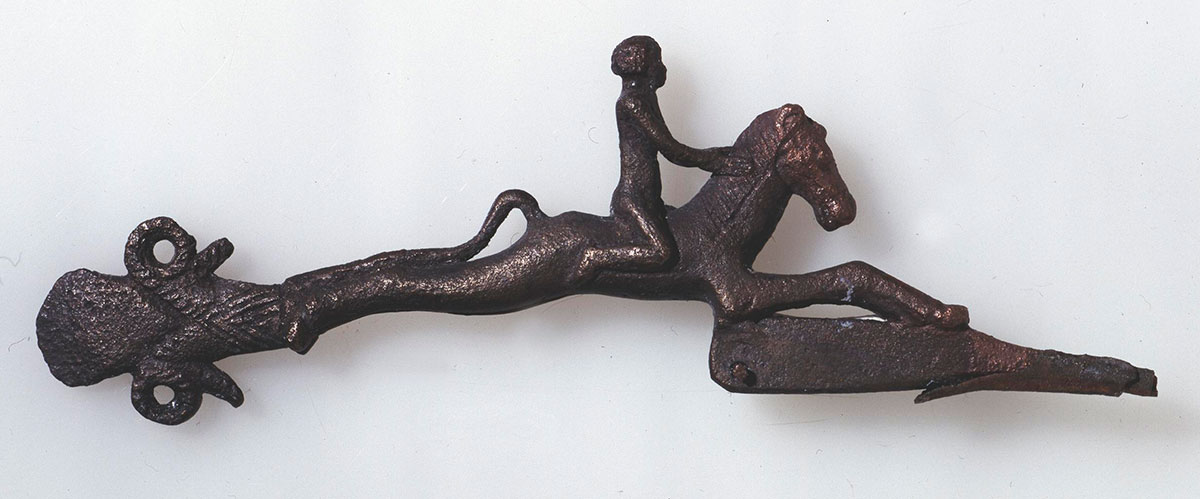
These images do not all come from the same world. Some appear in formal temple reliefs as part of a grand battle narrative. Others turn up on painted ostraca, which were basically ancient scrap paper made from pottery shards, and on personal objects like a wig curler and a toy chariot. Taken together, they fall into four categories: military scenes, decorative objects, foreigners, and goddesses.
The military riders are fairly straightforward within the context of battle scenes. Horemheb’s tomb shows a rider behind an officer among charioteers and soldiers. Other scenes with riders from Abu Simbel and Luxor Temples depict the battle of Kadesh. Their horses’ bridles are carefully depicted, and the rider usually wears a kilt and sometimes carries a weapon.
The decorative objects are a different story. Some of the historical objects featuring horse riders include a wig curler, a wood statuette, a battle ax, and part of a toy chariot. Their horse and rider images are much more expressive, with the riders sometimes nude, the horse stretched to a full gallop, and the harnessing as an afterthought.
Other scenes show foreigners (Asiatics, Hittites, or Syrians) fleeing on horseback in battle scenes. Then there are several images of the goddess Astarte. Adopted by the Egyptians from the start of the New Kingdom onwards, she was associated with fertility and war. Astarte was often depicted on horseback, sometimes brandishing a weapon. For a culture that supposedly didn’t ride horses, the cast of riders is remarkably varied.
Who Are These Riders?
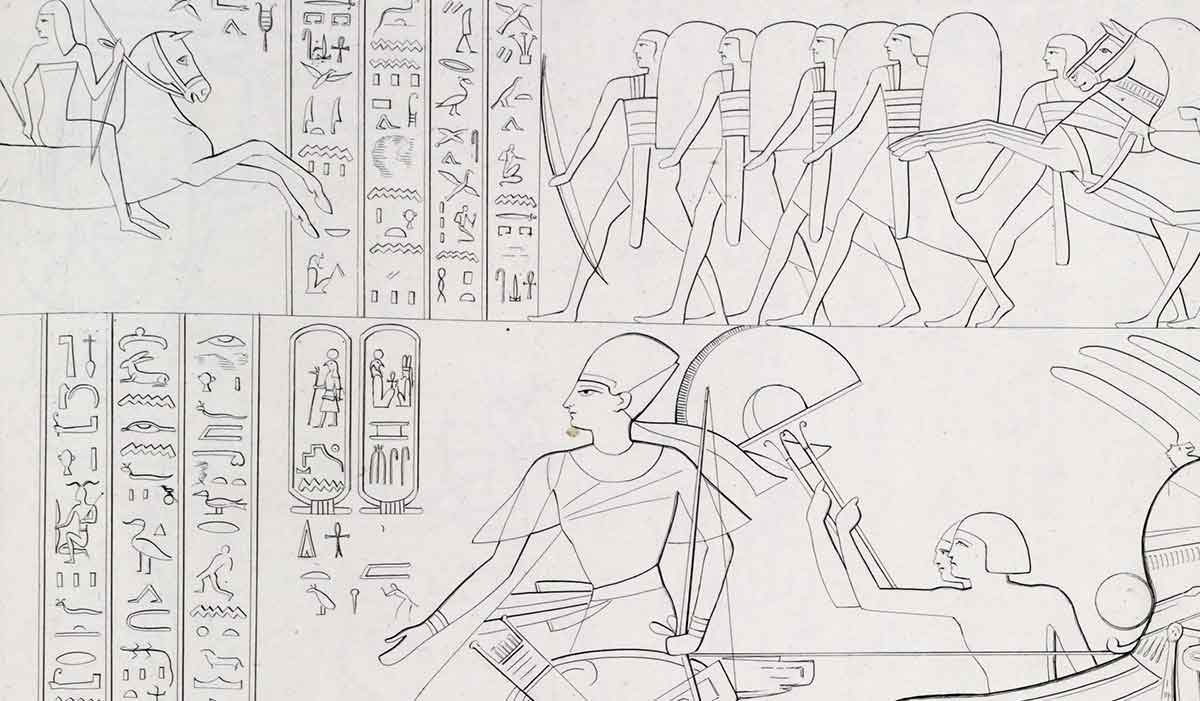
The next question that arises is, who are these horse riders? The military reliefs are easiest to read. They survived with at least some of their original context, surrounded by the battle scenes that explain them. A few of the riders are even labeled as ḥpwty, meaning “scout” or “runner.” These scouts would have ridden ahead to gather information on enemy positions and the terrain ahead. Schulman (1957) pointed out that mounted scouts make sense as they would have been much quicker than soldiers on foot and navigated the uneven terrain in the Levant much more easily than chariots. He also suggests they are among the earliest examples of cavalry.
Many of the other horse rider examples share similarities in position and dress with the scouts. Nearly all the artifacts have military associations (toy chariot, battle ax, riders with bows). This suggests they represent, or were inspired by, mounted scouts. Even the goddess Astarte was linked with warfare.
These mounted scouts were likely a small but essential part of the Egyptian military organization. They fulfilled an important role of providing reconnaissance and intelligence. Still, Egyptian horse riders somehow get pushed to the sidelines, in the historical record and in the popular imagination. One explanation is that riding was stigmatized.
Who Did and Did Not Ride?
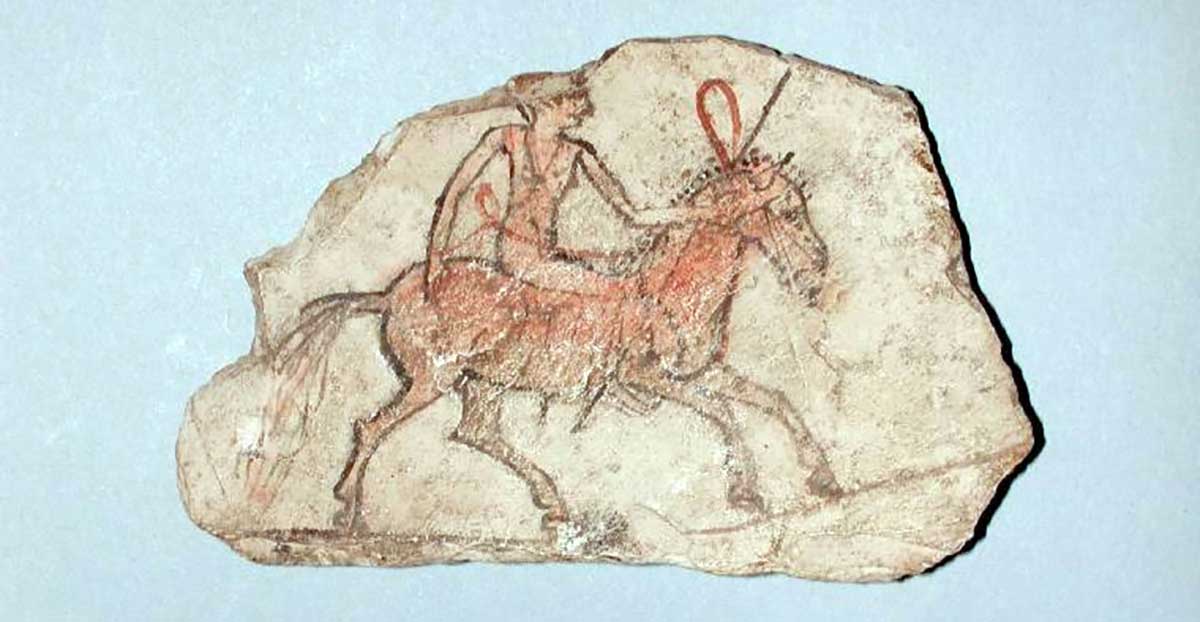
To understand this stigma, look at the horse’s equine cousin, the donkey. Donkeys appear in the record from the Old Kingdom onwards. They were treated as beasts of burden, transporting goods and hauling supplies. They were practical and reliable but completely unglamorous. They were just important enough to be included among the owner’s other property in tomb reliefs.
Images of anyone riding donkeys are even rarer than images of horse riding. When they do appear, they are mostly foreigners. Graffiti drawings found in the Sinai Peninsula show several Asiatics riding donkeys. Other images and text recount donkeys carrying children, injured soldiers, and even dead people. In other words, riding was “othered.” It was something for non-Egyptians or people who had no other choice. It is hard not to wonder if this same stigma was carried over to horse riding. This attitude may have also influenced the scholars who have dismissed horse riders as grooms or low-ranking soldiers. People of no importance.
Reframing the Question
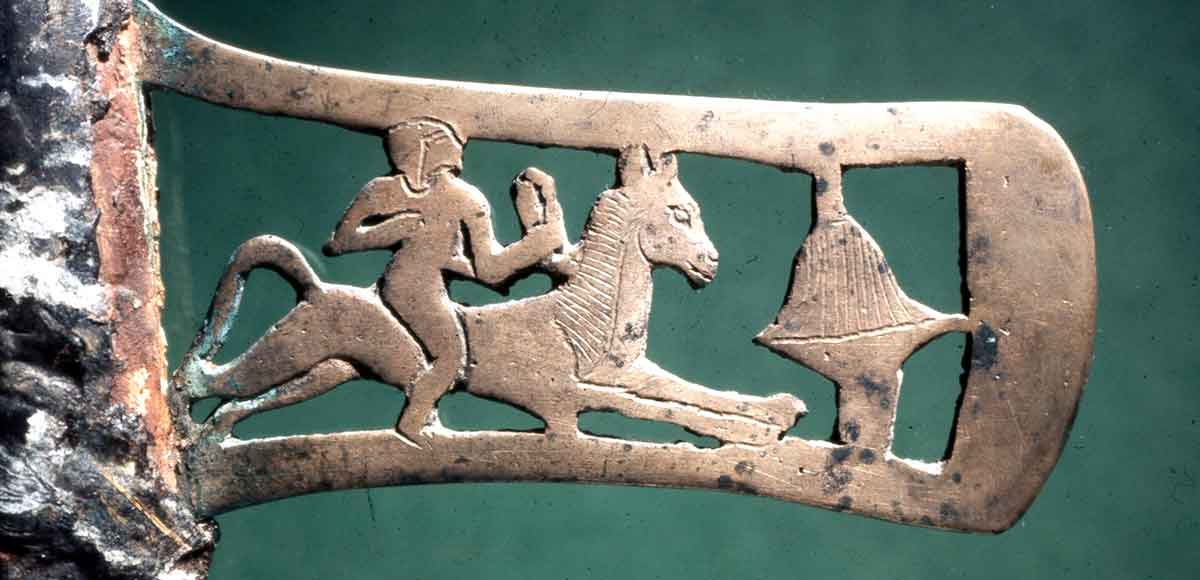
However, the visual evidence is hard to ignore. Mounted scouts are present in battle scenes as a real and organized part of military structure, used when speed and terrain demanded it. They were small in number, but essential. The fact that they are rare in the artistic record is representative of their frequency and status, not their existence.
The chariot started as a tool of war and filtered into private life. Riding may have followed the same path, beginning as a military necessity and quietly spreading to the private stables of the elite. If the stigma of riding outweighed the practicality for the elite owners, it could have still been possible for the grooms and workers on a private estate to ride horses. Practiced, but never prestigious enough to record, unlike the elite horse owners in their chariots.
So perhaps the more important question when analyzing the artistic record is not whether horse riding was as widespread as chariot use, but rather, what did horse riding signify compared to chariot use? Instead of the statement “Egyptians didn’t ride horses,” a more accurate one is “Horseback riding was not prestigious, central, or widely monumentalized.” And in ancient Egypt, what wasn’t worth memorializing was essentially invisible.