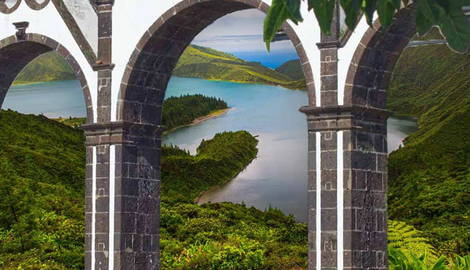

Although most people come to enjoy the landscape, on São Miguel you will also find historical cities, impressive monuments, and a deep connection to the ocean and the Portuguese Maritime Expansion.
The Island’s Past
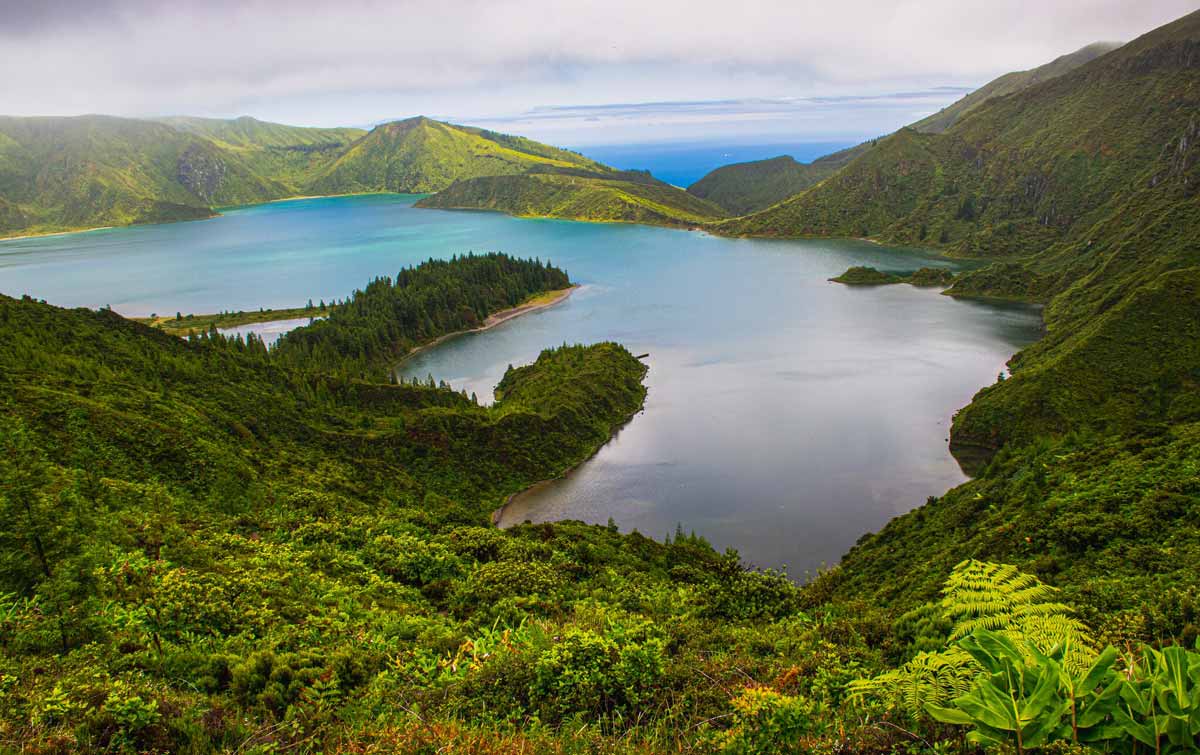
São Miguel’s history dates back to the 15th century when the Portuguese discovered the island between 1427 and 1431.
The first settlers arrived in 1444 under the rule of the donatary captain Gonçalo Velho Cabral. Most of them came from the North, Alentejo, and Algarve regions of continental Portugal. A few years later, Moors, Jews, the French, and the English also settled in São Miguel.
The fertile soils and safe bays attracted these settlers, who quickly transformed the island into a trading post. The local economy thrived due to the cultivation and exportation of wheat and pastel (woad dye).
São Miguel’s first capital was Vila Franca do Campo. However, this only lasted until 1522, when a massive earthquake hit the island. The town was severely damaged, and under no condition to serve as the capital. As a result, Ponta Delgada, which had survived the earthquake, quickly became the most important city. Today, Ponta Delgada is the capital of the Azores Islands.
By the end of the 16th century, privateers often raided the island, searching for valuable cargo coming from India, Africa, and Brazil. Moreover, in 1582, Spanish troops occupied the island due to the Azorean resistance against the rule of the new Portuguese king, Philip II of Spain. In 1640, after the restoration of Portugal’s independence, São Miguel’s economy improved due to commercial trade with Brazil.
Orange exports became the most profitable business in the 18th century. The profits were then used to fund impressive gilded woodwork inside churches and the stonework of manor houses.
Povoação
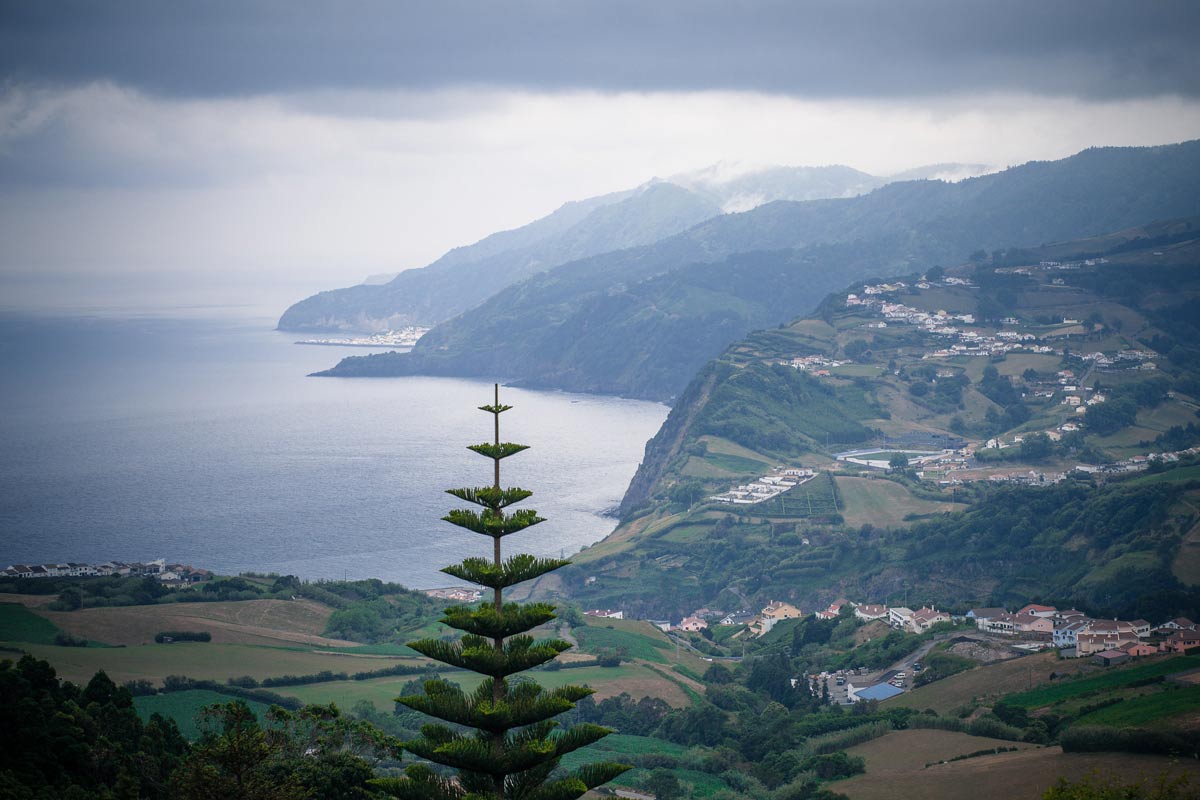
In 1444, Gonçalo Velho Cabral landed on São Miguel Island and ordered the construction of a settlement.
The location was chosen due to the fresh streams of clear and sweet water surrounded by groves of cedar, sour cherry, and beech trees. The fertile lands and abundance of water helped settlers to establish their homes. Moreover, the easy access to the ocean allowed for an easy route to continental Portugal.
Wheat production was the main economic activity from the village’s early beginnings. That is why locals call Povoação the “Island granary.”
Today, Povoação, the first settlement in the Azores, is a village with a little over 1500 inhabitants.
While exploring Povoação, visit the Ermida de Santa Bárbara. This hermitage dates back to the 15th century and was the first Christian church on the island. Over the centuries, the church was damaged due to the island’s intense seismic activity. As a result, it was rebuilt in 1798 and again in the 19th and the 20th centuries. Unfortunately, the successive reconstruction works completely altered the hermitage layout, its lighting scheme, and its main features. Nevertheless, you can still admire its beauty and simplicity.
At Igreja de Nossa Senhora do Rosário, you can admire a 16th-century church built in 1553. It is one of the oldest on São Miguel Island. Today, this church is classified as a Property of Public Interest by the Portuguese Government.
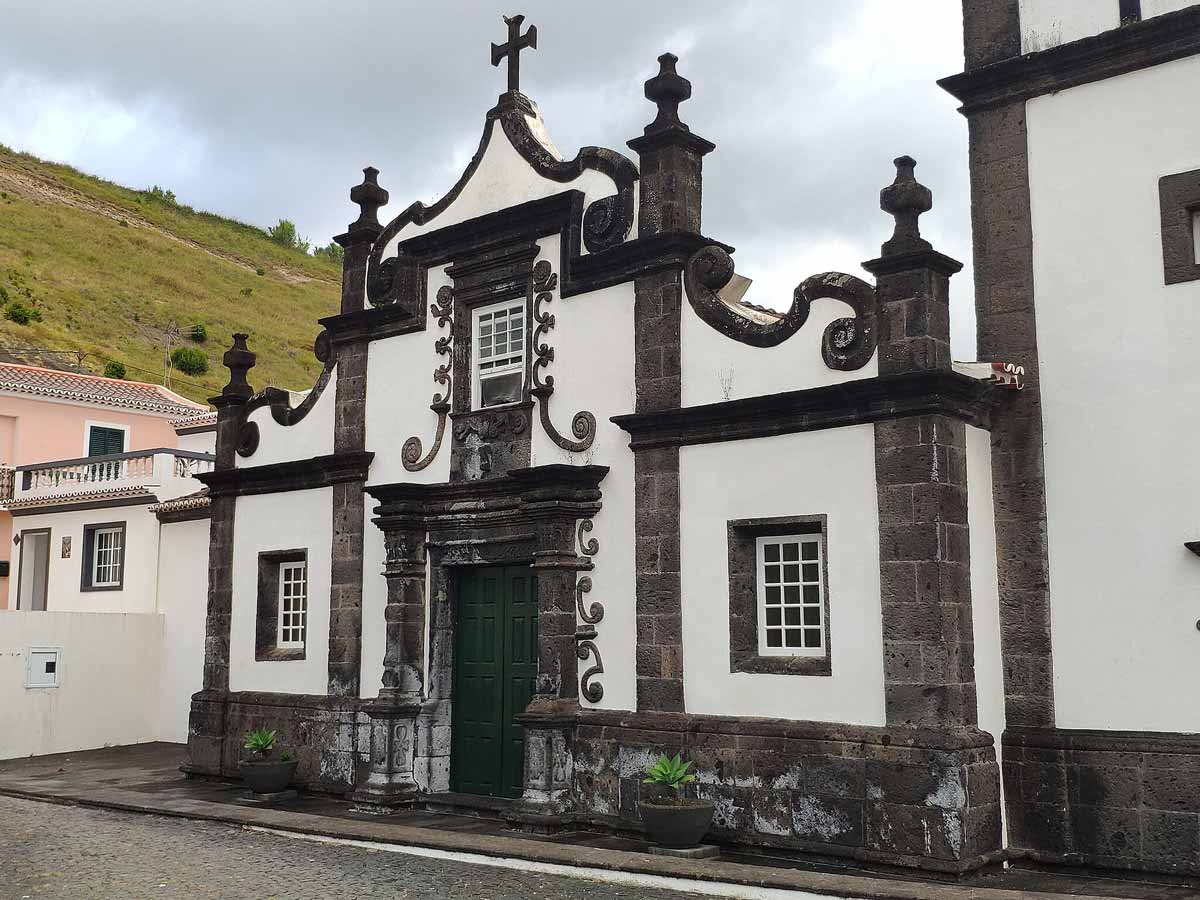
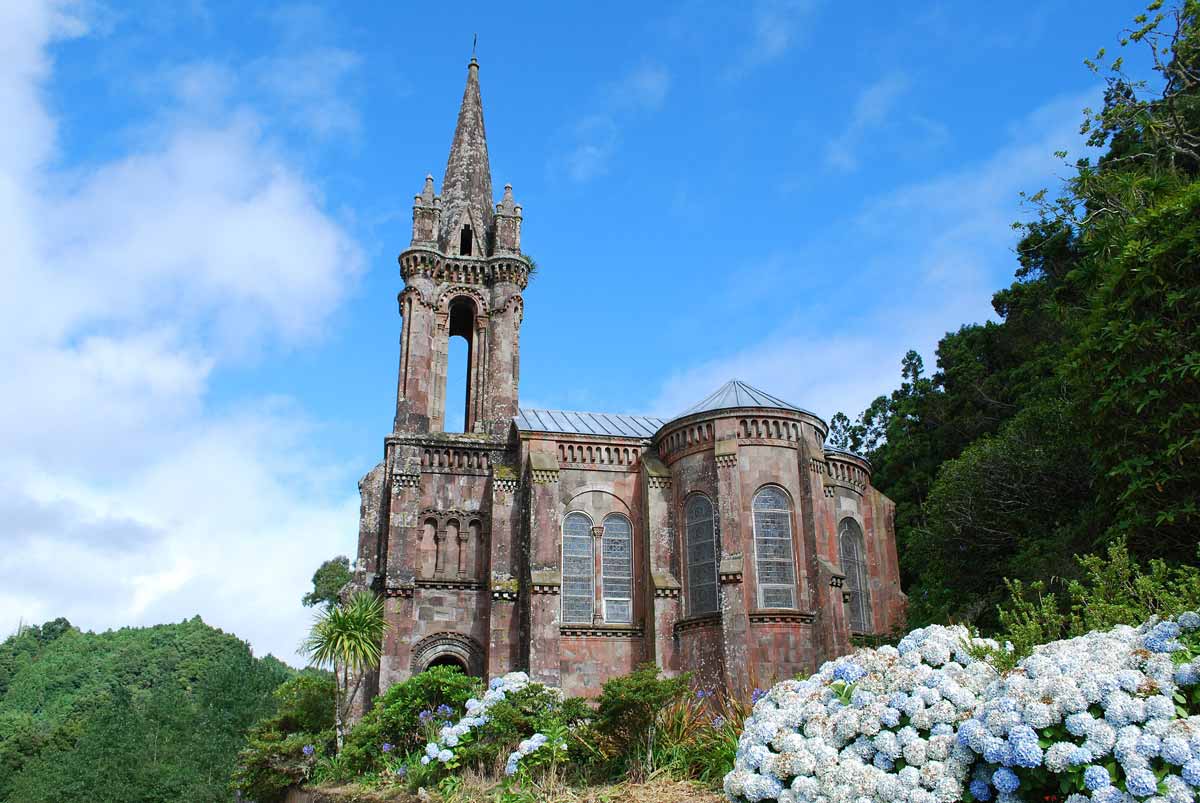
In Povoação, explore Capela da Nossa Senhora das Vitórias. This remarkable Neo-Gothic chapel located by the Lagoa das Furnas was built in the 19th century. José do Canto, a wealthy businessman and bibliophile born and raised in the Azores, ordered its construction. His goal was to mimic grandiose European cathedrals. Today, you can admire its impressive artistic features, such as its altar and stained glass.
At the Museu do Trigo (Wheat Museum), you can explore a 19th-century building where locals used to transform the wheat to prepare it for human consumption. Besides learning how local farmers worked, you can also learn about the industry’s impact on Povoação and São Miguel Island.
Vila Franca do Campo
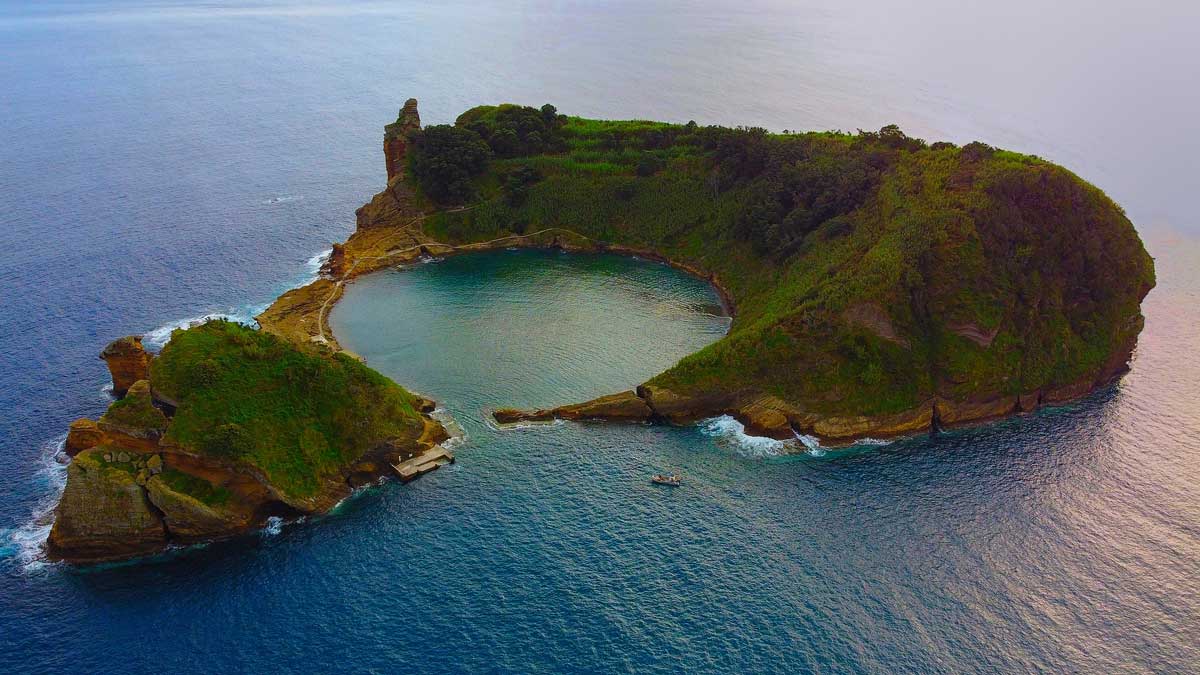
Vila Franca do Campo is a small village that used to be one of the most important locations in the Azores islands.
During the first century of settlement, Vila Franca do Campo was home to nobleman Gonçalo Vaz Botelho, the Customs headquarters, and the Ombudsman’s Office. In 1472, Vila Franca do Campo was elevated to town status and, a few years later, received the first hospital on the archipelago.
In the 16th century, Vila Franca was a prosperous and influential town thanks to commercial trade. However, on October 22, 1522, a mighty earthquake destroyed Vila Franca. During the night, a massive landslide on the slopes surrounding Vila Franca caused a mudslide that buried most of the town. Hundreds of people perished and most of the survivors moved to other locations.
The donatary captain ordered the town’s reconstruction, but Vila Franca was too damaged. As a result, government facilities moved to Ponta Delgada. Nevertheless, Vila Franca remained an influential town in the Azores until the 18th century thanks to its orchards and fertile lands.
In 1582, Vila Franca witnessed a naval battle between the Spanish and the Portuguese crown during the War of the Portuguese Succession. Vila Franca was also the birthplace of Bento de Góis, who led the largest land exploration of Asia between 1602 and 1606. In the early 20th century, Vila Franca was the first location to have electricity.
While exploring Vila Franca, there are a few landmarks you must visit.
Ermida de Nossa Senhora da Paz is a very intriguing hermitage. If you have ever been to Braga, you will notice this hermitage looks like a small-scale version of Bom Jesus de Braga. Except the hermitage is much older.
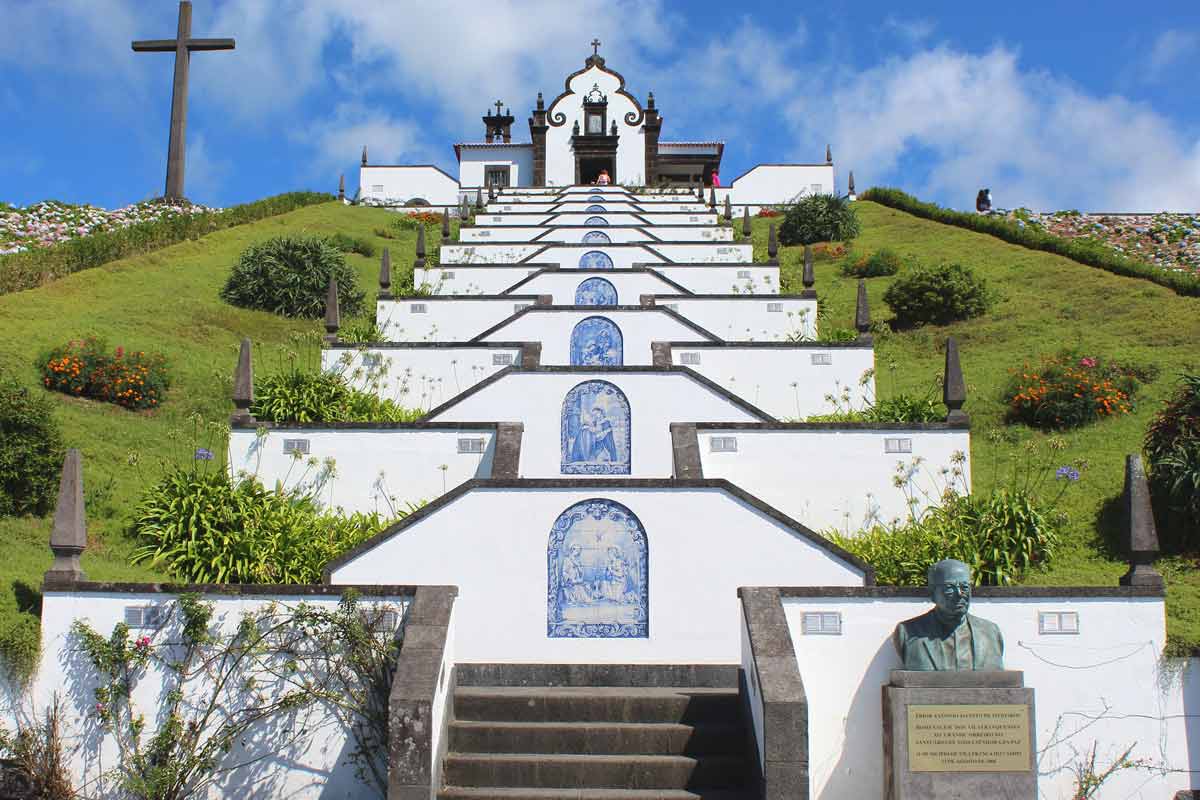
The original building dates back to 1522, when the infamous earthquake destroyed most of it. More than two centuries later, a group of locals decided to rebuild the chapel. Alberto Pacheco was the architect behind the new project that included two naves separated by round arches and a Baroque chancel. Once you walk up the 100 steps and 10 terraces, you will be rewarded with breathtaking views over Vila Franca do Campo and its islet.
Igreja de São Miguel Arcanjo is one of the oldest churches in the Azores. Prince Henry the Navigator himself ordered the construction of this church in 1460. However, it was built several decades later.
The church was rebuilt soon after the 1522 earthquake. Workers used the same materials from the original construction and made an effort to respect the original Gothic style. The artillery damage on the church bell tower from a Corsair attack in 1624 is still visible today.
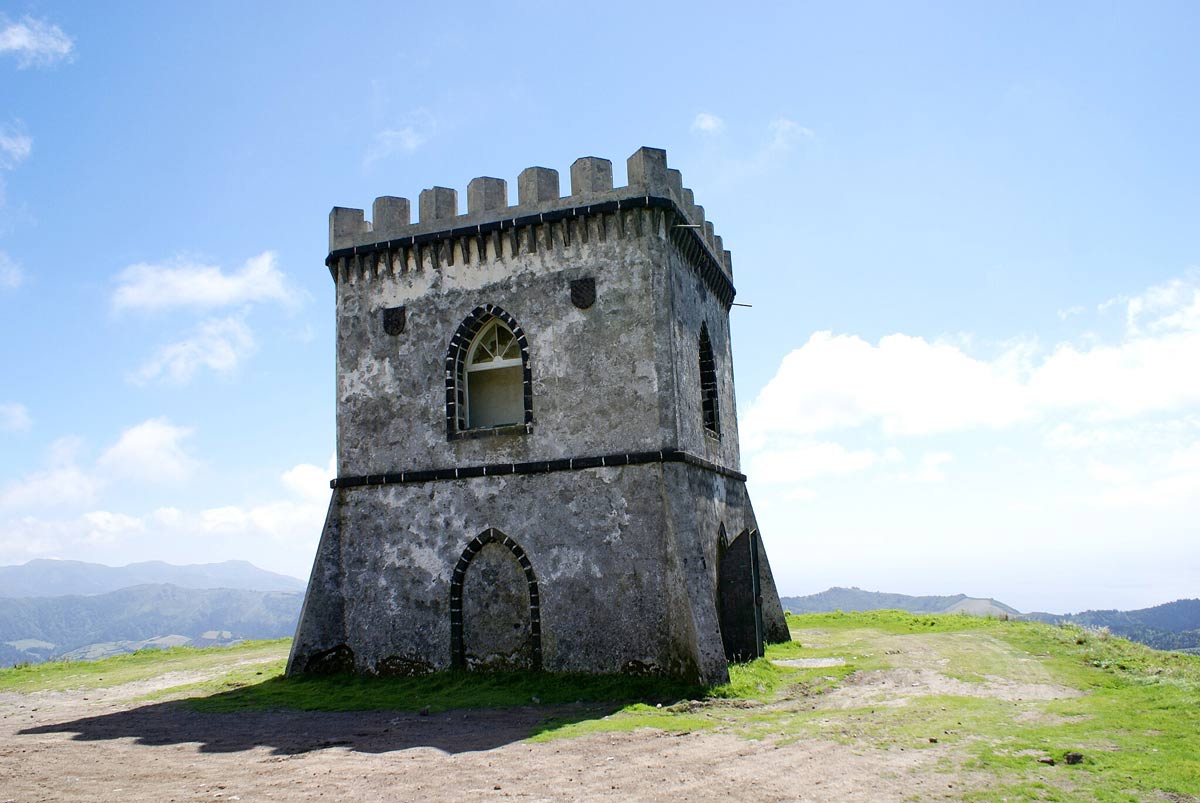
Another intriguing landmark is Castelo Branco, a 20th-century watchtower built as a scenic lookout post offering impressive views over São Miguel’s southern coastline. It is available to visit today.
Ponta Delgada
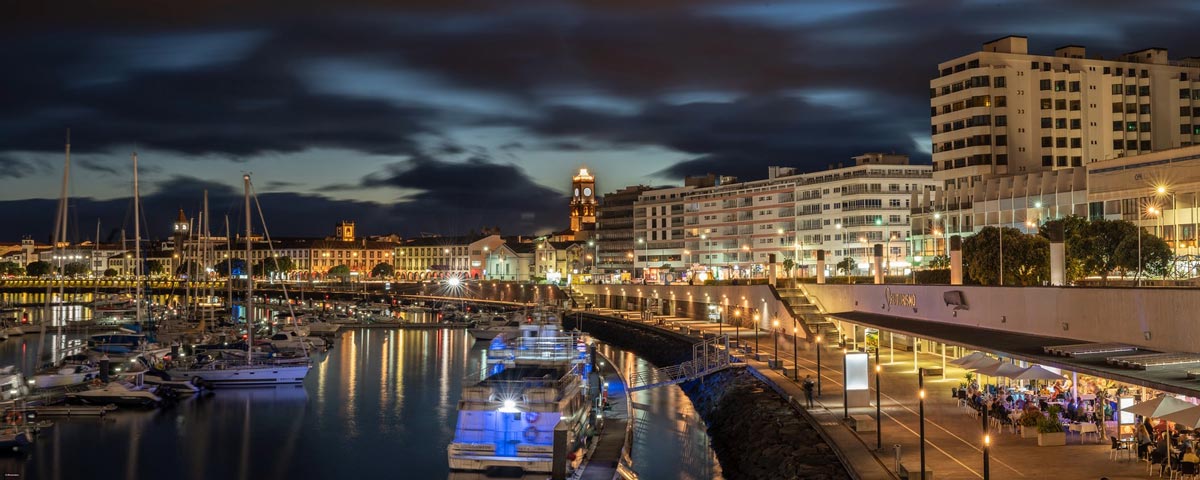
Ponta Delgada is the capital of the Azores islands and the largest city in the archipelago. Its settlement began in 1444 under the rule of the donatary captain Gonçalo Velho Cabral.
The fertile soils and humid climate provide perfect conditions for agriculture. These natural resources combined with the city’s strategic location helped strengthen the commercial routes between Europe and America, and Ponta Delgada’s role as an influential trading post.
As a result, the Customs House was transferred here in 1518. After Vila Franca do Campo’s destruction in 1522, Ponta Delgada was elevated to city status in 1546.
Between the 16th and 18th centuries, the large-scale exportation of wheat, sugar cane, wine, sweet potato, corn, and orange to England helped the island’s economic growth. However, in the 19th century, a disease in the orange orchards drastically reduced exports, forcing farmers to find new crops.
Today, Ponta Delgada is the Azores’ economic, administrative, and tourist center and home to the island’s university since 1975.
The rich architectural heritage of Ponta Delgada’s historical city center will allow you to find some of the oldest buildings in the archipelago.
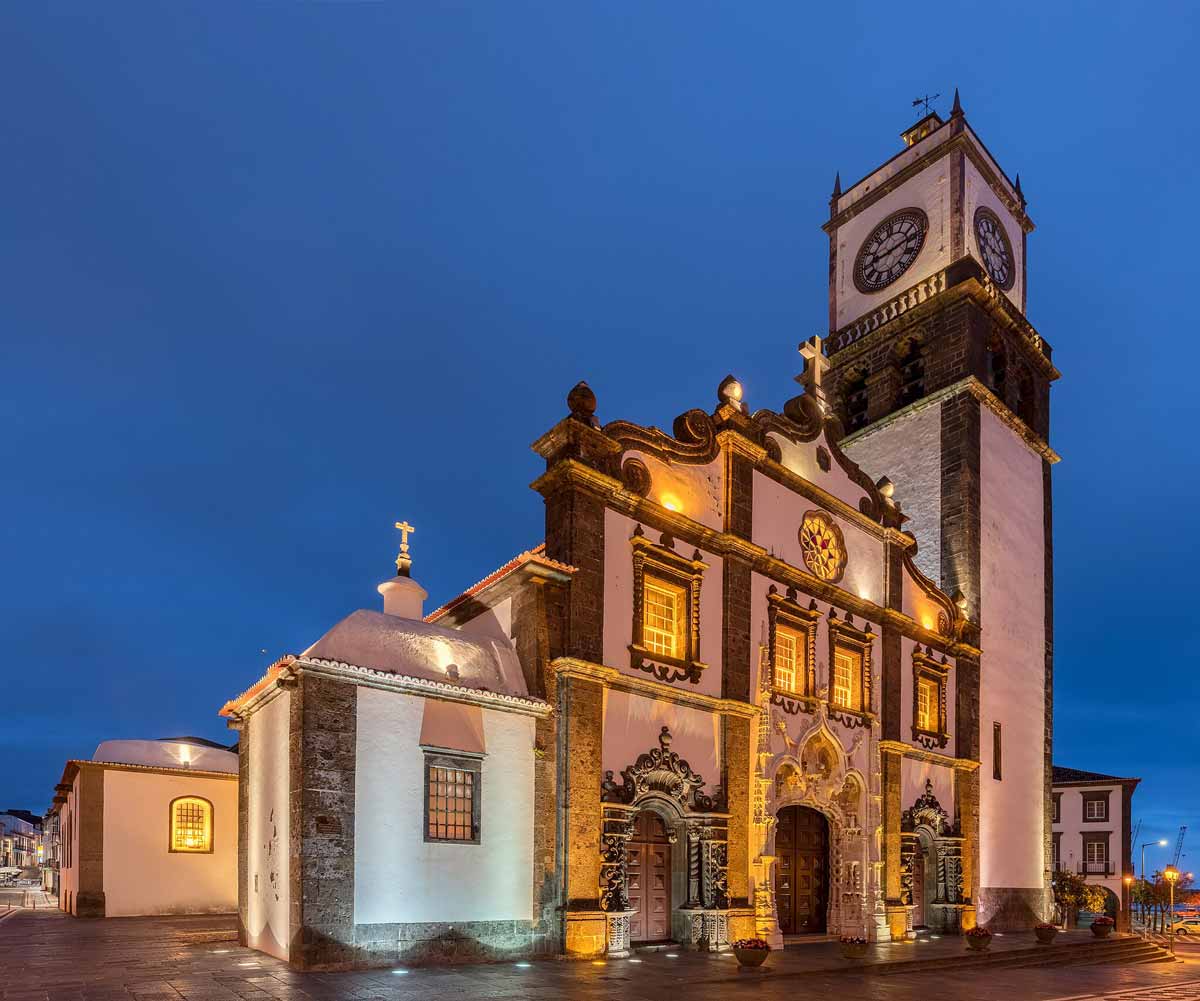
Igreja Matriz de São Sebastião is a stunning church built over a small hermitage dedicated to Saint Sebastian between 1531 and 1547 during the reign of King João III.
While visiting this iconic landmark, you can admire the original Gothic style, the Manueline features, and the Baroque décor. On the façade, the Manueline portico stands out due to its intricate details. Inside, you will find carved cedar and rosewood, 17th and 18th-century imagery and tile panels, jacaranda furniture, and gold-embroidered tapestries from the 16th century.
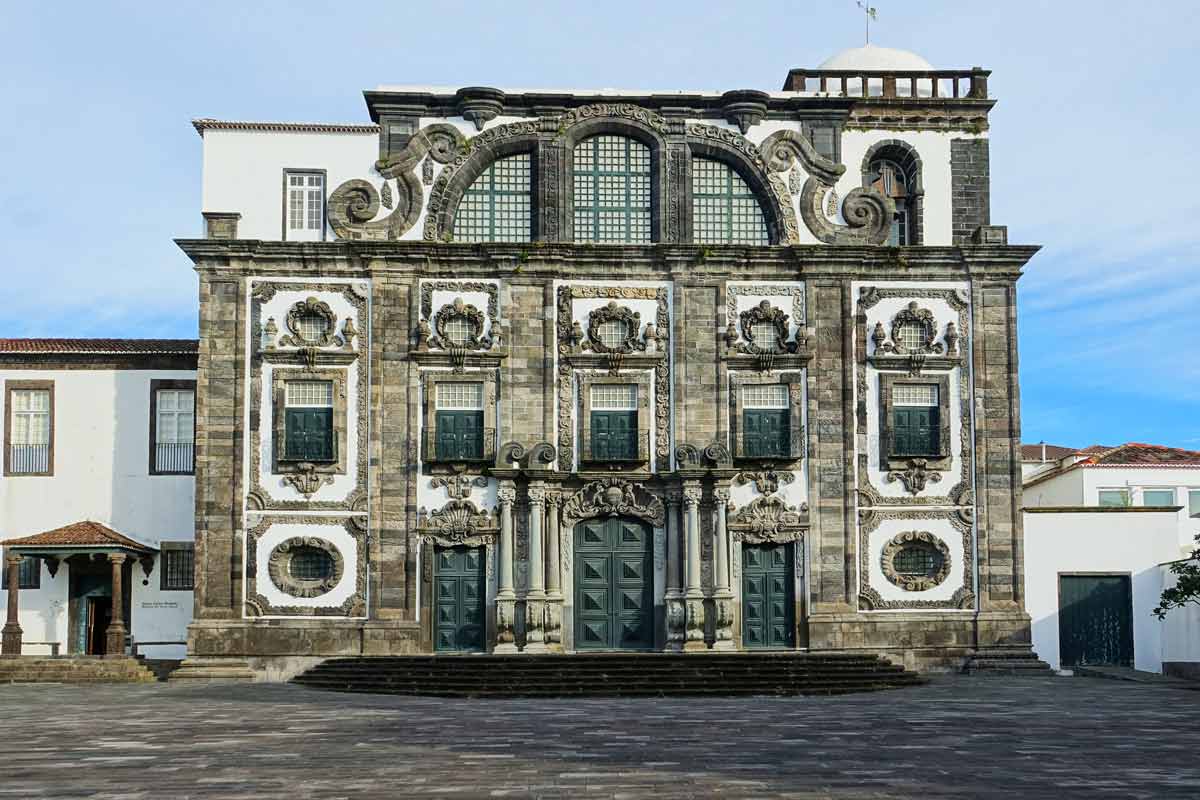
Igreja do Colégio dos Jesuítas, located in Ponta Delgada’s historical city center, is a stunning church from the 16th century. Construction began in 1592. At the same time, a new convent was built for the Jesuits, who a few years later founded a college in the city.
At Igreja do Colégio dos Jesuítas you can observe Mannerist and Baroque features. The church façade was sculpted in local basalt stone. The golden shine from the Baroque gilded wood altar contrasts with the black and white façade. Inside, take some time to admire the traditional Portuguese blue and white tile panels.
Forte de São Brás is a unique example of military architecture in the Azores archipelago. It was built in the 16th century overlooking Ponta Delgada’s original anchorage to defend the anchored ships from English, French, and Algerian pirate attacks.
This polygonal-shaped fortress has four bastions on each corner and thick low walls. Over the centuries, the fortress was transformed and new expansions were added.
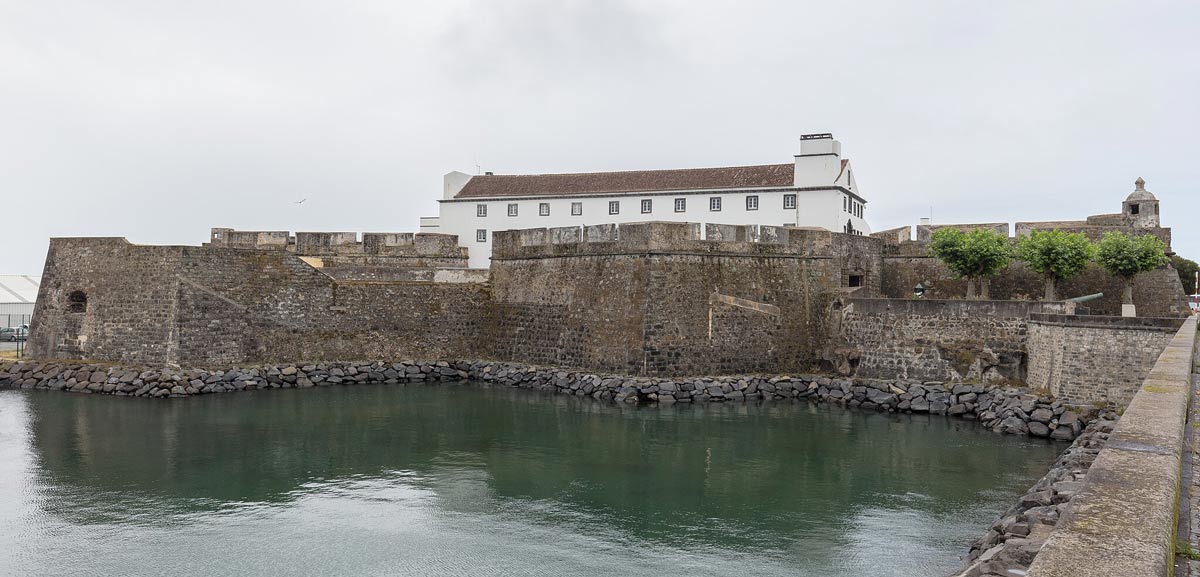
Since 1953, Forte de São Brás has been classified as a Property of Public Interest by the Portuguese Government. Today, it houses the Azores Military Zone Command and the Azores Military Museum.
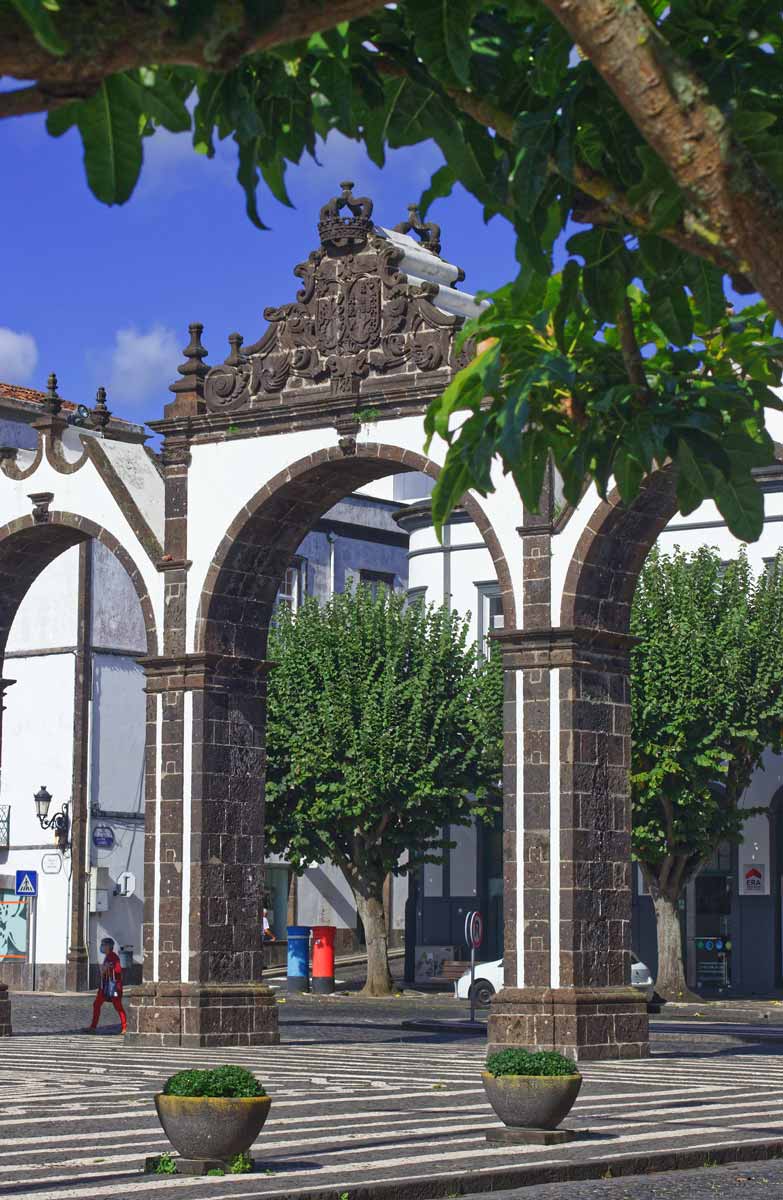
One of the most recognizable landmarks in Ponta Delgada is Portas da Cidade. These city gates were originally built in 1783, next to the old harbor at Avenida Infante Dom Henrique. However, in 1952, they were transferred to their current location at Gonçalo Velho Cabral Square. They feature Baroque decorations which include the city’s symbols and three basalt stone arches.