
The Renaissance was a remarkable historical period in Europe, and its most visible heritage lies undoubtedly in the arts. The era spanned from 1400 to 1600 AD, a time when painters across Italy and Northern Europe ditched the flat artistic style of the Middle Ages and began depicting human bodies as realistic, multi-dimensional beings. A handful of museums hold such concentrated collections that they have become bona fide pilgrimage sites for art lovers. Here are seven of the very best museums for Renaissance art you ought to visit.
1. Uffizi Gallery, Florence (Italy)
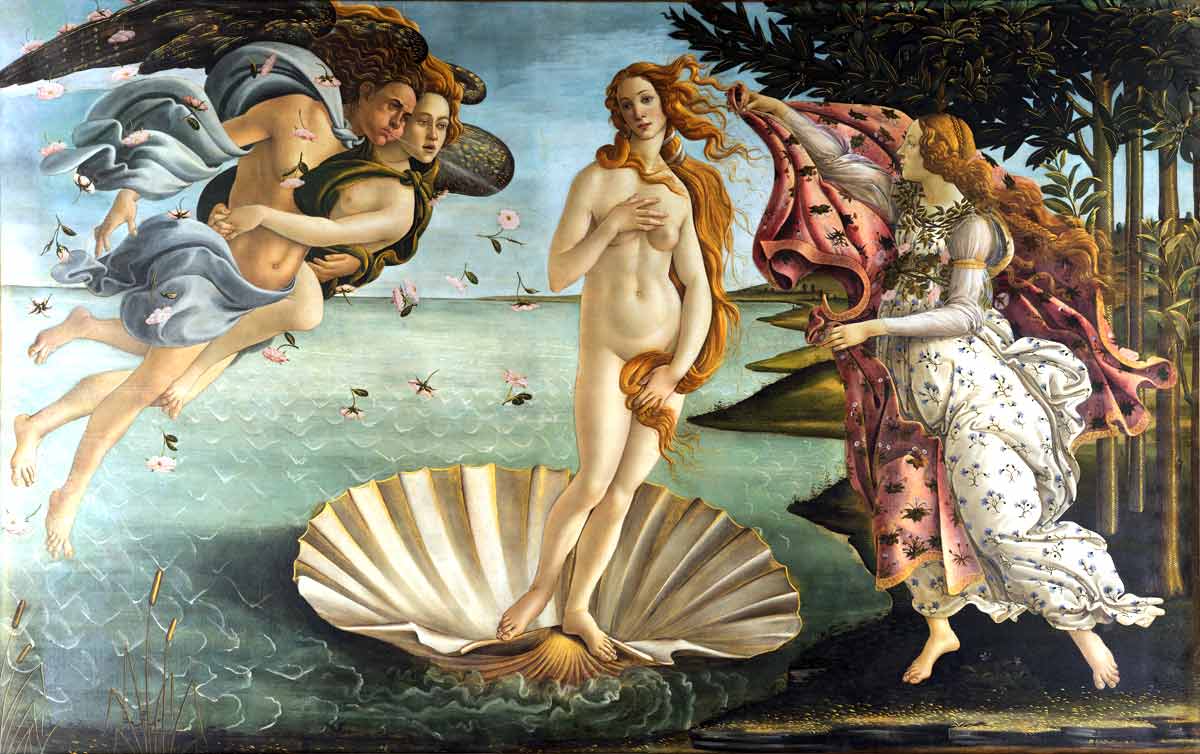
Built in the 16th century by the all-powerful Medici family, the Uffizi sits dead-center in Florence, the city that’s often dubbed the birthplace of the Renaissance. Its collection traces Italian painting from Giotto‘s early dalliance with naturalism right through to the full blast of the High Renaissance, all in (roughly) chronological order.
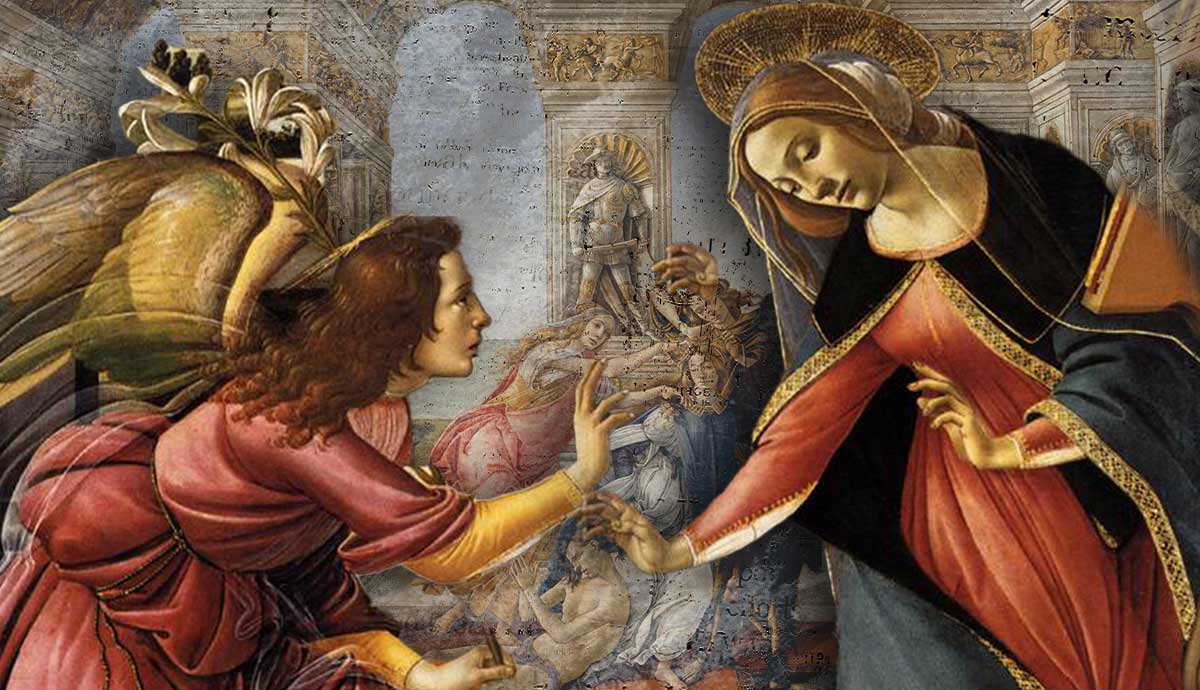
Walking through the place feels a bit like leafing through a really beautiful illustrated encyclopedia of the period, but on a manageable scale. Botticelli‘s Birth of Venus and Primavera get their own legendary room (and legendary crowds to match). Leonardo da Vinci’s Annunciation hangs a few galleries away, near pieces by Raphael, Titian, and Caravaggio.
The building was originally designed by Giorgio Vasari (the painter and biographer who basically invented art history with his book Lives of the Artists) as offices for Florentine magistrates. “Uffizi” is just Italian for “offices.” It opened to the public as a gallery in 1769, making it one of the very first museums in the modern sense of the word.
2. Vatican Museums, Vatican City
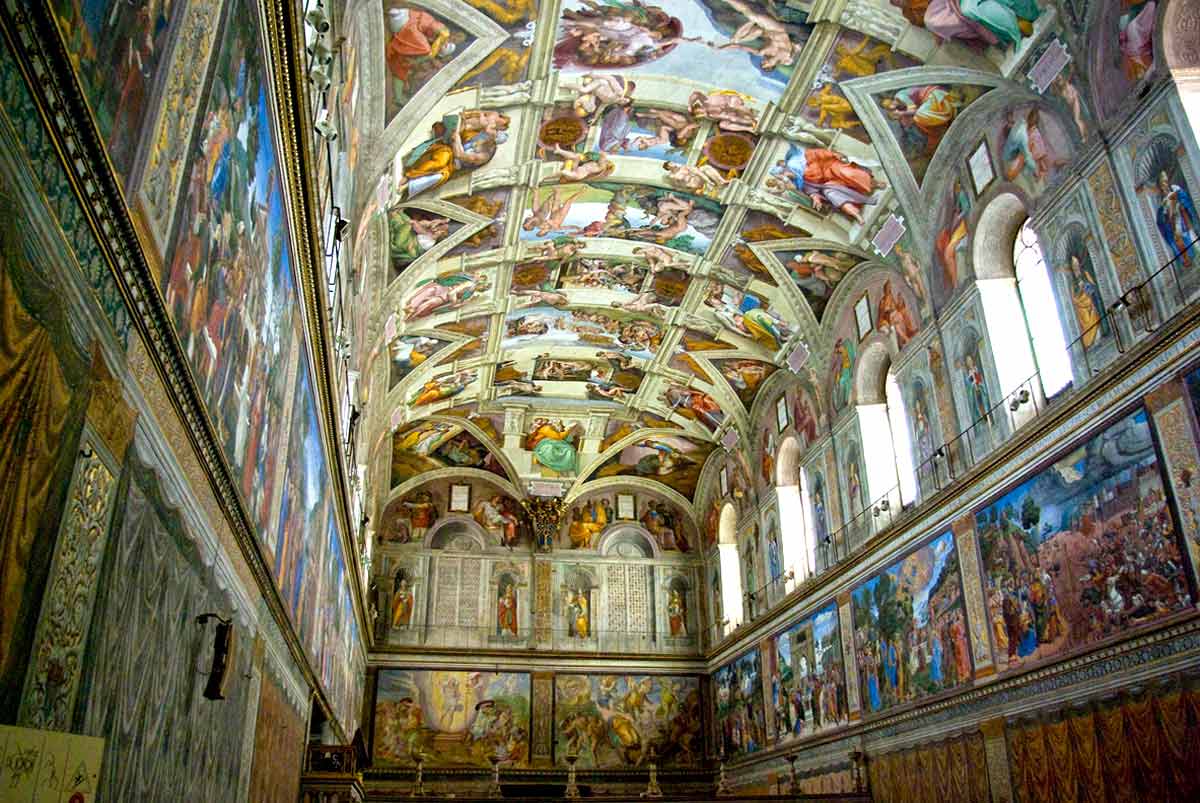
The Vatican Museums are revered for holding some of the most impressive art collections on Earth. They were founded in the early 16th century by Pope Julius II, one of history’s most prolific art patrons. For Renaissance fans, two spaces alone are worth the journey and the long lines: the Sistine Chapel and the Raphael Rooms.
Michelangelo painted the Sistine ceiling over the course of four years (1508-1512), coming back decades later to add The Last Judgment on the altar wall. Fun fact: contrary to popular belief, he didn’t paint the ceiling lying on his back, but stood on scaffolding with his neck cricked back at unnatural angles for an indecent amount of time. He allegedly complained about it in poems and letters to friends.
The Raphael Rooms, frescoed between 1508 and 1520, are home to The School of Athens, widely considered the epitome of compositions in Western art. Beyond these headline acts, the galleries also hold works by Leonardo, Caravaggio, Botticelli, Ghirlandaio, and Perugino.
3. The Louvre Museum, Paris (France)
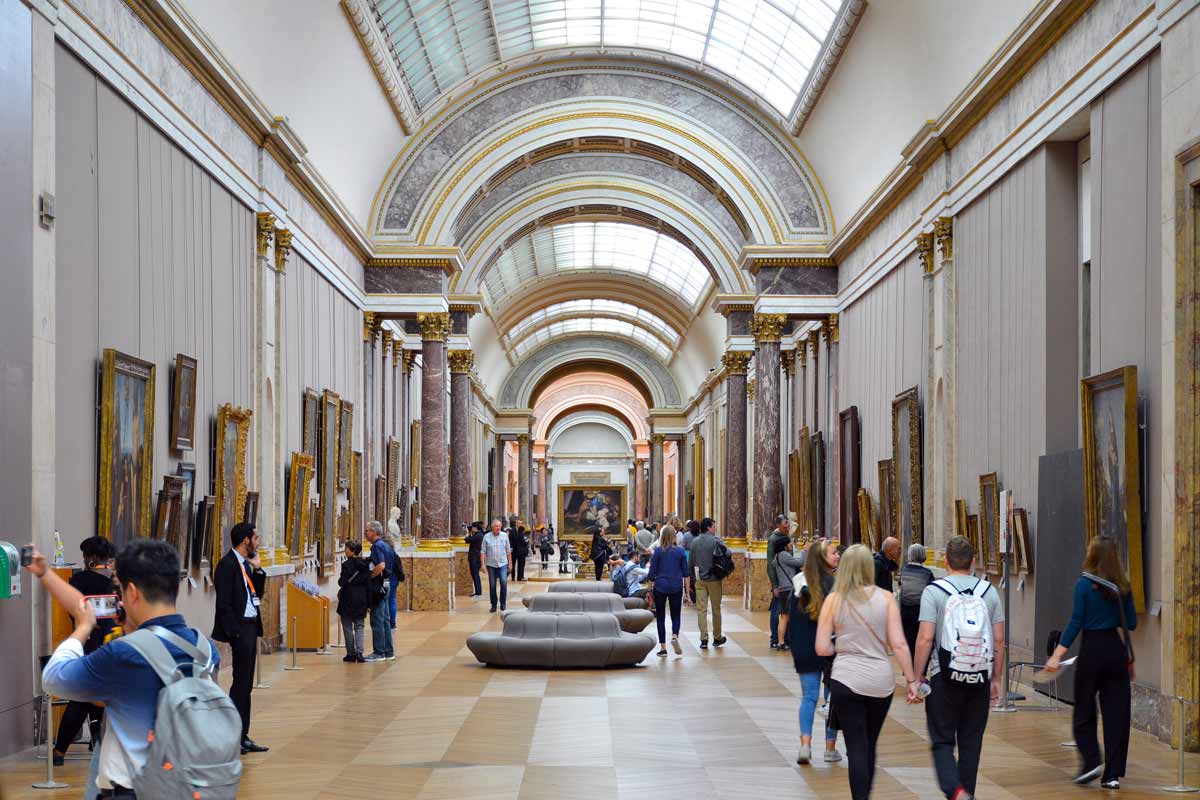
The Renaissance gems at the Louvre rival those of any Italian institution, mostly thanks to centuries of French royal collecting and one rather extraordinary friendship. King Francis I invited Leonardo da Vinci to France in 1516 and set him up in a chateau in the Loire Valley. According to popular French legend, the king cradled the artist in his arms as he died from a stroke (and bitterly disappointed at himself for not having produced better art) three years later.
Leonardo originally brought several paintings with him on the journey across the Alps, including The Mona Lisa, which is the very reason she now resides in Paris rather than Florence. The Mona Lisa, Virgin of the Rocks, and Saint John the Baptist all eventually became part of the French royal collection and now anchor the Louvre’s Renaissance galleries.
The Grand Gallery is the real showstopper, though. This long, sky-lit hall is lined with Italian Renaissance works by Raphael, Titian, Veronese, and Correggio. Veronese’s monumental Wedding at Cana, the largest painting in the Louvre at over 22 by 32 feet, hangs across the room from the teeny tiny Mona Lisa, which measures just 30 by 21 inches. First-time visitors often blurt out “what…is that it?” when they finally elbow their way to the front of her bulletproof case. On a sidenote, the juxtaposition of huge and tiny in the same room is one of the great accidental (or not) comedies of museum hanging.
4. The Metropolitan Museum of Art, New York (USA)
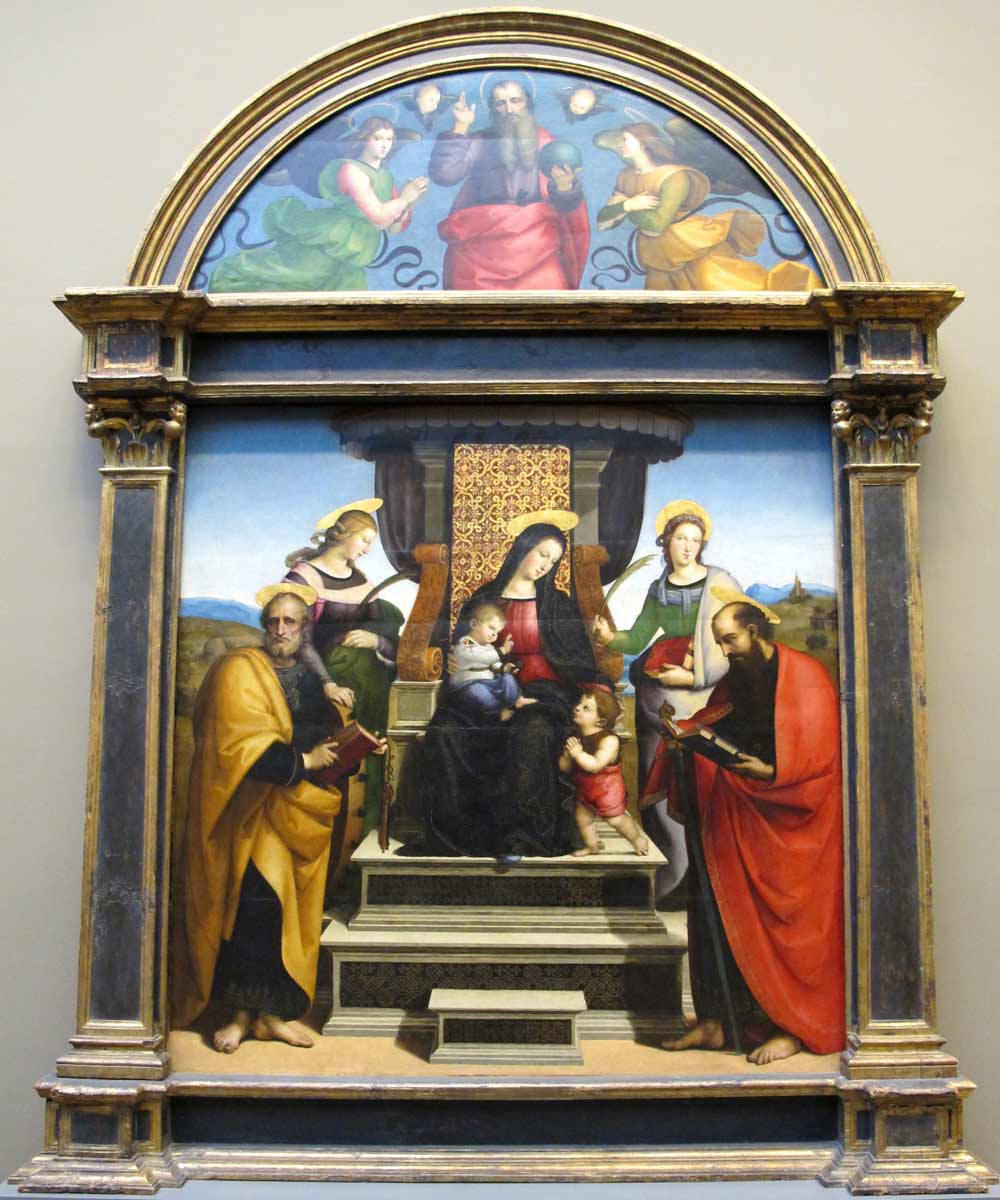
The Met’s European Paintings department holds an extensive selection of works spanning the Renaissance period, with works by Raphael, Titian, Botticelli, Bronzino, and Duccio, plus drawings by the Italian Renaissance’s biggest names (Leonardo, Michelangelo, and Raphael himself).
In November 2023, the museum reopened its full suite of 45 galleries after a five-year skylight renovation. The upgrade was the largest infrastructure project in the museum’s history, and if you visited prior to 2023, you’ll find the difference jaw-dropping.
5. National Gallery, London (UK)
Overlooking Trafalgar Square, the National Gallery holds one of the broadest collections of Western European painting anywhere in the world, and it has a lovely focus on Italian Renaissance art. Best of all, entry is free, which makes repeat visits an absolute pleasure.
Among the gems are Leonardo da Vinci’s Virgin of the Rocks (the second version, slightly different from the Louvre’s), Piero della Francesca’s Baptism of Christ, Raphael’s Madonna of the Pinks, and Titian’s Bacchus and Ariadne.
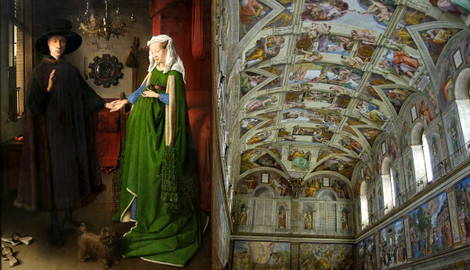
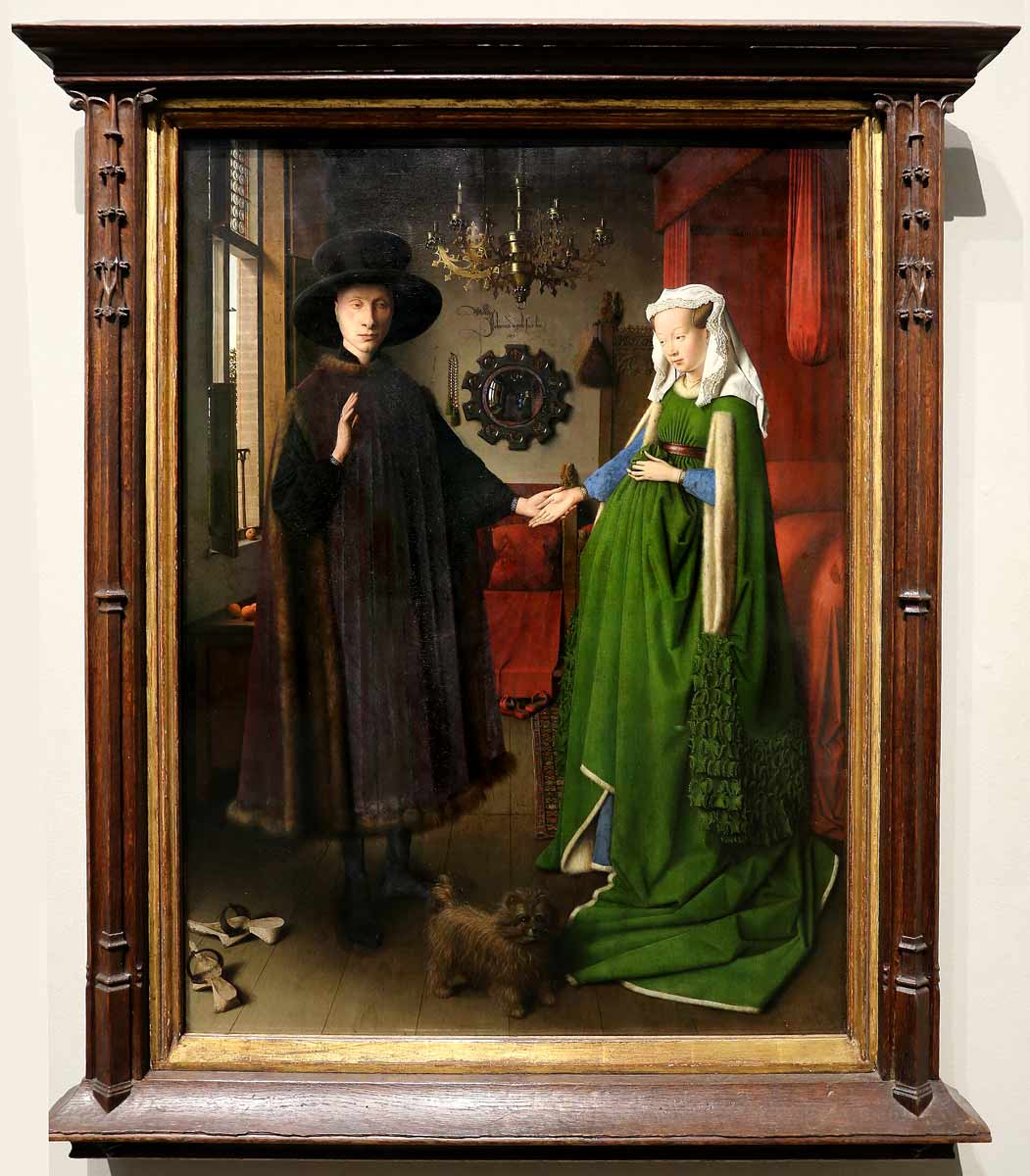
The Northern Renaissance is just as well represented here, with Jan van Eyck’s Arnolfini Portrait (look closely at the convex mirror at the back of the room, and you’ll spot two tiny extra figures reflected, one of whom may well be Van Eyck himself) and Hans Holbein’s wonderfully odd The Ambassadors.
6. Gemäldegalerie, Berlin (Germany)
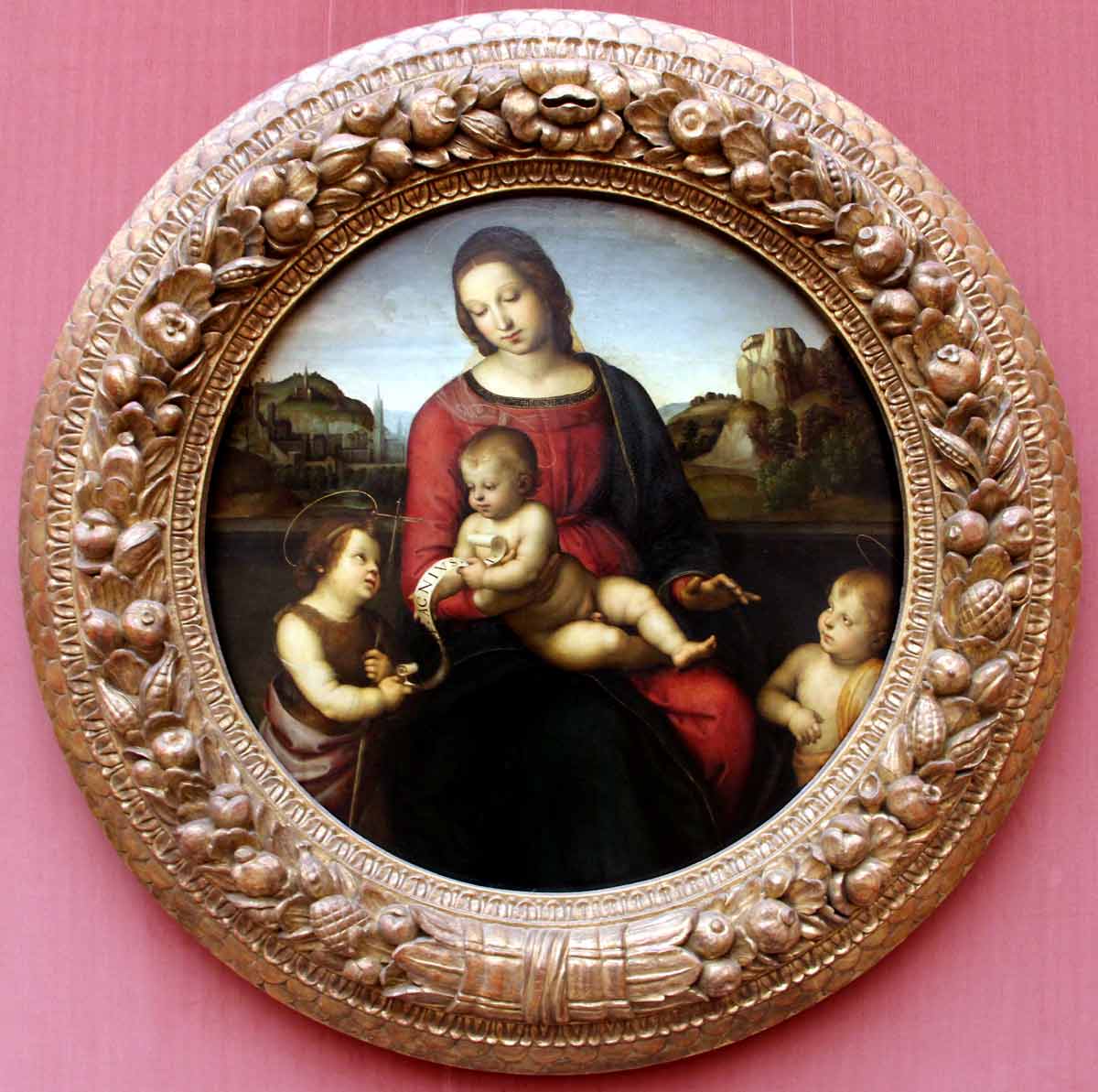
Part of the Berlin State Museums, the Gemäldegalerie is a much quieter destination than the Louvre or Uffizi, which is a big part of its charm for art lovers in the know. It holds one of the world’s leading collections of European paintings, with especially rich holdings in early Italian and Northern Renaissance art.
Some masterpieces to see here include Botticelli’s Madonna and Child with Singing Angels, Raphael’s Madonna Terranuova, and Pieter Bruegel the Elder’s wonderful Netherlandish Proverbs, which packs around 100 Dutch sayings into a single chaotic village scene (yes, people still play “spot the proverb” with it today). There’s also a stunning Caravaggio in the mix.
The Northern Renaissance galleries are second to none with major works by Dürer, Cranach, Van der Weyden, and Van Eyck. The biggest perk, though, is what you don’t experience here: namely, the crushing crowds of the museum’s more famous peers. You can actually stand in front of masterpieces at length and study brushwork up close without being sardined by a tour group.
7. Museo del Prado, Madrid (Spain)
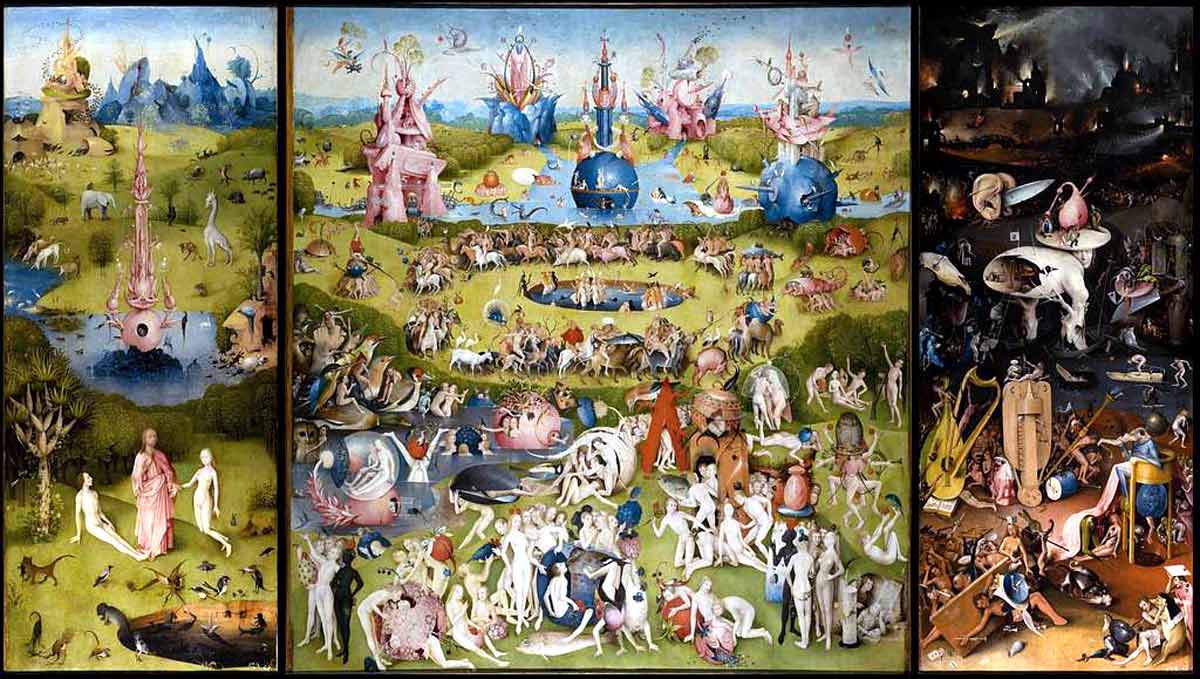
Founded in 1819, the Prado holds the most coveted collection of Spanish painting anywhere on the planet, plus substantial holdings of Italian and Flemish Renaissance works amassed by Spanish royalty. Emperor Charles V and his son Philip II were ardent patrons of Titian. Charles once famously bent down to pick up a paintbrush the artist had dropped, an unprecedented gesture from a Holy Roman Emperor that became part of art history legend. The results of all that royal patronage fill entire rooms here.
Italian highlights include Raphael’s Holy Family with a Lamb, works by Fra Angelico and Botticelli, and a knockout concentration of Titians. The Flemish Renaissance comes through Hieronymus Bosch’s mind-bending Garden of Earthly Delights. The painting looks about 400 years ahead of its time and is full of surreal monsters and bird-headed demons playing musical instruments. To this day, no art expert has ever been able to definitively explain what that was all about. Works by Rogier van der Weyden and Pieter Bruegel the Elder fill out the rest of the Northern collection.
The Spanish Renaissance slips into the mix via El Greco, considered the forefather of both Cubism and Expressionism. He was indeed Greek (from Crete), not Spanish (his real name was Domenikos Theotokopoulos, which Spanish-speakers understandably shortened to “the Greek”), and his stretched, almost flame-like figures are unlike anything else seen in the period. Seeing them in person is an incredible way to feel how the Renaissance gave way to the Baroque.