From the Romans to the Greeks, the Persians, and the Chinese, the ancient world was a place of great cultural diversity and varied ways of life. Civilizations had their own technologies and their own preferences for what became the norm. A significant concern was the scope of warfare and the options available for training and equipping soldiers who had to fight.
Armor was a primary factor, and the ancient world had many types of armor from which to choose. Here are 5 different kinds of armor in the ancient world.
Ancient Armor in an Age of Bronze and Iron
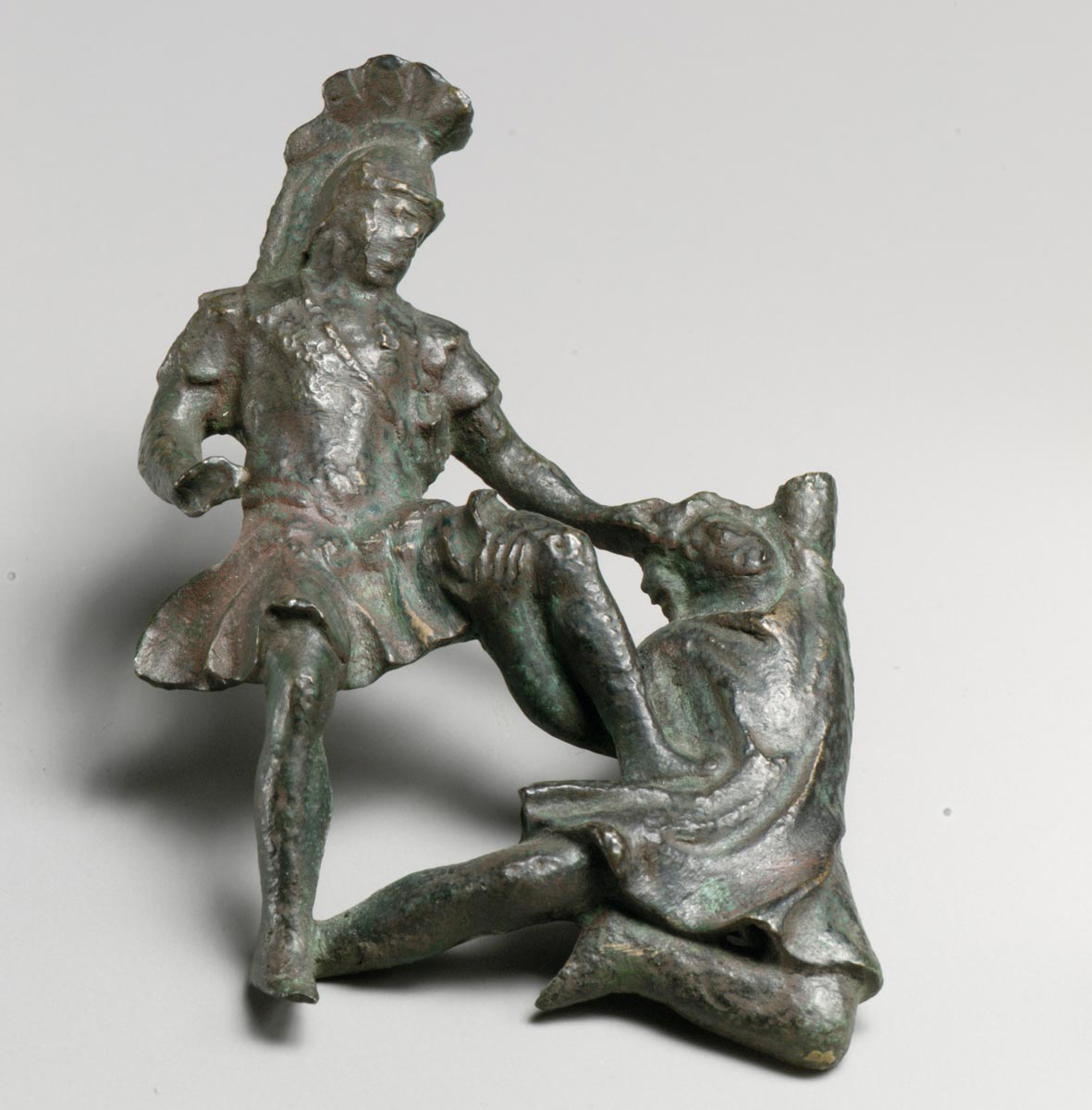
An alloy of copper and tin, bronze was obviously a key substance in the Bronze Age. Around 3300 BCE, the Middle East began to transition from copper tools, weapons, and armor, to bronze. It was harder and stronger, with a lower melting point, meaning it could be cast into various shapes more easily.
Although bronze continued to be used well past the Bronze Age Collapse around 1200 BCE, it fell out of favor in many areas as the availability of iron, and the ability to work it became more prevalent. In some areas, the difficulty in finding tin, a key component of bronze, led to a shift towards using iron.
As such, the Bronze Age ended, and the Iron Age began. But this was certainly not the end of the Ancient Era! When exactly the Ancient Era ended is subject to regional interpretations, such as the fall of Rome in Europe (5th century CE), or the rise of Islam in the Middle East (7th century CE).
Of course, armor was made from bronze and iron, but they weren’t the only materials used. Leather was always popular, as it would be, far into the future. Bone, shell, and various other exotic materials were also used. In China, for example, the earliest evidence of armor comes from the Shang dynasty (ca. 1600 BCE to ca. 1046 BCE) and was usually made from shell or rawhide, while helmets were made of bronze.
The ancient world stretched far and wide, however, and ancient armors varied greatly in their design and the materials used to construct them.
1. The Greek Linothorax
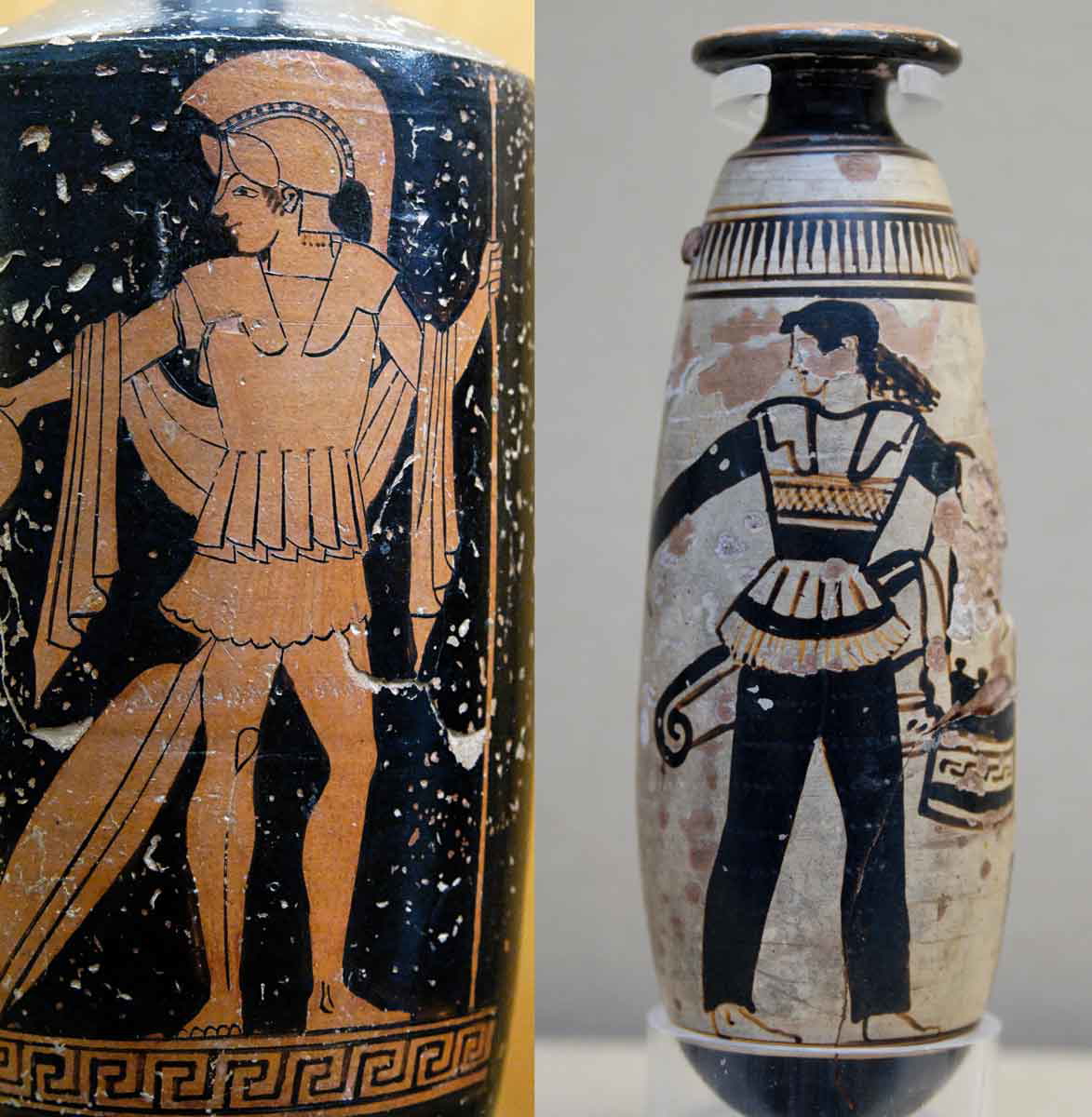
Occupying a legendary place in the minds of those who imagine Ancient Greece, armor forms an iconic part of this visual. During ancient times, armor could be made from many substances, from metal to bone, and even wood. The Greeks were no exception to using the full gamut of what was available. Linen was an unusual, yet efficient choice for the armor that many Greeks wore.
Not much is known about the construction of the linothorax, and while many cultures have used linen and other fabrics, the construction of these armors is done by quilting and then stuffing the quilt with loose fabric, creating a padded armor. This runs contrary to typical depictions found in ancient art where the linothorax is depicted looking similar to tailored leather.
Controversially, there has been the belief that the linothorax was created by gluing layers of linen together, but this stems from a mistranslation of a book from 1869, and there is no historical evidence to support the belief. With that being said, however, linen is biodegradable and all ancient examples have perished. Evidence for the armor comes from ancient texts and visual depictions.
While other cultures, notably, the Romans, did employ linothorax, it was likely not done to the same degree as in Greece, and whatever it was, and however it was constructed, remains a somewhat mysterious subject.
2. Lamellar Armor
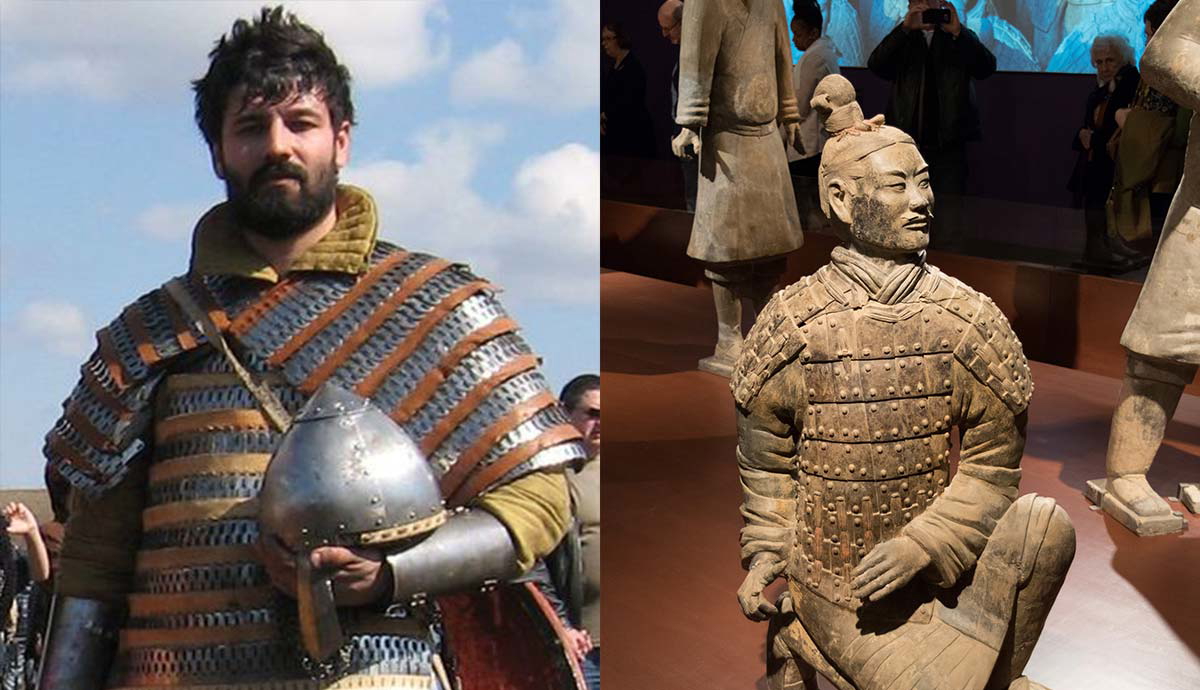
Appearing in the first millennium BCE, lamellar armor utilized hundreds, and even thousands of small metal plates, called lamellae, which had holes punched in them and were laced together to form armor that could cover various parts of the body. They could be made to cover just the chest and back (cuirass), or the entire body from the neck to the shins. Unlike scale armor, lamellae were not sewn onto a leather or cloth backing. The increased mobility that lamellar armor offered led it to become extremely popular in China where it saw widespread use.
Lamellar armor offered high flexibility and significant defense against a variety of weapons, depending on what was used in its construction. During ancient times, there were a number of options for making lamellae. Bronze, iron, and later, steel, were used. Leather was also a popular choice, while there is evidence that bone was also used.
Archaeological evidence suggests the armor first appeared with the iron-age Assyrians, while Sumerian and Egyptian bas-reliefs from the 17th century BCE suggest the armor may have been in use much earlier. Lamellar armor appeared in China in the 5th century BCE and was also used in the construction of helmets, replacing the single-piece bronze helmets that were in common use.
Lamellar armor continued to be used right up until the early modern era when gun use was the norm on the battlefield.
3. Scale Armor
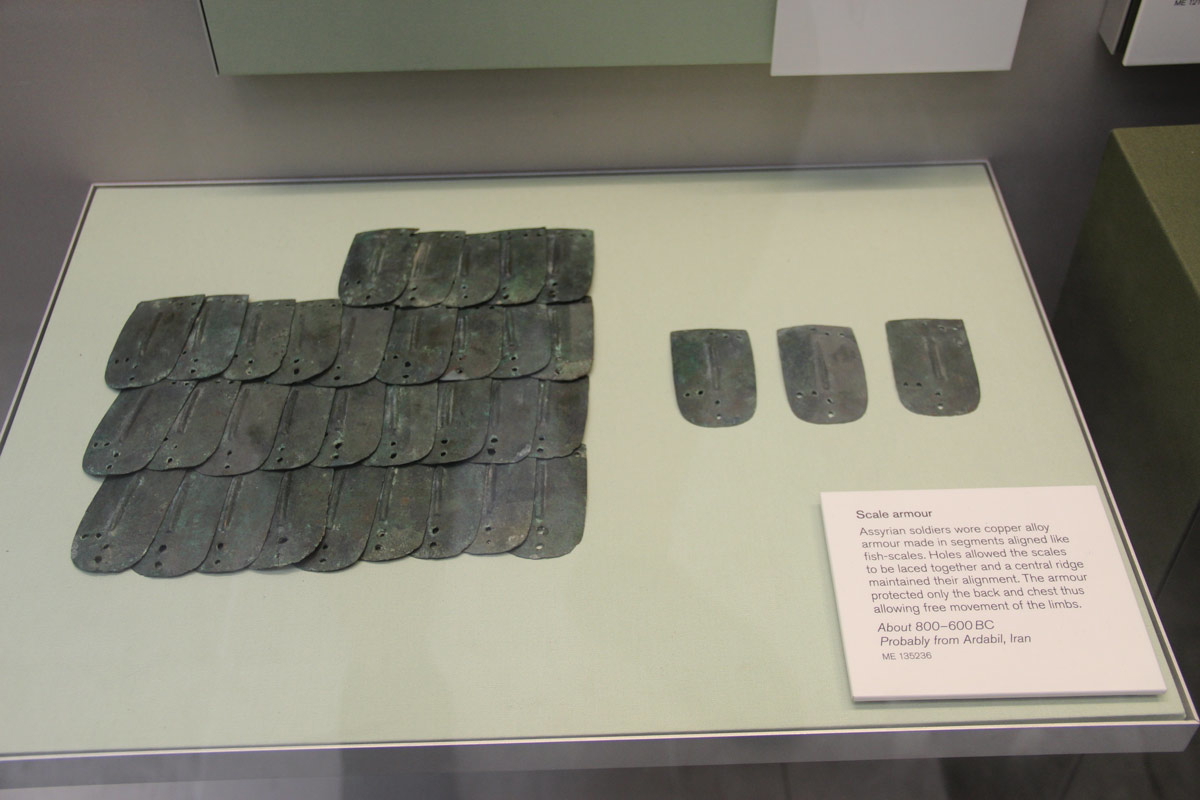
Another popular form of armor in ancient times was scale armor, or scale mail, which consisted of metal scales sewn into a backing of leather or cloth. The scales overlapped, as they do in fish and reptiles, thus replicating the natural defenses that evolved in nature. They could be made from many materials such as bronze, iron, leather, and even horn and pangolin scales.
The earliest known example comes from Ancient Egypt from around the time of Amenhotep II ( r. 1425-1400 BCE), while the Chinese Shijing ancient book of poetry dating from the 11th century BCE to the 7th century BCE, mentions horses being covered in scale armor. Scale armor for horses was also found in the Middle East dating to the 3rd century CE.
Archaeological evidence suggests the Scythian horse warriors used scale armor In the first millennium BCE, while Herodotus notes that the Persians used it as well. The Sarmatians are also known to have used the armor.
The Romans adopted scale armor which they called lorica squamata. It found widespread use, however there is much debate as to when it was adopted. It is not known for certain when it was introduced, but it featured predominantly in the 1st and 2nd centuries CE.
4. Chainmail

Consisting of small metal rings linked together to form a mesh, chainmail was a popular form of armor that has been in use from ancient times all the way through to the present, and was most commonly used between the 3rd century BCE to the 16th century CE. It is believed to have originated from the Celts in Europe who exercised a high proficiency with metalwork and was adopted by the Romans who ensured its widespread use across the republic and the empire that followed. Contrary to popular depictions of Romans wearing banded lorica segmentata armor, chainmail was likely the most widespread armor used amongst the legions and their auxiliaries.
The Sassanid (or Sassanian/Sasanian) Persians in the Middle East adopted chainmail in the 3rd century CE after contact with the Romans who wore it. It was introduced to China in the 4th century CE and to India in the 12th century CE.
Chainmail was versatile and offered decent protection, especially against slashing attacks. The metal rings were able to effectively distribute the force of an attack, reducing the effect of the impact. It could also be used with other forms of armor, increasing its efficacy. Underneath chainmail, warriors and soldiers wore padded garments.
Chainmail is still used today in a number of niche areas, such as in the butchery and meatpacking industries, and it sometimes finds use in stab-resistant vests used by law enforcement. Divers in shark-infested waters also make use of chainmail to protect against shark bites.
5. Laminar Armor
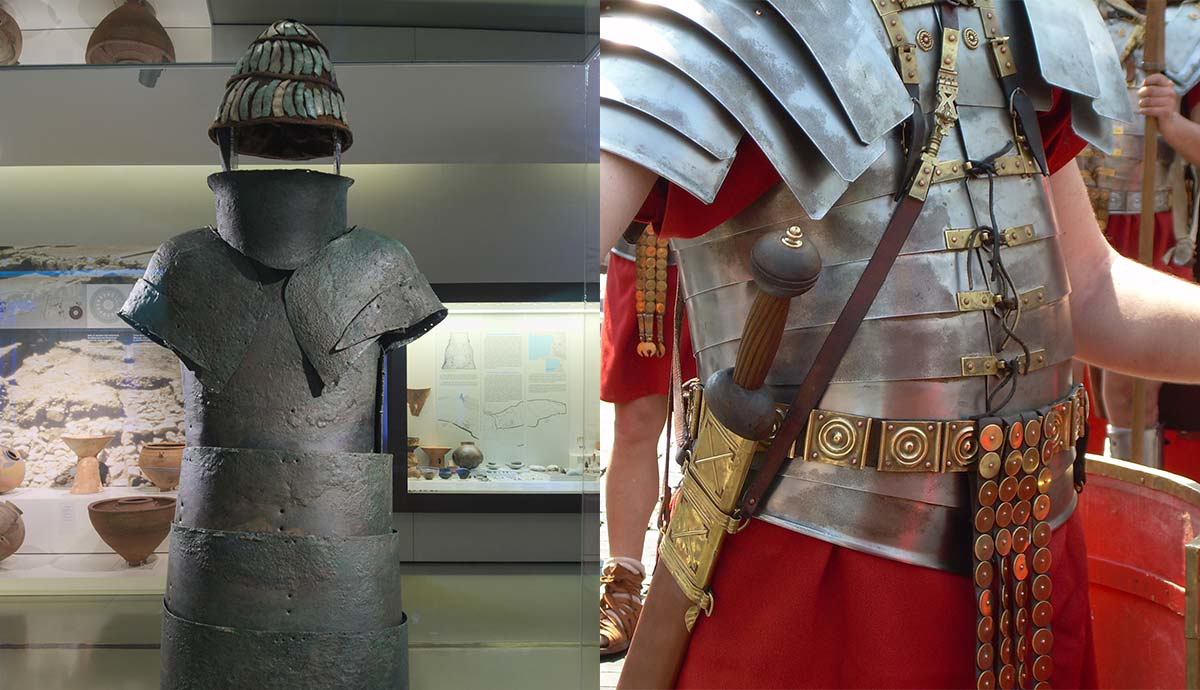
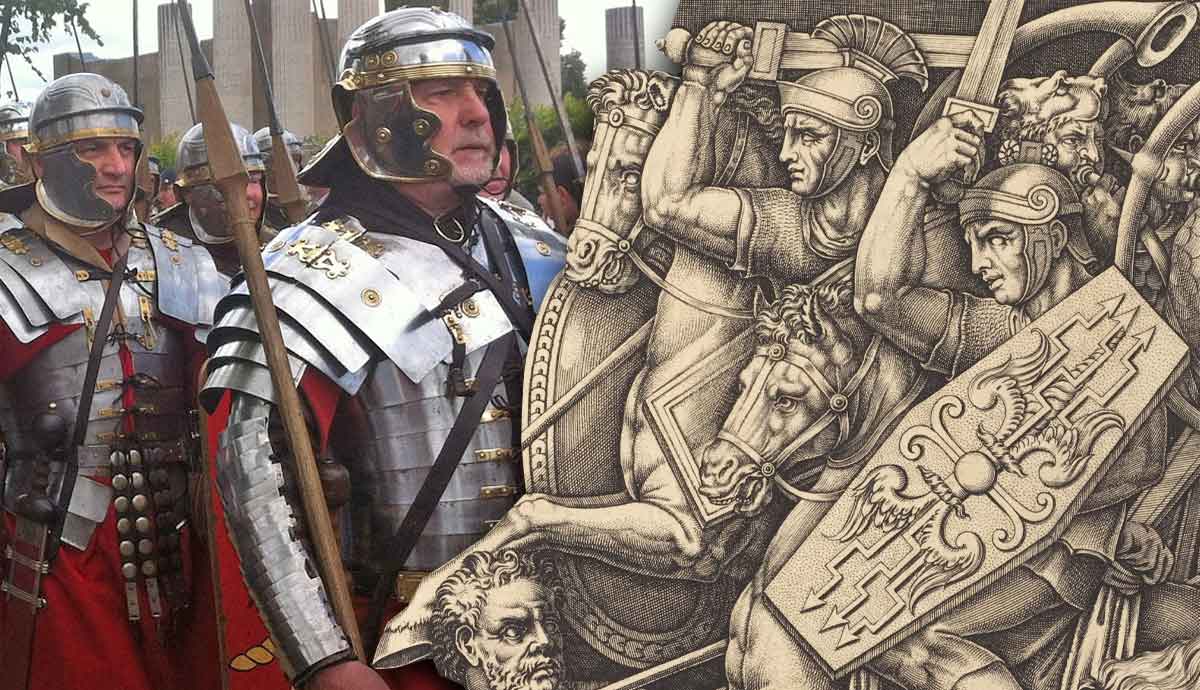
Not to be confused with lamellar armor, laminar armor consisted of horizontal bands or strips called lames. The most famous example of this type of armor is encapsulated in the common image of the Roman soldier wearing what the Romans called lorica segmentata—their specialized version of laminar armor.
Predating the Romans by almost a thousand years, the Mycenaeans in ancient Greece were known to have used laminar armor made of bronze, although only one complete suit has been found, along with fragmented remains of others. The particular example, known as the Dendra Panoply, is a subject of great interest. It is made of fifteen pieces of bronze and is dated to around 1500 BCE. As bronze is heavier than iron, the Dendra Panoply would have been exhausting to wear in addition to it limiting the wearer’s mobility.
Laminar armor was also used by many other civilizations in the ancient world, likely including the Sarmatians, Dacians, Scythians, and Parthians. The concept of laminar armor was indeed extremely old long before the Romans adopted it.
Combining Armor
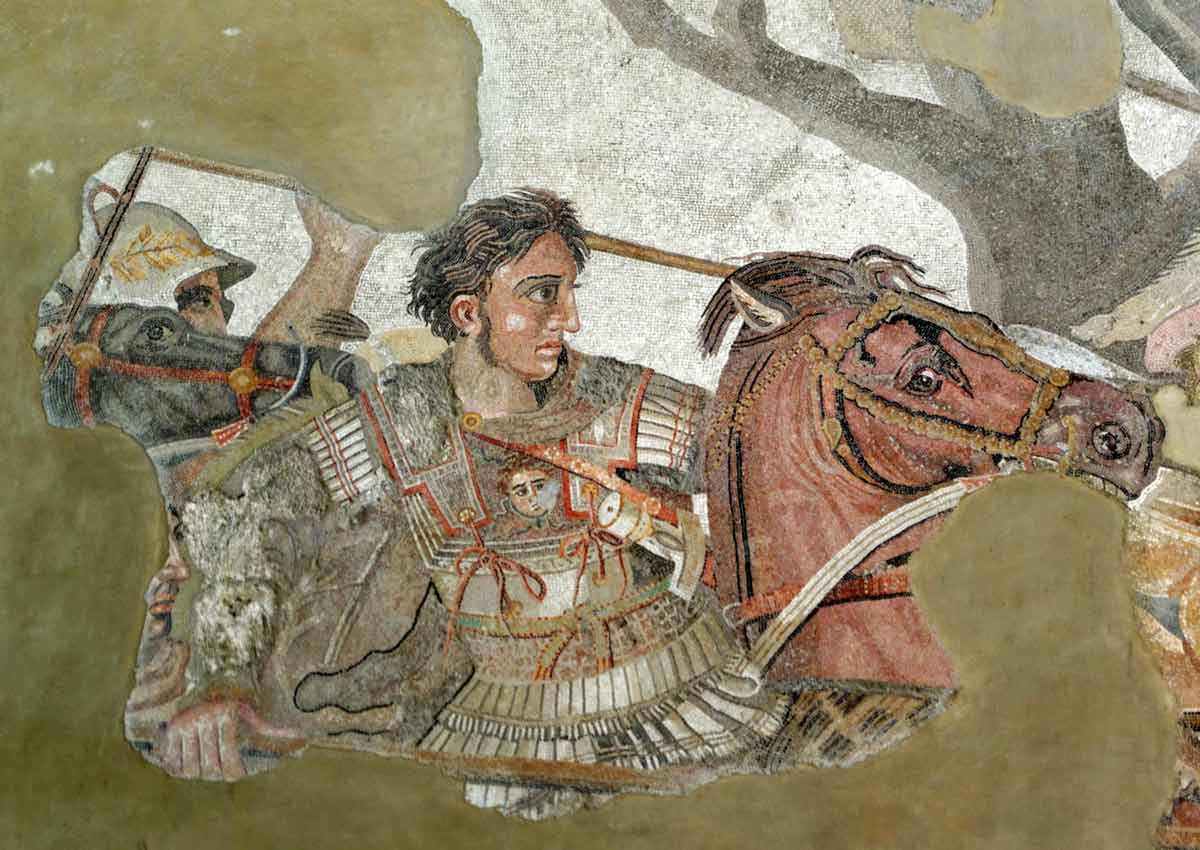
Armor often wasn’t just a single type of design, and incorporating two or more styles was a widespread practice. A common combination was mail and plate, which was a suit or a cuirass of mail, with metal plates sewn into it. This type of armor originated in ancient times and saw use across many regions well into the Late Medieval Era and beyond. The design of mail and plate wasn’t singular, as there were many different ways of joining the plates to the mail, representing a host of design philosophies from many regions.
Mail and plate, of course, wasn’t the only combination either. Vase paintings from Athens show that the linothorax was a prime candidate for being combined with other armor types, and depictions often show scales covering part of the armor.

From copper and bronze to iron and steel, eventually, the ancient world passed into history, and battlefield fashion went through dramatic changes. Many design features survived the changing times and were incorporated into medieval designs, while others underwent little evolution and still found great popularity.