Summary
- Vedānta, meaning “the end of the Vedas,” is a philosophy focused on God-realization to break the rebirth cycle.
- Its three main sub-schools are Advaita (non-dualism), Viśiṣṭādvaita (qualified non-dualism), and Dvaita (dualism).
- Advaita Vedānta teaches the individual soul (Ātman) is ultimately identical to the ultimate reality (Brahman).
- In contrast, Dvaita Vedānta argues the soul and God (Brahman) are eternally distinct and separate realities.
- Vedānta’s concepts parallel debates in modern Western philosophy, especially regarding monism, pluralism, and consciousness.
Vedānta literally translates as “the end of the Vedas,” and it has never been conceived as a single doctrine. Vedānta concerns the realization of God in our world, thereby cutting across the core ideas of Hinduism, such as Atman, Brahman, and attaining salvation by breaking the shackles of the cycle of birth, death, and rebirth. Nonetheless, it would be wrong to consider Vedānta as a contribution to a purely theistic cause because this particular darśana offered a radical and transformative view of consciousness. And what would Western philosophy be without the debates about consciousness? I guess a lot shorter, and with far less existential dread.
Are Vedānta and the Upaniṣads Basically the Same Thing?
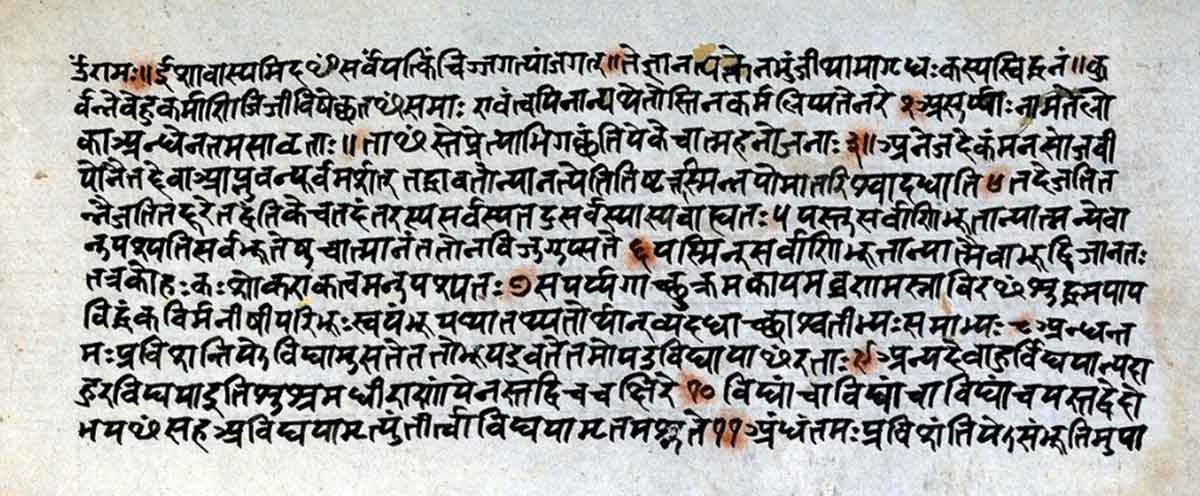
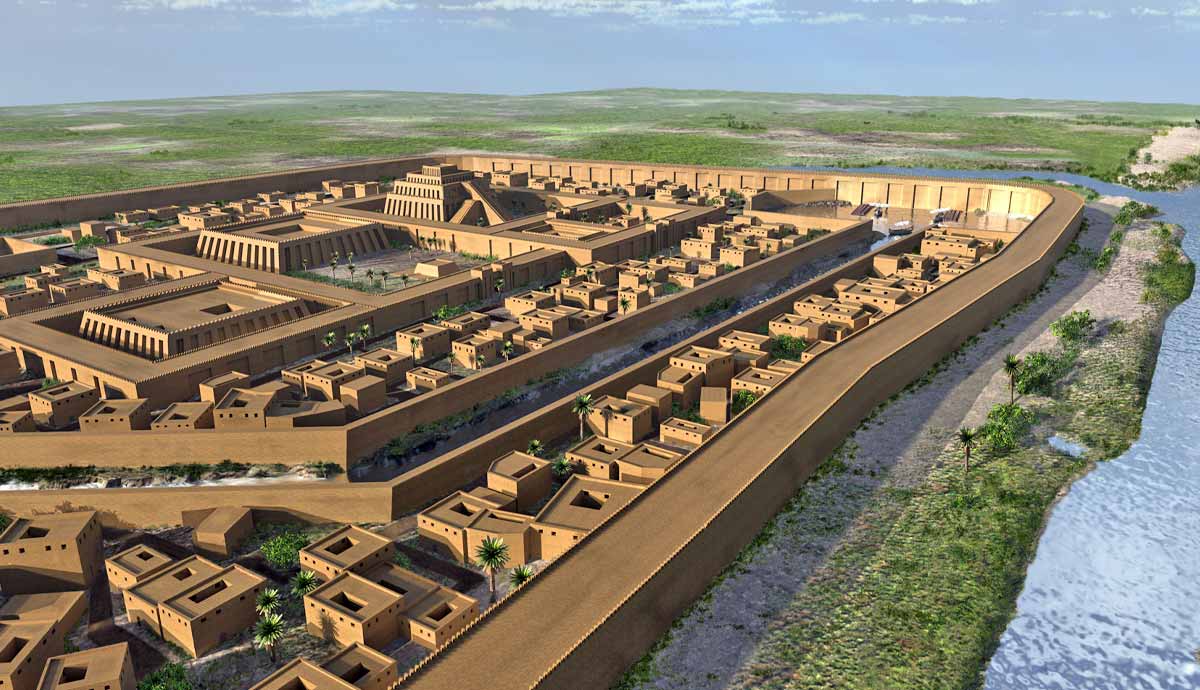
The Vedic tradition (c. 1500‒600 BC) marked the flourishing of ancient urban centers in the Indus Valley. These urban centers were home to Indo-Aryans, a specific ethnolinguistic group who spoke languages belonging to the Indo-Iranian branch of the Indo-European language family. The social system that reigned back then was deeply embedded in the Vedas. The four Vedas, each composed in Sanskrit, contained instructions for sacred rituals, chants, hymns, and speculative reflections on the nature of reality, transmitted orally for centuries before being written down. Moreover, the only people who had access to the Vedas, and, therefore, the sacred knowledge about the world, were Brahmins. This was the caste of priests, whose duty was to devote themselves to studying and interpreting the Vedas. At the same time, they were considered the highest class in the Indo-Aryan social order.
However, among the most intellectually engaged, some Brahmins grew discontent with their own caste. Priests seemed to be immersed in earthly, all-too-human customs, such as striving for power and money. This made them less observant of the rules of Hinduism and less devoted to the ultimate spiritual goal of salvation. For this reason, some of them went to forests in search of the inner light and God.
Over time, this led to the creation of the Upaniṣads (800‒200 BC), a new corpus of texts passed down from teacher to student. The Upaniṣads are also called Vedānta, or “the end of the Vedas.” So this is where the confusion may arise. It looks like the Upanishads, which are listed as the fifth and sixth Vedas, bear the same name as the philosophical school. Be it as it may, Vedānta was systematized much later, between the 8th and 16th centuries AD, by sages like Śaṅkara (c. 8th century AD), Rāmānuja (c. 11th century AD), and Madhva (c. 13th century AD), and in opposition to other rivals of the Hindu religion, such as Buddhism and Jainism.
The Central Concepts of Vedānta
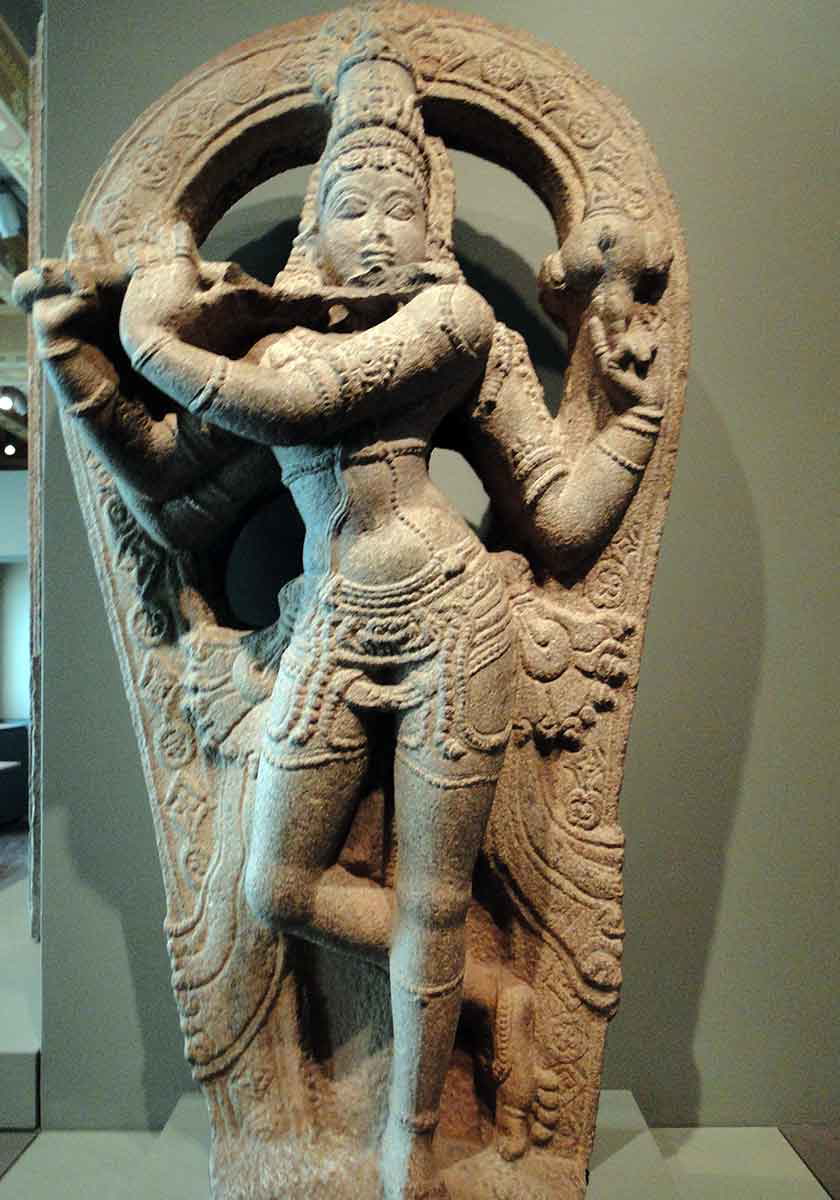
The mentioned sages, Śaṅkara (c. 8th century AD), Rāmānuja (c. 11th century AD), and Madhva (c. 13th century AD), all developed their sub-schools of Vedānta: Advaita Vedānta, Viśiṣṭādvaita Vedānta, and Dvaita Vedānta, respectively. The sub-schools tackled the three main concepts: Brahman, Ātman, and their Relationship.
At the heart of Advaita lies the concept of Brahman, understood as the infinite, attribute-less (nirguṇa) ground of being. Brahman is not merely the highest deity among others but the ultimate reality itself, which is timeless and unchanging. In this framework, the multiplicity observed in the world, namely its forms, colors, beings, and changes, is regarded as māyā, or illusion in the sense of misperception.
What, then, of the individual self, the Ātman? In Advaita, the Ātman, when stripped of its empirical layers of personality, memory, and bodily identity, is none other than Brahman itself. Thus, the salvation or the liberation from the cycle of life, death, and rebirth is not a journey toward union with Brahman, because there was never any real separation to begin with. Instead, it is the removal of ignorance (avidyā), a direct recognition that the self already is Brahman, and that all apparent distinctions are provisional. Due to this, Śaṅkara is famous in the history of philosophy for his position of non-dualism, or better yet, monism.
For Rāmānuja, the central problem with Advaita was that it rendered individuality, diversity, and devotion unintelligible. If everything is only Brahman, then what is the status of love for God, ethical action, or ritual practice? His response was to argue that Brahman is indeed one, but not devoid of qualities. Brahman is personal, identified with Viṣṇu or Nārāyaṇa, one of the principal deities in Hinduism, and endowed with auspicious attributes such as compassion, knowledge, and power.
On this view, Ātman, or the individual soul, is real and eternal. It is not an illusory appearance of Brahman, but a distinct entity. At the same time, it cannot exist independently, because the soul is inseparably related to Brahman as part of its very nature. The salvation in Rāmānuja’s Viśiṣṭādvaita is not the dissolution of individuality into the absolute, but something akin to the blissful communion of the soul with a personal God. The liberated soul retains its distinctness, and its highest fulfillment is loving devotion (bhakti) to Brahman. Obviously, Viśiṣṭādvaita Vedānta also serves to defend non-dualism, albeit in a more nuanced way that balances monism and pluralism.
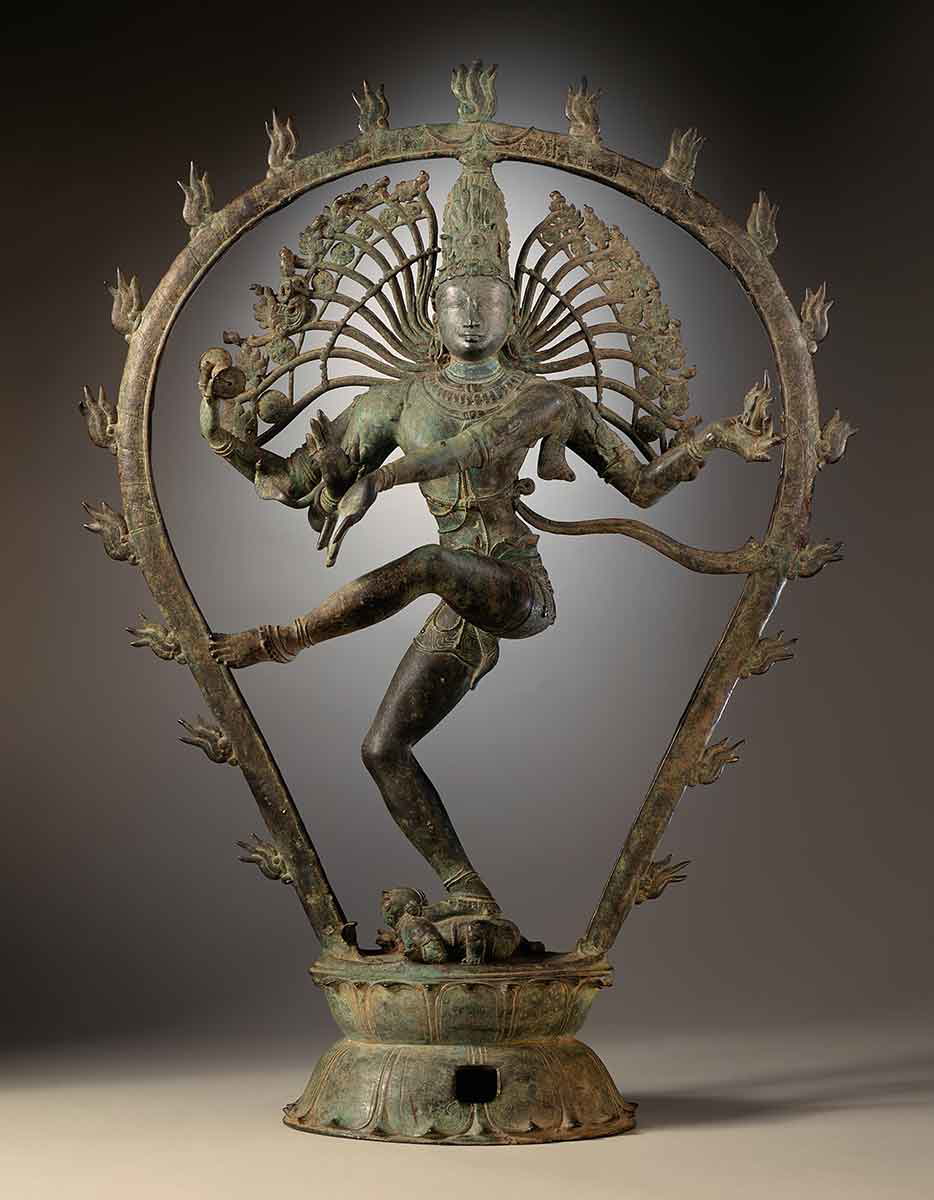
The third major branch of Vedānta, Dvaita, represents a deliberate rejection of Advaita’s monism. For Madhva, the sage behind Dvaita, any philosophical position maintaining that Brahman and Ātman are ultimately identical undermines both common sense and the foundations of religious life as described in the Upaniṣads. Madhva thought that one can’t really love or serve God meaningfully if one is ultimately identical with Him. Instead, he argued in favor of an uncompromising dualism: Brahman (or Viṣṇu) and the individual soul (jīva) are eternally distinct realities.
In his view, thus, Brahman is a personal God, independent, omnipotent, and the source of all things that exist. Unlike in non-dualist Advaita, Brahman is not a formless absolute but the supreme Lord, an object of devotion and worship. Ātman, by contrast, is finite, dependent, and always subordinate to God. It has its own distinct essence, which can never collapse into Brahman. Salvation, therefore, does not amount to the identification with God but attaining eternal proximity to Him, dwelling forever in His presence, serving Him in bliss and devotion.
Vedānta in Relation to Other Darśanas
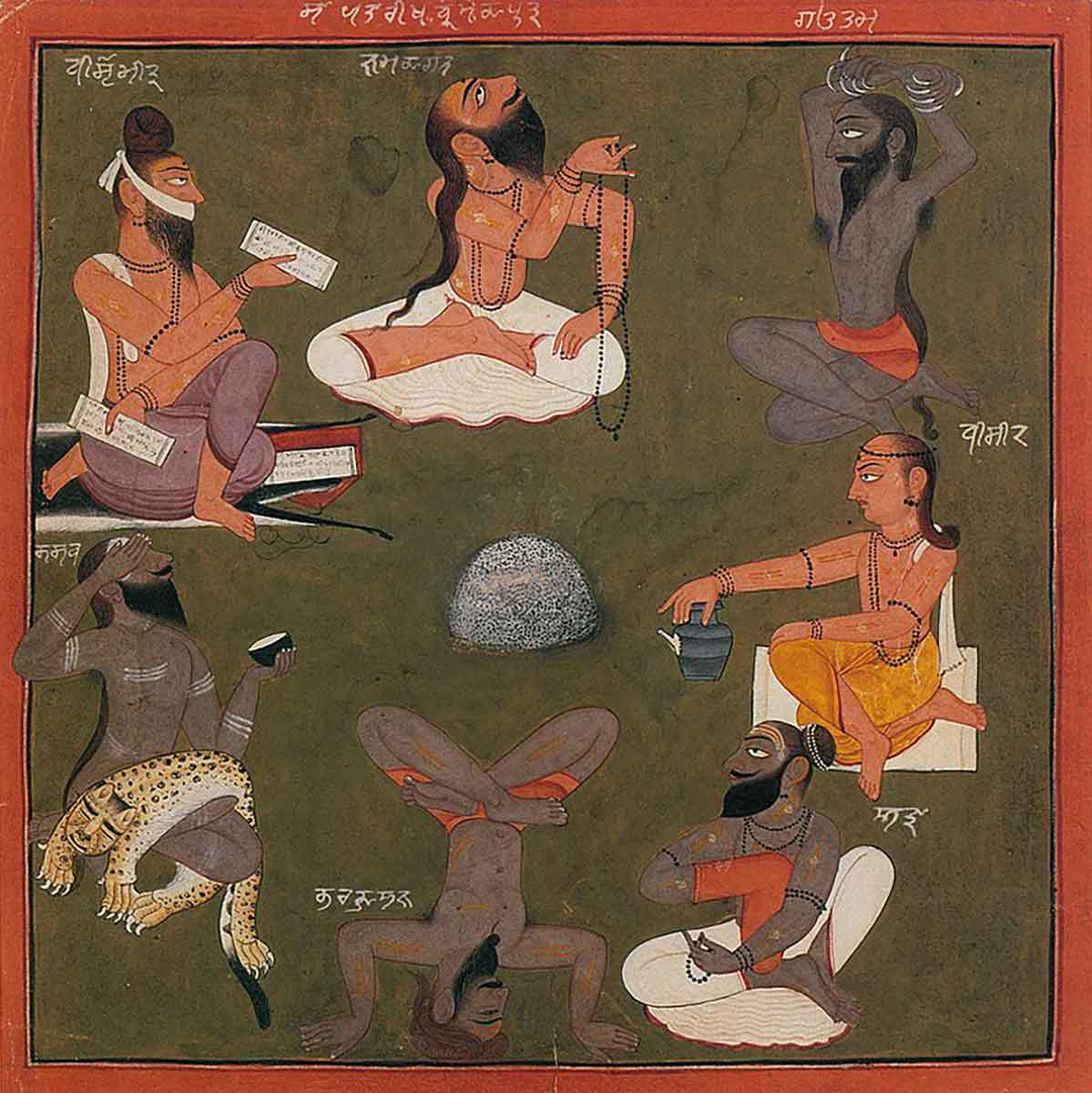
Vedānta’s place within the six āstika darśanas is best understood through a dialectical lens: each school both drew from and reacted against the others, creating a dynamic intellectual ecosystem. With Mīmāṃsā, Vedānta shared a close familial bond. Both were professed by the masters of scriptural interpretation, but while the proponents of Mīmāṃsā concentrated on ritual injunctions and the authority of the Vedas in matters of action, Vedānta thinkers redirected the same hermeneutical tools toward the Upaniṣads.
The dialectic continued with Nyāya and Vaiśeṣika. Nyāya’s sharp tools of logic and epistemology, and Vaiśeṣika’s systematic ontology of categories, provided Vedānta with valuable resources while also offering a foil. Vedānta appropriated Nyāya’s logical exactness for its own polemical purposes, showing how critique and borrowing could go hand in hand.
The dialogue with Sāṃkhya and Yoga was also rich. Sāṃkhya’s dualism of puruṣa (consciousness) and prakṛti (matter) set the stage for the reinterpretations of the Upaniṣads. Thus, Advaita dissolved dualism into pure nondualism, while Viśiṣṭādvaita and Dvaita recast it within a theistic framework. From Yoga, Vedānta absorbed meditative and practical disciplines, but reoriented them toward the realization of Brahman rather than mere isolation of consciousness. In this way, Vedānta did not stand apart from its predecessors; it positioned itself as their logical and soteriological culmination by appropriating their methods, refining their arguments, and claiming to surpass them with a vision of reality that aspired to liberation from all suffering.
Vedānta and Contemporary Analytic Philosophy
For analytic philosophers, Vedānta offers more than exotic history. In Western metaphysics, there is also a lively debate between monists, who hold that reality is fundamentally a single, unified entity, and pluralists, who hold that the world is composed of many independent, irreducible constituents. What makes this parallel more than a curiosity is the way Vedāntic thinkers anticipated the structure of these contemporary debates.
Consider the case of priority monism. Philosopher Jonathan Schaffer argues that while the world is a single entity, its parts have a kind of dependent reality, which means that they exist, but only in virtue of their place in the whole. Rāmānuja’s Viśiṣṭādvaita makes a remarkably similar move, yet it also presses a challenge. For Rāmānuja, the whole (Brahman) is not merely prior to its parts; they essentially constitute it. Brahman without souls and matter would not be Brahman at all, just as a living organism without organs would cease to be the organism it is.
In this way, Viśiṣṭādvaita suggests a stronger form of holism than Schaffer’s model allows: the whole is not merely metaphysically prior but internally dependent on its parts for its very identity. This is a subtle but important divergence, and one that could enrich ongoing analytic debates about the direction and symmetry of grounding relations.