
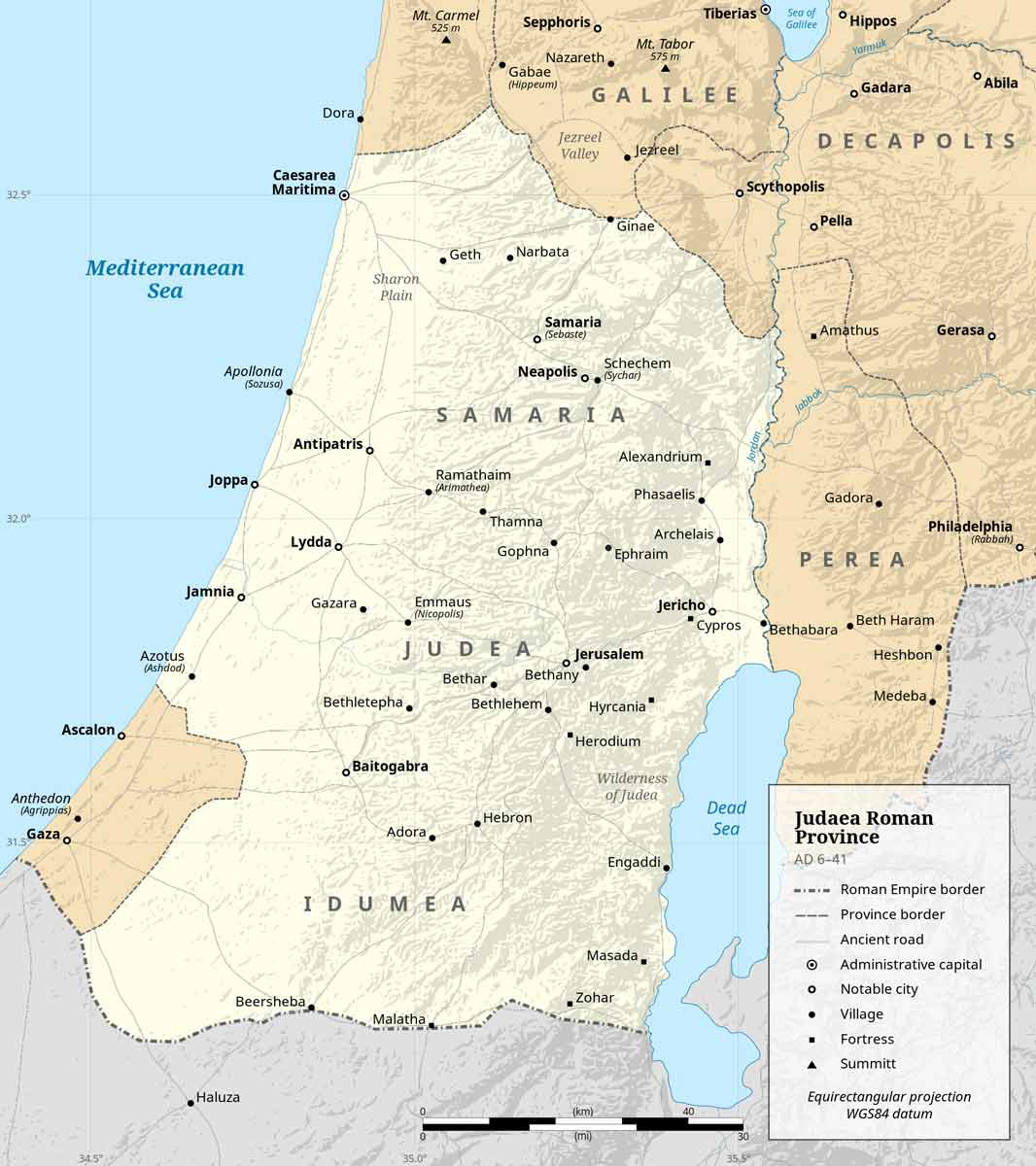
In the 1st century CE, Judea was a multilingual region situated at the crossroads of numerous trade routes and cultures. In previous centuries, the area had been occupied by many different nations, including the Babylonians, Persians, Greeks, and, during the time of Jesus, the Romans. In addition, many devout Jews who resided in different parts of the known world at that time traveled back to Jerusalem to partake in their annual feasts. The Pentecost narrative of Acts 2 attests to that fact (Acts 2:5). So, what language did Jesus speak?
Common Languages of the 1st Century

The Romans, speaking Latin as their mother tongue, dominated the known world, though Greek remained a widely spoken language throughout their territories. The influence of Hellenism still permeated much of society in the 1st century CE. Both these languages were prominent in the early years of the Christian era. Latin became more influential later in Christian history. Greek, however, was commonly used in many cultures, due to Hellenism. The translation of the Hebrew Old Testament into Greek played a significant role in making the Jewish faith accessible to Jews and Gentiles who could not speak Hebrew. Many Jews who settled outside of Judea and primarily spoke Greek used the translated version of the Hebrew Bible.
According to tradition, Ptolemy II Philadelphus, a Greek pharaoh of Egypt during the 3rd century CE, had the religious books of the Jewish religion translated by 70 Elders. He wanted to preserve it in the library at Alexandria and have it available to a broader audience.
Scholars commonly refer to the work as the Septuagint or LXX, both referring to the 70 (72) people traditionally credited with translating the Hebrew text into Greek. They translated the Hebrew text into Koine Greek, a common dialect widely spoken at the time. Later, the authors of the New Testament books wrote the gospels and letters to various churches and individuals in Christian communities in Koine Greek. Using Koine Greek made their writings available to audiences that Hebrew and Aramaic would not reach.
Aramaic had supplanted Hebrew as the commonly spoken language among Jews. As a Semitic language, it is related to Hebrew, which the Jews later tended to use only for liturgical purposes when reading the Hebrew Old Testament in the synagogue. The dominance of Aramaic over Hebrew was a gradual process that started with the Babylonian Exile.

The Babylonians conquered the Kingdom of Judah in the 6th century BCE and took most of its people into exile. In Babylon, both the common and administrative language was Aramaic, which gradually became the lingua franca among the Jews in exile. When the Persians conquered the Babylonians, the dominant language remained Aramaic. During this time, some commentaries on the Tanak reflected on the Hebrew text using Aramaic. The reading of these targumim followed the reading of the Hebrew scriptures in synagogues, and discussion and reflection on the reading happened in Aramaic.
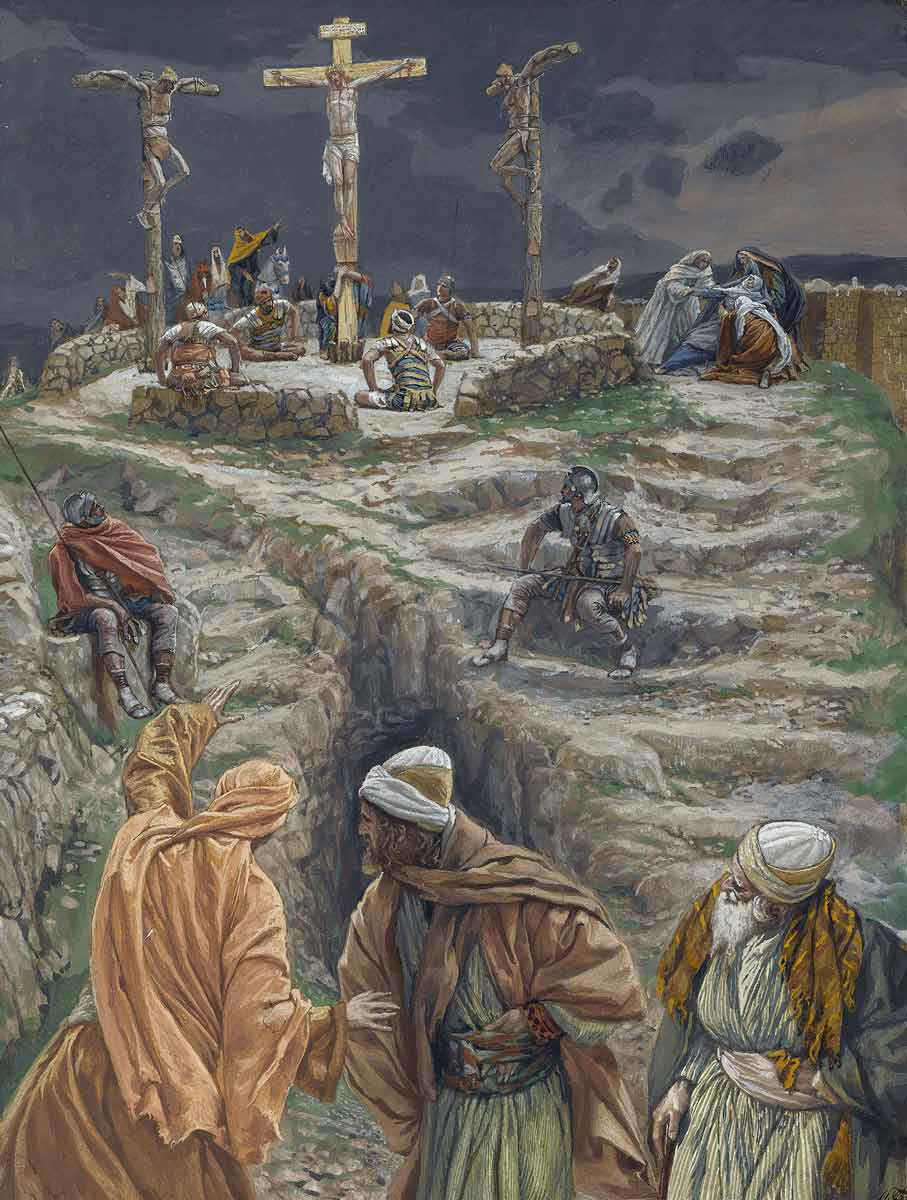
During Roman rule, many notices reflected the multilingual nature of society in the Levant. One biblical example is the inscriptions, or titulus, on Jesus’s cross (John 19:19-20), that had the words “Jesus of Nazareth, the King of the Jews” in Latin, Greek, and Hebrew. It indicates a multicultural society and the need to use several languages for public communication under Roman rule in Judea. Here, Hebrew may reflect the classical language of those who accused Jesus rather than the generally spoken language of the Jews: Aramaic.
Hebrew in the 1st Century CE

Because the Israelites spoke Hebrew in the Old Testament, one of many Semitic languages of the Levant, many Bible readers assume that Jesus spoke Hebrew as well. However, the influence of many cultures that either occupied Judea or travelled through the area for trade had an impact on the local culture and language.
For several centuries before the 1st century, Aramaic had been the lingua franca among the Semitic peoples of the Levant, and allowed for broader communications among different people groups of the ancient Near East. Aramaic, a language related to Hebrew, dominated from the time of the Persian Empire (539–332 BCE). Historical records and archaeological evidence indicate widespread use of Aramaic in the ancient Near East, but Hebrew prevailed in Jewish communities, even if only for liturgical purposes.
Among the Dead Sea Scrolls are copies of Aramaic, Greek, and Hebrew manuscripts. Some parts of the Old Testament include relatively small sections written in Aramaic. These are Ezra 4:8, 6:1-8, and 7:12-26, Daniel 2:4b–7:28, and Jeremiah 10:11. Among the Jews, Hebrew remained a sacred language because the author(s) of the Torah and most of the broader Tanak used the language. For that reason, Hebrew was still used in the 1st century, but as a liturgical language rather than a mother tongue.
Public readings from the Tanak in synagogues took place in Hebrew, and synagogue schools kept the knowledge of the language alive. Jesus likely received at least some of his education in a synagogue school, so he would have been familiar with Hebrew, but mostly spoke Aramaic.
Clues From the Bible
Several clues from the Bible suggest that Jesus had command of more than one language. He most likely did not have a top-tier education as the son of a carpenter. The Bible records Jesus reading from the scriptures in the synagogue, indicating his proficiency in reading Hebrew. He was at least able to read Hebrew in a liturgical setting. These scripture readings were often followed by readings from the targumim, which elaborated on the Hebrew text of the Tanak in Aramaic. Further discussion on the reading and commentaries would also have occurred in Aramaic in the Judaean territories.
Since Aramaic was the lingua franca of the time in Judea, it seems reasonable to assume that Jesus spoke Aramaic in his daily interactions. The simplicity and directness of the stories Jesus told reflect the culture of oral tradition common to Aramaic-speaking people of the time. Further evidence comes from Aramaic phrases attributed to Jesus in the Gospel of Mark, such as “Talitha koum” (Mark 5:41), meaning “Little girl, arise,” and “Eloi, Eloi, lama sabachthani” (Mark 15:34), meaning “My God, my God, why have you forsaken me?” These transliterations provide strong evidence that Jesus spoke the common language of the Semitic people when engaging with them.
Several times in the Gospels, when Jesus quotes from the Old Testament, he is referencing the Septuagint, or Greek translation of the Tanak. Some examples are Luke 4:18-19, Matthew 22:44, and Matthew 1:23. In Luke 4:18-19, Jesus quotes from Isaiah 61:1-2. The Septuagint refers to “good news,” where the Hebrew has “heralding liberty.” These small differences in the language in the Hebrew and Greek versions of the Old Testament indicate that Jesus quoted from the Septuagint rather than the Hebrew Old Testament. His preference for the Septuagint translation in these verses may show that Jesus was proficient in Greek as well.
In addition, the use of words like “hypocrite” (Matthew 7:5, Luke 6:42) shows Greek influence on the utterances of Jesus. The word has a distinctly Greek origin and flavor. Jesus may have had exposure to Greek when working with his father. Sepphoris, a Hellenistic city just a few miles from Nazareth, was a hub of Greek culture and trade. Joseph, as a skilled carpenter, was likely to have interacted with Greek-speaking traders and merchants from that city.
Greek was the administrative language in the eastern part of the Roman Empire. Jesus likely engaged with Pontius Pilate in Greek. There is, however, no definitive evidence that Jesus was fluent in Greek. It is likely that he had a working knowledge of the language.
Conclusion

Jesus was likely fluent in Aramaic while proficient enough in Hebrew to engage on a liturgical level and read it in a synagogue setting. He also showed a preference for the Greek translation of the Hebrew Bible in some gospel quotes. It may reveal his ability to read and even speak Greek, a common language spoken across the Roman Empire. There is no indication that Jesus could speak in Latin, though it was the language of the Romans who controlled Judea at that time.
Jesus was most likely multilingual with varying levels of proficiency in Aramaic, Greek, and Hebrew. Though his schooling was likely not of the highest caliber, the Judaean society was a melting pot of cultures and languages. Even when not formally educated in multiple languages, the daily interaction of people working in that part of the world would have resulted in some ability to speak the most common languages of the time. Jesus, knowing his ministry would extend beyond the Jews, likely understood the utility and importance of being able to communicate with people of other cultures and tongues.
Scholars agree that Jesus primarily spoke Aramaic, but whether Greek or Hebrew was his second language is a matter of debate. To have the impact that his ministry of three-and-a-half years had, Jesus may well have had a strong command of both languages, in addition to Aramaic, to engage with the religious elite of his own people in Hebrew and with foreigners in Greek.