Summary
- The Messenian Wars’ traditional dates are disputed; evidence suggests the first two wars occurred later, in the 7th century BC.
- The 20-year First Messenian War resulted in Sparta’s conquest and the enslavement of the Messenians, creating the helot class.
- The Third Messenian War began as a helot revolt after a 464 BC earthquake and helped trigger the Peloponnesian Wars.
- After 200 years of conflict, Messenia finally gained its independence from Sparta in 371 BC following the Battle of Leuctra.
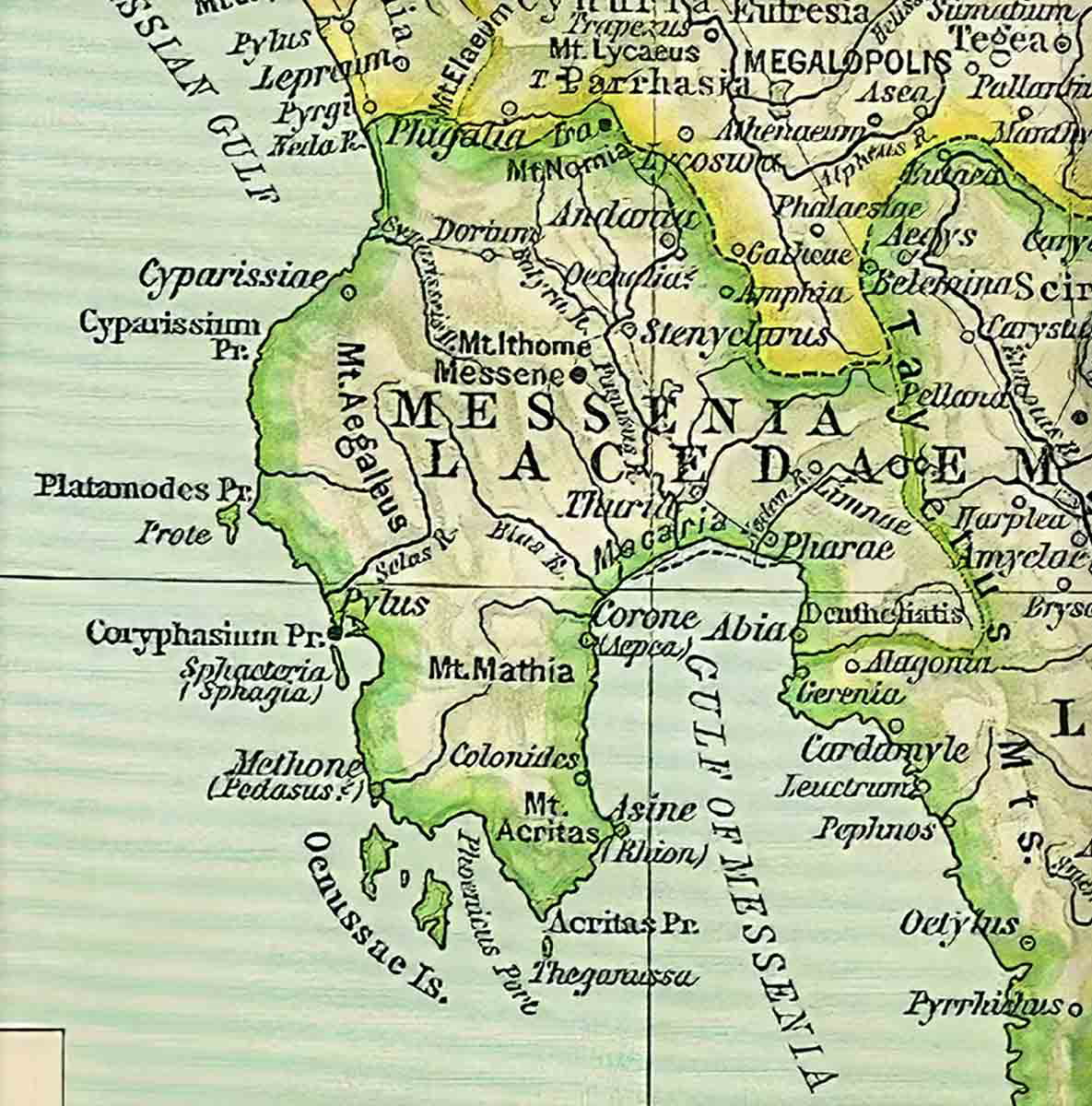
Messenia sits in the southwest corner of the Peloponnese in southern Greece. Ancient Messenia endured three distinct wars over the course of around 200 years, which became known as the Messenian Wars. Despite being infamous conflicts, there is significant controversy surrounding the exact dates of these wars and what actually happened. What does the surviving evidence reveal about the chronology of the Messenian Wars?
The First Messenian War
The First Messenian War is referred to by a near-contemporary source, a poet named Tyrtaeus. He was a state poet for Sparta, motivating the Spartans to fight for their city. He apparently participated in the Second Messenian War and referred, in his poetry, to the previous one.
Regarding the First Messenian War, Tyrtaeus provides some useful facts. He explains that it lasted 19 full years and ended in the 20th year. The Eurypontid King of Sparta was Theopompus, while the Agiad King of Sparta was Polydorus (Sparta was ruled by two concurrent dynasties). It was the former king who led the Spartans to victory in this war. Tyrtaeus explains that it was during this war that the Spartans captured the territory of Messenia. Unfortunately, he does not provide a detailed explanation of the course of the entire war. We only learn a few scattered pieces of information that can form a basic outline.
Sources from centuries later also explain what happened in this conflict. After many battles, the Messenians finally took their final stand at Mount Ithome, which was heavily fortified. During the Spartans’ attack on Ithome, the Messenians were victorious under the leadership of their king, Aristodemus. However, the Spartans returned and thoroughly defeated the Messenians, leading to their complete enslavement. They became the helots, a slave class in Spartan society.
The Second Messenian War
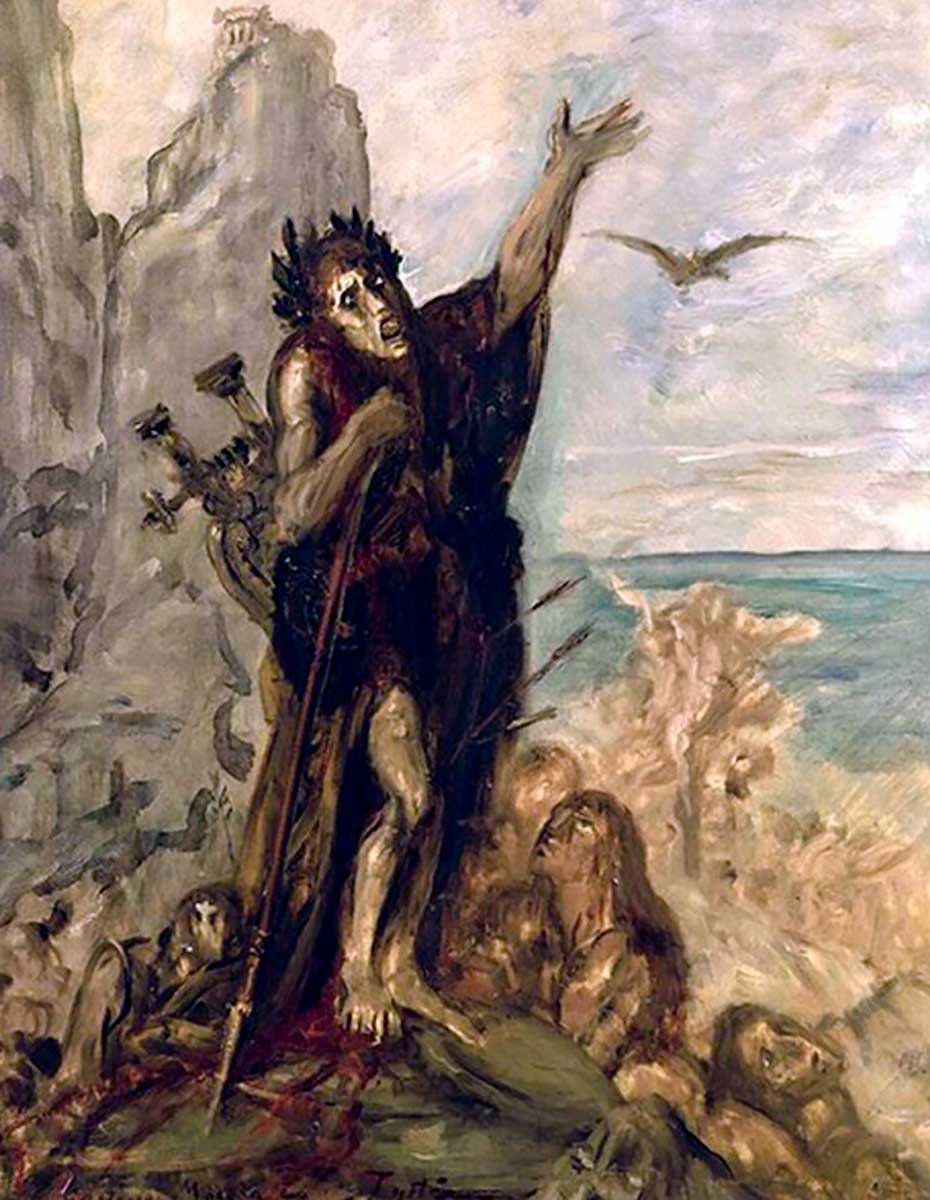
The Second Messenian War is the one in which Tyrtaeus himself participated. He suggests that they were separated by about two generations, or half a century. This is inferred from the fact that he refers to the participants of the First Messenian War as their fathers’ fathers.
According to some sources, the Second Messenian War lasted eleven years. Since Messenia had been conquered by Sparta at the end of the first conflict, this second war started with a revolt of the Messenians. At first, Argos and Arcadia fought alongside the Messenians against Sparta. Over the course of the war, these two allies abandoned Messenia. The Spartans, for their part, were supported by Cretans.
After the Argives had left the Messenians, the Messenians and the Arcadians participated in the Battle of the Great Foss, or the Great Trench. The Spartans had bribed the Arcadian king, Aristocrates, to withdraw his troops during the battle. He did so, and this led to a crushing defeat of the Messenians. The Agiad King of the Spartans at this time is reported to have been Anaxander, the grandson of Polydorus, from the time of the First Messenian War. This corresponds to Tyrtaeus’ statement placing two generations between the two wars, both of which were Spartan Victories.
Chronological Confusion
While the evidence is clear that about 50 years passed between the first two Messenian Wars, pinning down their actual dates is more challenging. Traditionally, the First Messenian War has been placed in 743-724 BC. The start of the Second Messenian War is placed by Pausanias (c. 110-180 AD) during the archonship of Tlesias of Athens, which supposedly occurred in 680 BC. Yet, despite these clear statements from ancient Greek historians, there is good evidence that these dates are too early. For example, we find reference in Aelian’s Varia Historia, written in c. 200 AD, of a Greek general named Epaminondas in the 4th century BC declaring, in c. 369 BC, that he would free Messenia after 230 years of servitude to Sparta. This suggests that the Second Messenian War ended around 600 BC.
A later date is also supported by Pausanias’ report that Anaxilas, a tyrant of Rhegium, was third in descent from Alcidamidas. Anaxilas was born in the latter half of the 6th century BC, perhaps around 530 BC. Alcidamidas is said to have left Messenia for Rhegium after the First Messenian War. Even if we assume that Alcidamidas was fairly young when he emigrated, and that each of the three generations leading to Anaxilas was lengthy, the implication is clear. The First Messenian War must have occurred in the 7th century BC.
A late date for these two wars is further supported by evidence regarding Tyrtaeus, who participated in the Second Messenian War. The Byzantine Suda places Tyrtaeus in the 35th Olympiad, which was in 640-637 BC. An earlier source, Jerome, in the 4th century AD, placed Tyrtaeus in c. 633 BC. This is compatible with him being involved in a war that started in c. 610 BC, which continued until the end of that century. This would then match Epaminondas’ reference to 230 years of enslavement. In contrast, it is incompatible with the idea that the Second Messenian War occurred as early as 680 BC.
Therefore, by examining these various references and piecing them together, we can see that the dates of the First and Second Messenian Wars should be much later than commonly given. The First Messenian War probably took place between c. 670-650 BC, while the Second Messenian War probably happened in c. 610-599 BC.
The Third Messenian War
The Second Messenian War was not the final confrontation between the Messenians and the Spartans. There was also the so-called Third Messenian War, which occurred as a result of an earthquake. In reality, there is evidence that there was another war between the Second and “Third” Messenian Wars. This appears to have occurred around 500 BC or just after, in the reign of King Cleomenes I of Sparta. It is mentioned by Herodotus in the middle of the 5th century BC, just a few decades after it occurred. The result of this war was a Messenian migration to Sicily, where they founded the city of Messenia in c. 488 BC.
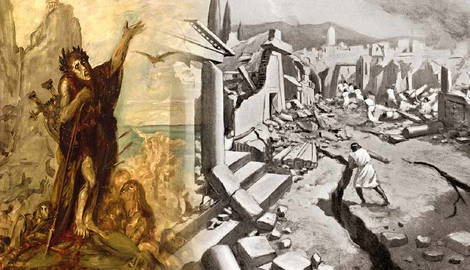
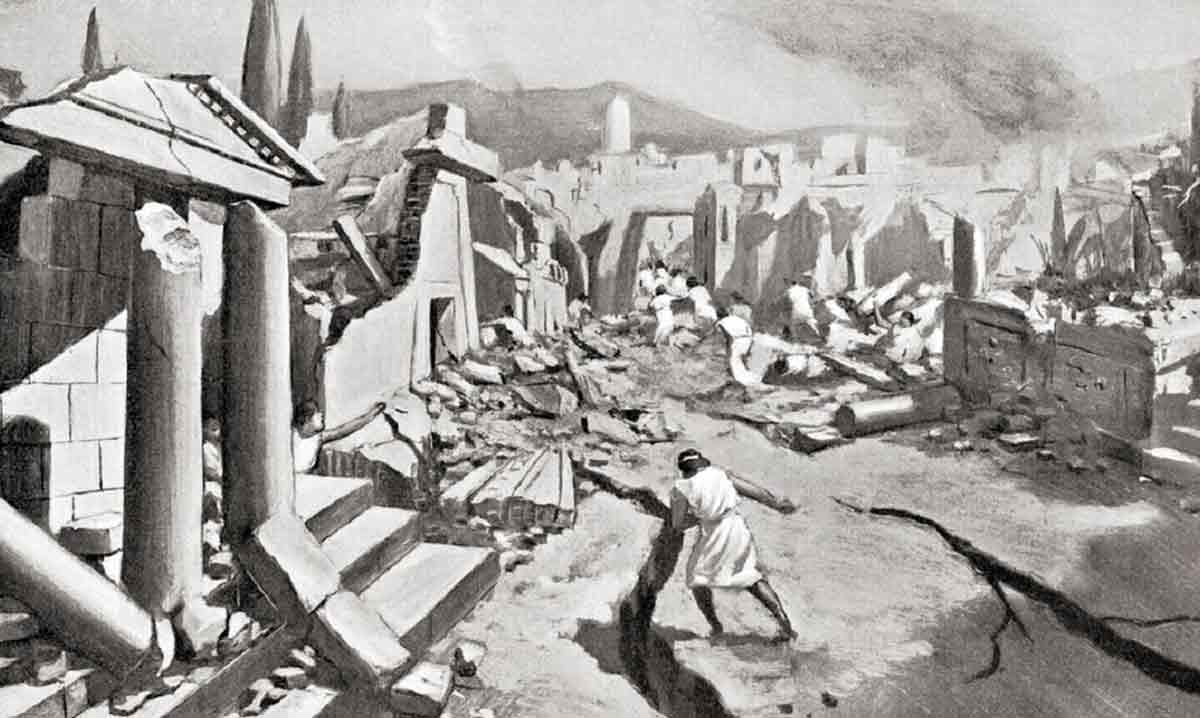
Just over two decades later, in 464 BC, Greece suffered a major earthquake. This seriously affected Sparta, and the enslaved Messenians took the opportunity to rebel. In fact, they viewed this disaster as divine punishment against the Spartans for an event that had occurred not long before the earthquake. A number of helots worshiping at a temple of Zeus had been dragged outside and killed.
Filled with indignation and presented with a weakened Sparta, the Messenians revolted once again in a war that would run from 464 to 455 BC. The Messenians eventually surrendered on the condition that they be allowed to leave the region.
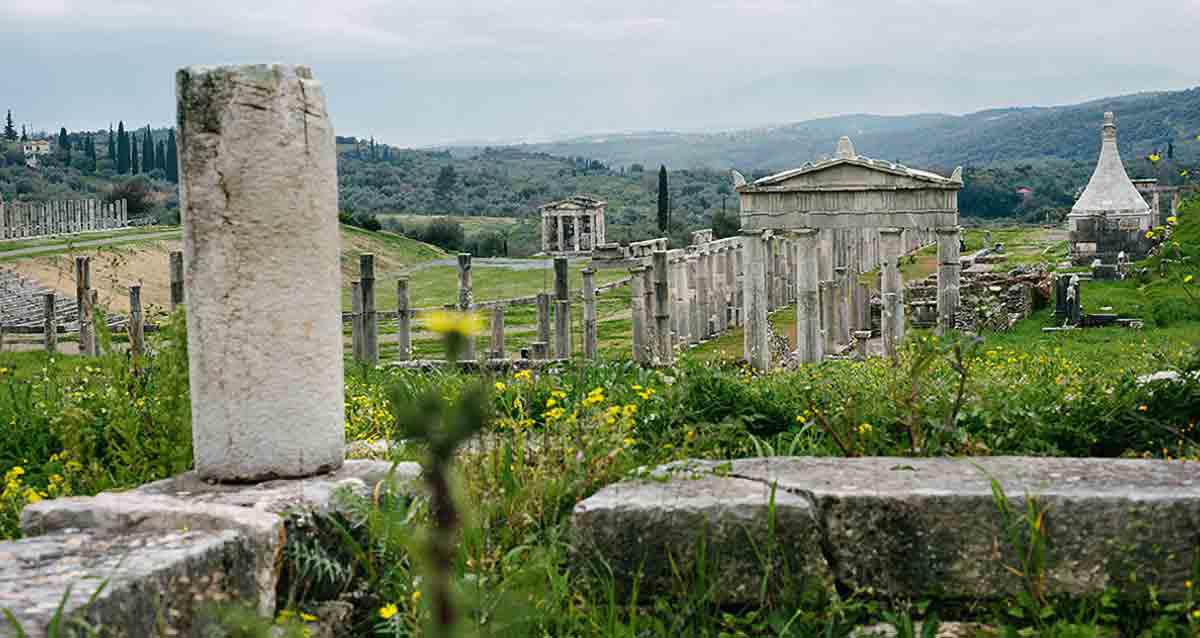
This revolt had massive consequences for all of Greece. This revolt compelled the Spartans to request help from Athens. The Athenians responded, but the Spartans began to worry that they would end up siding with the Messenian helots. Thus, they dismissed the Athenian troops. This was a massive insult to Athens, and it directly resulted in them positioning themselves as enemies of Sparta from then on, ultimately resulting in the two Peloponnesian Wars in that century.
Those who remained behind would only gain their freedom after the Peloponnesian Wars, when Thebes defeated Sparta in the Battle of Leuctra in 371 BC. Their general Epaminondas collected the Messenian exiles and founded the town of Messené, at the foot of Mount Ithomé, which formed the acropolis of the city. Messenia maintained its independence until the Romans conquered Greece in 146 BC.
Two Hundred Years of Messenian Wars in the Peloponnese
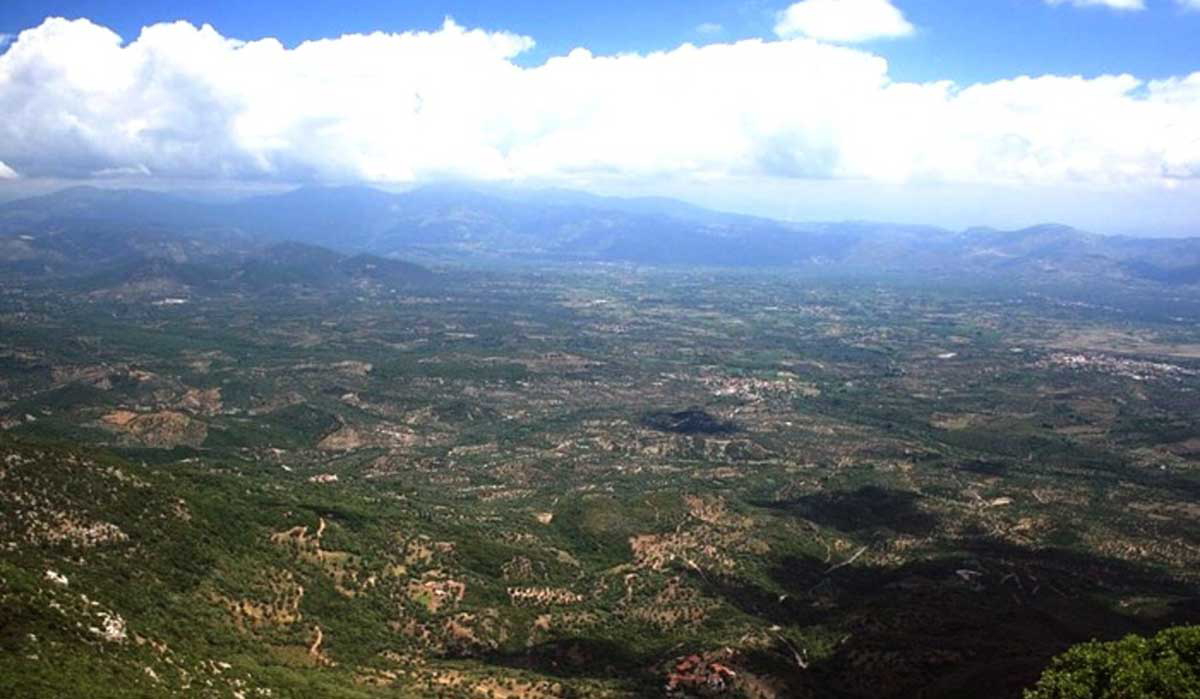
So what is the most likely chronology for the Messenian Wars? The First Messenian War was a 20-year conflict that resulted in the conquest of Messenia by the Spartans. It resulted in the creation of the helot class in Spartan society, which would go on to play a defining role in the identity of that city-state. While traditionally dated to 743-724 BC, an analysis of the evidence suggests that it actually occurred much later, in the second quarter of the 7th century BC (c. 670-650 BC). The Second Messenian War occurred two generations later, probably in c. 610-599 BC. Tyrtaeus, a contemporary Greek poet, says that it started due to a Messenian uprising, but resulted in a Spartan victory.
A case could be made that the Third Messenian War should actually be called the Fourth. This is because there is evidence that there was another war between Sparta and Messenia before the traditional “Third” war. In any case, the final war was an opportunistic rebellion that occurred after a terrible earthquake devastated Sparta in 464 BC. Although the Spartans were ultimately victorious in that conflict, their behaviour during it contributed to many decades of warfare against Athens in the Peloponnesian Wars (431-404 BC). Messenia would eventually gain freedom after Thebes defeated Sparta at the Battle of Leuctra in 371 BC.