In 1835, the Mexican state of Texas declared its independence, sparking the Texas Revolution. The brief but intense conflict resulted in Texas winning its sovereignty by force of arms. Mexico, however, did not want to let Texas go quietly, and briefly invaded the new republic with raids during the early 1840s. 1845 saw a major geopolitical change as the United States agreed to annex Texas as one of its states. Texas became the 28th state, thus making its border with Mexico the United States’ border with Mexico. A year later, war erupted between the two nations over the Texas border dispute. Why did Mexico’s leader, General Antonio Lopez de Santa Anna, ultimately lose Texas permanently in this conflict?
Who Is Antonio Lopez de Santa Anna?
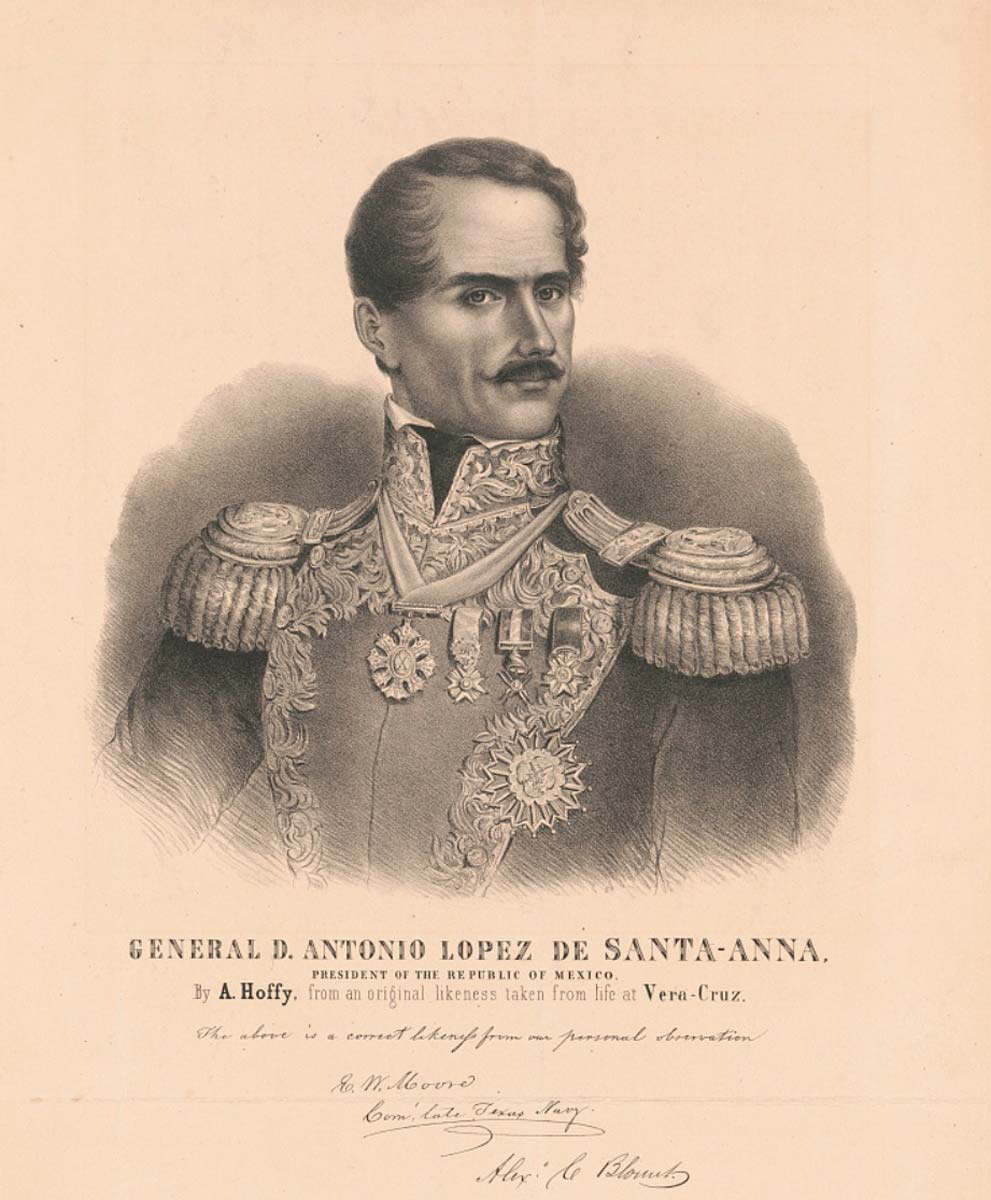
General Antonio Lopez de Santa Anna began his life in New Spain as a child born to a respected Spanish family. The boy’s father served as a functionary for the Spanish government in the Veracruz region. As a young teen, Santa Anna worked for a merchant in the city and in 1810 went to a military academy. During the 1810s, Santa Anna fought insurgents and Native Americans who rebelled against the government, where he developed a reputation for bravery. In March 1821, however, Santa Anna switched sides in the ongoing Mexican Revolution, joining the Mexican revolutionaries against the Spanish government.
When Mexico won its independence, Santa Anna became the state governor of Veracruz. In 1829, beginning a trend that would continue throughout his life, Santa Anna returned to military status from civilian “retirement” to head off the Spanish invasion at Tampico. The success of Santa Anna at Tampico, ending Spain’s hope of reconquering Mexico, made him a war hero. In 1833, thanks to his heroic image, Santa Anna was elected president of Mexico… for the first of several non-consecutive terms.
Mexican Texas
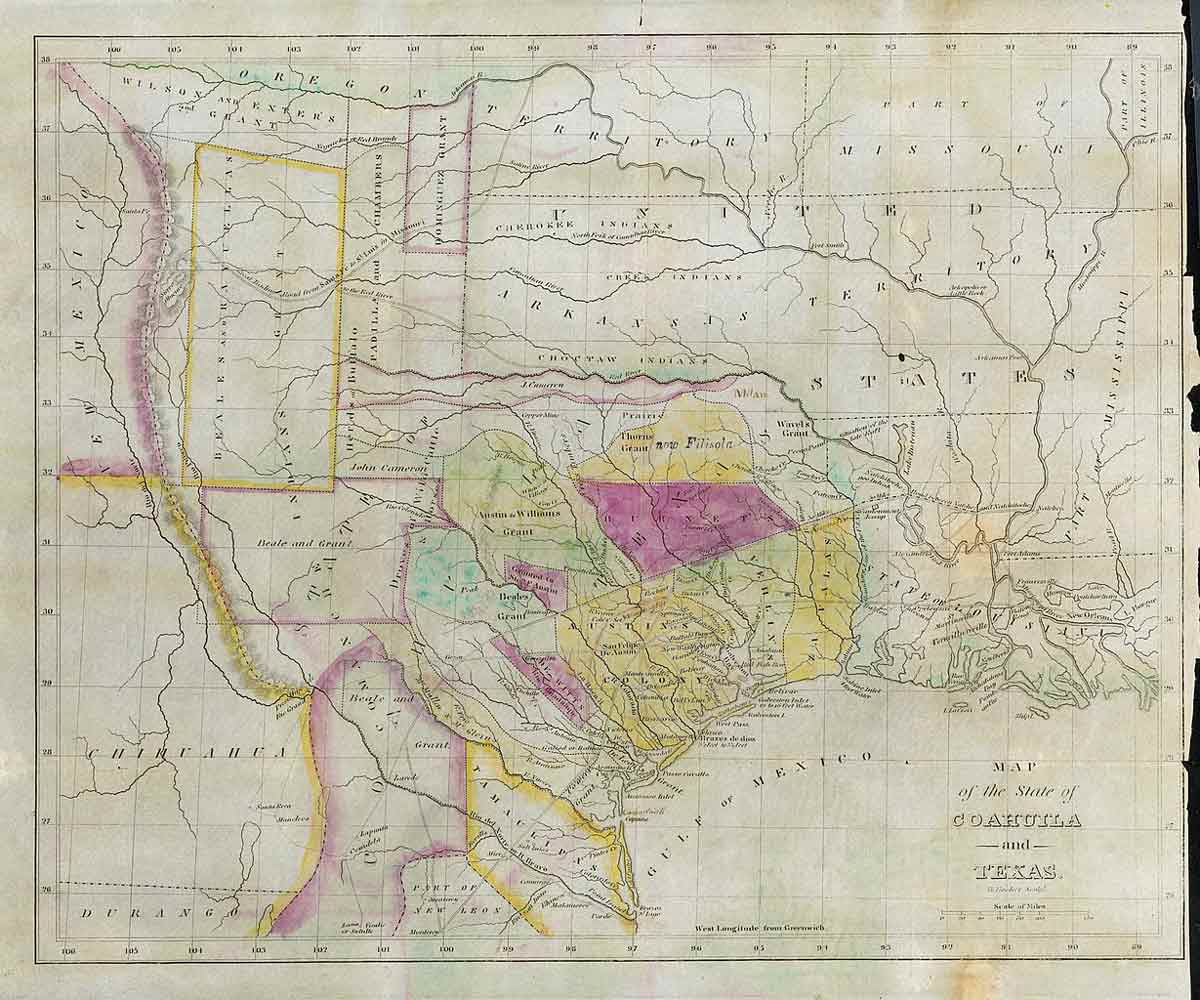
During the 1820s and early 1830s, while Santa Anna was becoming a renowned military hero, the Mexican state of Coahuila y Texas was growing popular with settlers from the United States. This settlement was encouraged by Mexico, as it feared Texas’ sparse population made it a target for potential takeover by foreign rivals. Empresarios worked as agents for the Mexican government to encourage settlers by offering land grants. Tensions arose as many settlers from the United States brought their slaves to work the agriculturally-suited land of East Texas. Slavery was illegal in Mexico, though the state of Texas had granted a temporary exception.
The early 1830s saw tensions increase as more white settlers arrived in Texas but maintained cultural ties to the United States. New Mexican president Santa Anna disliked the considerable autonomy given to the state of Texas and wanted to centralize power. He was incensed that settlers in the state were making political demands and organizing their own conventions. In 1835, Santa Anna overthrew the Constitution of 1824, creating a centralized Mexican state and granting himself absolute power.
Santa Anna and the Texas Revolution
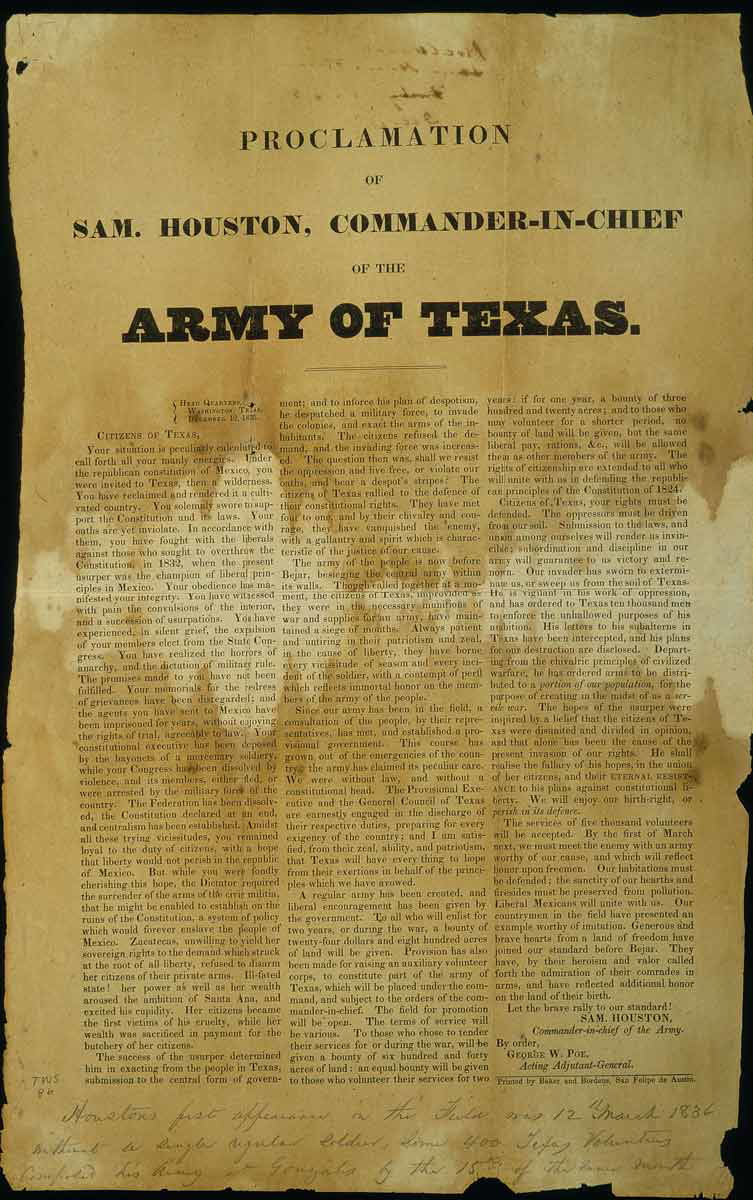
The suspension of the Constitution of 1824 was the final straw for independence-minded Texians, though shooting had already started. A month before the suspension of the constitution, Santa Anna had sent an army to Texas to seize a cannon that he thought might be used in an independence movement. October 2, 1835, saw Texians fire on Mexican dragoons (mounted infantry) at Goliad, sparking the Texas Revolution. By December, emboldened Texians had forced Mexican garrisons past the Rio Grande River.
General Santa Anna (having abdicated his presidency) responded with force, arriving in Texas in February 1836 with a sizable army. They defeated the Texians at the Alamo and Goliad, executing almost all survivors. This brutality, adopted by Santa Anna from his mentors as a young officer, had the opposite effect of its intention: rather than cowing the Texians with fear, it steeled their resolve. In April, the Texians struck with the element of surprise in the Battle of San Jacinto, routing the Mexicans and capturing Santa Anna himself shortly after the battle. As a prisoner, Santa Anna signed the Treaty of Velasco, granting Texas independence on May 14, 1836.
Santa Anna After Texas Independence
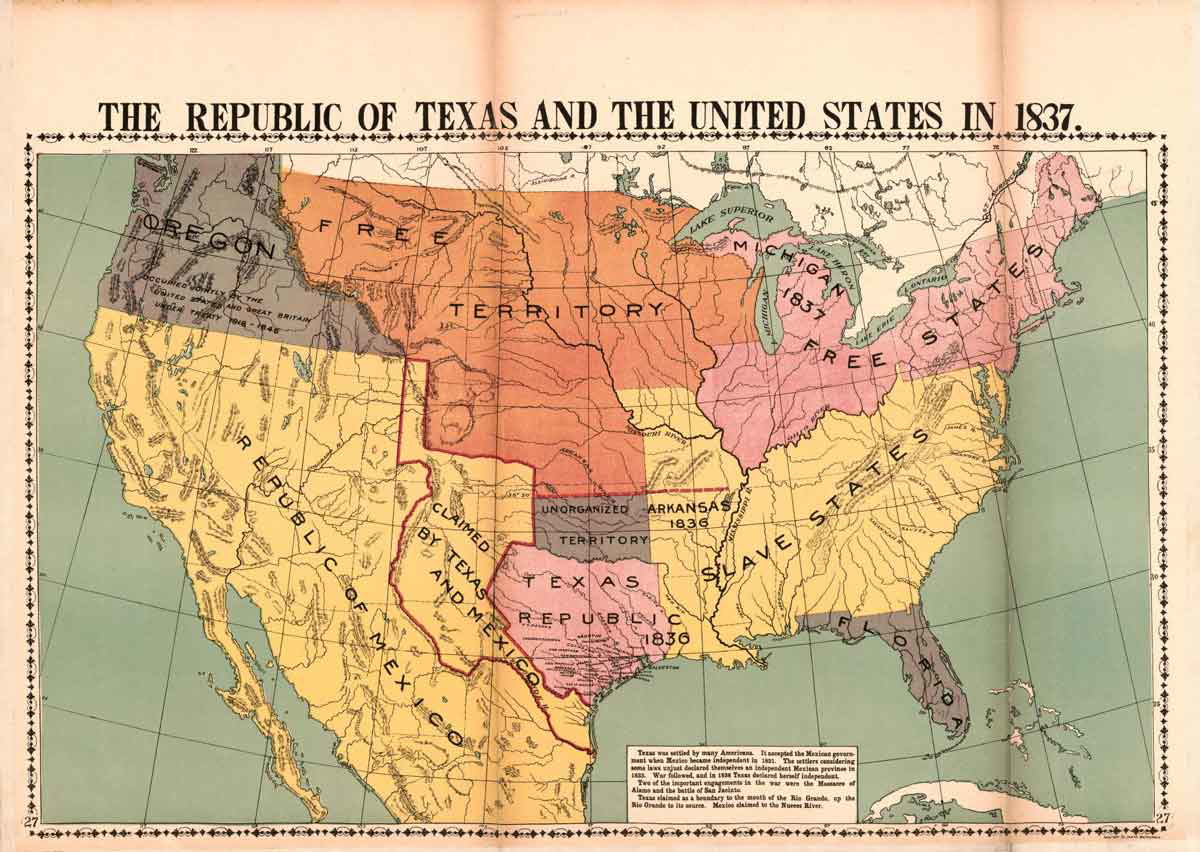
The Texians originally held Santa Anna to ensure the Mexican military followed through on the terms of the Treaty of Velasco, but eventually allowed him to travel to Washington, DC, from where he returned to Mexico the following year. On May 20, 1836, the Mexican government had disavowed the treaty, arguing that Santa Anna signed only under duress as a prisoner-of-war. However, the United States quickly recognized Texas independence, extending formal recognition on March 3, 1837—only a few weeks after Santa Anna arrived back in Mexico.
The loss of Texas and Santa Anna’s brutality during the war harmed his reputation, as did his agreement to sign the Treaty of Velasco. Fortunately for the general, a new crisis erupted that made his skills valuable: France invaded Veracruz, Mexico, over unpaid debts incurred in fighting the Texas Revolution. The French were also upset over damage to a bakery owned by a French pastry chef, giving the conflict the name Pastry War. General Santa Anna emerged from retirement, rallied the troops, and forced the French out of the city. In the fighting, he lost his leg to French cannon fire.
Santa Anna and Texas Statehood
As during the Mexican Revolution, Santa Anna’s bravery in combat made him a folk hero. This allowed the general to claim the presidency once again in an acting capacity in both 1839 and 1841. After claiming the presidency in 1841, Santa Anna became a de facto dictator thanks to the Bases of Tacubaya (a plan to restructure the Mexican government) on September 28. Six months later, Santa Anna sent an army to San Antonio, Texas, as a form of harassment and retaliation—he lacked the resources to attempt to retake the state. The Vasquez Raid, named after Mexican general Rafael Vasquez, ended after two days, but caused much panic across Texas.
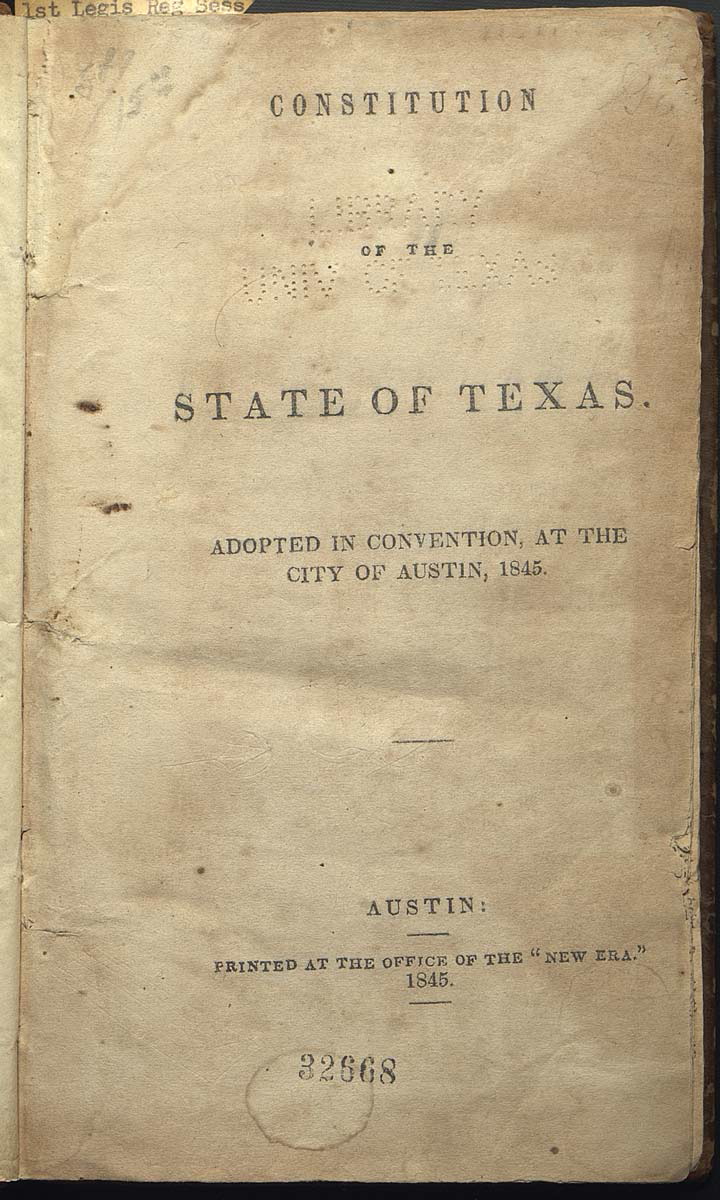
A larger raid in September 1842, under General Adrian Woll, held the town of San Antonio for a week. Texians resisted fiercely, but it was clear that the small republic could not win a prolonged campaign against Mexico. As a result, an increasing number of Texians came to support annexation by the United States. Texian President Sam Houston pushed for annexation, which was fiercely debated in the United States Congress due to Texas’ allowance of slavery. On December 29, 1845, Texas officially became the 28th state of the United States, a move supported by expansionist US president James K. Polk.
1846-48: The Mexican-American War
When Texas became a state, Santa Anna had been ousted from power and exiled after a popular uprising in December 1844, which included a mob disintering his buried leg and parading it through the streets. In exile in Cuba, Santa Anna watched as his home country and the United States moved toward war following Texas’ annexation. When war erupted in 1846, Santa Anna offered his military services. He also made a secret deal with the United States to end the war… but reneged on the deal and arrived in Mexico City ready to defend the nation.
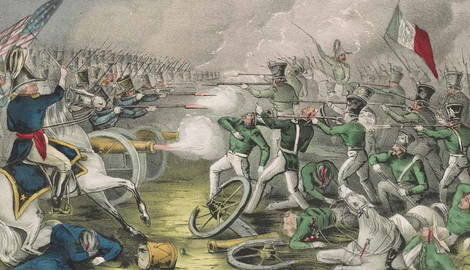
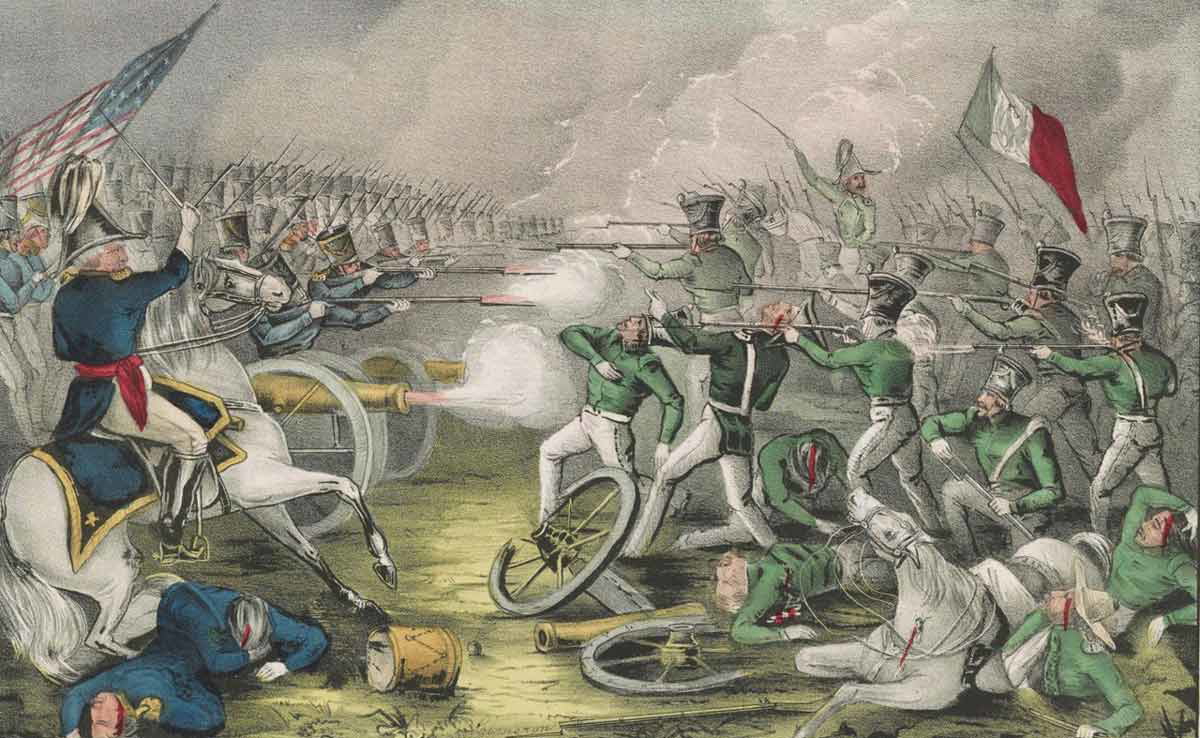
Unfortunately for Santa Anna, who assumed a battlefield role, the US military was much swifter, better led on the battlefield, and more modernized than anticipated. The much larger United States Navy was able to dominate the coastlines and deliver troops close to Mexico City, while Santa Anna preferred a land-based conflict. The March 1847 amphibious landing at Veracruz, the largest in history at that time, allowed the US to get thousands of troops within striking distance of Mexico’s capital. Six months later, the city was captured. On February 2, 1848, the Treaty of Guadalupe-Hidalgo officially ended the war, ceding more than half of Mexico’s territory—its northern portion—to the United States.
Why Did Santa Anna Lose Texas to the United States?

The Mexican-American War ended any hope of Mexico reclaiming Texas. By the end of the war, the US was a dominant military power with its own armaments industry. Mexico, by contrast, relied heavily on imported weapons from Europe (mostly left over from the Napoleonic Wars), which were largely obsolete. Likewise, Mexico lacked anything close to America’s bustling shipbuilding industry, eliminating any chance of competing militarily on the high seas. There was no real hope of Mexico ever being able to contest the results of the war.
Aside from the United States’ greater military strength, Mexico suffered from internal political and economic weaknesses that made it difficult to fight a rigorous war. In the years leading up to the Mexican-American War, Mexico had been rocked by civil wars, coups, and insurrections. There was also racial, ethnic, and sociopolitical strife due to centuries of Spanish rule and its Casta (caste) system. This lingering social hierarchy, coupled with Mexico’s use of unpopular conscription, made Mexico’s army primarily composed of illiterate, poorly-trained young people. Social discrimination, conscription, and lack of regular pay led to high desertion rates and a lack of discipline in Mexico’s military during the war, causing its underperformance.
Post-War Santa Anna
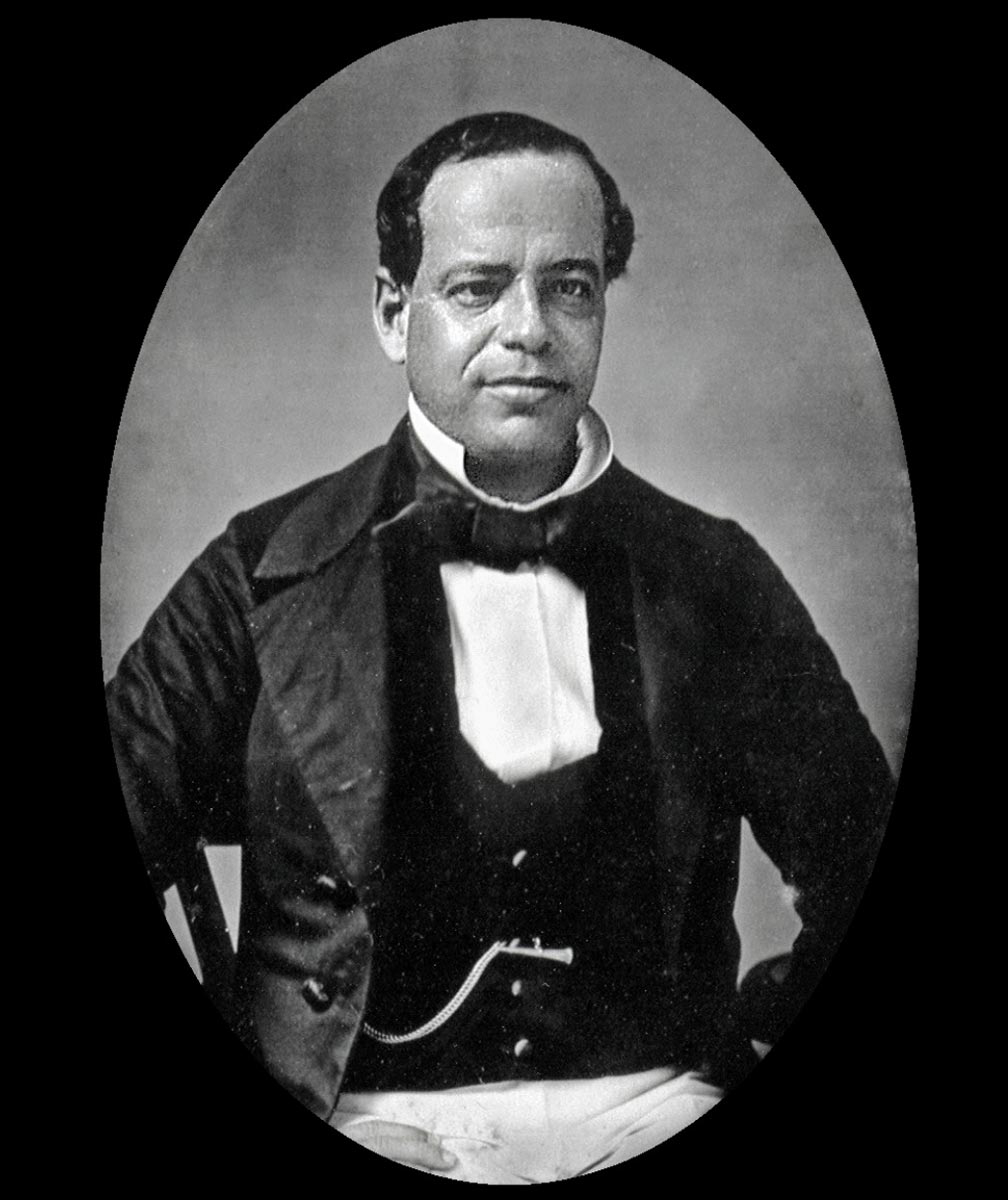
Santa Anna had gone into exile again, this time voluntarily, after his defeat in the Mexican-American War, allowing a new government to sign the Treaty of Guadalupe-Hidalgo. Five years later, he was invited back to Mexico after a conservative revolt. Again, Santa Anna became an authoritarian ruler, this time proclaiming that he should hold office for life. The threat of war quickly loomed again between the US and Mexico, this time in disputed New Mexico territory. Fortunately, diplomacy won the day and Mexico sold the disputed territory in what became southern Arizona for $10 million in the Gadsden Purchase of 1854.
The sale of the Gadsden Purchase was seen as a corrupt deal by Santa Anna, with many Mexicans upset that he was selling more territory to the United States after the humiliating Mexican Cession of 1848. Accused of corruption, Santa Anna fled into exile yet again in 1855. In 1866, he tried to return to Mexico to help fight the French, who had installed Emperor Maximilian I in Mexico City. This time, Santa Anna’s offer of assistance was rejected by supporters of the Republic of Mexico, likely due to fear that the former dictator would once again try to gain executive power. For eight more years, Santa Anna remained in exile, struggling with eroding health, until finally being allowed to return to his country. He passed away on June 21, 1876, in Mexico City.