El Greco began as an icon painter in Crete and ended as Spain’s most singular voice. His elongated figures, fearless color, and mystical light were first mocked, then mined by modernists. These nine works mark the turns: Italy’s training, Toledo’s breakthroughs, and the late visionary canvases that changed how painters think about space and emotion. Together, they show why El Greco feels contemporary centuries later.
1. Saint Luke Painting the Virgin: Early Crete Years
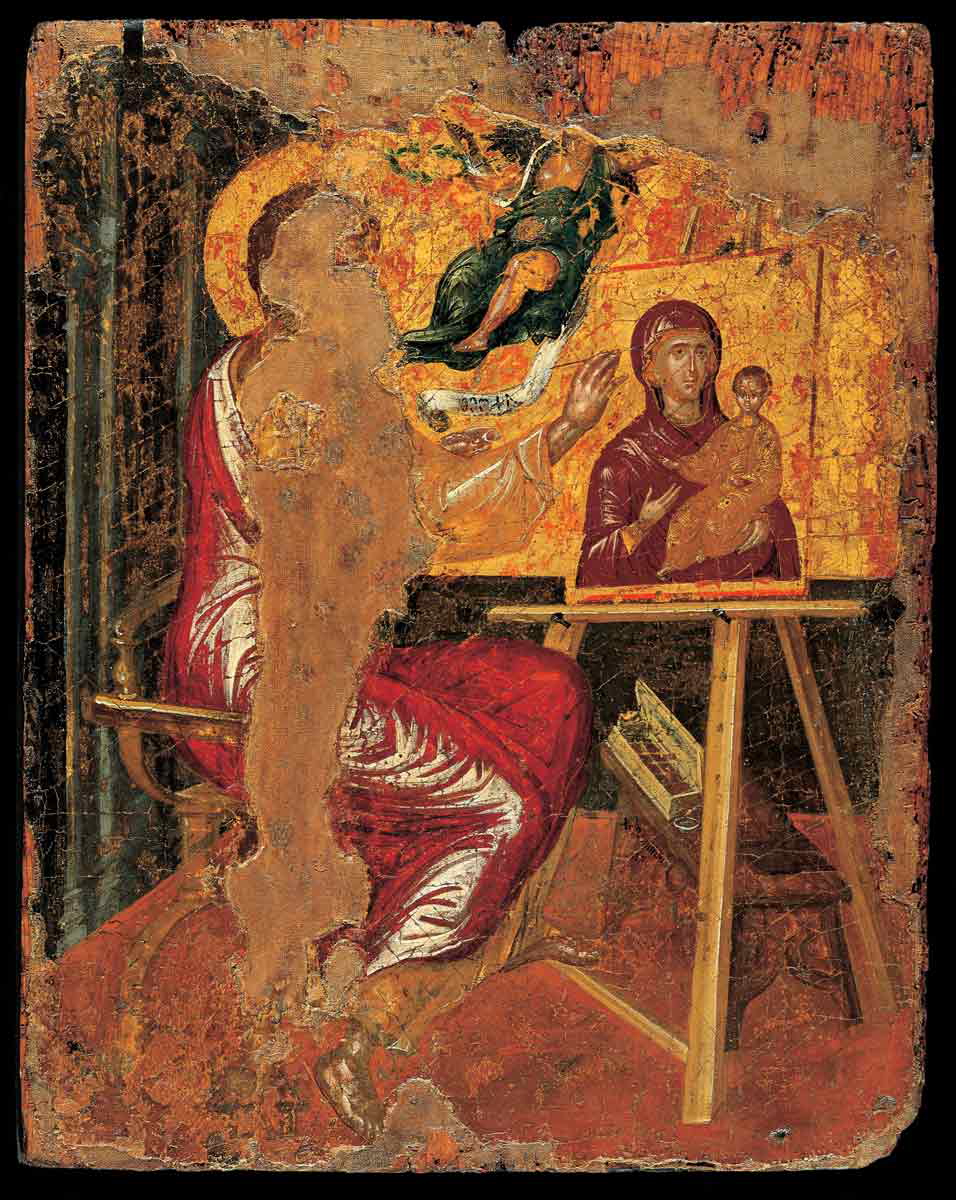
Domenikos Theotokopoulos, known simply as El Greco (Italian for the Greek), was born in Crete in 1541. During the thirteenth century, Crete—being part of the Byzantine Empire for centuries—was taken over by Venice. In terms of artistic life, Venetian influence brought opportunities for a more diverse education and more structured working conditions for artists in the form of painters’ guilds. As a child from a wealthy family, El Greco had the chance to receive a high-quality education based on Greek and Latin literature and the Byzantine tradition of painting.
El Greco started his artistic career as a painter of Orthodox Christian icons. It is unclear if he was Catholic or Orthodox himself, but the mixed influence of the two traditions was evident even in the minuscule amount of his surviving works from this period. In the late 1560s, El Greco decided to move to Venice.
- Why it matters: Reveals El Greco’s roots in Byzantine icon painting, which were later transformed by his time in Venice and Toledo
- Hallmarks: Gold ground, hieratic pose, icon layout carried into later altarpieces
- Where it is today: Versions and attributions vary across European collections; attribution remains debated
2. Christ Driving the Money Changers from the Temple: El Greco in Italy
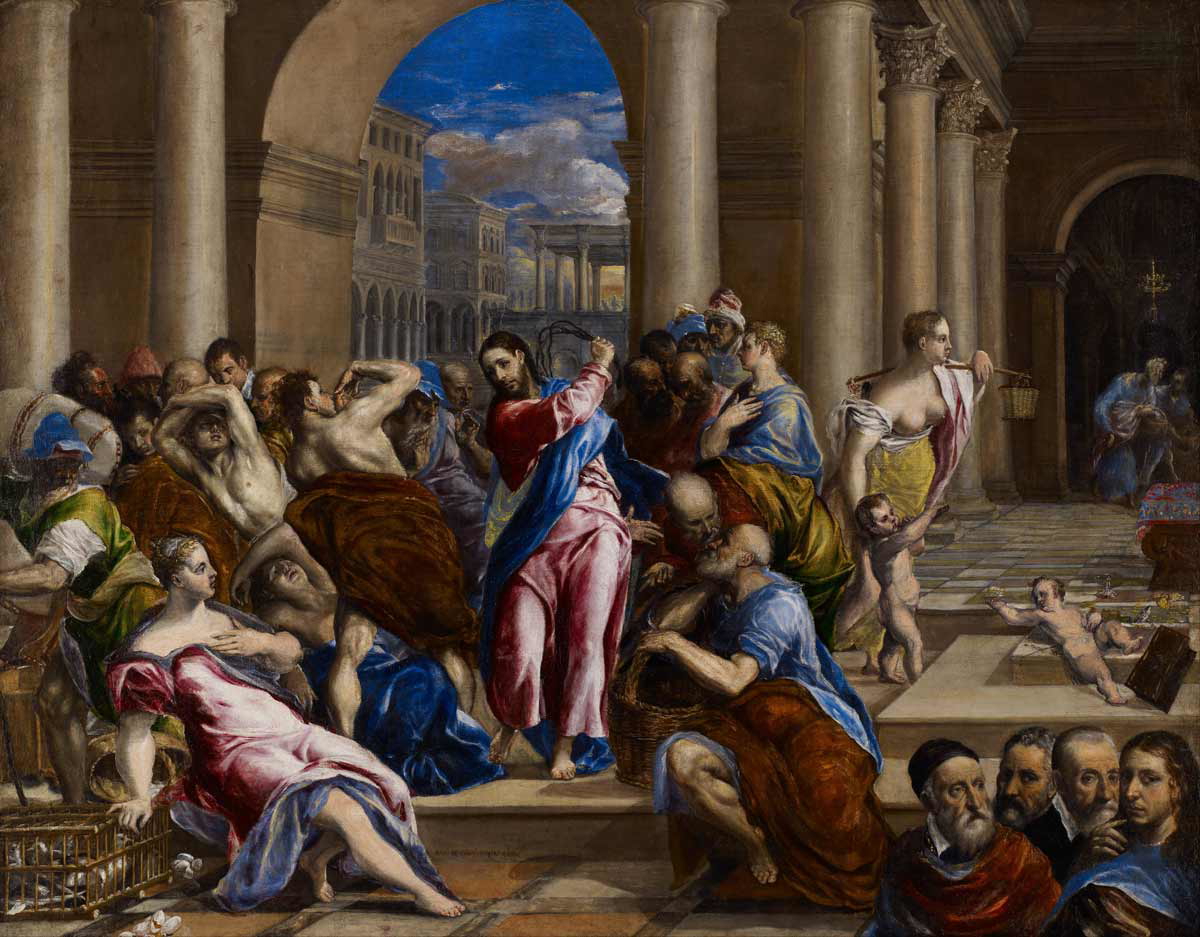
Venice was the center of artistic activity of the time, specifically for Greek artists looking to secure more commissions and develop their skills. Despite unique opportunities, the city could not distinguish between its many artists. Along with the legendary El Greco, Venice had a dozen other men under the same pseudonym, some of them working in the workshops of major artists like Titian. This poses a significant challenge for El Greco experts attempting to understand his Italian period.
The painting Christ Driving the Money Changers from the Temple is the perfect example of El Greco absorbing the influence of great Italian masters. The painting itself hides a hint of that: four figures in the bottom right corner represent Titian, Michelangelo, Giulio Clovio (an illustrator and El Greco’s close friend), and Raphael. However, despite obvious influence, El Greco was ruthless when it came to the Old Masters, claiming they knew nothing about painting.
- Why it matters: El Greco’s Italian breakthrough, absorbing Titian and Michelangelo while asserting a personal voice
- Hallmarks: Muscular poses, Venetian color, quoting Old Masters in the foreground group
- Where it is today: Minneapolis Institute of Art, Minneapolis
3. Assumption of the Virgin: Arrival in Spain
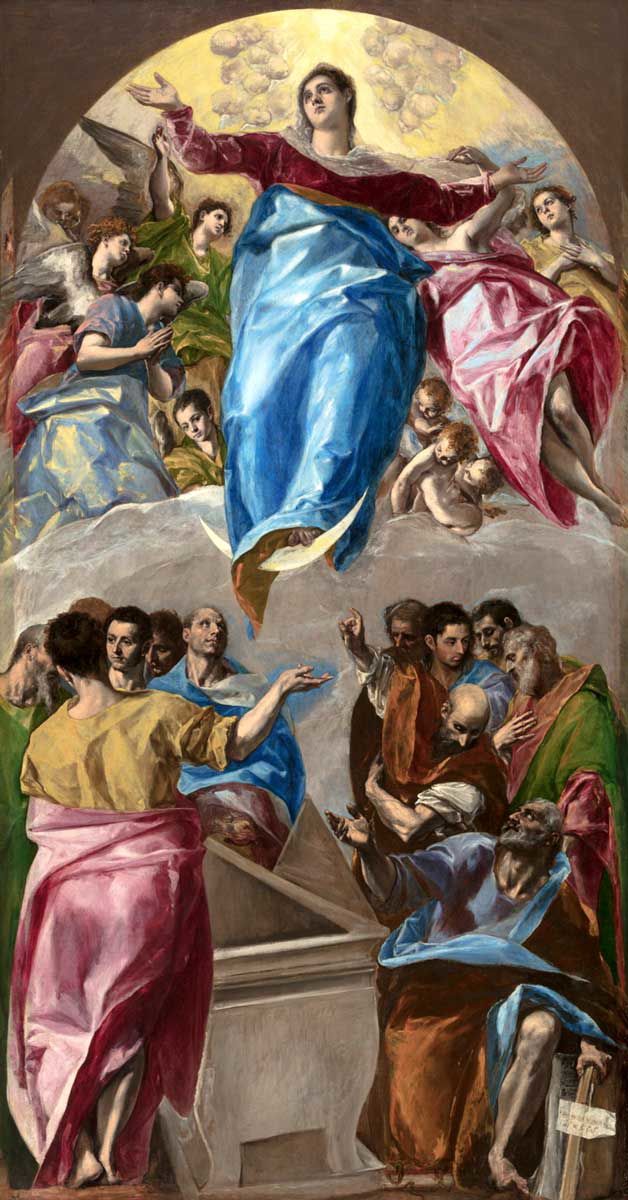
El Greco’s competitive personality and his performative disdain for the great Italian masters did not make him the most adored and desirable artist in Italy. Moreover, Italy was already crowded with talented artists, so El Greco decided to move to Spain. The legendary painting Assumption of the Virgin was El Greco’s first work in Spain and the one that brought him considerable success in the country. Apart from the Virgin, the top part of the painting featured the image of the Pieta with God the Father holding Jesus instead of his mother.
El Greco’s bold use of color and proportion led many art historians to believe the artist suffered from some kind of illness or condition. Some believed he had astigmatism, which made him see objects and figures unnaturally elongated, while others decided the artist was colorblind, thus explaining the unexpectedly bright and intense colors. However, all these assumptions are shattered by El Greco’s secular portraits of his commissioners. In these pieces, he abandoned his love for dramatically distorted limbs and faces in favor of a more conventional style and colors, fully expected in paintings like these.
- Why it matters: First major Spanish commission that establishes El Greco in Toledo
- Hallmarks: Vertical thrust, blazing reds and blues, two-tier heaven and earth composition
- Where it is today: Art Institute of Chicago, Chicago
4. Saint Peter & Saint Paul: Inside El Greco’s Studio
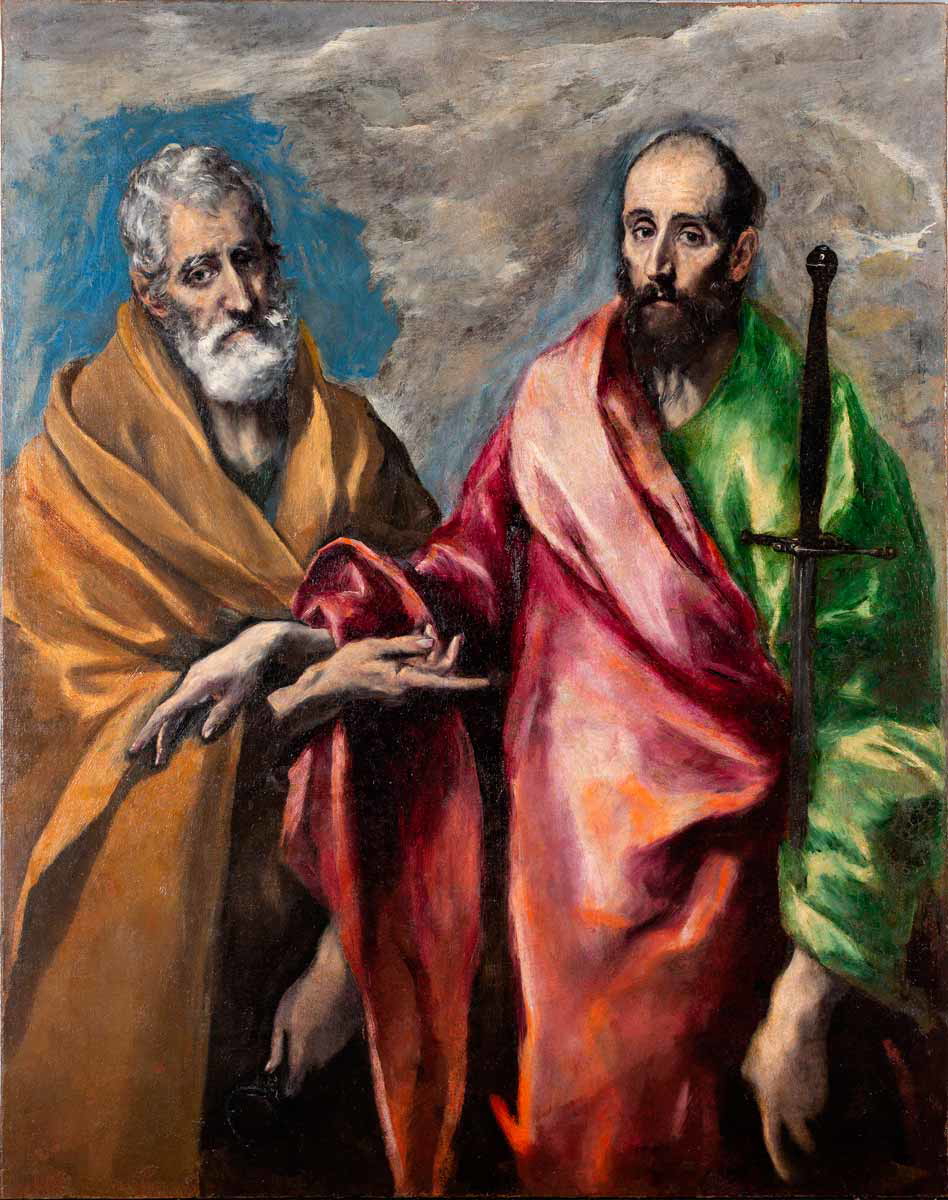
In Toledo, El Greco soon created his new studio. Finally, he became known for his unique style, so he was sought after instead of being seen as yet another Greek painter in Venice. In his workshop, he painted miniature copies of his existing works and offered them as a catalog to prospective commissioners.
While El Greco frequently worked with original ideas and compositions, his most stable source of income relied on copies of the works he had made before. He painted the same image of Saint Peter and Saint Paul at least three times, adjusting the color scheme to the client’s preferences. However, his most popular subject was Saint Francis, which existed in more than 120 variations, some of which were identical.
- Why it matters: A prime example of the studio’s repeatable “catalog” works tailored to patrons
- Hallmarks: Elongated saints, charged color, small variations across multiple versions
- Where it is today: Museu Nacional d’Art de Catalunya, Barcelona
5. The Disrobing of Christ: Toledo Cathedral Dispute
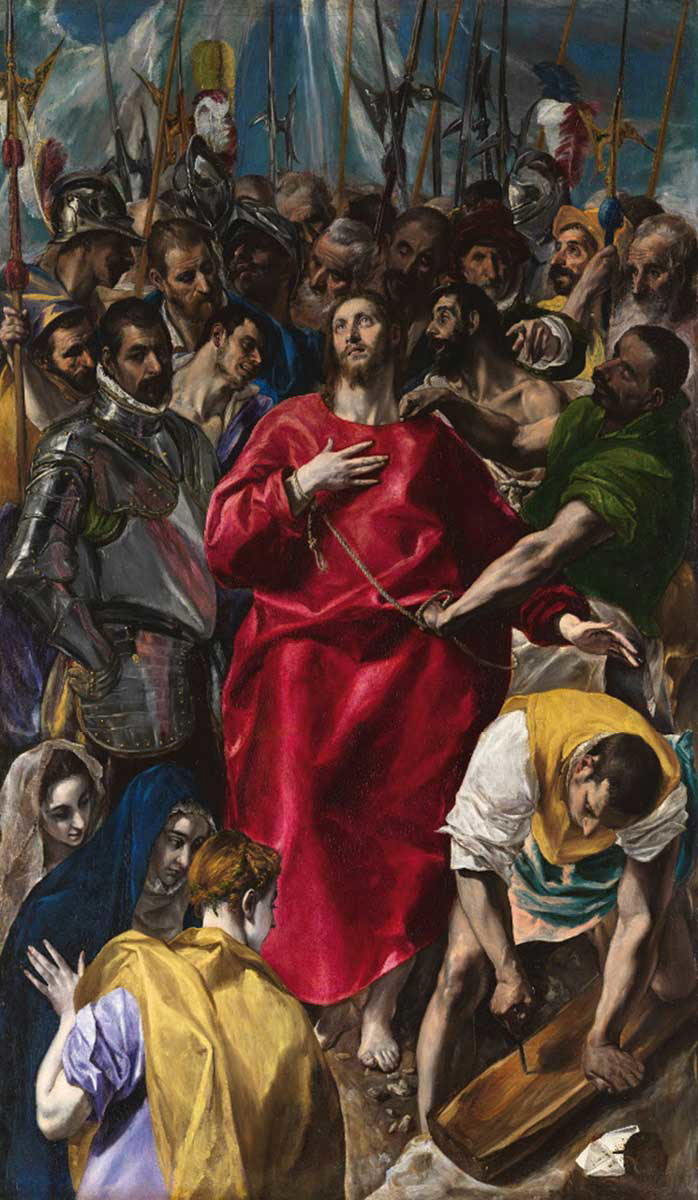
As a painter, El Greco struggled with following orders, despite being highly regarded in Toledo. He regularly ignored his clients’ wishes after coming up with something unexpected and exciting to paint. Not all commissioners agreed to pay for his experiments, so El Greco sued them. In trials like these, the final verdict depended not on a judge but on a group of other painters invited to assess the plaintiff’s work.
The Disrobing of Christ, painted for the Toledo Cathedral, was an example of El Greco’s unconventional approach. During the late Renaissance era, followed by emotionally intense Mannerism and Baroque, Spanish art had a distinctive focus on violence and blood, emphasizing the suffering of Jesus and Christian martyrs. The disrobing of Christ, therefore, was an unpopular subject since it only anticipated torture. But the main offense taken by the Spanish public was not in the absence of gore, but in the layout of figures. El Greco painted Christ lower than his tormentors, and such disrespect was the reason for the Toledo Cathedral to decrease the payment threefold.
- Why it matters: Tests Spanish taste with an audacious composition that lowers Christ among captors
- Hallmarks: Saturated crimson, compressed crowd, dramatic upward gaze
- Where it is today: Cathedral of Toledo, Sacristy, Toledo
6. The Penitent Mary Magdalene: Repetition and Icon Memory
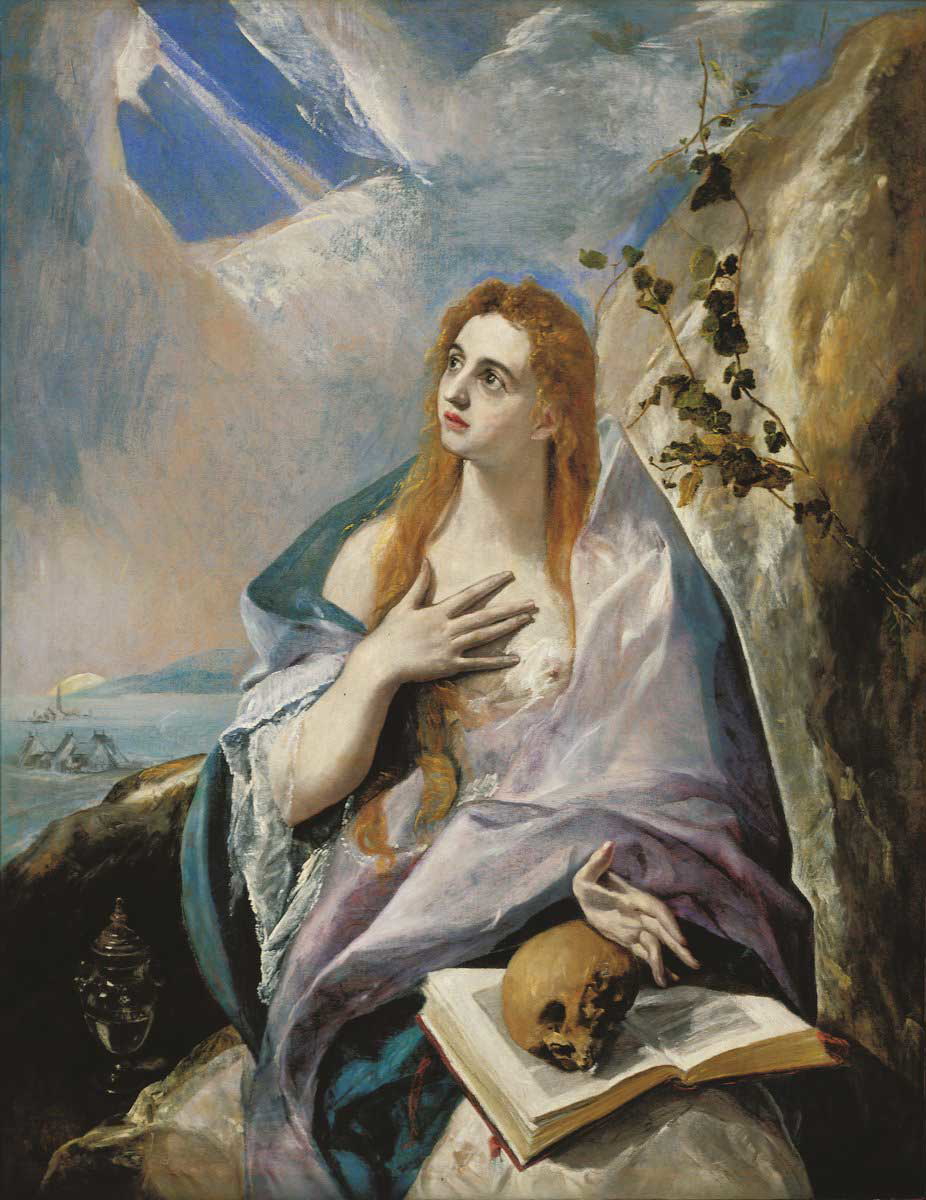
Penitent Mary Magdalene was one of the most popular subjects for El Greco, repainted and sold many times. Despite the constant presence of female figures like Magdalene or the Virgin Mary in his religious works, El Greco’s secular paintings never included women. The only exception was the portrait of his lover Jeronima de Las Cuevas, whom he never married, despite having a son together; however, some experts question the portrait’s attribution to El Greco.
Surprisingly, for an artist of his age and time, El Greco had no interest in realistic body proportions and anatomy. Under the complex draperies of rich tones and textures, there were no actual bodies, no limbs, torsos, bones, or muscles, only shapeless clouds of smoke. He treated facial features with the same indifference. Despite their abundance in his compositions, El Greco made no attempts to make them recognizable. The same set of facial features repeated on and on in his religious paintings. Some art experts believe the reason was El Greco’s past occupation as an icon painter in Greece. In the Byzantine tradition, faces hardly mattered, since they were replaced with attributes and symbols.
- Why it matters: Best-selling subject that shows how icon habits meet Counter-Reformation emotion
- Hallmarks: Luminous skin, stormy background, drapery that abstracts the body beneath
- Where it is today: Museum of Fine Arts, Budapest
7. The Burial of the Count of Orgaz: Two-Zone Vision
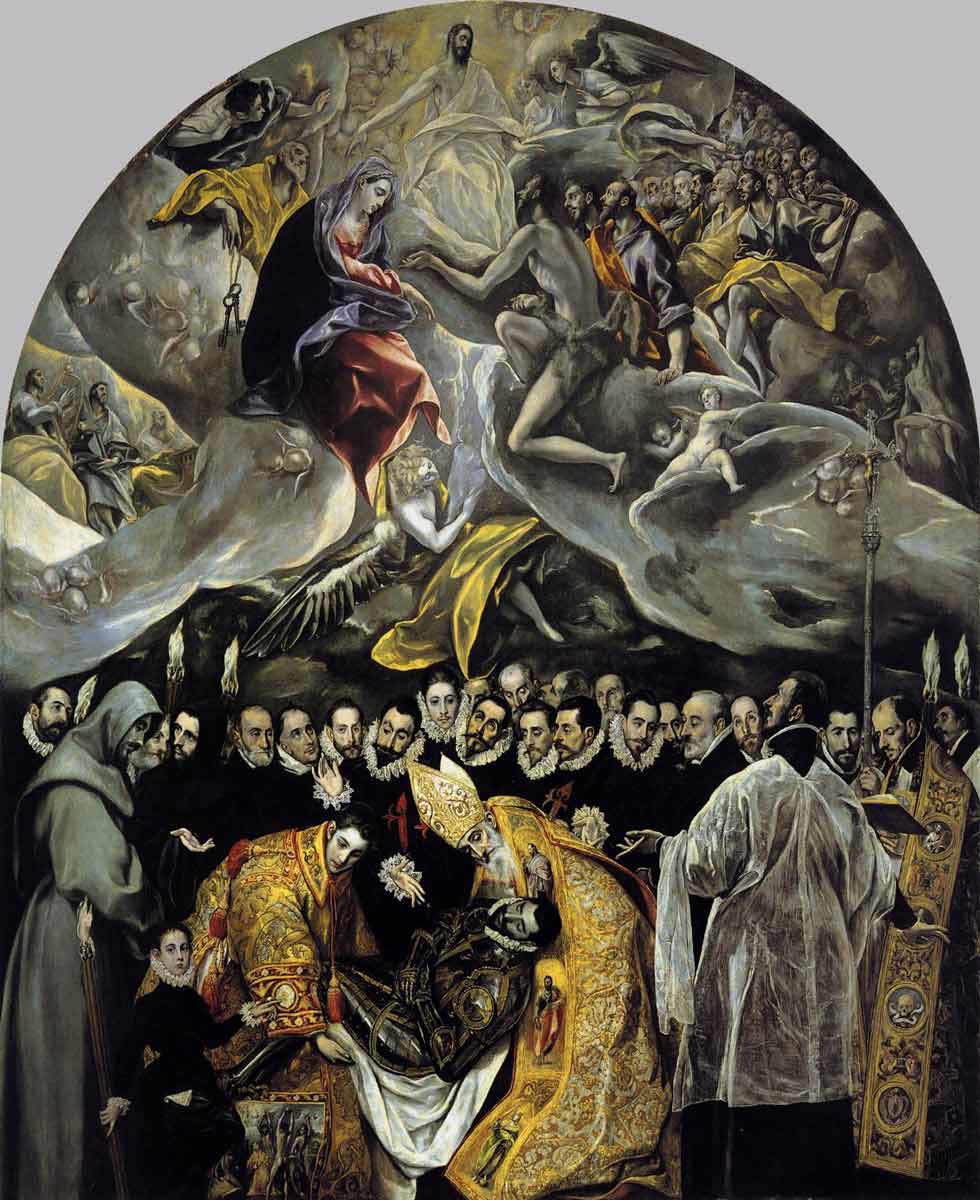
One of the most famous works of El Greco, showcasing his set of skills, was The Burial of the Count of Orgaz. The count of Orgaz, or Don Gonzalo Ruiz de Toledo, was not El Greco’s contemporary but a town mayor who died more than two hundred years before the painting was made. The mayor introduced a yearly tax collected from Toledo residents to decorate the local church.
Two hundred years later, the tax became such a heavy burden for the locals that they refused to pay it. Thus, the parish priest asked El Greco to remind them of their duty by retelling the legend of the Count of Orgaz, who was so holy that Saint Stephen and Saint Augustine descended to assist with his burial. The painting consisted of two panels. The bottom one showed the actual burial, and the top showed the Count ascending into heaven. The complex composition demonstrated El Greco’s knowledge of Dutch group portraiture—the finest example of the style, allowing him to arrange dozens of people in a single composition.
- Why it matters: Signature masterpiece fusing a civic legend with a celestial vision
- Hallmarks: Split composition of earth and heaven, lifelike portraits, ecstatic light above
- Where it is today: Iglesia de Santo Tomé, Toledo
8. Laocoön: El Greco’s Only Myth
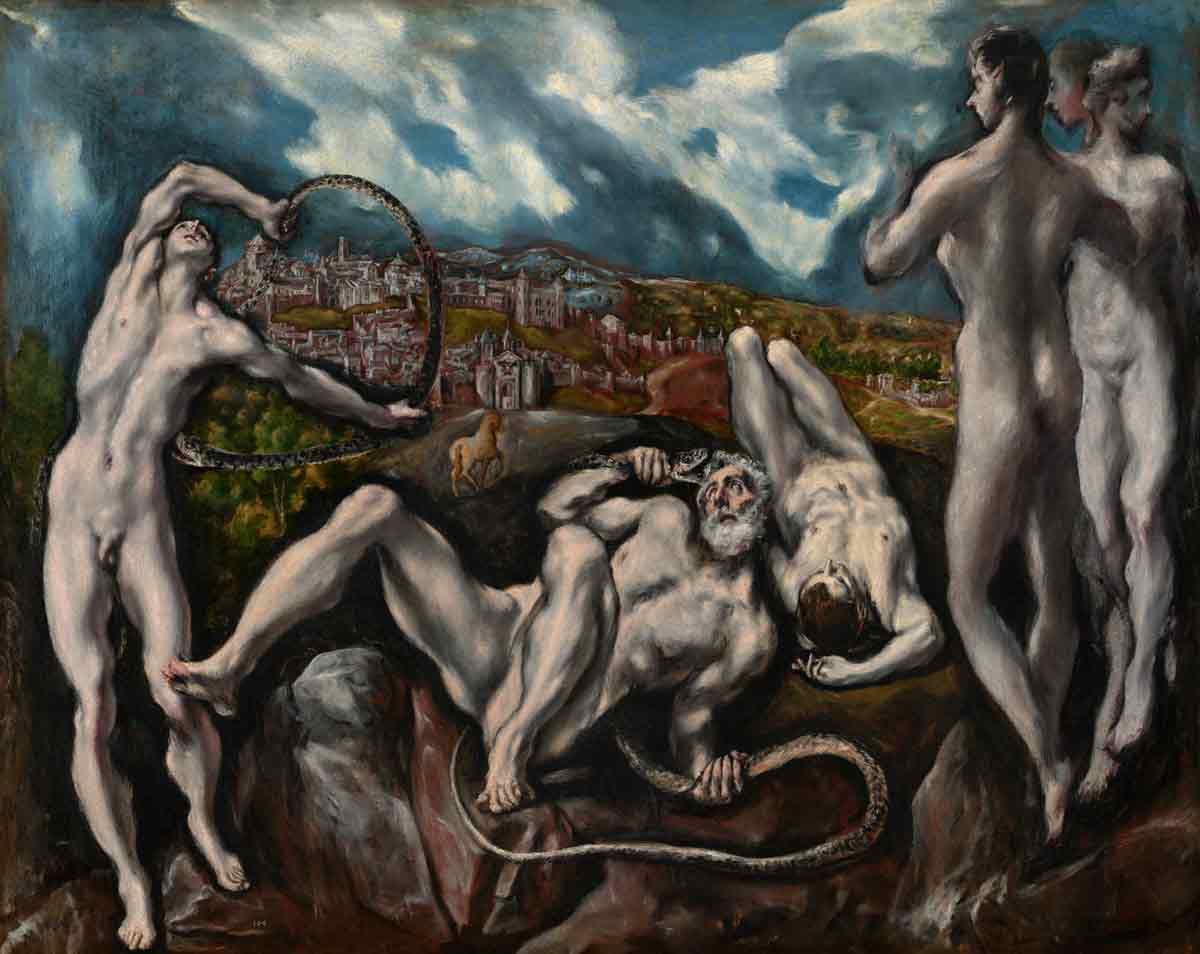
The Trojan priest Laocoön was the only one who warned the Trojans against accepting the gift of a giant horse and begged them to set it on fire. As a punishment, the same gods Laocoon worshipped sent giant serpents that devoured him and his sons. Laocoon’s agony was the only known mythical subject to be painted by El Greco, revealing an unexpected dimension. The Trojan Horse in the painting is not a wooden structure but a living horse with red hair.
A red horse, according to the Book of Revelation, the apocalyptical finale of the New Testament, was the sign of the Second Seal being open—one of the seven seals representing stages of the world’s end and the arrival of the Final Judgment. The figure riding the red horse is the second Horseman of the Apocalypse, representing war. Thus, from a pagan priest, Laocoön turns into a Christ-like figure sacrificed by his own gods, left to watch the destruction of his world from afar.
- Why it matters: Turns a classical tale into an apocalyptic Christian meditation
- Hallmarks: Serpentine bodies, visionary sky, Revelation “red horse” symbolism
- Where it is today: National Gallery of Art, Washington, D.C.
9. The Opening of the Fifth Seal and the Legacy of El Greco
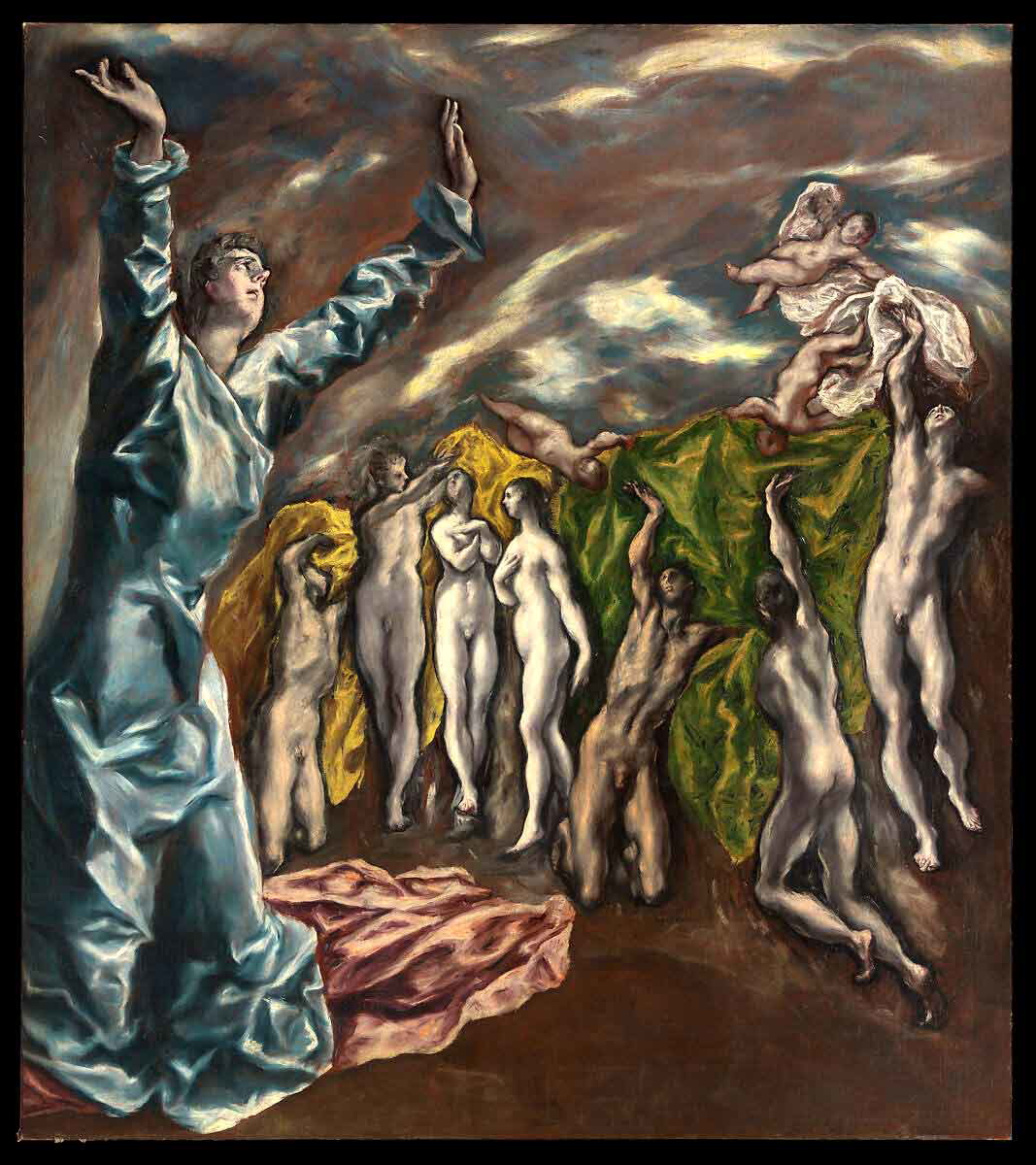
Despite the prominence of El Greco’s work during his lifetime, he was ridiculed and forgotten soon after his death. He did not leave behind a group of followers nor trained assistants, except for his son, who never achieved the same success.
The surprising recovery of El Greco’s legacy happened in the nineteenth century, when the views on painting started to change radically. Expressive qualities of art began to mean more than its consistency with the canons of what was acceptable. Paul Cezanne, among others, was enamored and obsessed with El Greco, borrowing color schemes from his works, while Picasso and Modigliani directly quoted him in their compositions. El Greco’s visible indifference towards the laws of physics, anatomy, and proportion could have made him a true star of the twentieth-century Expressionist movement, yet they turned him into an underappreciated master of his age.
- Why it matters: A touchstone for modernists who prized expression over strict narrative order
- Hallmarks: Fractured space, ecstatic gestures, blazing chroma
- Where it is today: The Metropolitan Museum of Art, New York