The concept of human dignity is difficult. Despite being used in many international declarations of human rights there exists no precise definition of the term. The absurd, according to Camus, is an unpleasant experience coming about from the absence of myths that show for certain all human life is valuable. The idea of human dignity rests on the idea that human life is too valuable to be treated in certain ways. I show how closely tied questions of the absurd and of human dignity are in The Myth of Sisyphus.
Concepts of the Absurd
In philosophy there is no one single concept of the absurd. Different thinkers have different conceptions of what exactly is meant by this technical philosophical term. In addition, the impact of the absurd on their work varies from person to person. Some of the names associated with the absurd that are most familiar include Søren Kierkegaard, Jean-Paul Sartre, Thomas Nagel and, of course, Albert Camus. There are also many other thinkers, from various different disciplines that deal with subjects that relate to the absurd, sometimes very strongly, but who do not use the technical term in their work. Names that instantly come to mind include Friedrich Nietzsche, Fyodor Dostoevsky and Samuel Beckett.
It is important to be aware that while all conceptions of the absurd will share some common features, for example, the search or yearning for meaning in a meaningless universe, they can be very different in emphasis and use. Kierkegaard understands the absurd as the religious sphere of existence and it is by virtue of the absurd that we can have faith in God. For Sartre, on the other hand, the absurd is a consequence of the absence of God. When studying work on the absurd, we must be careful that the concept of the absurd we are using is the same as that used by the philosopher we are studying. There is, unfortunately, a lot of confusion in the secondary literature brought about by people using, for example, Sartre’s concept of the absurd in order to understand Camus. Let us turn now to how Camus approached the absurd.
The Absurd in Camus’s Cyclical Works
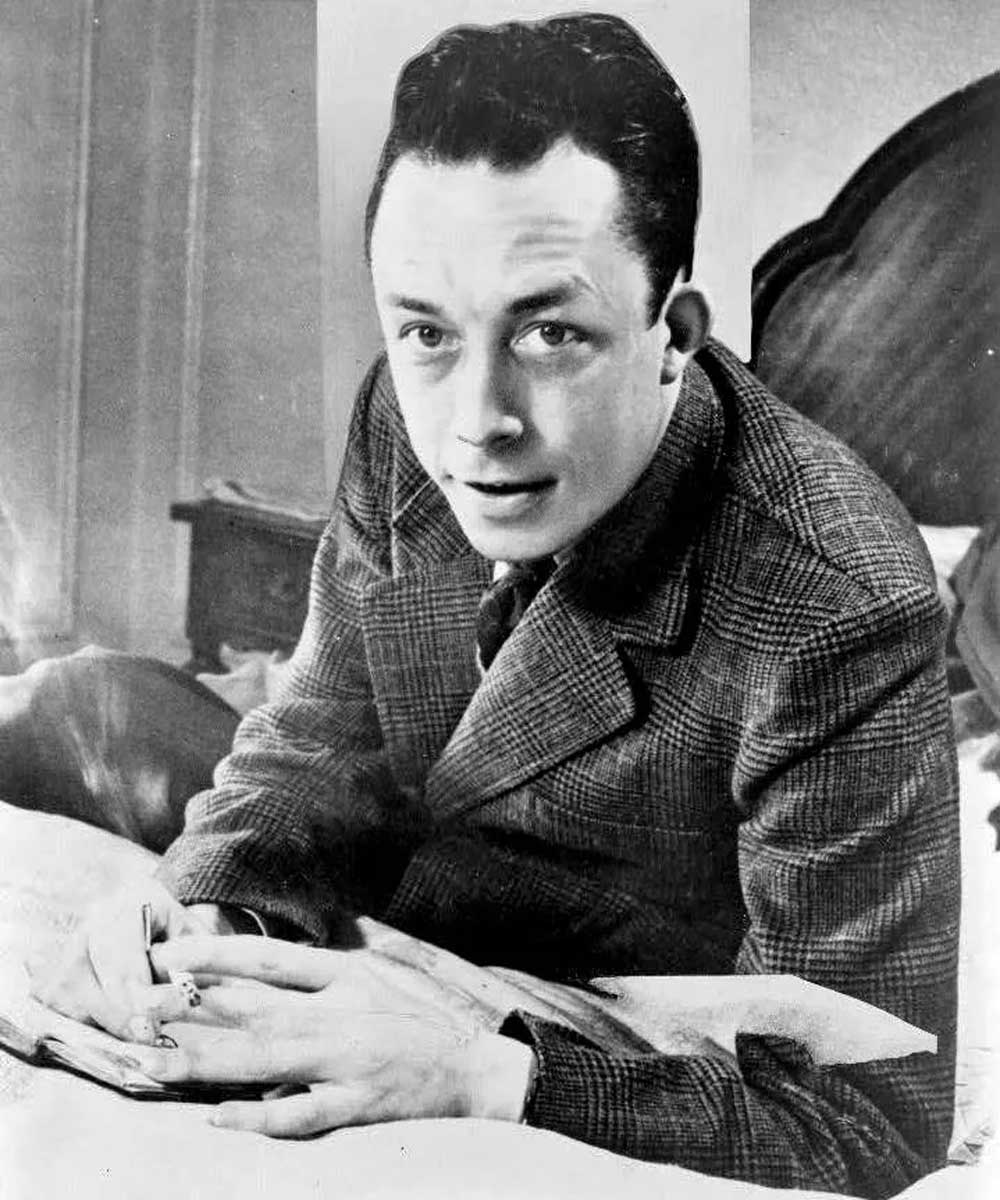
From the beginning of what we could call his philosophical career, Camus planned out his works in cycles. Each cycle is devoted to a single theme and comprises a novel, two plays, and an essay. What is revealed straightaway by this structure is the importance, for Camus, of complementing dramatic philosophical fiction with non-fictional essays on the same subject. This combination of mythos and logos is central to Camus’s approach to philosophy. He was enormously influenced by the ancient Greeks; for them mythos referred to the communication of ideas through stories and narration, and logos was associated with rational discourse. It is important to note here that it is not simply the case that mythos and logos refer only to Camus’s fiction for the former and his essays for the latter. In The Myth of Sisyphus, both appear as complementary approaches within the same essay. That is, Camus explores the absurd with sections that employ rational enquiry and argumentation, but he also expresses his findings in the form of a myth at the conclusion of the essay. Let us now take a look at the texts that comprise Camus’s primary work on the absurd.
Camus’s first cycle was devoted to the exploration of the absurd and his second to rebellion. The third would have been on love but he was killed in a motor accident before it could be completed. To avoid confusion, it is worth mentioning that some works, for example The Fall, were produced between cycles and are considered non-cyclical by Camus scholars. The works included in his first cycle on the absurd are the novel, The Stranger; the plays, Caligula and The Misunderstanding; and the essay, The Myth of Sisyphus.
Let us begin our look at Camus’s approach to the absurd with the idea of searching for meaning in a meaningless universe.
The Search for Meaning
What most philosophical accounts of the absurd have in common is the idea of a yearning or search for meaning in a meaningless universe. Camus’s account is no exception but it is nuanced; and if we want to understand his philosophical essays and literature on the absurd this nuance must be understood. Let us look first at what is meant by searching for meaning in a meaningless universe.
What do we mean by meaning? Broadly speaking, there are two senses in which we use the word ‘meaning’ when talking about the absurd. These are meaning as in comprehension, and meaning as in significance or value. They are related. Part of comprehending something is to understand its significance. However, if we think of the second use of the word to refer to something like meaningfulness, we can see a distinction between the two. We can comprehend something but at the same time not believe it to be meaningful. Consider the following: I know the difference between an open and shut door. Seeing an open door in a busy office on a Tuesday afternoon is usually not meaningful whereas coming downstairs in the middle of the night to find your front door wide open is a different matter.
Some questions concerning meaning can be answered by science. Understanding thunder and lightning, for instance. However, other questions are beyond science. Scientists can, for example, tell us what life is, but they cannot tell us why (or if) life is significant, meaningful or valuable. For that, we need another approach and this is where mythos enters the discussion.
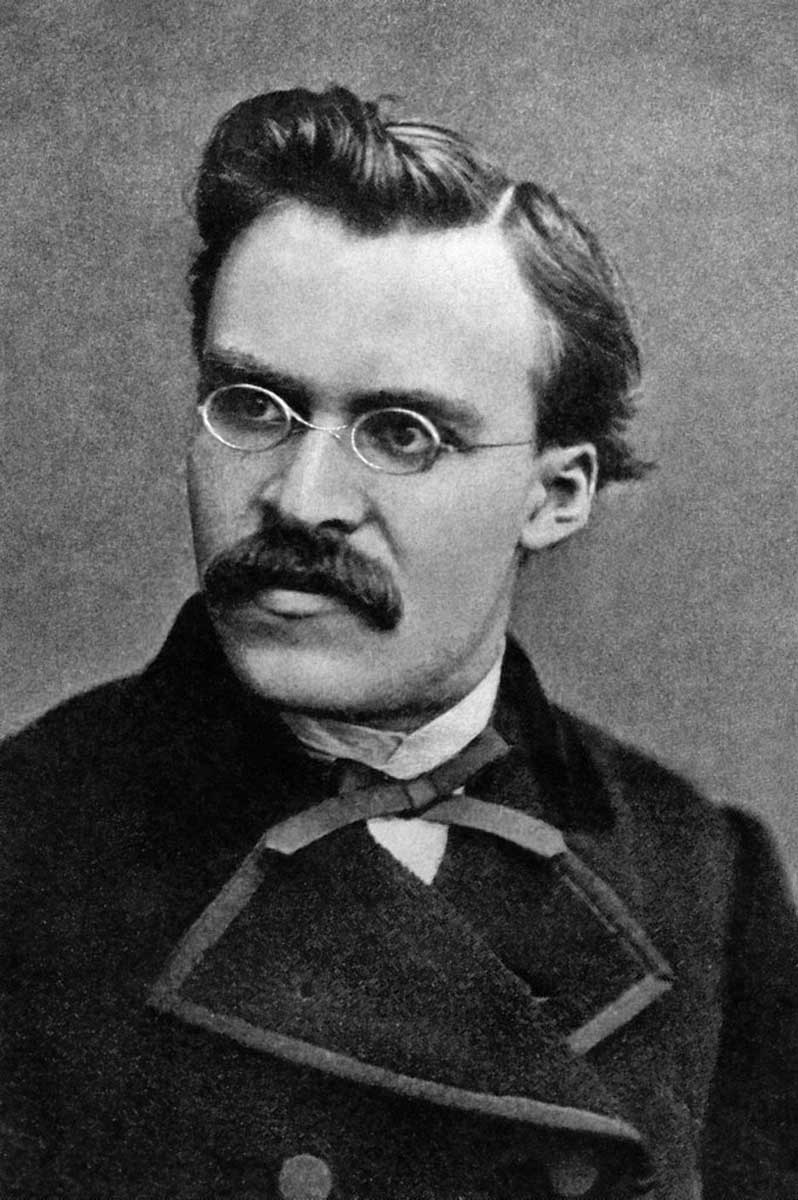
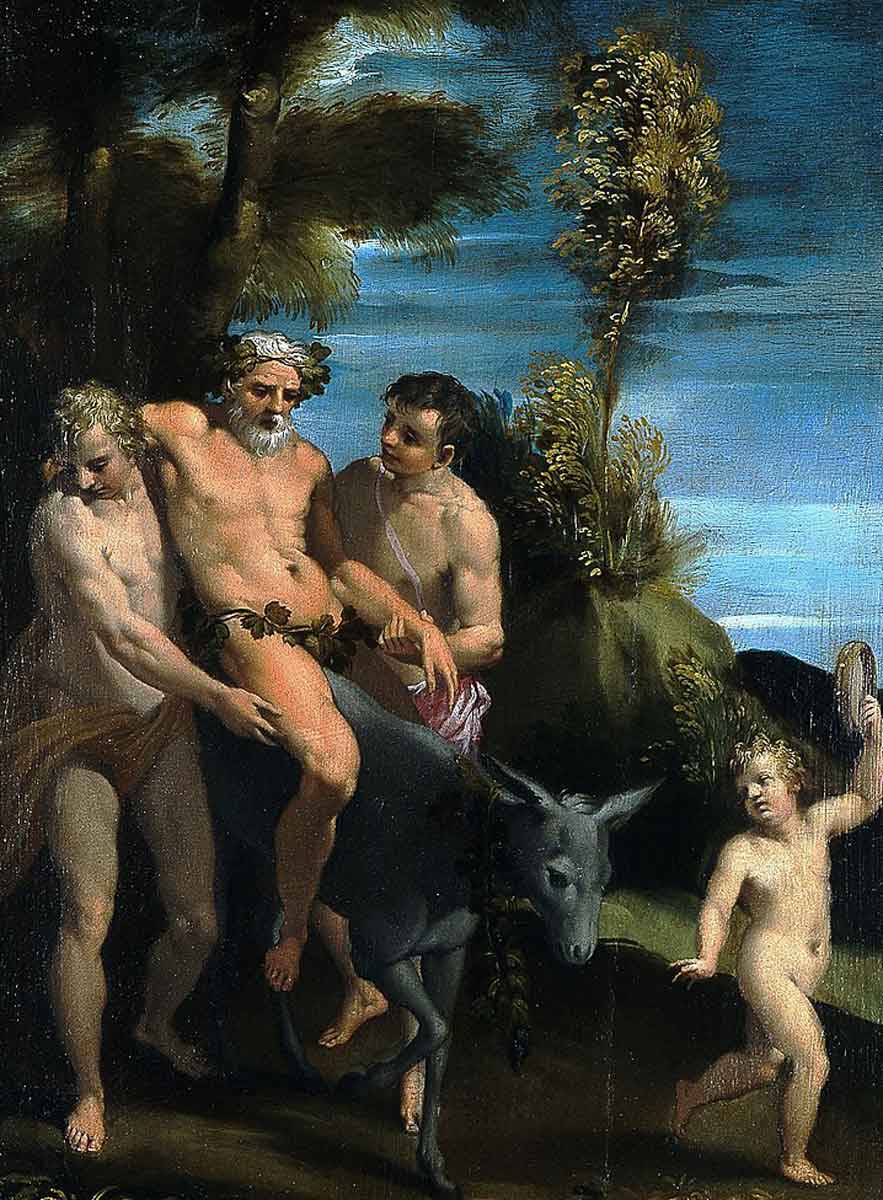
Myths are often used to show why something ought to be considered valuable. One of Camus’s most important influences was the German philosopher Nietzsche. In his book-length essay The Birth of Tragedy (1872), Nietzsche said that all Greek myths were aimed at overcoming the wisdom of Silenus. It was Silenus, a creature from Greek mythology, who said that the best thing for human beings was never to have been born; and the second best was to die as soon as possible. In essence, Silenus is saying that life has no value for us. When Nietzsche talks of myths overcoming Silenus he is talking about ways of discovering and communicating the idea that life is valuable. This is the main idea pursued by Camus in The Myth of Sisyphus. Let us take a look at that now.
The Myth of Sisyphus
The Myth of Sisyphus is a book-length essay on the absurd published in 1942. Camus opens with the claim that the most important philosophical question is suicide. Here he is referring to the wisdom of Silenus. In an approach very similar to that of Rene Descartes, Camus begins his essay by doubting everything and looking for something that he knows for sure. He does this in the guise of ‘the absurd man.’
Camus presents not only the results and conclusion of his investigation into the absurd, but he brings his readers along with him in his exploration. The essay is in the first person, written as if in real time, with the absurd man presenting his discoveries as he uncovers them. For instance, near the beginning he says that the world is absurd, but he later corrects himself saying that he was too hasty in this judgement. It is not the world that is absurd but the clash between the great yearning human beings have for meaning and the silence of the universe. It is worth noting that at the end of the first, longest and most philosophical section of the essay, Camus states that Nietzsche shows the way of the absurd man. There can be no doubt that The Myth of Sisyphus is a response to Nietzsche.
Nietzsche, we remember, claimed that all myths were an attempt to overcome Silenus. Camus ends his essay with his own version of the Sisyphus myth. In the original Greek myth, the focus is entirely on Sisyphus as he endlessly struggles to push a huge rock up a mountain only to see it roll back down to the bottom every time he nears the summit. In Camus’s version, things are reversed. His focus is on Sisyphus walking back down the mountain, when he is free of his rock and his time is his own. During this time, he is free to give meaning to life and existence. In the final lines of the essay, Camus says that we must imagine Sisyphus happy. He is happy because he has made his life meaningful, and because his life has meaning, he knows it is valuable. We saw that Silenus said for human beings life is worthless; Camus offers a myth that disputes this.
Searching for Myth and Meaning

From a position of knowing nothing Camus wants to discover something: one thing that he knows for sure about life, the world and the human condition. He can then use this as a foundation upon which he will discover more and more. The absurd man in The Myth of Sisyphus discovers this one thing, and it is the problem of the absurd.
It is important to bear in mind that Camus is not imagining people walking around blindly not knowing anything about life, as was the condition of the first bipedal humans. When they first walked upright, they were immediately confronted with the horizon. Due to their extremely limited experience and understanding of the world, they had no idea what was beyond this horizon or what might be coming out of it. They developed myths in order to name things in the world and to create a language in which ideas could be communicated and discussed.
We humans today, the descendants of these first myth-makers, still benefit from their discovery and also from all the discoveries that have since emerged, such as science and the arts. We are not walking around blindly. In fact, modern humans believe that they have a very good understanding of the world and human condition. The problem is that every so often we are confronted with a total lack of understanding about what we consider to be the most important things in life. As we shall see shortly, most of us are convinced of the value of human life, but when asked to show why it is valuable we cannot find a suitable answer. What Camus is looking for is a way of knowing for sure the value of human life.
Camus shows, in The Myth of Sisyphus, that when we take a step back and look at our lives, we often discover that the things we take for granted and think we understand are based on mythos rather than logos. We saw above that for the Greeks both of these could be used as tools to make sense of the world. However, many people in the contemporary world no longer have any faith in mythos as a tool for exploring and comprehending the human condition. Camus believes that the value of life can only be properly expressed and understood with mythos—if we don’t have this tool, we cannot comprehend it.
For Camus, the absurd is the unpleasant experience of finding oneself devoid of myths that show the value of life. It is upon the idea that all life is valuable that we rest one of our most important concepts: human dignity.
Human Dignity
As Thomas Nagel said in his influential essay ‘The Absurd,’ human beings must treat their lives and the lives of others extremely seriously in order to live even ordinary, day-to-day lives. But when we take a step back and look at life, we often find that we cannot justify the seriousness with which we take it. That is, it is impossible to prove that life itself is valuable. This clash between the need and yearning for meaning and the absence of meaning in the world is what, for Nagel, brings about the experience of the absurd. Like Camus, he defines absurdity as a clash between pretension or aspiration and the reality of the world. If we say that we believe life is valuable and treat it as such, but also believe that we have no reason to think life is valuable, then we have an absurd situation. It is because this absurdity affects all of us that we can refer to it as ‘the absurd.’
Nagel, like Sartre whose philosophy is clearly an inspiration for him, thinks that we ought to be aware of absurdity but that it should not be a major consideration in our lives. Nagel recommends responding to the absurd with an ironic smile before getting on with the business of living. Camus, however, calls for continual contemplation of the absurd. This constant awareness of the absurd is how he defines ‘rebellion’ (the subject of his second cycle). And for Camus, the stakes could not be higher.
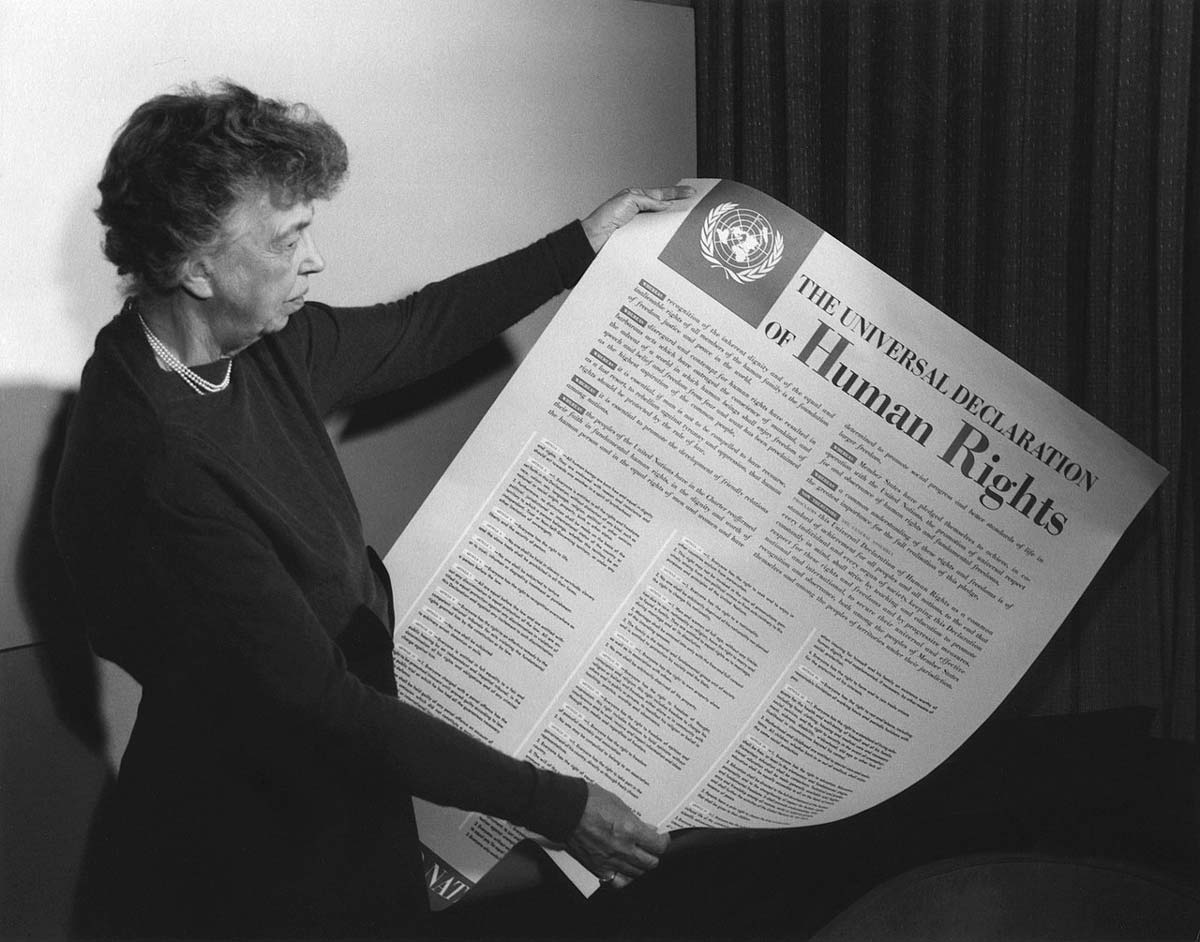
The concept of human dignity is foremost in numerous international proclamations of human rights including the United Nations Universal Declaration of Human Rights and The Charter of Fundamental Human Rights of the European Union. However, despite dignity being the foundation upon which the idea of human rights exists, there is no definition of what human dignity actually is or why we should believe such a thing actually exists. Human dignity is one of those things, like love and art, that we find impossible to define, but we are sure we know them when we see them. Camus would argue that we can know that these things exist through the use of myth.
The Value of Life
When we want to evoke the idea of human dignity, we do not usually attempt to rationally argue for a definition. Instead, often without realizing that we are doing so, we use dramatic imagery and storytelling in order to capture the idea of its violation. That is, we offer such violations as rape, torture, slavery and murder in order to capture the significance and importance of human dignity. Such acts are abhorrent to us because we feel that human life is too valuable to be treated or squandered in this way. It is by drawing out our revulsion to these acts that we can grasp what is being violated: human dignity.
Slavery, for example, degrades because it treats the enslaved as if their lives are worth less than that of the free. In addition, it is often expressed that it is not only beneath the dignity of a human being to be treated in such a way, but it is also beneath the dignity of a human being to treat others in this way. We know that slavery is wrong. It is one of the worst violations of human rights imaginable. Camus would not doubt this nor argue otherwise. What concerns him is how we know this to be the case. This is why in The Myth of Sisyphus he sets out to show that human life is valuable.
We saw above that Camus is responding to Nietzsche in his essay. He does so by taking up the challenge to overcome Silenus by creating a myth that shows human life has value. But Camus is also responding to another one of Nietzsche’s ideas and that is ‘the death of God.’ When Nietzsche said that God is dead, he did not mean it to be taken literally. Rather, he meant something like our belief in God is dead. In other words, we no longer believe that the Christian religion provides the answers to questions about the value and meaning of life. The trouble for Nietzsche and Camus is that in throwing aside Christian myths, we have nothing to replace them with and are left with nothing to justify the value we put on life. Remember, for Camus, the experience of the absurd is brought about by the absence of myth to answer such questions. The task for Camus, then, is to create myths that reveal the truth about human dignity to replace the previous myths we no longer believe.
Christians and people of other religious faiths would argue that this task is unnecessary. But Camus does not believe in God. For him, in order to show that life is valuable and that human dignity exists and ought not to be violated—something he firmly believes to be the case—he needs a new myth. The absurd, then, is an unpleasant experience brought about by the absence of such myths. The answer Camus offers in The Myth of Sisyphus is to create the myths we need. His Sisyphus myth, offered at the conclusion of the essay, is just such a myth.