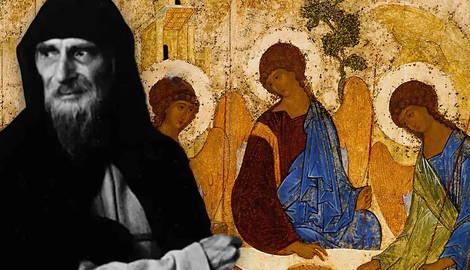

Andrei Rublev was one of the most significant artists of the Russian Middle Ages. Rublev’s Trinity remains one of the most important artifacts in the history of Orthodox Christian art. In 2023, Russian President Vladimir Putin officially removed the work from museum custody and donated it to the state-affiliated Russian Orthodox Church. Art experts believe this move could be detrimental to the work’s condition and eventually destroy the icon. Read on to learn more about The Trinity controversy and the political motives behind it.
What Makes Rublev’s “Trinity” So Significant?
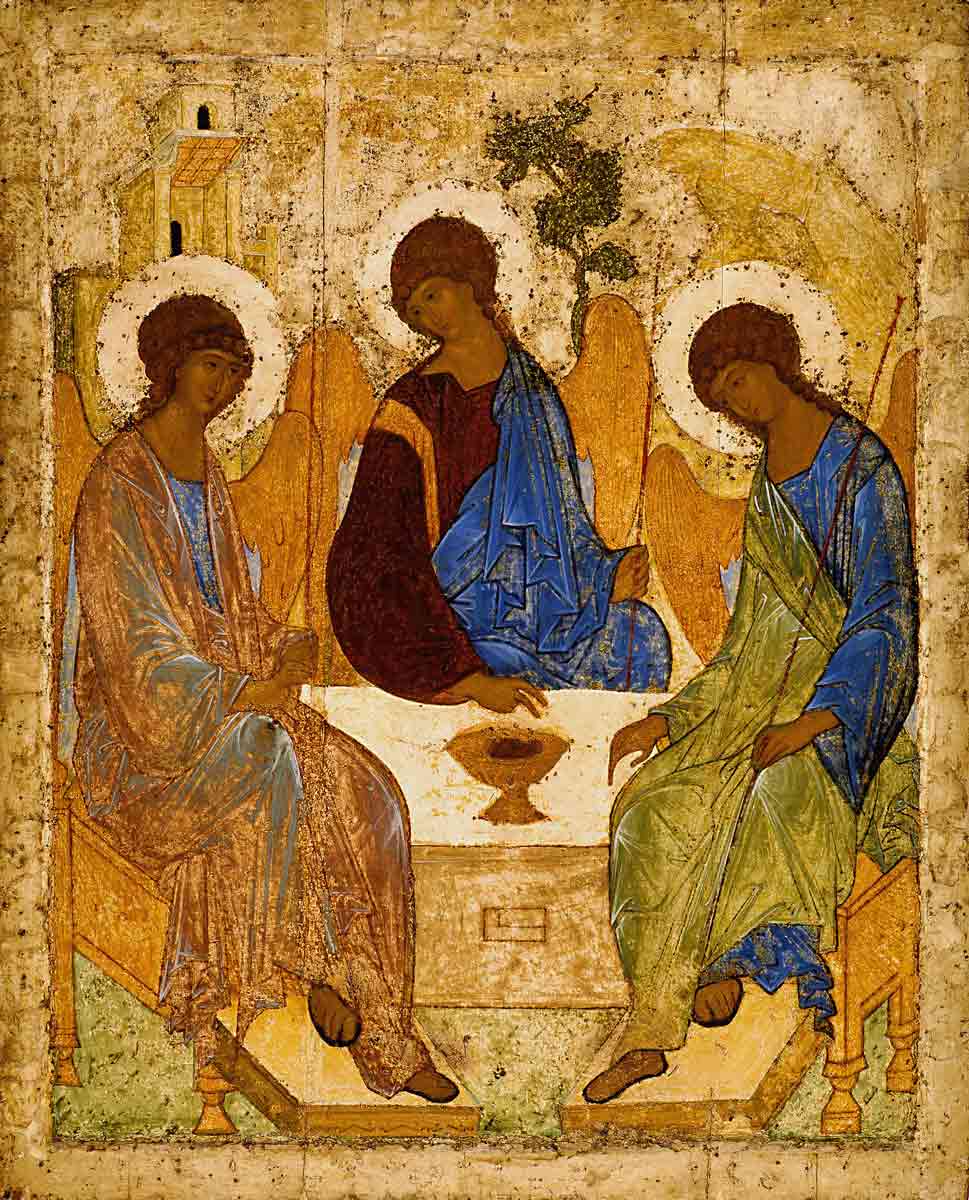
No other work of art is as important among the entire cultural legacy of pre-modern Russia as The Trinity, attributed to the legendary painter Andrei Rublev. Not much is known about Rublev’s biography and identity apart from the fact that his style and skill helped form the tradition of icon painting for centuries to come. Based on Byzantine icons, Rublev and his colleagues developed their own expressive language and artistic canon.
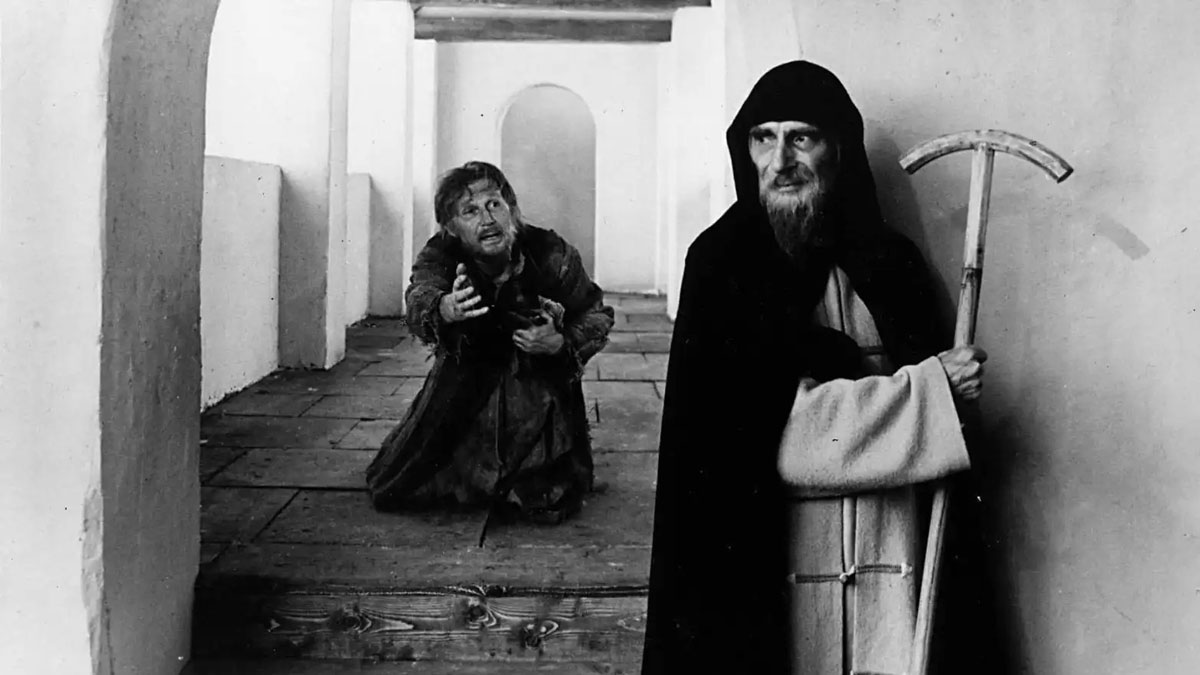
Rublev was one of the rare Medieval artists whose authorship could be proven with at least some certainty. Before early modernity, painters were considered mere craftsmen, and thus, their identities were deemed irrelevant. Only the most talented and outstanding masters received mentions in contemporary sources, and Rublev was one of them. Nonetheless, art historians still cannot draft a list of the uncontested works by Andrei Rublev. The Trinity is one of the two works which have a general consensus around them. Rublev was the first artist in Russian history to be officially declared a saint in 1988. He is celebrated three times a year as the protector of artists, icon painters, and anyone professionally connected to arts.
The subject matter of The Trinity was both traditional and revolutionary. The three figures referred to the Old Testament story of God revealing himself to Abraham. According to the narrative, Abraham was visited by three unknown men to whom he offered food and shelter. Only later did he realize that the three visitors were God—the Father, the Son, and the Holy Spirit. Traditionally, the Trinity works included Abraham and other details of the story, but Rublev decided to focus only on God’s representation. Thus, the image was not intended for education but for reverence.
The Trinity is a great example of the use of inverted perspective—a form of organizing visual space inside the painted image. The traditional perspective used by Western artists in the Early Modern and Modern eras represents further objects smaller than the closer ones. Rublev’s icon reverses this tradition—instead of meeting at the horizon, perspective lines drift apart. Thus, the vanishing point seems to exist outside of the painting, in the place intended for the church or gallery visitor. The reason for that is conceptual and reflects the power dynamic between the audience and the icon. Instead of evaluating the work by watching, the viewer finds themselves being watched by something far greater and wiser than any earthly being.
Trinity’s Religious Status
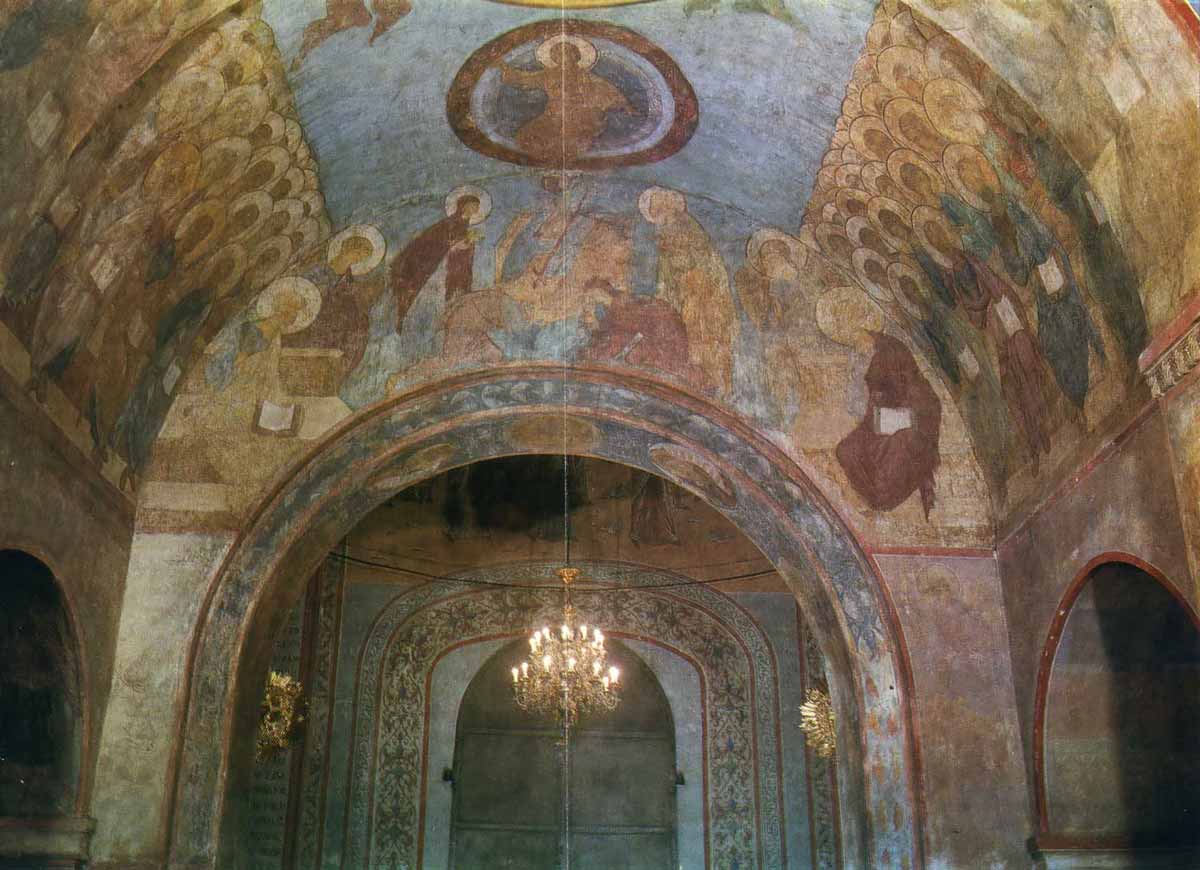
From the moment of its creation in the 15th century, The Trinity remained in the Trinity Lavra of St. Sergius, one of the main Russian monasteries located near Moscow. Only five centuries later, after the Russian Revolution dismantled the stable position of the Church in the Russian power structure, the icon was moved to the State Tretyakov Gallery. There, experts discovered that the work was crudely painted over several times, with Rublev’s original image distorted beyond recognition. In fact, it changed so much that art historians started to doubt if this was really the work attributed to Andrei Rublev.
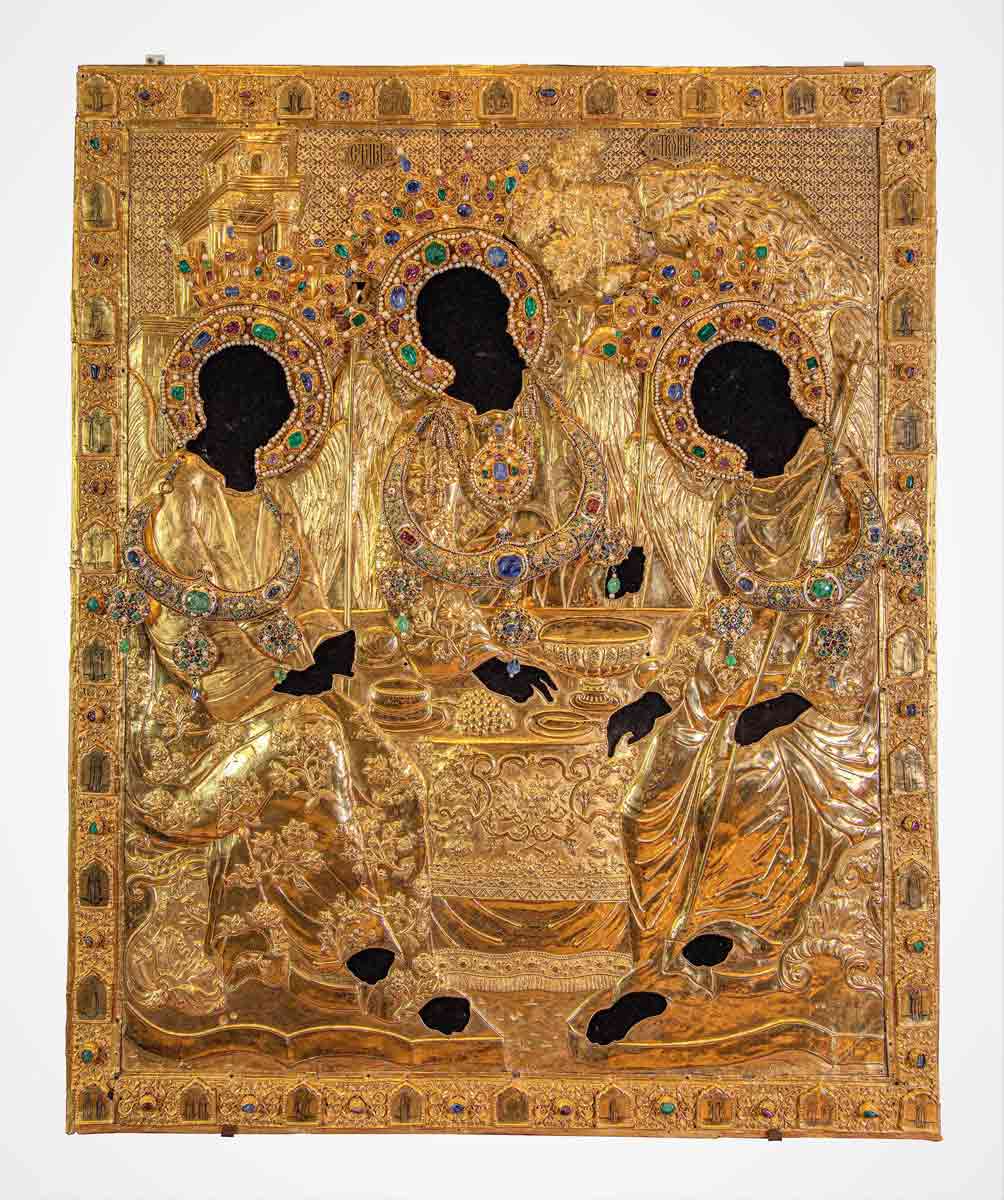
Before its restoration in the 20th century, The Trinity was repainted at least five times and covered with a gilded frame that concealed almost the entirety of the image, leaving out only the figures’ faces. Such frames, known as rizas are traditional decorations aimed at both protecting the painted images from candle smoke and other elements and venerating saints’ images by adorning them with precious stones and metals. The famous philosopher Walter Benjamin, who visited Russia in the 1920s, described rizas as chains for saints and angels, which did no justice to the complexity of painting underneath them.
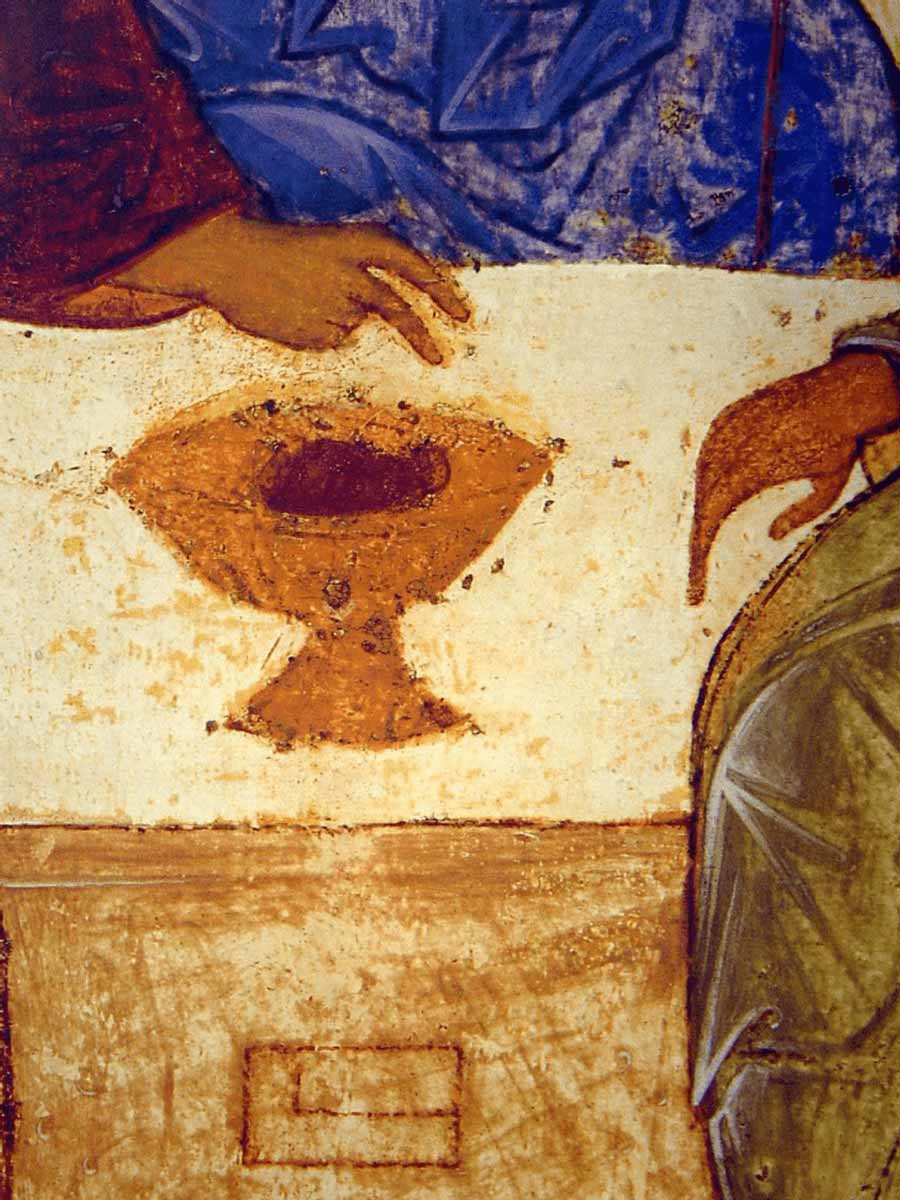
After the initial cleaning and conservation, the icon remained in the custody of the Tretyakov Gallery and soon became one of its main treasures. Despite uncovering the original paint layer, the painting still consisted of a large collection of paints and pigments from different eras. Moreover, the riza on the painting was held on dozens of small nails, which left traces and damaged both the wooden base and the paint layer. Thus, The Trinity remained unstable and fragile, requiring constant care and frequent checks.
One of the main concerns of art historians is the base material of the work. Rublev painted The Trinity of three wooden boards fixed together. Over the centuries, the boards started to disintegrate and drift apart. The tempera paint, already compromised by previous faulty attempts at restoration, started to crack and chip. Experts from the Tretyakov Gallery concluded that the icon could not be restored but only conserved, with destructive processes stabilized enough to win more time for the work’s already significant lifespan.
Although The Trinity is an Orthodox icon representing one of the most revered images, it was never associated with miracles of any sort or special events concerning Orthodox practices. Thus, the historical significance of the icon overweights its cult value—or at least, overweighted until recently. Despite its questionable religious status, in July 2022, Russian officials demanded the icon to be temporarily moved to the Trinity Lavra for a three-day celebration of its patron saints. Museum conservators warned the officials that this move could destroy the work, but their pleas were ignored. After the three-day tour, restoration experts found at least ten new damaged areas on the icon.
Transfer of The Trinity
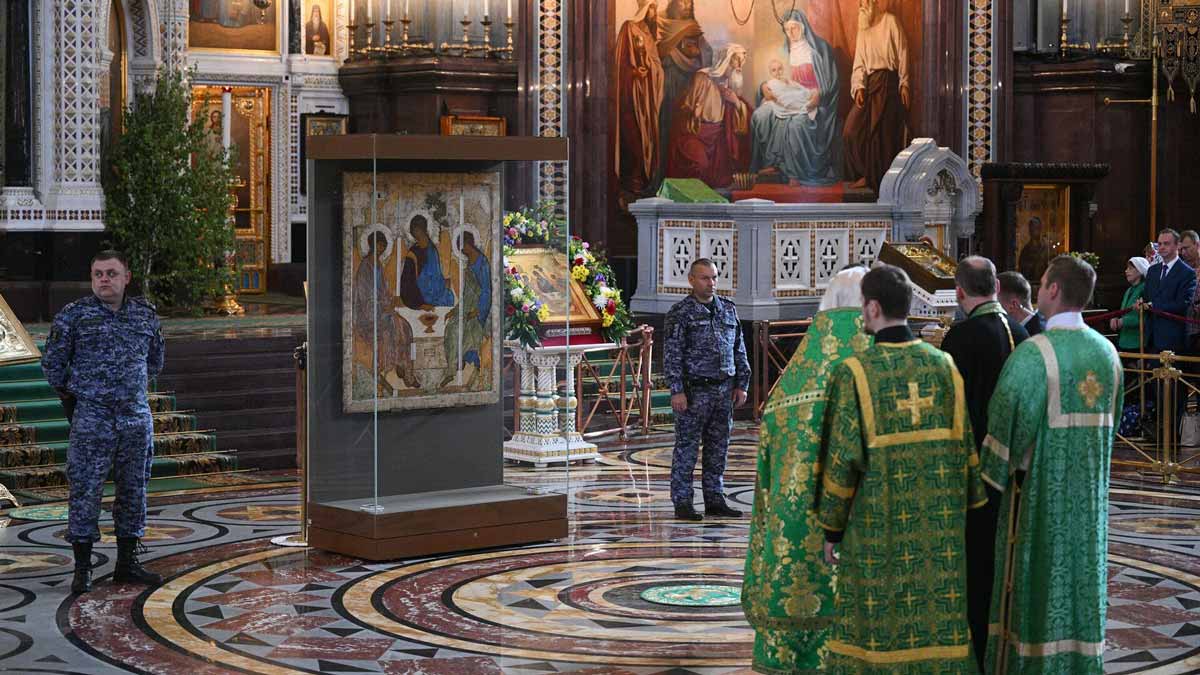
In December 2023, the Tretyakov Gallery curators received orders from the Kremlin to prepare The Trinity for transportation. By Vladimir Putin’s order, the work was to be transported first to the Cathedral of Christ the Savior in Moscow, within walking distance from the Kremlin, for half of the year, from January to June of 2024. Later, it was to be transported to the Trinity Lavra for permanent residence. This decision caused a major backlash among the Russian museum community, and even directors of major federal institutions protested.
Russian officials motivated their actions by the mass demand of the Orthodox Christians. Still, the museum community insisted that a work as important as Rublev’s most famous icon requires setting aside its religious value in favor of its physical preservation. Neither the Cathedral of Christ the Savior nor the Lavra could offer adequate care and maintenance. For example, the subway line that goes right underneath the cathedral creates vibrations that are almost unnoticeable to visitors, but that could possibly be detrimental to the condition of the fragile artwork. Doors, constantly flung open by churchgoers, create fluctuations in temperature and humidity. A similar effect is caused by body crowds of people inside, with their body temperatures and breathing affecting the inner climate.
Restoration experts report that the cathedral representatives do not allow them to evaluate the work’s condition, citing the personal decision of the Patriarch Kirill of Moscow, the head of the Russian Orthodox Church. Although the church officials promised to maintain the required conditions by placing the icon in a custom case with a built-in climate control system, museum experts visiting the Church reported that the icon was kept in a regular glass cabinet with no technical extensions. Today, church officials claim that the icon is capable of healing itself and does not need the help of museum professionals.
The Future of Andrei Rublev’s “Trinity”
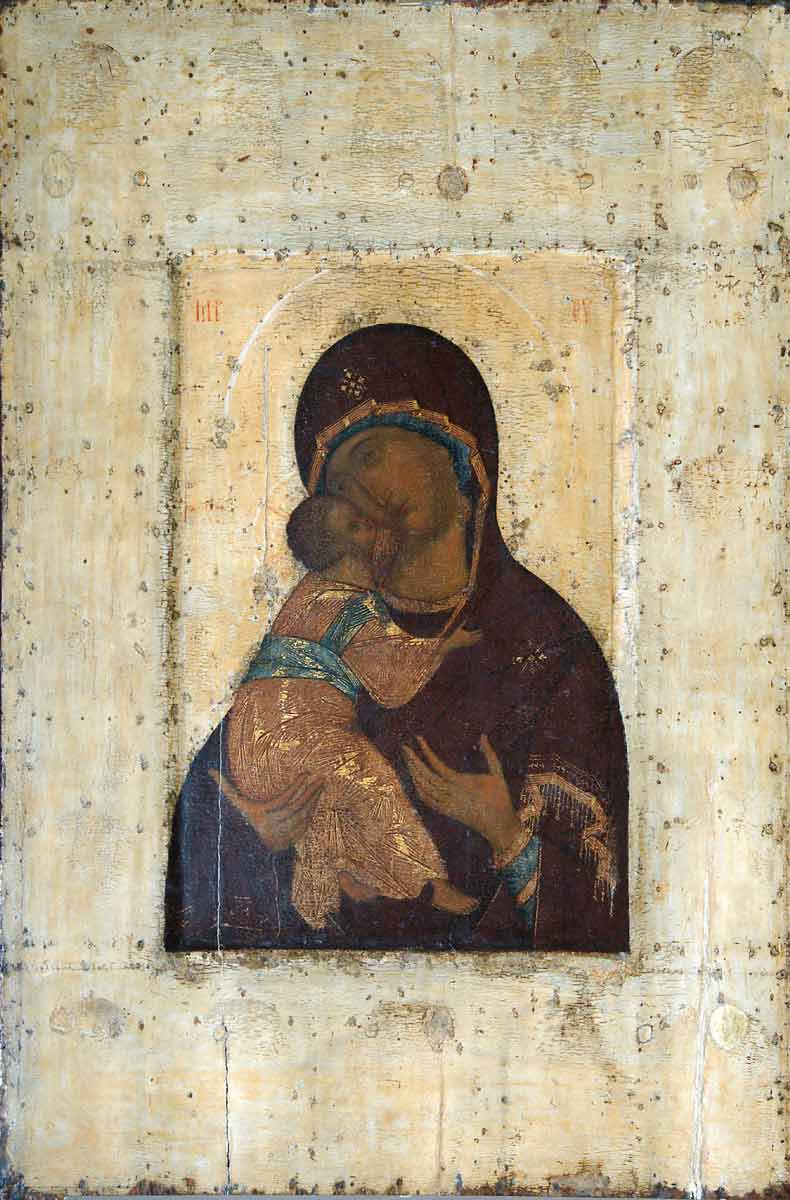
Some Russian curators believe that the case of The Trinity could be only the beginning of the mass destruction of the Russian cultural legacy in tune with conservative cultural politics. A significant part of Russian art institutions and curators presented themselves in opposition to the regime, even if this opposition was not always outspoken. With the beginning of the large-scale invasion of Ukraine in 2022, intolerance to other opinions, even restrained ones, reached its peak.
Critics of Putin’s regime believe that the transfer of The Trinity was a political move aimed at keeping the museum community quiet and compliant. It was a demonstration of power, hinting at the possibility of endangering museum collections further to serve ideological purposes. It showed that governmental institutions have no respect for cultural legacy when it stands in the way of building at least a semblance of mass loyalty to the state. Another reason could be the need to unite more conservative, usually Christian, groups of Russian citizens around the regime’s agenda and win their support during the ongoing war and the growing resentment towards the Kremlin’s decisions.