
As an artistic genre, animal painting was never considered to be particularly high and revered, but it was almost universally admired. Yet, one female artist named Rosa Bonheur managed to make a groundbreaking career, becoming the wealthiest artist of her era. Her paintings of cows, horses, rabbits, and lions were filled with tender feelings and confident professionalism. Read on to become familiarized with five important works by Rosa Bonheur.
1. Rosa Bonheur’s Lesser Known Bronzes: A Sheep Resting
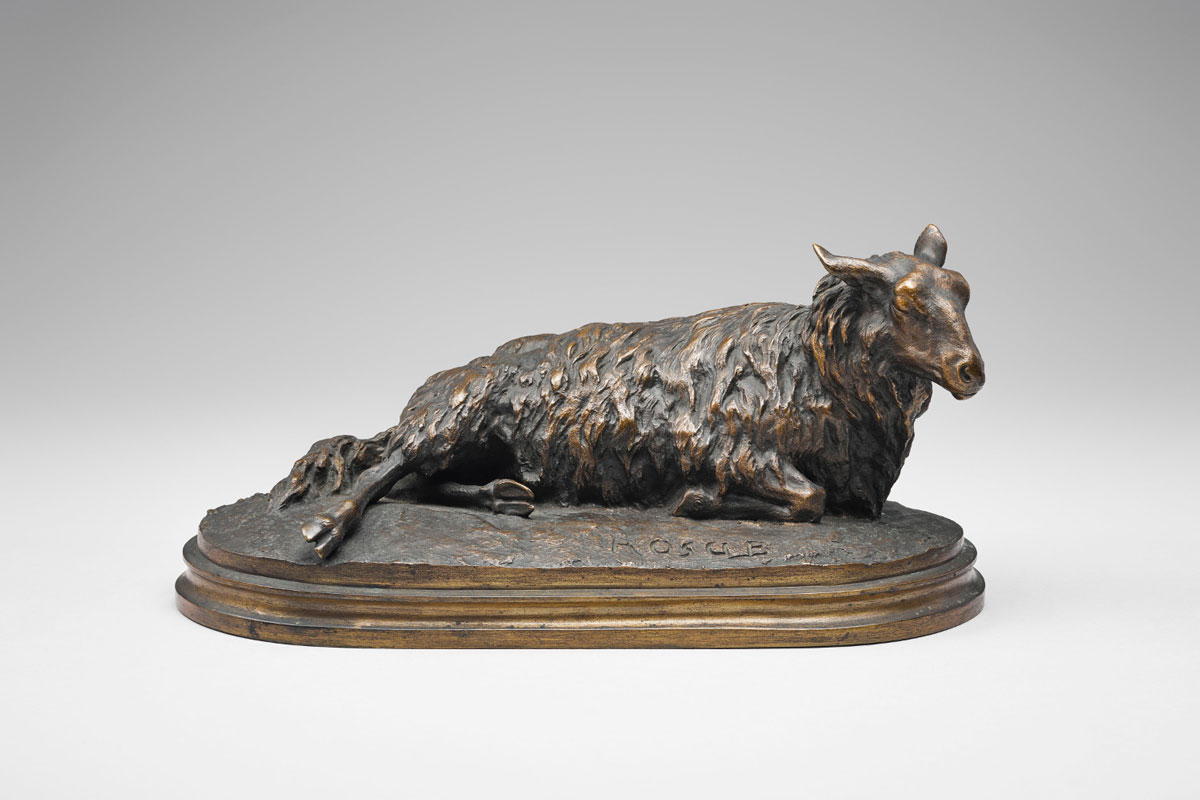
Rosa Bonheur was the most famous painter of her time, and perhaps the most successful painter of animals of all time. Her father was an artist too, who encouraged equal and mixed-gender education for all people regardless of their class and age. For that reason, he eagerly trained his four children and arranged opportunities for practice and study.
Rosa Bonheur showed an early inclination towards painting animals. Even in her pre-school years, she learned letters by drawing small images of animals next to the letters that their names corresponded to. Over the years, she developed her passion into a successful career. In her later years, she even arranged for a menagerie of lions and gazelles to be placed in her chateau for her to care for, study, and paint.
Despite being famous for painting, Rosa Bonheur enjoyed working with animal sculpture as well, although he initially resorted to it out of necessity. As a young artist in training, she attended farms and slaughterhouses, studying the anatomy, bones, and muscles of dead animals. Not content enough with the amount of knowledge she received, Bonheur decided to try her hand at dissecting animals. This was a popular practice among not only medical students but also artists of the time, with some even attending human dissections in anatomical theaters. Still, Rosa Bonheur never felt comfortable enough with blood and blades. Seeking an alternative, she resorted to sculpture as a way to study the three-dimensional movement of animals, their body parts, and their range of motion without having to dissect bodies.
2. The Most Famous Work of Rosa Bonheur: The Horse Fair, 1852-55
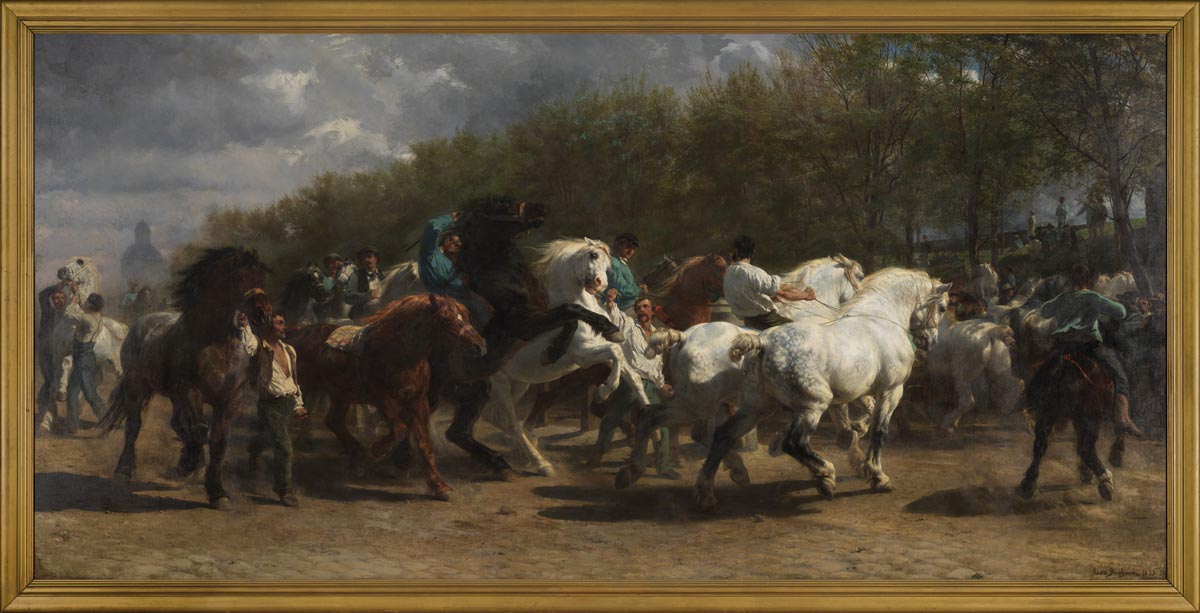
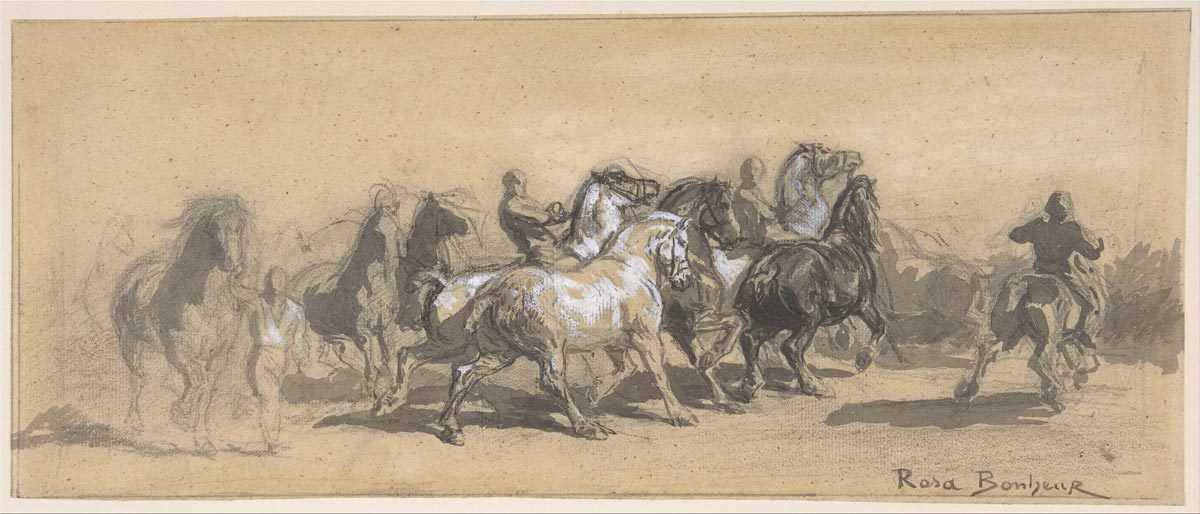
The Horse Fair was and remains the signature work of Rosa Bonheur, and the one that brought her almost instant fame and recognition. Ambitious about her subject, she approached several patrons, offering them the finished work in exchange for funding, but none of them were ready to put significant funds into a large-scale project of a horse market. While working on the painting, Bonheur attended the market regularly, disguised as a man to avoid unwanted attention. Her finished work was a two-hundred-inch-long scene of emotional intensity and strong character, expressed by both men and horses. Bonheur compared The Horse Fair to the famous Parthenon Frieze, the Ancient Greek relief of equestrian warriors, that is now on display in the British Museum, to the great disdain of the Greek side.
The painting became an immediate sensation. Queen Victoria herself requested a private viewing of it during the artist’s visit to England. Commissions flooded the artist, soon making her the most famous and wealthiest painter of her time—not just the most famous woman painter. Soon, she painted four smaller replicas and several watercolor copies of the work at the request of her clients.
Bonheur’s younger brother, also an artist, made a bronze relief based on the painting to be placed on Bonheur’s monument. Unfortunately, it was destroyed during World War II. All four of the Bonheur siblings became painters and sculptors, focusing primarily on animals. Some regard this as the influence of their father, a painter and educator, and others as an example of the hereditary genius—the genetically predisposed talent.
Bonheur’s success brought her not only a string of commissions and a large circle of patrons, but social obligations as well. Visitors filled her studio, and invitations to social occasions and exhibitions became overwhelming. Apart from growing connections and securing a steady income, Bonheur also became preoccupied with the new form of responsibility. The public was favorable but demanding, eagerly waiting for new paintings, new shows, and new achievements. In order to maintain her creativity in a healthy and productive way, the artist decided to act. In the late 1850s, Bonheur retired from social life and settled in a newly purchased chateau in Fontainebleau. She still painted on commission but maintained most communication through her agent, London art dealer Ernest Gambart.
Despite being born and living in France, Bonheur’s work received much more critical acclaim in Great Britain, sometimes attracting bitter criticism from the French. She was not too eager to accept belated praise, however. On several instances, after the officials offered her money for the previously rejected commissions, she refused, preferring to find another customer. For that reason, The Horse Fair, initially underestimated by the French authorities, ended up at the Metropolitan Museum rather than a Parisian institution.
3. The Gender-Based Criticism of the Artist’s Time: Weaning the Calves, 1879
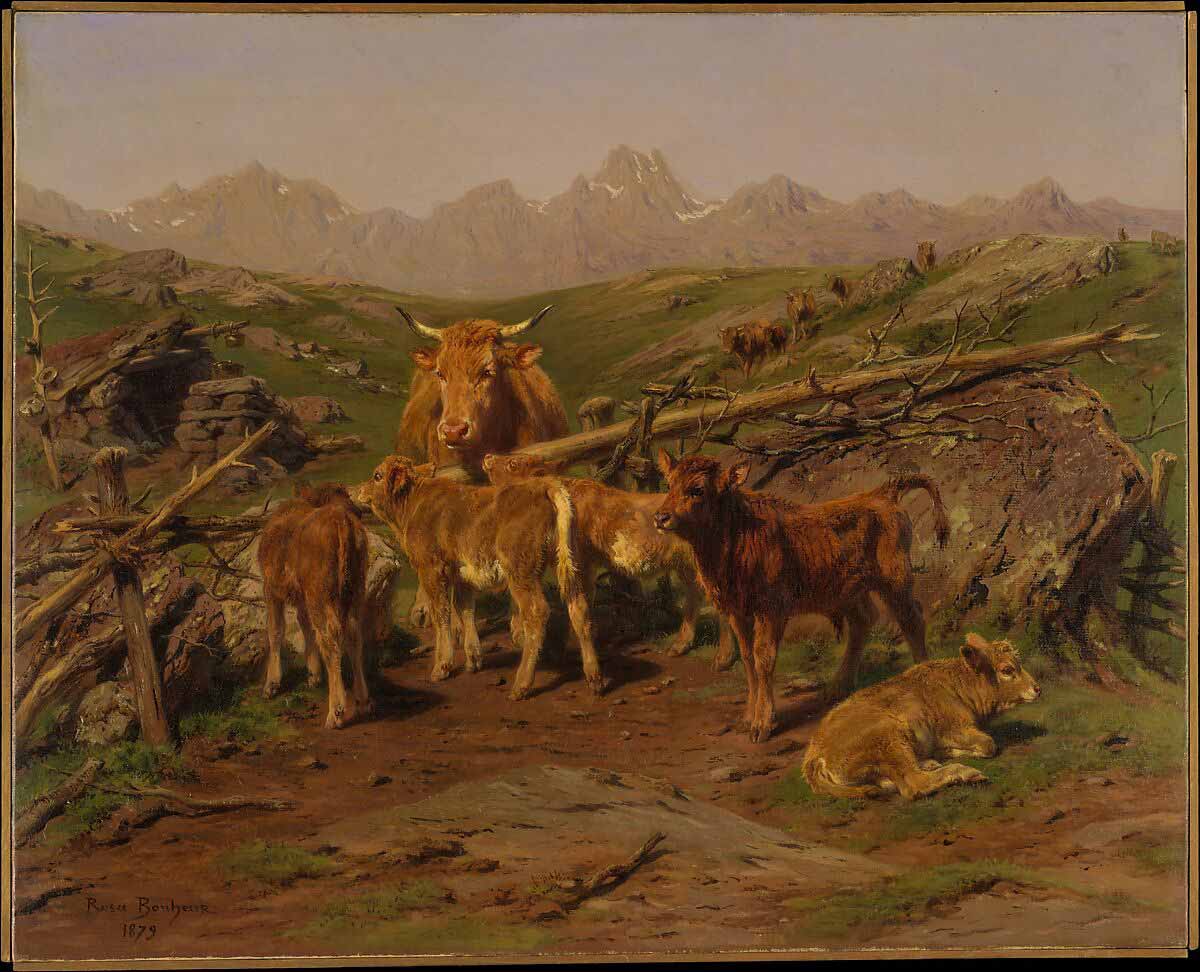
Many art critics noticed the supposed masculinity of Rosa Bonheur’s work. In the nineteenth century, women artists were believed to possess specific qualities and inherent aesthetic perceptions that made their works immediately distinguishable from those of their male colleagues. Bonheur’s work, however, had no such distinction, with the bold stroke of brush, strong understanding of composition, and theoretical basis. And still, Bonheur’s paintings of animals often mix deep psychologism with tenderness and gentle admiration, like in her images of calves.
The notorious art critic John Ruskin has seen Bonheur’s work but remained staunchly convinced that no woman could paint. Ruskin had a personal animosity towards French art in any shape or form and insisted that France did not have a distinctive painting tradition at all, unlike Britain. For his nationalistic commentary, he was mocked by artists of both countries, but nonetheless, Ruskin remained influential for decades, partially due to his endorsement of the Pre-Raphaelites. Still, Rosa Bonheur was not too charmed by him, stating Ruskin had the eye of a bird for art—and not in the sense of its sharpness, but as if seeing it through a tiny pin-sized hole.
4. Rosa Bonheur’s Favorite Animals: Two Horses, 1889
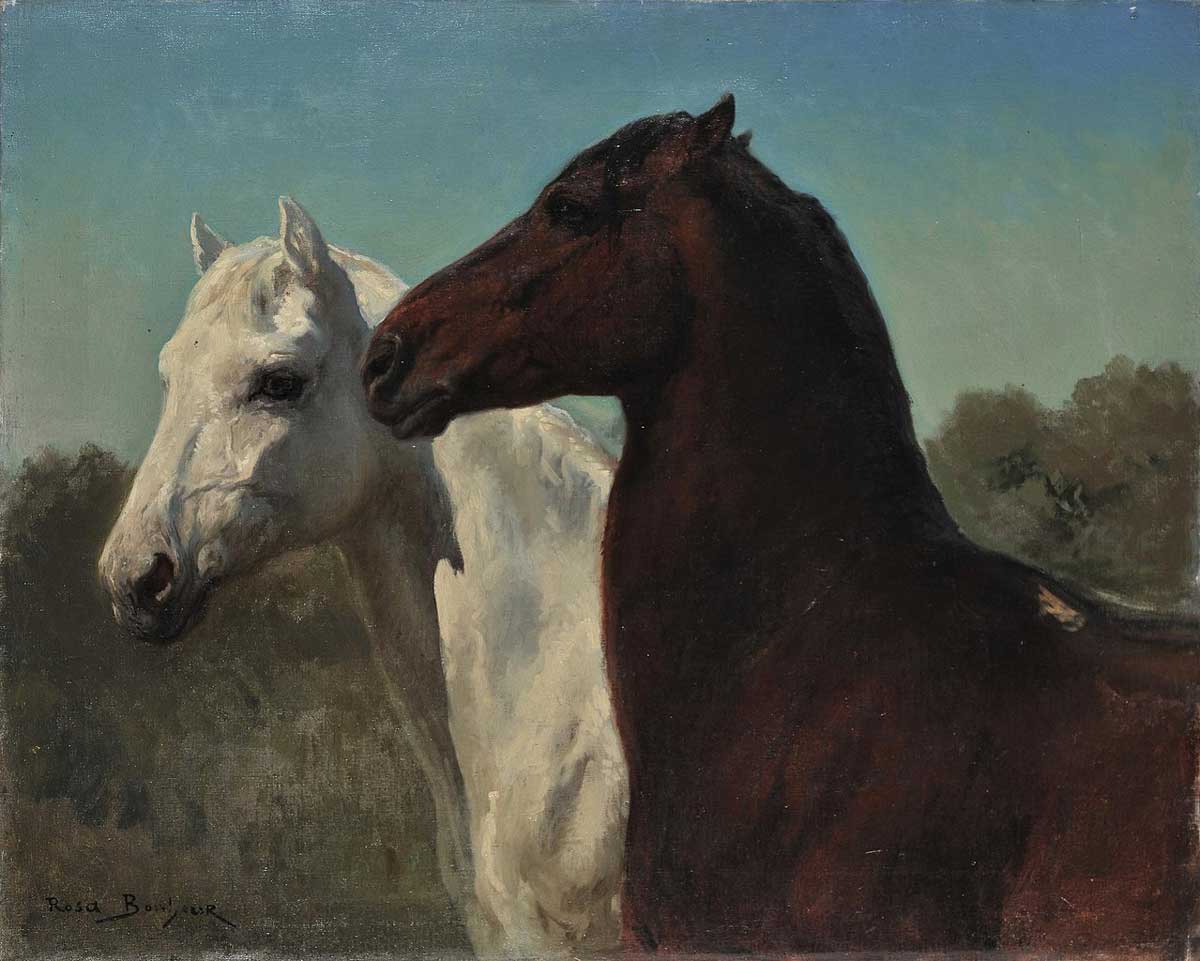
Horses were perhaps the favorite animals, frequently painted by Bonheur. She was a skilled horserider, and always rode astride rather than side saddle, in a manner that was considered exclusively male and indecent for women. While working on The Horse Fair, Bonheur studied the behaviors and characters of horses well enough to develop a deep connection to them. In her diary, she left a note: “The horse is, like man, the most beautiful and most miserable of creatures, only, in the case of man, it is vice or property that makes him ugly. He is responsible for his own decadence, while the horse is only a slave.”
Perhaps, our present-day dismissal of Rosa Bonheur’s art rests on the fact that her works were rather conservative and conventional, representing a commonly shared good taste. Their great quality is diminished by the lack of a hint of a scandal, provocation, or challenge. She was not interested in defying artistic conventions, instead choosing to celebrate nature in its beauty with great attention to the tiniest of details. She was a Realist painter, but not the Courbet-type provocative Realist with raw imagery. Her realism is soft and pleasant, evoking tenderness and childhood memories.
Even her unconventional lifestyle was never performative. She was known to prefer men’s attire to dresses and even received a special municipal permit for cross-dressing, which was then illegal in Paris. Still, she highlighted that it was a choice of convenience rather than a political statement since working in slaughterhouses and stables in dresses was rather uncomfortable. Even her personal life, although raising rumors, was quiet and closed off from the rest of the world. Bonheur spent almost half a century living with a fellow painter Nathalie Micas, stating that they would gladly marry and raise children if one of them was a man.
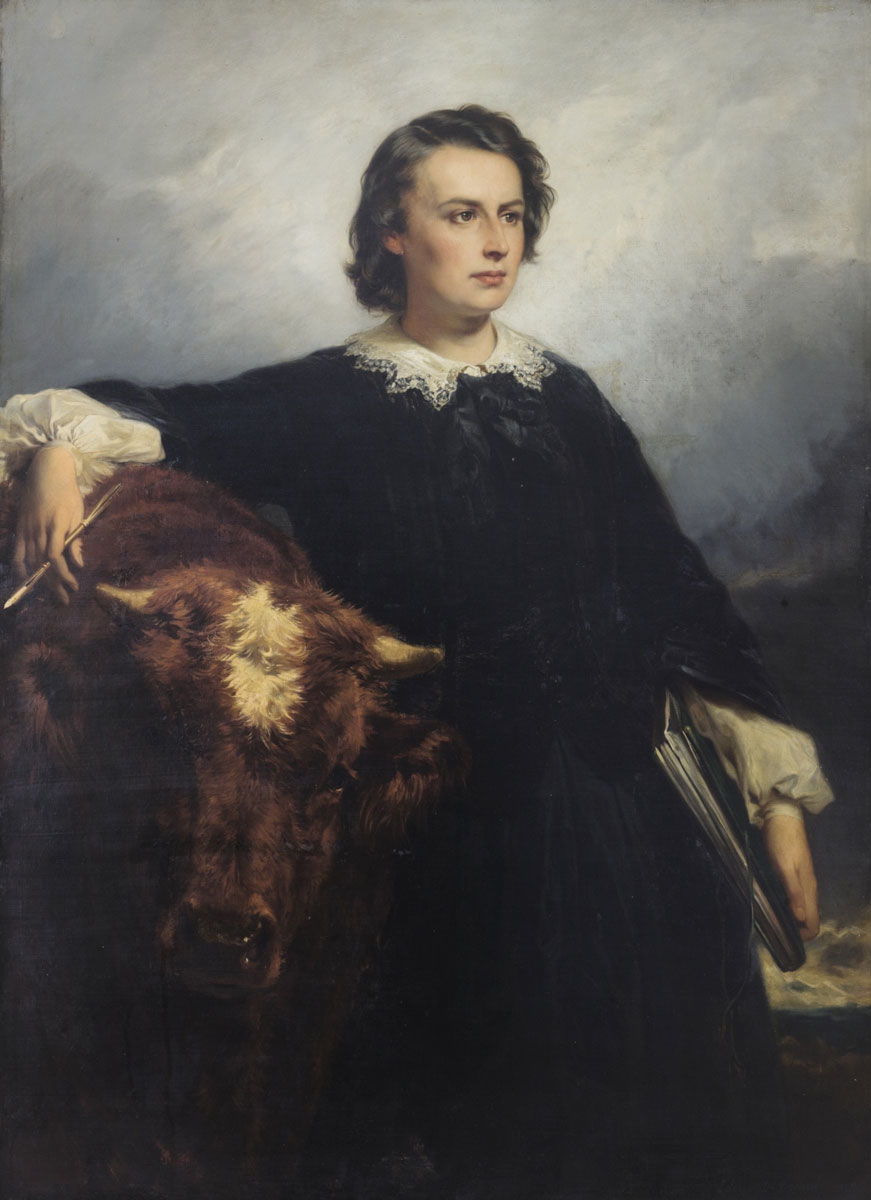
5. Finishing Other Artist’s Work: Rosa Bonheur With a Bull
Although there are no known self-portraits painted by Bonheur, she was depicted by other artists. Most of her portraits were painted by her partner and biographer, Anna Klumpke. Klumpke spent four years with Bonheur after the death of the artist’s previous partner, Nathalie Micas. After Bonheur passed away, Klumpke was announced as the sole benefactor in the painter’s will, with all archives, paintings, and property passing to her. Klumpke made sure to protect Bonheur’s heritage and even published a memoir on their life together.
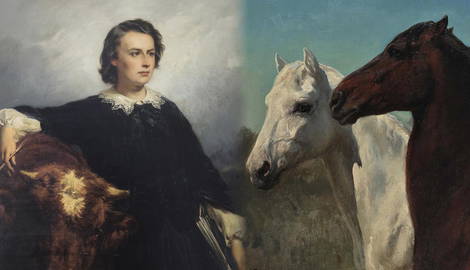
One particular portrait, however, stands out from the collection of Bonheur’s faces. Painted in 1857 by the French society painter Edouard Dubufe, the artist was shown with her arm gently placed on the neck of a bull and a paintbrush in her hand. The bull’s gentle ears and textured nose seem almost intruding in the rest of the picture as if it was never intended to be there. Well, it was, but the feeling that something is off can be easily explained. Dubufe, who specialized in official and pompous portraits of his commissioners in lavish dresses and expensive jewelry, painted only Bonheur’s figure. The bull was a later addition made by Rosa Bonheur herself, as a marker of her own love for animals and artistic specialization.