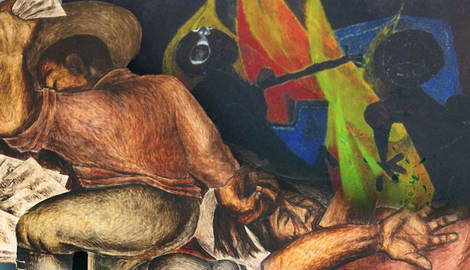

After the decade-long bloodshed of the Mexican Revolution, the reformed state needed to express its national and cultural identity through a new form of art. Mexican muralists like Diego Rivera and David Siqueiros revived the tradition of pre-colonial Indigenous art and blended it with left-wing political concerns. The form of a mural was universally accessible and understandable regardless of one’s literacy and social status, which made it a perfect tool for political education and propaganda. Read on to learn five important facts about Mexican muralism and its artists.
1. Mexican Muralism Has Its Roots in Indigenous Art
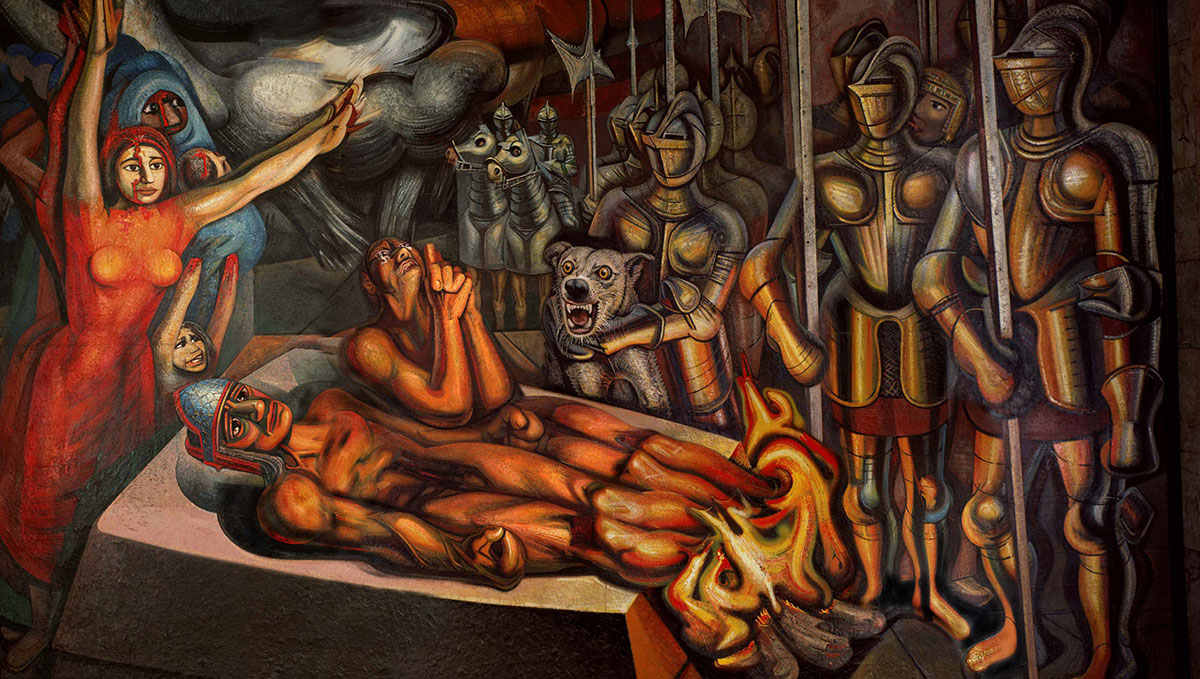
One of the most significant and famous art movements in Mexican history, Mexican muralism originated from political necessity. In the 1910s, the country was shaken by the revolution that, after a decade of civil war, overthrew the 35-year-long dictatorship and installed a constitutional republic. Exactly a century before the Revolution, Mexico got rid of the Spanish colonial rule and now became a truly independent country.
The new government needed new symbolism to form the independent nation’s cultural identity. They decided to depart from the Western-centric forms and styles of art in favor of the concept of indijenismo—the revival of the Indigenous art of the pre-Hispanic period. Back then, Mexico had a staggeringly low literacy rate. Thus, the new art had to be understandable and functional outside the intellectuals’ circles. Public art and murals became the principal form of artistic expression that was simultaneously convenient for the masses and referenced the pre-colonial tradition of fresco painting.
The artists left anti-colonial and pro-socialist messages on public buildings, educating and involving all Mexican classes in politics. They also shaped the mythology of the recent Revolution, painting its heroes, key events, and storylines. Still, the tradition of Indigenous art blended with some of the Western styles. The Mexican murals showed a clear influence of the dramatic Spanish Baroque and Modernist movements like Cubism and Abstraction.
2. The Most Famous Muralists Were “The Big Three”
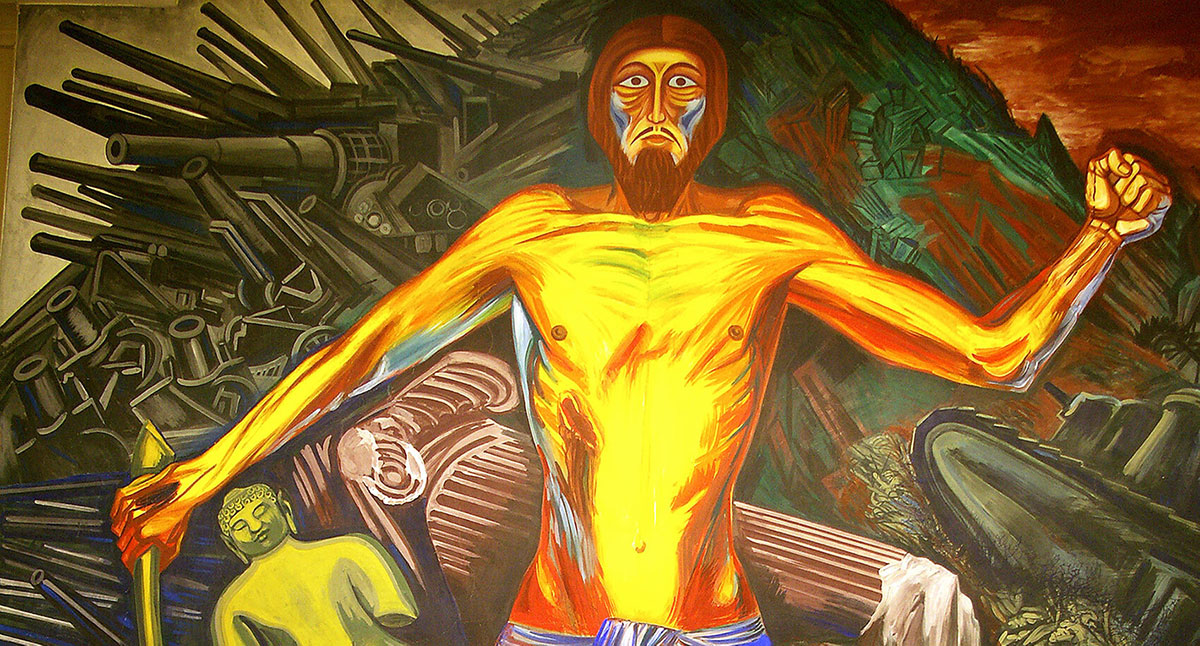
The most prominent names of Mexican muralism were the so-called Big Three—Diego Rivera, Jose Clemente Orozco, and David Alfaro Siqueiros. All three shared the view of art as an important tool for the necessary social revolution and a universal form of communication. However, their backgrounds and conceptual approaches were distinctive.
Orozco and Siqueiros both fought in the Mexican Revolution and witnessed the horrors and suffering of war. Jose Clemente Orozco was the most pessimistic of all, anxious about the future and open about the violent potential of the new technological world. Similarly, Siqueiros often painted gruesome and violent scenes, yet they almost always had a certain emotional undertone, glorifying the sacrifices made during the Revolution.
Diego Rivera spent the war in Europe and thus had a different outlook on the revolutionary events. His paintings were full of heroic fervor and glorification of the Mexican Revolution. Before moving to Muralism, he worked in a Cubist style and, in terms of his imagery, was much more oriented on the Western painting tradition. Moreover, during his studies in Europe, he befriended the Montparnasse circle of artists, including Amedeo Modigliani and Moise Kiesling. Perhaps, due to his European ties, Rivera became the most recognized Mexican muralist outside Europe.
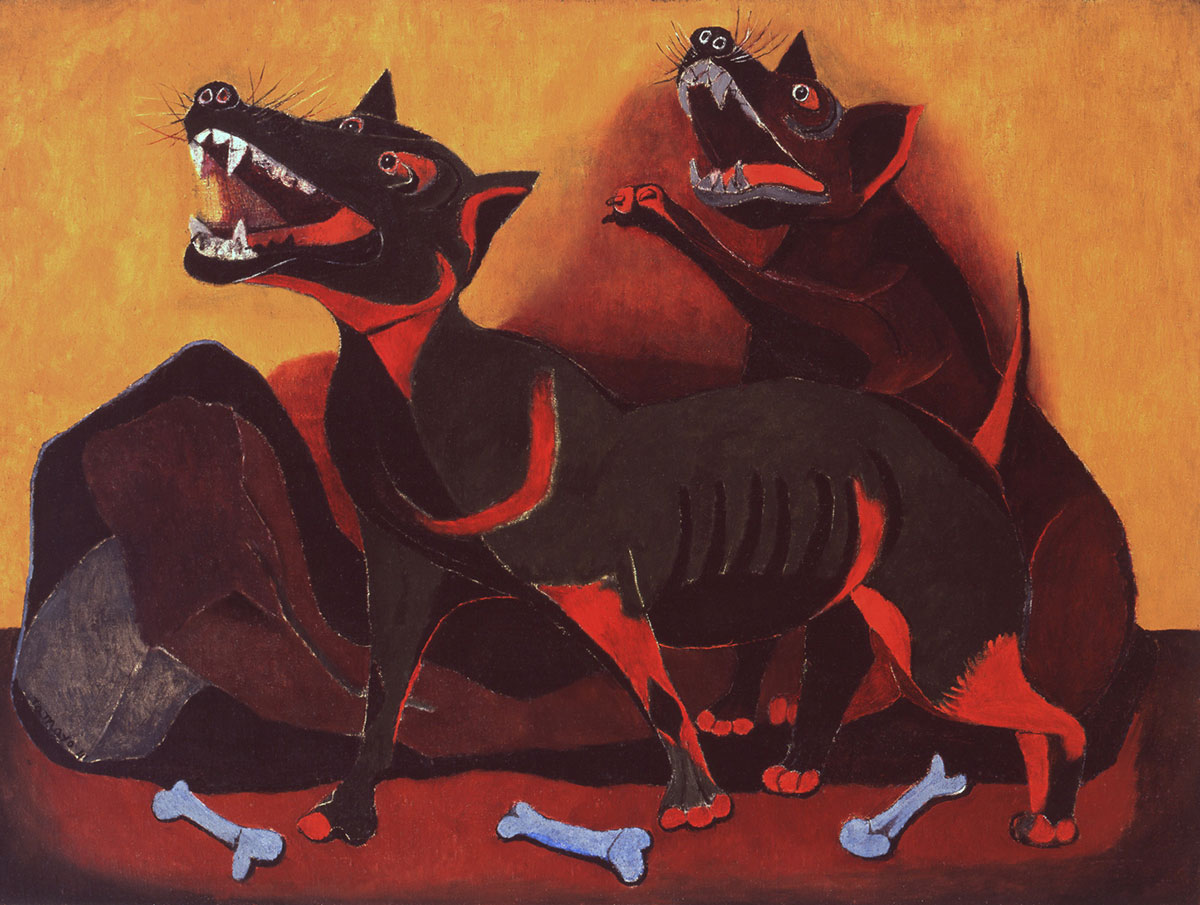
Another prominent figure of Mexican Muralism was Rufino Tamayo, sometimes called The Great Fourth. Tamayo’s ideas and inspirations were radically different from those of other muralists, resulting in his works being dismissed for far too long. Tamayo had a strong background in European Modernism and experimented with abstract art in his early years.
Like other muralists, he sought to invent a distinctive artistic style for Mexico but did not share their political fervor. He was against overtly political art, preferring to focus on native ornaments and mythology. The Communist revolution, advocated by Rivera and others, for him, was a dangerous step that could possibly lead to even greater destruction and tragedy. Feeling uncomfortable among other Mexican artists, Tamayo moved to the US, where he developed his career as an artist and teacher, instructing the famous abstract expressionist Helen Frankenthaler, among many others.
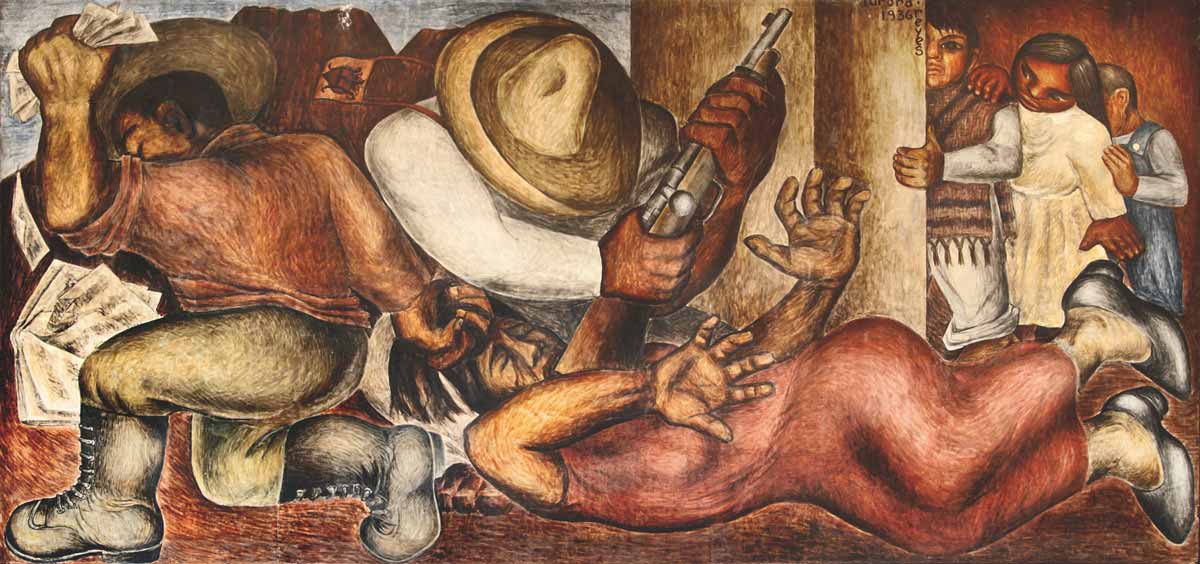
Despite the most famous names of Mexican muralism being male, women were involved in the movement as well, achieving significant fame and success. Mural paintings, as large-scale and physically demanding projects, were rarely associated with the feminine types of art, yet women artists occasionally managed to secure monumental projects. Apart from political struggle, they were concerned with gender dynamics, motherhood, daily labor, and education. Aurora Reyes Flores, the first Mexican woman muralist, devoted her first work to the wave of attacks on teachers in rural areas of Mexico. Several state-sponsored teachers, most of them women, were brutally murdered by locals who protested against non-religious forms of education.
Another famous woman Muralist Rina Lazo gained prominence as Diego Rivera’s assistant but soon moved on to create her own work. Lazo passed away in 2019 and worked until her last years. She actively advocated for the revival of Mexican muralism.
3. Most of Them Were Communists
One distinct trait of the Mexican Muralist group was its left-wing political orientation. Most of them were members of the Mexican Communist Party and shared concerns about class struggle, capitalist exploitation, and the dangers of imperialism. Jose Clemente Orozco highlighted the class-free quality of wall art: it could not be contained in a museum or a private collection and remained available and understandable to everyone.
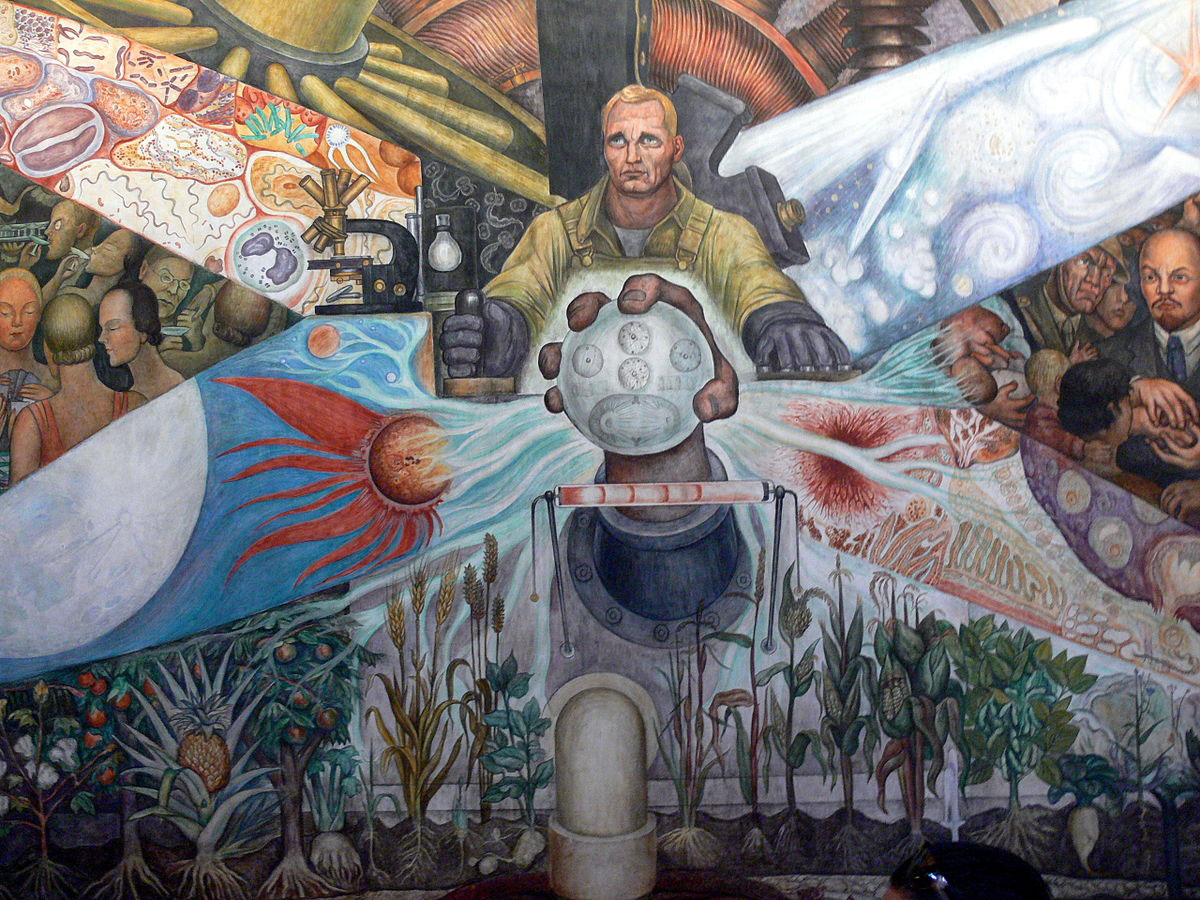
One of the most famous and scandalous works of Diego Rivera, Man, Controller of the Universe, presented a clear and obvious outlook on the Capitalist and Communist futures of the Muralists’ group. The right side of the mural represented the union of working classes of all races and nations, united by Lenin, Trotsky, Marx, and Engels. Among the crowd, a decapitated marble idol adorned with a swastika symbolized the ruins of the old violent world. On the other side, the same idol retained his power, leading warplanes and crowds of anonymous soldiers and gas masks into an attack. Oppressed workers faced police brutality while the indifferent rich crowd danced and gambled.
4. David Siqueiros Attempted Assassination of Trotsky
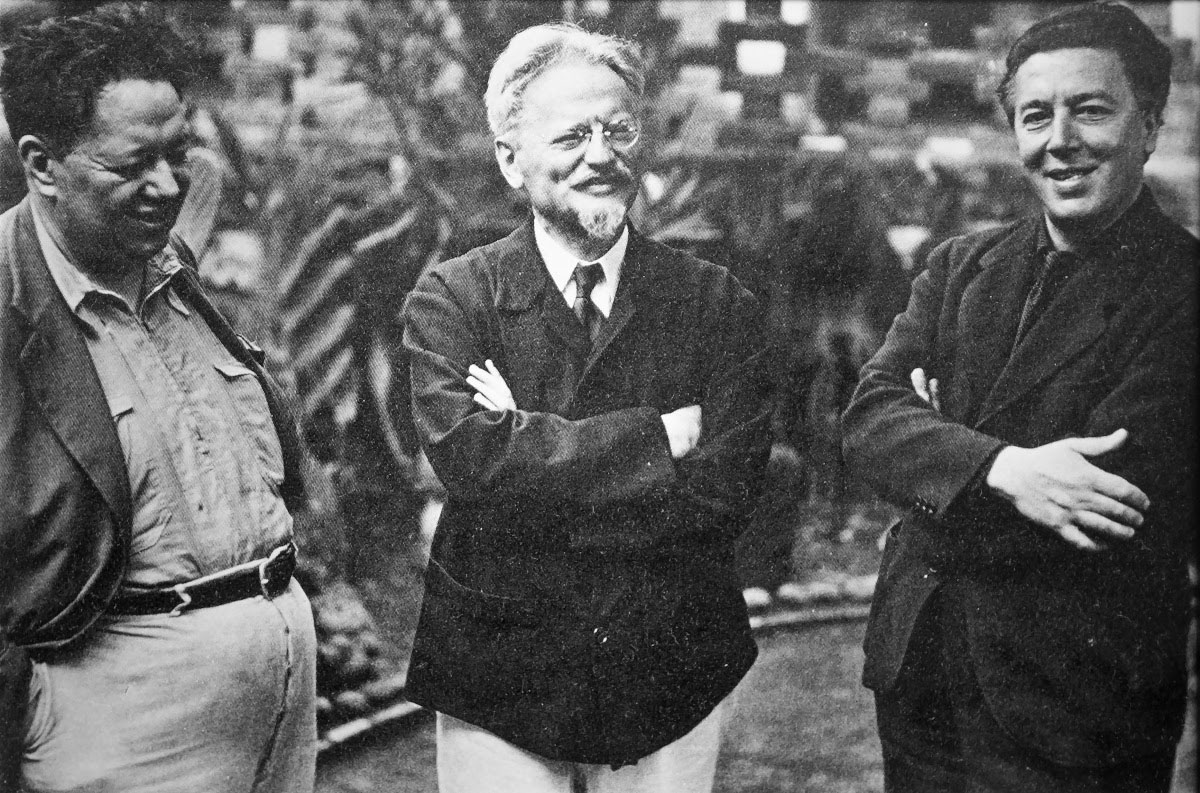
That being said, it would be wrong to assume the artists were all unanimous in their views. They shared many social and political ideas and incorporated them into their works, but they could hardly coexist outside their artistic practice. Diego Rivera, along with his wife Frida Kahlo, were devoted supporters of Leon Trotsky, the Russian revolutionary and personal enemy of Joseph Stalin. After Trotsky’s exile from the newly formed Soviet Union, Rivera and Kahlo hosted him in their Mexico City home.
David Siqueiros, on the contrary, was a radical and militant Stalinist. In May 1940, Siqueiros conducted a failed attempt to assassinate Trotsky in his Mexico villa. Siqueiros and a group of armed NKVD agents entered the villa and opened fire, slightly injuring Trotsky’s fourteen-year-old grandson and abducting one of Trotsky’s assistants, who had probably served as their accomplice. The attackers escaped, and the abducted assistant was later found murdered. Initially, Siqueiros admitted his group was not mentally ready to carry out the assassination. While being questioned by the authorities, however, he changed his story, claiming they never intended to actually kill Trotsky, instead forcing him to leave Mexico. Still, only months later, Trotsky was murdered by another Stalinist called Ramon Mercader.
5. Mexican Muralism in the US: What Could Possibly Go Wrong?
By the 1930s, the Mexican Muralist movement had gained enough fame and exposure outside their home country. In the following decade, The Big Three were invited to the US to work on public art. The Mexicans’ influence on the American art scene was tremendous and soon evolved into a state-wide Federal Art Project that provided jobs for local artists by commissioning public art.
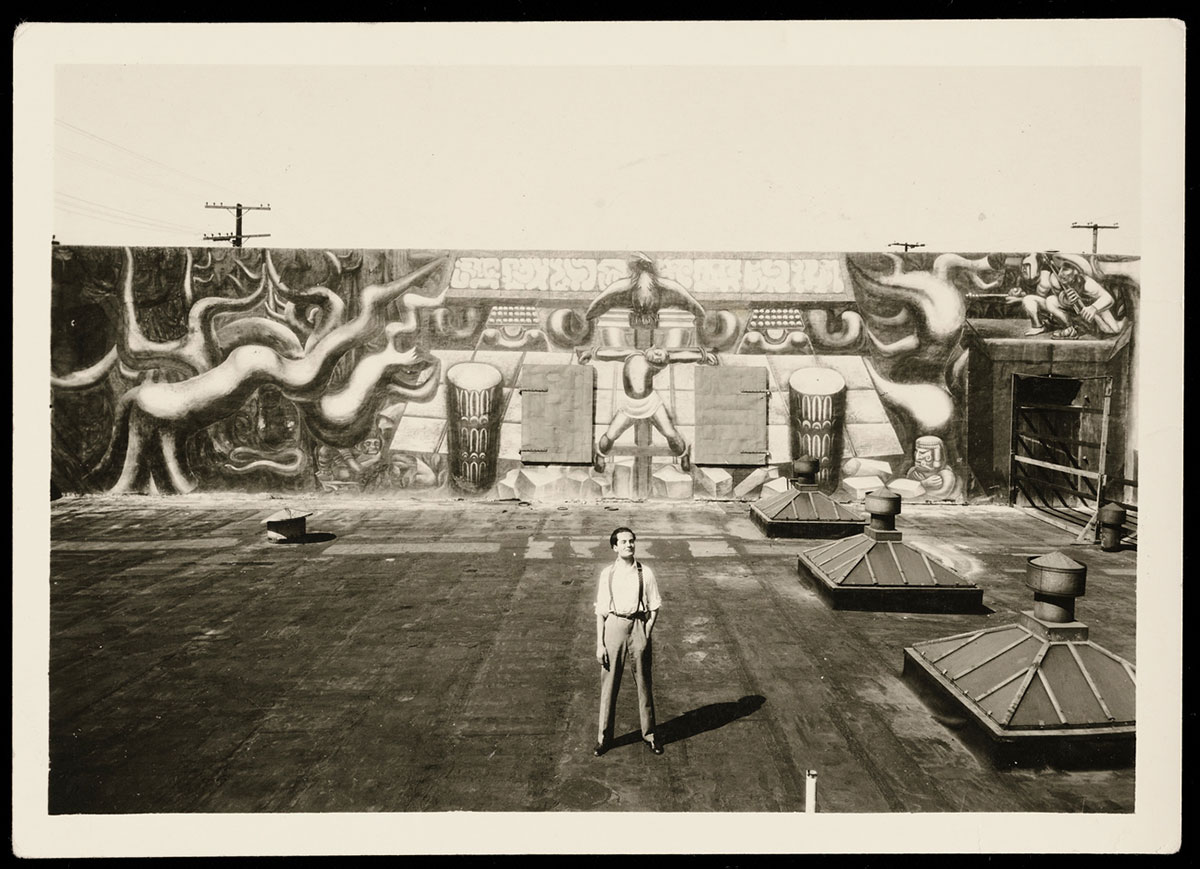
Still, the Mexican Muralists stirred a great controversy in the American art world. Clearly, they were expected to abide by the rules and follow the official US ideology, but their strong political leanings did not allow them to turn away from social and political issues. Tasked to paint an unspecified image of tropical America, David Siqueiros painted a figure of a crucified Indigenous American surrounded by Mayan ruins. The mural was whitewashed almost immediately after completion, and Siqueiros was deported back to Mexico. Today, the Getty Conservation Institute is working on reviving the original and making it available to the public again.
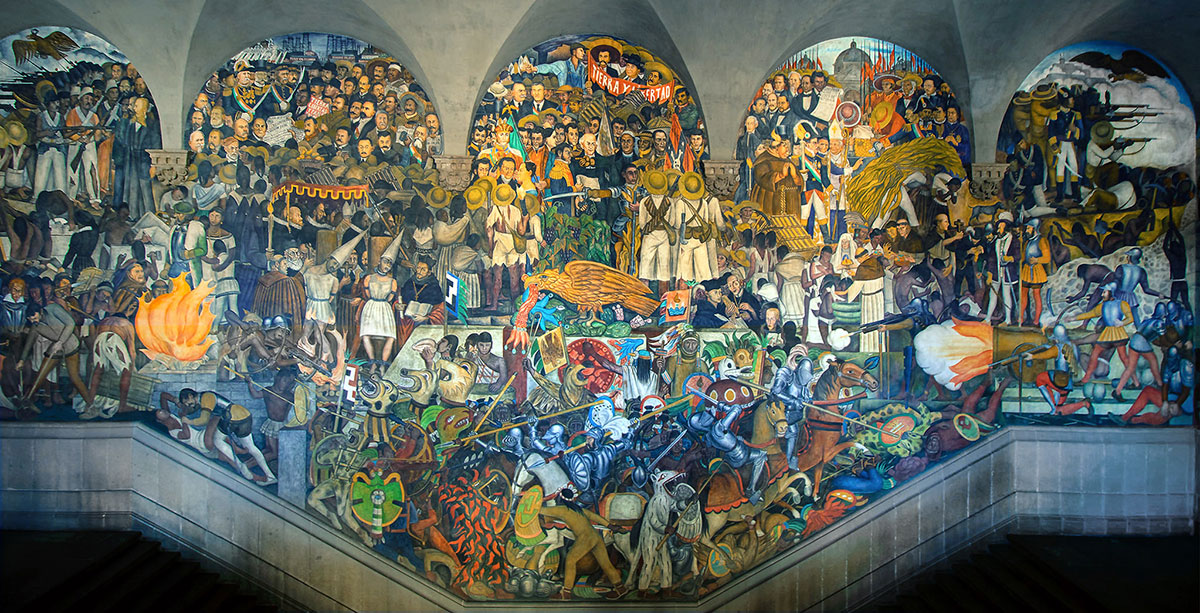
The abovementioned mural by Rivera that showed the radical opposition of the Capitalist and Communist worlds became even more scandalous. Initially, it was commissioned by the Rockefeller family to decorate the famous Rockefeller Center building. John D. Rockefeller Junior, the epitome of capitalism itself, approved the concept of painting the clash of two opposing ideologies. Yet, it somehow never occurred to him that hiring a radically left artist would not bring him the result he expected. The scandal erupted when the Rockefellers accidentally discovered the portrait of Lenin and asked for it to be overpainted. Rivera refused, and the mural was soon replastered and destroyed. Back in Mexico, Rivera created a copy of it for the Mexico City Palace of Fine Arts, this time with a small portrait of Rockefeller included in the capitalist side.