
For centuries, the human body has been the most popular subject in art history. However, some artists went significantly further, adopting their bodies not as objects to be depicted but as artistic mediums conveying other meanings. Although this practice dates back to prehistoric rituals, it was truly resurrected into the world of art only in the 20th century. Read on to learn more about body art!
The Origins of Body Art: From Shamans to Jackson Pollock
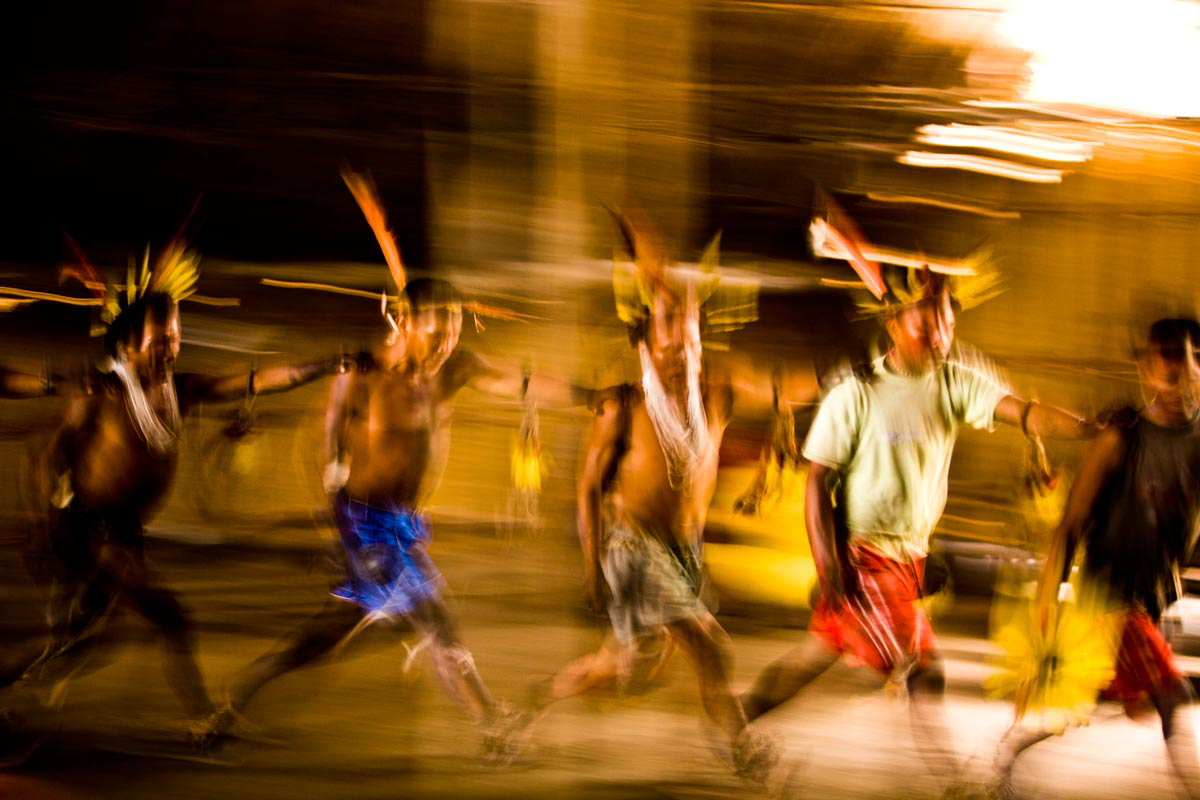
For centuries, body movement was confined to religious rituals, social practices (such as dancing), and theatrical performances, but it was largely removed from artistic practice. In many cultures, shamans used their bodies as instruments in exhausting rituals or as vessels for communicating with other worlds. In societies that employed such practices, art rarely existed as a separate domain of human expression and was either utilitarian or ritualistic.
In the premodern and modern eras, bodies were widely present in art, but mainly as subject matter and carriers of meanings rather than as creation instruments. Artists turned their ideas into physical forms, but these acts of material transformation were rarely examined as separate processes.
In contemporary art, the human body can symbolize one’s identity or personal experience, as well as rely on physical experiences of pleasure and discomfort, fear and tranquility. From the artistic object itself, the body transforms into one of the artist’s mediums, like paint or bronze. Although a body has its physical limits, its expressive potential greatly exceeds that of any other medium, mostly due to the fact that bodily experiences are more or less universal among humankind. Partially, the rise of such practice originated from the growing interest in pre-Christian and Indigenous spiritual practices.
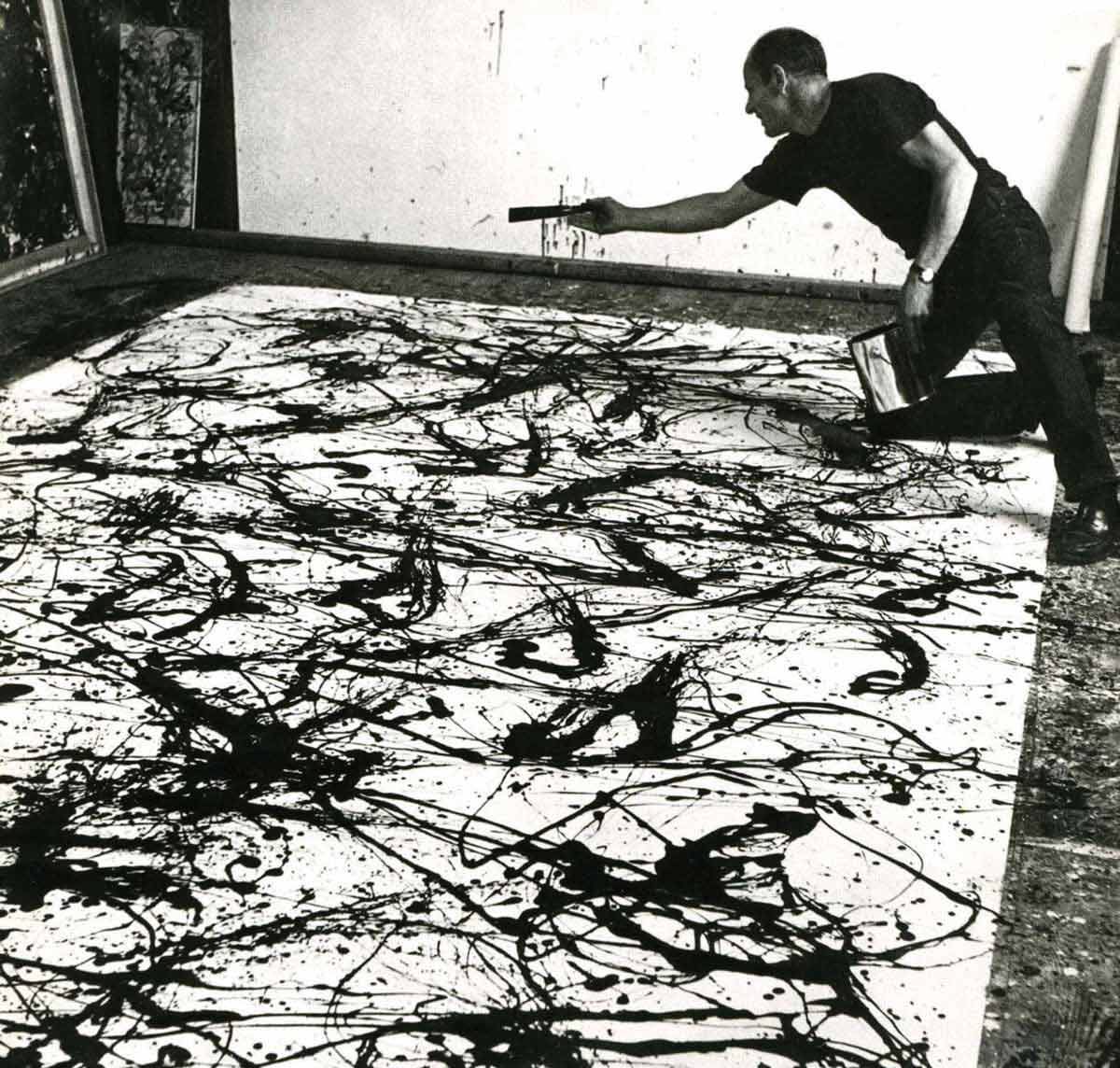
A decisive change towards adopting bodies into artistic practice occurred on the American artistic scene in the 1940s. Partially, it had its roots in psychoanalysis and the practice of automatic drawing that was popular among the Surrealists in the past decades. American artists who experimented with abstract art knew about the work of Wassily Kandinsky, who arranged his compositions carefully and with a great deal of internal control.
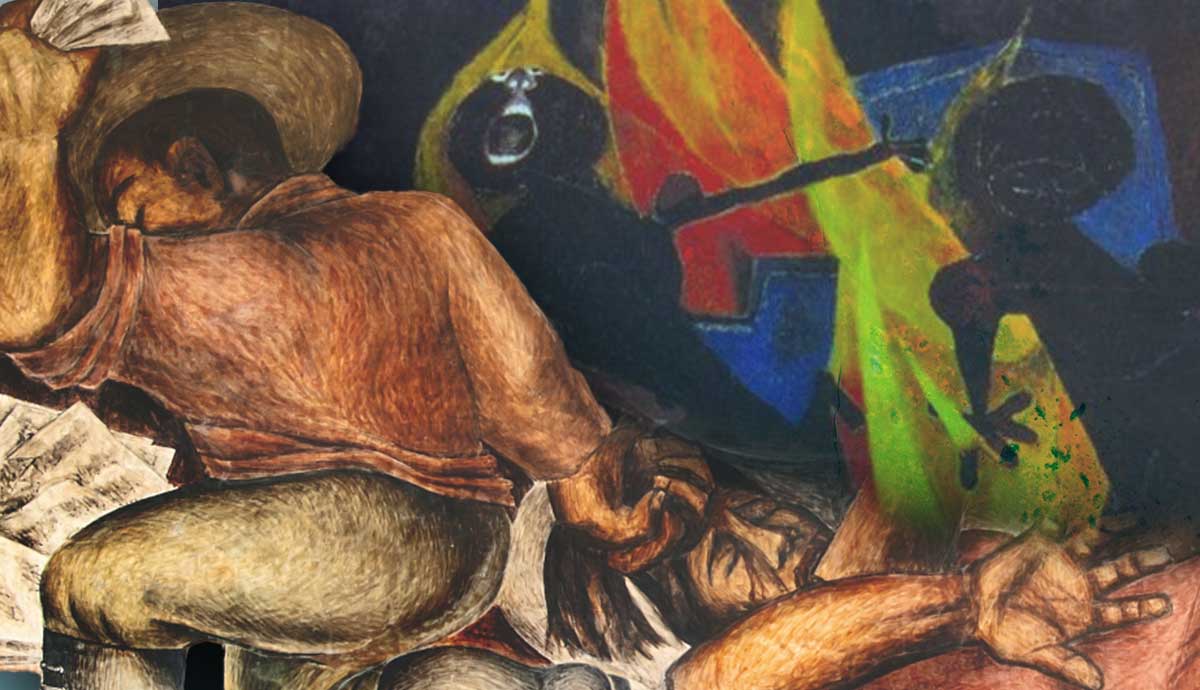
On the contrary, American Abstract Expressionists began to use spontaneous movement as an expressive method, creating works that were emotional and individualistic. The technique of spilling and dripping the paint became known as Action Painting. Jackson Pollock, the most famous of AbEx artists, had a great interest in Indigenous American culture and observed its rituals and practices. He adopted ritualistic dancing to his own artistic practice, moving around the canvas stretched on the floor and working in active sweeping and dripping gestures. Thus, the movement of the body became crucial for his art: it was not the body that created the painting, but the painting that illustrated the movement of the body.
Performance Art
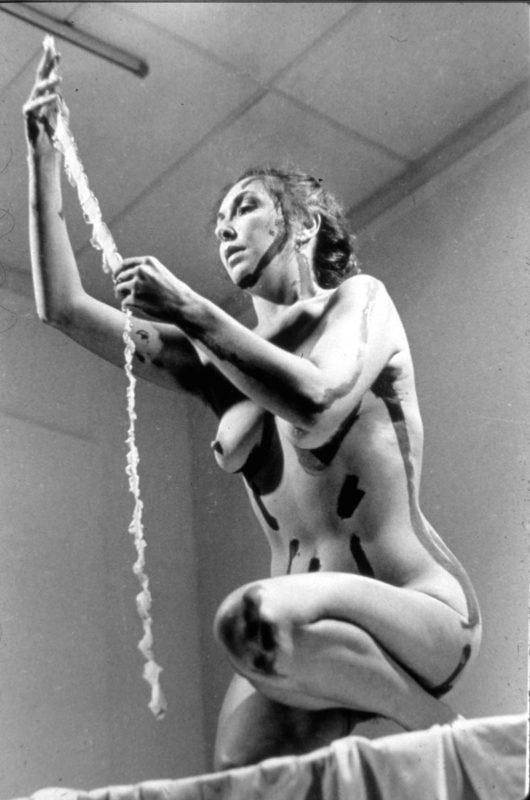
However, the decisive turn towards bodily practices occurred with the emergence of performance art. Early experience with it began in the 1920s when Dada artists celebrated nonsense by reading absurd poetry in bizarre costumes or performing cacophonic music. After World War II, performance re-emerged as an alternative expressive practice that was accessible and uncontrollable.
Initially, performance art existed as a protest against the commercialization of art and institutional barriers set by galleries. A piece of performance art cannot be bought or sold and, at least at that time, contained no clear material value. In that sense, the inalienable material of the artist’s own body perfectly developed this idea. It also offered a desirable element of interactivity: instead of being told what to think about a museum piece by a written label on the wall, the audience got their own chance to experience, interact, and form an opinion.
Viennese Actionism
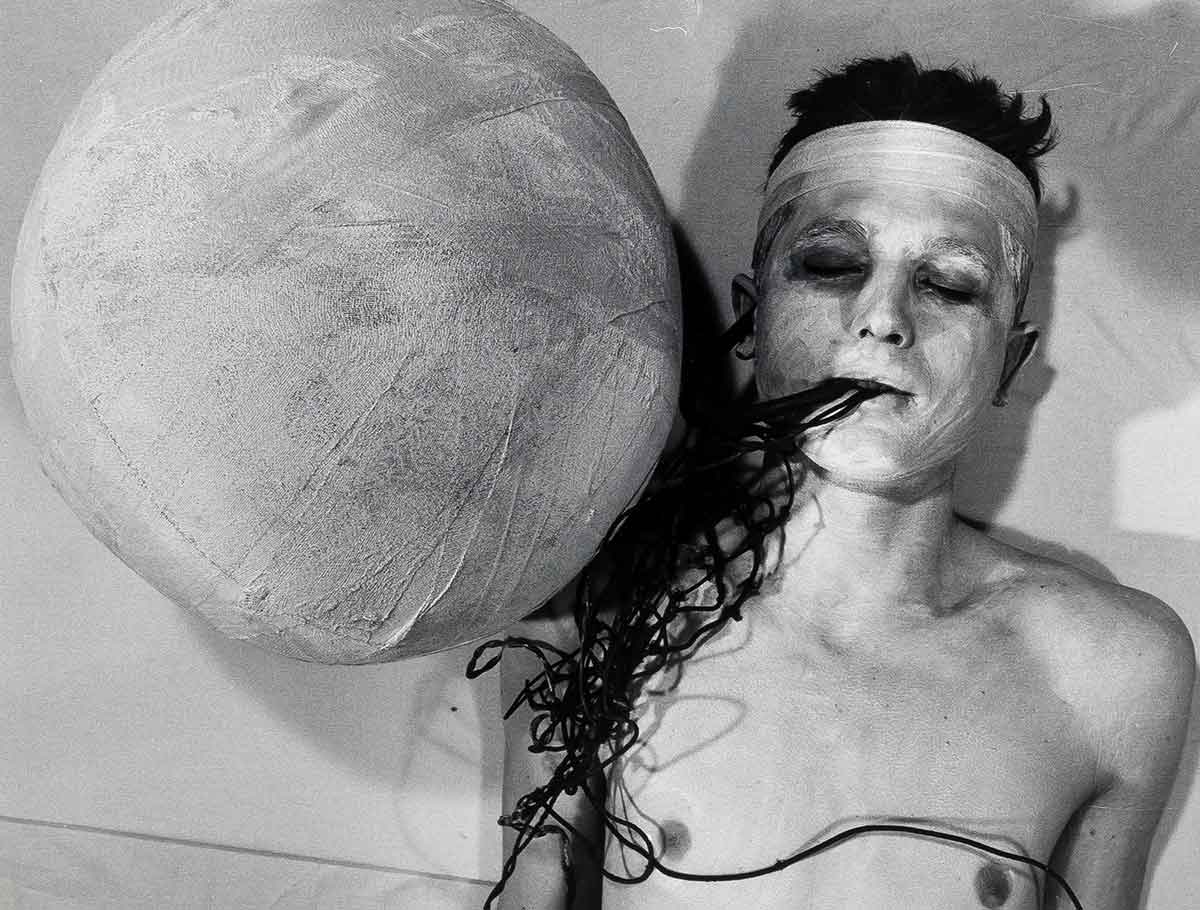
In post-war Europe, one short-lived yet notorious artistic movement turned the use of the body into a gruesome cathartic act. In the 1960s, a group of Austrian artists known as the Viennese Actionists employed destructive and violent practices to purge the collective trauma of mass violence through pain and humiliation. Artists mutilated themselves mid-performance, consumed various bodily fluids, masturbated, and performed other shocking acts based on physicality. The artists’ idea was to take on themselves the most repulsive and horrific deeds of humanity so the rest of the world would be freed from it. The general public and the authorities did not understand the concept, and the movement was effectively over by the late 1960s.
Yves Klein and His Living Brushes
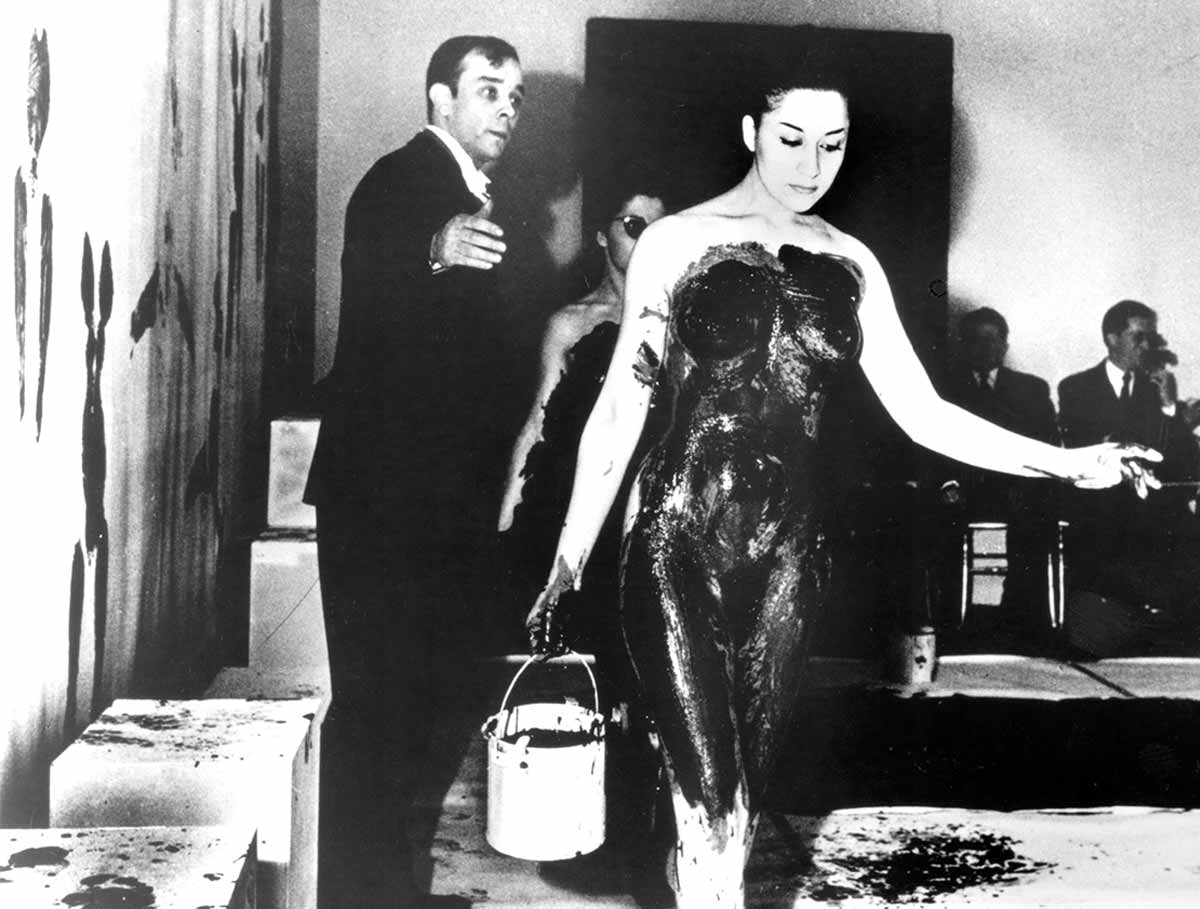
Another famous artist who relied on the use of bodies for artistic practice was Yves Klein, the legendary artist of the Nouveau Realism movement. However, instead of using his own body, Klein manipulated women’s bodies and, to the biggest possible extent, removed himself from the actual process of physical creation. Klein turned the creation of his most famous works into performances. Dressed in a formal suit and white gloves, he stood next to giant canvases and instructed nude models to cover themselves in paint and roll over the surface, leaving traces. Thus, he literally painted with bodies, at the same time distancing themselves from it.
Art critics noted an undertone of chauvinistic tradition in Klein’s art. Like Picasso with his Cubist paintings of his nude lovers, Klein manipulated women’s bodies as mere instruments for his own expression. By calling his models “living brushes,” he dehumanized them, turning living human beings, stretching nude in front of the crowd, into utilitarian objects.
Marina Abramović
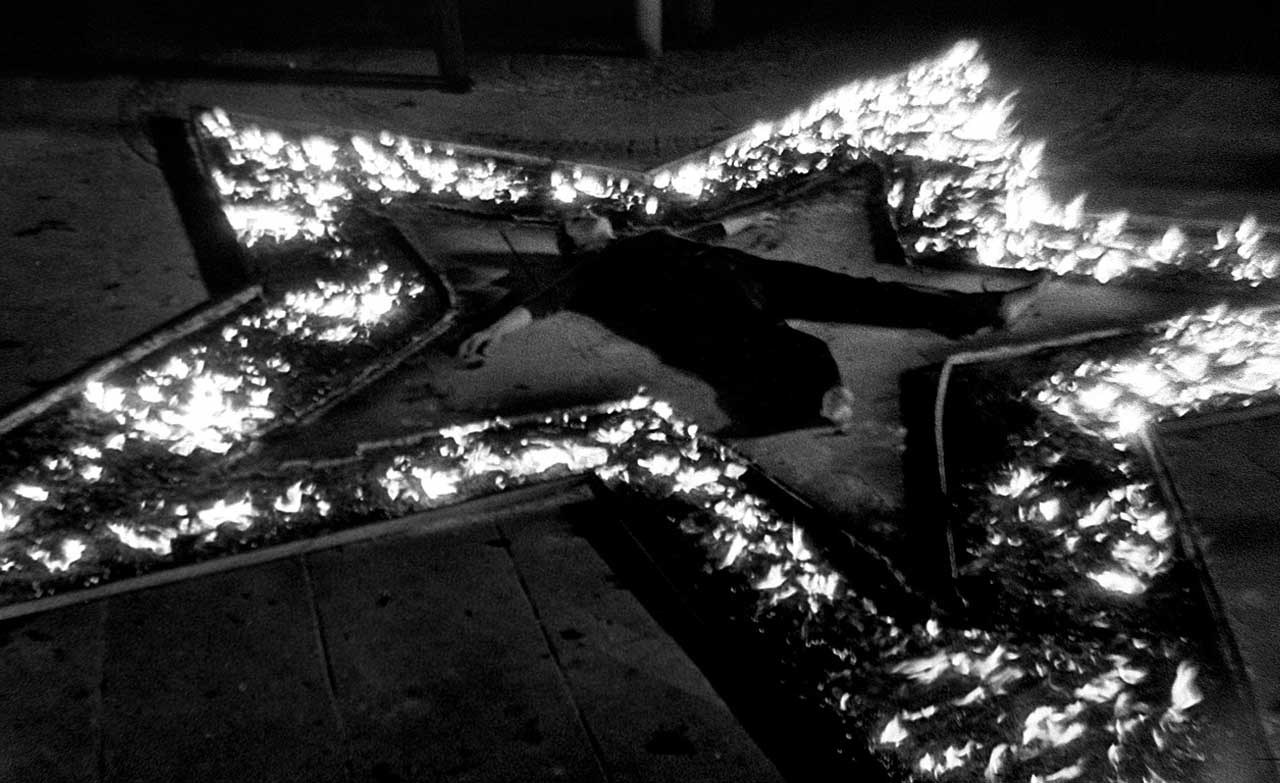
Marina Abramović is the artist who transformed performance art and, similarly to the Viennese Actionism group, aimed to test the limits of the human body, although usually in a less gruesome form. In her performances, the power of artistic expression acted as a remedy against the limited physical and mental capabilities of humans. She almost died in a fire, she fasted, cut herself with knives, and endured attacks from gallery visitors. She walked half of the Great Wall of China to marry her partner, only to learn that he cheated on her with his Chinese translator along the way. Abramović believes that a performance artist has to enter a specific state of mind that would stretch their endurance and physical possibilities.
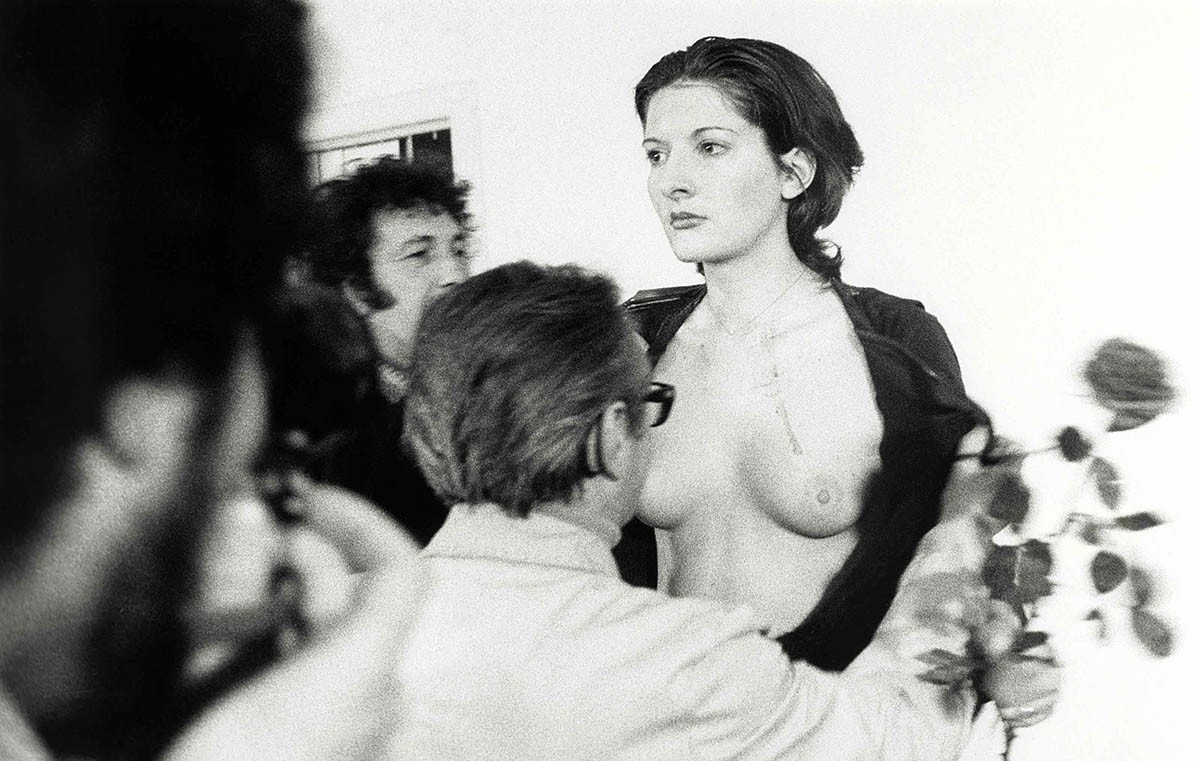
For Abramović, using her body meant breaking the barriers between the artist and their audience and escaping the seclusion of an artistic studio. She says that audiences today prefer to be a part of something rather than look at it. The use of the body, in that sense, provides a universally understandable experience of movement, pain, or exhaustion. Abramović alternated using her body as a passive and active tool, like in the case of the famous performance Rhythm 0. For six hours, the audience was allowed to manipulate her body by cutting and tying it with rope, directly threatening her life, but at the end of the performance, Abramović stood up and began to walk toward the visitors, causing the crowd to flee in horror.
The Body Art of Ana Mendieta
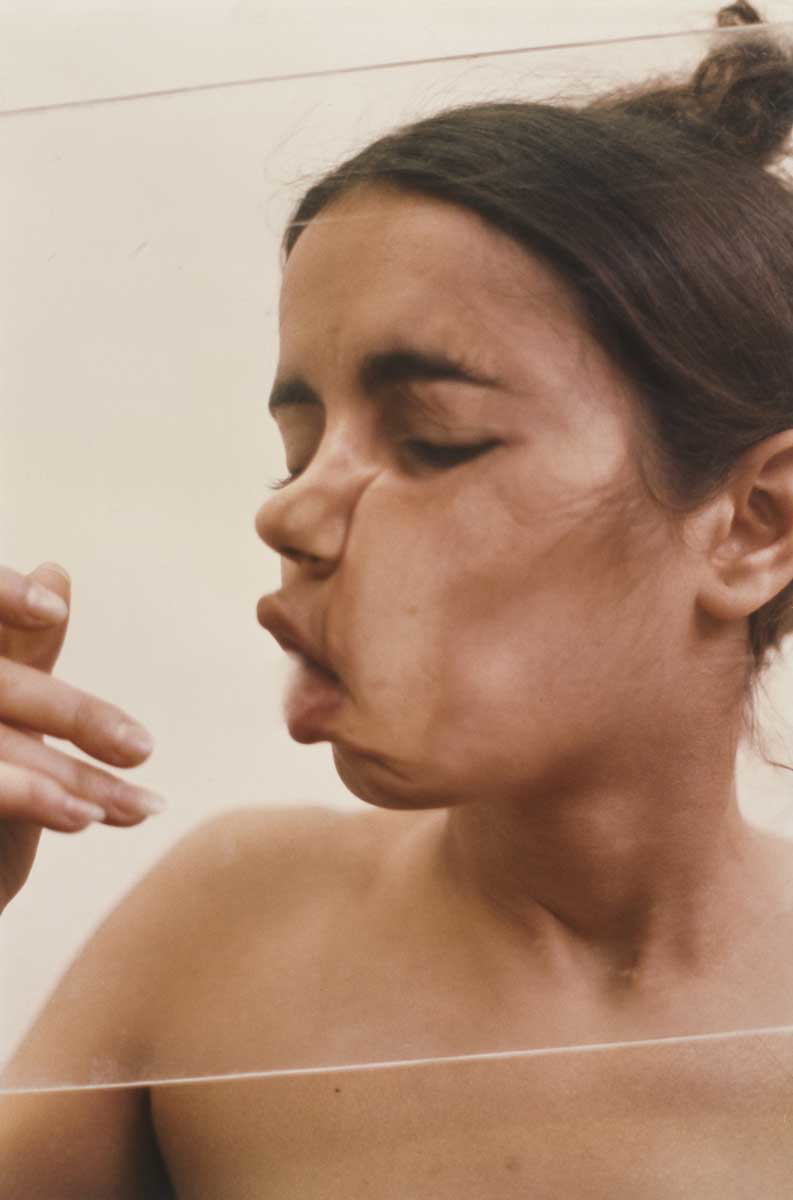
Ana Mendieta was a Cuban-American artist who was relocated from Havana to the USA when she was just 12. Torn out from one culture and implanted into another, Mendieta, who was still a minor, found herself stuck between worlds and ideologies. Although originally trained as a painter, she quickly moved to the domain of performance art and photography, using her body as her principal artistic medium. Mendieta defined herself primarily as a sculptor—apart from shaping earth and sand, she also shaped her own face and body by pressing it onto glass or leaving imprints of it. For Mendieta—an immigrant who was forced to leave all life, family, and belongings indefinitely and adapt to an entirely new language, system, and tradition—her body was the only thing that constantly remained hers and followed her through all other transformations.
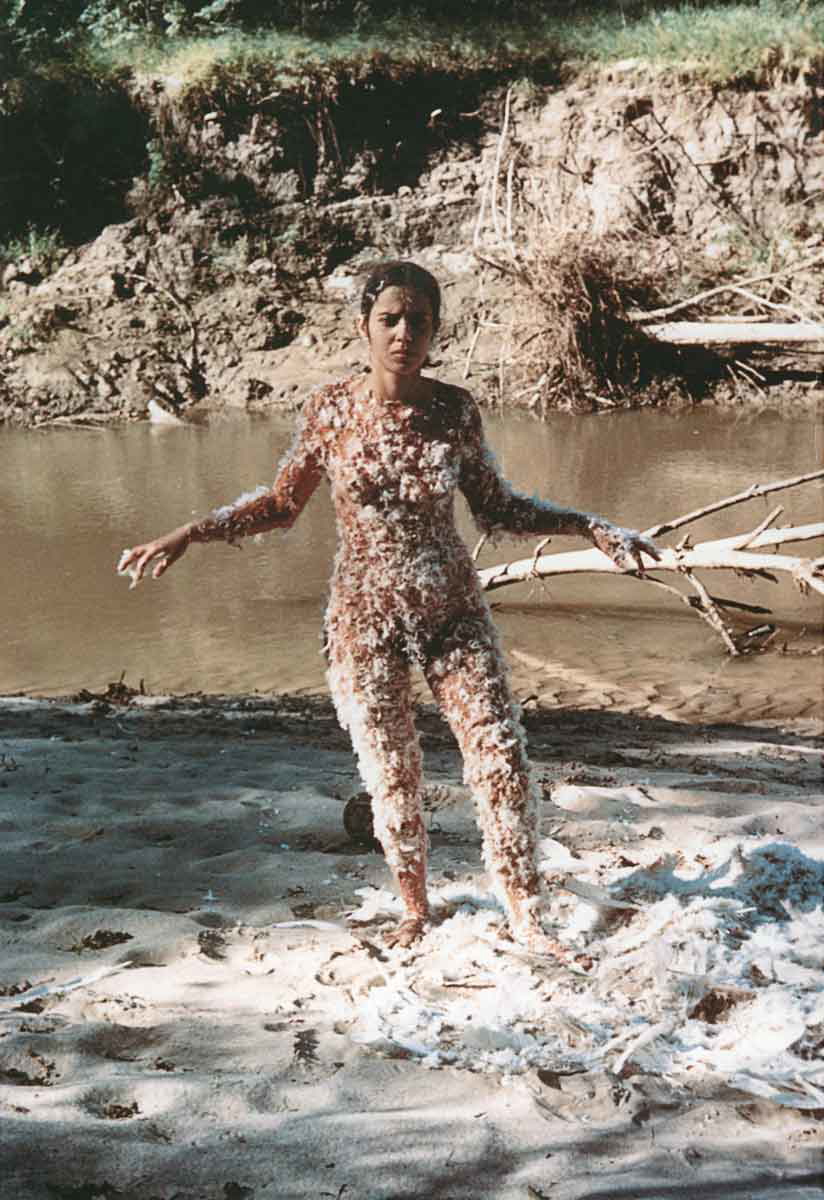
As noted by American art critic Lucy Lippard, the body-related artwork made by a woman artist is treated entirely differently than that performed by a man. For centuries, the female body was treated as an artistic subject matter and was, more often than not, sexualized and presented in its idealized form. Thus, if a woman artist makes her body the center of her work, the general public labels her as a narcissist, putting herself on display. In the case of male artists, such works rarely receive backlash since men are mostly treated as artists and not muses or models. In the cases of Ana Mendieta and Marina Abramović, that criticism was present on the art scene for too long. Still, Mendieta’s use of her own body reflects her conditions and experiences as an artist and immigrant. For her, the physical body is a symbol and form that stands beyond ideologies, borders, and external limitations.