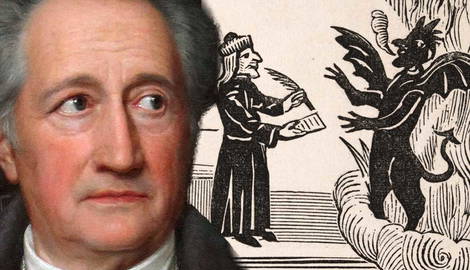

The legend of Faust is so powerful and enduring that his name remains a byword for taking an almighty gamble on something potentially dangerous, as in the phrases ‘Faustian pact’ or ‘Faustian bargain.’ For centuries, this doctor has served as a cautionary tale against indulging in the all-too-human desire to strive beyond our limitations, to know more, do more, and experience more. While Johann Wolfgang von Goethe’s 18th-century play sparked the lasting fascination with Faust, the character originated much earlier in a real person.
The Real Faust and the First Stage Version
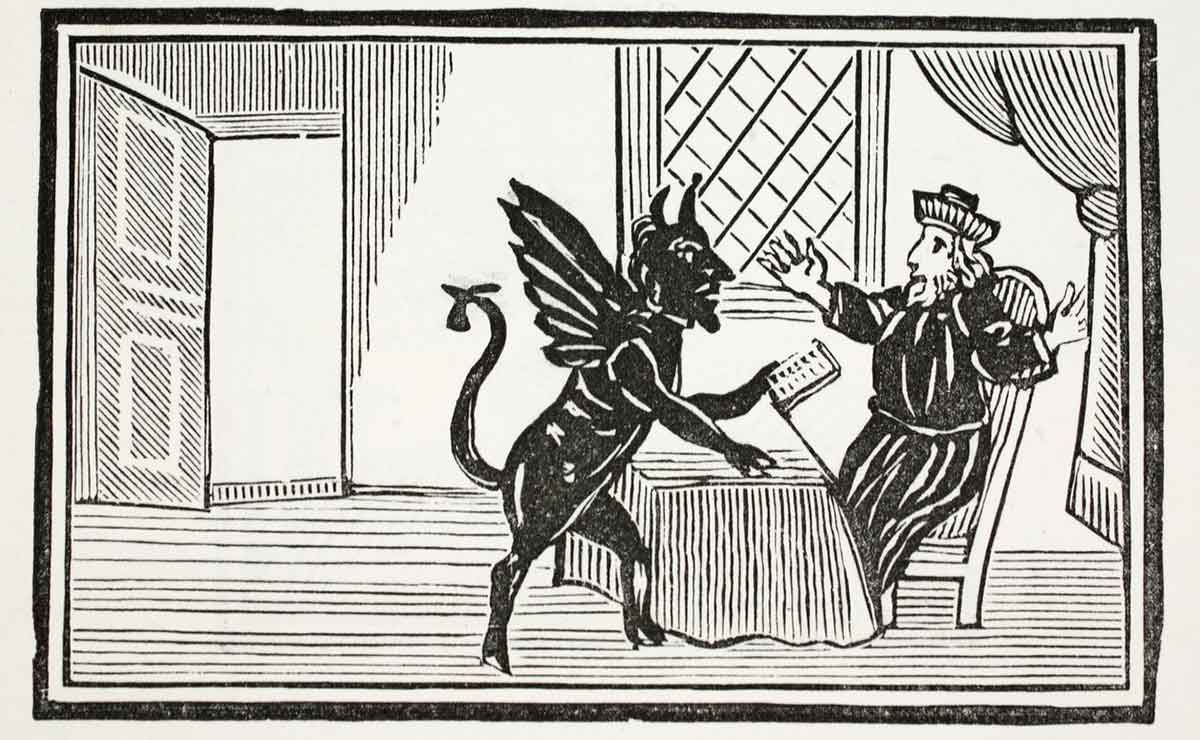
Mired in folk legend ever since his death, the historical Doctor Johann Georg Faust is difficult to pin down. Historians agree that he was born in the late 15th century and lived until around 1540 or 1541, when his life was cut short by an extraordinary (perhaps supernatural) occurrence during a scientific experiment.
For many contemporaries who recorded encounters with Doctor Faust, his foolish end was a long time coming. Faust had traveled about his native Germany practicing magic, blending alchemy, astronomy, and astrology, casting people’s horoscopes, and prescribing strange medicines. He seems to have made himself unpopular with many local authorities, as well as with the Catholic Church.
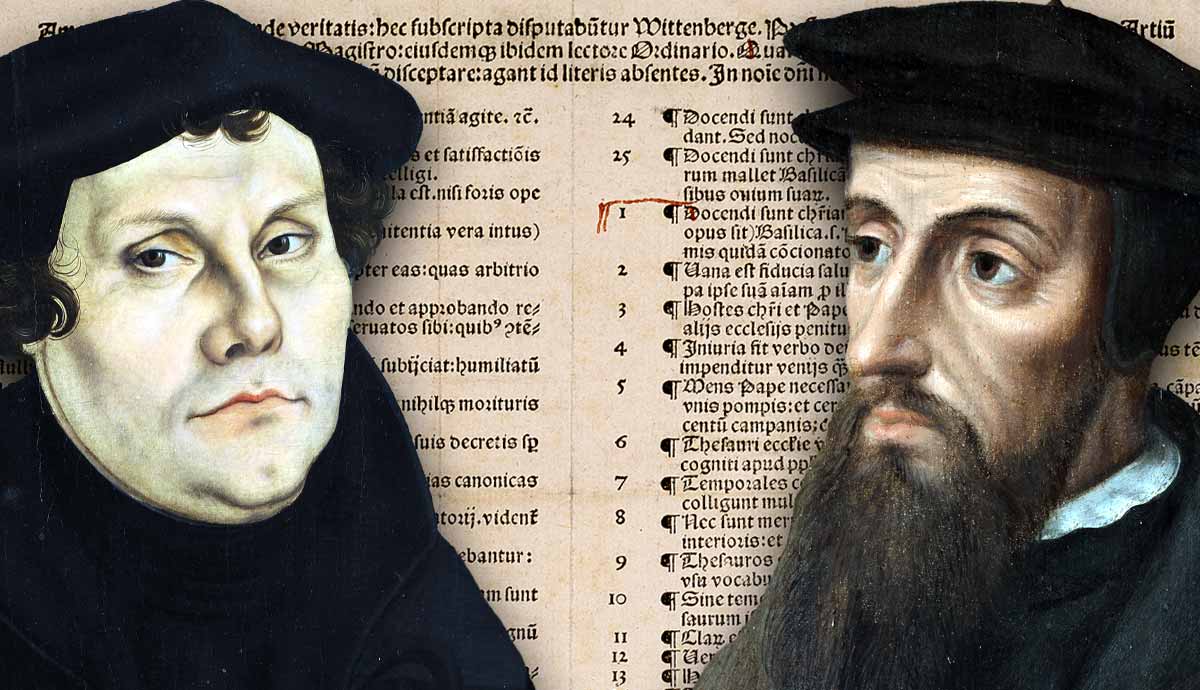
Doctor Faust may have joined the newly popular Protestant cause (which accounts further for the disfavor of the Catholic Church), but he was considered heretical also by Protestant leaders. He never met Martin Luther, but knew his colleague, Philip Melanchthon, who mistrusted astronomers whose claims might displace God’s centrality in the universe.
When Doctor Faust died in an explosion among his alchemical instruments, many felt it was his just reward for tampering with divine mysteries. The reportedly mutilated state of his body led to fast-spreading rumors that the Devil himself had come from Hell to fetch his servant.
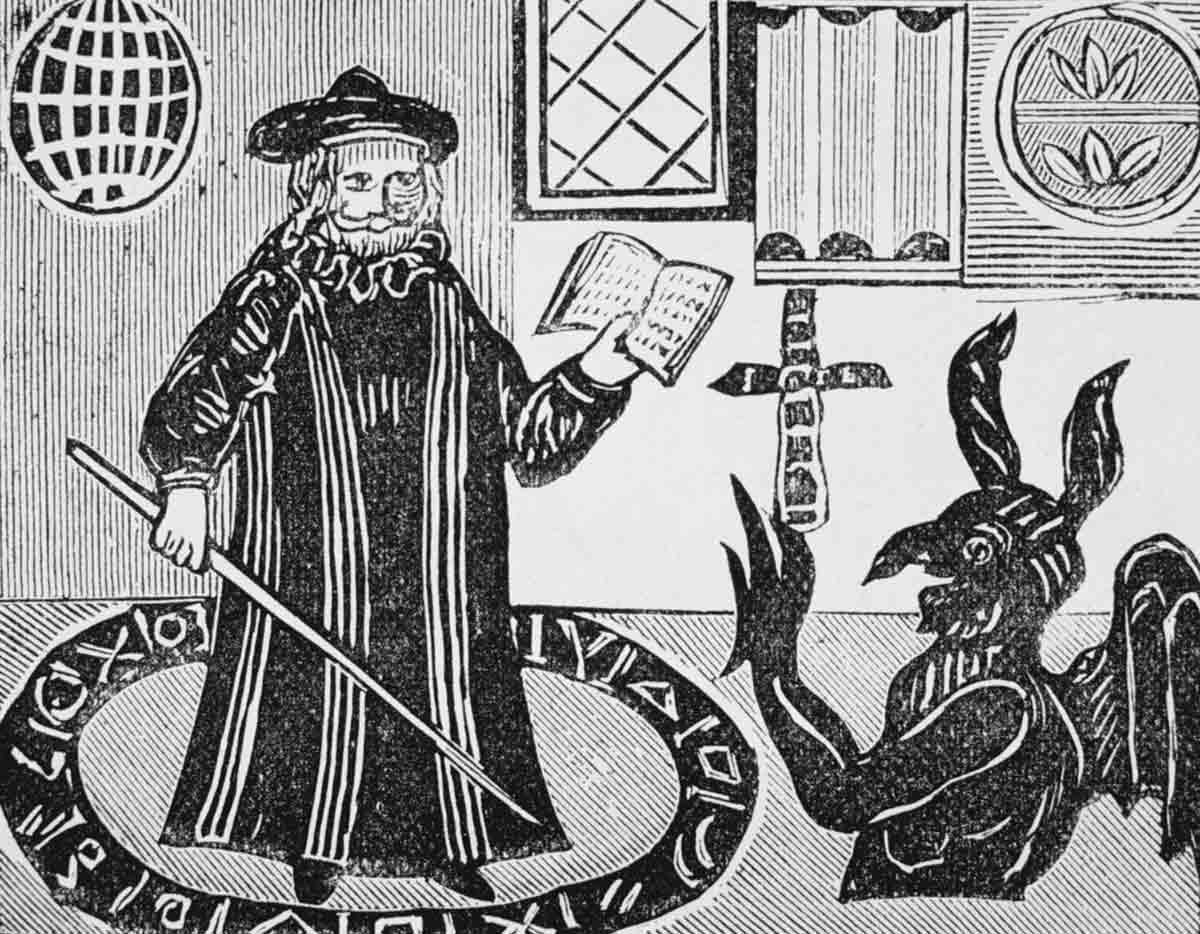
Embellished with varying details about the doctor’s wayward life and explosive death, these reports spread fast and far beyond the original German chapbooks. The legend was in full flow when Christopher Marlowe, the English playwright, adapted it for the stage in the early 1590s.
Doctor Faustus was a play for the Renaissance era. The Latinization of the doctor’s name recalls its etymological link to luck or fortune, and the play presents a conflict between making one’s own fortunes (through work and study) and placing one’s fortunes in the hands of fate. Marlowe presents Faustus as a Renaissance man who is tired of knowing everything it is possible to know; he wants more, and he wants magic.
But with magic comes a good and a bad angel, and a fork in the road. Promised prosperity by the bad angel, Faustus chooses the path of the Devil, signing a blood pact with a demon named Mephistopheles. Faustus spends years performing ungodly tricks before, despite his attempts to repent, the Devil takes his soul to Hell at last.
Goethe’s Faust
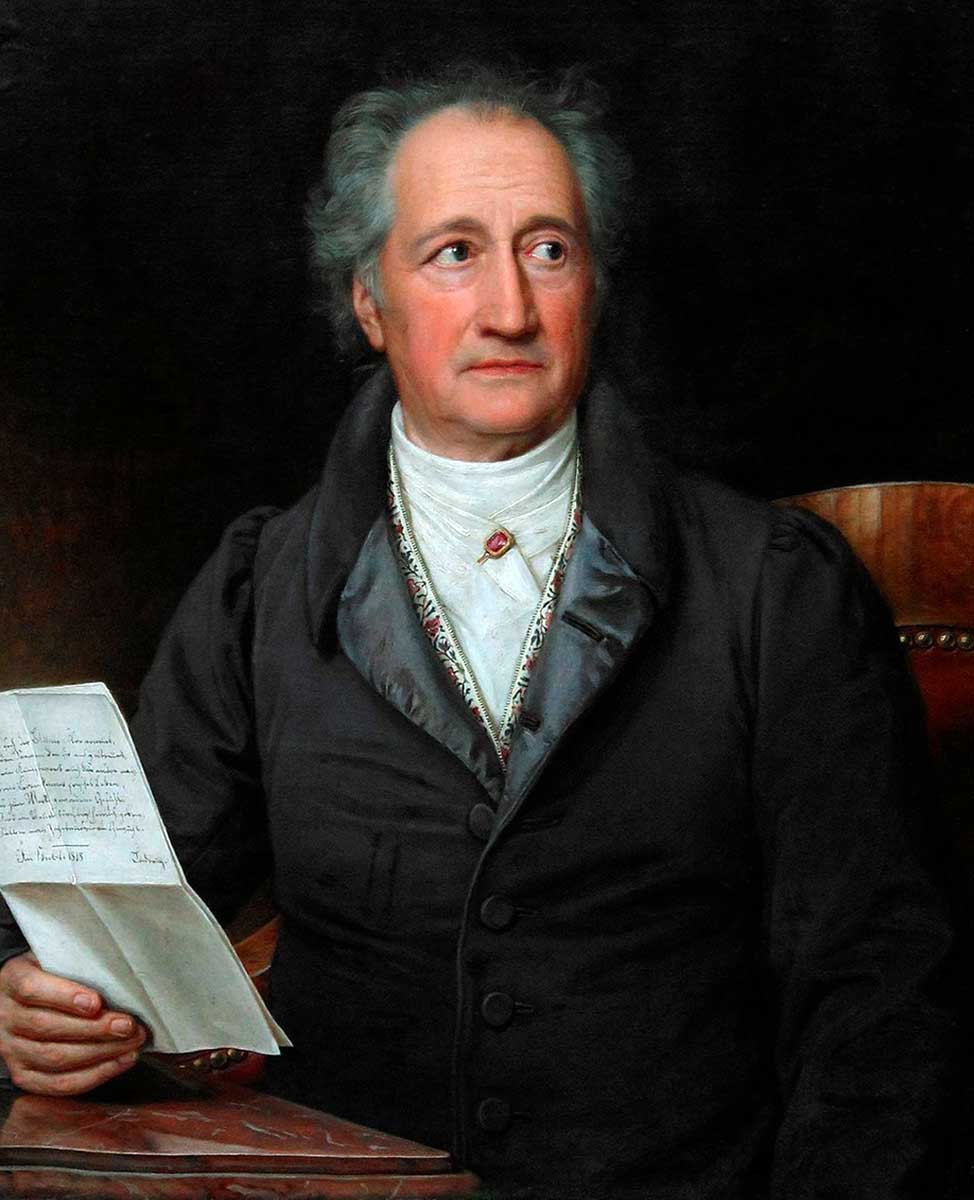
When Johann Wolfgang von Goethe published the two-part drama Faust, he was already well-known as one of Germany’s foremost intellectuals, having published novels, verse epics, aesthetic criticism, and scientific research, directed the theater at Weimar, and played a major role in the revival of classicism in that city.
Weimar Classicism, which flourished in the last few decades of the 18th century, combined the new learning from the Age of Enlightenment with a renewed interest in ancient Greco-Roman arts and philosophy, along with the first glimmerings of Romanticism. This also grew out of the Sturm und Drang movement, of which Goethe was a prime representative. His works emphasized the centrality of subjectivity, and particularly the emotions, in our experience of the world.
Goethe may have been famous by the time Part One of Faust came out in 1808, but it had been several years in the making, with composition beginning back in the 1770s. Part Two took almost the same length of time again: Goethe finished it in 1831, and it was published in 1832, after his death. This was Goethe’s magnum opus, a significant portion of his life’s work.
Like Marlowe, Goethe made some important modifications to the Faust legend to heighten its drama and plumb the depths of its philosophical possibilities. Goethe’s Faust opens in Heaven, with a wager to parallel the play’s later, more famous deal between the protagonist and the Devil. In Goethe’s opening, Mephistopheles (or Satan) challenges God, wagering that he can turn one of God’s servants away from good towards evil.
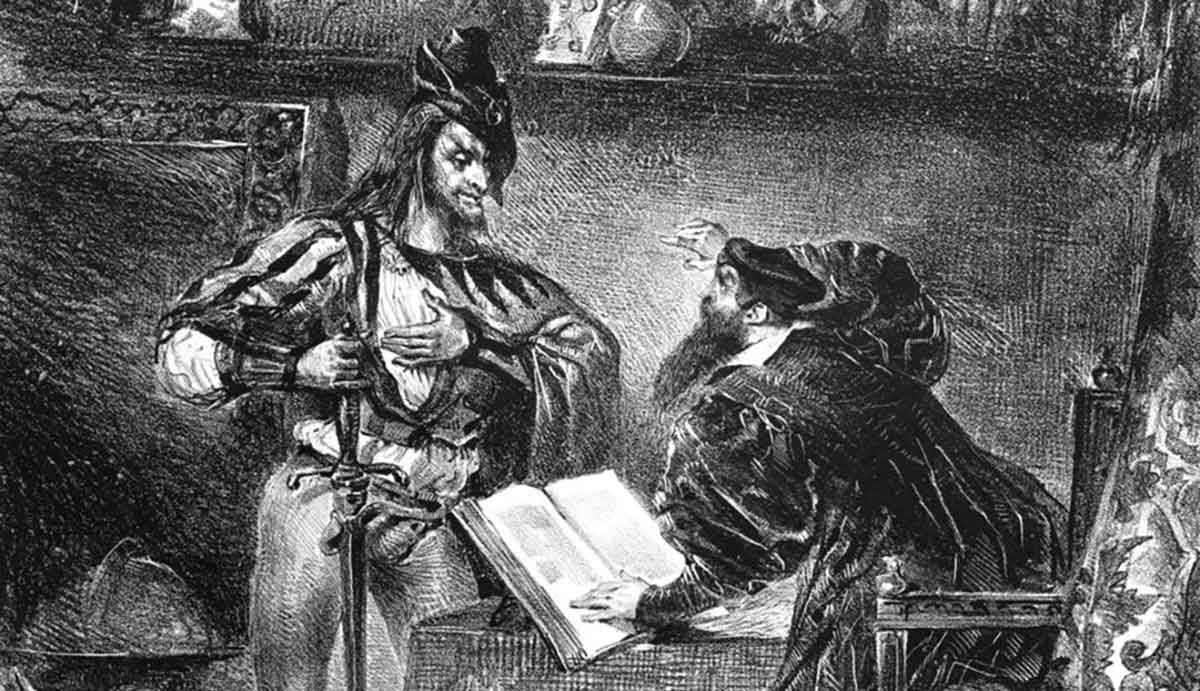
When Mephistopheles arrives, Faust is tantalized by the prospect of infinite knowledge that the demon offers. Mephistopheles promises he will serve Faust in life, opening doors to unimaginable avenues never explored by man, and in return, Faust must serve Mephistopheles in the afterlife.
But Faust wants more. He urges Mephistopheles to grant him an experience of transcendence on earth; that unknowable, unreachable infinity sought by the Romantics. If Mephistopheles can show him an infinity so blissful that he wants to remain in it forever, Faust will cease his restless striving and join the demon in Hell.
Following the blood pact, Faust’s life takes a series of cursed turns. His love for the heroine, Gretchen, only brings her the shame of being seduced and made pregnant outside marriage, then the sorrow of killing her own child and being sentenced to death for the crime. As Faust tries desperately to enlist Mephistopheles’s help in freeing Gretchen from prison, the end of Part One leaves the redemption of both protagonists in the balance.
Part Two reveals that, although Faust has lost his bet with Mephistopheles, God has won his. Faust has pursued transcendence, but in the service of good: trying to save Gretchen.
Both parts of the play were instantly popular (although it was more often read as a book than staged), with its wagers cutting to the core of philosophical questions about human nature, creation, the soul, and good and evil.
Faust and Romanticism
With Goethe’s play, Faust became a cornerstone of European art and culture, an everyman whose epic struggle reverberated across myriad works. The doomed, isolated hero whose search for knowledge draws him toward his dark side, and who must finally seek redemption, is so archetypal in Romanticism that we can easily lose track of Goethe’s Faust among his descendants.
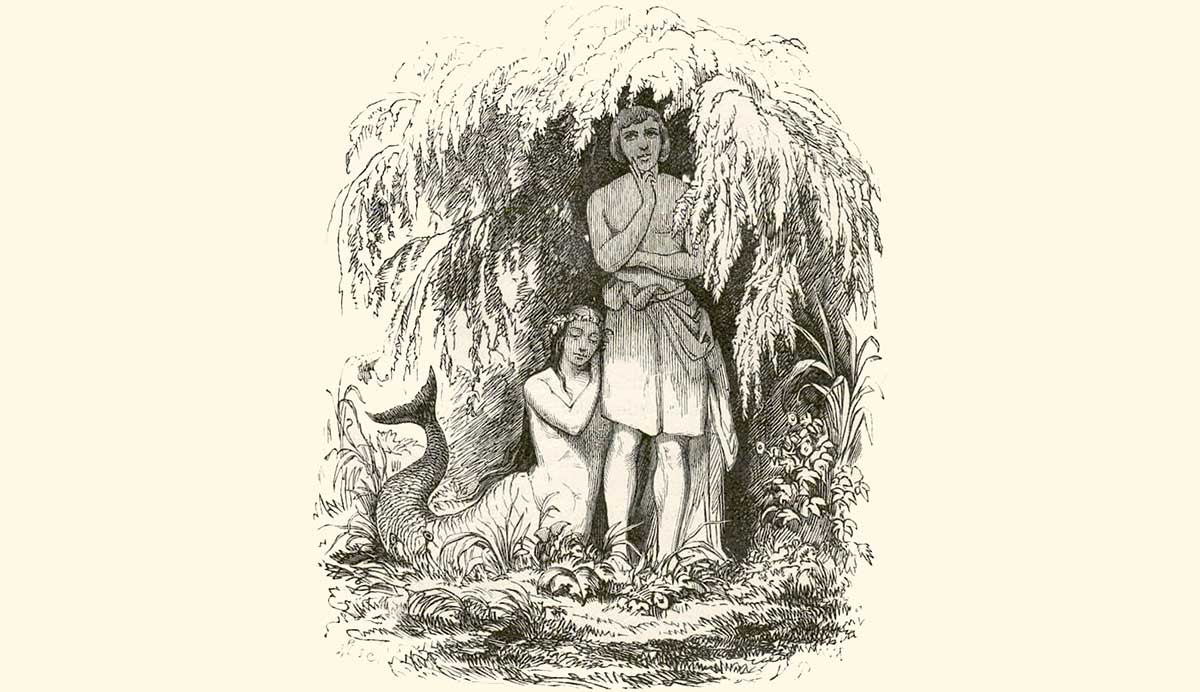
For instance, the wager that puts questions of humanity itself in the balance reappears in Hans Christian Andersen’s The Little Mermaid (1837), with the Sea Witch, who offers Ariel a taste of becoming human, acting as a Devil figure.
In a completely different, but contemporary work, Lord Byron‘s dramatic poem Manfred (1816-17) focuses on a tortured hero who communes with spirits in the hopes of finding solace after the death of his beloved (a death he seems, mysteriously, to feel guilt about). The autobiographical resonances in this poem were typical of Byron, whose protagonists generally aligned with the public perception of the poet as (metaphorically, at least) something of a ladykiller.
The Faustian Romantic’s intense subjectivity and soul-searching are borne of both a restless thirst for knowledge and a conviction that he is toxic to everyone he loves. No Romantic protagonist embodies this blend better than Victor Frankenstein, in Mary Shelley’s 1818 novel.
Shelley’s masterstroke in Frankenstein is in blurring the distinctions between the characters in previous iterations of the Faust legend. At first glance, the restless student Victor Frankenstein seems purely cast in the Faust mold, but when he creates a human by assembling body parts gathered from corpses and animating the whole, he takes on God-like qualities. In examining the responsibility of Frankenstein, the almighty creator, to his creature, Shelley’s novel extends the preoccupation in Goethe’s play with the covenant between God and humanity.
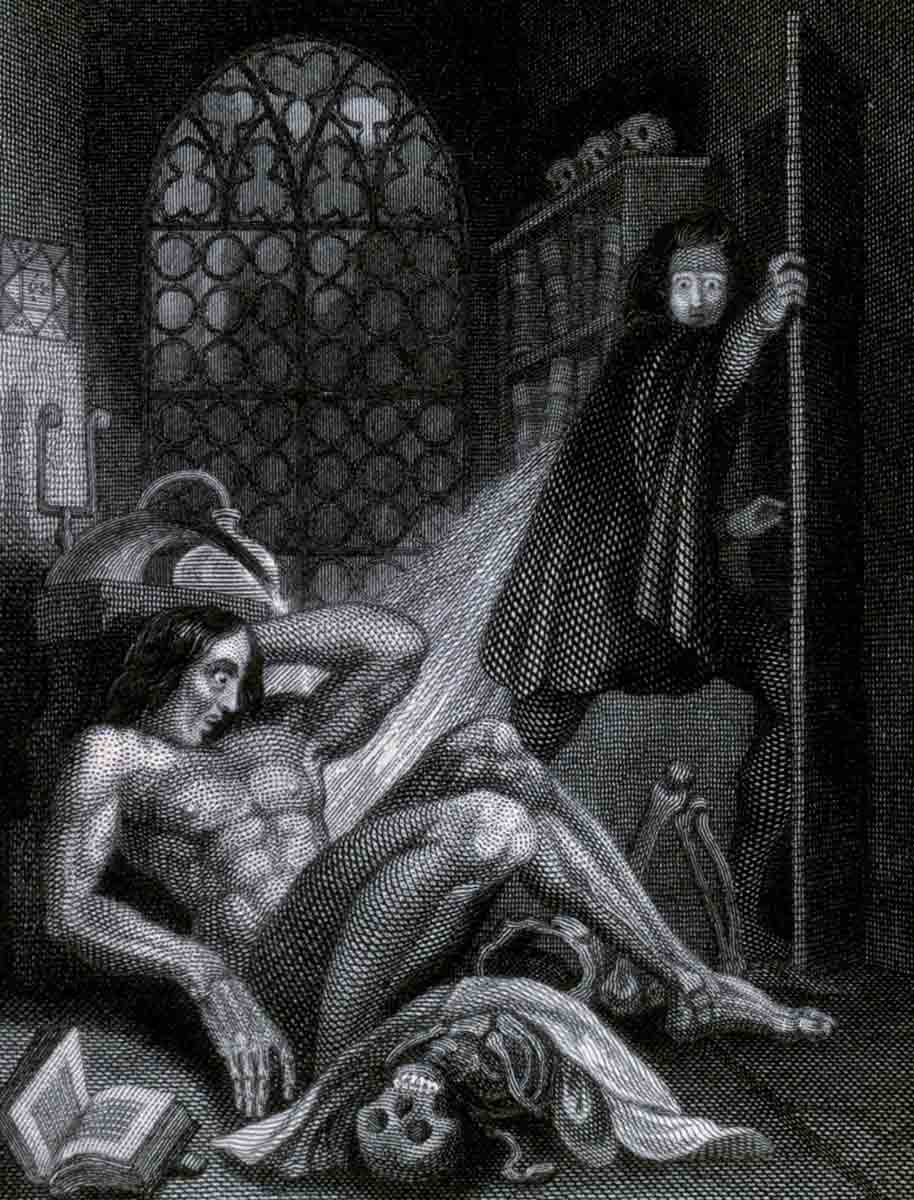
The creature, on the other hand, may appear Mephistophelean at first glance, but it is his rejection by Frankenstein—as if God had turned away from humanity—which turns him into a killer. Moreover, the creature, as well as Frankenstein, goes on a search for redemption over the course of the novel. He is desperate to shake off the mantle of malevolence that fate has thrust upon him. He is even a zealous reader and polymath in the mode of Faust (and reads The Sorrows of Young Werther, the novel which made Goethe famous a few decades before Faust).
Both Frankenstein and the creature are Faustian, both tempted to usurp God by transgressing the laws of nature, and both taking on Satanic hues in the process. Frankenstein reflects the development of the Faust legend within Romantic thought. Its supernatural elements, the possibility that Faust’s experiments with magic cause his death, were internalized, becoming manifestations of a very human concern with hubris or over-reaching.
In turn, Mephistopheles became internalized too: no longer an apparition of the Devil or an agent of Satan, but a manifestation of part of Faust’s own soul. In Frankenstein and many subsequent Faustian tales, protagonists harbor both Faust and Mephistopheles within themselves.
Faust in France
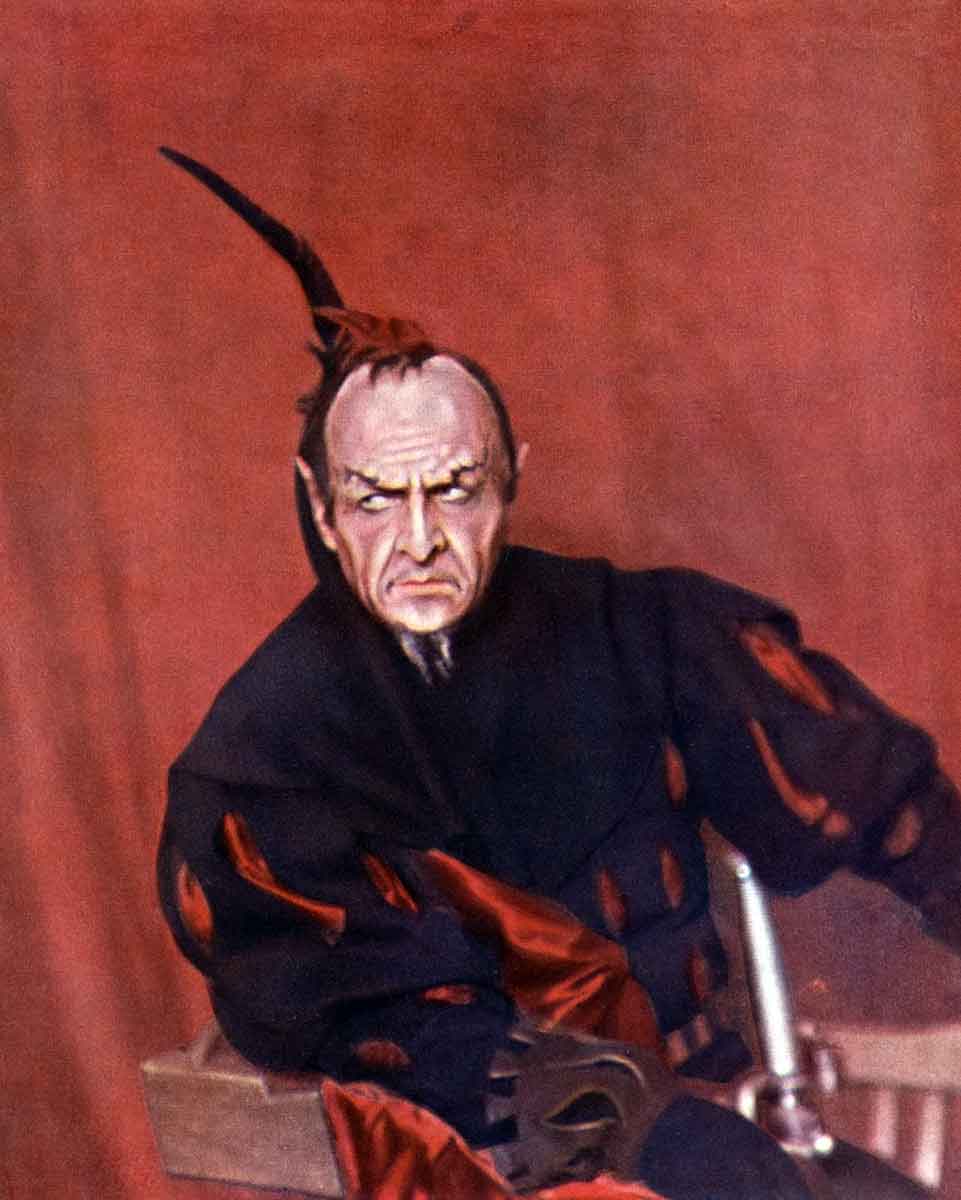
Following the popularity of Goethe’s play, Faust took on true legend status. It became not just a historical tale with a partial basis in truth, but a story so resonant that it could be referenced by artists across the globe, in all kinds of art.
Faust was an important figure in 19th-century France, thanks to two composers. Charles Gounod and his librettists took inspiration from Goethe for their 1859 opera Faust. With an accompanying ballet, it soon became one of the most frequently performed operas at the Paris Opéra. Audiences were entranced by the music, which brought to life scenes such as Mephistopheles’s first appearance to Faust, Faust’s seduction of Marguerite (an alternative name for Gretchen in Goethe’s version), and Faust’s redemption as Mephistopheles is cast back to Hell.
In Gounod’s version, good vanquishes evil, and Faust is saved because of his selfless willingness to damn himself to save Marguerite. Hector Berlioz, meanwhile, chose to end his version with, as in the title of his operatic composition, The Damnation of Faust. Berlioz had read an 1828 translation of Goethe’s play by the Romantic, proto-Surrealist poet Gérard de Nerval. Fascinated, Berlioz blended the legend with his perennial, autofictional preoccupation with brilliant male protagonists whose capacity for love is a blessing and a curse.
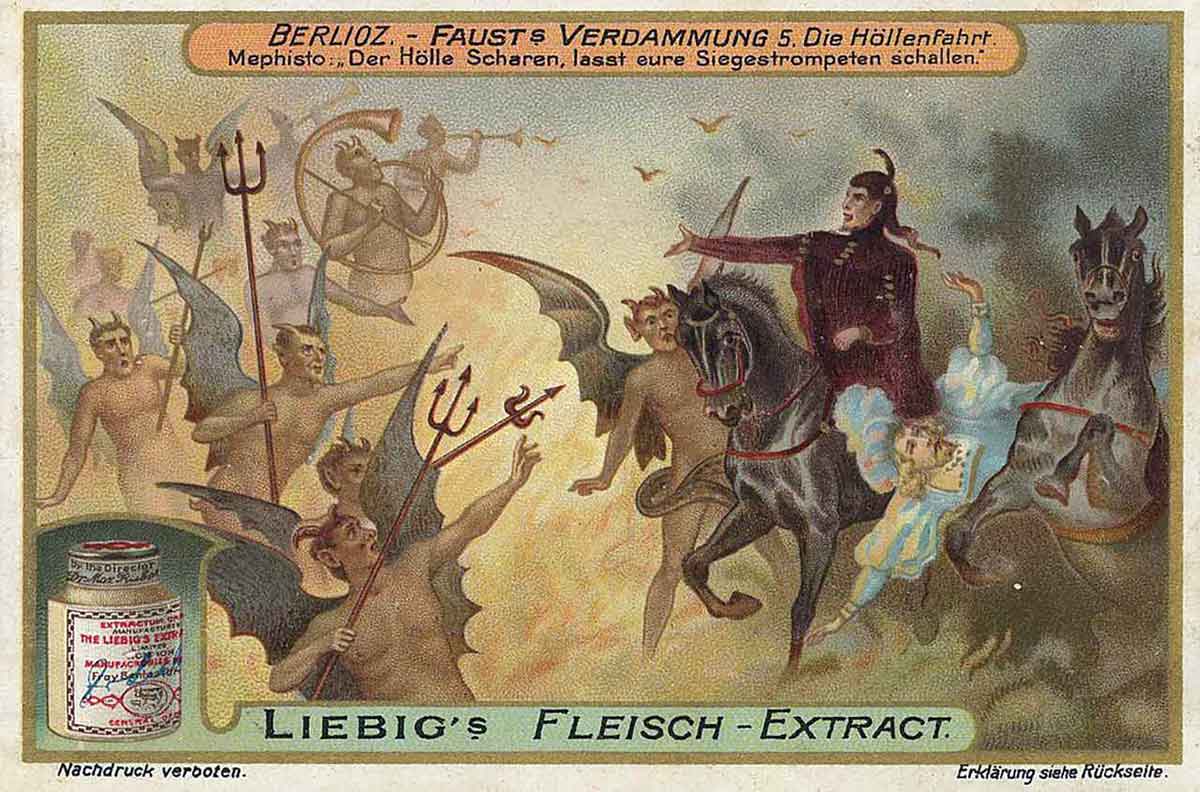
Gounod’s and Berlioz’s musical settings of the Faust legend are only two of the most popular versions, but the story and its characters inspired music by most of the prominent composers of the 19th and 20th centuries: Ludwig van Beethoven, Franz Schubert, Franz Liszt, Richard Wagner, and Gustave Mahler, to name a few. Byron’s Faustian poem Manfred, in turn, inspired compositions by Robert Schumann and Pyotr Ilyich Tchaikovsky.
Faust in English Literature
Writers in English took Faust down the perilous paths of Gothic and sensation novels. Melmoth the Wanderer (1820) by Charles Robert Maturin derives its meandering plot from the central idea of selling one’s soul to the Devil and being cursed to roam the world eternally in search of a confidant to inherit the pact.
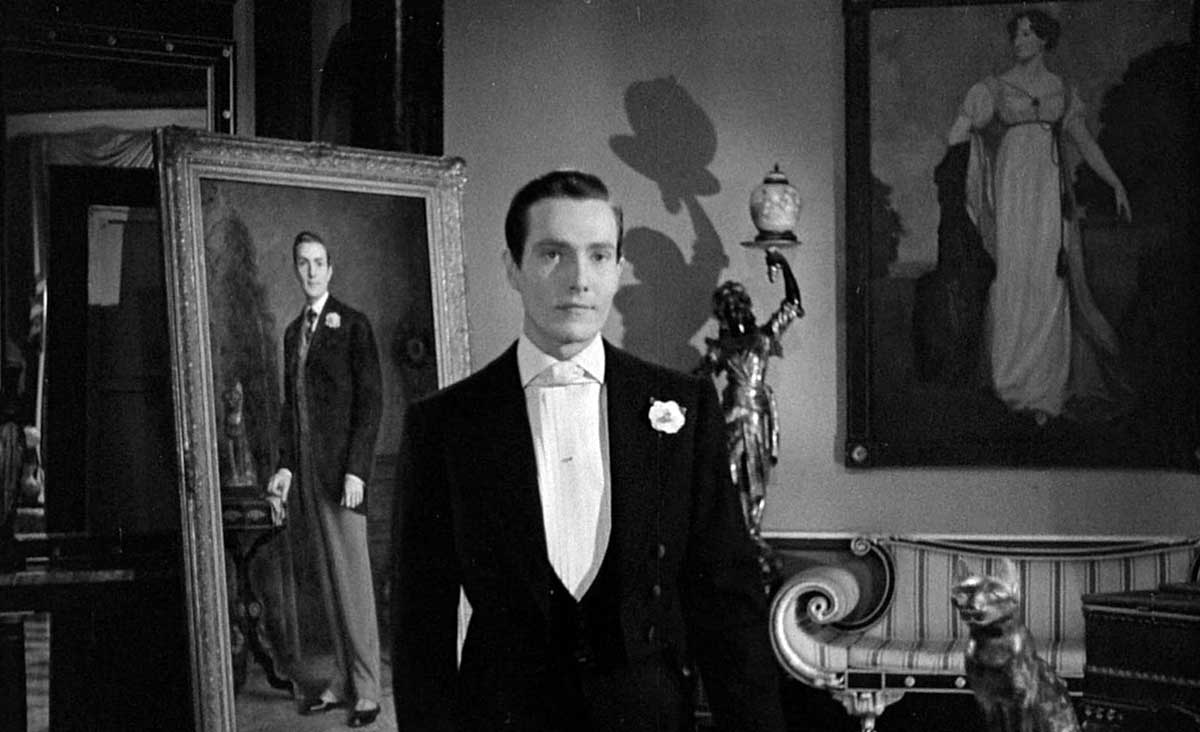
Melmoth‘s Faustian tinges influenced writers during the Gothic literature craze at the end of the 19th century. Maturin’s great-nephew, Oscar Wilde, was not only inspired by his relative to adopt the pseudonym Sebastian Melmoth on his release from prison: a decade earlier, Wilde created his own Faustian protagonist in The Picture of Dorian Gray (1890).
Dorian Gray, like Frankenstein, has no explicit Mephistophelean figure, and the Devil’s bargain instead takes the form of part aesthetic, part ethical speculation, as Dorian wonders what might happen if his portrait were to grow old while he himself remains young. As in earlier versions of the Faust legend, this wager allows the protagonist to pursue a life of depraved, transgressive pleasures.
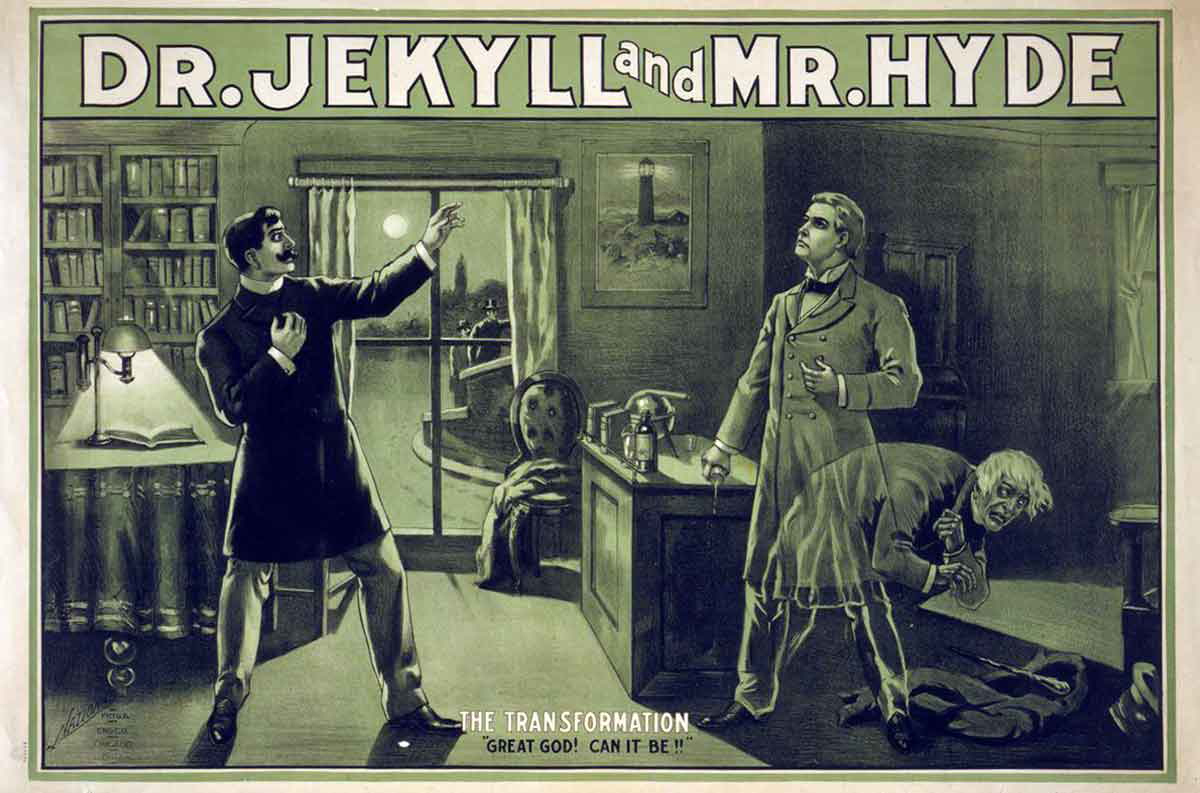
We don’t know, in Dorian Gray nor in Robert Louis Stevenson’s novella The Strange Case of Dr Jekyll and Mr Hyde (1886), what exactly these pleasures are. We only know that these protagonists cannot resist the temptation to explore their dark sides. Dr. Jekyll even splits his soul in order to live a double life as the villainous Mr. Hyde. Like Frankenstein, Stevenson’s novella takes an overachieving Faustian scientist and implies that, deep down, he is also Mephistophelean.
Perhaps the most consummately Faustian novel in English literature of this period is Marie Corelli’s The Sorrows of Satan (1895). It was a bestseller thanks to its sensational plot, a retelling of the legend wherein a poor author suddenly comes into money just as he befriends a mysterious aristocrat who turns out to be the Devil. The author must choose whether to pursue a rich, immoral life or forsake his fortunes in favor of redemption. As its title suggests, Corelli’s novel followed some Faustian adaptations, such as Frankenstein, in examining Satan’s perspective, especially his feelings of rejection by God and his yearning for redemption.
Faust in Russian Literature
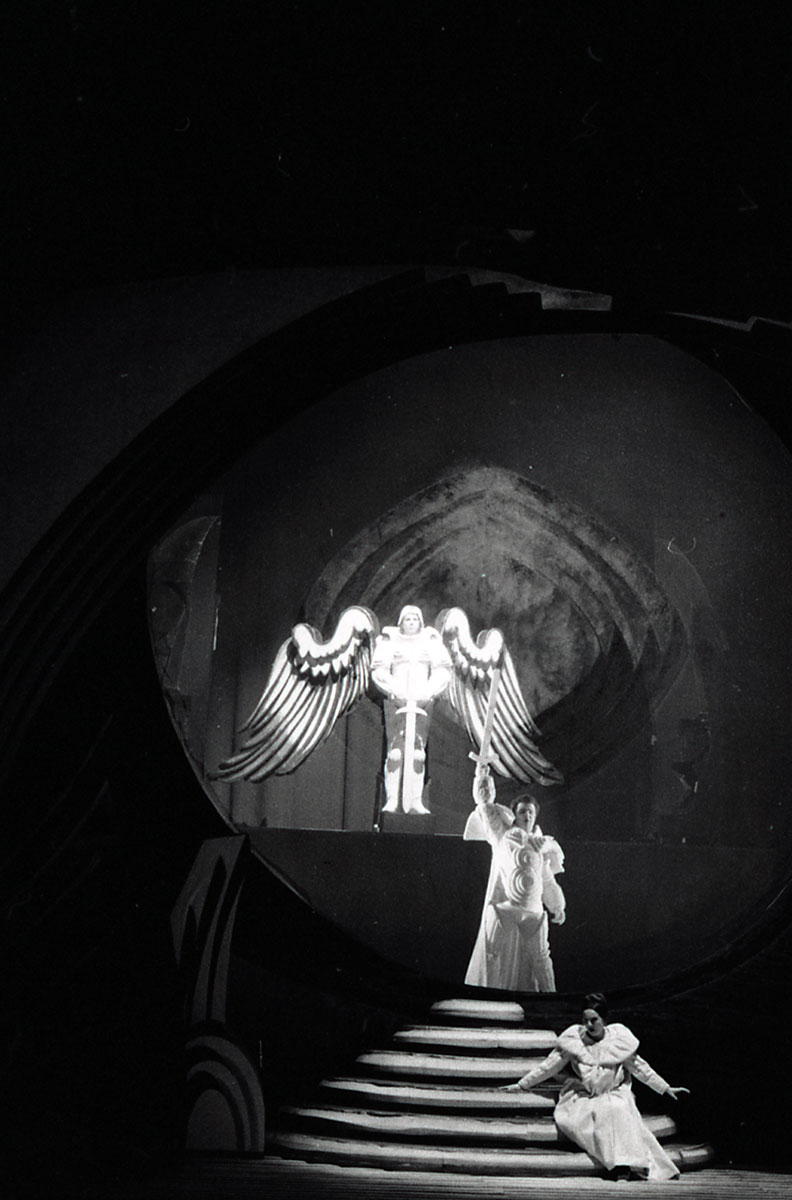
Russian authors also took inspiration from Faust, particularly Goethe’s version. Early Russian versions of parts of the play began to appear in the mid-1800s, via English or French translations from the original German.
These inspired prominent figures in Russian literature, such as Alexander Pushkin, who wrote A Scene from Faust in 1828, and Ivan Turgenev, whose 1856 novella Faust features a protagonist reading Goethe to his love interest.
Turgenev, along with another giant of Russian literature, Fyodor Dostoevsky, took up themes they found compelling in Goethe’s version of the legend, such as the seemingly infinite quest for knowledge, the all-consuming temptation of sin, and the question of redemption and how it might be achieved.
In 1908, Valery Bryusov’s The Fiery Angel offered a historical fiction approach to Faust, recreating the 16th-century German setting and conjuring up a world of the occult. It was followed a few decades later by another Russian novel centring on the Devil’s bargain: Mikhail Bulgakov‘s The Master and Margarita (written 1928-40).
Twentieth-Century Fausts
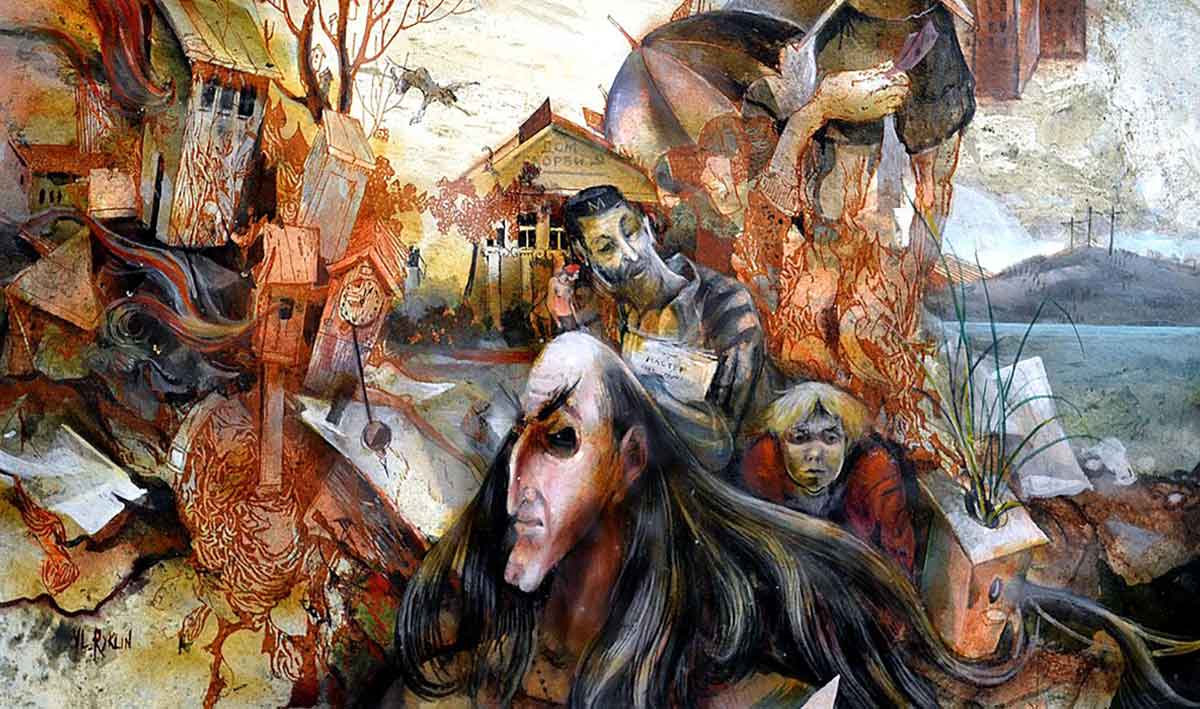
If not for Faust, we wouldn’t have the Rolling Stones’ Sympathy for the Devil. When he wrote the lyrics, Mick Jagger had just been reading the English translation of Mikhail Bulgakov’s The Master and Margarita. Begun in 1928, it had undergone various revisions and excisions under the Soviet regime and didn’t appear as a single-volume novel until 1967. By then, Bulgakov had been dead for 27 years.
The Master and Margarita is one of two significant early-20th-century novels that applied the Faust legend to a modern context, locating the tempting forces of evil in contemporary totalitarian regimes. Bulgakov struggled to publish his novel exactly as he wished in Soviet Russia because much of its plot deals with state repression of literature.
There are Faust references dotted throughout: the Devil appears as Professor Woland, a name which Mephistopheles uses to refer to himself in Goethe’s Faust. A member of Woland’s retinue is named Korovyev, based on the Russian word for ‘cow,’ possibly referencing the fact that Mephistopheles, in Gounod’s Faust, mentions a golden calf. There is a further connection to musical versions of Faust when Professor Woland prophesies the death of an author called Berlioz, recalling the composer of The Damnation of Faust.
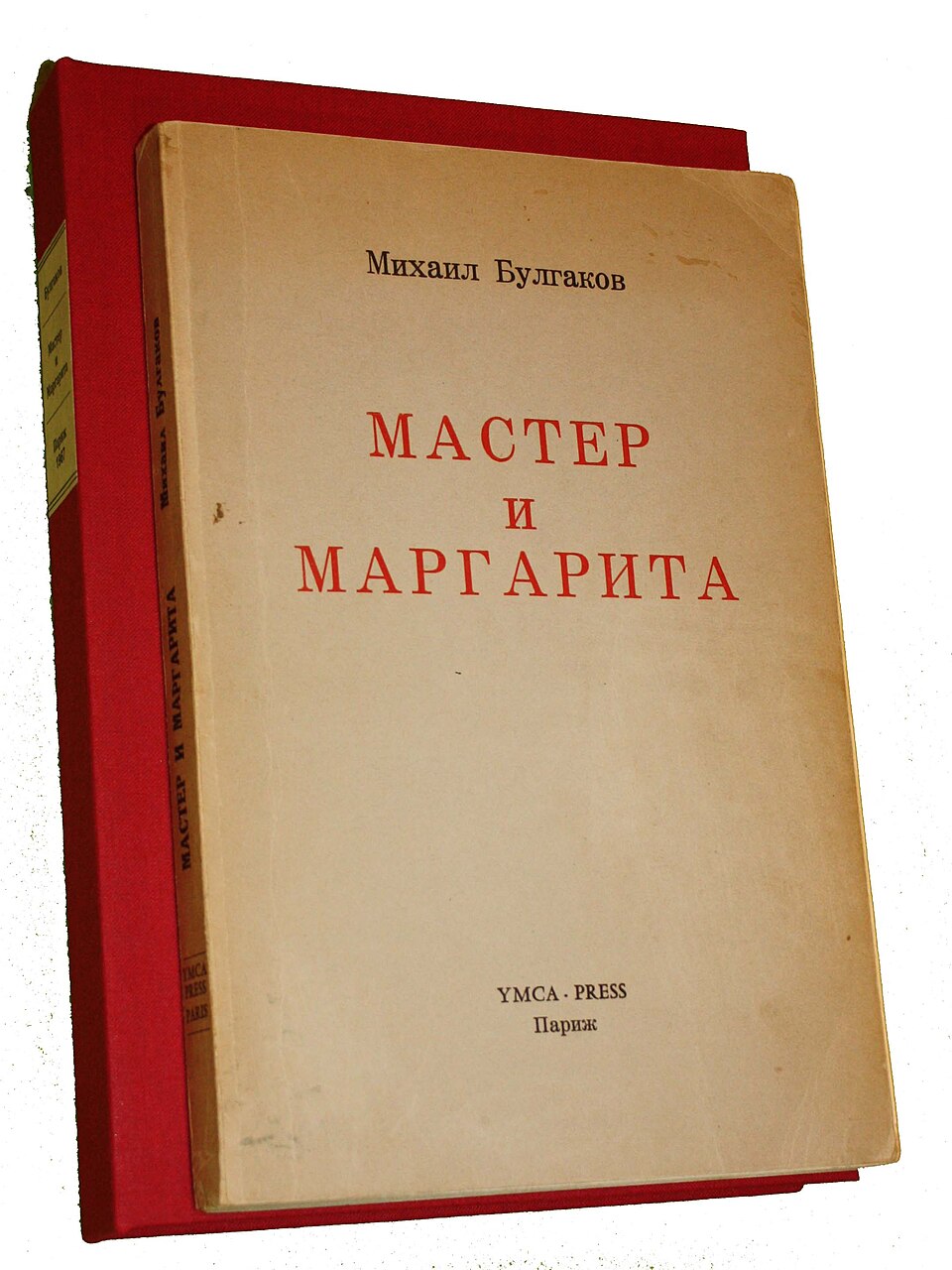
Berlioz’s death offers characters proof of the Devil’s existence, and Woland goes about, as Mephistopheles does in other versions, impressing audiences with the powers of evil. A parallel plot about Pontius Pilate’s rejection of Jesus ties in with the Faust legend’s themes of turning one’s back on God. Then, the primary plot soon turns to Margarita (an adaptation of Marguerite, the alternative name for Gretchen in Gounod’s opera), who is offered a wager by Woland. She and the Master (like Berlioz, an author embroiled in the corrupt literary circles of contemporary Moscow) are eventually condemned to purgatory.
The Master and Margarita opens with an epigraph from Goethe’s Faust: “Who are you, then? / I am part of that power / which eternally wills evil / and eternally works good.” This weighty conflict was omnipresent in the minds of authors during this period, as they grappled with manifestations of absolute power right before their eyes, not just in Russia but also in Germany.
Thomas Mann was not the first writer in his family to adapt the Faust legend. Mann’s son Klaus published a novel, Mephisto, in 1936, which arose directly out of his experiences in anti-Nazi resistance. While Klaus Mann was exiled from Hitler’s Germany in 1934, one of his former theater associates remained, embracing the new regime and its opportunities to advance his career as a theater and movie director. Mann likened his former associate to Faust and the Third Reich to Mephistopheles.
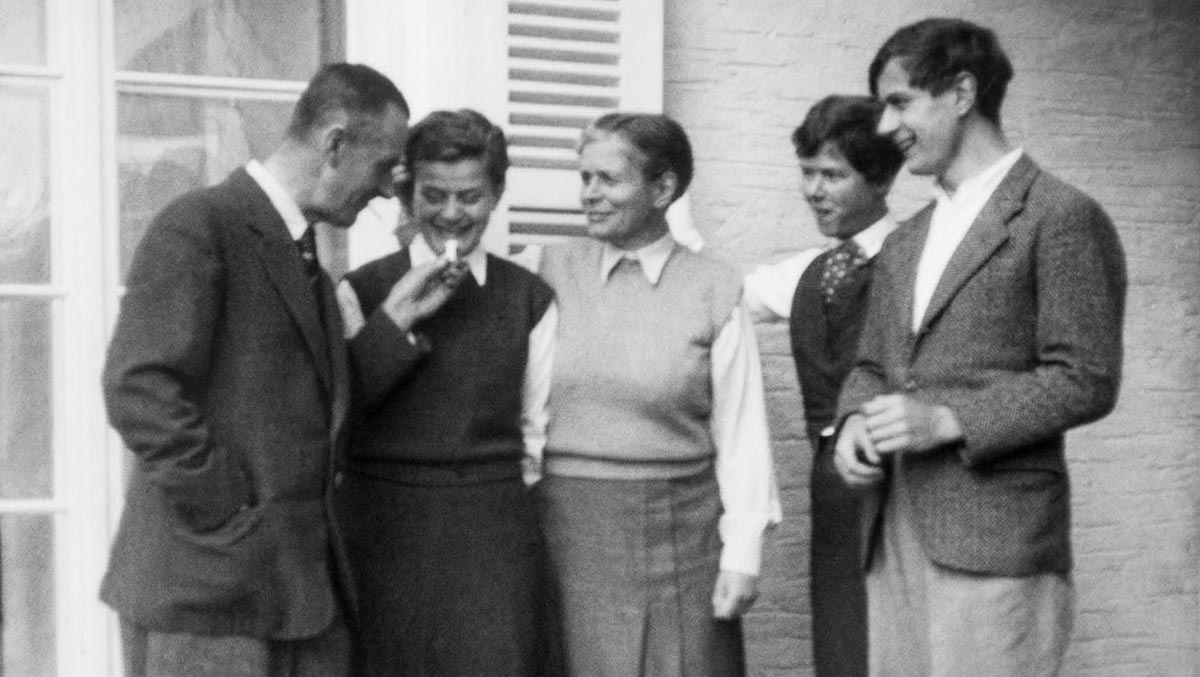
Thomas Mann’s Doktor Faustus, the other essential Faustian novel of the 20th century, along with Bulgakov’s, was published in 1947, at which point its author was living in exile in Los Angeles. Like Klaus, Thomas saw the Devil’s bargain at the core of the Faust legend as emblematic of the choice facing contemporary Europe.
Adrian Leverkühn, the composer protagonist of Doktor Faustus, contains elements of German thinkers such as Friedrich Nietzsche and Richard Wagner, whose ideas had influenced Nazi ideology. But Leverkühn is also modeled on Arnold Schoenberg, the composer whose 12-tone technique was condemned as degenerate by the Nazis. Mann engages the Faust legend to examine how artists in the midst of a regime such as Nazism can pursue greatness while resisting the temptation to succumb to evil.
Leverkühn’s bargain, his soul in exchange for musical genius, leads only to madness. Having deliberately contracted syphilis in order to deepen his artistry through madness, Leverkühn instead deteriorates, bringing misfortune to everyone closest to him, including his young nephew, who dies while Leverkühn is writing an oratorio called The Lamentation of Doctor Faustus. Leverkühn’s decline plays out against the backdrop of Germany’s own, with Mann decisively applying the Faust legend and its deadly wager to both an individual and an entire nation at a crucial period in its history.