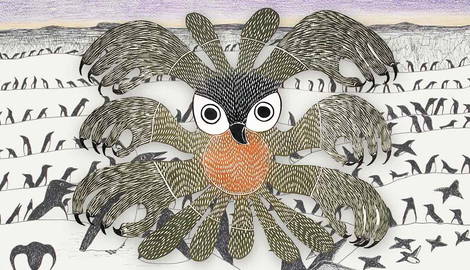
Inuit art is an umbrella term because Inuit art is as varied as the people who inhabit the Nunangat (ᐃᓄᐃᑦ ᓄᓇᖓᑦ), the Inuit homeland in Arctic Canada. Inuit people are not a homogeneous group—the Nunangat itself is divided into four regions. Similarly, Inuit culture is not as uniform as some might believe. Since the early 1960s, Baffin Island and Cape Dorset (Kinngait), a small village at the island’s southern tip, have been the site of a uniquely rich Inuit artistic production. To put it with Canadian journalist Sarah Milroy, “ … the resulting phenomenon is unique: with a population of 1,363, Cape Dorset may be the only community in the world where art constitutes the leading industry.” The diverse works of Inuit artists Manasie Akpaliapik, Kenojuak Ashevak, Tim Pitsiulak, and Kananginak Pootoogook, are inextricable from the wildlife and cold landscapes of Baffin Island.
1. Manasie Akpaliapik (ᒫᓇᓯ ᐊᒃᐸᓕᐊᐱᒃ)
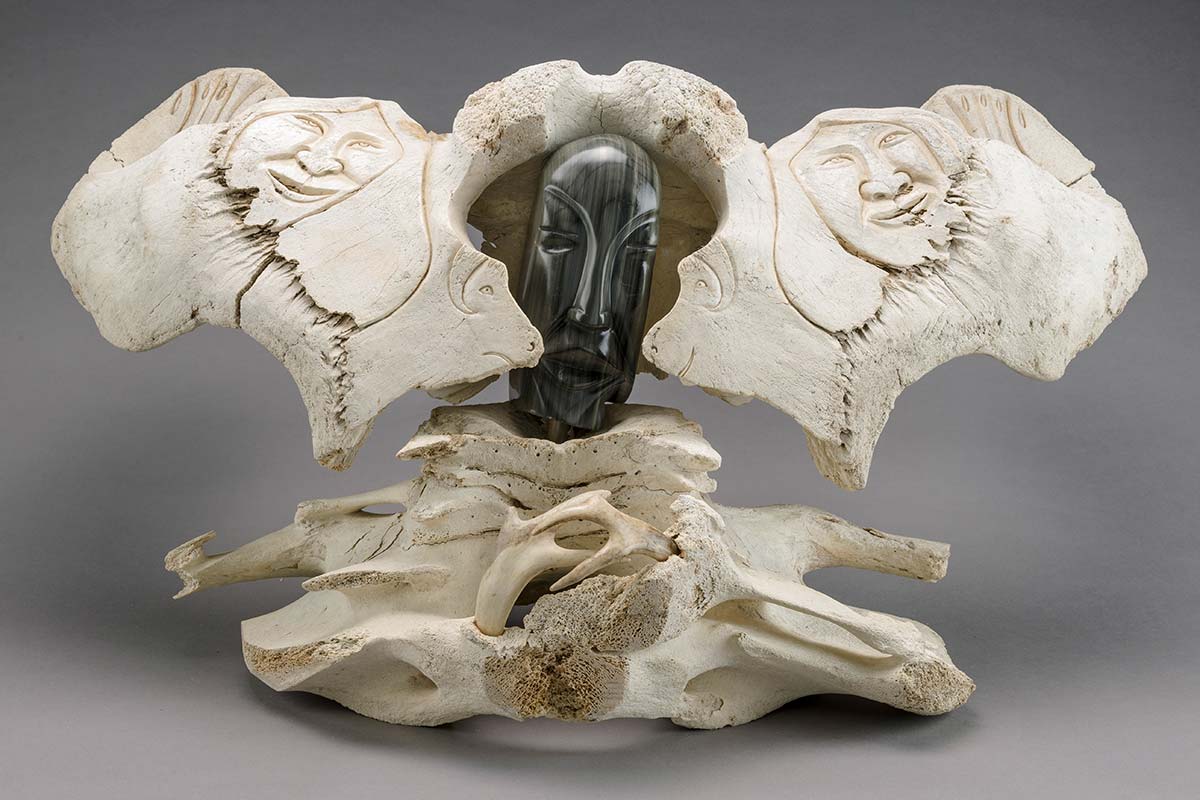
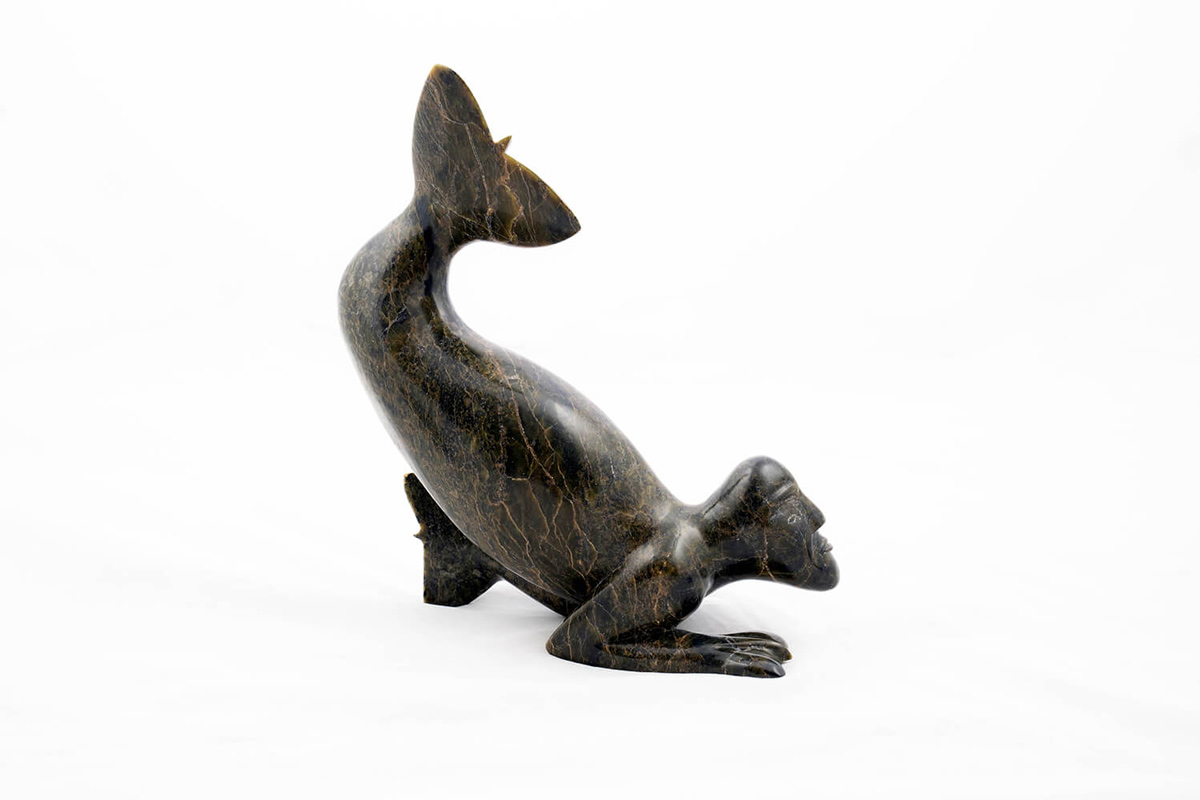
Since the 1980s, Manasie Akpaliapik has been creating sculptures from materials such as whale bones, antlers, skulls, walrus tusks, musk ox horns, jawbones, and vertebrae. He has revolutionized Inuit and Canadian art by transforming what caribou and whales have left behind—whether willingly or unwillingly—into evocative masterpieces. In this unique relationship of mutual respect, every part of the animal is used, as each fragment, even the smallest, serves a purpose long after the animal has passed away.
In Inuit tradition, owls are believed to shepherd the spirits of the deceased into the afterlife and ravens are messengers carrying the prayers of the living to the spirit world. In Inuit traditions, as well as in Manasie’s works, the lives of human beings are inseparable from those of animals.
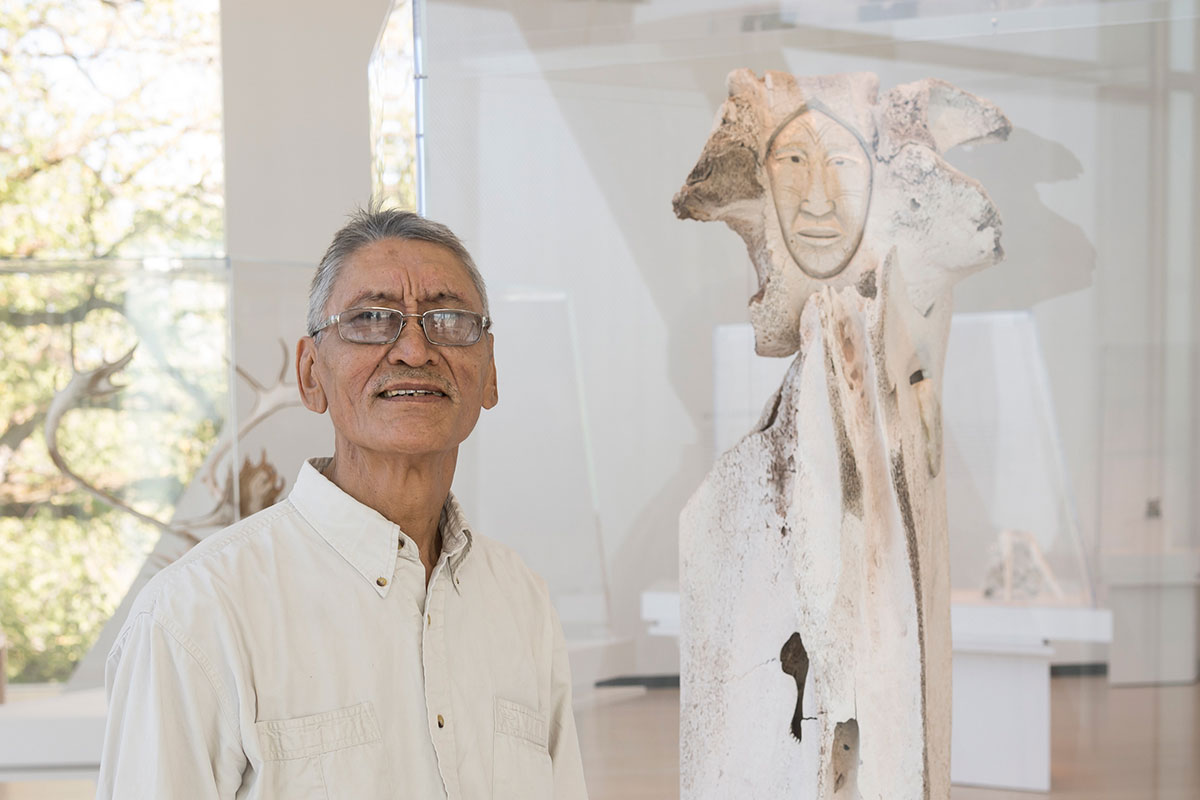
Born in 1955 in Ikpiarjuk (ᐃᒃᐱᐊᕐᔪᒃ)—which means “the pocket” in Inuktitut, the language of the Inuit—Manasie grew up in a small community of seal hunters in the northern part of Baffin Island, located in the Qikiqtaaluk (ᕿᑭᖅᑖᓗᒃ) region of Nunavut. In this predominantly Inuktitut-speaking community, both his parents, Lazaroosee Akpaliapik and Nakyuraq Akpaliapik, were carvers. He first learned to carve from his great-aunt, Paniluk Qamanirq, and his adoptive grandparents, Elisapee and Peter Kanangnaq Ahlooloo. However, at the age of twelve, Manasie was sent to a residential school in Iqaluit.
For four years, until he left school at 16, he was prohibited from speaking Inuktitut and encouraged to abandon the culture of his people and embrace Christianity on the path to assimilation. In 1980, after the tragic death of his wife and children in a house fire, he moved to Montreal, Québec.
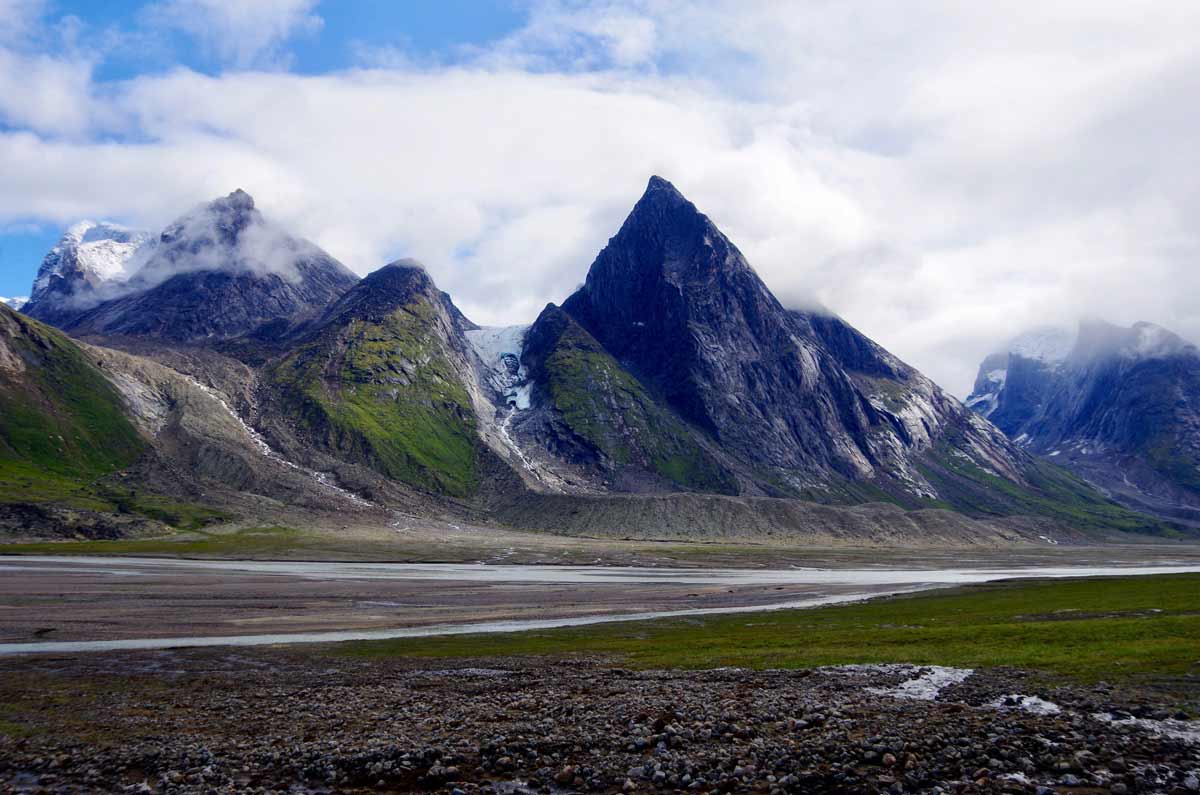
Pond Inlet, not far from Ikpiarjuk, on northern Baffin Island, photograph by Isaac Demeester, 2021. Source: Unsplash
In Montreal, Manasie continued to carve. He also became friends with Raymond Brosseau, one of Canada’s most active art collectors and lovers of Inuit art. Every summer, he returns from his “new” home in Ontario, near Cobourg, to Ikpiarjuk, the homeland of his family and ancestors. There, he undertakes long trips with friends and family, always ready to lend him their boat to search the shores and Arctic waters of Baffin Island for whale bones and caribou antlers.
While Akpaliapik’s artworks are unique and immediately recognizable, they do not exist in a vacuum. They are part of a long-standing tradition, likely the first and oldest Indigenous culture in present-day Canada, which originated thousands of years ago in the Canadian Arctic, one of the most barren and cold regions on Earth.
Arctic Bay, photograph by Isaac Demeester, 2019. Source: Unsplash
Over the years, archaeologists have unearthed various examples of wooden masks and excavated bears and falcons dating back to the High Dorset era (or Dorset Culture). These sculptures, usually made of ivory but also bone, antler, and wood, were initially hollowed out and then perforated so as to resemble harpoon heads.
Archaeologists have also found “swimming figurines,” likely crafted between 1000 and 1200 CE by the Thule people, the ancestors of the Inuit. Usually faceless, these “swimming figurines” depict a vast array of animals, primarily waterbirds and seals, along with human beings and spirits, with their lower bodies invisible beneath the waterline.
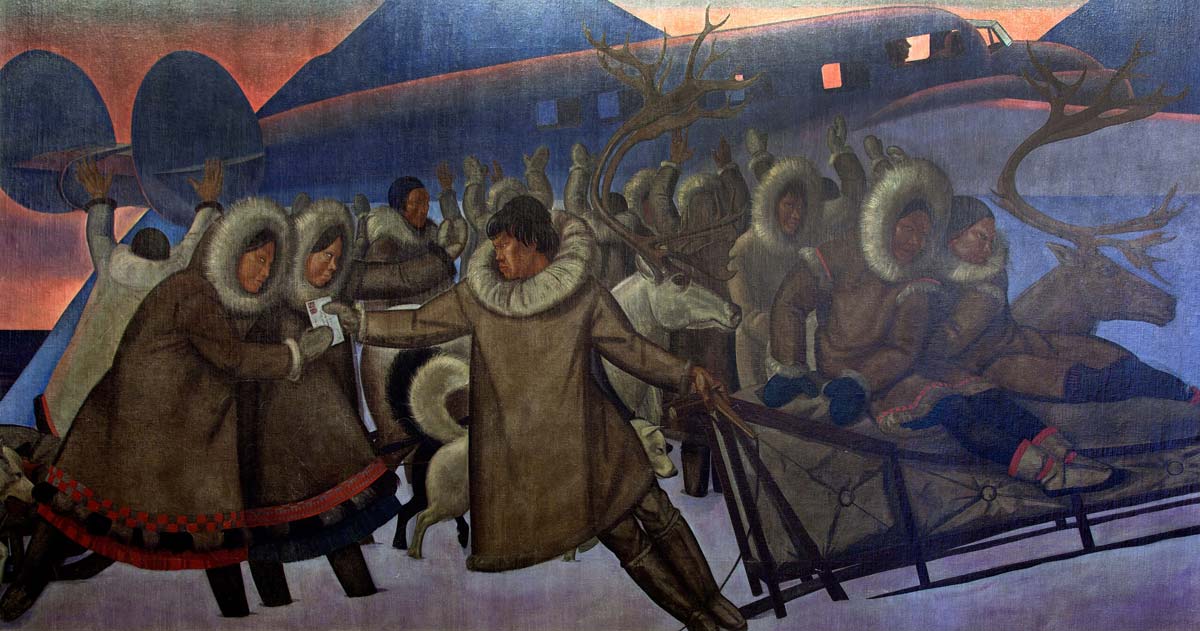
Movement is central to Manasie’s creative process. During his journeys from Ontario to the Arctic, he immerses himself in the environment from which the whalebones and caribou antlers originate. He crafts his artworks in what he refers to as the “South,” the Canadian South, but all the materials he uses—from hair to bones—come from the North, the land where his ancestors have lived and died for centuries.
Just as people used to pay tribute to the animals they hunted through homages and rituals, Manasie honors the animals of the Arctic by incorporating their bones, hair, and antlers into his sculptures. Without them, his sculptures would not exist. Manasie’s works blur and discard established categories that tend to draw a line between the animal kingdom and the human race.
In his studio in Ontario, skulls and antlers become vessels for expressing the pain and struggles of his darker days, marked by the death of his wife and children and his alcohol addiction, as we see in his dramatic piece Self-Destruction (1995), currently housed at the Musée National des Beaux-Arts du Québec (MNBAQ).
Manasie has always been vocal about the challenges affecting Inuit communities “up in the North.” In a 2023 interview with Inuit Quarterly, he stated “Alcoholism is one of the biggest problems in the North, and that’s what I was struggling with for a long time. I’ve been sober now for seven years. They always say, if you change your life for the better, then good things will come your way. It’s true—a lot of good things are going my way.”
2. Kenojuak Ashevak (ᕿᓐᓄᐊᔪᐊᖅ ᐋᓯᕙᒃ )
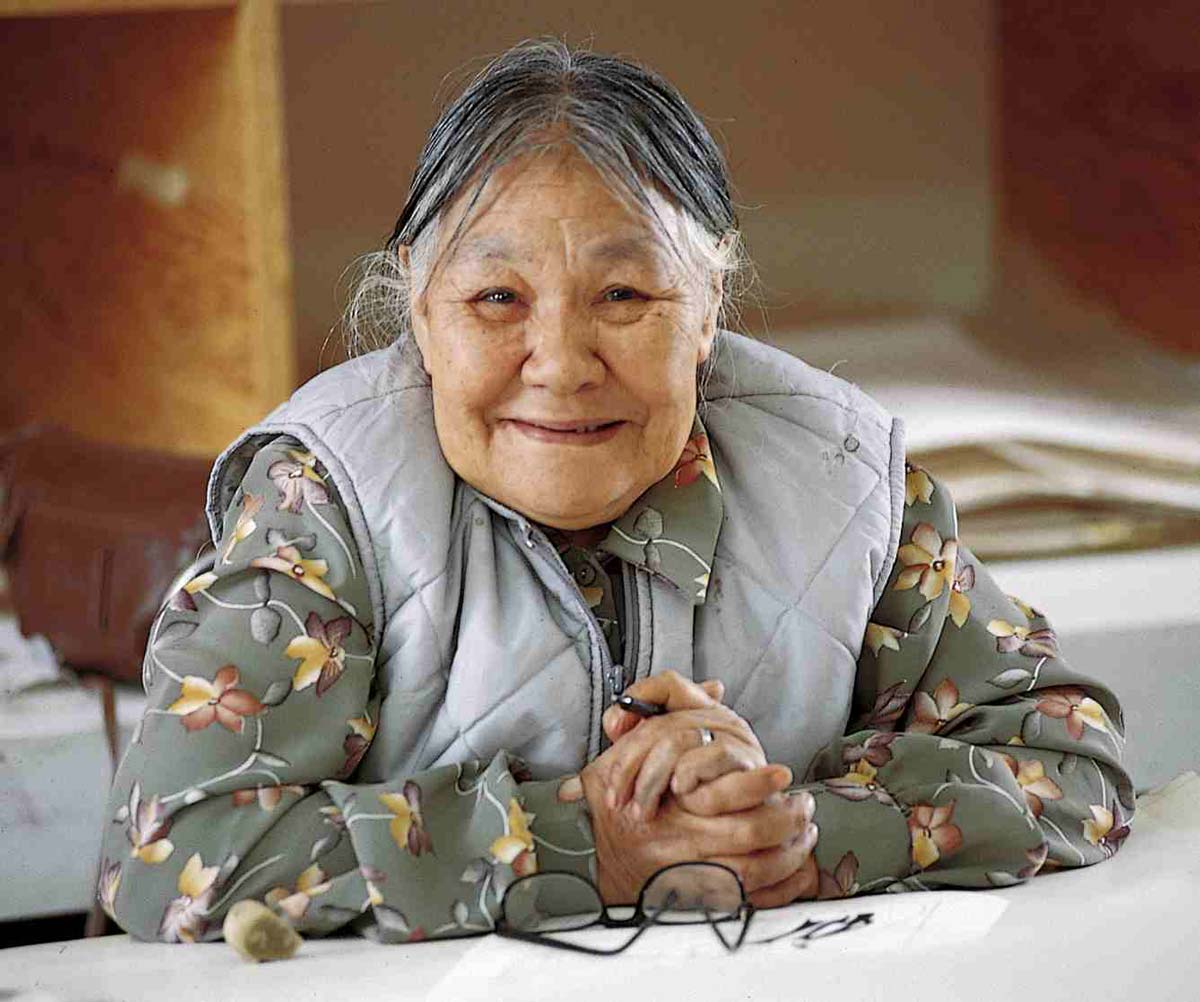
In Inuktitut, the language of the Inuit, Baffin Island is called Qikiqtaaluk (ᕿᑭᖅᑖᓗᒃ), meaning “very big island.” Baffin Island is indeed Canada’s largest island. Kenojuak Ashevak (1927-2013) was born here, in the igloo of her parents, Silaqqi and Ushuakjuk, in the outpost camp of Ikirasaw, on the island’s southern coast. Her father was a hunter, fur trader, and shaman, an angakkuq who claimed he could transform himself into a walrus and predict good hunting seasons. When he died prematurely in 1933, Silaqqi took her six-year-old daughter, Kenojuak, to live with her maternal grandmother, Koweesa.
Growing up with her grandmother, Kenojuak learned the crafts of her ancestors, the Nunatsiarmiut, the Inuit of Baffin Island, commonly referred to as Baffinland Eskimo by the non-Indigenous population. She mastered the complex art of processing and repairing seal skins and learned how to make resistant and waterproof amautiit, the traditional female Inuit parka made of caribou skin.
In 1952, while already married to Johnniebo Ashevak (ᔭᓂᕗ ᐊᓴᕙ), she tested positive for tuberculosis and was sent to Parc Savard Hospital, in Quebec City, one of the oldest cities in North America. She remained here, in the city founded by French explorer Samuel de Champlain (1567-1635) in 1608, for three years, until the summer of 1955. Three years that marked a turning point in her life; it was here that she began to draw extensively and met sculptor Harold Pfeiffer (1908-1997), who encouraged her to pursue beadwork, to create Inuit appliquéd bags and clothing, not just as a hobby, but as a proper job that could sustain her financially. Finally, in the mid-60s, Kenojuak moved with her husband and their children to Cape Dorset, Kinngait (ᑭᙵᐃᑦ), which means “high mountain” in Inuktitut, a hamlet at the southern tip of Baffin Island.
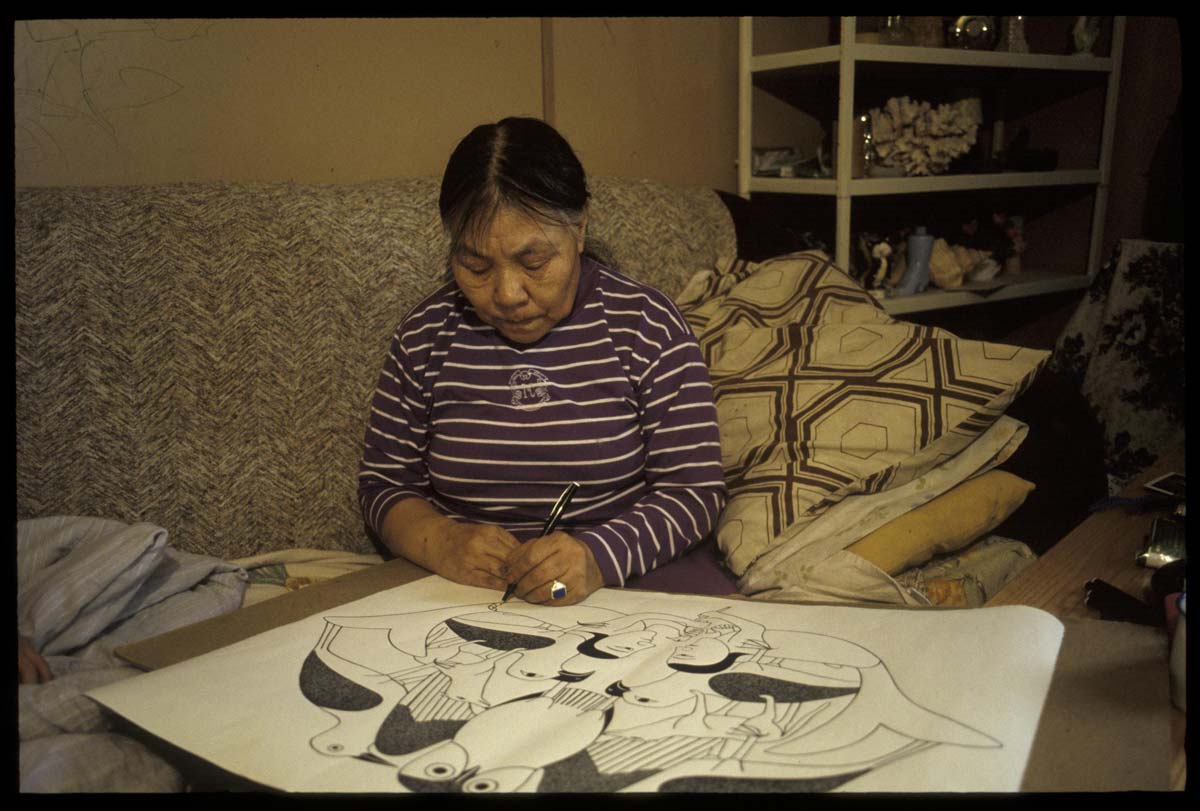
She spent the rest of her life on Kinngait, in her wood-frame home, where, as Sarah Milroy puts it, “she could be found lying on her stomach on a queen-size mattress in her living room, drawing and drawing, making the images that would then be turned into prints over at Kinngait Studios.”
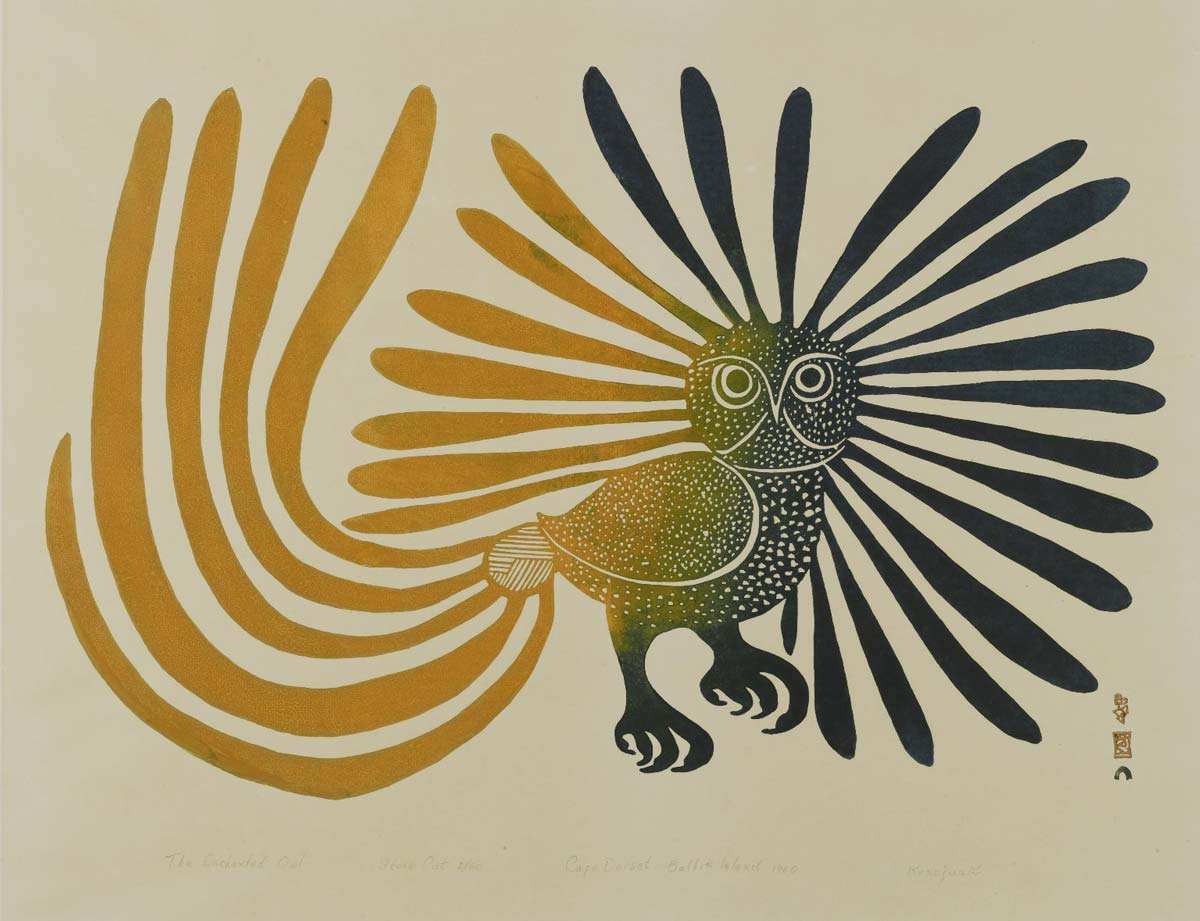
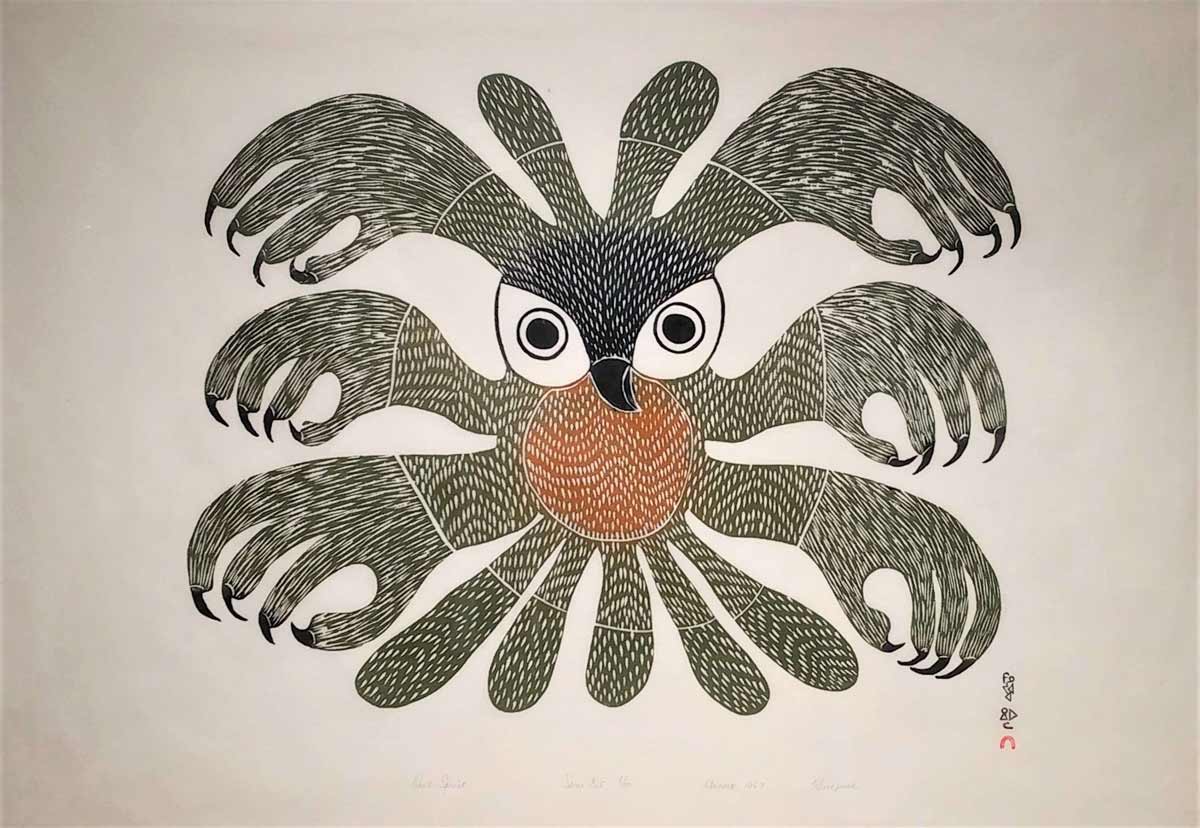
It was in Kinngait that she met James Archibald Houston (1921-2005), designer, children’s author (and later Inuit art promoter), along with his wife Alma. They immediately recognized the beauty and potential of the sealskin bags she was designing, stitching, and beading along with other women in her community, and urged her to translate the figures and scenes she adorned her bags with onto paper. The rest is history. Ashevak’s prints are immediately recognizable for their bright colors, lively graphic buoyancy, and the round, almost dreamlike shapes of the animals she depicts.
The enchanted owls she became known for in the 1970s are always shown facing the viewer. Their feathers pop out from their bodies and extend all around them as if to surround and protect them.
Unlike those painted by other Inuit artists, including her grandson, Tim Pitsiulak, Ashevak’s animals—owls, packs of wolves traversing the Arctic, rabbits eating seaweed, foxes, and “bird humans”—inhabit a dreamlike world devoid of human figures, where the sky and the ground are often left out. In this suspended and serene void, dogs are taunted by birds flying high above them, polar bears roam the Earth accompanied by spirits, birds are caught in mating dances, and loons engage in playful wrestling with Sedna (ᓴᓐᓇ), the Inuit Goddess of the Sea. This is the world Kenojuak grew up in in the 1930s and 1940s, the world of the Canadian Arctic, where wolves and bears roamed freely, and survival could never be taken for granted.
3. Timootee “Tim” Pitsiulak (ᑎᒻ ᐱᓯᐃᓚ)
Kenojuak Ashevak passed away at the age of 85, on January 8, 2013, in her wood-frame home in Kinngait. Two years earlier, when the exhibition Inuit Modern opened in Toronto, she traveled to the Art Gallery of Ontario as a visiting dignitary, accompanied by her nephew, Tim Pitsiulak (1967-2016). Tim was born in Kimmirut (ᑭᒻᒥᕈᑦ), Kuujjua, “Great River,” as it is called in Inuktitut, on southern Baffin Island, on the shore of Hudson Strait, but spent most of his life in Cape Dorset, hunting, drawing, carving, and making jewelry. His parents were Napachie and Timila Pitsiulak.
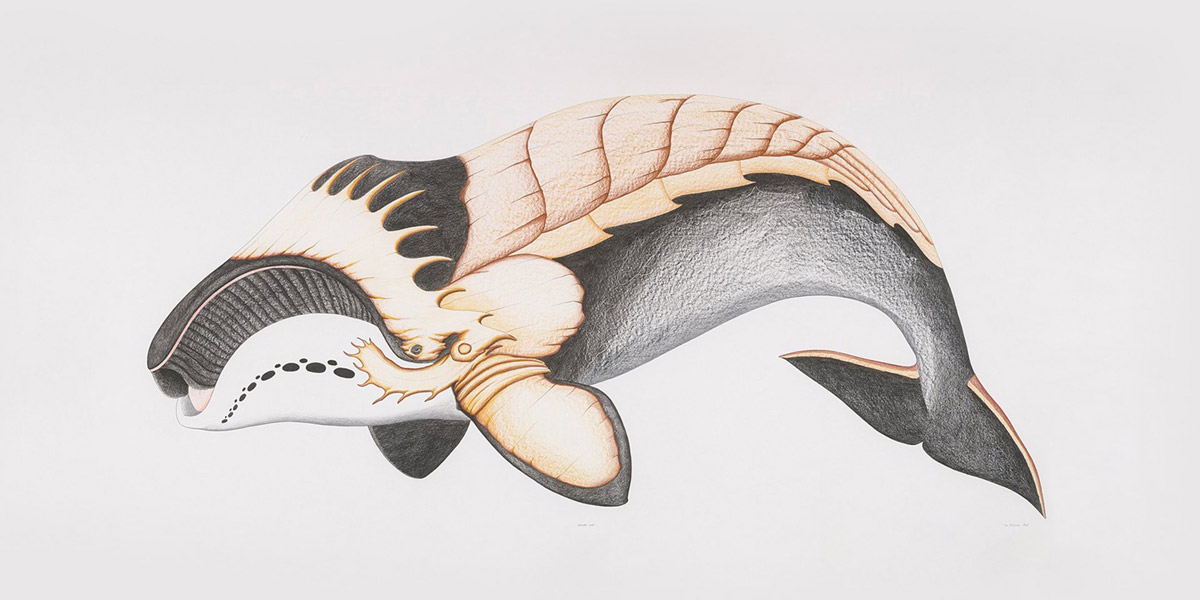
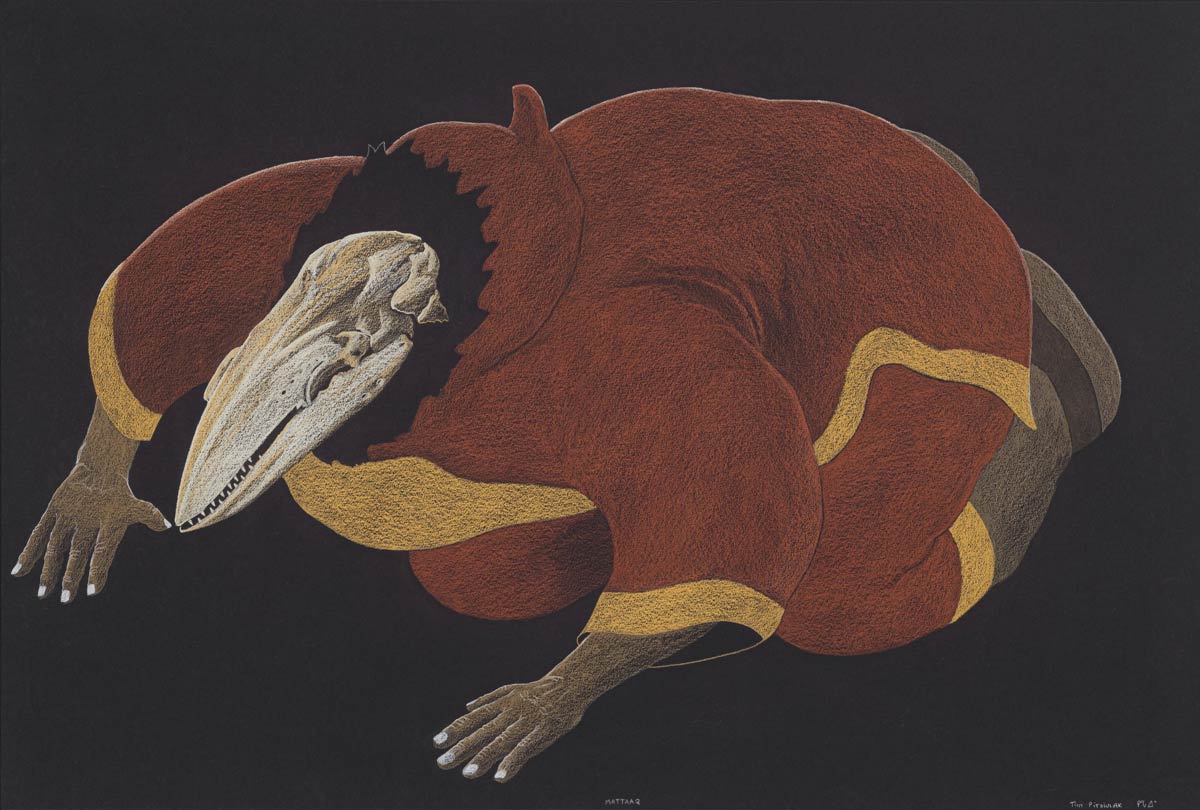
During his hunting trips, equipped with a gun and a camera, he often took pictures that would become the basis for his artworks. Like Ashevak’s, Tim Pitsiulak’s works prominently feature animals.
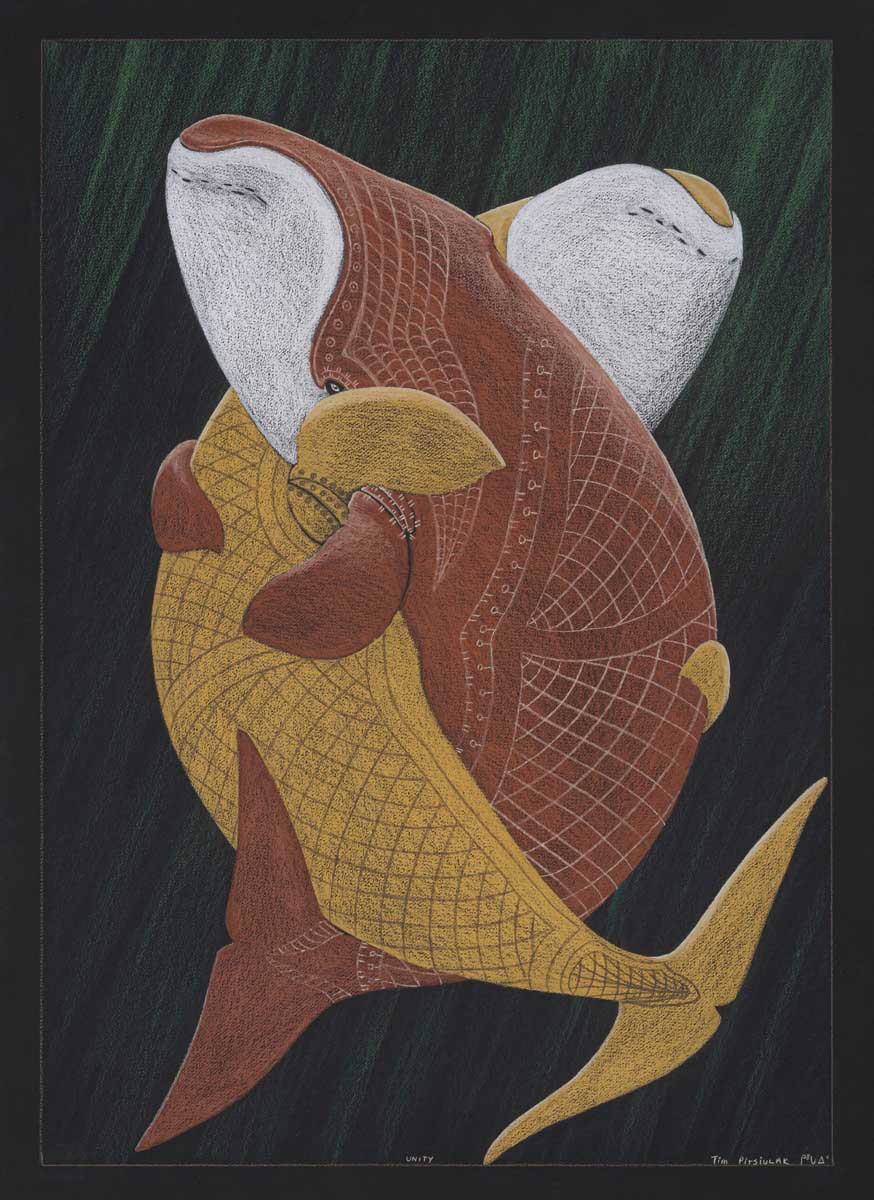
Unlike Ashevak’s, however, the animals in his drawings are extremely naturalistic and life-like. The photographic likeness of his white bears, narwhals, weasels, moose, muscular Greenland sharks, weary-eyed caribou, and beluga whales is striking. Animated with a liveliness and agency rarely seen in Western art, Pitsiulak’s animals are both mythical figures and sentient beings, living by their own set of values and morals, as they are caught scratching themselves or deep diving into the frigid arctic waters. The ocean, which Pitsiulak mostly paints in a uniform black and blue, is the realm of whales, walruses, and seals, where they can swim and dive and play freely.
Pitsiulak was also a skilled hunter, who deeply respected Nunavut’s wildlife while also making use of modern technologies, and it shows. In his works, he carefully blends Inuit traditional ways of life and traditions with the modernity represented by motorized boats, rifles, Ski-Doos (snow machines), and flaming orange Caterpillar Telehandlers.
Pitsiulak once said that his “inspiration to be an artist comes from my aunt, Kenojuak Ashevak, because she is the oldest and the best.” In 2013, two of his belugas and a bowhead whale were featured on Canada’s 25-cent coin. 43 years earlier, his grandmother, Kenojuak Ashevak, had seen her print, Enchanted Owl, chosen by Canada Post for a six-cent stamp commemorating the 100th anniversary of the Northwest Territories, making her the first Inuk artist to be featured on a Canada Post stamp.
Today, Pitsiulak’s drawings, lithographs, photographs, and sculptures are housed in museums and galleries across Canada, from the Winnipeg Art Gallery to the National Gallery of Canada in Ottawa.
4. Kananginak Pootoogook (ᑲᓇᒋᓇ ᐳᑐᒍᑭ)
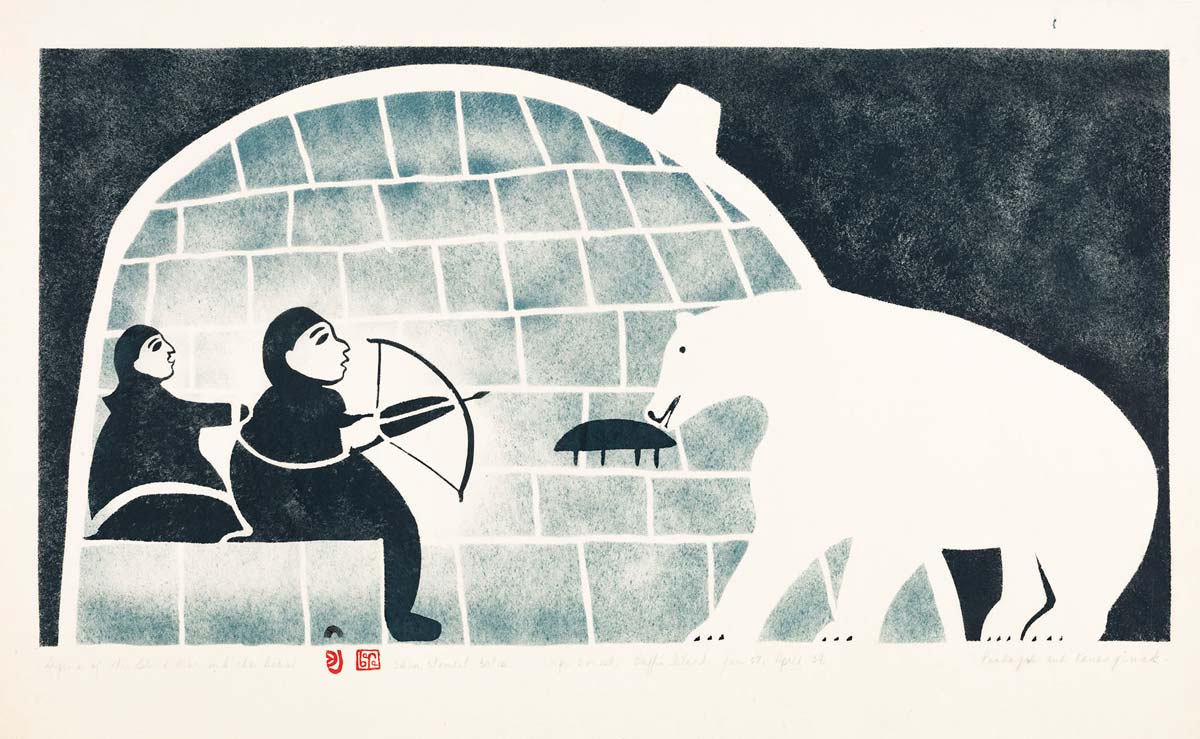
In 1959, at the age of 24, Kananginak Pootoogook (1935-2010) created his first print, the Legend of the Blind Man and the Bear, in collaboration with his father, Josephie, a hunter and respected camp leader. The influence of Japanese art and printmaking, introduced to the Cape Dorset Inuit community by James Houston and his wife Alma, is clear in this work. This early print encapsulates Kananginak’s artistic approach, which he maintained and honored from the 1960s (when he produced his first artworks) until his death in 2010.
The Legend of the Blind Man and the Bear transports the onlooker inside a split-open Inuit igloo. The viewer is inside and outside the igloo at the same time, just like the imposing white bear, whose hind legs are outside the igloo, in the snow, while his front legs have already crossed the igloo’s threshold. Inside the igloo, two men—perhaps a father and son—sit together. The man, armed with a bow and arrow, is ready to strike.
Though the scene is naturalistic, the title hints at the legendary origins of the scene represented here. Reality and myth go hand in hand in Pootoogook’s works.
Raised to be a hunter like his father, Kananginak’s life took a significant turn in 1957. Due to his father’s declining health, the Pootoogook family moved from the hunting camp of Ikirassak to Kinngait (Cape Dorset) in Nunavut. Here Kananginak met James Houston and his wife Alma, who dramatically changed the course of his life.
Houston, who had studied printmaking in Japan, introduced Pootoogook and the Cape Dorset community to the works of Japanese master printmaker Un’ichi Hiratsuka. Over the following years, Kananginak helped establish the West Baffin Eskimo Co-operative and eventually became its main spokesperson and president of the Board of Directors.
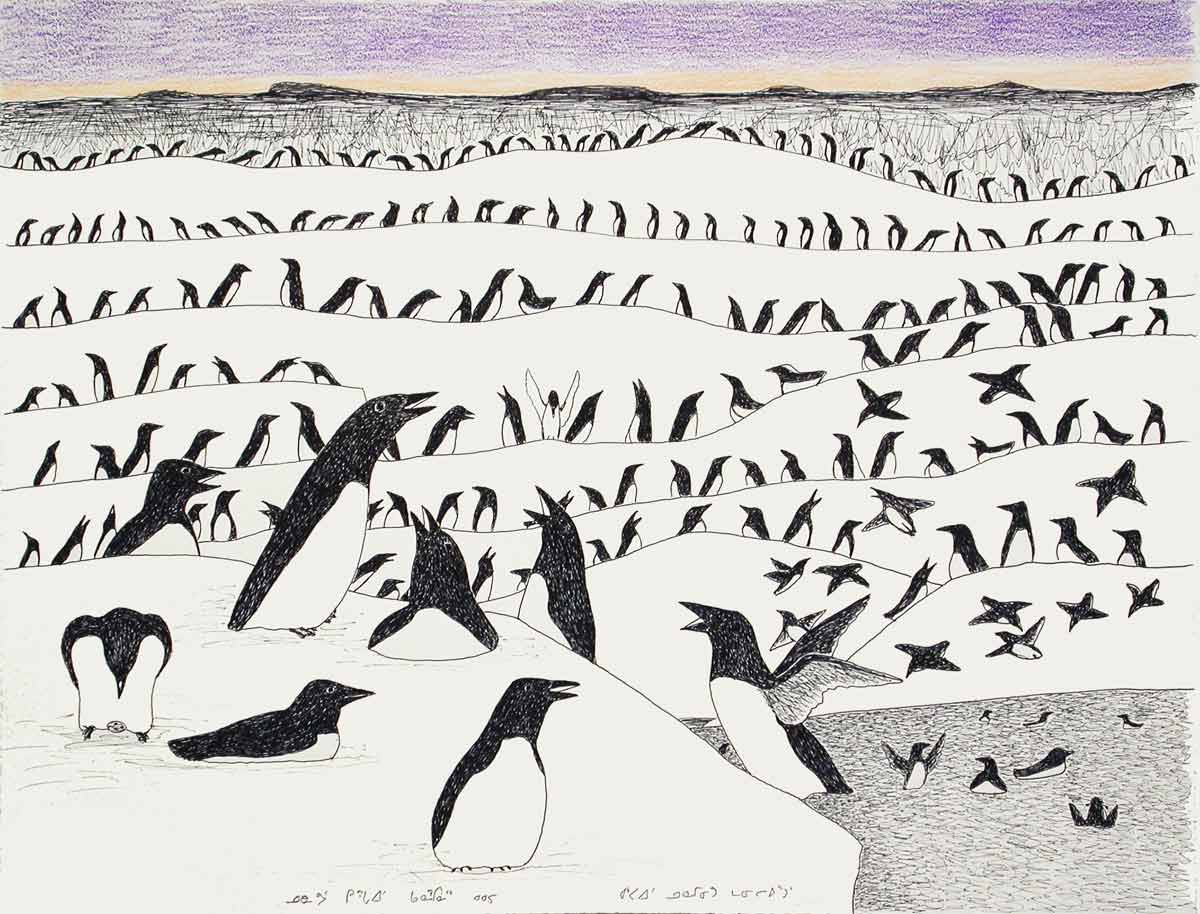
Like most Inuit artists, Kananginak’s style is unique and immediately recognizable. While Pitsiulak primarily depicted whales, walruses, and caribou, Kananginak focused on birds—such as seagulls, ducks, flying geese, black guillemots, owls, and falcons—to the extent that he earned the nickname “the North’s Audubon,” after French-American artist and ornithologist John James Audubon (1785-1851), famous for his interest in North American bird species.
In later years, particularly from the 1980s onward, Kananginak turned his attention to contemporary Inuit society, to the issues faced by many Inuit communities in Nunavut, such as domestic violence and alcoholism, as well as the impact of outsiders—from traders to missionaries and Canadian authorities—who brought skidoos, electric tools, and heavy machinery to the remote North. Today, the name Pootoogook is synonymous with Inuit drawings and prints.
Kananginak’s niece, Annie Pootoogook (1969-2016), one of the eleven children of his brother Eegyvudluk Pootoogook (1931-2000) and artist Napachie Pootoogook, also became a renowned artist, known for her beautiful depictions of contemporary Inuit society, as seen in the tender In the Summer Camp Tent (2002) or 3 Generations (2004-5). Kananginak’s nephew, Goo Pootoogook (b. 1956), has also gained recognition.
Napachie Pootoogook was a notable artist in her own right and one of the many daughters of Pitseolak Ashoona (1904-1983). Some of her most beautiful paintings focus on Inuit women—women wearing beautiful amauti, practicing throat singing outside their igloo, and singing love songs to their children, as seen in Aqaqtuq (Singing Love Song). Ashoona’s granddaughter, Shuvinai Ashoona, is also a beloved Inuk artist.
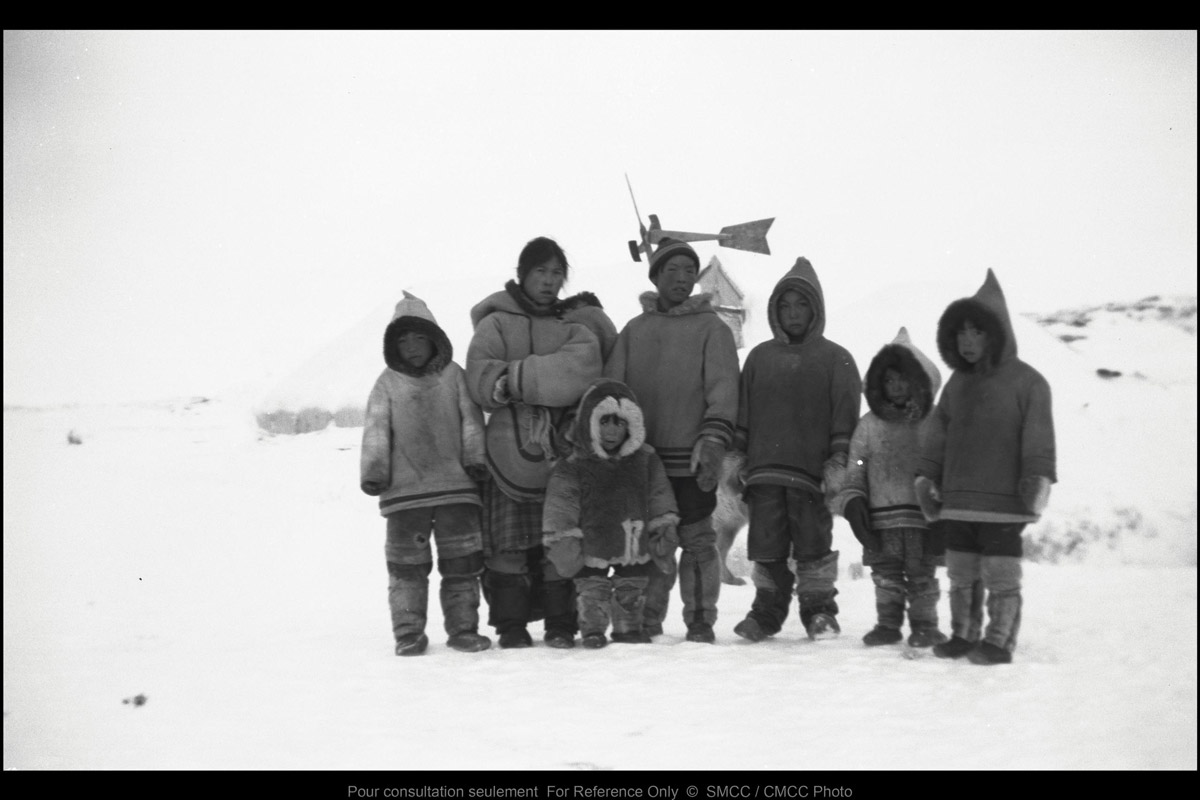
Since the early 1960s, hundreds of Inuit prints, drawings, and sculptures have found homes in southern Canada, particularly in Ottawa, Montreal, and Quebec City. In museums, galleries, and corporate boardrooms, non-Inuit Canadians and foreign tourists can admire the works of Manasie Akpaliapik, Kenojuak Ashevak, Tim Pitsiulak, and Kananginak Pootoogook, compare their works and styles, and catch a glimpse of Inuit society. Some viewers will also pine for what Sarah Milroy describes as “the imagined freedoms of a life” in the Inuit Arctic, away from buzzing metropolises, among caribou, moose, and beluga whales. “Whites imagine Inuit, and Inuit imagine whites,” she writes, and “Inuit art is where their fantasies meet.”
However, Inuit art is more than just a meeting of these different perspectives. The prints, drawings, sculptures, and appliqué bags produced in Kinngait, at the southern tip of Baffin Island, have opened a much-needed window into Inuit society and culture for over 50 years.