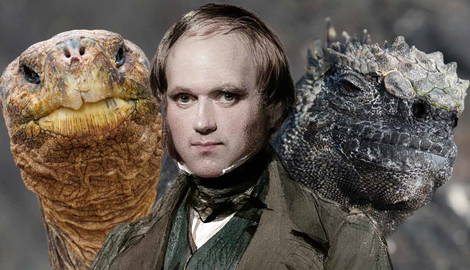

In modern imagination, Darwin’s trip to the Galápagos was a considered observation and quiet reflection that led to scientific realization and triumph. In reality, it was anything but.
At times chaotic, the expedition included bizarre animal experiments and amateurish record-keeping that lacked the professionalism expected from scientists. For 35 days, the Galápagos was at the mercy of someone who, at times, must have seemed quite mad.
The Global Voyage of the HMS Beagle
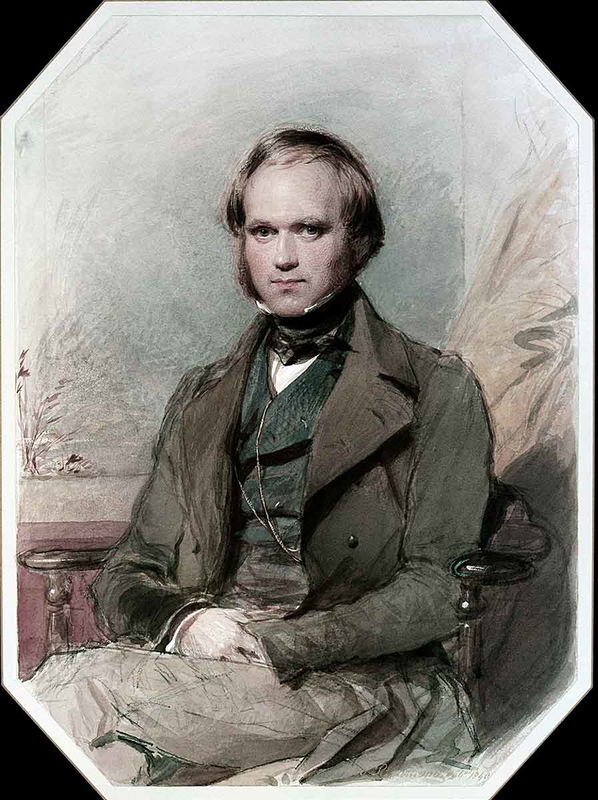
In 1831, the HMS Beagle set out on a survey mission. Charles Darwin, just 22 at the time, was a young and adventurous naturalist on the crew. With many years of experience still ahead of him, it is not inconceivable that adventure was a major focus in the mind of this youth.
Circumnavigating the world, the ship left Plymouth in December 1831 and traveled south through the Atlantic, making many stops in South America. On September 15, 1835, the Beagle reached the Galápagos, and Darwin made the most of his opportunities to explore the islands before the ship departed five weeks later.
After departing, the Beagle sailed across the Pacific, making stops in Tahiti and the coasts of New Zealand and Australia before crossing the Indian Ocean, stopping in Cape Town and turning north to return to England.
Darwin Mislabeled the Galápagos Finches
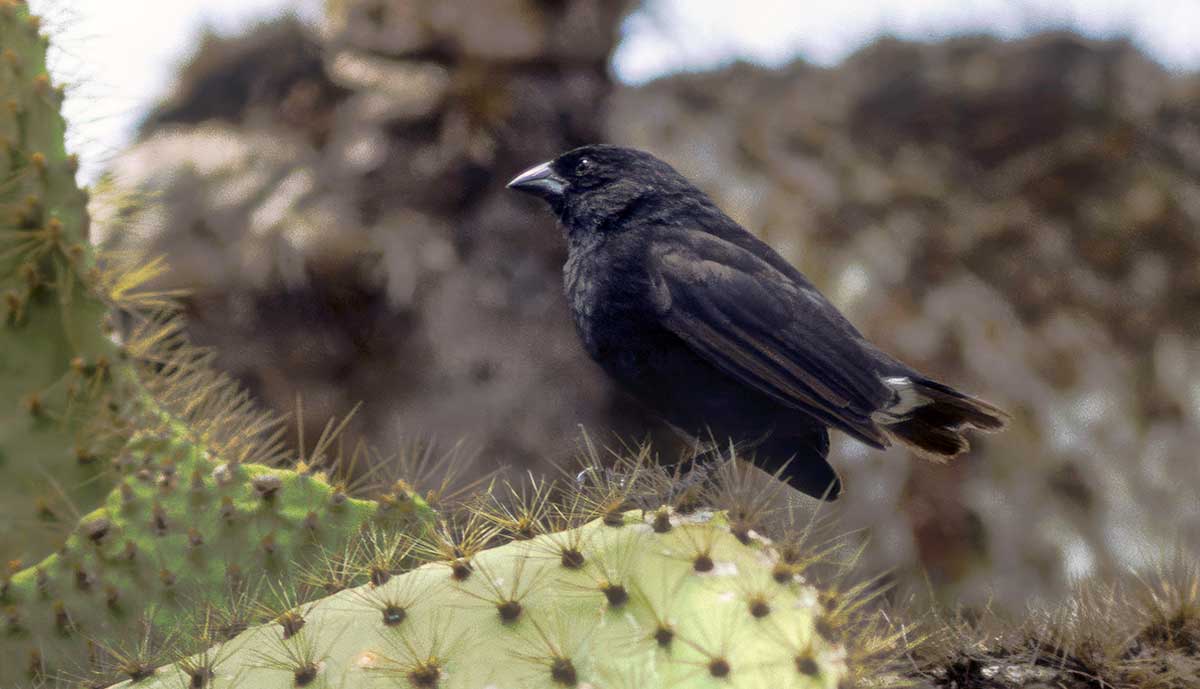
Perhaps in the inexperience of youth, and perhaps done in the haste of excitement, Darwin misidentified a number of species, particularly finches, identifying some as blackbirds and wrens instead of noting that they were various species of finch.
In addition, a bizarre oversight was made in which Darwin failed to identify which island the birds were from, thus invalidating research on distribution across the archipelago. Because of this amateurish blunder, resultant reconstructions had to be left to guesswork, some of which were made years after the initial discoveries.
Noting and correcting Darwin’s mistakes was ornithologist John Gould, who reclassified Darwin’s discoveries with the correct scientific attention.
Riding Giant Tortoises, Eating Scientific Evidence, and Yeeting Iguanas
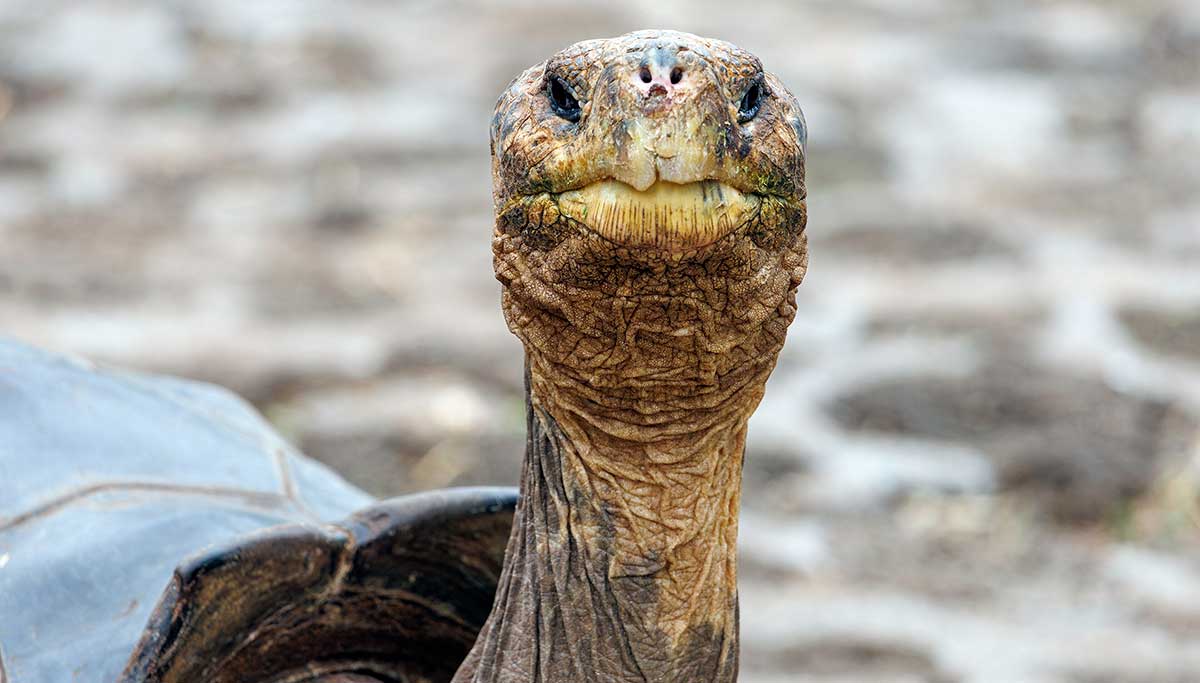
Darwin mentioned that he had initially failed to realize the significance of the different islands in determining species variation. He did not pay sufficient attention to Nicholas Lawson, the Vice-Governor of the Galápagos, who noted that the island home of each tortoise could be distinguished by the shape of their shell.
Not realizing the importance of this fact to the theory he would later develop, Darwin and the crew ate through the tortoises they took aboard and threw their shells, crucial evidence, overboard.
During his research on these creatures, and perhaps in some lighthearted mood, Darwin attempted to ride a tortoise, recalling that it was difficult to keep his balance.
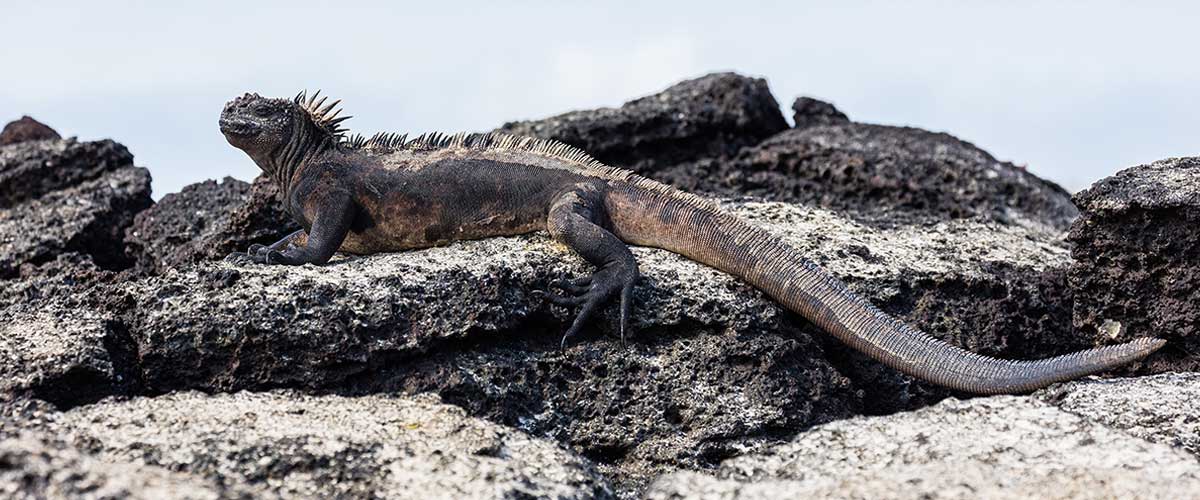
Darwin had a dislike for the appearance of Galápagos iguanas. He described this species as “a hideous-looking creature, of a dirty black colour, stupid and sluggish in its movements.” He also noted someone calling these iguanas “imps of darkness.” He repeatedly tossed one specimen into the ocean to watch it swim back to shore. Darwin noted that this may be because it had no predators on land. This behavior, he noted, seemed like “apparent stupidity,” but was a built-in response that helped the creature evade sharks, as Darwin saw it.
Mockingbirds and the True Catalyst of Natural Selection
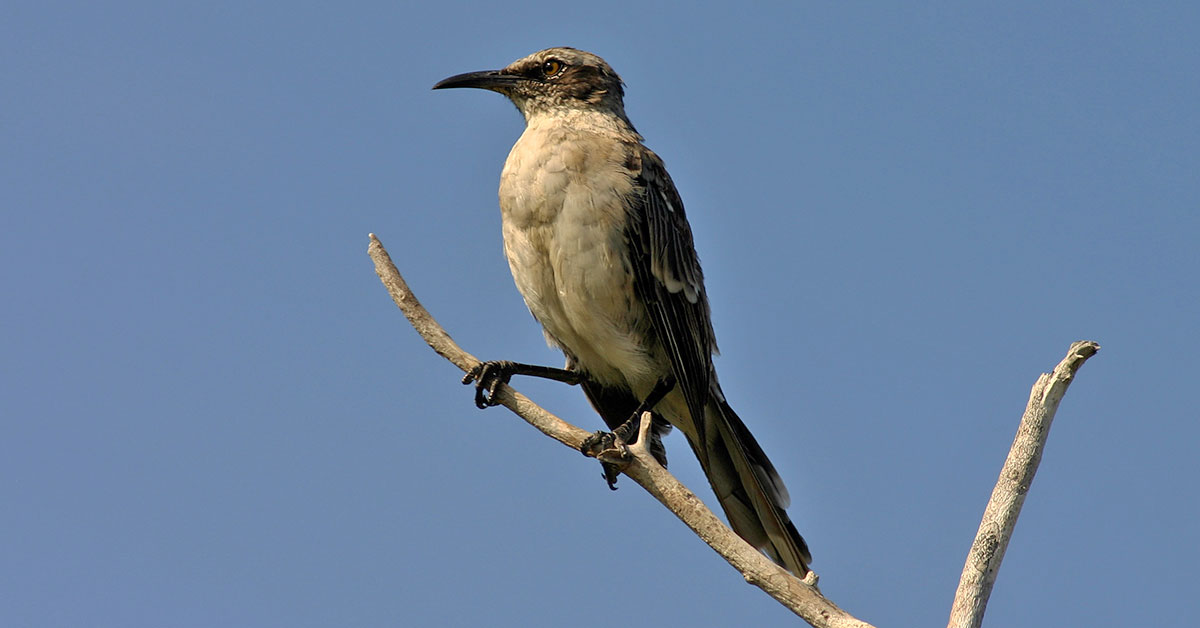
Unlike his work with the finches, Darwin cataloged the mockingbirds of the Galápagos well, noting which islands they came from. Rather than a single immutable species inhabiting the entire archipelago, the animals showed marked differences from island to island. When sailing home, he wondered about what this meant for the stability of species. While there was no eureka moment with regard to the Galápagos Islands, it is suggested that the notes on mockingbird differentiation among the islands helped give rise to the theory expounded in his book On the Origin of Species.
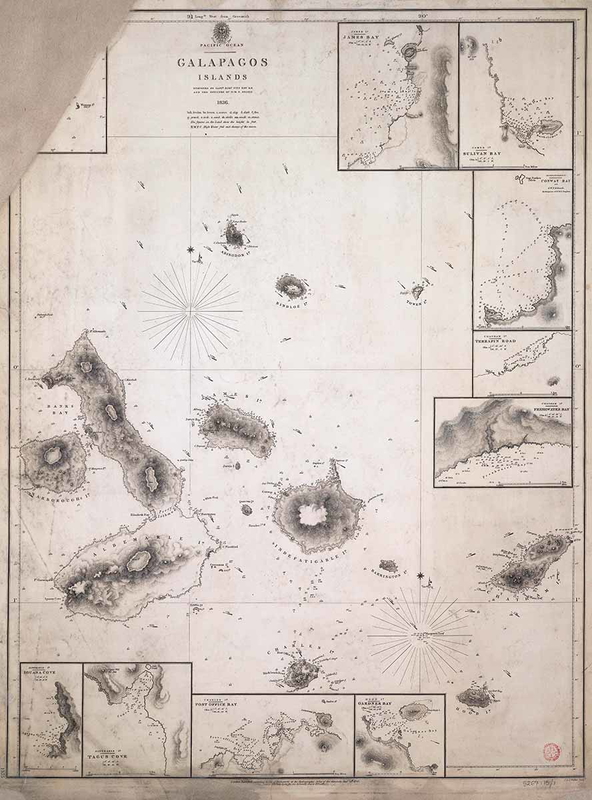
Fieldwork can be a messy enterprise, filled with first-time discoveries that help formalize solid scientific representations later. Darwin, in his youth, and his discoveries on the Galápagos Islands provide evidence for this dynamic. And while, in retrospect, it is easy to roll our eyes at Darwin’s escapades on the archipelago, the work he did was vitally important to our understanding of evolution.