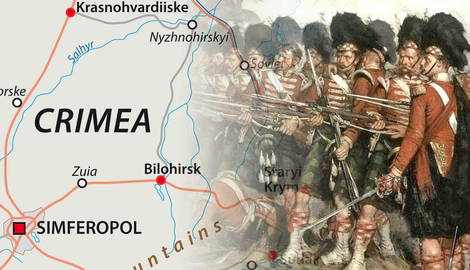

The status of the Crimean Peninsula has been central to public debate since Russia annexed the region from Ukraine in 2014. But this is just the latest bloody conflict for the Black Sea peninsula. For thousands of years, powerful empires have fought over this strategically important piece of land. This is the complex and contentious history of Crimea.
| Date | Events |
| 80,000 – 30,000 BC | Neanderthal habitation, including alongside early humans |
| 5th Century BC | Greek colonization and encounters with the indigenous Tauri |
| 2nd Century BC | Scythians dominate the Tauri and Greeks |
| 1st Century BC | Roman rule as client kingdom |
| 3rd Century AD | Gothic settlement, language survives in isolation until the 1700s |
| Middle Ages | Byzantine and nomadic invasions by Huns, Bulgars, Khazars, and Kipchaks |
| 13th Century | Mongol conquest by the Golden Horde of Batu Khan, Venetian and Genoan trade posts |
| 1475 | Ottoman expansion turns the Crimean Khanate into a vassal state |
| 1783 | Russian annexation under Catherine the Great |
| 1853 – 1856 | Crimean War |
| 1918 – 1922 | Russian Civil War |
| 1941 – 1944 | WWII Nazi occupation |
| May 1944 | Stalinist Deportations |
| 1954 | Transfer to Ukraine |
| 1991 | Dissolution of the USSR |
| Feb. 2014 | Russian annexation |
| Feb. 2022 | Full-scale invasion |
The Geography of Crimea
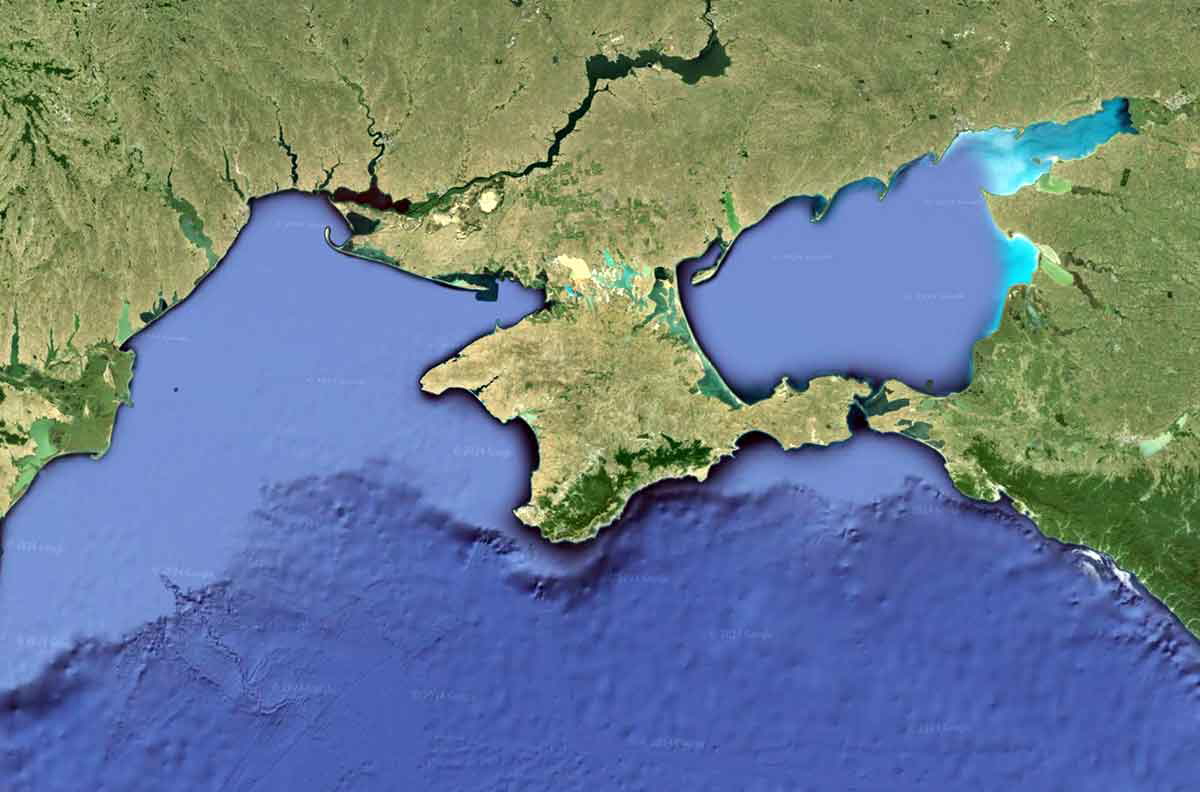
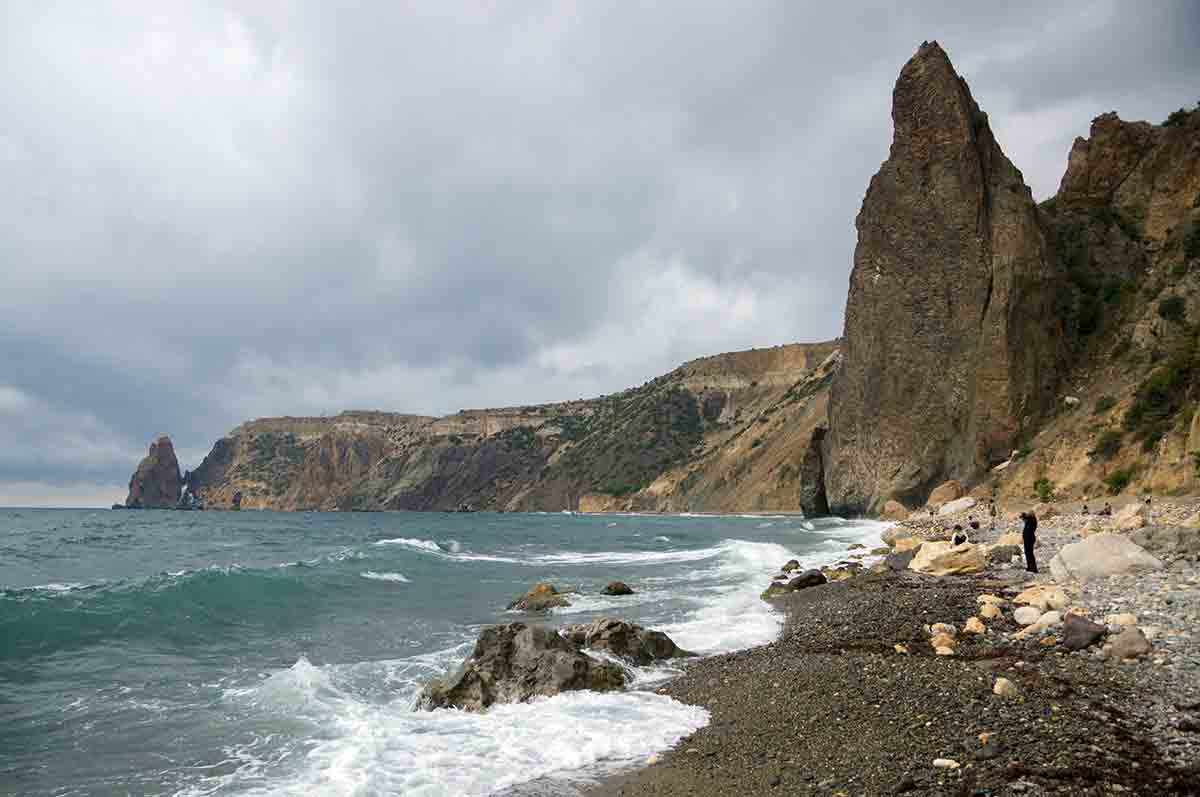
The Crimean Peninsula is a large landmass of 10,400 square miles that juts out into the Black Sea from its northern coastline. Directly to its north are territories that are disputed between Russia and Ukraine. On its eastern flank lies the Kerch Strait, which leads into the Sea of Azov to the north. To the south lies the open waters of the Black Sea, which terminates on the coastline of Turkey. To the west are open waters and the coastlines of Ukraine, Romania, and Bulgaria.
Sevastopol is the largest city on the Crimean Peninsula with a population of almost half a million. Strategically, Sevastopol’s port is of prime concern to Russia, as it represents access to the Black Sea and the Mediterranean beyond.
Crimea’s Early History
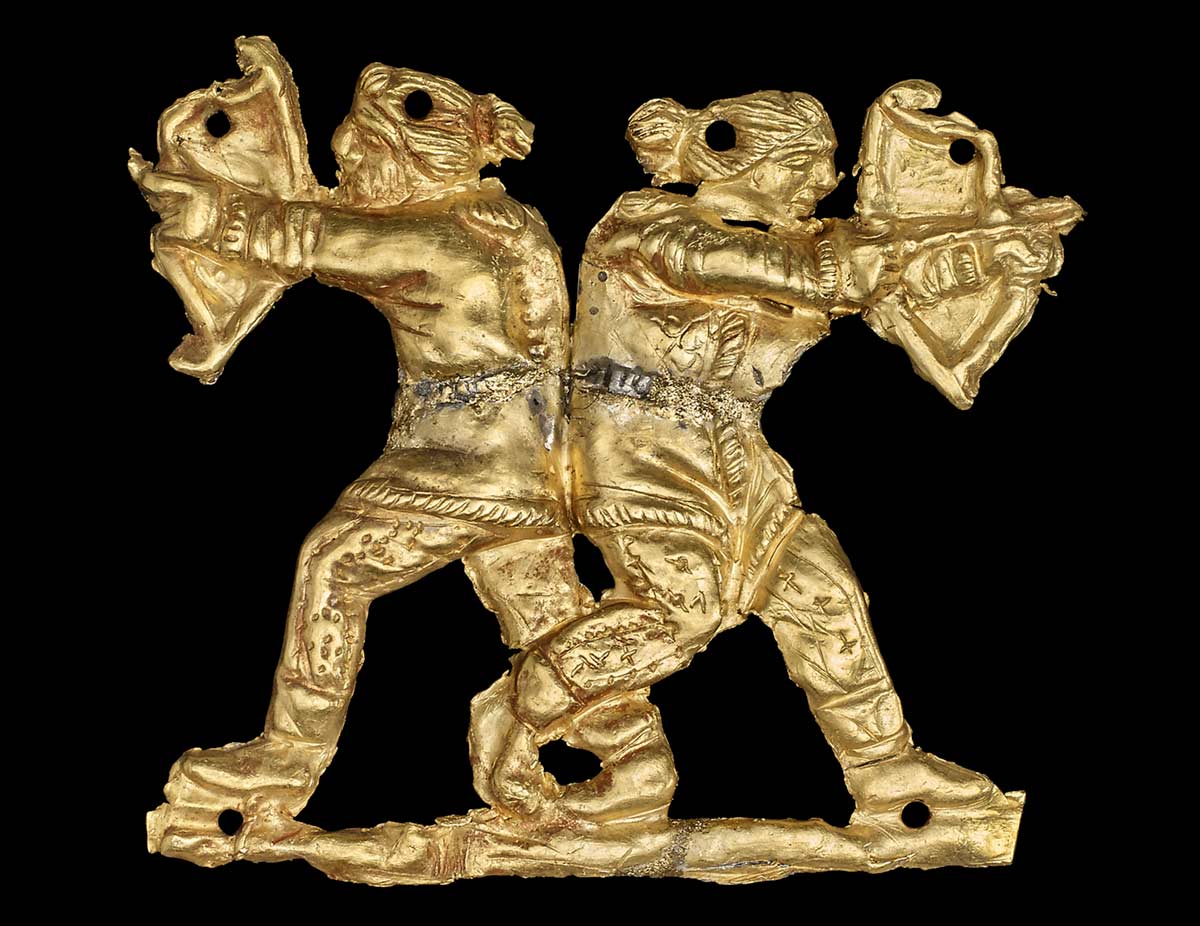
Crimea has been inhabited for tens of thousands of years. Evidence of Neanderthal habitation dates back to 80,000 BC, with the youngest Neanderthal evidence dated to 30,000 BC. If this date is correct, Crimea would have been one of the last places Neanderthals inhabited before they went extinct. There is some overlap in the prehistoric records. It seems that modern humans lived in Crimea alongside Neanderthals for a few thousand years.
In ancient times, the area may have been inhabited by the Cimmerians. There is written evidence for several Greek colonies established in the 5th century BC. When the Greeks arrived, they found the mountainous areas inhabited by a people they called the “Tauri.” There is debate on who the Tauri were. Greek historian Strabo suggests that the Tauri were Scythians, while Herodotus claims they were a separate people.
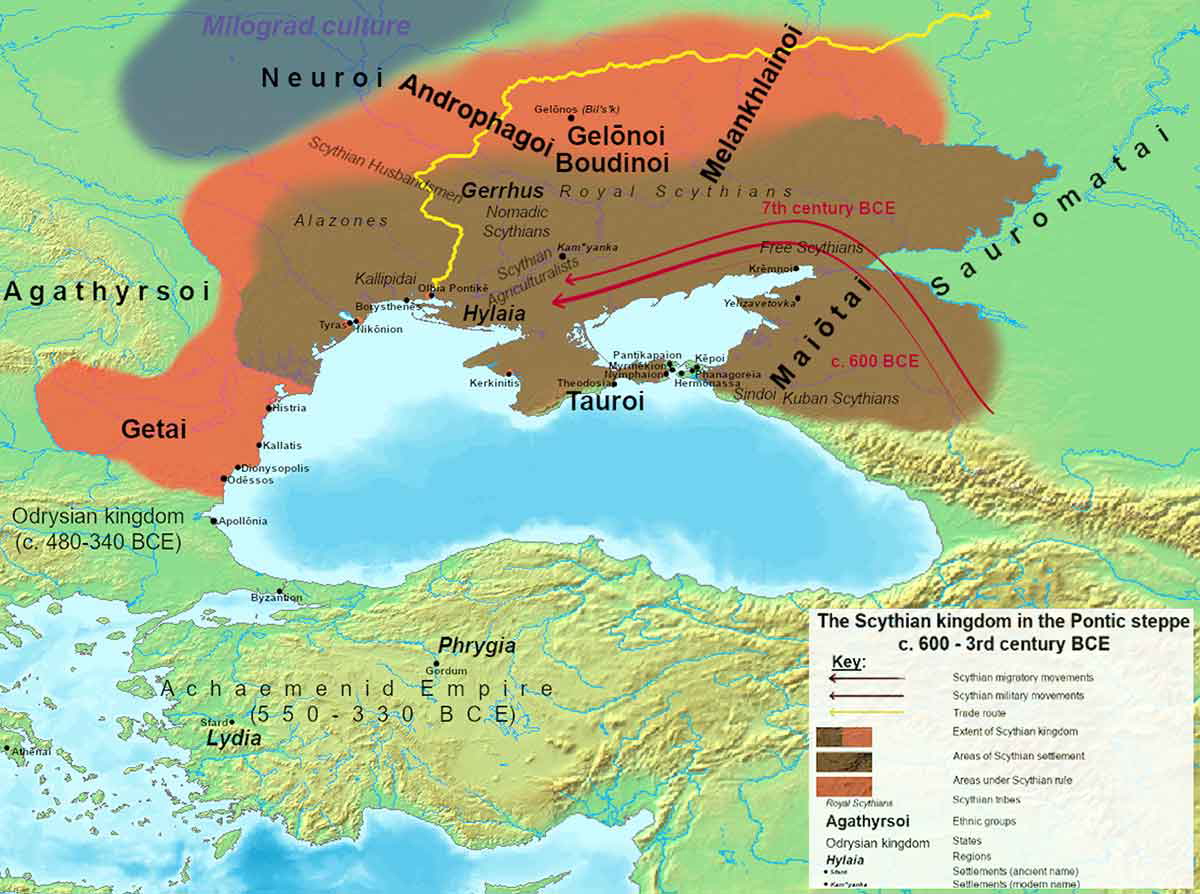
The Greeks viewed the Tauri as a savage and violent people predisposed to raiding. Whether they were Scythians or not, by the 2nd century BC, the Tauri were under Scythian control and continued to plague the Greek colonies, which came under the control of the Bosporan Kingdom, a client state of Rome.
The two most important colonies were Chersonesus in the southwest of the peninsula and Panticapaeum near the Kerch Strait.
After defeating the Pontic Kingdom and suppressing a rebellion several decades later, Roman control over the coastal areas of Crimea was entrenched. This area was integrated as a client state network under the protection of Rome’s Moesia Inferior province and was a thriving trade hub between the Romans and the Sarmatians, Scythians, and tribes of the Zarubyntsi culture.
Crimea in the Middle Ages
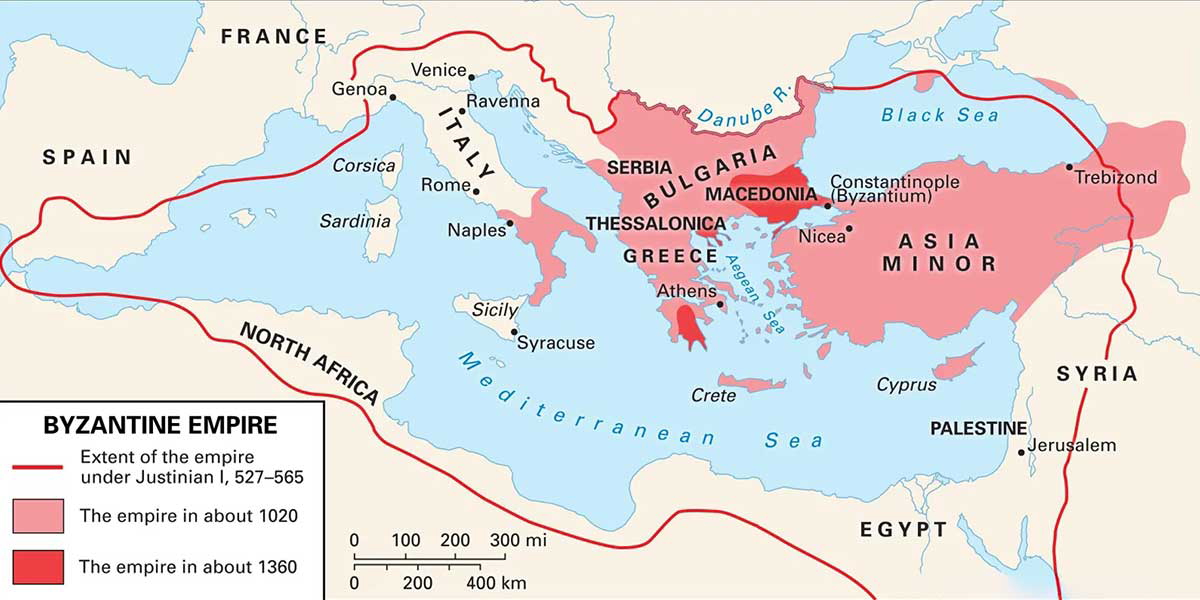
After the fall of the Western Roman Empire, the Eastern Roman Empire transitioned into the Byzantine Empire. This state controlled the southern coastal areas of Crimea for almost the entirety of the Middle Ages. These areas, however, were on the very edge of the empire and bordered hostile peoples to the north.
Some land was settled by Christianized Goths in the 3rd century AD. They preserved their language, and some isolated communities continued to speak Crimean Gothic until the 18th century.
However, most of Crimea was not under the empire’s control and was the target of invasions by many neighboring peoples. Huns, Bulgars, and Khazars all invaded Crimea during the early Middle Ages, followed by the Mongol-Turkic forces of the Golden Horde in the 13th century. This forced the Byzantines to invest heavily in protecting their northern frontier.
By the 9th century, Crimea was contested by three major powers in the area. The Byzantines, the Kyivan Rus’, and the Khazarians all had military interests in the peninsula. In the late 11th and early 12th centuries, the area came under the influence of the Turkic tribal confederation known as the Kipchaks. They shared the peninsula with the Tatars, who arrived under the flag of the Golden Horde and were assimilated into this group of Turkic peoples.
Trade Wars
Some medieval chronicles suggest a legendary influx of Anglo-Saxon refugees following the Norman Conquest of England, though concrete archaeological evidence remains elusive.
The 13th century saw Genoa rise as a powerful trading empire that made extensive use of Black Sea trade routes. This led to a series of conflicts between Genoa, the Golden Horde, and its breakaway state, the Crimean Khanate, which came to be regarded as the successor state of the Golden Horde. The Crimean Khanate was ruled by Muslims and formed close relations with the Ottoman Empire.
The Genoese established several trading posts in Crimea, with their main headquarters being the town of Kaffa (now Feodosiya) on the southeastern coast of the peninsula. Most of these posts were seized from their rivals, the Venetians, who had originally operated in the area.
In 1475, the Ottomans sent a military expedition to Crimea to seize the Genoese colonies along the coast. The result was a victory for the Ottomans. Not only did they emerge with the lands they had set out to seize, but they were also able to assert authority over the Crimean Khanate and turn it into a vassal state.
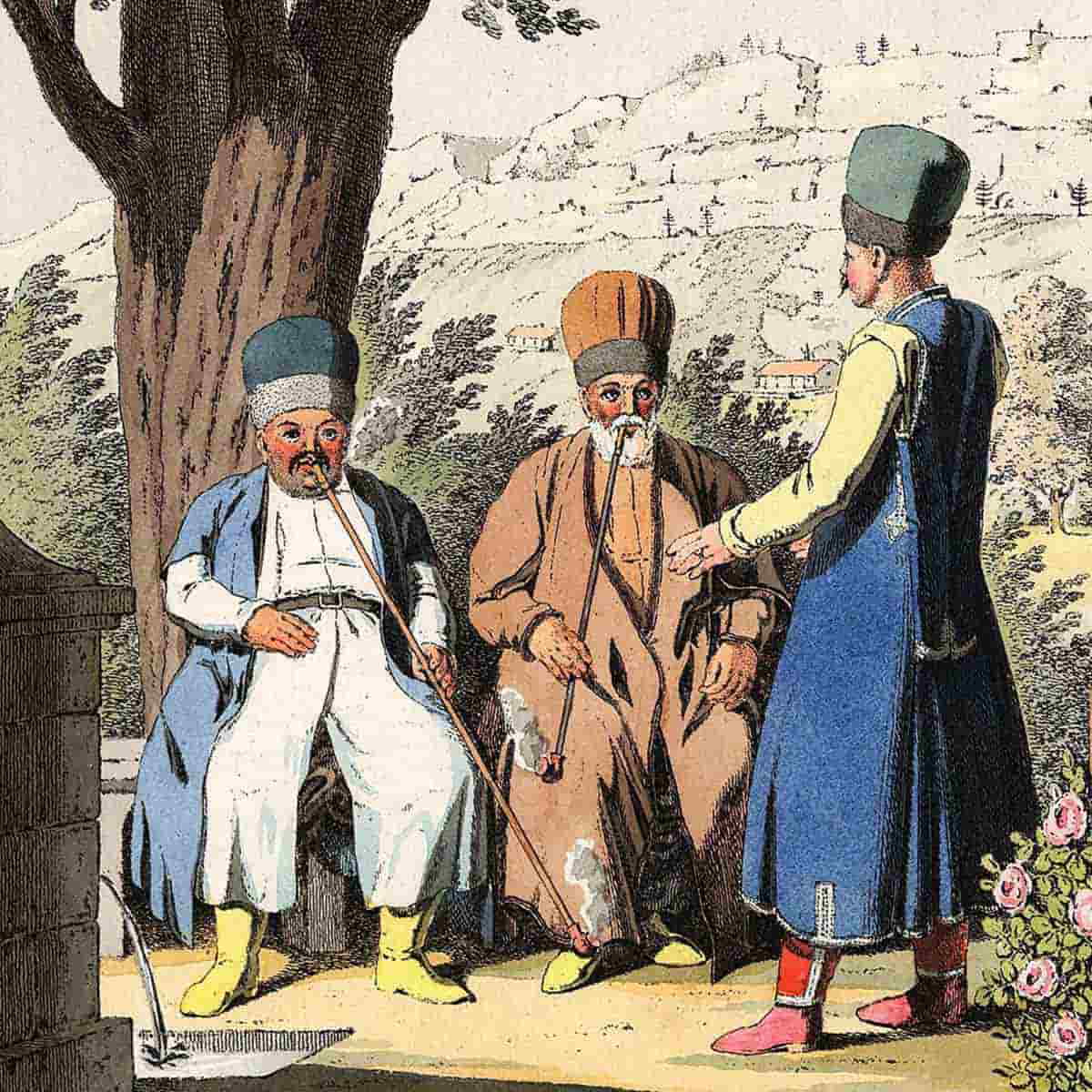
Despite having new rulers, the Crimean Tatars continued with their way of life, which relied heavily on the slave trade. For centuries, they raided Slavic lands and took their victims back to Crimea. At its height, enslaved people accounted for three-quarters of the Crimean population. The Black Sea slave trade was the source of the Crimean Khanate’s highest income, and it was the Ottoman Empire’s biggest source of slaves.
The Russians Take Control
Sitting between two imperial powers, Crimea was a strategic asset worth fighting over. The Ottoman and the Russian empires would clash several times in a series of wars that spanned centuries. By the late 18th century, Russian expansion and military success had forced the Ottomans to cede fortresses in the Kerch area, while the rest of Crimea was declared an independent Tatar state.
Less than a decade later, in 1783, Crimea was annexed into the Russian Empire under Catherine II (the Great). In 1778, Greek and Armenian Christians were relocated on her orders to settlements to the northeast of Crimea. This was done to repopulate empty lands but also to end the tension between Muslims and Christians in Crimea. The exodus of the Christians, who had been the wealthiest residents of Crimea, created a financial vacuum and made Crimea wholly dependent on Russia.
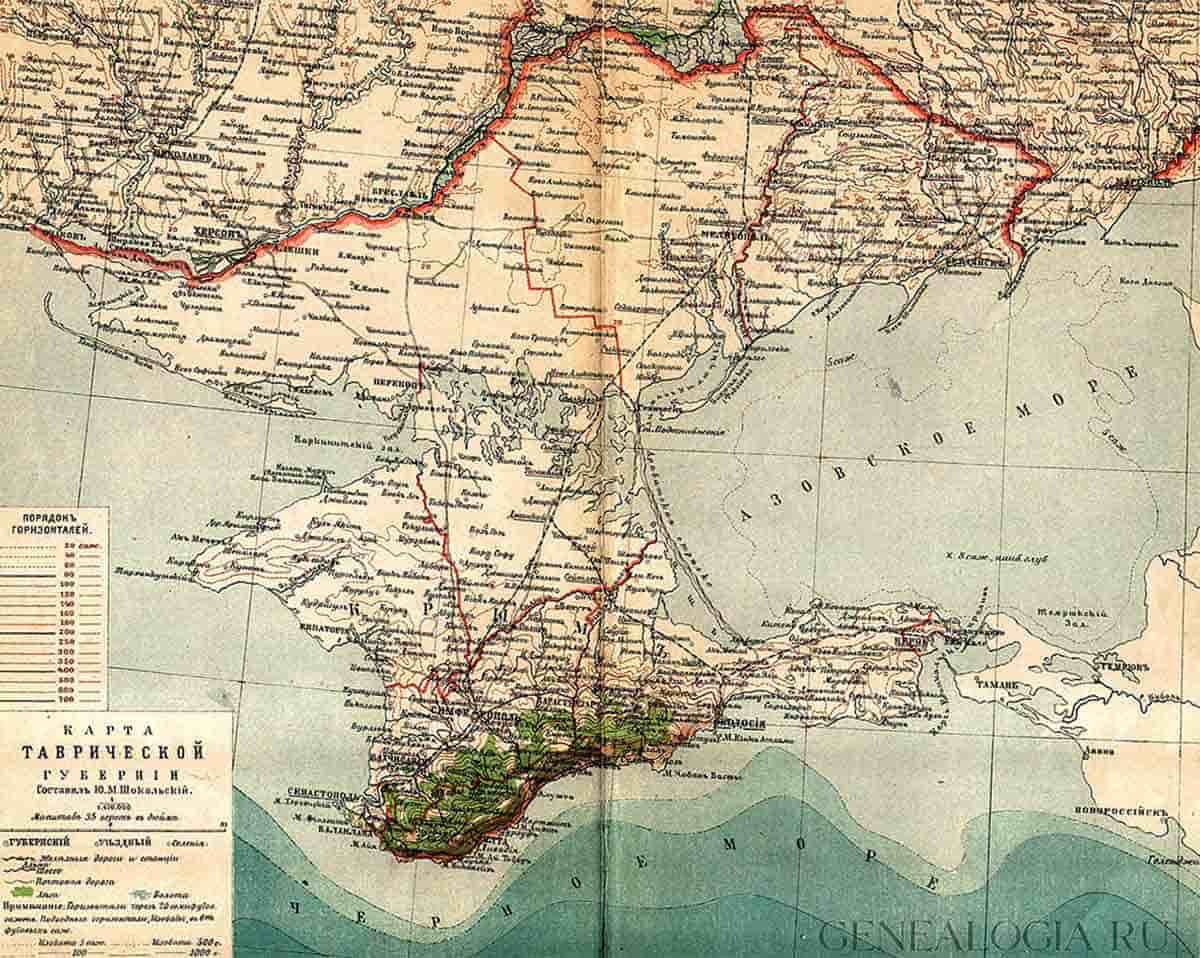
Administrative changes followed, and in 1802, Crimea became part of the Taurida Governorate, which included lands north of Crimea. This administrative division would remain as such in the Russian Empire until the revolution of 1918.
Half a century later, Crimea would be the epicenter of a huge conflict as European powers jostled for position, pushing their agendas into the vacuum left by the waning influence of the Ottoman Empire.
The Crimean War
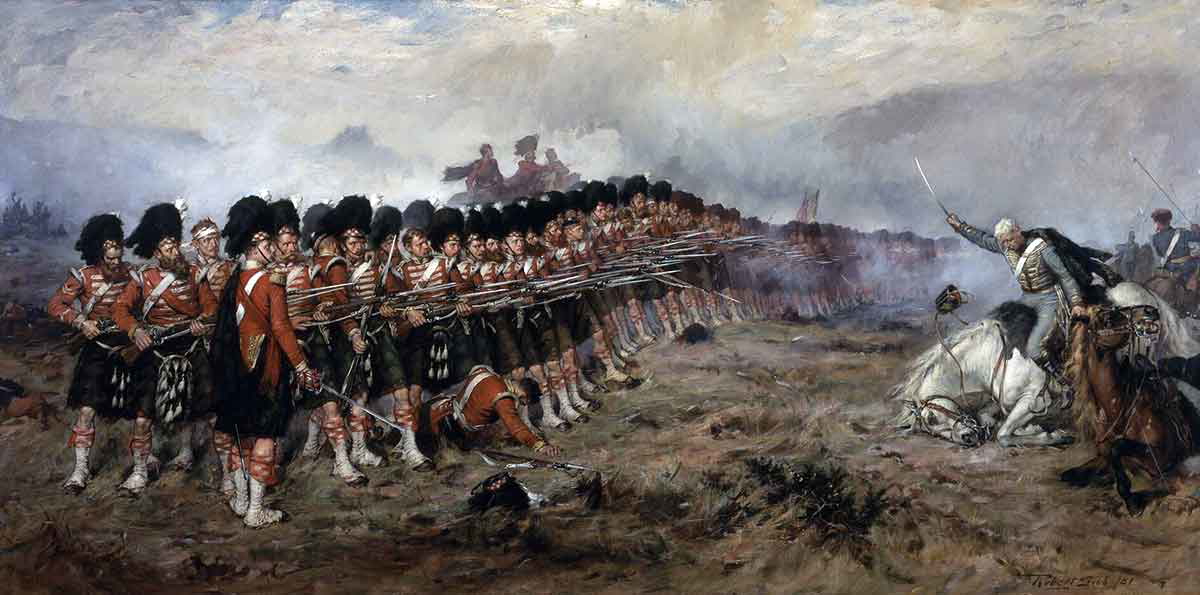
From 1853 to 1856, Crimea was a bloody battleground. Originally, the pretext for war was a dispute between Tsar Nicholas I of Russia and Ottoman Emperor Abdulmejid I over who would have authority over Orthodox Christians living in Ottoman territory.
In 1853, the Russians and the Ottomans went to war, and in March 1854, France and Britain joined the Ottoman side in a bid to stop Russia’s growing power. Sardinia also joined the alliance against Russia. Diplomatic efforts having failed, the two sides went to war.
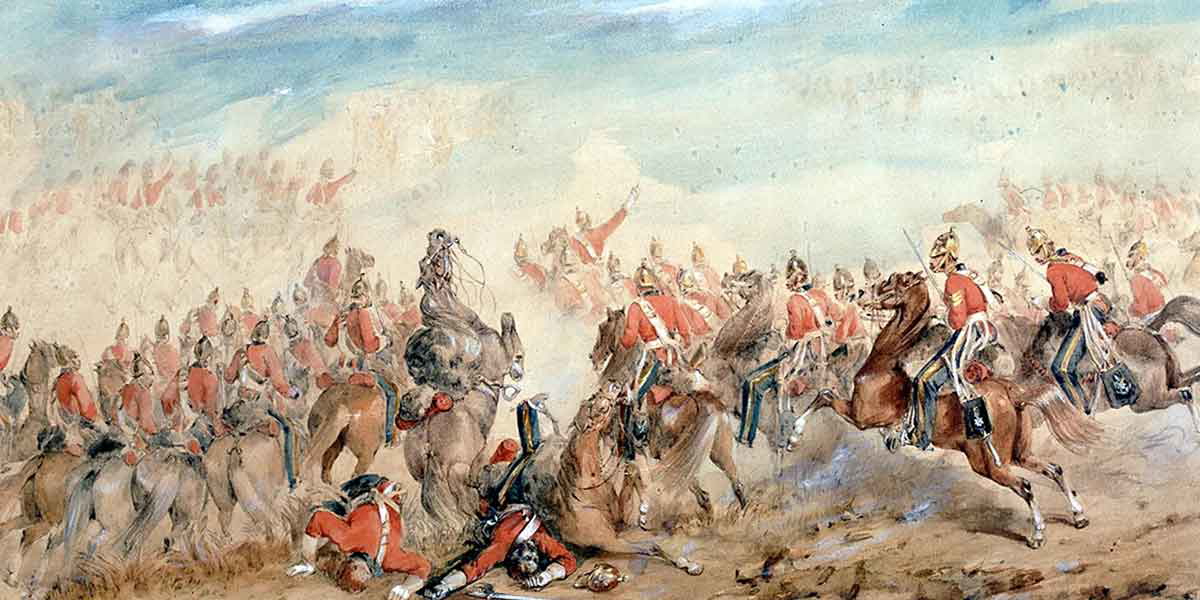
France and Britain decided that the Crimean port of Sevastopol was the most pressing target; thus, Crimea became the focus of the war.
After two and a half years, around 650,000 soldiers were dead, mostly due to disease. In March 1856, Russia conceded defeat after losing Sevastopol and being threatened by Austria joining the war against them. The treaty that followed saw Russia lose the Danube Delta and Southern Bessarabia. The Crimean Peninsula, where the majority of fighting occurred, remained in Russian hands.
Crimea & The Rise and Fall of the Soviet Union
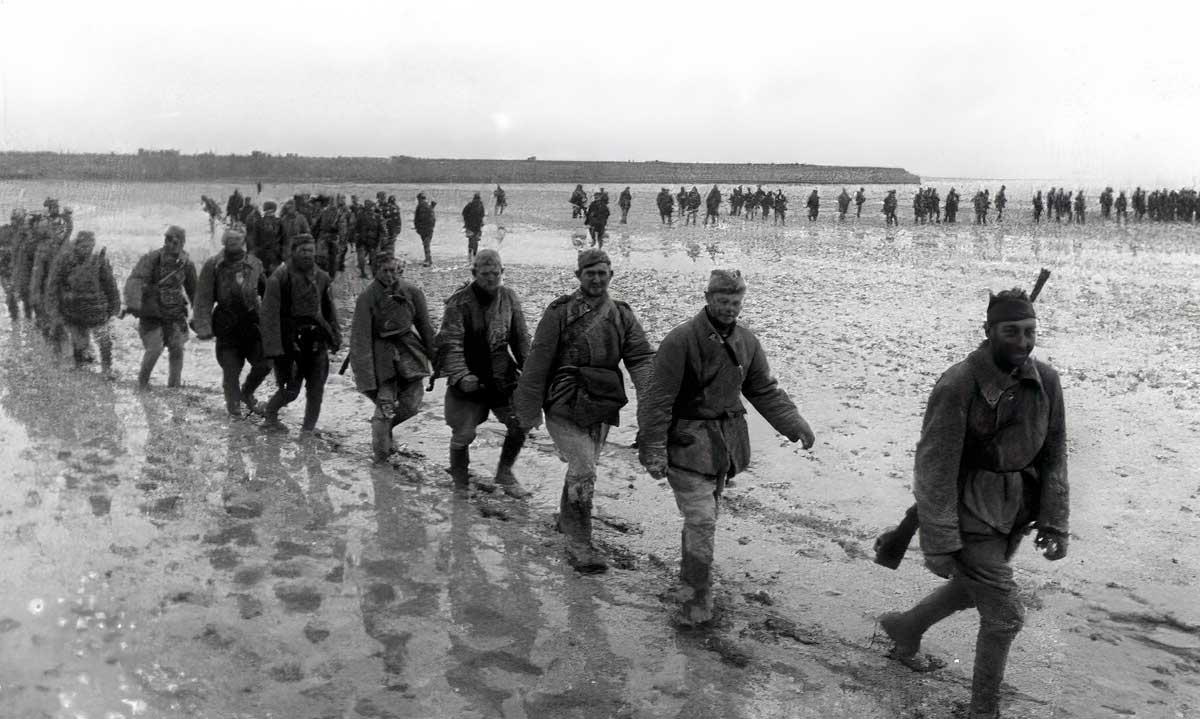
The Bolshevik takeover of power in Russia resulted in huge territorial losses as they immediately pulled Russia out of the First World War and ceded land to the Germans. Meanwhile, the Crimean Tatars again declared their peninsula a democratic republic as the Russian Empire crumbled around them.
The Russian Revolution sparked a brutal civil war that lasted for almost five years, ending in 1922. In their war against the “Red” Bolshevik forces, the “White” Tsarist forces were forced to retreat to Crimea, where the peninsula served as a last bastion for the Whites.
In 1921, Crimea was designated as an autonomous administrative unit within Russia. Between 1917 and 1933, approximately 150,000 Crimean Tatars were killed or relocated out of Crimea in accordance with Stalin’s policies of collectivization, including the removal of people and groups that were deemed problematic toward the Soviet vision. A major factor was the desire of Crimean Tatars for an autonomous state.
Two decades later, Crimea became a bloody battleground as the Germans invaded the Soviet Union and pushed their forces into the peninsula. As a result of the poor treatment received at the hands of the Soviet government, many Crimean Tatars collaborated with the Germans. They were treated relatively well due to good German-Turkish relations and the championing of the Tatar people in Crimea by the Turks. The support for the Nazis resulted in the creation of the Tatar Legion in the Nazi army.
The vast majority of Crimean Tatars, however, were not inclined to support the Nazis. Many others fought in the Soviet army and as partisans against the Nazi occupation. Six Crimean Tatars were awarded the title Hero of the Soviet Union, the highest Soviet military honor.
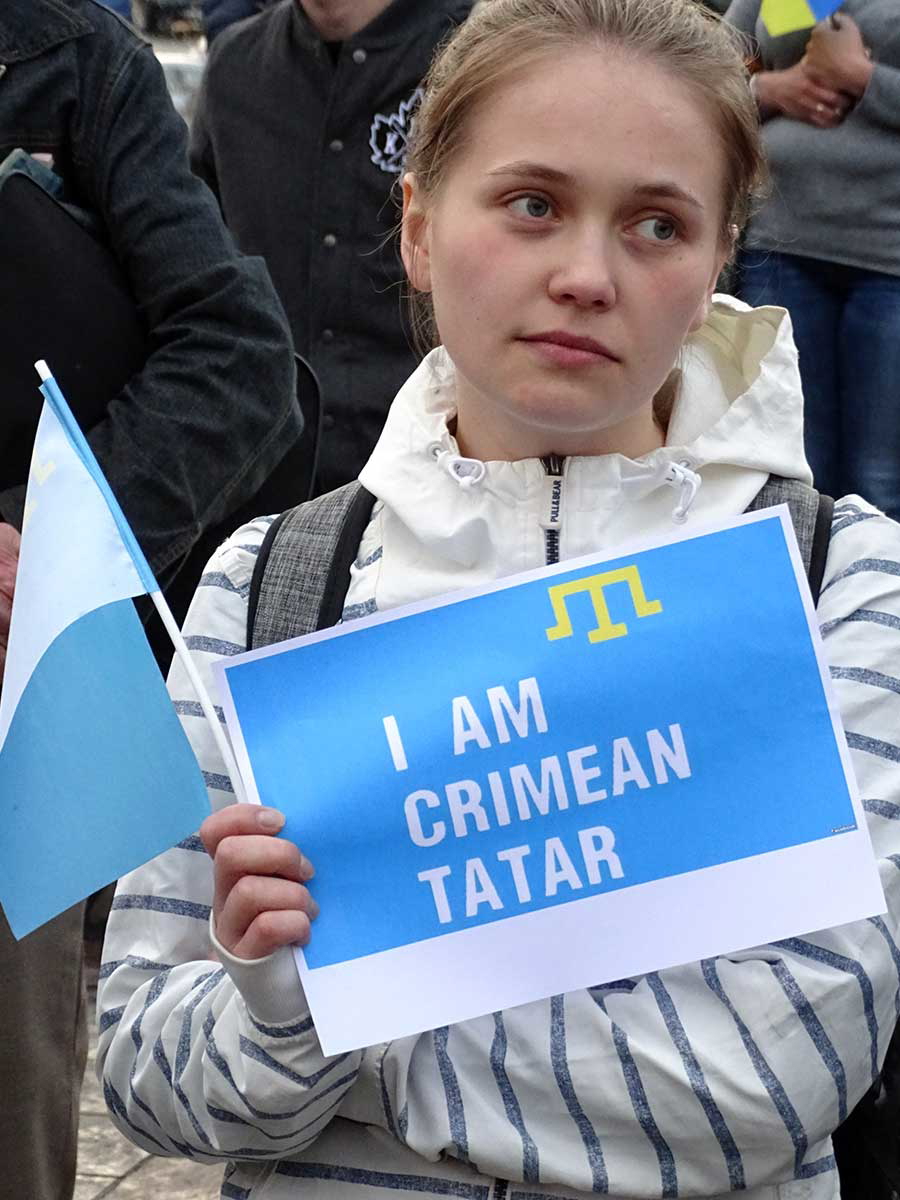
The dynamic with the Tatars was exploited after the war, and Stalin accused the Tatars of collaboration to justify the mass deportation of Tatars from Crimea. This deportation, mainly to Uzbekistan, is recognized as genocide and cultural genocide by several countries, including Ukraine, Lithuania, Latvia, and Canada. Within the first year, 20% to 25% of all those deported perished in Central Asia. It is unknown how many died, but the total number is approximated to be a few hundred thousand.
Along with the deportations, those loyal to the Kremlin were relocated to Crimea. Thus began the Russification of Crimea and the erasing of Tatar culture. The native language of the Tatars was banned, and Tatars were forced to read and write in Cyrillic. Tatar culture was targeted, with books being burned and mosques destroyed.
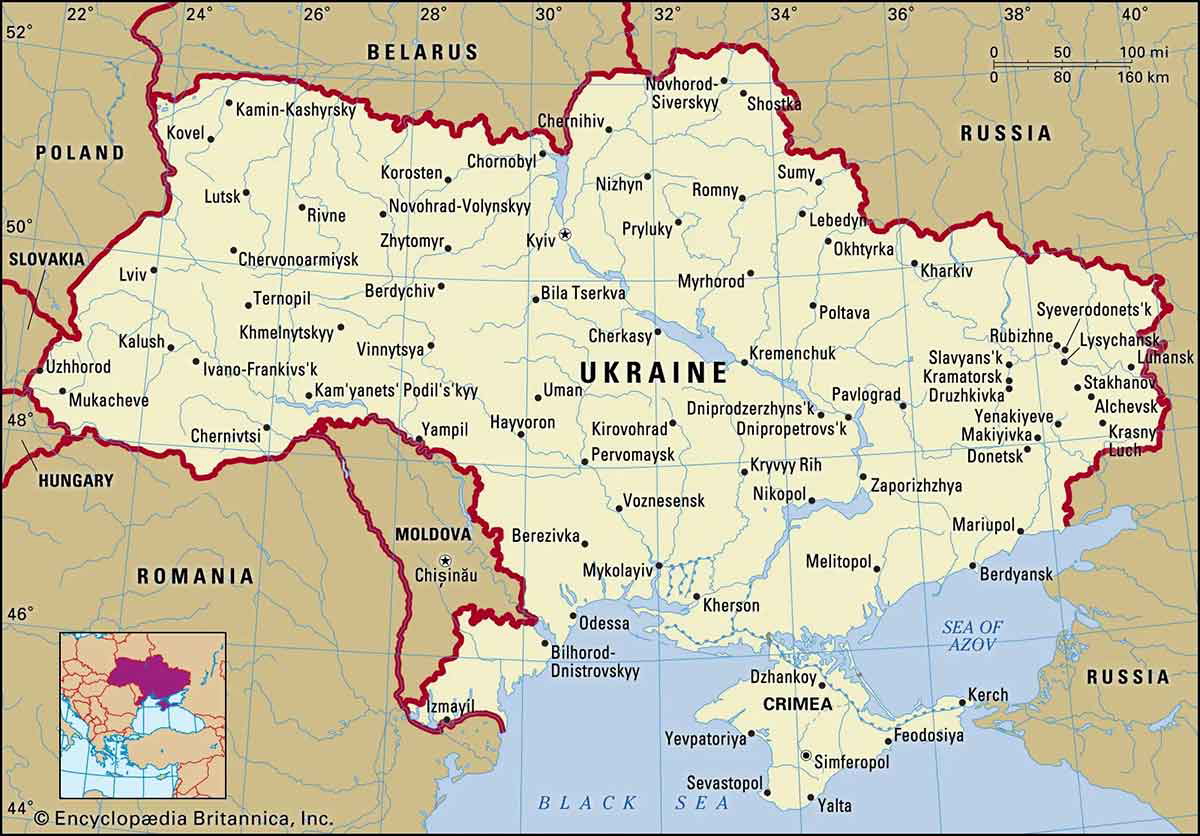
In 1954, a fateful decision was made that would echo through the decades and fuel the conflict in the region today. The Soviet Union comprised 15 republics, and Crimea was transferred from the Russian Soviet Socialist Republic to the Ukrainian Soviet Socialist Republic, for reasons of territorial proximity as well as the agricultural and cultural ties that existed between Ukraine and Crimea.
In 1991, the dissolution of the Soviet Union meant that Crimea ended up being part of Ukraine. Since Crimea had been part of the Ukrainian Soviet Socialist Republic for the previous 37 years, Ukraine retained its territorial link after the Soviet Union was broken up.
Crimea in the Past Decade
Since 2014, the events surrounding Crimea have been characterized by controversy. In February of that year, Ukrainian president Viktor Yanukovych was ousted in a coup or revolution for seeking closer ties with Russia and rejecting a political association and free trade agreement with the European Union, which was supported by a majority in parliament.
The Revolution of Dignity, or Euromaidan, as it is also known, threw Ukraine into turmoil. Crimea, as well as the eastern parts of Ukraine, were also thrown into confusion. Pro-Russian elements decried the coup.
The demographics of Crimea exemplify the situation. Since 1900, ethnic Russians have been the majority, overtaking the Crimean Tatars in total numbers. The 2014 census revealed that two-thirds of the Crimean population was ethnic Russian.
Tensions rose in the cities and towns throughout Crimea as pro-Ukrainians and pro-Russians protested. In Kerch, the mayor openly declared Crimea to be a part of Ukraine and was accused of treason by gathering crowds. In Sevastopol, Russian flags were raised, and pro-Russian elements demanded the election of a Russian citizen as mayor.
Meanwhile, the Crimean prime minister, Anatolii Mohyliov, stated that Crimea recognized the provisional government of Ukraine and would follow the laws passed by the new Ukrainian parliament in Kyiv.
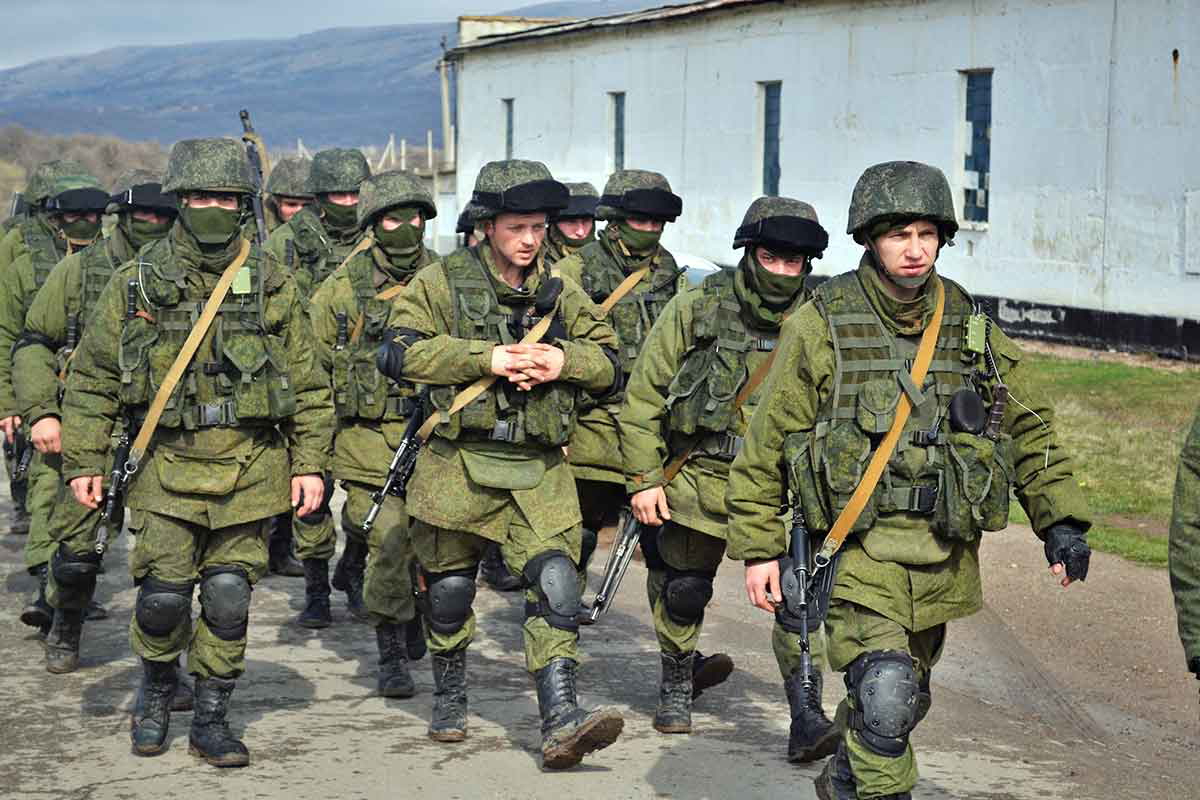
Fearing the loss of rights to the port facilities for the Black Sea Fleet in Sevastopol and under the pretext of supporting the desires of ethnic Russians who wanted Crimea to be part of Russia, Russian forces seized vital facilities throughout Crimea.
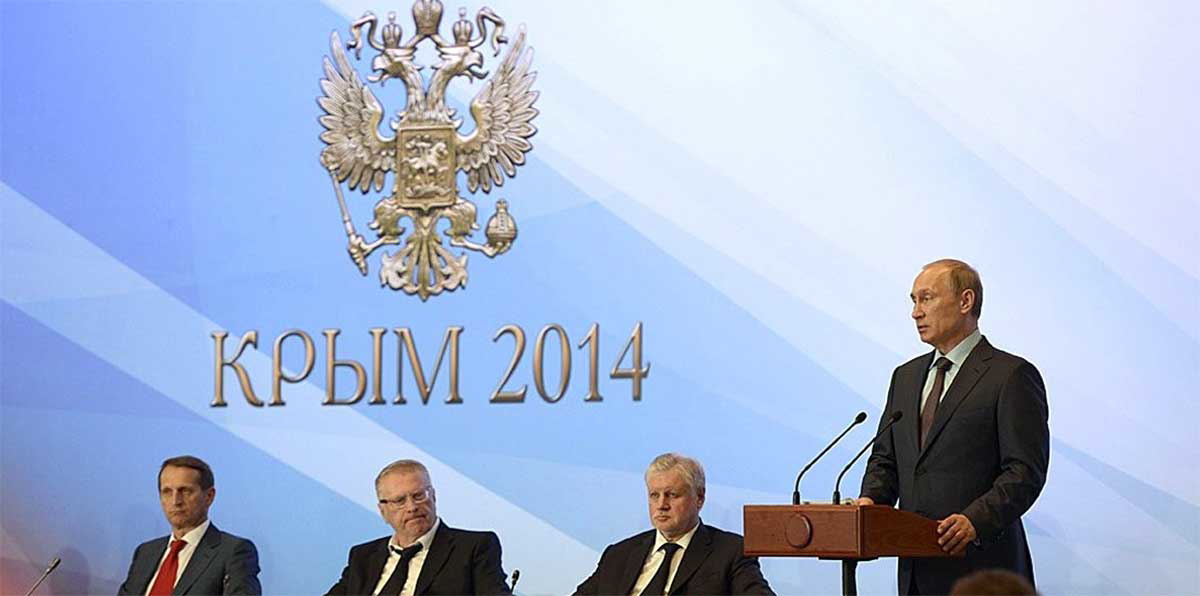
Shortly afterward, the Russians took complete control, installed a new administration, and held a referendum on whether Crimea should join the Russian Federation or remain part of Ukraine. The results were rejected by Ukraine and considered invalid by the United Nations because they constituted a violation of Ukraine’s sovereign integrity and ran counter to Ukraine’s constitution. Many Crimean Tatars boycotted the vote. Nevertheless, 97% of the rest of the voters voted to join the Russian Federation, and Russia naturally accepted the result.
Since then, Crimea has been under full control of Russia, and pro-Russian separatists in eastern Ukraine have been fighting against the Ukrainian government in a war that escalated significantly when Russia launched an invasion on February 24, 2022. The future of Crimea hinges heavily on the outcome of the current Russo-Ukrainian War.