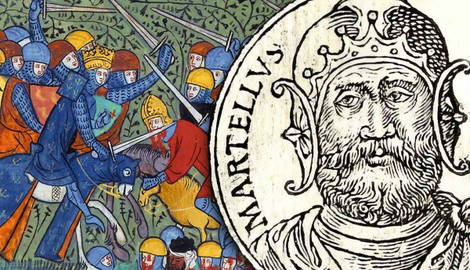

In October 732 AD, Charles Martel confronted the advancing armies of the Umayyad Caliphate near Tours and Poitiers in a battle with far-reaching consequences for Western Europe. Facing experienced cavalry forces moving north from Iberia, Martel relied on disciplined Frankish infantry formations which could withstand sustained assaults. Martel’s victory checked further Umayyad expansion into Frankish territory while simultaneously strengthening his political authority, laying the foundations for the emergence of the Carolingian empire.
The Fracture of Post-Roman Western Europe
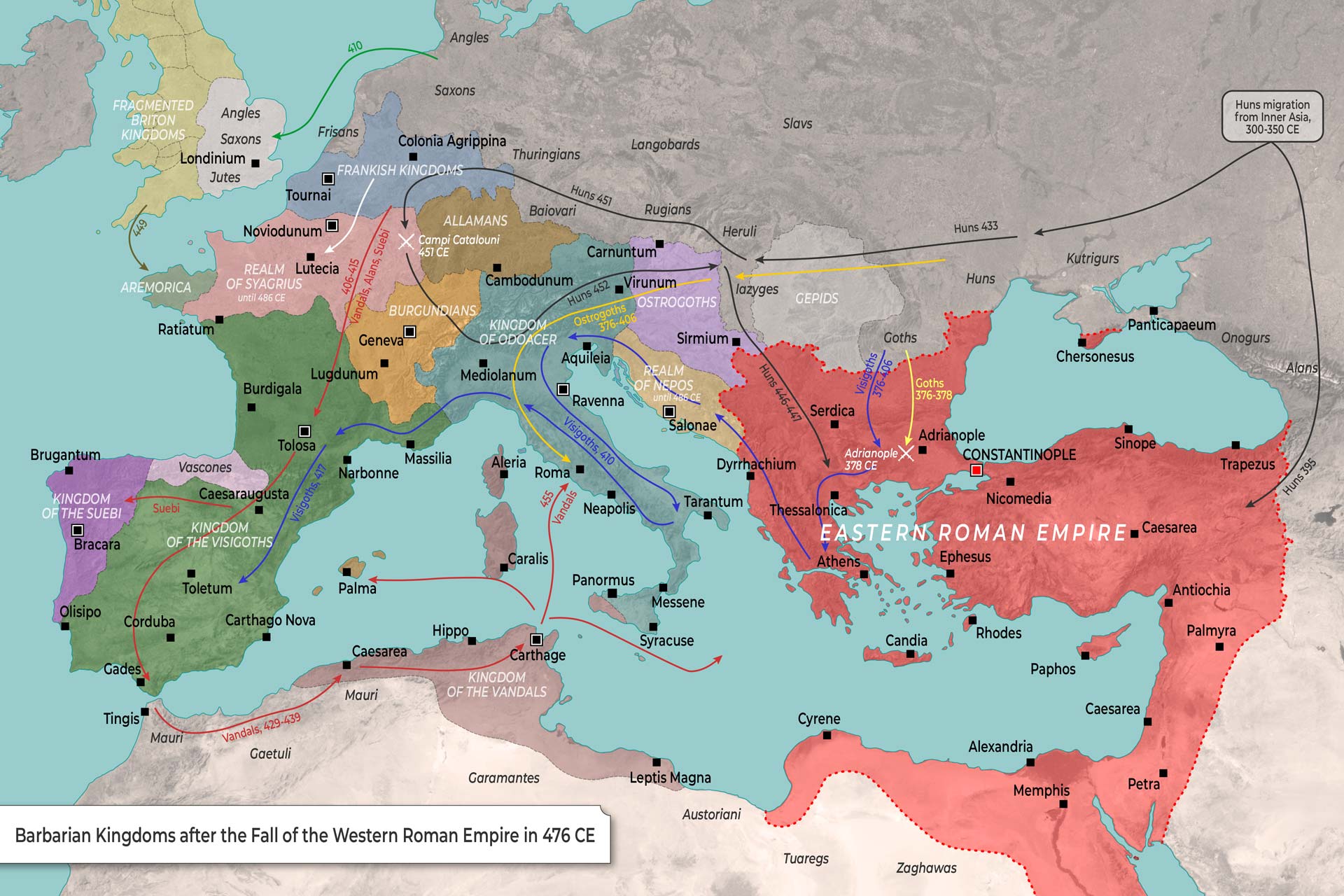
The fall of the Western Roman Empire in 476 AD created a power vacuum that was filled by various Germanic speaking tribes such as the Franks, Goths, Vandals, and Anglo-Saxons who claimed suzerainty over the former provinces of Gaul, Hispania, and Britannia.
Hailing from the lower Rhine in the present-day Netherlands, the Franks had gradually been coalescing to become the preeminent power in the former Roman province of Gaul, expanding their territorial acquisitions under powerful Merovingian kings such as Childeric and his son Clovis I, who subsequently converted to Christianity.
The Merovingians unified most of northern and western Gaul, but stability remained a major issue as various factions typically led by royal offspring or rebellious dukes constantly battled over their various inheritances and territorial claims.
The Merovingian Franks emerged as the prevailing power in western Europe, whose warlike nature forged some of the finest warriors in Europe, constantly combating Visigoths, Burgundians, Lombards, and subduing various other tribes. They would soon be embroiled in conflict with another ascendent power to their south on the opposite side of the Pyrenees.
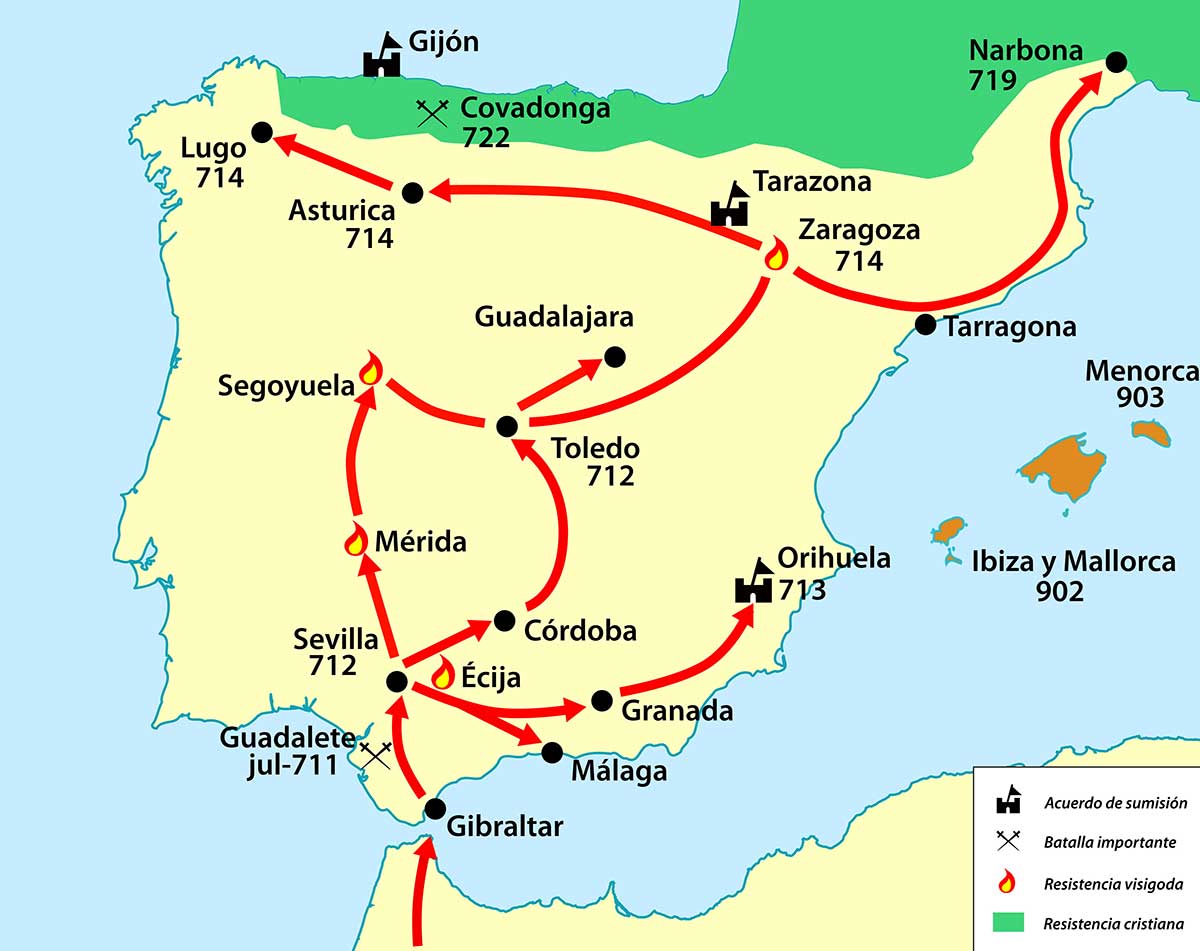
Islamic armies had been spreading rapidly across three continents in the decades following the death of the Prophet Muhammad in 632 AD. By 711, armies from North Africa had crossed the Strait of Gibraltar into the Iberian peninsula and defeated the Visigothic kingdom of Spain.
The larger Umayyad Caliphate absorbed Iberia and utilized its strategic geography as a springboard to conduct further raids and incursions into Francia. The independent duchy of Aquitaine across the border remained particularly vulnerable and beset by Muslim infiltrations, as it was at the nexus of two expansive empires. In the face of the seemingly unstoppable Islamic armies, Duke Odo the Great of Aquitaine sought military assistance from his Frankish rivals.
How Charles Martel Built a Formidable Medieval Army
Charles Martel was previously mayor of the palace to the king, a powerful political office in the Merovingian court that enabled its occupant to control the royal treasury and manage military campaigns. Charles emerged as the real authority behind the throne who leveraged his position to become the most powerful official in Francia and an exceptional military commander.
Cognizant of the growing Umayyad threat, Charles proposed crucial reforms that recognized the shortcomings of the existing system of temporary customary Frankish levies in confronting the highly mobile Muslim armies. He would first need to unify the incessantly warring Frankish factions.
Charles consolidated his power base in Austrasia in northeastern Gaul, confiscating and redistributing ecclesiastical property in order to finance his ambitious reforms. He made several improvements to the army such as by outfitting his infantry with high-quality armor and emphasizing stronger discipline through the defensive tactics of the shield wall. Every free Frankish household was to provide at least one male for Charles’ army. Charles successfully managed to unite the Franks into a cohesive and deadly European force ready to resist the onslaught of Islamic armies.
The Clash at Tours and the Triumph of Heavy Infantry
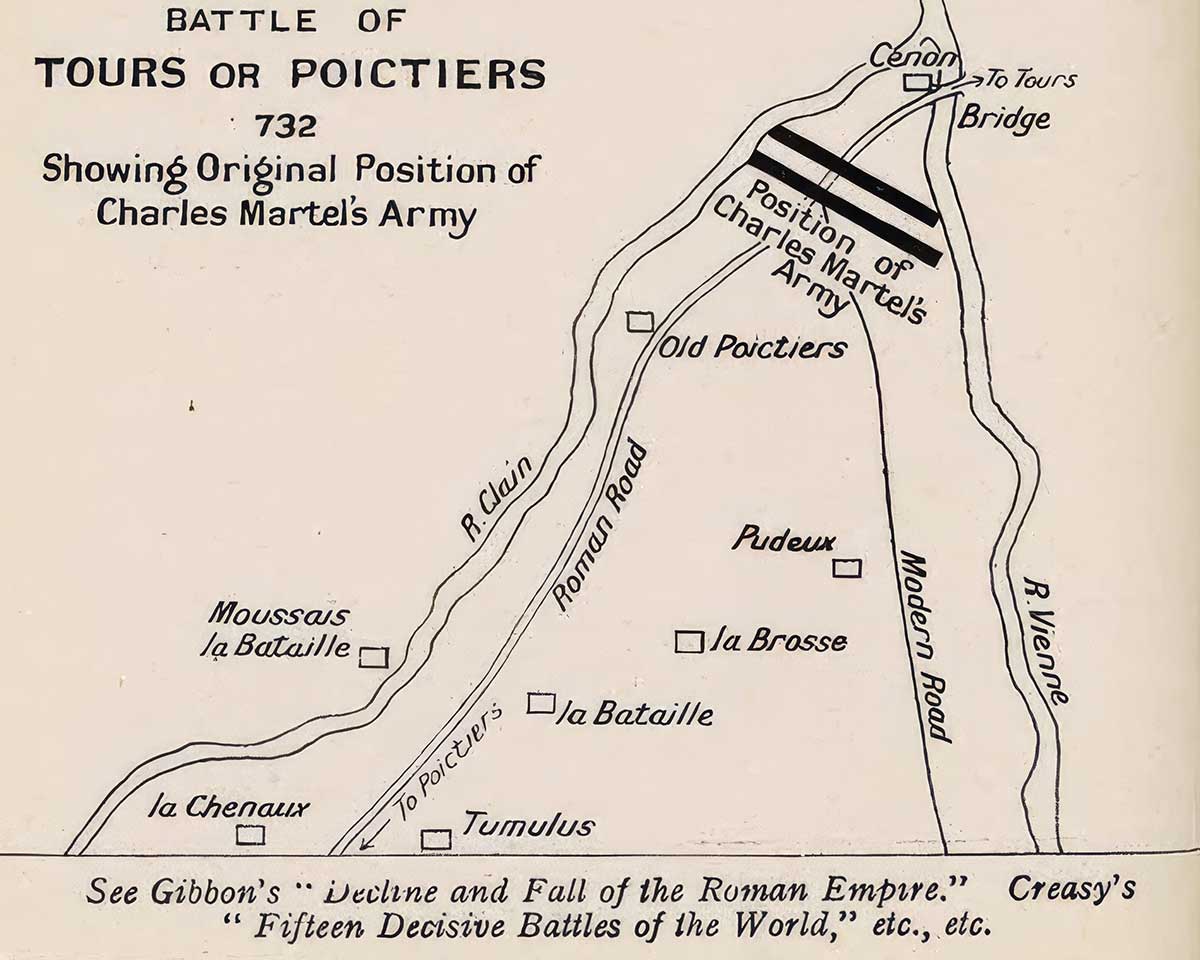
In October 732 the Governor of Umayyad Spain Abd Rahman Al-Ghafiqi led a large force estimated at 25,000 men into the Frankish lands consisting mostly of cavalry north from Iberia and across the Pyrenees. Rather than an army of conquest, modern historians now believe that this was a large raiding force intent on plundering wealthy monasteries and churches across the country.
His soldiers consisted of Berbers, Syrian Arabs, and recent Visigothic converts to Islam. Many were familiar with the terrain having raided Aquitaine for years and returning with valuable plunder and slaves. This was a battle-hardened force as Muslim armies of the 8th century fought against one another as frequently as they clashed with European Christians.
The Muslim army proceeded north toward the River Loire as Charles gathered his force to intercept them, moving rapidly via the old Roman roads which still traversed Gaul.
Charles established a defensive position on a hillside near the junction of the rivers Clain and Vienne somewhere between the cities of Tours and Poitiers in northern Aquitaine, positioning themselves directly in the path of the advancing Umayyads who appeared to be taken by surprise by such a large force. The armies roughly maintained numeric parity with the key distinction being the horse versus foot composition between the Muslims and the Franks.
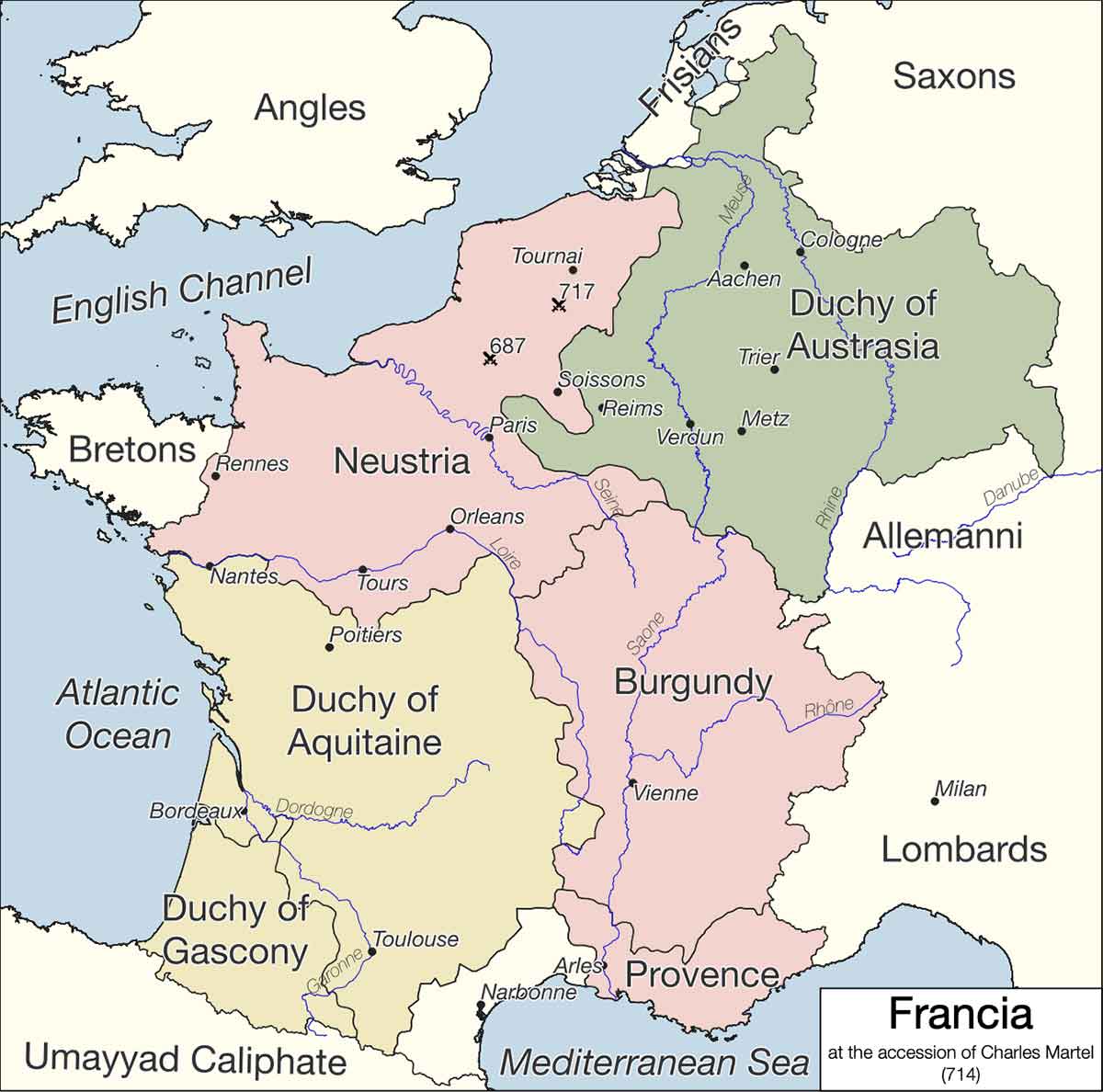
The two armies engaged in a weeklong standoff, with only brief skirmishing occurring. The Umayyads waited for their full strength to materialize as their speedy foray into Francia had overstretched their forces. The cooling autumn weather was beginning to negatively affect the Muslim soldiers, many of whom were accustomed to living and fighting in warmer regions.
As the Umayyads advanced northward, Charles arrayed his force in a static phalanx formation blocking the main road to Tours. The strength of the Franks lay in their tactical cohesiveness and ability to endure cavalry charges by elite Muslim cavalrymen.
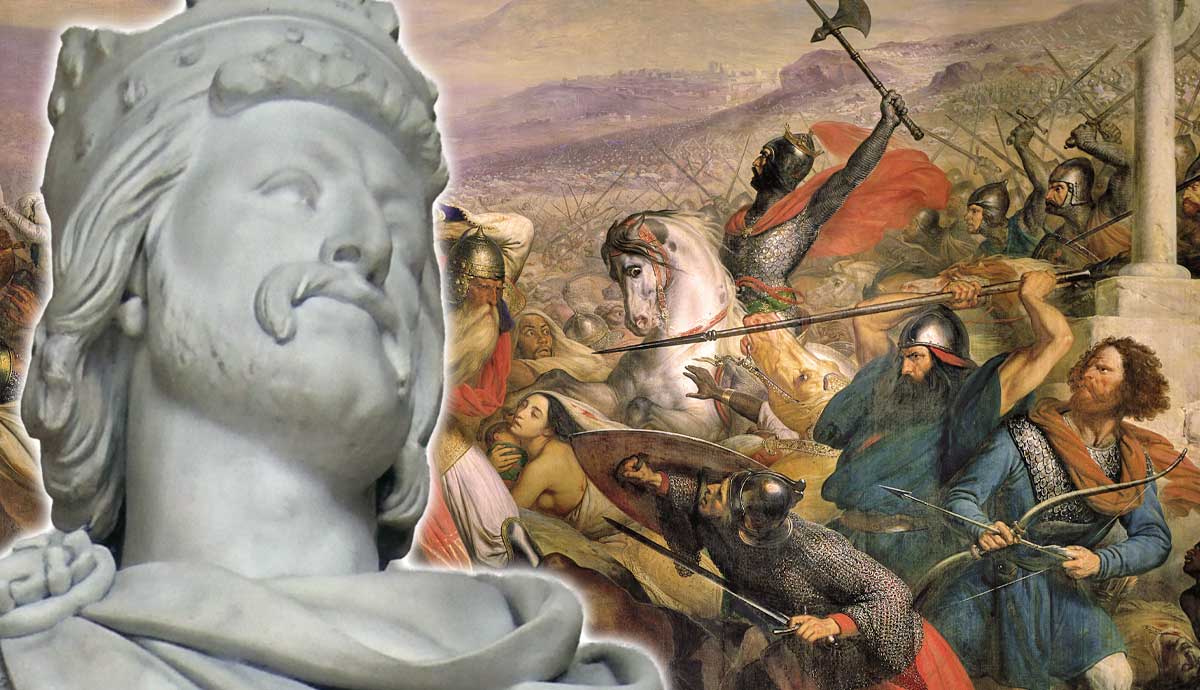
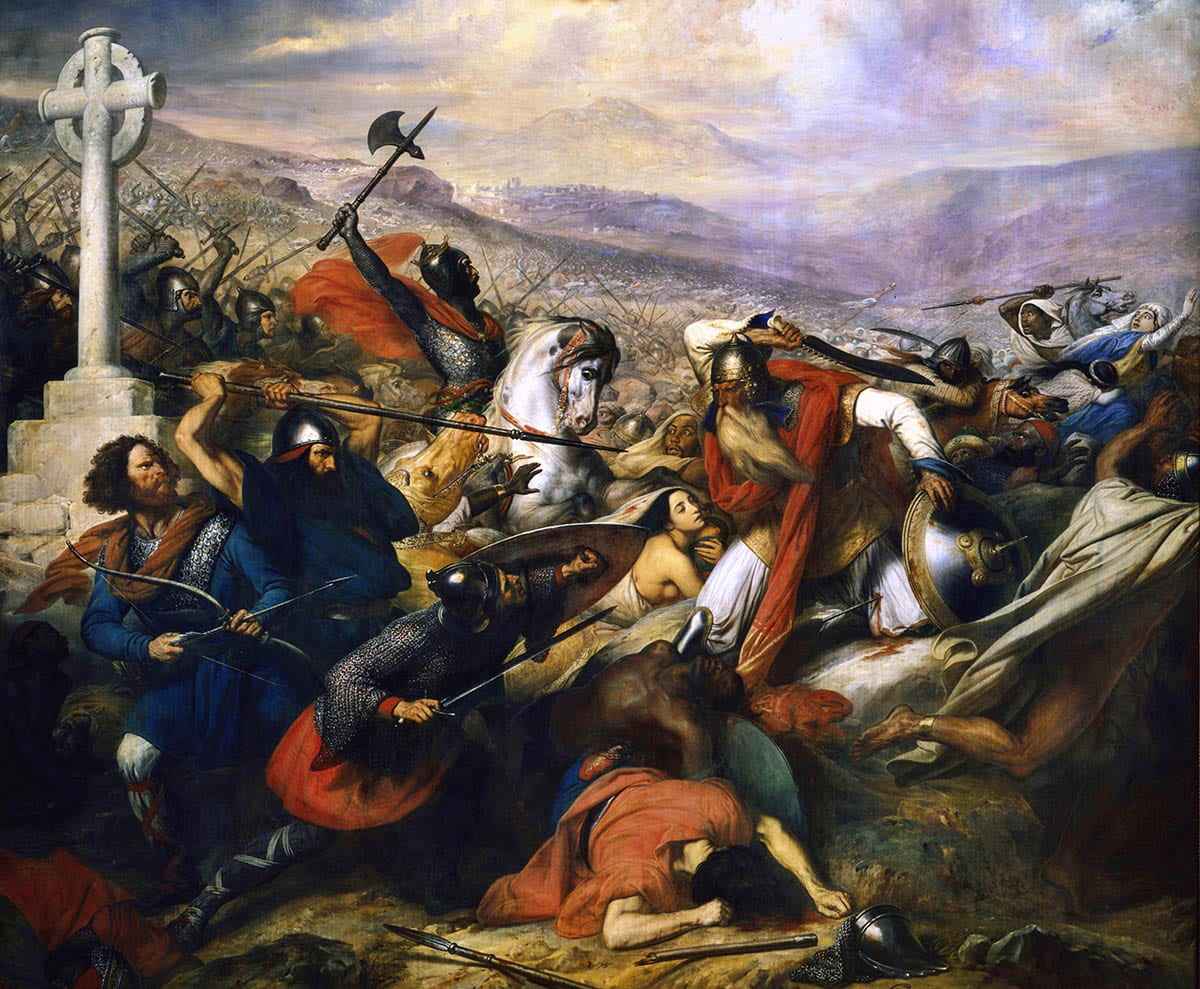
Finally, on Saturday October 10, Abd Rahman Al-Ghafiqi ordered his cavalry to charge the Frankish lines. The Frankish infantry resolutely fended off their repeated attacks. One Arab chronicler described the Frankish shield wall “as a sea which could not be moved.” Charles’ armor-clad disciplined force successfully absorbed the shock of cavalry charges and proved superior in close quarter combat.
The Umayyad forces wheeled in retreat when news arose that Frankish forces were threatening their camp, and Abd Rahman Al-Ghafiqi was killed during the ensuing rout. The Muslims withdrew that night stunned but remained in good order and withdrew beyond the Pyrenees.
Why the Victory at Tours Reshaped European History
Following the Battle of Tours, Charles earned the sobriquet Martel from Martellus, the Latin word for hammer. His triumph against the Umayyads limited the Islamic forces to the Iberian peninsula, though smaller scale raids would continue. While the significance of Martel’s victory has been questioned by modern historians, it has traditionally been considered a decisive turning point in European history, halting the relentless advance of Islam and affirming the Christian identity of Europe.
The duchy of Aquitaine retained its independence and gradually established closer ties with the Franks. Charles continued to further integrate the Frankish kingdom, laying the groundwork for his son Pepin to overthrow the Merovingians and become the first Carolingian king of Francia.
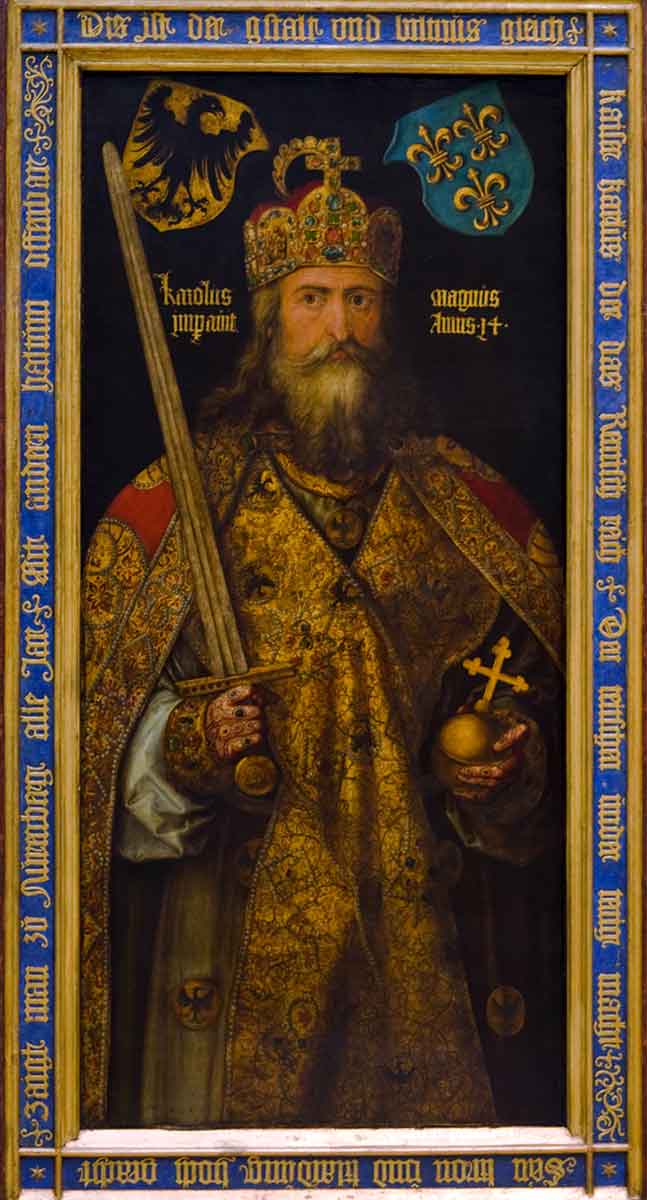
Charles Martel’s grandson Charlemagne would reach new heights by conquering the Lombard kingdom of northern Italy and becoming crowned the first Holy Roman Emperor in Rome by Pope Leo III in 800 AD, ruling over a vast stretch of Western Europe that had been disunited since the end of the Roman Empire. As a result, Charlemagne left behind an even greater legacy than his grandfather as the “Father of Europe.”