
Born in the ancient Middle East in the 3rd century AD, monasticism played a crucial role in the development of Christianity in the Western world. By the 4th century, it had become an established institution within the church, attracting those who sought an ascetic life. A similar rejection of worldliness prompted St. Benedict of Nursia, the “father of Western monasticism,” to found the Benedictine Rule in the 6th century. Six centuries later, a reformed monastic movement sought to revive the austerity of St. Benedict’s Rule, leading to the establishment of abbeys throughout Europe. Born to inspire spiritual renewal, they became cultural, economic, and political centers.
1. Cluny, France
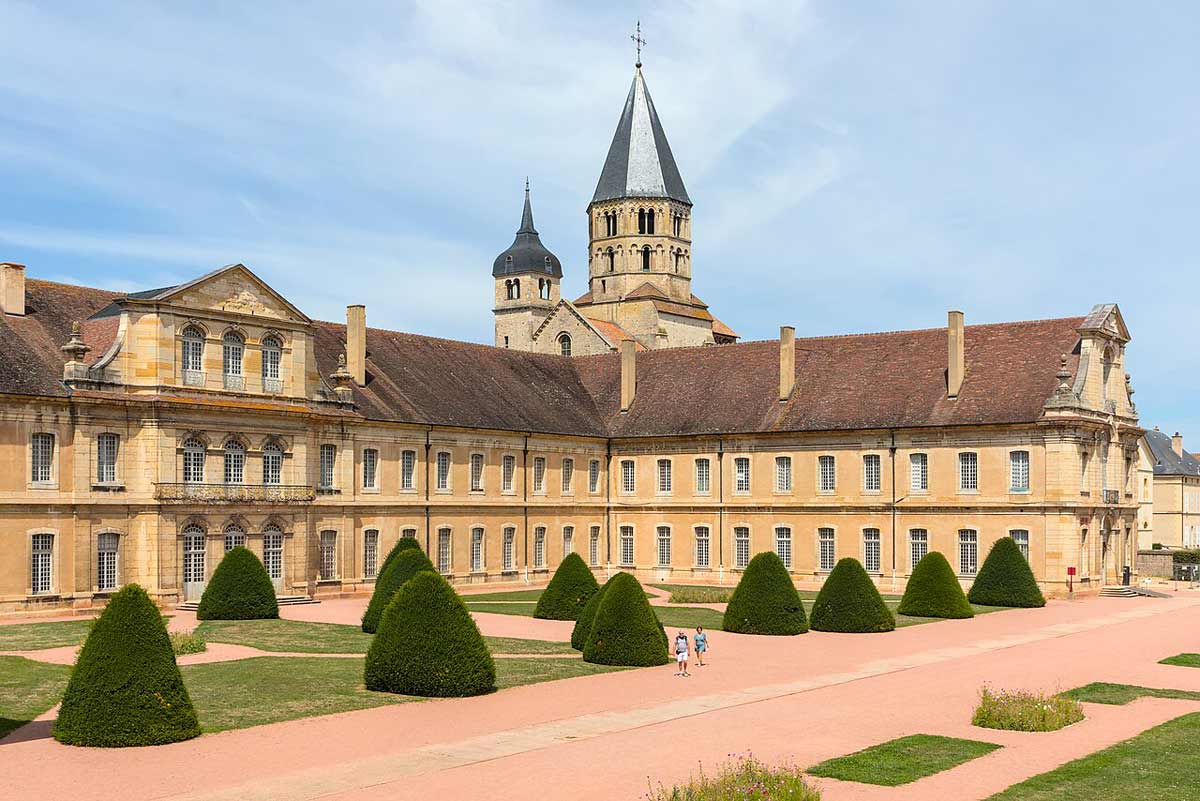
Founded in 910 by William “the Pious,” duke of Aquitaine and count of Mâcon, the abbey of Cluny (Burgundy, France) soon emerged as the leading force behind the 12th-century monastic movement. By the 10th century, Western monasticism had lost much of its initial rigor and credibility, displaying a general laxity. The newly founded Cluny Abbey, subject to no authority but that of the pope, was, however, independent of the “corrupting” influences of the local laity.
Indeed, the charter of Cluny specified that the monastery’s role was to restore the spiritual austerity of the original Benedictine Rule. Thanks to its independence and the generous donations of William “the Pious,” the abbey grew in size and prominence, filling the power vacuum in Europe and contributing to the centralization of the Roman Church.
Under the leadership of its first abbots, freely chosen by the monks and well connected to the nobility, Cluny Abbey became a leading center of 12th-century Europe. The monastery even influenced the papacy’s policy. Indeed, the pope who is credited with launching the First Crusade in 1095, Urban II, was a former great prior of Cluny.
Over the course of the 11th century, the abbey gradually developed a centralized, wide network of priories that adopted the “mother house’s” observance of a stricter rule. By the mid-12th century, the ecclesia Cluniacensis (Latin for Cluniac church) comprised 700 communities.
A new church, built between 1088 and 1130 in the Romanesque style, embodied Cluny’s leading role in Western Christianity. The largest church in Latin Christendom until the construction of St. Peter’s Basilica in Rome, the building’s grandiosity contrasted with the monks’ emphasis on poverty and simplicity.
2. Monte Cassino, Italy
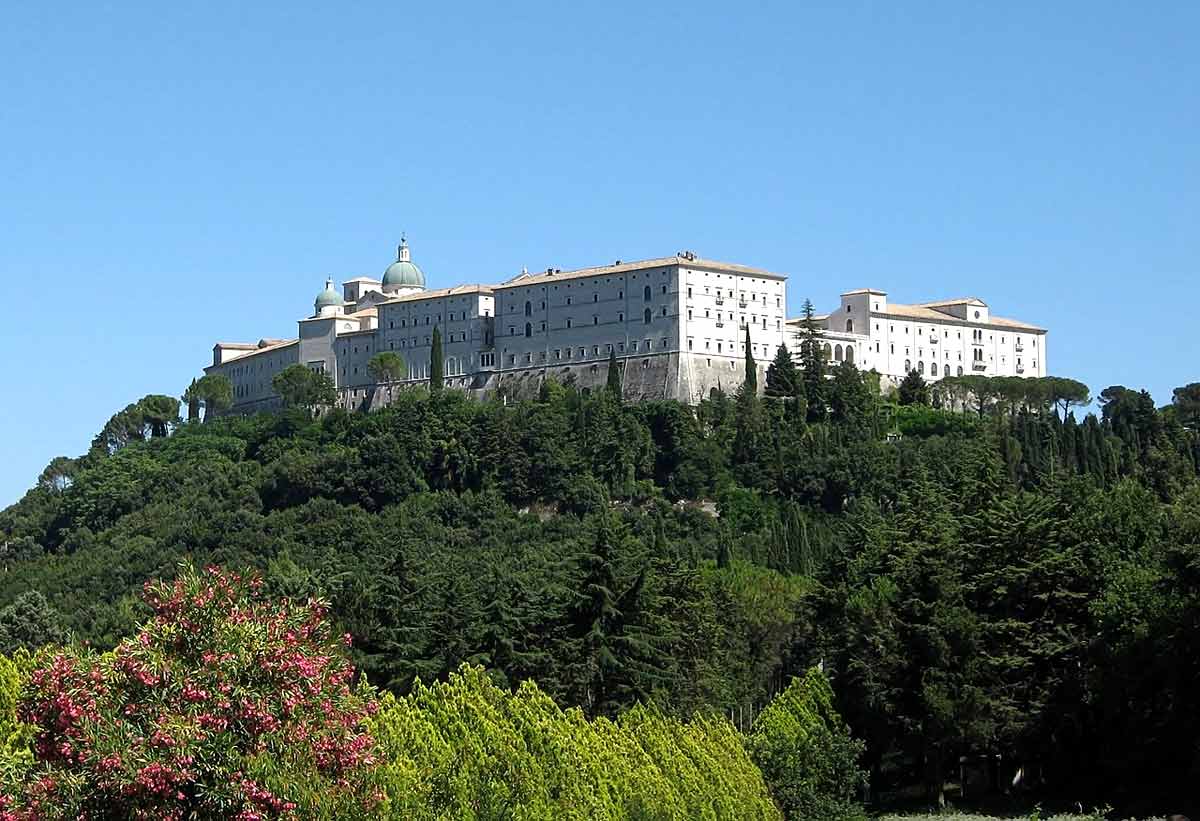
Between the late 5th and 6th centuries, Benedict of Nursia, the son of a well-off Roman family from present-day Umbria, observed with concern the increasing licentiousness of Rome as the imperial capital fell into decline. After a period spent in solitude in a grotto in Subiaco, where Emperor Nero had built a lavish villa, he founded 12 monasteries in the area.
Targeted by the intrigues of a neighboring priest, Benedict moved to an area south of Rome, eventually settling at the top of Monte Cassino, a hill near the town of Cassino (present-day Lazio). There, he soon began to convert the largely pagan district to Christianity and established a monastery in 529. According to Benedict’s biography by Pope Gregory the Great, the site previously housed a temple dedicated to Apollo.
It was in Monte Cassino that Benedict wrote his rule (later named after him) to regulate the abbey’s monastic life, which became the norm for monastic conduct in Europe. After his death in Monte Cassino in about 547, the abbey multiplied in size and wealth as the Benedictine Rule spread across Europe.
During the early Middle Ages, Monte Cassino’s abbots tried to mediate between the three main actors vying for power in the Italian peninsula: the papacy, the Lombards, and the Franks. Sacked by the Lombards in 580, it was later rebuilt only to be sacked again in 884, this time by the Saracens. Largely reconstructed in the 11th century, Monte Cassino experienced a spiritual and cultural “golden age,” housing an impressive collection of classical and medieval works.
Dissolved by the newly founded Italian Kingdom in 1866, the abbey of Monte Cassino was destroyed in 1944 during the Battle of Monte Cassino, when the Allies repeatedly bombed it. It was later rebuilt by the Italian government. Today, it is home to a community of 13 monks.
3. Fountains Abbey, England
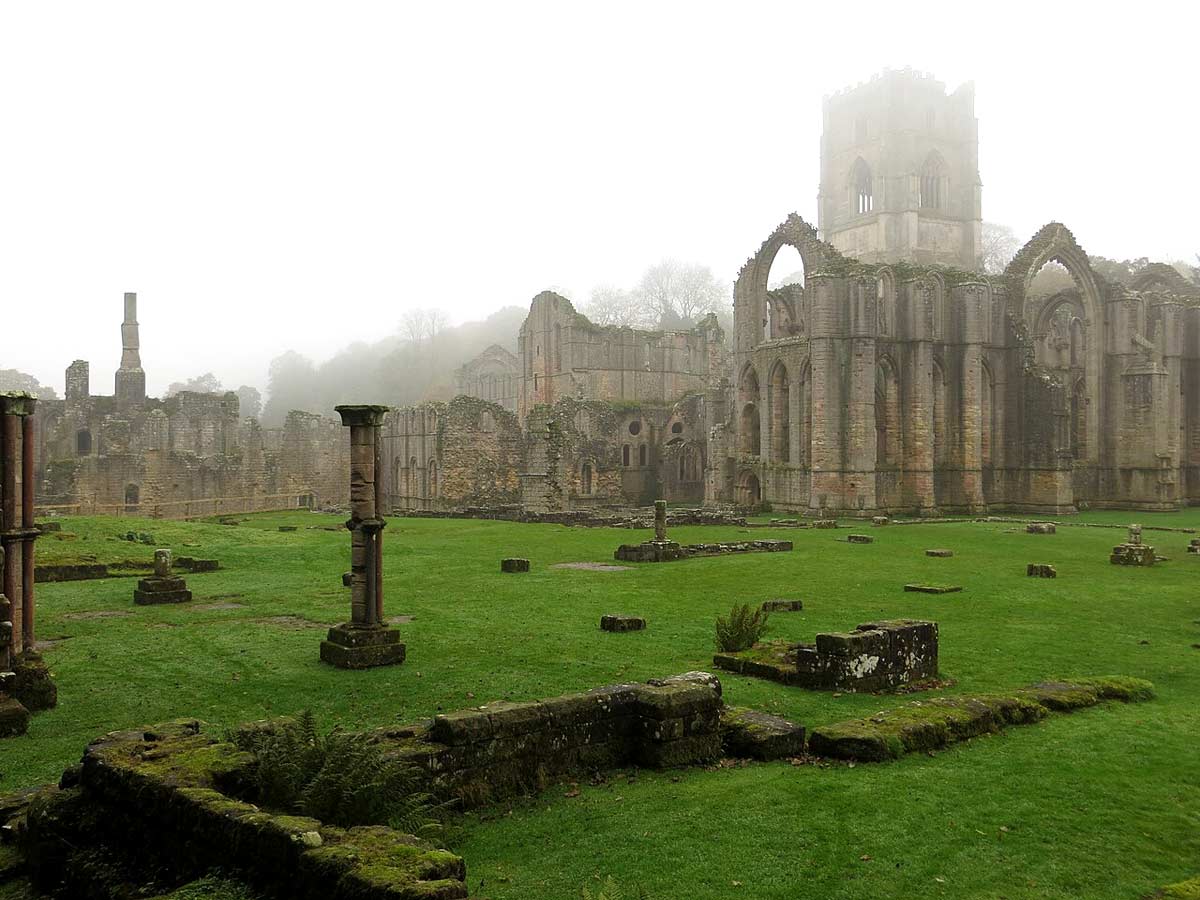
In 1132, thirteen Benedictine monks seeking a more secluded and rigorous life left their community at St. Mary’s Abbey in York. The Archbishop of York granted them permission to found a new monastery in the Skell Valley, a remote area with easy access to natural resources, including water. Indeed, Fountains Abbey may have been named after the water springs flowing in the valley. In 1135, the newly founded abbey left the Benedictine Rule to join the Cistercian order.
Joining the long tradition of monasticism in northern England, Fountains Abbey struggled to survive in its early years. However, the arrival of a group of monks from wealthy families saved the community from disbanding. In a complete reversal of fortune, by the late 12th century, Fountains Abbey became one of the largest and wealthiest monasteries in England. For the following 400 years, the abbey’s influence and prosperity grew, acquiring vast swaths of land across Yorkshire.
Fountains Abbey’s fortunes changed abruptly in the 16th century, when it was closed during Henry VIII’s Dissolution of the Monasteries. The previously prestigious center was then used as a stone quarry. Designated a UNESCO World Heritage Site in 1986, Fountains Abbey is the largest monastic ruin in Britain.
4. Clairvaux Abbey, France
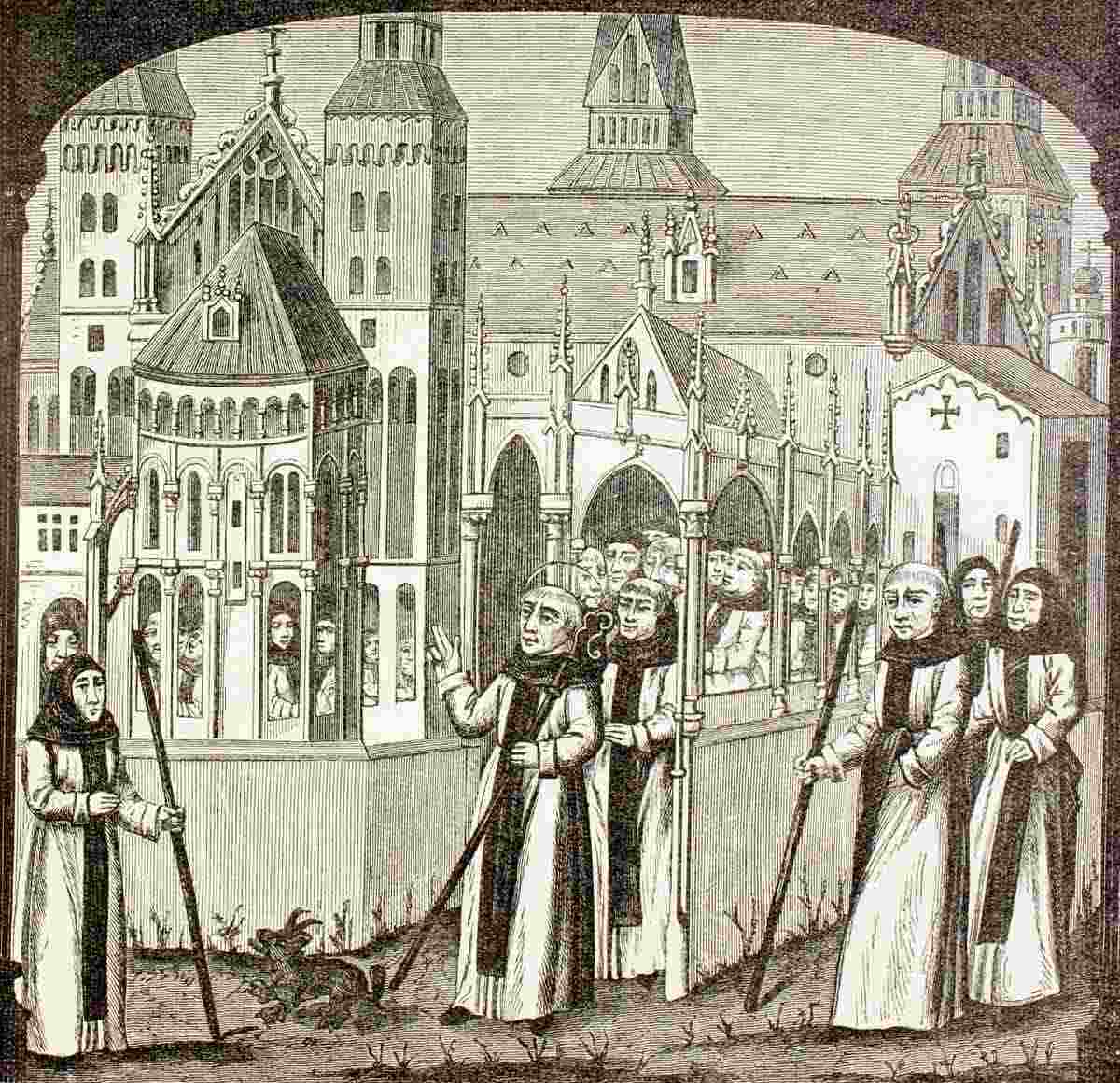
As the reformed monastic movement spread throughout Europe, Bernard of Clairvaux (canonized in 1174), deeply affected by the death of his mother, was among those who sought a more austere life. After a meeting with St. Stephen Harding, the abbot of Cîteaux Abbey, St. Bernard joined the Cistercian community of like-minded monks seeking to return the Benedictine Rule to its original austerity.
In 1115, Harding tasked St. Bernard with the establishment of a new Cistercian monastery in Clairvaux, a village on the borders between Champagne and Burgundy. In the 12th century, during the Cistercian order’s “golden age,” the newly founded Clairvaux Abbey grew rapidly, becoming the largest Cistercian center in Europe.
After the death of St. Bernard in 1153, Clairvaux Abbey remained an influential religious and economic center. In the 13th century, its abbot, Stephen Lexington, opened the Cistercian college at the University of Paris, one of Europe’s leading centers of higher learning.
Clairvaux Abbey remained active until 1808, when Napoleon turned it into a prison.
5. St. Gallen, Switzerland
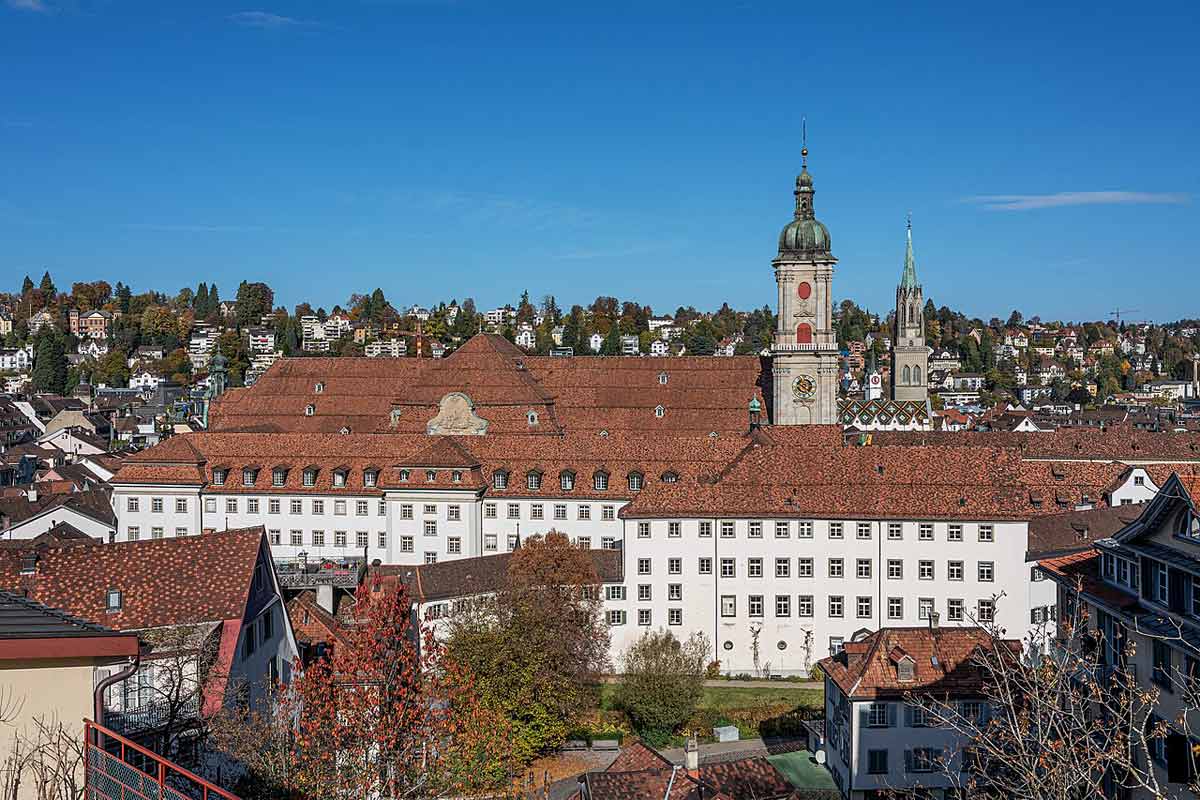
Located in northeastern Switzerland in the Sankt Gallen canton, the origins of St. Gallen Abbey can be traced back to 612, when the Celtic missionary monk Gall founded a hermitage in the Steinach Valley. About a century later, around 720, Gall’s refuge from the world became a Benedictine abbey under the leadership of Abbot Otmar. By the 9th century, the small community had grown, and a new complex had been built.
Around the same time, St. Gallen became the leading educational center north of the Alps. Its fame as a cultural hub stemmed from its extensive library, which contained about 2000 manuscripts, as well as books from the Carolingian era and the Ottonian empire. Its hall, constructed in the 18th century, was designed in a Rococo style. Today, the library houses around 160,000 volumes.
As the abbey’s influence and wealth grew, a town (Sankt Gallen) developed around the monastic community. The abbots acted as rulers of the urban center and, in 1206, became princes of the Holy Roman Empire. Their rule ended only in 1524 with the spread of the Reformation in Switzerland. In 1803, Sankt Gallen became the capital of the newly established Swiss canton. In 1983, St Gall Abbey, along with its library, was designated a World Heritage Site.
6. Reichenau, Germany
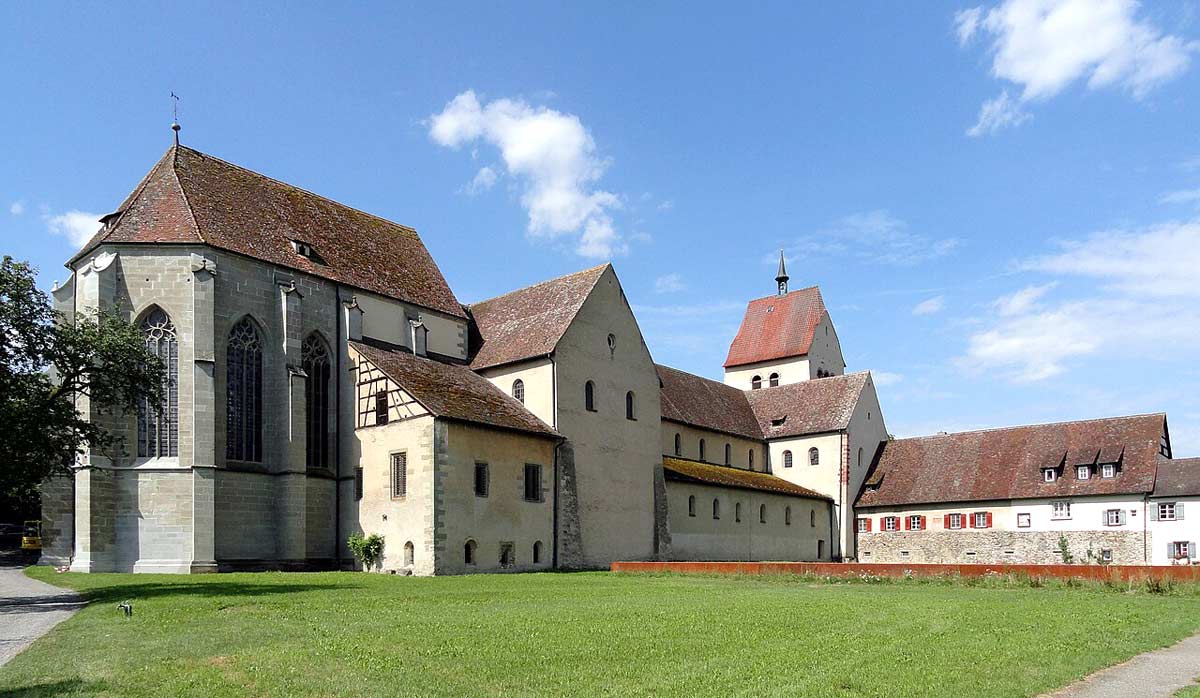
The island of Reichenau in Lake Constance (Baden-Württemberg) is a perfect spot for those seeking to leave all worldliness behind and find refuge. It is not surprising, then, that Saint Pirmin founded an abbey in Reichenau in 724, possibly fleeing Spain ahead of the Moorish invasion.
By the 9th century, Reichenau Abbey had become the most influential literary and artistic center in southern Germany. Excelling in the field of book illustration, the monks residing on the island were also renowned for their teaching skills, with many bishops and archbishops receiving their formal education in the abbey’s school.
At the time of the Carolingian Empire, Reichenau gained further importance as a learning center for imperial clerks. The abbey remained open until 1803, when Napoleon disbanded the monks and permanently secularized their land.
7. St. Augustine’s Abbey, England
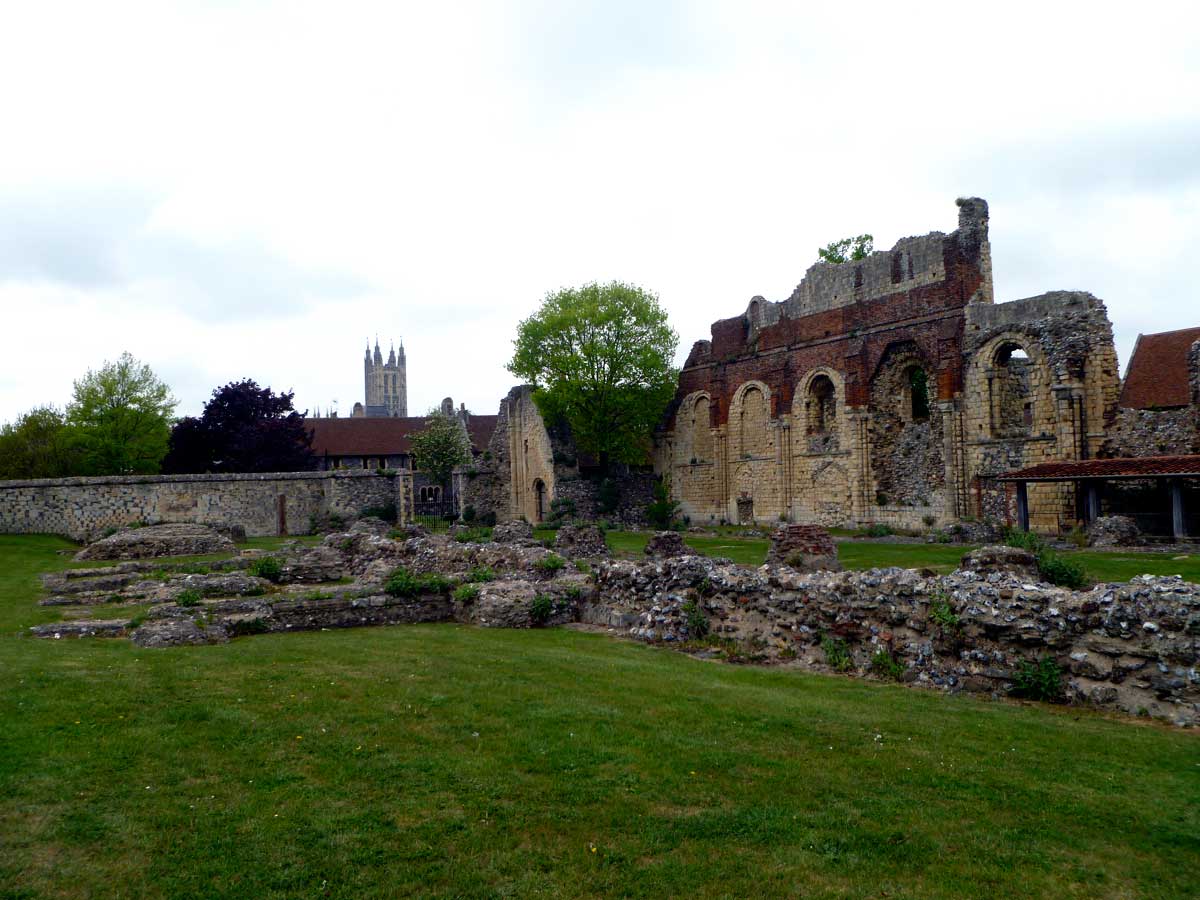
St. Augustine’s Abbey in Canterbury was founded in 598 by St. Augustine of Canterbury. The abbot of the Benedictine monastery of St. Andrew in Rome, St. Augustine was sent by Pope Gregory the Great to England on a mission to convert it to Christianity.
Landing on the Isle of Thanet in 597, St. Augustine and his entourage were received by King Aethelbert of Kent. The Anglo-Saxon monarch allowed them to settle in Canterbury, where they began to preach in the old St. Martin’s Church. St. Augustine’s evangelization efforts were successful, and he even converted King Aethelbert, who then appointed him bishop of the English.
In the following years, St. Augustine’s Abbey became the leading center of English Christianity and an important cultural hub. Raided by the Vikings in 1011, the abbey remained active after the Norman Conquest of 1066. The monks were even allowed to keep the majority of their lands. Their Anglo-Saxon abbot, however, was replaced by one from Normandy.
Rebuilt in the Romanesque style introduced by the Normans, St. Augustine’s Abbey remained active until 1538, when it was closed on Henry VIII’s order. In 1988, UNESCO added the abbey to its World Heritage List.