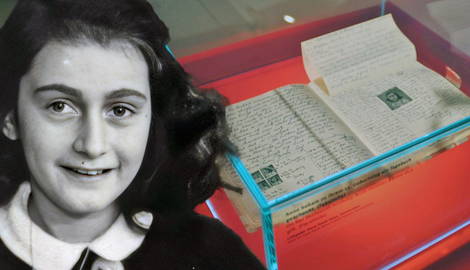

The Diary of a Young Girl, written by Anne Frank, a teenage German Jew, while in hiding in the Nazi-occupied Netherlands, is perhaps the most widely read account of the Holocaust. Quotes from Anne Frank’s diary and other writings are often part of official commemorations of the Holocaust and school curricula worldwide. Written under exceptional circumstances, Anne Frank’s account is a testament to perseverance and humanity in the face of the constant threat of persecution and death.
The Diary of Anne Frank
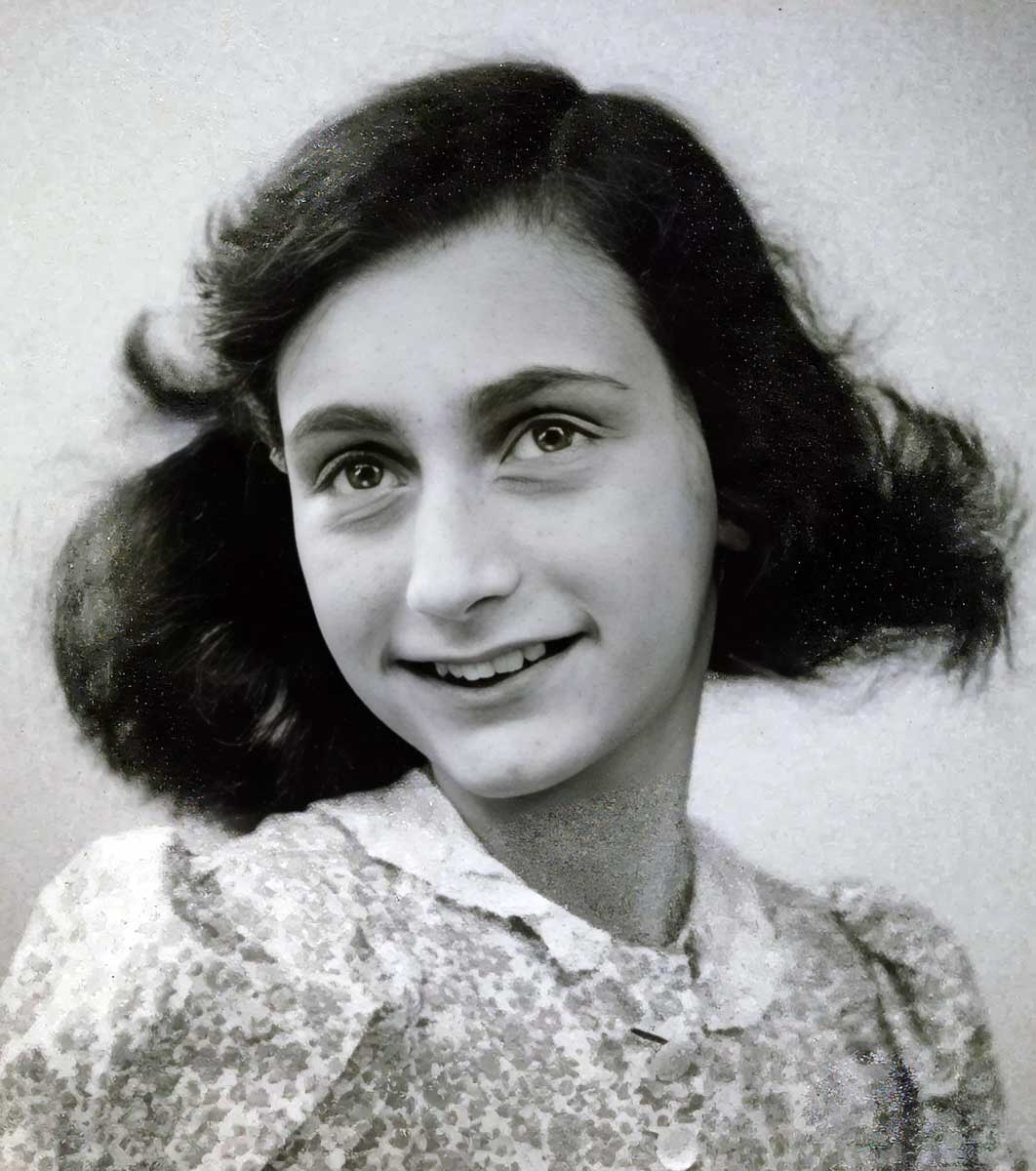
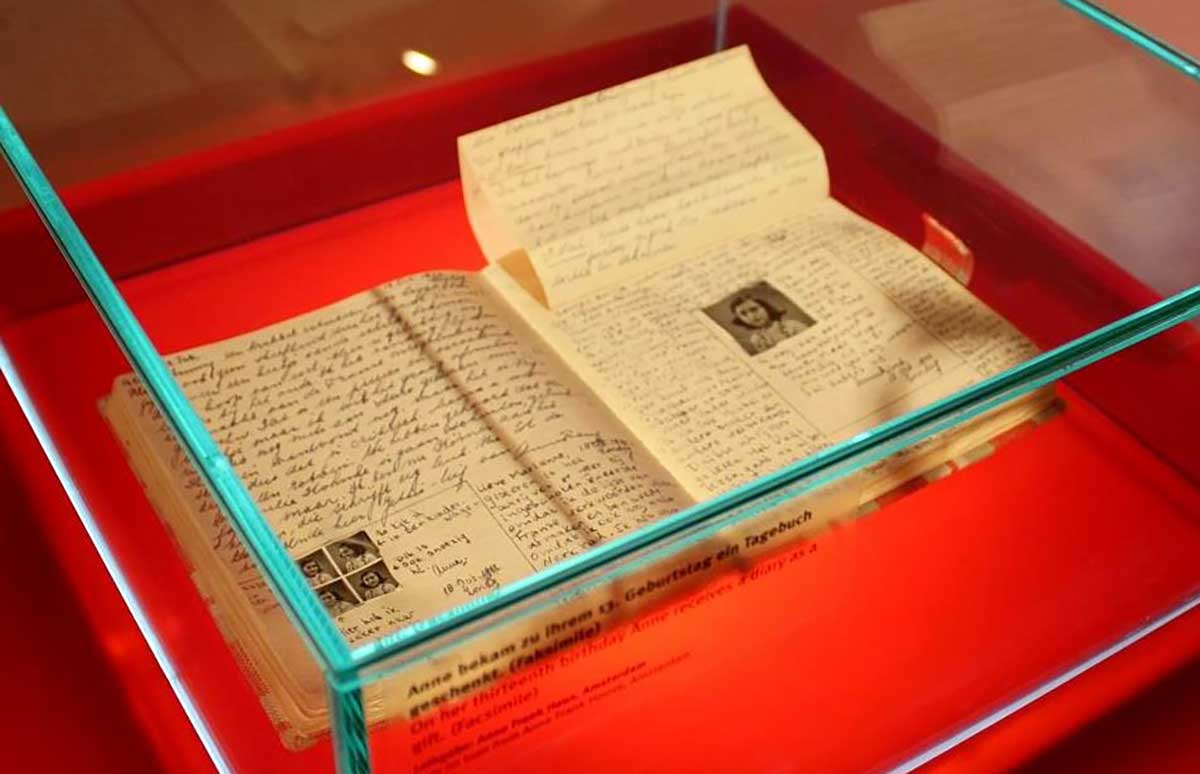
Anne Frank received her diary, a red-and-white plaid notebook, on her 13th birthday on June 12, 1943. At the time, the young Anne was living in the Nazi-occupied Netherlands with her older sister, Margot, and her parents, Otto and Edith Frank. Like many other German Jews, Otto had decided to leave Germany after Adolf Hitler seized power in 1933. In Amsterdam, Anne’s father opened a pectin firm, and, despite the initial financial struggles, the family began to feel at home, temporarily safe from the anti-Semitic persecution waged by the Nazi regime.
In the first entry, dated June 12, Anne expressed her hope to turn her diary into a close confidant: “I hope I will be able to confide everything to you, as I have never been able to confide in anyone, and I hope you will be a great source of comfort and support.” At the time, the 13-year-old did not yet know that the plaid journal would become her lifeline in the following years, a way to try to make sense of the unprecedented historical circumstances she was forced to witness. In the two years spent in hiding, writing in her diary “kept her company and kept her sane,” as Nathan Zuckerman, the protagonist of Philip Roth’s The Ghost Writer (1979), remarked.
Anne Frank and her family went into hiding on July 6, 1942, less than a month after Anne’s birthday, when Margot was notified of her imminent deportation to a work camp in Nazi Germany. “So there we were, Father, Mother and I, walking in the pouring rain, each of us with a schoolbag and a shopping bag filled to the brim with the most varied assortment of items,” wrote Anne in her diary.
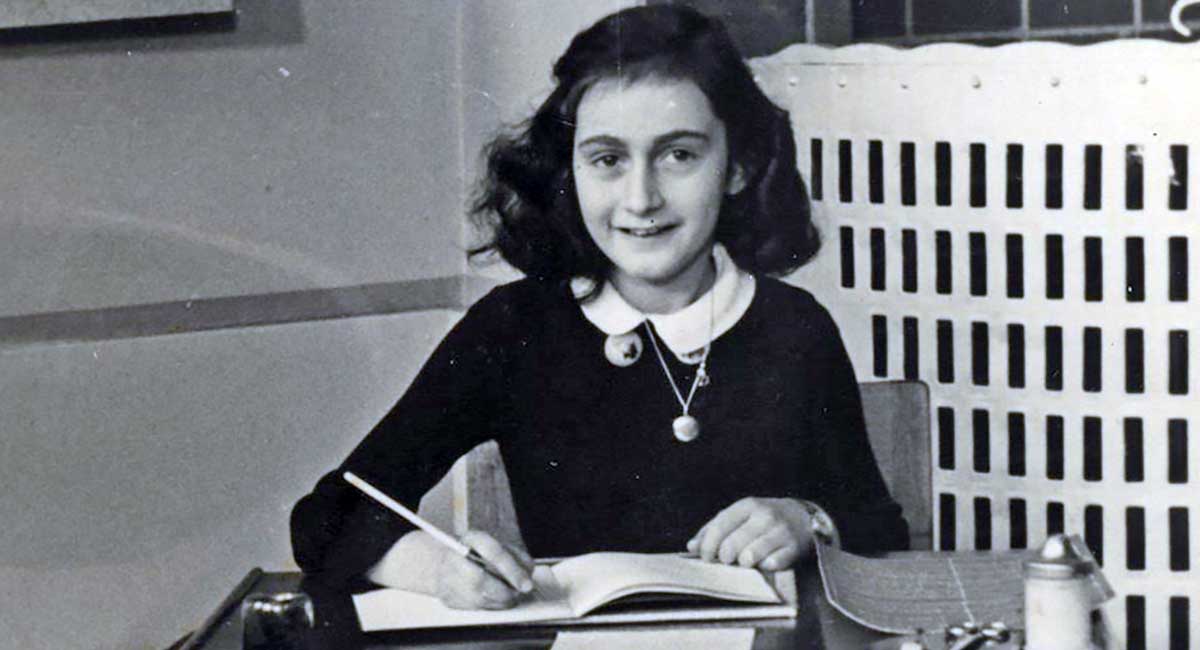
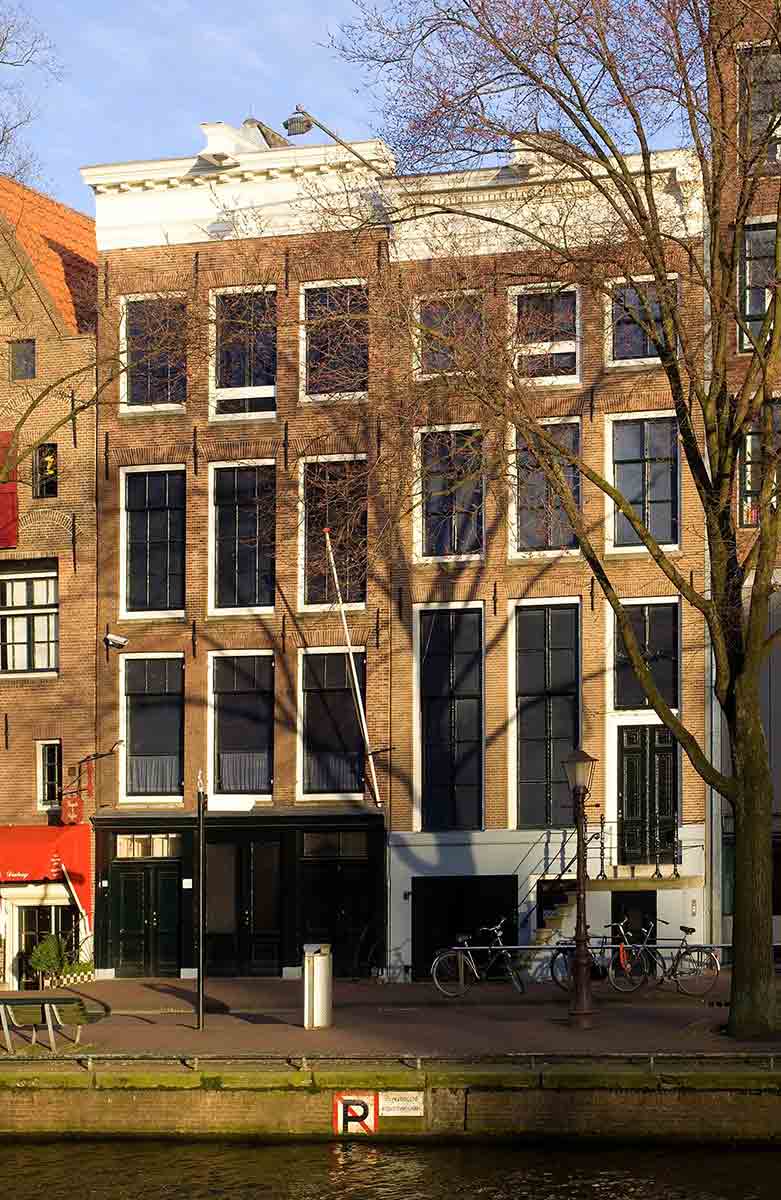
After unsuccessfully trying to secure visas to immigrate to the US, Otto began turning an extension, the “secret annex,” on the second floor of his firm’s headquarters at 263 Prinsengracht into a hiding place. Otto’s business partner, Hermann van Pels, and his family and dentist Fritz Pfeffer later joined the Franks in the annex.
Until August 4, 1944, when a group of German soldiers discovered and arrested them, along with their Dutch helpers, Anne recorded her daily life in the annex, her fears about the present, and her hopes for the future in her diary. She wrote letters addressed to a real and imaginary group of friends, mainly Kitty, a character created by Dutch writer Cissy van Marxveldt in the Joop ter Heul book series.
Anne Frank’s Quotes on Nazi Rule
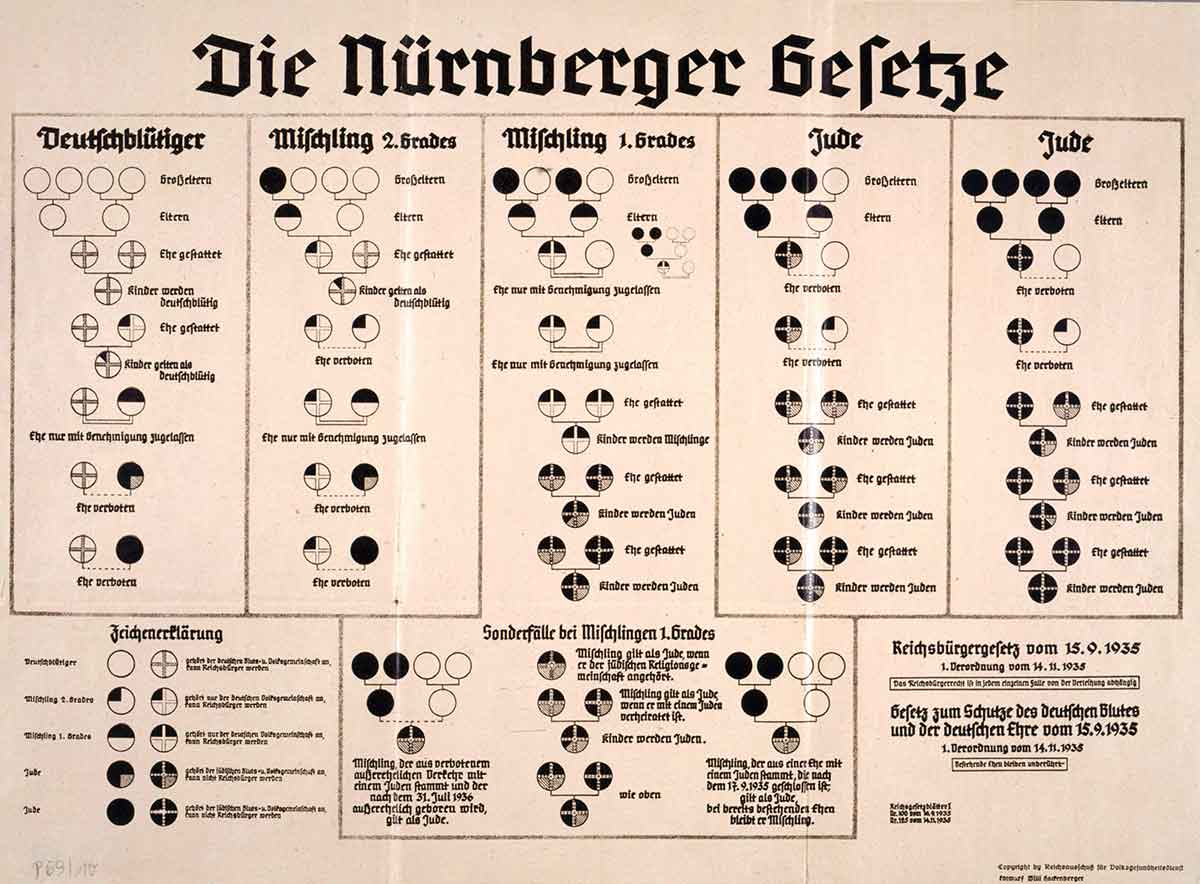
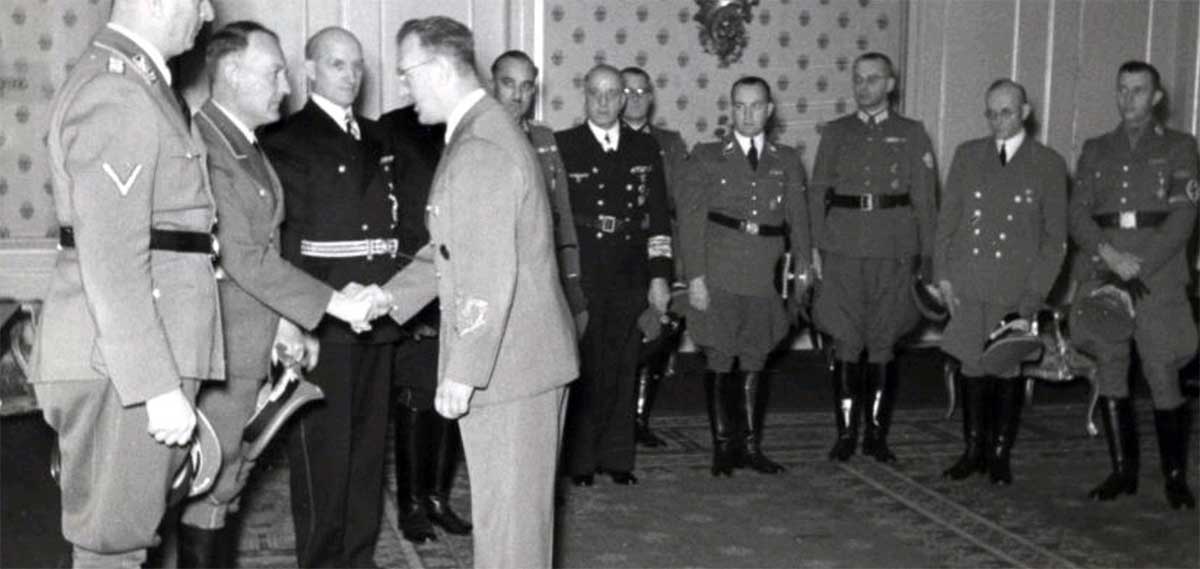
The Frank family’s hopes that the Netherlands could provide a stable refuge from the persecution and anti-Semitic violence of the Nazi regime shattered on May 10, 1940, when German troops crossed the country’s borders (even though the Dutch government had declared its neutrality) on their way to France. The Dutch army surrendered five days later, on May 15.
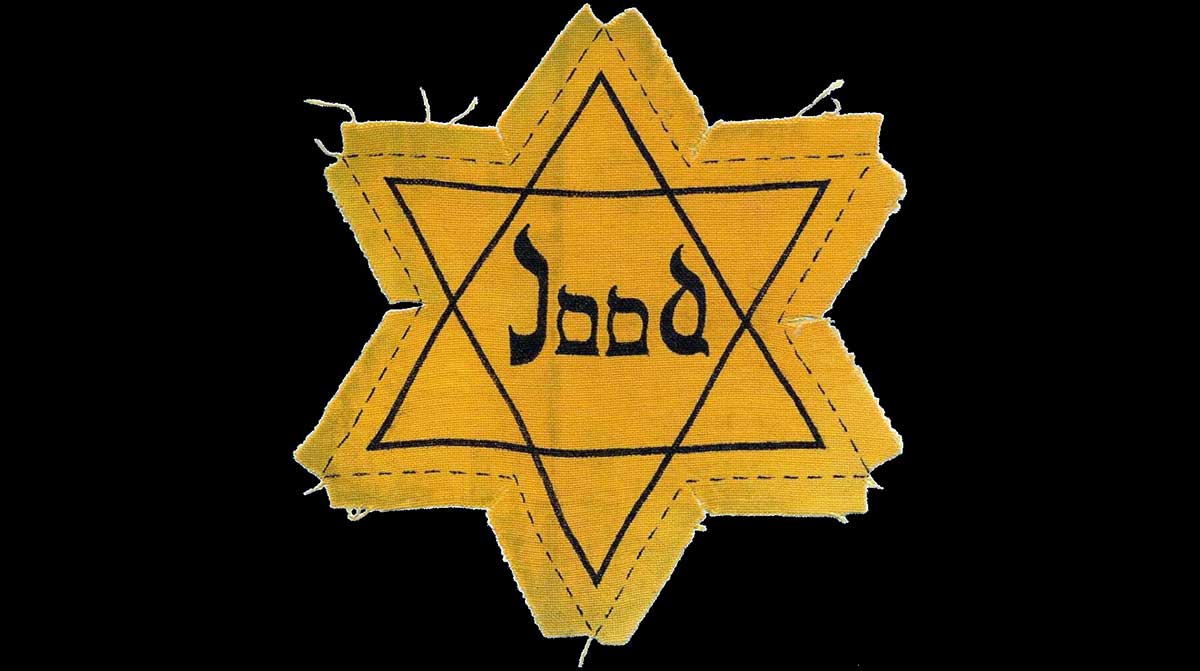
As the Nazi authorities took control of the country, the approximately 140,000 Jews living in the Netherlands had their rights and freedom gradually stripped away, as the Nazis, led by the Reichskommissar (Reich Commissioner) Arthur Seyss-Inquart, sought to exclude them from society. Soon, Jews were forced to wear a yellow star on their clothes with the word Jood, meaning “Jew” in Dutch.
In her diary, Anne reported the worsening situation in an entry written on June 20, 1942, and listed the long series of restrictions introduced by the Nazi authorities against the Jewish population:
“Our freedom was severely restricted by a series of anti-Jewish decrees: Jews were required to wear a yellow star; Jews were required to turn in their bicycles; Jews were forbidden to use street-cars; Jews were forbidden to ride in cars, even their own; Jews were required to do their shopping between 3 and 5 P.M.; Jews were required to frequent only Jewish-owned barbershops and beauty parlors; Jews were forbidden to be out on the streets between 8 P.M. and 6 A.M.; Jews were forbidden to attend theaters, movies or any other forms of entertainment; Jews were forbidden to use swimming pools, tennis courts, hockey fields or any other athletic fields; Jews were forbidden to go rowing; Jews were forbidden to take part in any athletic activity in public; … You couldn’t do this and you couldn’t do that, but life went on. Jacque always said to me, ‘I don’t dare do anything anymore, ’cause I’m afraid it’s not allowed.’”
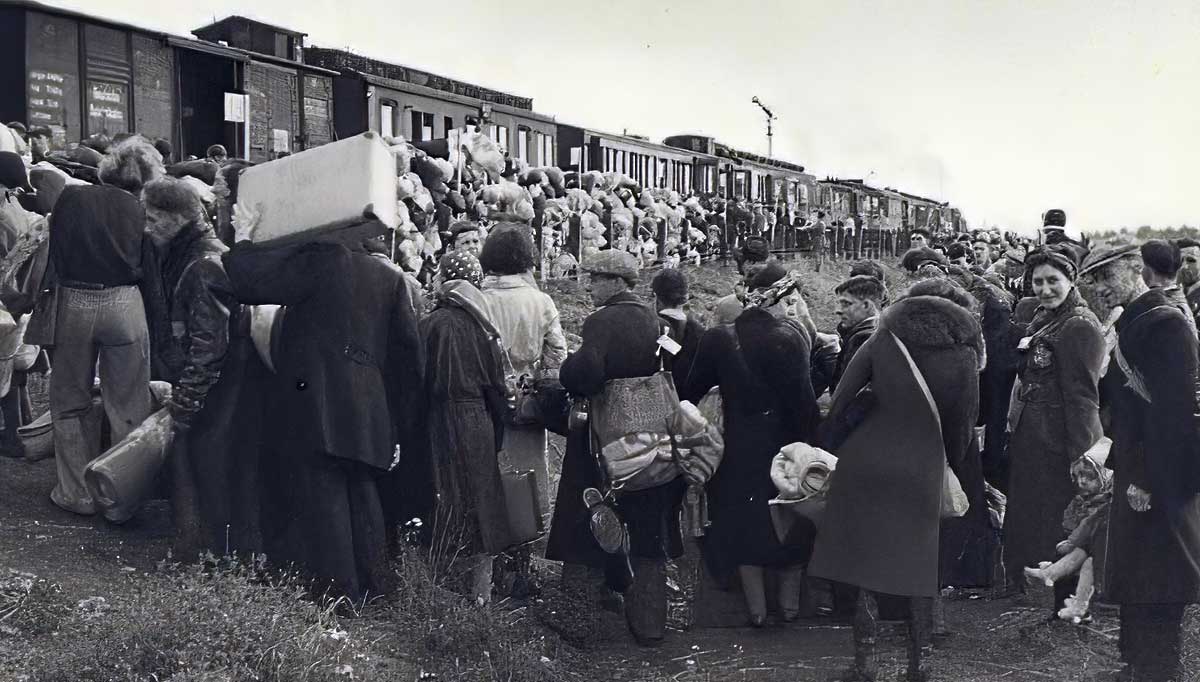
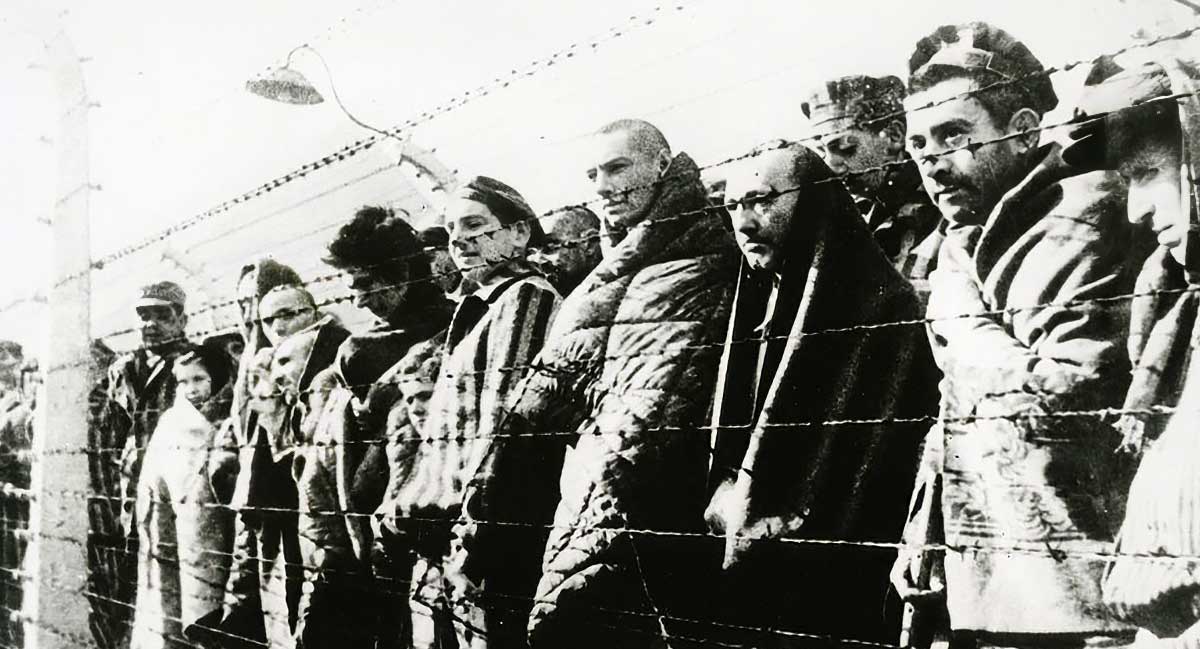
The Dutch population initially protested against the anti-Semitic measures, organizing a general strike in February 1941 following the arrest of several hundred Jews. In the following years, however, the Nazis began to systematically round up the Jews residing in the Netherlands and send them to the Westerbork and Vught camps. From there, starting in the summer of 1942, most prisoners were transported to the concentration and death camps of Auschwitz and Sobibor in Nazi-occupied Poland.
The survival rate among the Dutch Jews was especially low, with only 27 percent of the deportees managing to return home after World War II. Adolf Eichmann, one of the main coordinators of the Holocaust, was favorably impressed by the efficiency of the deportation from the Netherlands, commenting, “In the beginning you could say that the trains from the Netherlands were really rolling; it was quite wonderful.”
In the “secret annex,” Anne Frank frequently commented on the unprecedented situation she lived in and the horrors of the Holocaust. “The world’s been turned upside down. The most decent people are being sent to concentration camps, prisons and lonely cells, while the scum of the earth rules over young and old, rich and poor,” she wrote on May 25, 1944.
On October 9, 1942, she had already confided to her imaginary friend Kitty:
“Dearest Kitty,
Today I have nothing but dismal and depressing news to report. Our many Jewish friends and acquaintances are being taken away in droves. The Gestapo is treating them very roughly and transporting them in cattle cars to Westerbork, the big camp in Drenthe to which they’re sending all the Jews. … If it’s that bad in Holland, what must it be like in those faraway and uncivilized places where the Germans are sending them? We assume that most of them are being murdered. The English radio says they’re being gassed. Perhaps that’s the quickest way to die.”
Unbeknownst to Anne, in January 1942, 25 high-ranking Nazi officials had coordinated the so-called “Final solution to the Jewish question” at the Wannsee Conference, setting in motion the plan for the systematic deportation and extermination of European Jews.
Anne Frank’s Quotes on Self
Anne Frank’s diary is not only an eyewitness account of a young Jewish girl living under Nazi rule, but it is also a literary work depicting the emotional, psychological, and ethical maturation of a young woman and writer. While the earlier entries focus on her outings with friends to ice cream parlors and encounters with the first admirers, in hiding, Anne turned to introspection, reflecting on her identity and place in the world.
“Even though I’m only fourteen, I know what I want, I know who’s right and who’s wrong, I have my own opinions, ideas and principles, and though it may sound odd coming from a teenager, I feel I’m more of a person than a child, I feel I’m completely independent of others.”
March 17, 1944
“I know what I want, I have a goal, an opinion, I have a religion and love. Let me be myself and then I am satisfied. I know that I’m a woman, a woman with inward strength and plenty of courage.”
April 14, 1944
Some of the most widely known of Anne Frank’s quotes, these excerpts allow readers to get a glimpse of the young writer’s self-awareness regarding her personal development. During the long hours spent in careful silence to prevent any noise from betraying their whereabouts, Anne often turned to her diary for comfort and sanity. In his The Development of Anne Frank, John Berryman remarked how her unprecedented circumstances heightened Anne Frank’s “power of expression” and forced her to mature more quickly, drawing a parallel between her “conversion of the child into a person” to the conversion described by St. Augustine in his Confessions.
Anne Frank’s penchant for self-reflection also emerges from the following quote taken from the final entry on August 1, 1944:
“I’m afraid that people who know me as I usually am will discover I have another side, a better and finer side. I’m afraid they’ll mock me, think I’m ridiculous and sentimental and not take me seriously. I’m used to not being taken seriously, but only the ‘light-hearted’ Anne is used to it and can put up with it; the ‘deeper’ Anne is too weak.”
Anne Frank’s Quotes on People
Anne Frank’s surprising belief in the goodness of humanity despite the horrors of the Holocaust is perhaps her most famous quote:
“It’s difficult in times like these: ideals, dreams and cherished hopes rise within us, only to be crushed by grim reality. It’s a wonder I haven’t abandoned all my ideals, they seem so absurd and impractical. Yet I cling to them because I still believe, in spite of everything, that people are truly good at heart.”
July 15, 1944
After World War II, when news of the death camps began to spread, Anne’s remark on human nature turned her diary into an emblem of prevailing humanity in the face of a systemic oppression specifically designed to negate her and her fellow Jews’ very right to exist. “Consider if this is a man,” famously asked Holocaust survivor Primo Levi in his poem, “Who toils in the mud/ Who knows no peace/ Who dies for half a loaf/ Who dies by a yes or a no.”
However, it would be mistaken to write off Anne’s quote as a naive faith in the goodness of humanity by a 15-year-old girl. Rather, her declaration is a desperate effort to find meaning in a suddenly meaningless world, and to hold on to hope amid a growing sense of doom.
In an essay titled Give!, Anne had already argued that “Human greatness does not lie in wealth or power, but in character and goodness. People are just people, and all people have faults and shortcomings, but all of us are born with a basic goodness.”
Reaffirmed against the backdrop of persecution, her faith becomes more poignant, a testament to her powerful voice that would resonate with so many generations of readers.
Anne Frank’s Quotes on the Future
During the two years spent in hiding, Anne Frank and the other inhabitants of the “secret annex” alternated between despair and hope regarding their future after the war. While news of the Allies’ advance increased their optimism, the forced proximity, lack of privacy, and frequent quarrels led to frustration and demoralization.
In a series of entries from 1943, Anne expressed her mounting dread, comparing her plans for the future to a “castle in the air.” A couple of quotes from October and November give readers a sense of her struggle against despair and emphasize the power of art:
“I wander from room to room, climb up and down the stairs and feel like a songbird whose wings have been ripped off and who keeps hurling itself against the bars of its dark cage.”
October 29, 1943
“I see the eight of us in the Annex as if we were a patch of blue sky surrounded by menacing black clouds. The perfectly round spot on which we’re standing is still safe, but the clouds are moving in on us, and the ring between us and the approaching danger is being pulled tighter and tighter. We’re surrounded by darkness and danger, and in our desperate search for a way out we keep bumping into each other.”
November 8, 1943
Stuck in a present of constant danger, Anne saw her writing as a way to reaffirm her identity and secure her memory against the threat of erasure.
“I want to go on living even after my death! And therefore I am grateful to God for giving me this gift, this possibility of developing myself and of writing, of expressing all that is in me!”
April 5, 1944
In April 1944, Anne had already begun editing her diary, deleting some previous entries and adding some new ones. Her plan to publish her writing after the war dates back to March 1944, when she heard a speech by the Dutch Minister of Education in exile exhorting his fellow citizens to document their wartime experiences for posterity. For the young Anne, writing then became an act of self-assertion in the face of a hostile force that sought to annihilate her and her family.
Anne’s plan for her future tragically died with her in February 1945 at the Bergen-Belsen concentration camp, where she and her sister Margot contracted typhus. Her diary and other writings, however, survived the war thanks to Miep Gies, who kept Anne’s journal and other papers after the Franks’ arrest in 1944. After the war, she returned them to Otto, the only inhabitant of the “secret annex” to survive the Holocaust. Moved by his daughter’s writings, Otto published them in 1947 with the title Het Achterhuis (The Secret Annex), the title Anne herself had chosen.
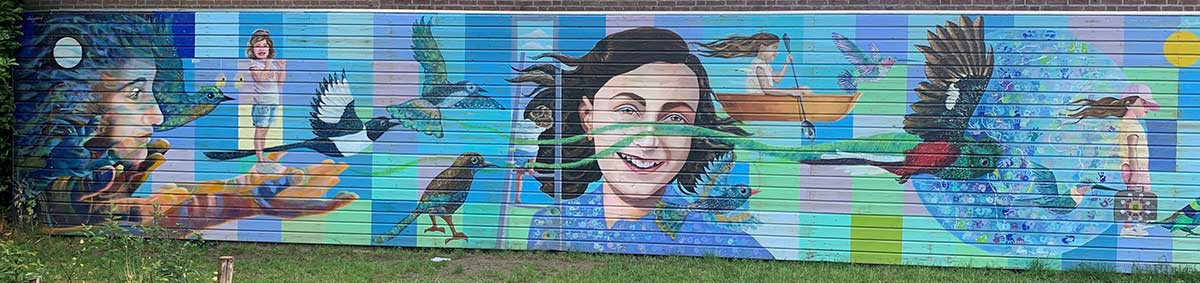
Today, the Diary of a Young Girl has been translated into over 75 languages, making Anne Frank a symbol of perseverance and her writings a “bid for immortality.”