
Between the end of the 10th and the beginning of the 11th century, as Europe recovered from the instability following the fall of the Western Roman Empire (5th century), the continent’s commerce grew, also fueled by the development of long-distance trade. The presence of pirates and bandits, however, made traveling dangerous. Moreover, merchants had to deal with quarrelsome overlords. To protect their trading interests, German merchants began to form Hanse (associations). By the 13th century, these trading groups bound into a single guild: the Hanseatic League. In the following centuries, the Hanse became the undisputed ruler of the Baltic and North Seas.
Setting the Stage: The Hanseatic League & Medieval Trade
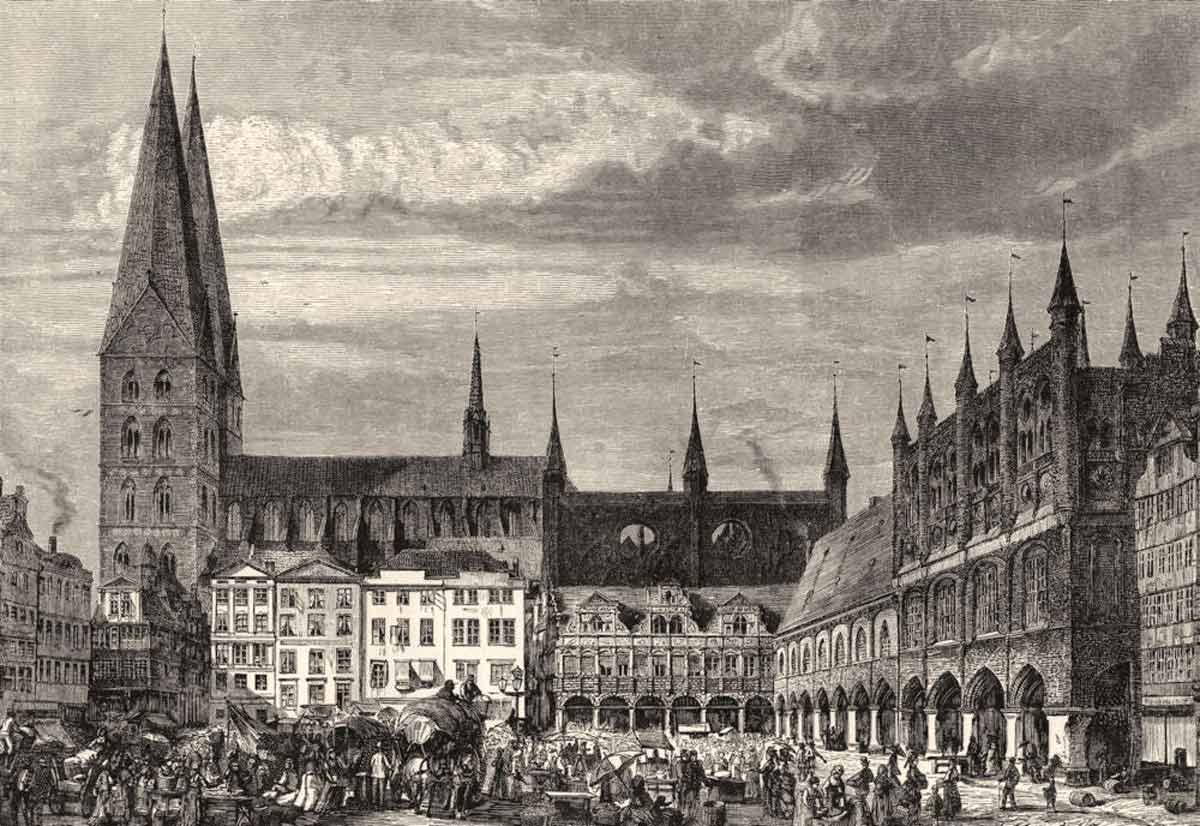
The volume of trade in Europe decreased after the fall of the Western Roman Empire, even if it never really stopped. Then, between the late 10th and early 11th centuries, when reconstruction began after several waves of invasions, European trade saw a rapid expansion.
The rate of economic development led Italian-American historian Roberto Sabatino Lopez to speak of a “commercial revolution.” Similarly, French historian Henri Pirenne (1936) talked about a “revival of trade,” claiming that it was export trade as the true basis of economic growth: “It was this alone which gave birth to that class of professional merchants which was the chief instrument of the economic revival of the 11th and 12th centuries … The impetus was given by long-distance trade.”
Some modern scholars believe the actual volume of long-distance trade in medieval Europe has been overestimated. However, there is no denying that the emergence of networks of merchants played a key role in the economic revival beginning in the 10th century, contributing to the creation of connections between distant communities and, eventually, the integration of European markets.
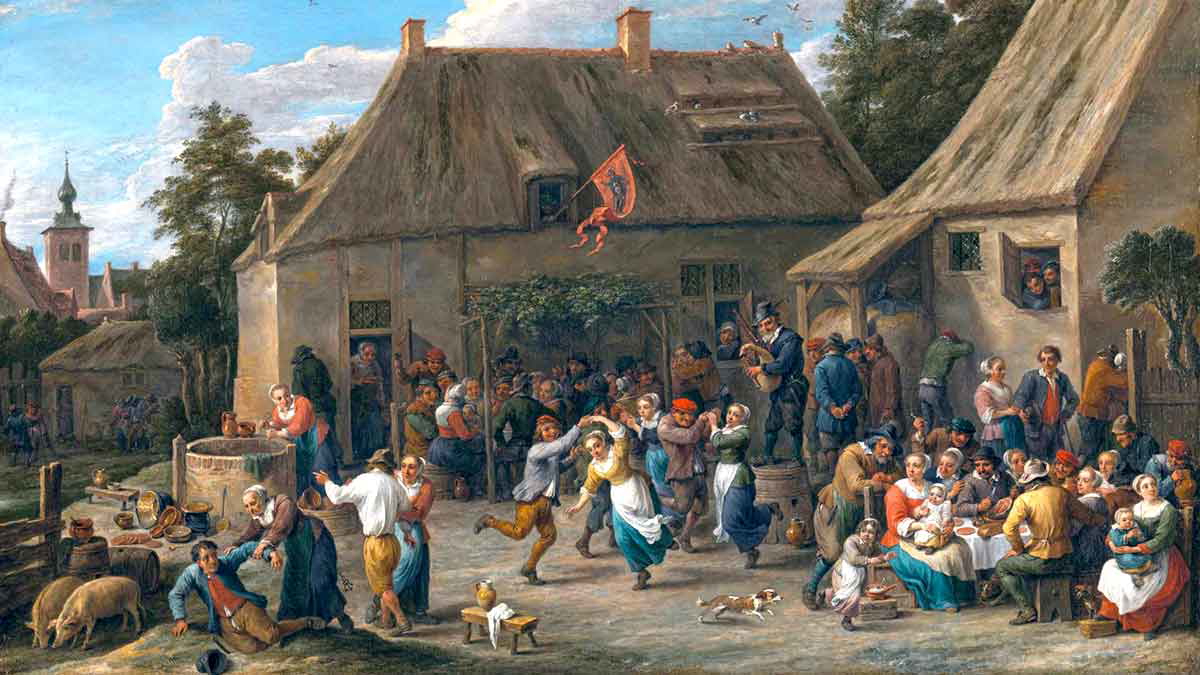
In the 12th century, while Italian and French ports began to create trade connections with the Muslim world and the Byzantine Empire, importing silks and spices, trade in the northern seas developed around the exchange of cloth, salt fish, wine, furs, and skins.
Evidence for the “economic revolution” is scant, but the establishment of an increasing number of markets and fairs, coupled with the flourishing of urban centers and port cities, is likely a testament to this revival of trade. At the time, towns and other forms of interest-based communities, such as guilds and universities, evolved in the absence of strong, central state entities. Often in conflict with the vertical feudal power structures of medieval society, merchant towns and communities soon set up trade connections.
The Birth of the Hanseatic League
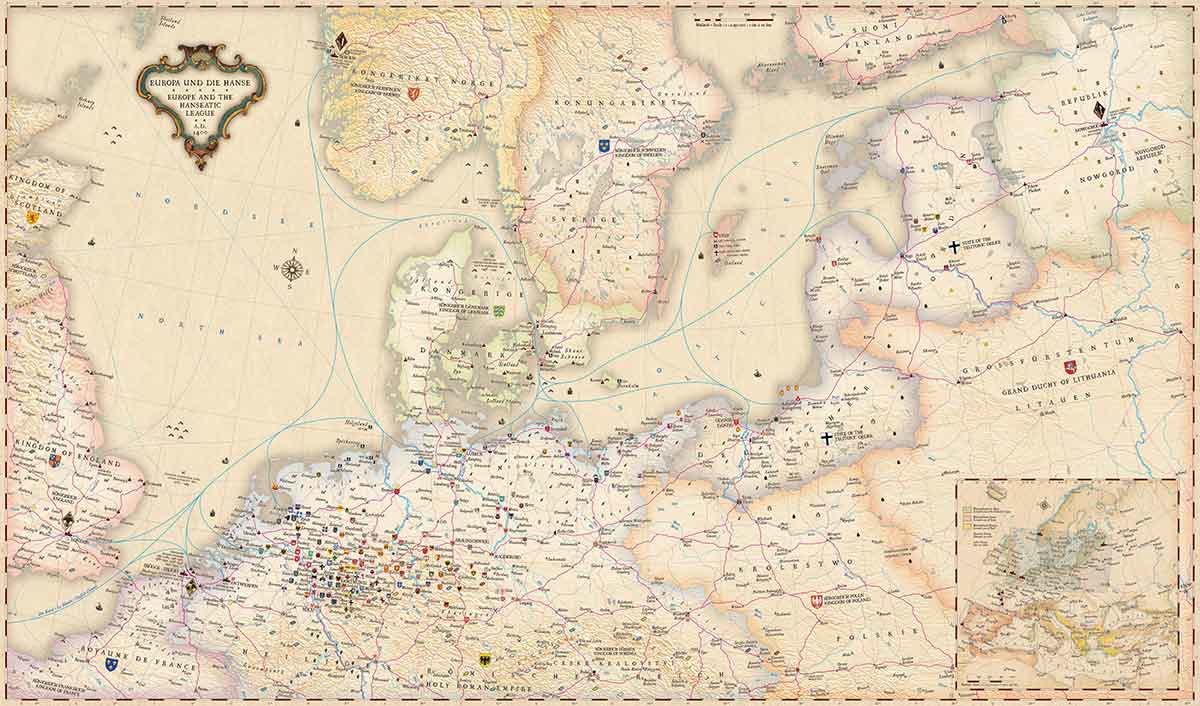
In the 12th century, German merchants made regular trips across the Baltic Sea to reach the Russian town of Novgorod. There, the traders exchanged cloth, metal, grain, and herring (among other goods) for wax, furs, and spices.
The routes connecting northern Germany and Russia, however, were long and full of hazards, from piracy to dealing with the feudal lords, from dukes and margraves to the Teutonic Knights, ruling over a patchwork of territories corresponding to present-day Germany, Poland, the Netherlands, the Baltic States, and Russia. To protect themselves and their interests, groups of merchants began to form loose unions known as Hanse, a medieval German term meaning “association,” which, in turn, derived from a Gothic word for “troop” or “company.”
On their way to Novgorod, the German merchants often stopped on the island of Gotland, off the Swedish coast. Its strategic location in the middle of the Baltic Sea made Gotland, especially the town of Visby, a popular trade hub of the Baltic region. Among those who regularly conducted their business in Visby were the Lübeck merchants, who established a key base on the island.
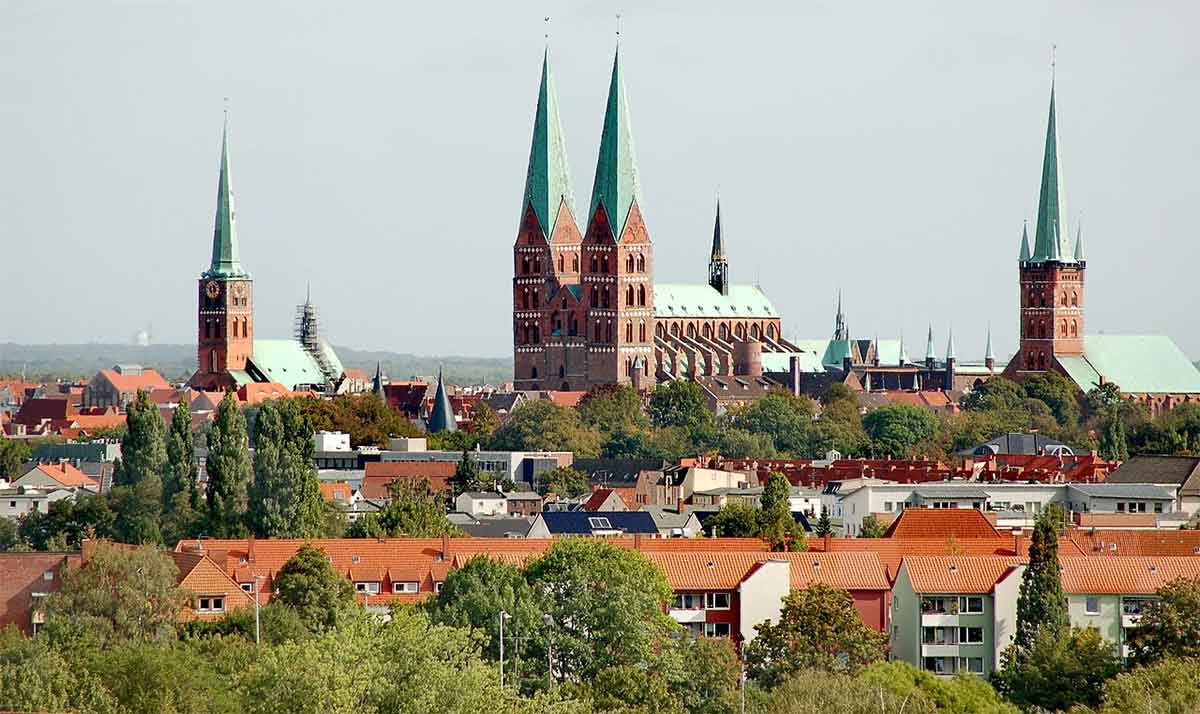
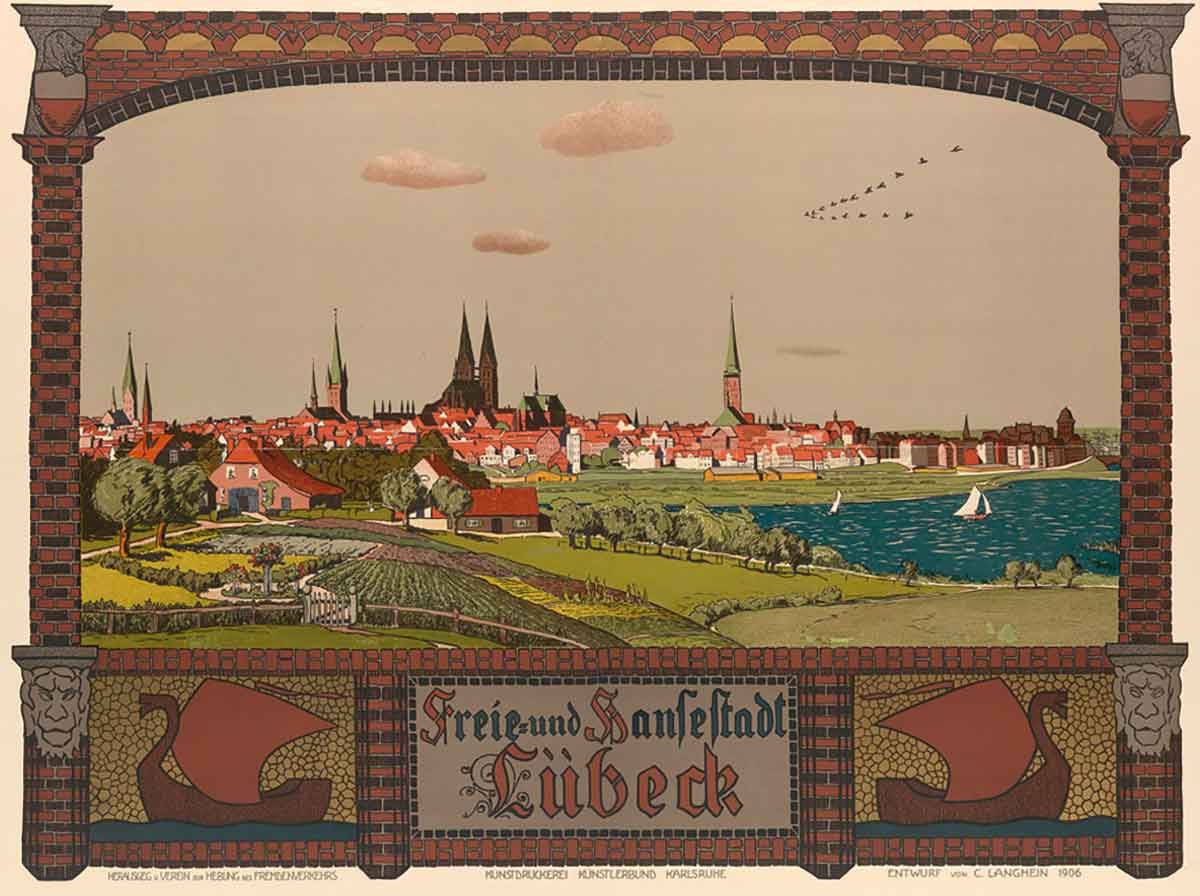
Indeed, the city of Lübeck, rebuilt in 1159 after its capture by Henry III “the Lion,” played a crucial role in the origins of the Hanseatic League. Placed in a particularly favorable position, on the banks of the Trave River and near the Baltic Sea, the German town formed a trading alliance with Hamburg in 1241. The two cities had previously agreed to refer to a set of common laws regarding certain trading matters.
A European Superpower
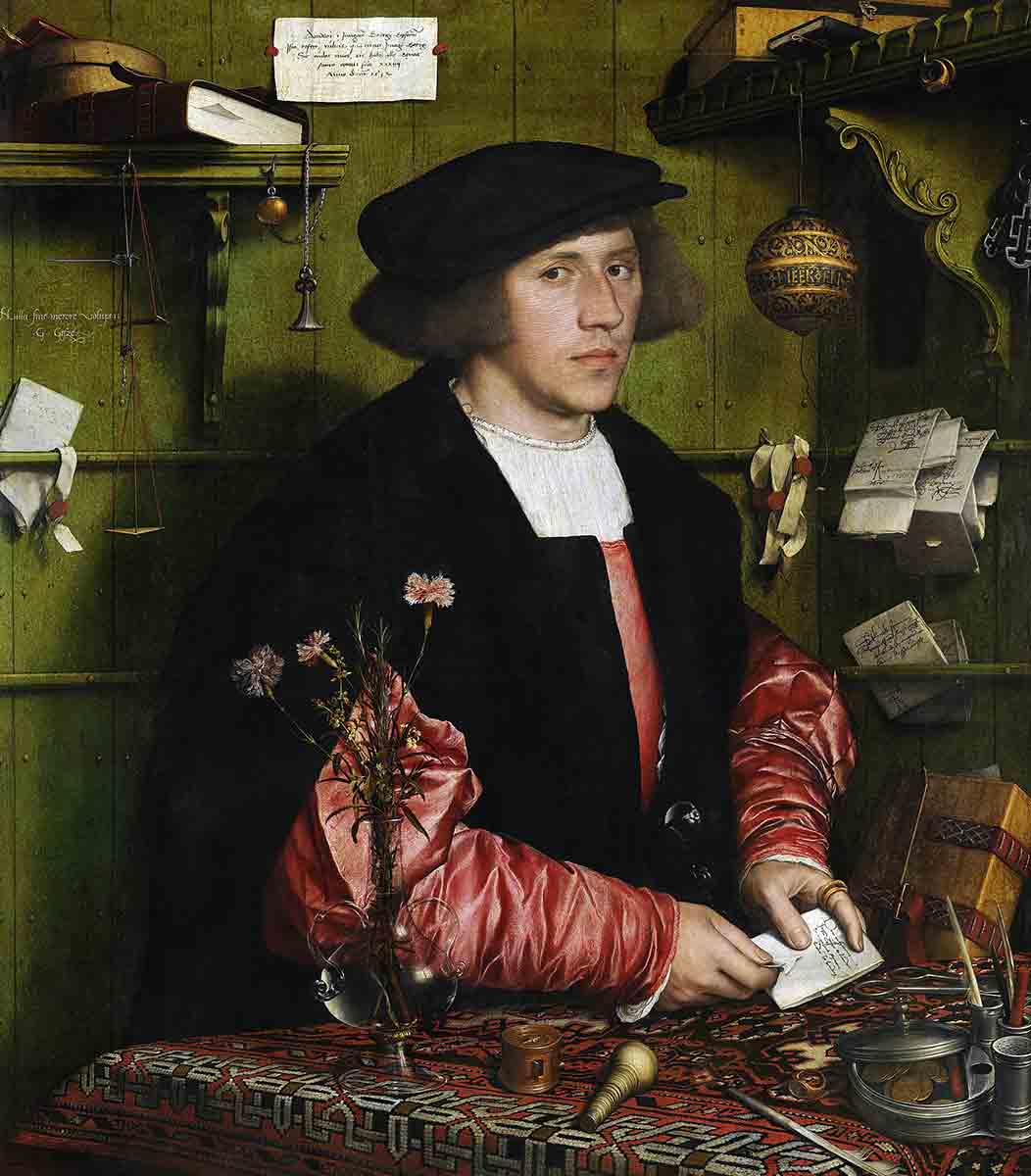
Meanwhile, other cities also formed loose unions to protect their common interests, a process favored by their geographic locations and interdependence of trading routes. By 1259, the Lübeck-Hamburg Hanse had acquired other members, including Cologne, Rostock, and Wismar. Some years later, they agreed to adopt the same legislation regarding trade. Thus, from the Hanse of merchants developed the Hansa (League) of towns whose merchants enjoyed privileges abroad.
Indeed, by the early 13th century, the German towns revolving around Lübeck had secured a monopoly on long-distance trade in the Baltic Sea area. The East-West trade axis between Novgorod, Tallinn, Hamburg, Bruges, and London would remain the foundation of the Hanseatic League’s commercial power throughout the Middle Ages. To better control the currents of Baltic trade, the cities of the Hanseatic League founded kontore (trading posts) overseas, which became the first port of call for the German merchants conducting business abroad.
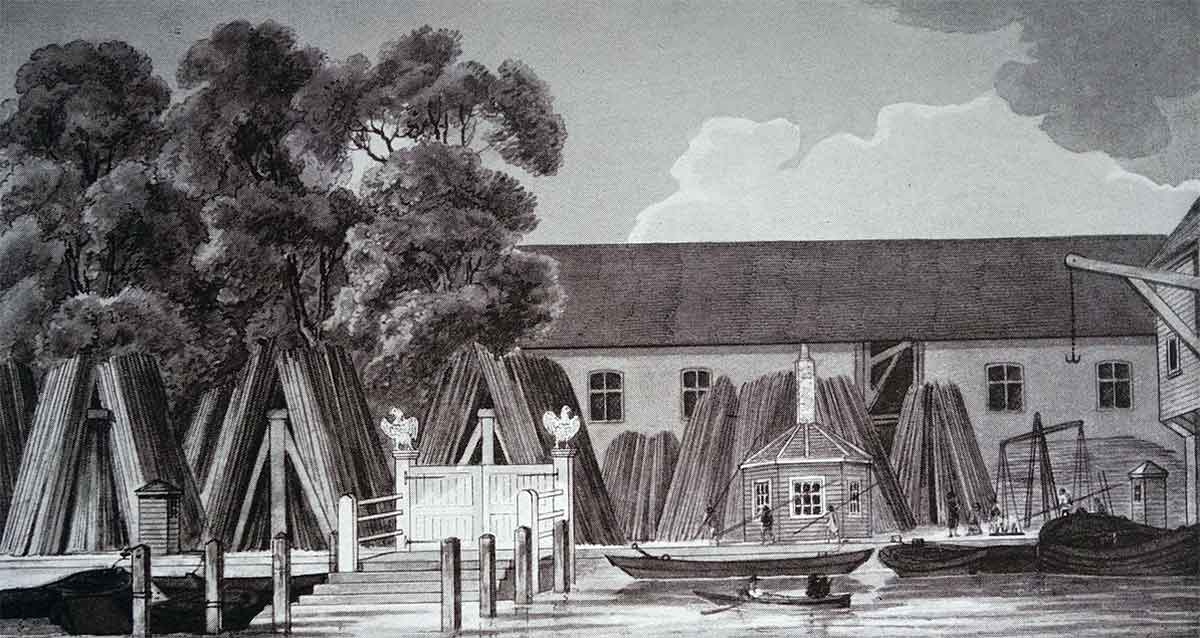
The four major kontore, which formed the cornerstones of the northern trading network, were in Novgorod, London, Bruges, and Bergen. In some cities, the posts formed a separate legal area, acquiring privileges and exemptions. In the English capital city, for example, the Hanseatic merchants set up their headquarters in the so-called Stalhof (steelyard) on the Thames River, west of London Bridge. It has been suggested that the etymology of the word “sterling” is closely linked to the German merchants, commonly known as “Easterling,” as it may have been used to refer to their solid currency. This theory, however, has been contested.
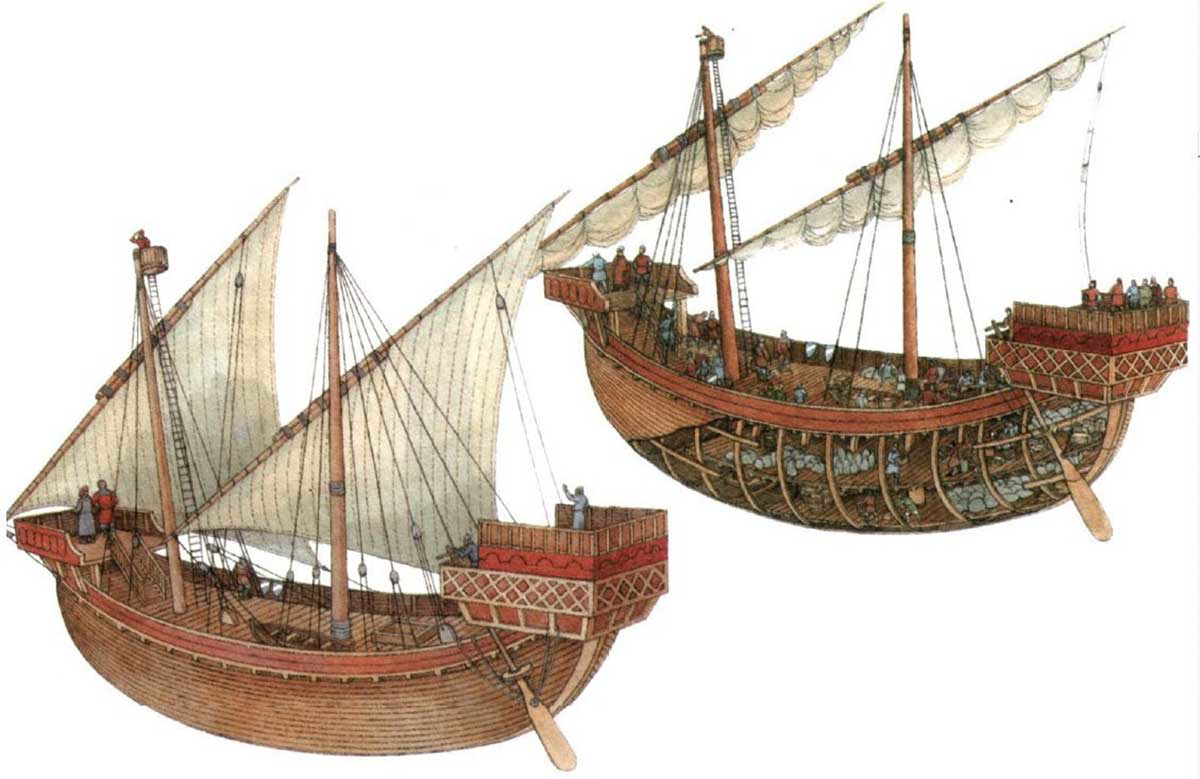
Alongside their joint commercial enterprises, the Hanseatic cities invested in shipbuilding, developing the cog, a type of cargo ship with a square sail and a flat bottom built to carry large amounts of cargo with a small crew. The cog, ideally suited for the trading needs of the Baltic region, gave the Hanseatic League advantages over its competitors, thus contributing to the establishment of its monopoly.
The Hanseatic League’s Organization
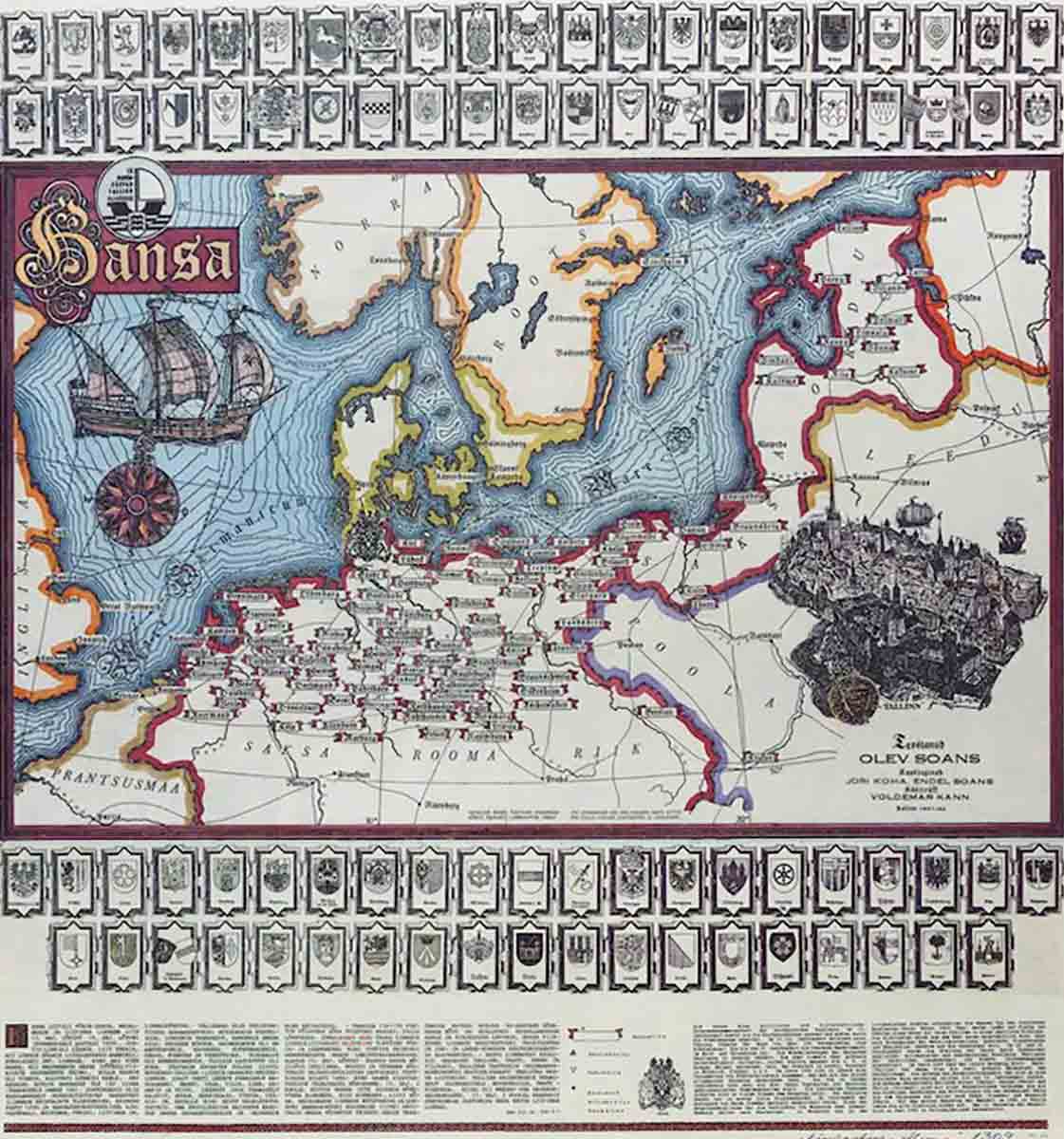
Defining the exact organization of the Hanseatic League has always been a difficult task. Indeed, despite its extensive trading network, the community of German towns never drew up an official, up-to-date list of its members. However, scholars generally agree that, at its peak, the Hansa’s membership counted more than 100 cities.
As they were joined in a loose organization, more of a community than a political federation or corporation, the Hanseatic cities had no permanent officials, no permanent navy, owned no joint property, and had no permanent central governing body. In the absence of a common council, representatives of the Hanseatic towns gathered in a diet, usually held at Lübeck, to agree on common policies. However, there was no obligation for all members to take part in the assembly.
The diets were also held at irregular intervals, often in the face of threats to the Hanseatic League’s commercial interests.
The Hanseatic League’s Policies
The main aim of the Hanseatic League was not the entry into new markets; rather, its members sought to protect and advance their hold on the Baltic region against growing competition. To retain the natural advantages granted by their favorable geographical position, the Hanseatic cities made frequent gifts and loans to local leaders, resorting to embargoes and blockades when their exclusive privileges were threatened.
In 1368, the Hanseatic League assembled a common fleet to blockade Norway’s ports after the Norwegian rulers resisted German merchants’ demands for trading privileges. As the Hansa blocked the vital importation of grain, Norway was eventually forced to concede.
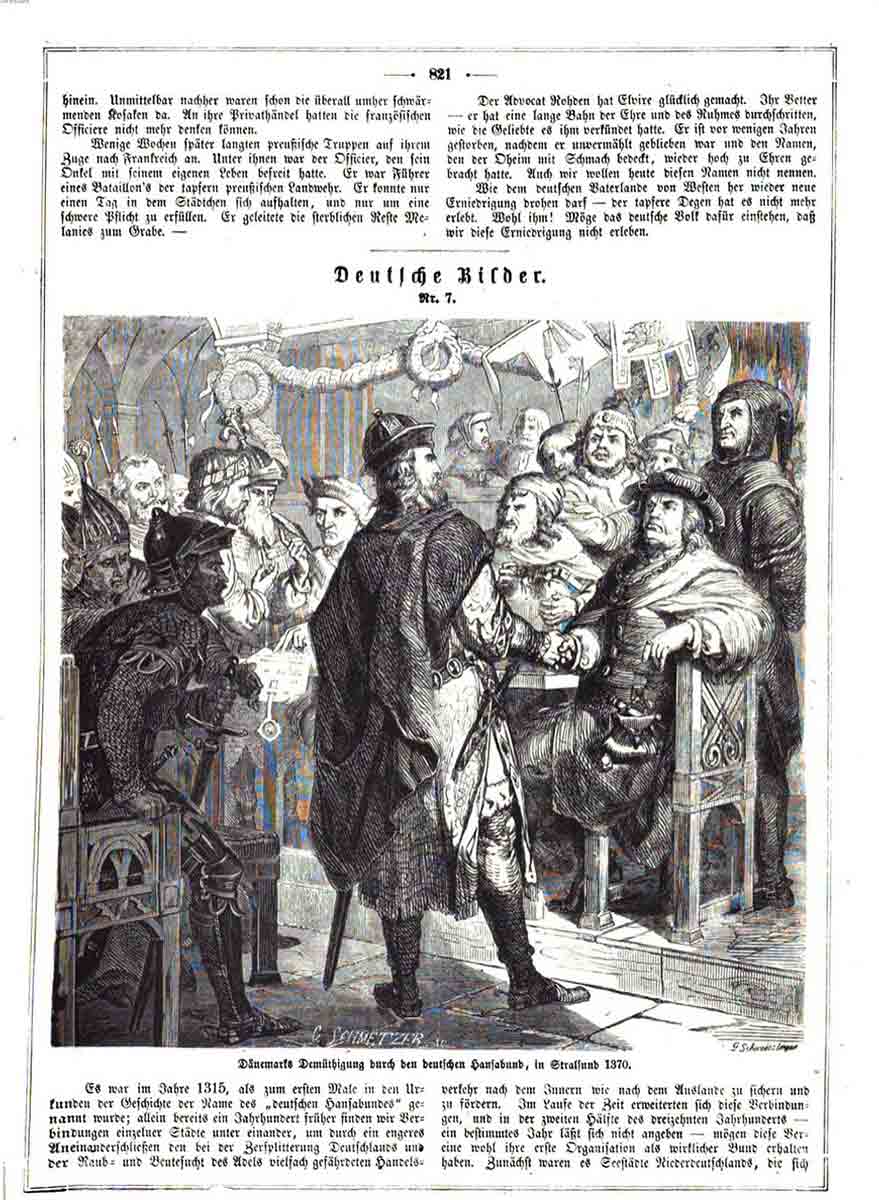
Only in extreme cases did the Hanseatic League resort to warfare. In 1361, for example, the German towns took up arms against Denmark, where King Valdemar’s expansionist policies posed a serious threat to their hold on Visby, the very basis of the league’s power in the Baltic. In 1370, the Treaty of Stralsund granted the victorious Hanseatic forces free passage through the “Sound,” a strategic strait between Denmark and Sweden, and the right to approve (or veto) the appointment of future Danish kings. The Hanseatic League also waged war against Poland, whose monarchs tried to annex Danzig (present-day Gdansk).
The Decline and Fall of the Hanseatic League
Despite the lack of a centralized political structure, the Hanseatic League retained its monopoly of Baltic trade for almost 500 years. Only in the 15th century did the Hanse begin to experience a slow but steady decline that continued in the following centuries, eventually leading to the community’s disappearance as a major commercial player.
The league’s initial decline was caused by a combination of factors reflecting the changing economic and political landscape of Europe (and the world). Besides their favorable geographical position, the foundations of the Hanseatic towns’ power lay in their interdependence and mutuality of interest.
Indeed, when internal conflicts began to arise between the cities, the weakness of the league became apparent, just when the Hansa was also put under strain by the increasingly frequent forays of competitors, such as Nuremberg and Augsburg, into the Baltic trade. Groups centered on the Hanseatic towns of Cologne and Danzig, for example, sought to build profitable connections with the Low Countries, England, and the Dutch merchants. As a result, cooperation between the league’s members became difficult.
At the same time, the rise of new nation-states posed a serious threat to the league’s monopoly. Local rulers grew resentful of the Hanse’s privileges and practices that prevented them from exercising control over the newly formed nations’ own trading interests. In 1598, for example, Queen Elizabeth I expelled the Hanseatic League from the London kontore. At the end of the 14th century, the union of Poland and Lithuania had also harmed Hanseatic interests. In the 15th century, following Ivan III’s capture of Novgorod, the Hanse lost a crucial trading post.
Finally, the decline of the Hanse was also a reflection of the fact that, in the 16th century, the center of trade shifted from northern to western and southern Europe. Indeed, the Age of Exploration opened up new markets and trade patterns. Thus, new powers, such as Spain, Portugal, the Netherlands, and England, replaced the Hanseatic towns as the new maritime superpowers.
The last Hanseatic diet took place in 1669 in Lübeck with only six cities sending their representatives. In the following centuries, the Hanseatic League would no longer play any active role in European trade.