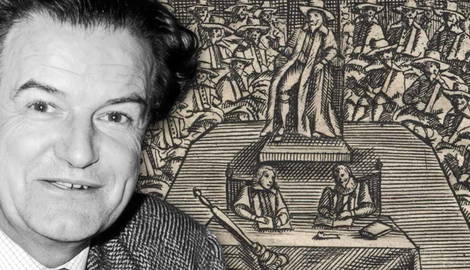

Christopher Hill’s 1972 work, The World Turned Upside Down, changed the way we think about religion, philosophy, and politics in the 17th century. Rather than focusing on the biographies of great individuals such as Charles I or Oliver Cromwell, Hill looks instead at the common people who formed what is sometimes referred to as the “lunatic fringe.” Rather than dismissing them as incoherent or fanatical, Hill takes seriously the new ways of thinking about the world that these otherwise “ordinary” people discovered and that we take for granted today.
Who Was Christopher Hill?
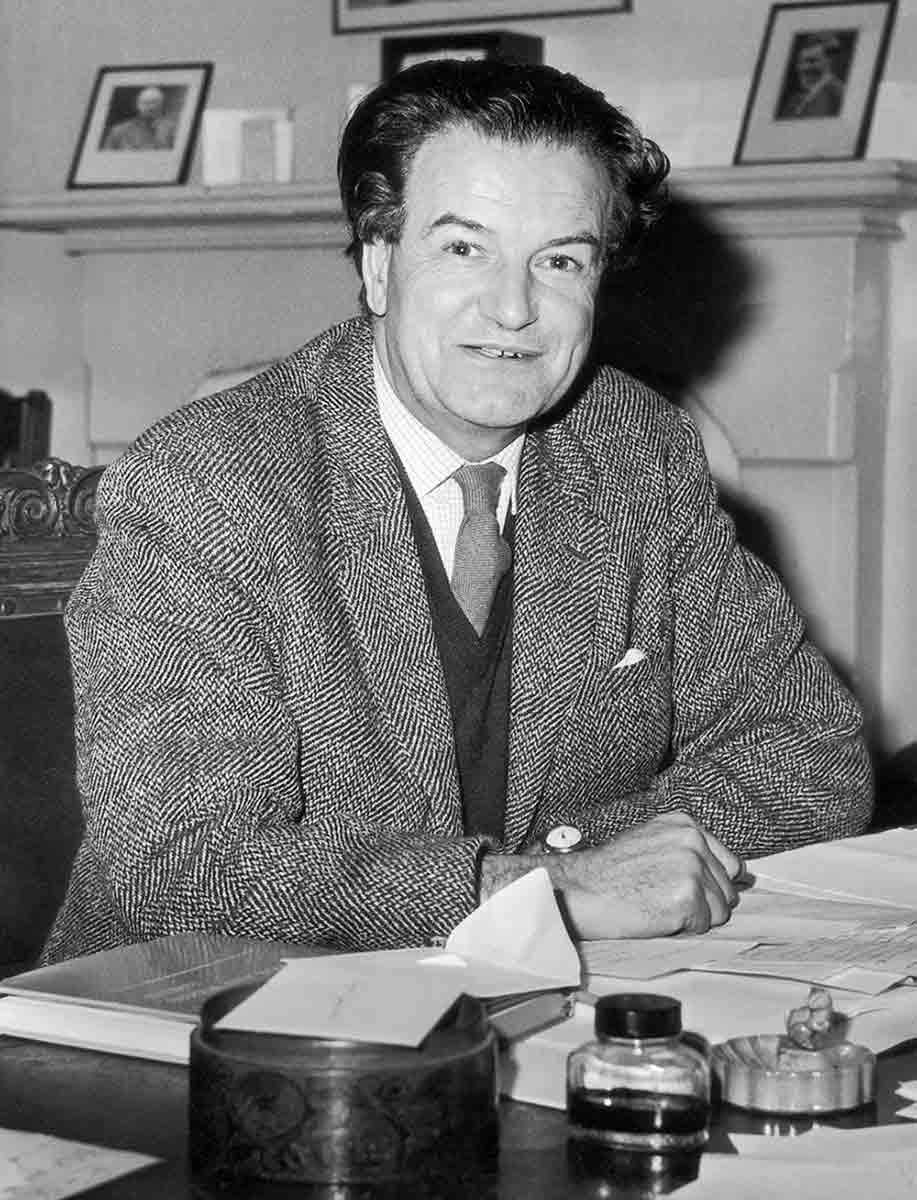
Christopher Hill was born into a family of devout Methodists on February 6, 1912, in the north of England. A bright child from the start, he took his examination to enter Balliol College, Oxford, at just sixteen years of age. So promising was the young Hill that his examiners offered him a place at Oxford straightaway out of fear that he might be poached by their rivals, Cambridge.
A trip to Freiburg, Germany, in 1931 opened Hill’s eyes politically. In Germany, he saw firsthand the rise of the Nazi Party, which proved to be a political awakening for the young Hill. He entered Balliol College the same year and in 1934 graduated with a first-class degree in modern history.
It was during his time at Oxford that Hill became a Marxist and joined the Communist Party of Great Britain. After graduating, he spent ten months in the Soviet Union. While there, he learned to speak Russian and studied Soviet history. On his return to England in 1936, he accepted a position as assistant lecturer at the University of South Wales and Monmouthshire. Whilst at the university, he attempted to join the International Brigade during the Spanish Civil War but was unsuccessful, and he helped displaced Basque refugees. In 1938, he returned to Balliol College, Oxford, as a fellow and tutor in history.
During the Second World War, Hill served in several capacities. Initially enlisted as a private soldier, he was quickly commissioned as a second lieutenant in the Oxford and Lincolnshire Light Infantry. In 1941, he was transferred to the intelligence corps, and in 1943, he was moved to the Foreign Office.
After the war, Hill returned to Oxford, where he formed the Communist Party Historians Group in 1946. Six years later, Hill helped found the academic journal Past and Present.
The Communist Party Historians Group
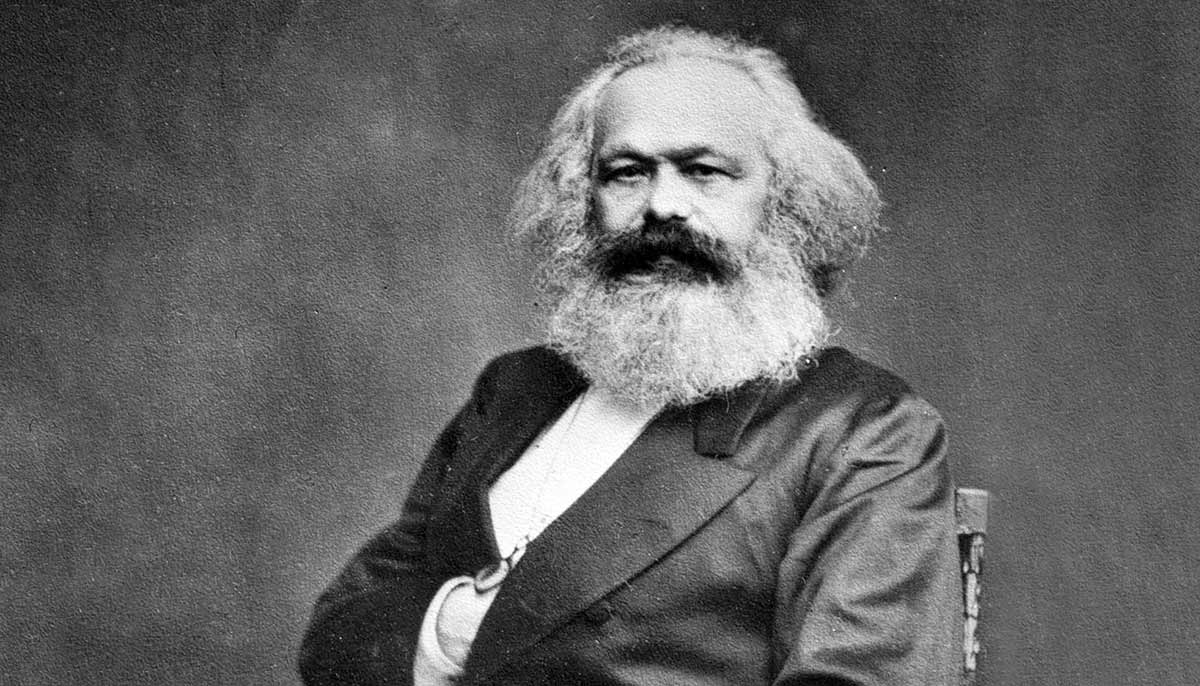
Christopher Hill took a Marxist approach to history. He had read Marx as an undergraduate at university, but said that it was his reading of 17th-century metaphysical poetry, and trying to make sense of it, that led him to join the Communist Party in 1935. He also held a favorable view of Soviet Communism (which would last until the Hungarian Uprising against the Soviets in 1956).
After the Second World War, Hill, along with some other Marxist historians, officially formed the Communist Party Historians Group. As the title makes clear, the group was a subdivision of the Communist Party of Great Britain (CPGB). The group had existed in a less official capacity before the war but was made official in 1946. Today, a successor group, the Socialist History Society, remains active, but the original group ceased to exist when the CPGB dissolved in 1991.
The heyday of the Communist Party Historians Group is considered to be 1936-1956. During this time, Christopher Hill was a prominent member, along with other notable Marxist historians, including Eric Hobsbawm (1917-2012), Raphael Samuel (1934-1996), and Dona Torr (1883-1957). The aims of the group were twofold:
- To inspire present-day activists through the discovery of a revolutionary tradition.
- To employ a Marxist-inspired approach to history that focused on social conditions and the “people” as opposed to the usual focus on “Great men and women of history.”
Marxist History
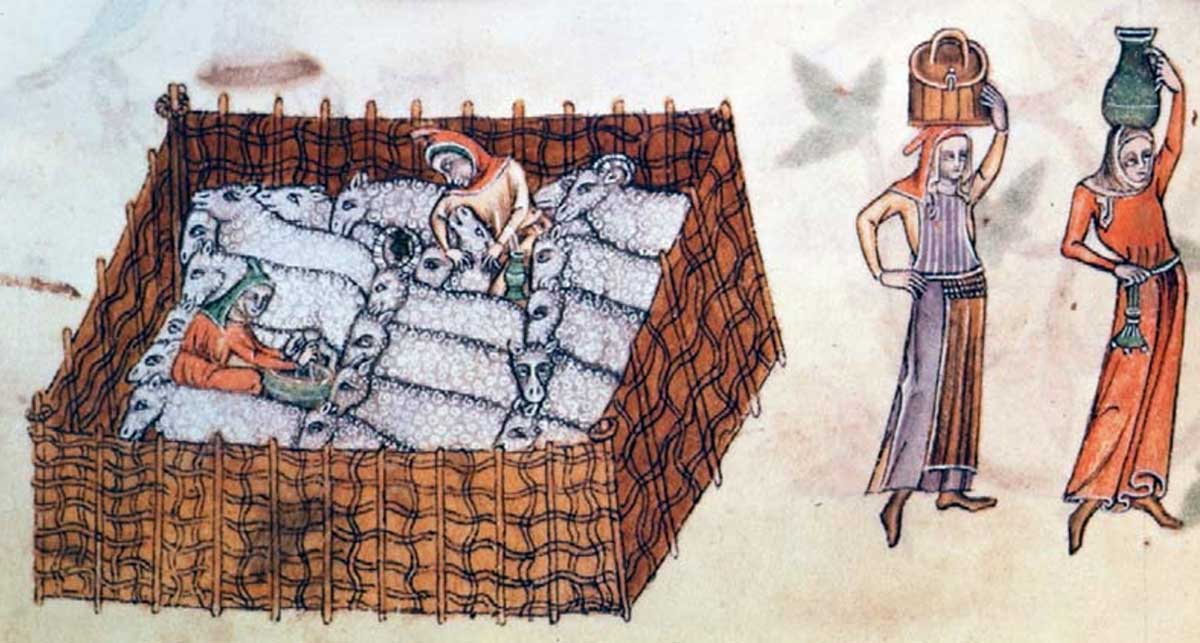
The central focus of the Marxist approach to history is class relations and production. This approach differs from more typical approaches in that Marxist historians are more interested in ‘history from below’ than in the impact of kings, queens, and other great leaders. In other words, historians like Christopher Hill believe that history is shaped and driven by the actions of ordinary people en masse rather than by highly influential and unique individuals often held up as cultural or national heroes.
The great man theory is strongly associated with historian and philosopher Thomas Carlyle (1795-1881). He argued that the history of the world is, in fact, the history of great men and their achievements. These great men fell into six different categories: divinities, prophets, poets, priests, men of letters, and kings. So, for example, such figures as Shakespeare, John Calvin, Thomas Hobbes, and Charles I.
History, as it is taught in schools, is largely focused on the great men and women approach. Children are encouraged to think about their past in terms of the Kings and Queens that ruled their countries, or by the Founding Fathers and presidents in America.
Christopher Hill’s area of specialism was 17th-century England. This period is most notable for the English Civil Wars that took place between 1642 and 1651. The typical approach to this period is to examine figures such as King Charles I and Oliver Cromwell, Prince Rupert, and Sir Thomas Fairfax. It was a momentous time in England, which saw for the first time a king put on trial and then executed for treason. However, there were many other voices to be heard from this period whose contributions to history are at risk of being forgotten. Hill’s The World Turned Upside Down (1972) focuses on these voices.
The ‘Lunatic Fringe’
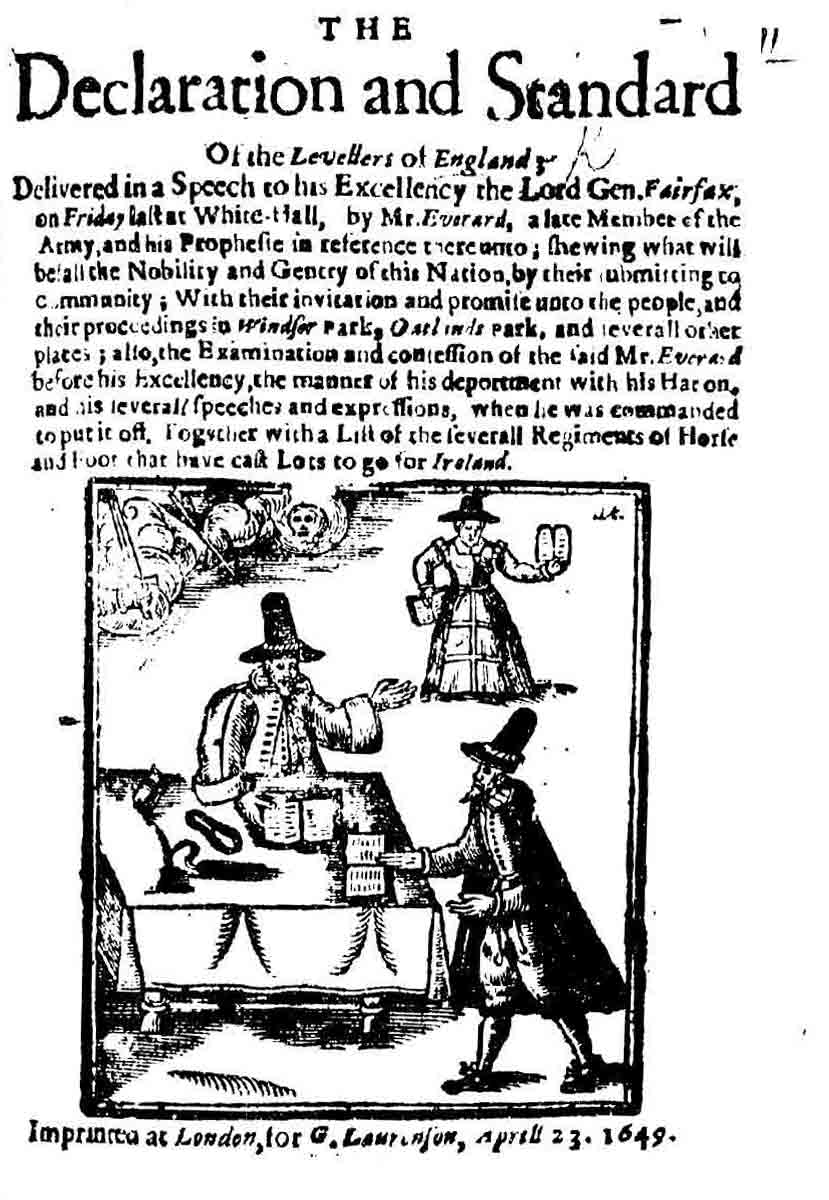
In The World Turned Upside Down, Christopher Hill took seriously the thoughts, ideas, and activities of a group of people often dismissed as “the lunatic fringe.” This loaded term is used to downplay and ignore social groups and effectively write them out of history. Hill’s argument is that the groups he includes in his book all played an important and influential role in history. Their dismissal as “lunatics” betrays in their accusers what Hill considered to be a snobbish arrogance.
In the book, Hill discusses many different groups, but there is a consistent thread running through them. Religion and politics appear to be inextricably linked. And there also seems to be a good degree of crossover between the groups. For example, Gerrard Winstanley (1609-1676) was a deeply religious political philosopher and activist who was involved with the Diggers and the Quakers. His influential 1649 pamphlet, The New Law of Righteousness, called for the abolition of poverty and the aristocracy through an analysis of Biblical texts, particularly the New Testament Book of Acts.
It is beyond the scope of a short article such as this to draw out all the movements and the people who formed these movements that Hill covers in his work. It will suffice, however, to offer some illustrative examples. To this end, we will look at the Levellers, the Diggers, the Ranters, and the Quakers.
Levellers, Diggers, Ranters, and Quakers
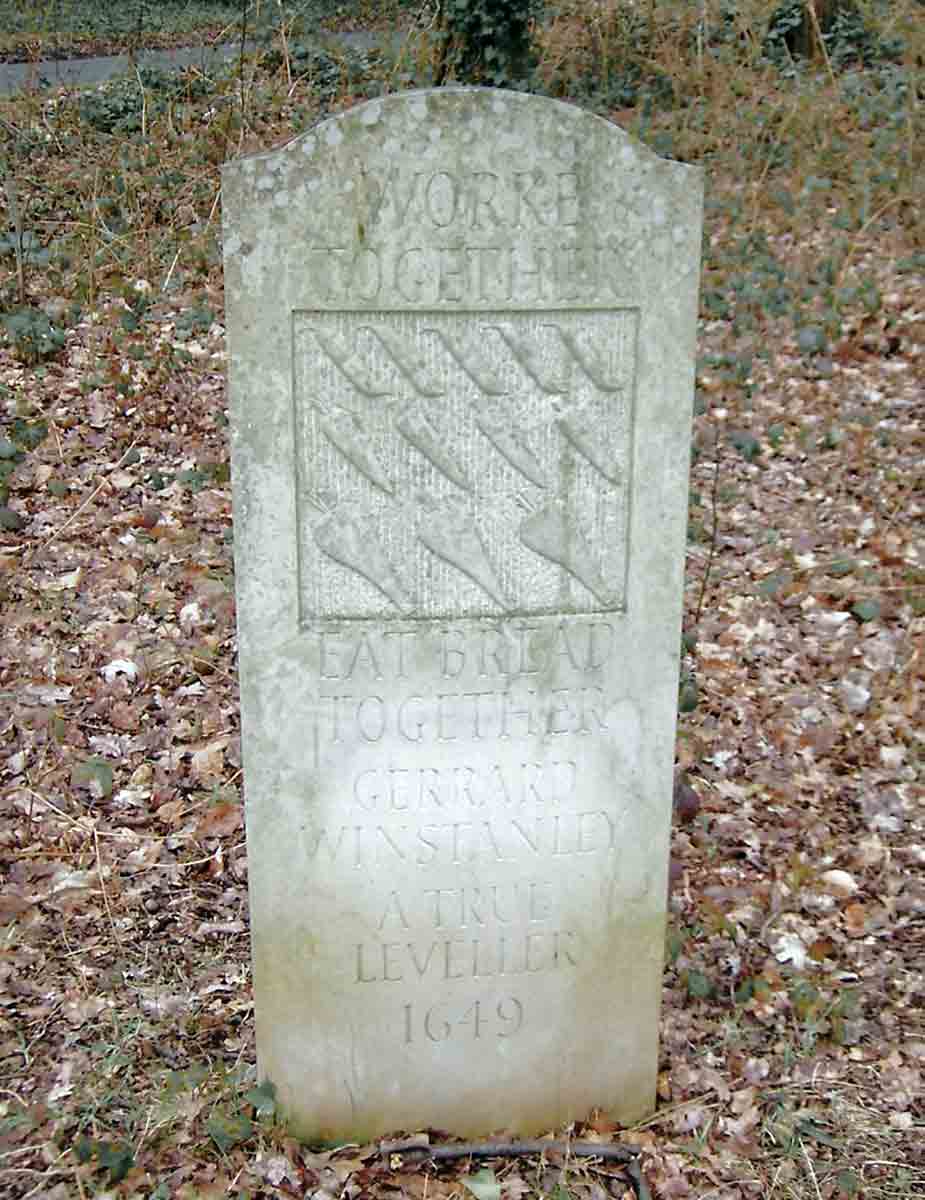
The Levellers came to prominence around 1646. A populist movement, they held meetings in taverns, published pamphlets, and addressed the public in the streets. The name “leveller” was originally a pejorative term used to describe rural rebels who levelled hedges during protests over enclosures. The main demands of the Levellers included voting rights for all adult males, the translation of the law into common English, religious tolerance, and an end to parliamentary corruption.
The Diggers were an offshoot of the Levellers, referring to themselves as the True Levellers. They became known as the Diggers due to their efforts to farm common land. Inspired by the New Testament, the Diggers considered all men equal and sought to abolish social hierarchy. Unlike the Levellers, the Diggers were opposed to individual ownership of the land.
The Ranters had no organized structure or leadership. The name was used by critics rather than by individuals themselves. It is possible it derives from the word “rent” as the past participle of “rend.” The reference here to someone being torn away from God. The Ranters were critical of the authority both of the Church and the Bible and called on people to listen to the divine within themselves.
The Quakers, known today as the Religious Society of Friends, had their origins during the English Civil Wars, following the revelation George Fox experienced. This was the idea that ordinary people can have direct interaction with God without the need for clergy. The name derives from Fox telling a judge to “quake before the authority of God.” Quakers were persecuted for their beliefs, leading to the 1662 Quaker Act, which imposed fines for failing to swear an oath of allegiance to the king (which they refused on religious grounds) and for attending Quaker meetings.
Hill’s Conclusions
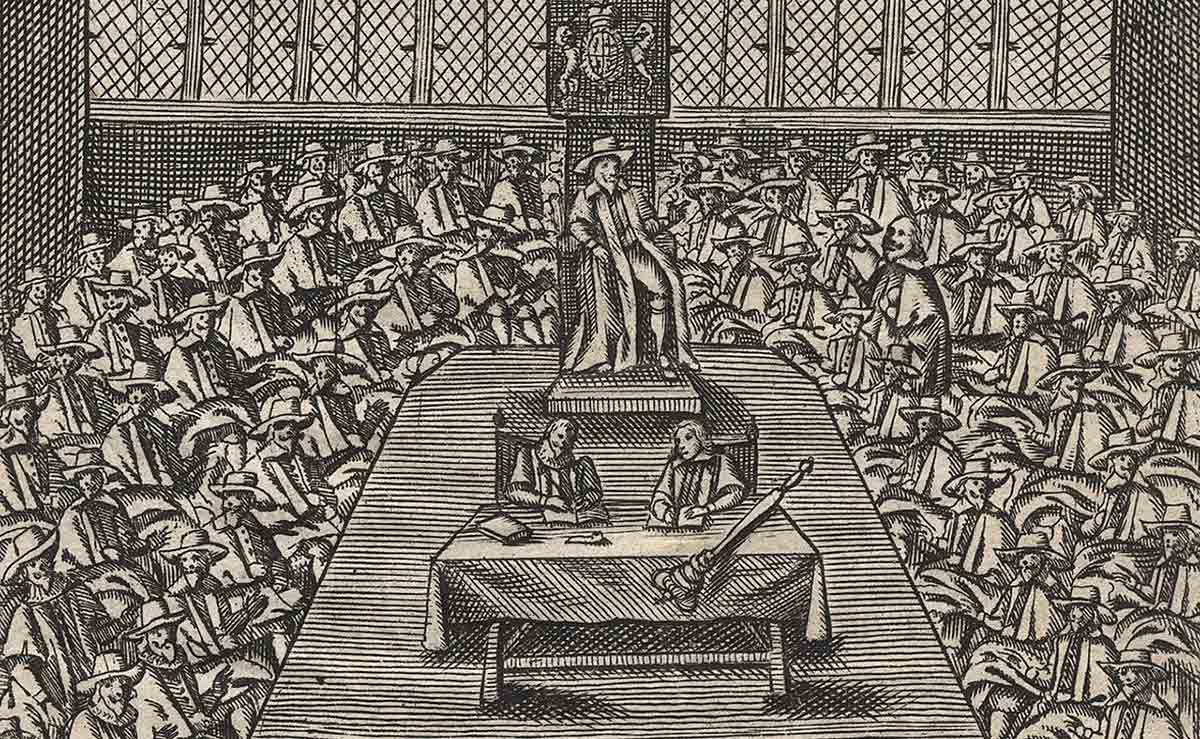
Christopher Hill’s focus on history from below yields rich insights into the minds of ordinary people in the 17th century. As we have seen, their lives were no less extraordinary than the so-called “great men and women” of history. This would probably have gone unnoticed had it not been for Hill’s approach to history.
We see in Hill’s case studies of various political groups active in the 17th century an independent way of thinking about God and Biblical interpretation. Along with a belief in a personal relationship with God, they believed the Bible could be interpreted by individuals. This freedom of thought was extended to politics, encouraging the free discussion of ideas. As can be seen from Hill’s work, many groups active at the time made good use of the printing press, and the use of pamphlets to spread new ideas exploded.
There were three key ideas essential to public discourse in the 17th century: freedom, tolerance, and democracy. These are essential ideas for us today, and Hill recognized that to promote them, we need a good understanding of their evolution in human thought. When historians focus solely on the deeds of “great people,” these valuable ideas risk being lost to history.