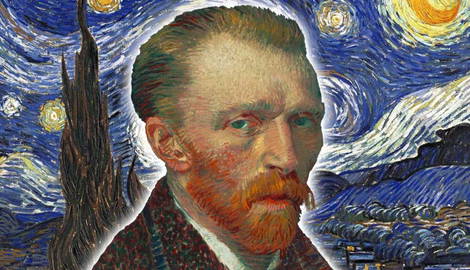

Vibrant colors and frenetic brushwork are characteristic of the art of Vincent van Gogh, but behind the paint, there was a tortured and tragic figure transferring his genius to the canvas. Van Gogh suffered from various mental conditions—what they were is a subject of great debate—and he is known for his “madness,” which eventually drove him to take his own life.
Van Gogh’s art was not only revolutionary in style, but was also a method of communicating his inner turmoil and desperate search for meaning.
A Life Shaped by Disappointment
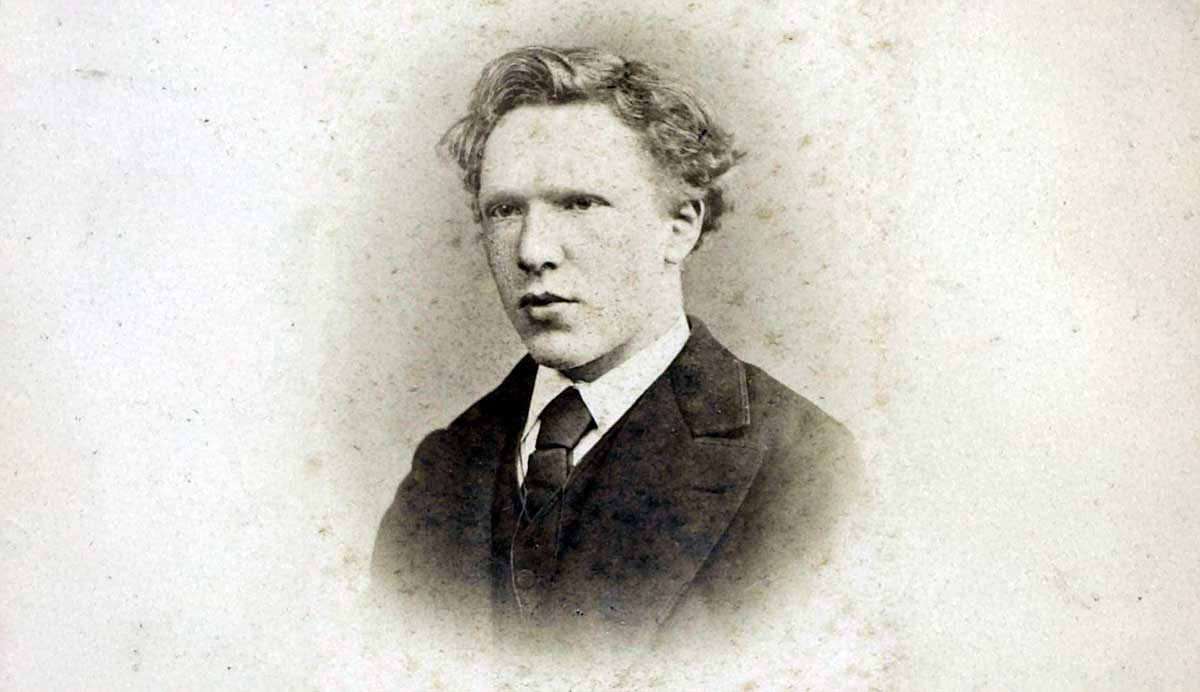
“What am I in the eyes of most people — a nonentity, an eccentric, or an unpleasant person — somebody who has no position in society and will never have; in short, the lowest of the low. All right, then — even if that were absolutely true, then I should one day like to show by my work what such an eccentric, such a nobody, has in his heart.” — from a letter by Vincent to his brother.
Vincent van Gogh’s early life was shaped by failure, rejection, and feelings of inadequacy. The primary source for commentary on his inner struggles comes directly from the man himself, in letters he wrote to his brother, Theo.
Van Gogh wrote of his childhood as “austere and cold, and sterile.” He was sent to a boarding school and felt abandoned, although his artistic side was encouraged. At the age of around 15, he returned home, and soon afterwards, his father obtained for him a job at an art dealer. After a few years, he was transferred to London. He fell in love with a landlady’s daughter, but upon confessing his feelings, he was rejected. After being transferred to Paris, he lost his job due to several issues, one of which was his disagreement with the way art dealers commodified art.
Afterward, he worked at various jobs, becoming a supply teacher in England and a minister’s assistant before working in a bookshop in Dordrecht. His attention, however, was stuck on religious matters. He failed the University of Amsterdam theology entrance examination after refusing to do the Latin section, and then failed a course at a Protestant missionary school in Belgium.
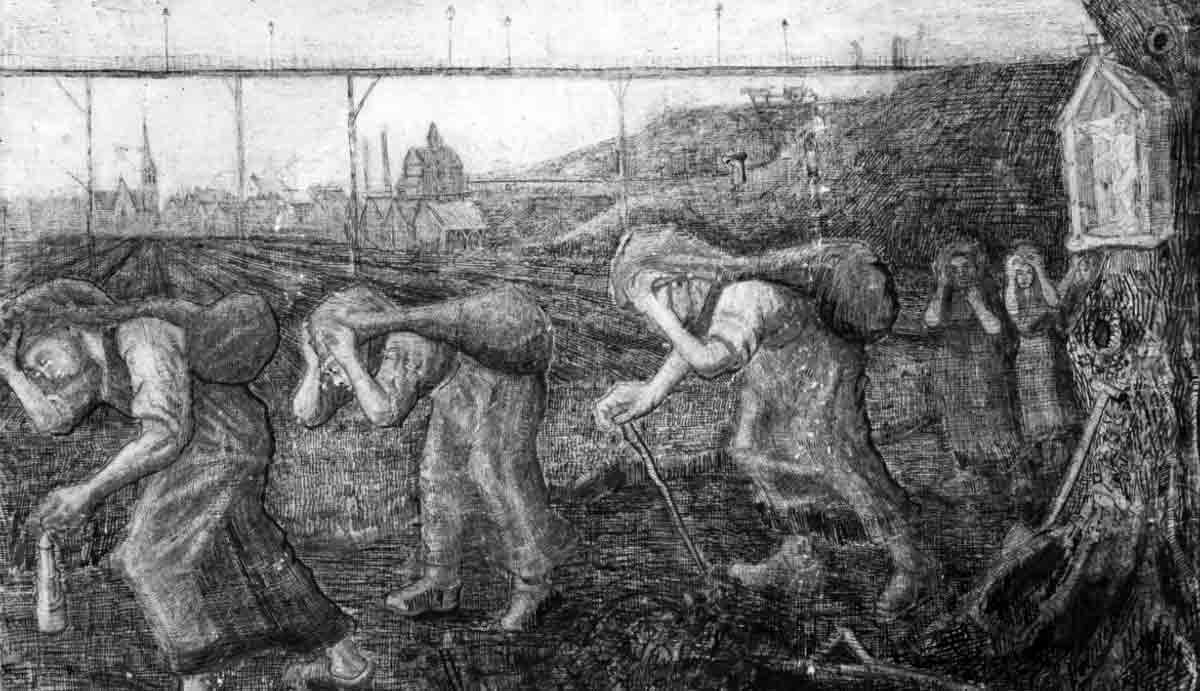
Nevertheless, Van Gogh became a missionary, working with coal miners in the impoverished region of Borinage in Belgium. He was emotionally intense and passionate, and his work as a missionary encapsulated these characteristics. He had a radical empathy for the poor, and he took on the appearance of those he helped, selling his possessions and living a life of poverty. As such, he earned the nickname “The Christ of the Coal Mine” as an epithet used by later writers. The church leaders did not like his approach nor his zealous nature, and Van Gogh was dismissed.
The turn to art could be described as an act of desperation, after so many other avenues of employment had failed. He had been suffering from depression for some time, and eventually took his brother’s advice, picking up the brush and putting paint on canvas. He moved to Brussels and had contact with other artists while working on his artistic skills. His endeavors were supported by Theo, who occasionally sent him money.
Emotion and Paint
Van Gogh’s misfortunes continued. He had moved back in with his parents and taken up the life of an artist, much to their disappointment, as they viewed the career as one of failure. Compounding the growing tensions, Vincent fell in love with his cousin, Kee Vos, although she was not interested. This caused a family altercation, and Vincent left his parents’ house on Christmas Day in 1881. He found a place to stay in the Hague, where he was tutored by the celebrated artist Anton Mauve. Throughout these early years as an artist, much of Van Gogh’s art displays a somber tone, with a darker palette that can be construed as being immensely depressing.
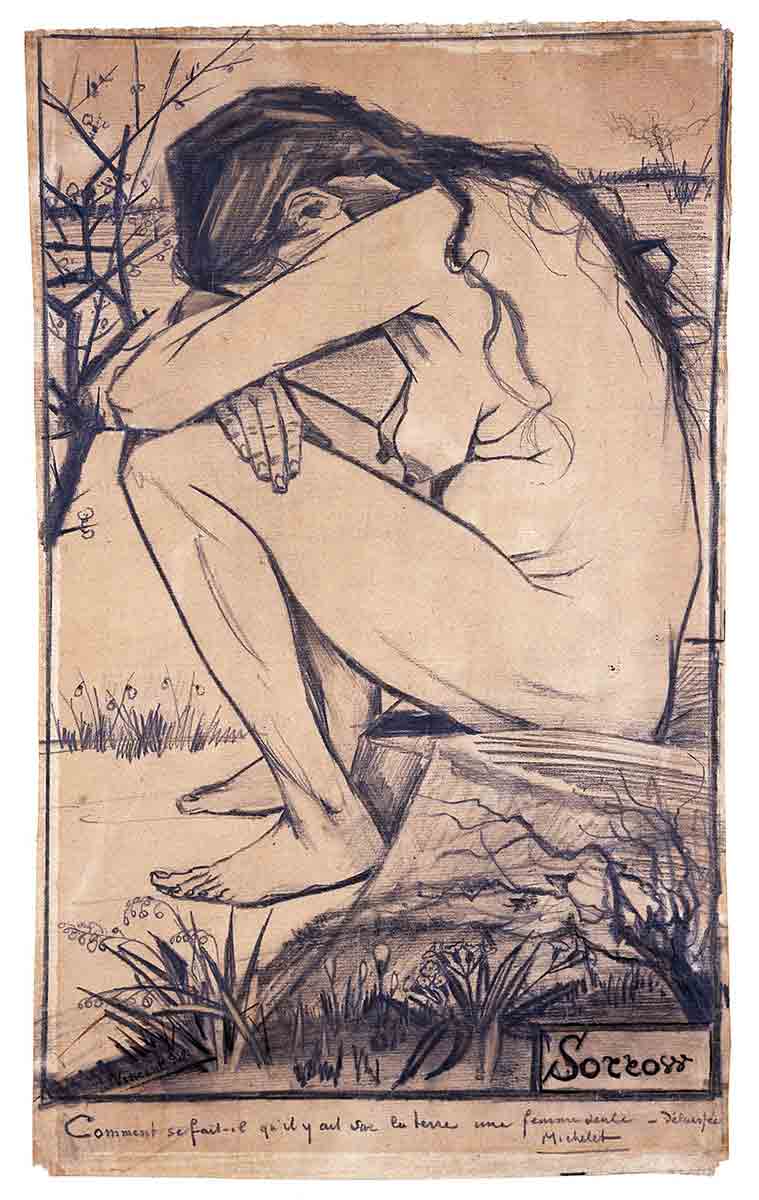
Mauve and Van Gogh had a falling out over the latter’s choice to live with a pregnant former prostitute, Sien Hoornik, a source of further emotional turmoil. Despite the disagreement, Van Gogh held Mauve in high regard throughout his life. This episode speaks to Van Gogh’s desperate empathy for the downtrodden. Van Gogh ended his relationship with Hoornik in 1883, but he wrote to his brother that he had wanted to help her in “finding her feet,” but that she was “too far gone.”
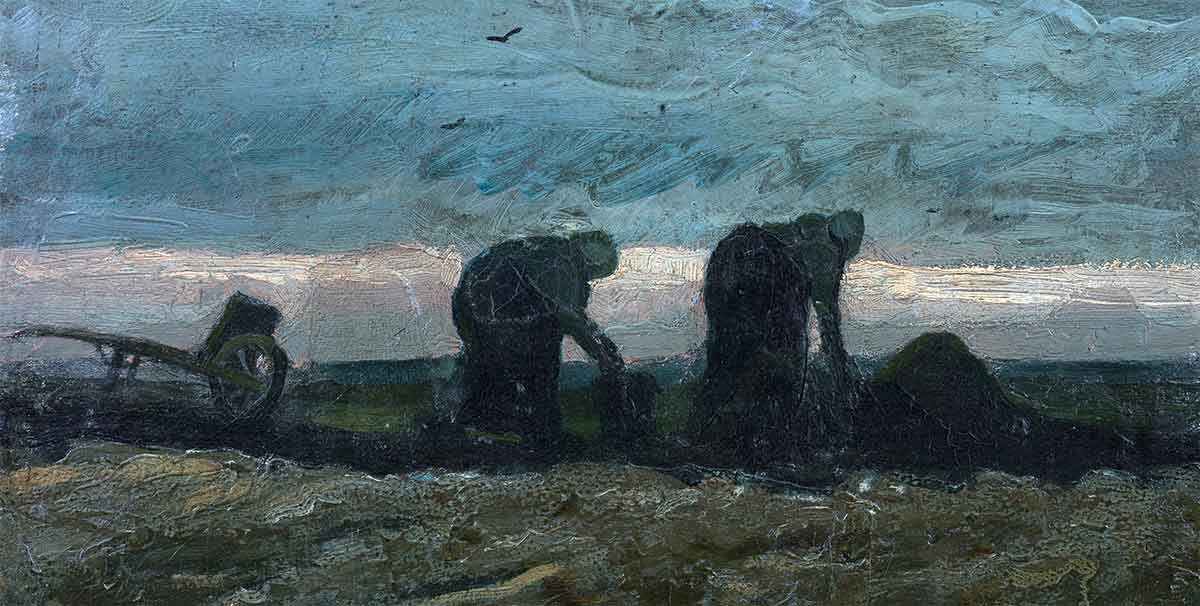
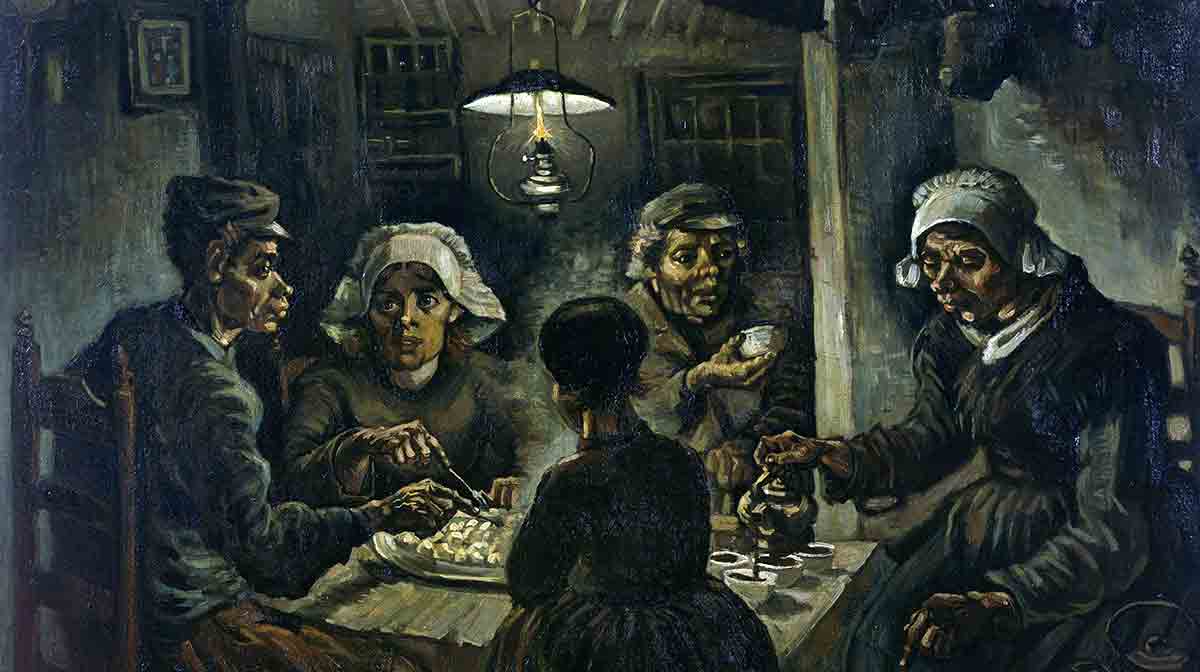
The subjects of many of Van Gogh’s early works reflect the influence of Mauve, as both artists chose rural life. While Mauve chose to represent his subjects in a gentle atmosphere of silvery light, Van Gogh deliberately chose darker, muddier tones to depict the reality of peasant life and to communicate a powerful statement on social empathy and personal melancholy. A prime example of this is The Potato Eaters. Painted in 1885, after Van Gogh moved to Nuenen, the work perfectly reflects the influence of Mauve, the dignity of poverty, and van Gogh’s emotional state.
Van Gogh’s entire career as an artist was not, however, shaped by a single influence. In 1886, he moved to Paris, where his paintings took on a much brighter, impressionist style, reflecting a more vibrant aspect of the man’s emotional intensity.
A Dream of Light
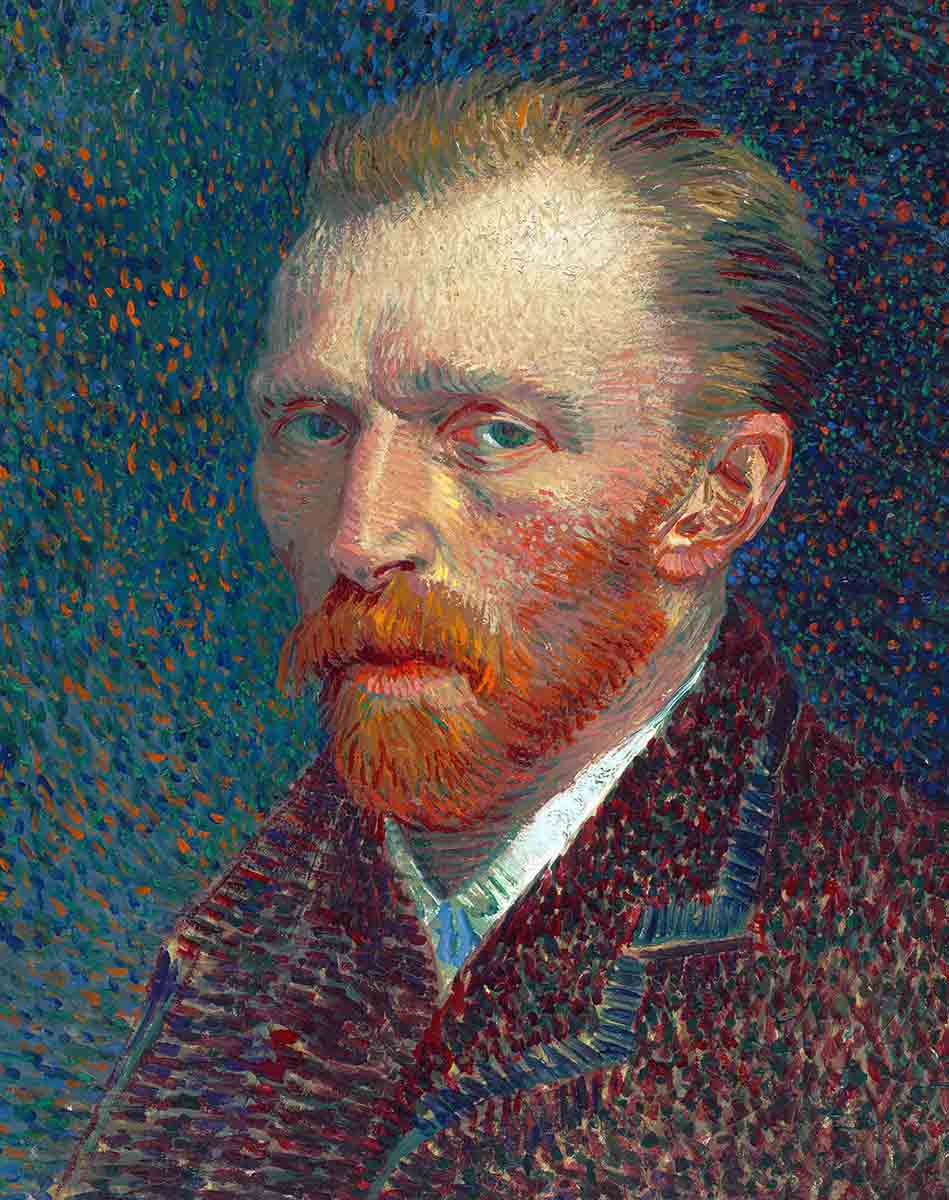
Van Gogh’s brother was still working as an art dealer in Paris when Van Gogh decided to join him. The move signaled a massive shift in Vincent’s work as well as his mental state. He met many artists such as Henri de Toulouse-Lautrec and Paul Gauguin, and was introduced to movements and techniques such as Impressionism and pointillism (a feature of Neo-impressionism).
His initial reaction to living in the City of Lights seems to have been one of a positive nature. In an 1886 letter to English painter Horace Mann Livens, Van Gogh wrote, “There is but one Paris and however hard living may be here, and if it became worse and harder even—the French air clears up the brain and does good—a world of good.”
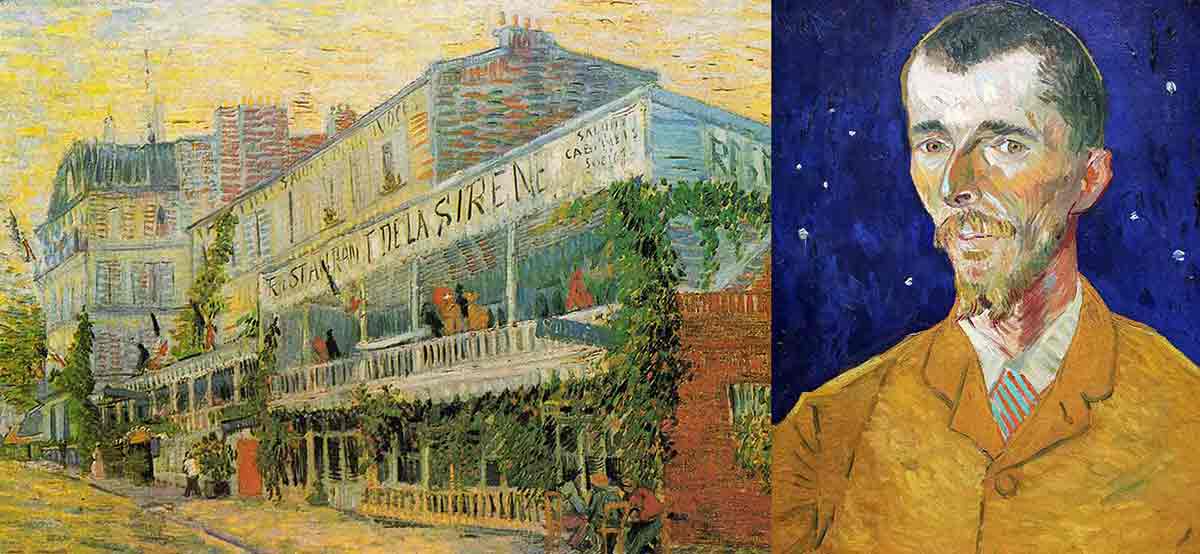
His paintings reflected the local influences. He incorporated modern art styles and switched to a lighter palette, using color to capture light and atmosphere. Gone were the dark and dreary scenes of peasant life, and in their place Van Gogh painted cafés, blossoming fruit trees, store fronts, and avenues engulfed in atmospheric luminance. While the impressionists attempted to capture light objectively, for Van Gogh, his color usage was connected to portraying the soul and his own emotions. His swirling lines and dashes capture his energy and the stressful intensity of his agitated fervor, which remained with him for the rest of his life. This he states in a letter to his brother on August 11, 1888 (after he moved to Arles):
“Because instead of trying to reproduce exactly what I have before my eyes, I use colour more arbitrarily, in order to express myself forcibly.”
This style is perfectly encapsulated in The Restaurant de la Sirène at Asnières, painted while he was living in Paris, and later works such as the portrait of Eugène Boch (mentioned in the aforementioned letter), and the iconic Night Café with its vivid, contrasting colors and bold lines. He wrote of this latter piece that he tried “to express the idea that the café is a place where one can ruin oneself, go mad, or commit a crime.”
During his time in Paris, he and his brother, enamored with Japanese wood prints, accrued a sizable collection. Van Gogh was particularly drawn to the quality of light and the bright colors that were depicted. He longed for bright, sunny skies like those he had seen in Japanese art.
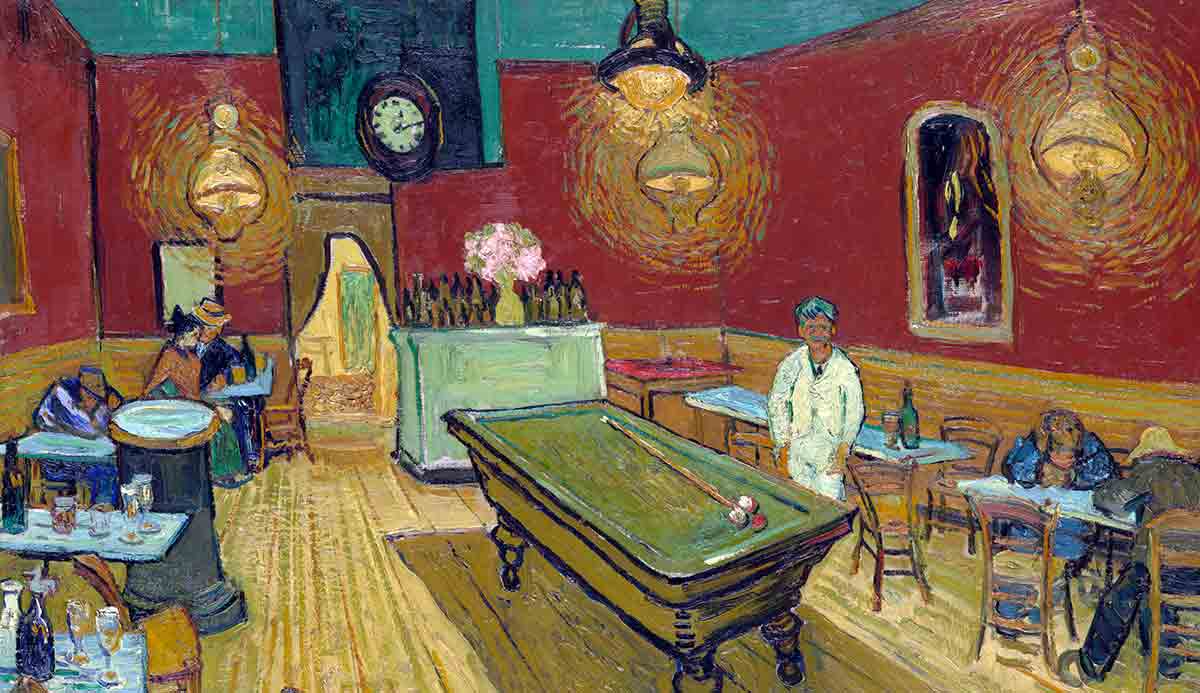
By 1888, his style showed marked Post-impressionist influence, and by this time, he was growing weary of the frenetic city life of Paris and yearned for a quieter experience. While life in Paris had changed the way he engaged with art, the city was an overwhelming cacophony for a man in a delicate state of emotional well-being. He wrote to Paul Gauguin, “The noise… of Paris had such a bad effect on me that I thought it wise for my head’s sake to flee to the country.”
In February 1888, Van Gogh left Paris for Arles in the south, searching for an end to the chaotic and anxious life of the capital as well as the brighter daylight of the southern coast.
Emotional Turmoil in the South of France
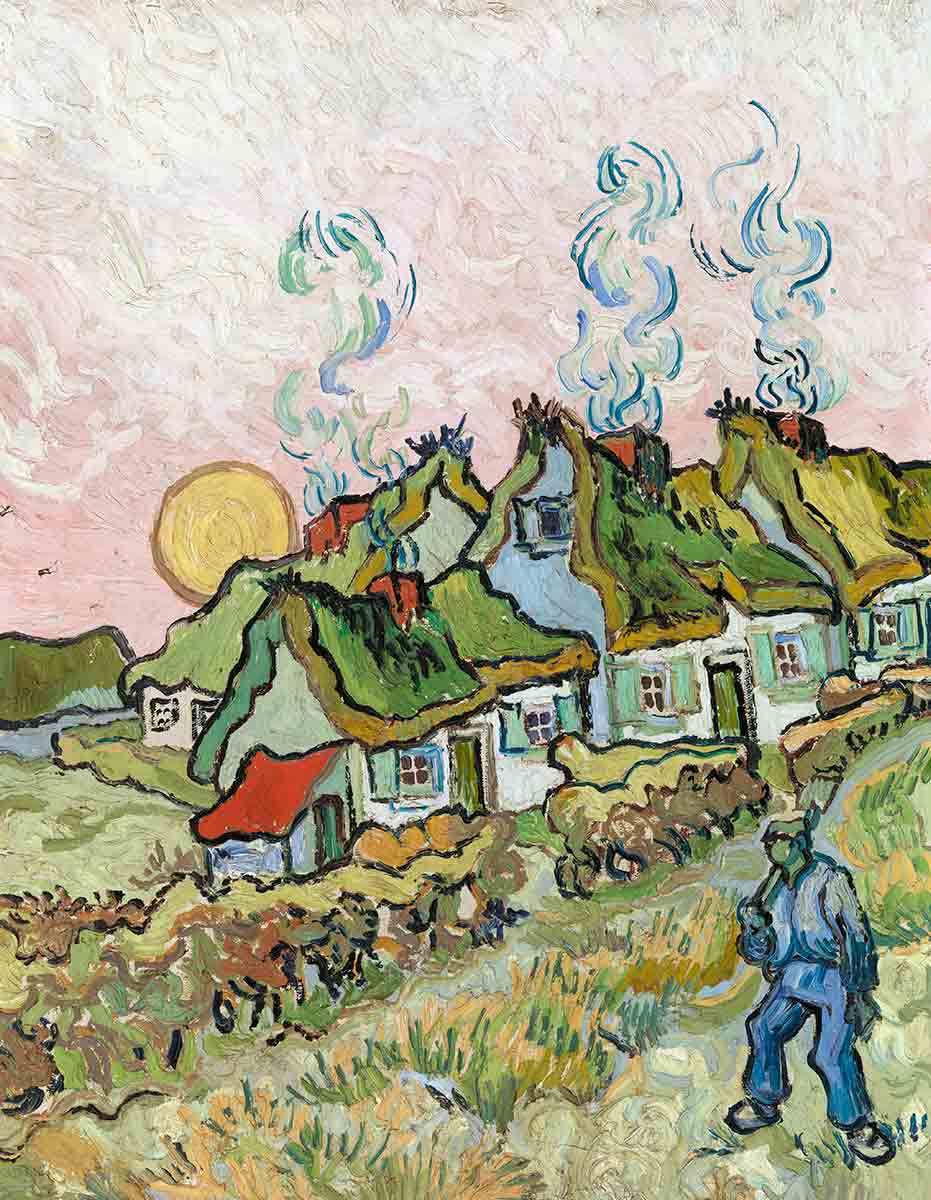
After the move to Arles, Van Gogh’s manic use of color and light continued unabated. This is where his style became fully realized, and where he created around 200 works over the space of 14 months. During this time, yellow featured prominently, and the Provençal sun gave Van Gogh the unbroken bright colors he yearned for in his subjects.
All this light and mania, however, did little to help Van Gogh’s weakening mental situation. Paul Gauguin visited him, and the two painted together, but their relationship broke down, and Van Gogh’s dream of living in an art collective was destroyed along with it. Following a particularly heated confrontation with Gauguin in December 1888, Van Gogh cut a portion of his ear off and sent it to a young woman, a cleaning girl named Gabrielle Berlatier, at a brothel that Van Gogh and Gauguin frequented. He had no recollection of the event, which suggests he suffered from a mental breakdown, and he was diagnosed with “acute mania with generalised delirium.” In May 1889, Van Gogh voluntarily admitted himself to the Saint-Paul-de-Mausole asylum in Saint-Rémy-de-Provence.
He also developed several harmful habits that most certainly played a significant part in his worsening mental state. He spent all his money on paint, leaving little for food. Van Gogh’s physician claimed that such was his poor mental state that Van Gogh wanted to poison himself. He even ate paint and drank turpentine. He wrote of such things to his brother.
“It appears that I pick up filthy things and eat them, although my memories of these bad moments are vague.”
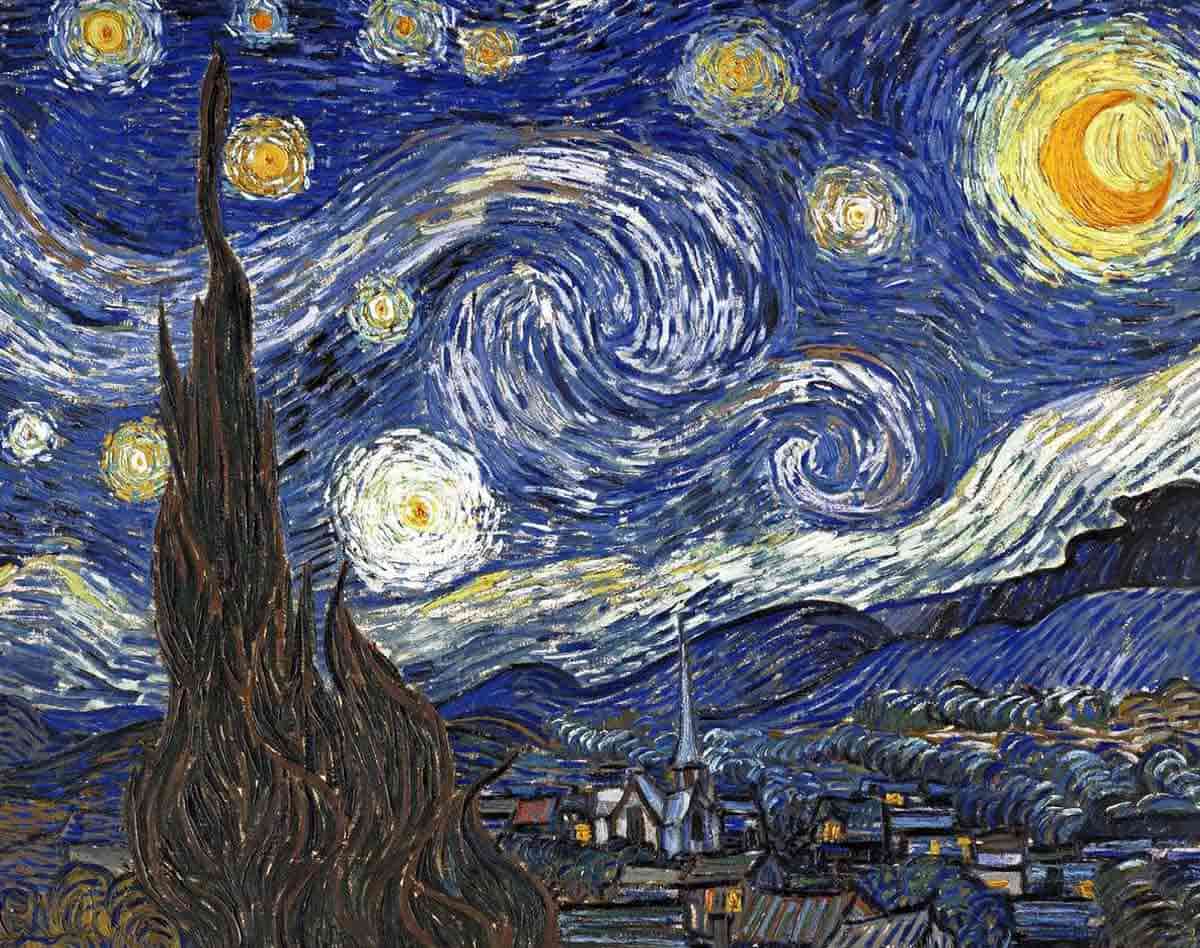
During his time in the asylum, Van Gogh painted his famous Starry Night, which contains swirling chaotic skies—symbolic of Van Gogh’s mental state—and a flame-like cypress tree towering into the heavens, a tree often symbolic of death in European art. The elements of distorted perception in the piece also reflect Van Gogh’s struggle with reality, and possibly the effects of the medication he was on at the time.
Van Gogh’s Death
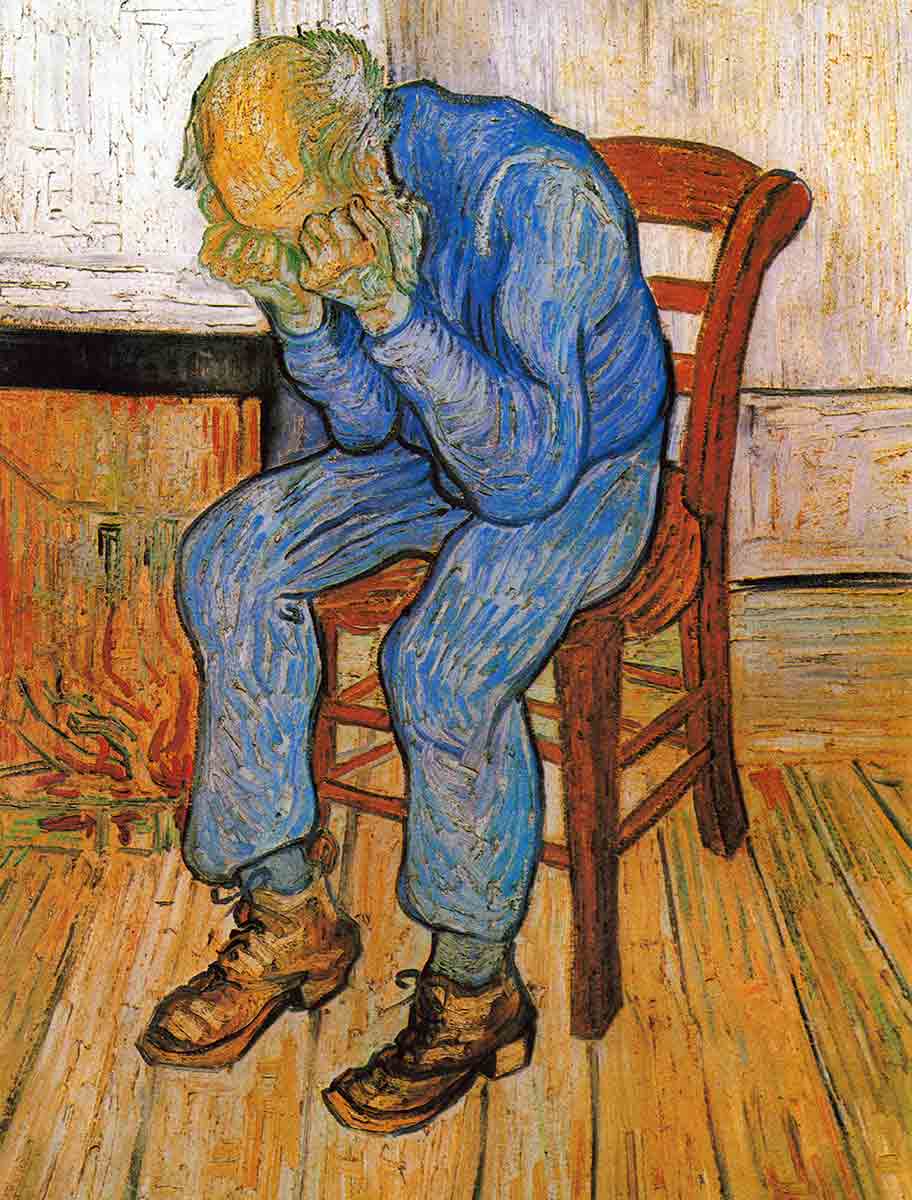
After leaving the asylum in May 1890, Van Gogh moved to Auvers-sur-Oise. His mental state did not improve. His final days were characterized by feverishly applying paint to canvas. On July 27, Van Gogh shot himself in the chest with a revolver. Although the initial attempt to take his life failed, he succumbed to infection on July 29. The following day, he was buried in the municipal cemetery of Auvers-sur-Oise.
Since his death, there have been many theories surrounding his mental state, including bipolar disorder, acute intermittent porphyria, temporal lobe epilepsy, and depression. Whatever the diagnosis might be, the condition was worsened by malnutrition, alcohol, alcohol withdrawal, and insomnia. The manic degree of overwork also likely contributed to his declining health over the course of his last few years.
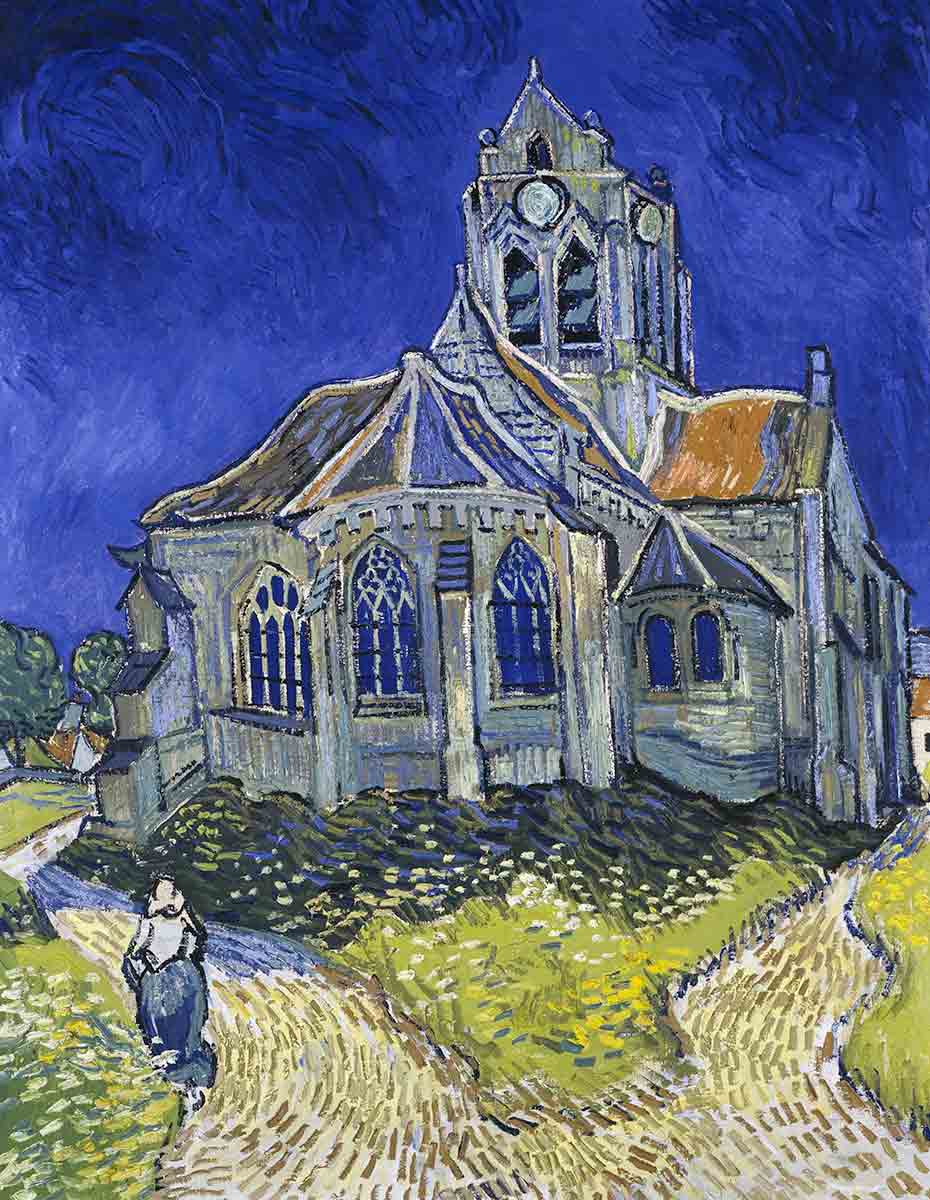
Van Gogh fulfills the archetype of a struggling artist, both financially and mentally. He sold few artworks during his lifetime, and had very little money to support himself. Van Gogh’s mental state is undeniably apparent in his works, feeding the image of a tortured soul, desperate for happiness and meaning in a life littered with disappointment.