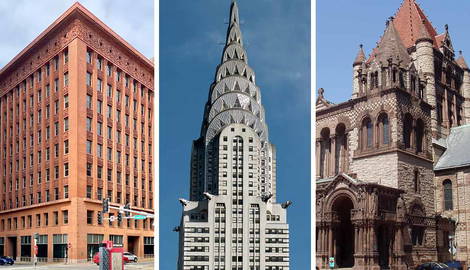

Architecture throughout history is a physical reminder of a nation’s ambitions, ideologies, and imagination. The United States, throughout its turbulent life, has produced many such works, from revolutionary classicism influenced by European mores to modern movements that can be defined as being unashamedly American.
Here are 10 examples of American architecture that exemplify the American story from the early days of the republic to the bustling metropolises that defined the 20th century and beyond.
1. Independence Hall, Philadelphia, PA: A Nod to European Influence
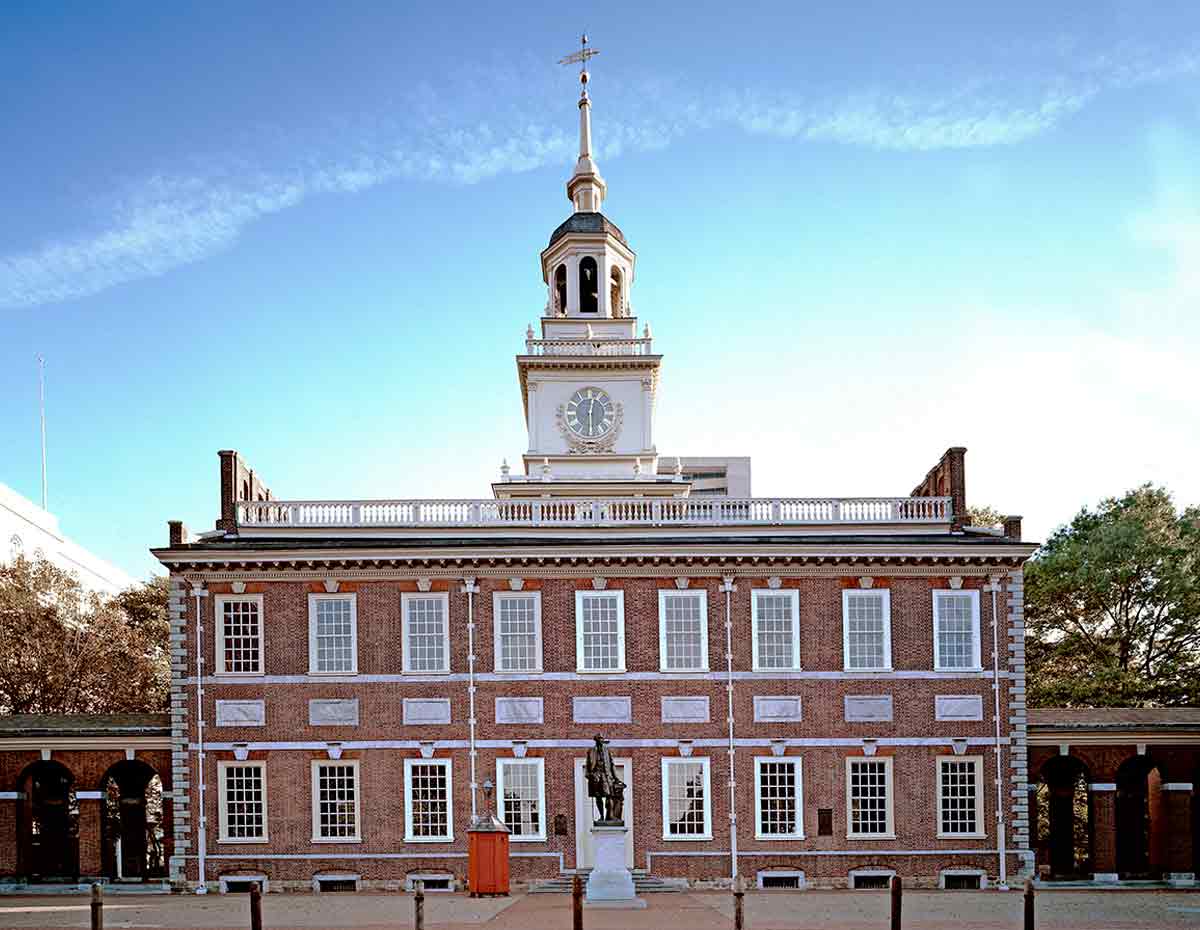
Designed by Andrew Hamilton and Edmund Woolley, Independence Hall in Philadelphia is a grand example of Georgian architecture, built between 1732 and 1753 for an American purpose. In the decades that followed, much of the structure was demolished, rebuilt, and renovated, with the notable addition being the steeple, rebuilt by William Strickland in 1828, replacing the original wooden structure, which had rotted to an unsafe degree and been removed decades earlier. Nevertheless, much of the original interior woodwork and exterior brickwork remains.
Of great importance, Independence Hall played a pivotal role in American history, as it was where the Declaration of Independence and the Constitution were signed, marking the birth of an independent nation, free from British control.
2. Monticello, Charlottesville, VA: The Home of Thomas Jefferson
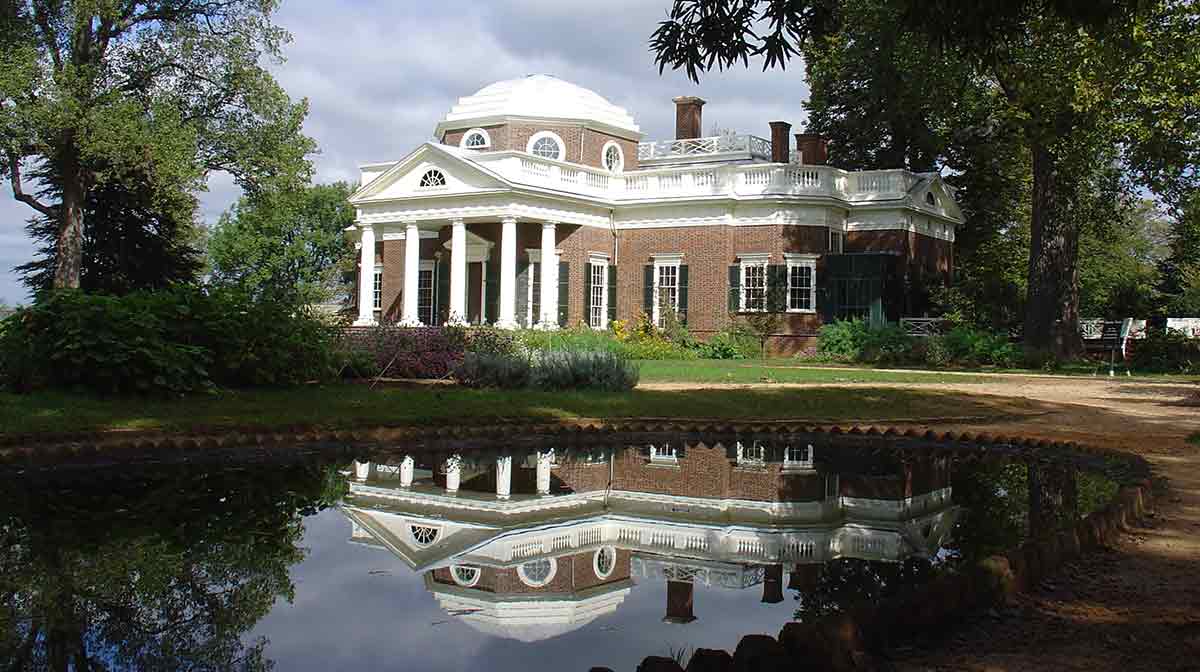
Representing a work in progress throughout much of Thomas Jefferson’s adult life, Monticello was a plantation home designed by the Founding Father and former president, and built between 1769 and 1809. With its dome and porticos supported by Doric columns, Monticello is an example of Neoclassicism and the Enlightenment ideals that shaped the US republic. Jefferson remodeled the structure with French influences and used a combination of free workers, indentured servants, and slave labor.
This National Historic Landmark and UNESCO World Heritage Site was a place of learning and authority that serves as a link to America’s past, but it also exists today as a symbol of the horrific inequality that was so prevalent at the time of its construction.
3. The Capitol Building, Washington, DC: An Icon of American Governance
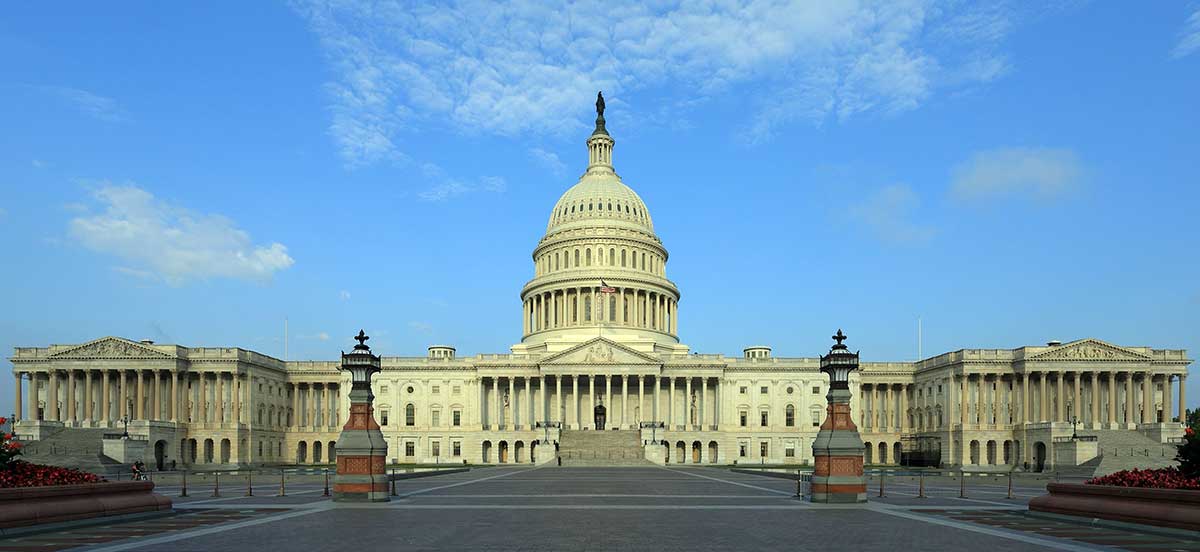
Certainly one of the most recognizable buildings in the United States, the Capitol is considered the home of American democracy, as this is where Congress meets to deliberate and pass laws. Situated on the eastern end of the National Mall, the original design was put forth by architect William Thornton, and construction began in 1793 with George Washington laying the cornerstone. Architect Benjamin Henry Latrobe oversaw the initial construction, and later reconstruction, followed by Charles Bulfinch, who took charge of rebuilding the dome.
The building had a difficult start to its history, as slow construction was punctuated by the British burning it down in 1814. It was, however, rebuilt and underwent alterations and expansions in the decades that followed, reflecting the growth of the United States. A new dome replaced the old one, which had become disproportionately small atop the growing structure beneath it. Expansions continued in the 20th century, and today the Capitol still retains the features of its Neoclassical design, reflecting democracy and authority in the classical Greek and Roman traditions.
4. Trinity Church, Boston, MA: Uniquely American
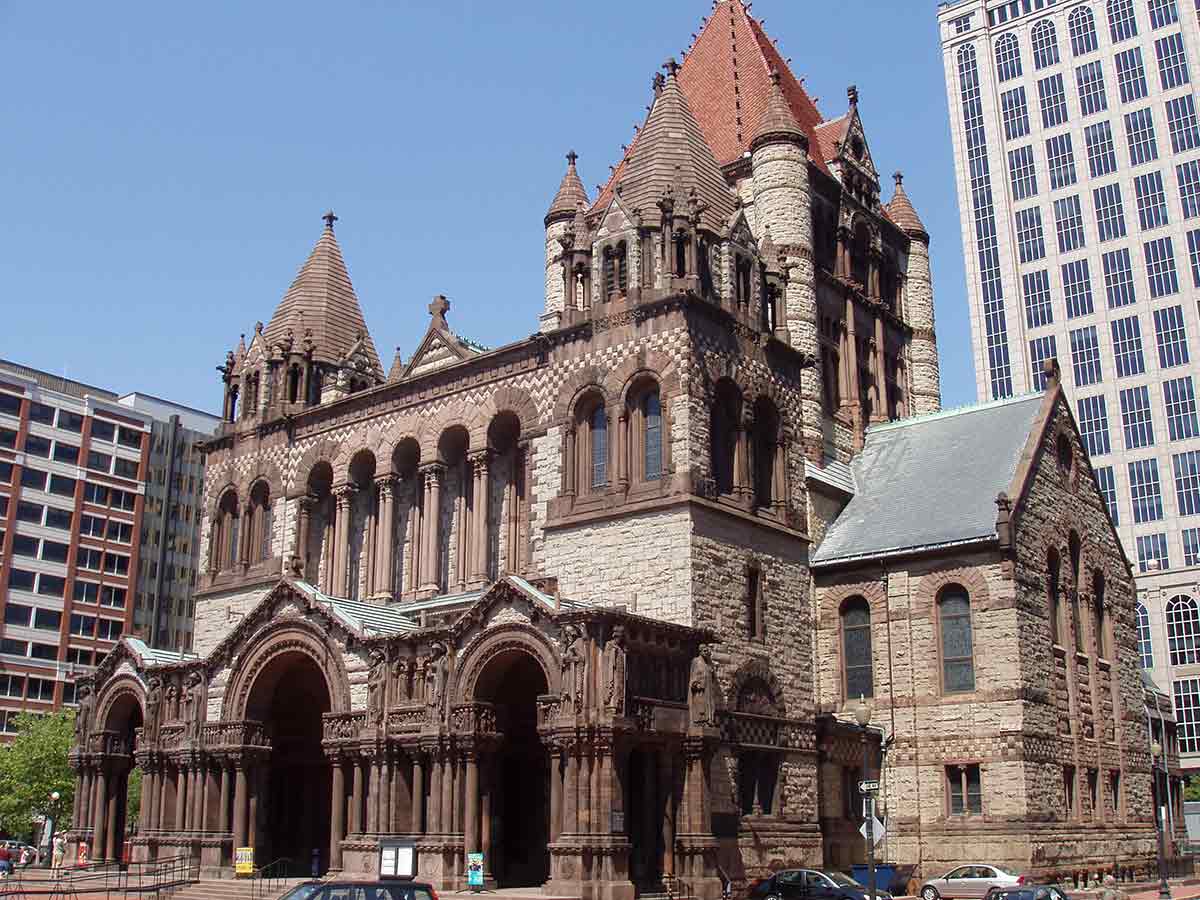
Signifying a major break from European architectural tradition, Henry Hobson Richardson designed the church and parish house of Trinity Church in a unique style that has come to be seen as Richardsonian Romanesque. The polychromatic building was finished in 1877 and features arches, a clay roof, and rough Dedham granite. The style became popular, and many public buildings across the country were influenced by its design.
Of note is the link between architecture and the broader American art scene, as the church features the work of American artist John La Farge, in the form of murals and intricate stained-glass windows.
Located in Copley Square, Trinity Church is a major attraction in Boston and a centerpiece of the city’s fascinating history.
5. Wainwright Building, St. Louis, MO: One of the First Skyscrapers
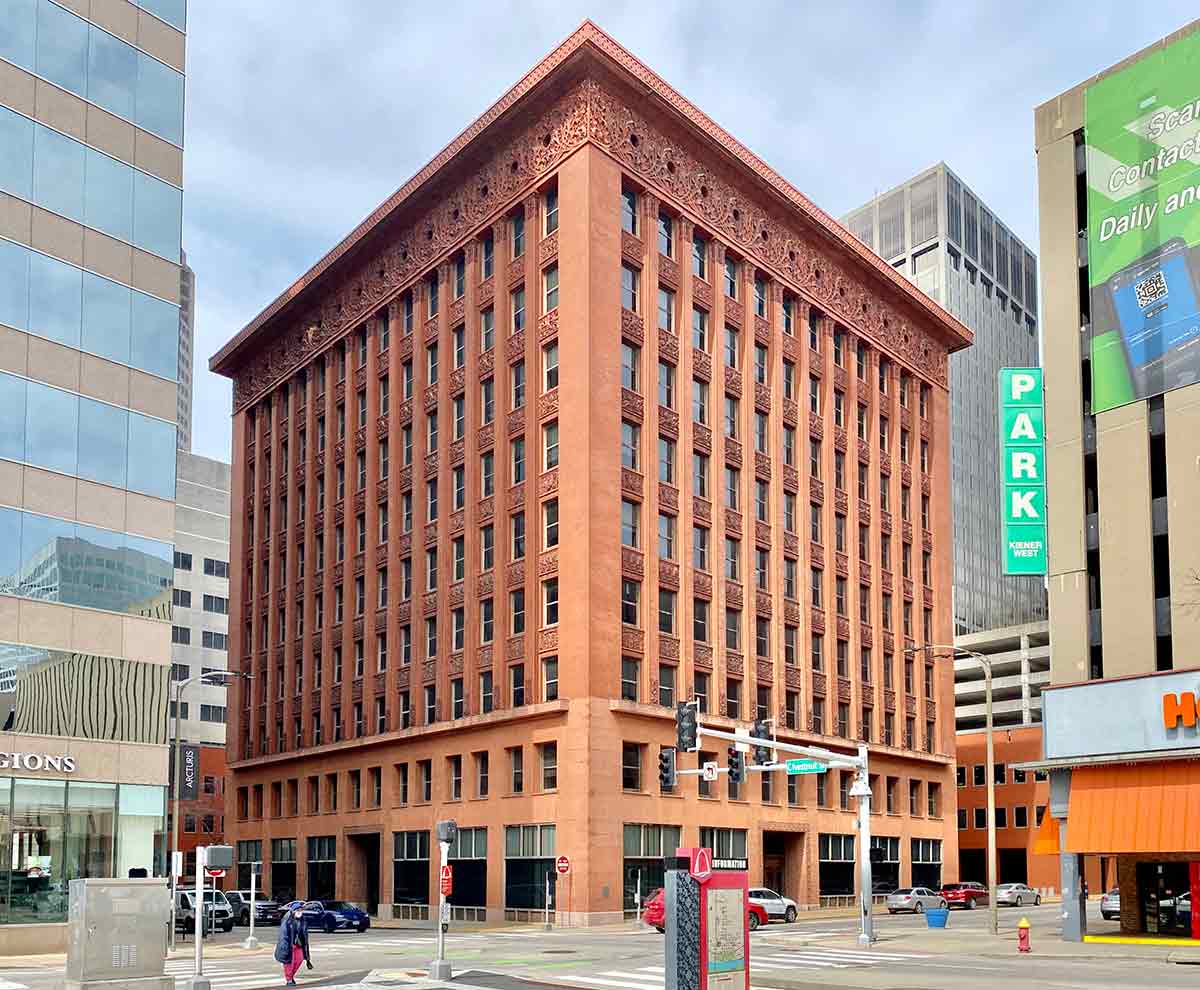
Located at 709 Chestnut Street in downtown St. Louis, the Wainwright Building is a 135-foot high (41 meters) terra cotta office building with 10 storeys. It may look unassuming amongst the buildings that tower around it, but the Wainwright building represents an important part of American architectural history.
Designed by Dankmar Adler and Louis Sullivan, the building was named after businessman and socialite Ellis Wainwright. Finished in 1891, the structure forewent the Neoclassical style that Sullivan disliked, and eschews a more utilitarian purpose. Nevertheless, the building features beautiful friezes along its spandrels, giving it an air of sophistication that complements the structure’s pragmatic function.
Described by famed architect Frank Lloyd Wright, the Wainwright Building exists as “the very first human expression of a tall steel office-building as Architecture.”
6. Fallingwater, Mill Run, PA: Modern Innovation
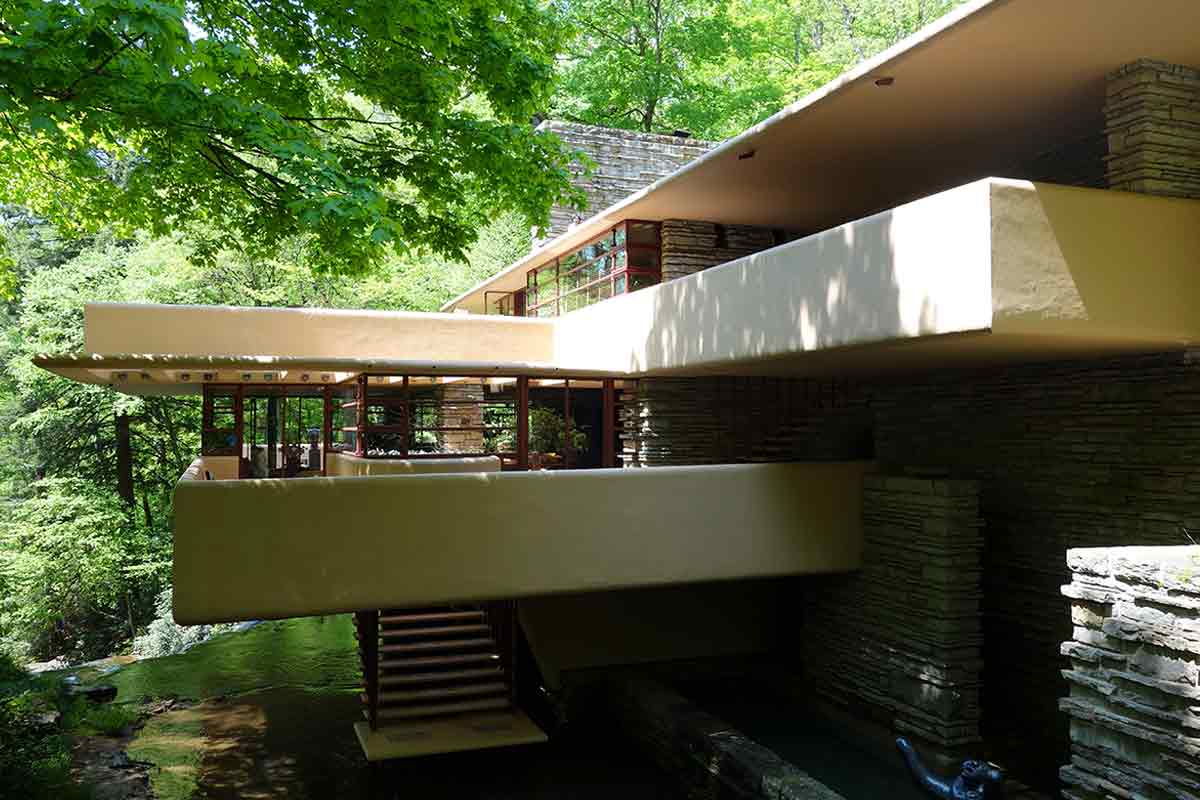
A modern residential masterpiece designed by Frank Lloyd Wright and built in the late 1930s, Fallingwater is an incredible vision of architectural imagination nestled within the natural beauty of the Pennsylvania woodland.
Built from stone, reinforced concrete, plate glass, and steel, the most striking feature of the house is the cantilevered terraces, which overhang a waterfall on Bear Run Stream. The house is angular, with a flat roof, and was built for businessman Edgar J. Kaufman and his family as a weekend retreat. Eventually, the house came under the management of the Western Pennsylvania Conservancy, which has hosted tours since 1964. In 1979, a visitor center was added.
Today, the house also serves as a museum and is a US National Historic Landmark as well as a UNESCO World Heritage site.
7. The Chrysler Building, New York, NY: An Art Deco Icon
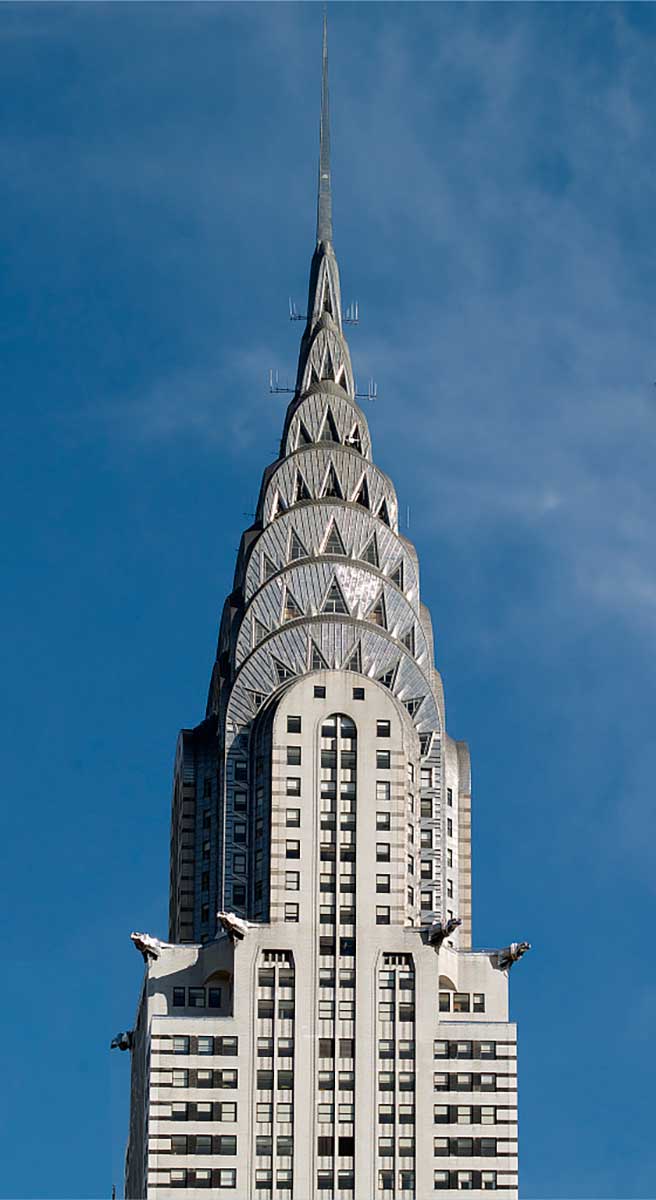
With its unmistakable facade, the Chrysler Building is one of the many architectural landmarks that give New York City its unique architectural heritage. Located in the East Midtown neighborhood of Manhattan, the Chrysler Building’s 77 floors reach 1,046 feet (319 meters). It was designed by William van Alen, and construction finished in May 1930, after which it held the record of being the world’s tallest building for 11 months until it was surpassed by the Empire State Building in 1931.
Commissioned by Walter P. Chrysler, the structure is an exemplar of 1920s Art Deco design, and its features mimic elements of the automotive industry, with its shiny exterior clad in Nirosta steel, which contains chrome, and punctuated by steel gargoyles reminiscent of hood ornamentation that was so popular on American cars. The most striking feature of the building is its 125-foot (38.1-meter) spire, which incorporates seven radiating arches that taper to the pinnacle, and in which are set triangular windows.
When it opened, the building received mixed commentary, with some saying it was unoriginal, while others praised its iconic modernism. Today, the building is an integral part of New York’s skyline, adding to the city’s complex culture and history. It was designated a National Historic Landmark in 1976.
8. The Seagram Building, New York, NY: A Template for Modern Corporate Towers

With 38 floors and standing at 515 feet (157 meters), the simple rectangular form of the Seagram Building in New York is an example of the International Style, radiating austerity, functionality, and utilitarianism.
The primary architect behind the construction was Ludwig Mies van der Rohe. The design was also heavily influenced by Phyllis Lambert, the daughter of the Seagram CEO. The structure got its name for the fact that it served as the headquarters for the Canadian distilling company, Seagram, in 1958 when the building opened.
Built around a steel frame, the Seagram Building has a glass facade of large windows separated by bronze mullions and steel spandrels, giving it a shiny look that inspired many other monuments to corporate America.
9. The Guggenheim Museum, New York, NY: Sculpture As Architecture
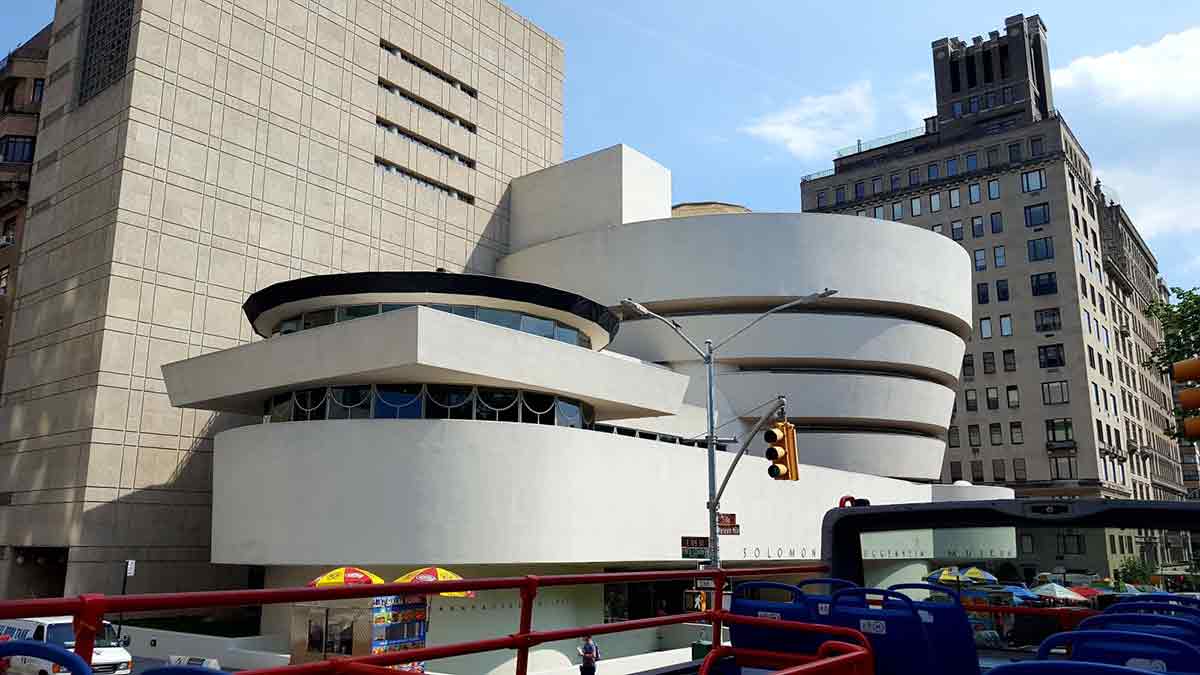
The first of several Guggenheim museums, the Solomon R. Guggenheim Museum served as a template for several of its sister buildings in its rejection of the austere facades of the International style, and its adoption of flowing forms that create a sense of organic movement.
An institution of art on the outside as well as on the inside, the Guggenheim was designed by Frank Lloyd Wright from a commission in 1943, and was built from 1956 to 1959. As Wright’s health declined, much of the architectural work was delegated to his son-in-law, William Wesley Peters. Neither of them visited the site much, and William Short of the architectural firm, Holden, McLaughlin & Associates, managed the project. Sadly for Wright, he died just six months before the opening of the museum.
The Guggenheim is a 6-story bowl-shaped building with a helical ramp running around the perimeter, lit by a central skylight. Unique in its vision, the Guggenheim holds pride of place among New York’s most iconic buildings.
10. The Vanna Venturi House, Philadelphia, PA: A Statement Against Modernism
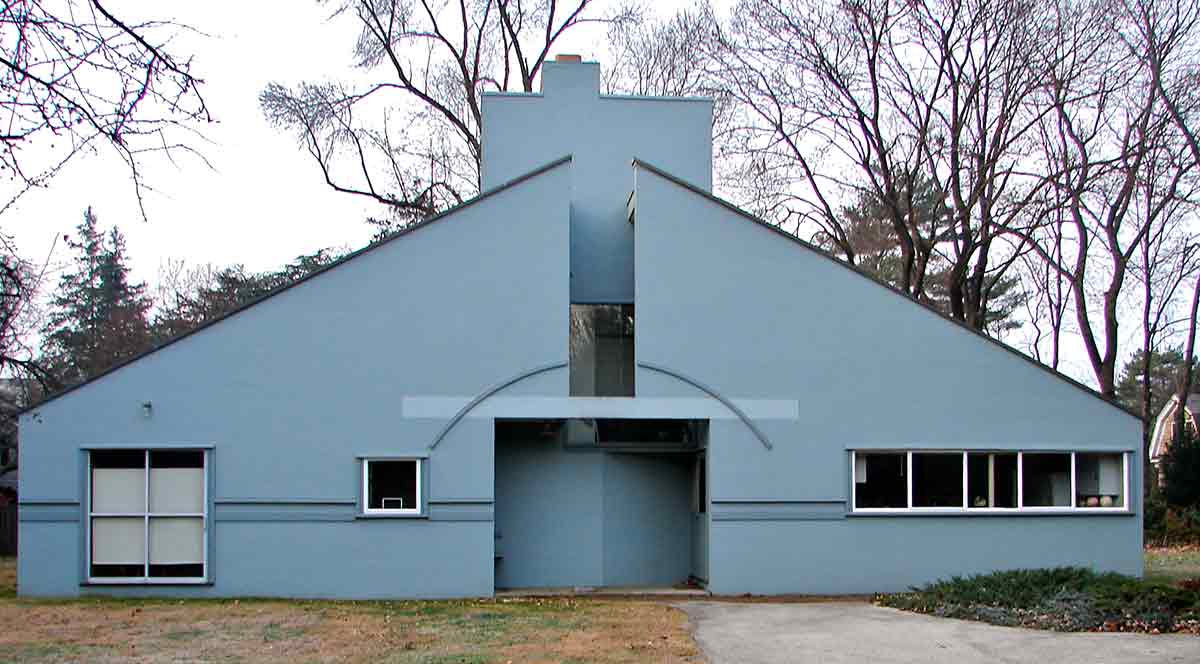
Located in the neighborhood of Chestnut Hill, Philadelphia, the Vanna Venturi House, designed by Robert Venturi, is one of the first examples of the Postmodern architectural movement in the United States. True to his ideas on architecture, Venturi designed the house to be a mix of paradoxical complexity that challenges the orthodoxy of modernist unity. While the International style championed function and simplicity with the slogan, “less is more,” Venturi countered with “less is a bore,” and drew on familiar historical elements, presenting them in an unfamiliar way.
This deliberate act of architectural rebellion was intended to make an intellectual statement, challenging the elitism of high modernism. The house embodies contradiction through its mix of flat surfaces and Mannerist forms; elements that have historically not been used together.
The Vanna Venturi House was built between 1962 and 1964, and has been drawing praise and criticism from artists and architects alike ever since.