In Portugal, you will find historical sites so well-preserved you will feel you traveled back in time. In this article, we will guide you through Citânia de Briteiros, Cromeleques dos Almendres, Foz Côa, Alcobaça monastery, Convento do Carmo, Silves Castle, and the Buçaco Palace.
1. Prehistoric Rock Art in the Côa Valley
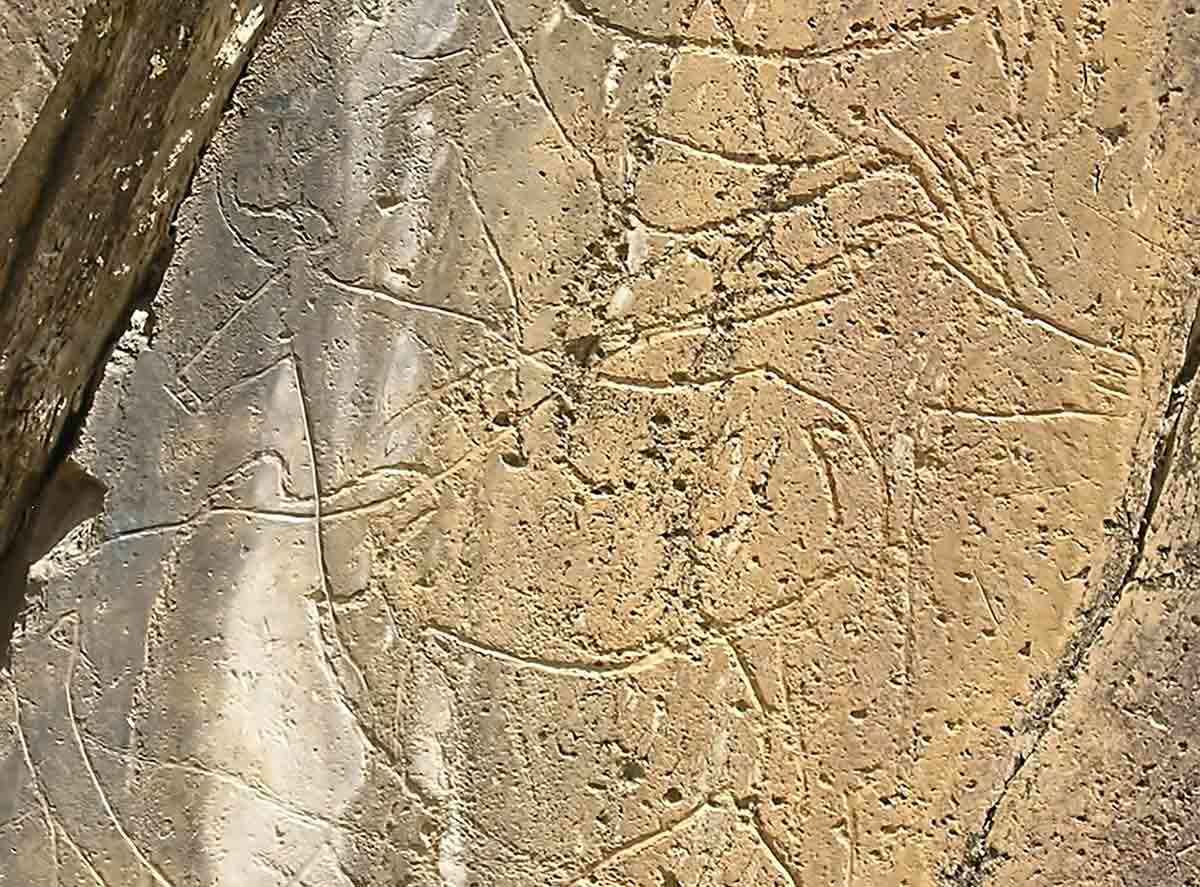
Along the riverbanks of the Côa River in northern Portugal lies a unique concentration of prehistoric rock art from the Upper Paleolithic (22,000 BCE to 10,000 BCE). These extraordinary stone engravings are scattered along 1,200 schist rocks and spread over 20,000 hectares of land. Together with the rock art across the Spanish border in Siege Verde, Côa Valley is the only UNESCO World Heritage Site shared between Portugal and Spain.
The unique prehistoric rock art at Côa Valley was only discovered in the 1990s. At the time, the Portuguese government planned to build a dam, flooding the stone engravings. However, a small team of archaeologists decided to share with the public the existence and importance of the Côa Valley rock art. The government was accused of trying to withhold sensitive information, and after years of controversy, dam construction was halted.
Since 1998, Côa Valley Archeological Park has had the mission to preserve the rock art and organize visits to some of the stone engravings. Most images depict large animals such as horses, goats, and extinct aurochs. Several techniques were used, including picot, filiform, abrasion, and brushstrokes. Their size varies between 15 to 180 centimeters (6 to 71 inches).
Today, you can learn more about prehistoric rock art in the Côa Valley at the Côa Valley Archeological Park Museum. You can also visit the rock art sites on organized tours. If you are feeling adventurous, you can kayak to the rock art sites or visit them during a nighttime hike. However, these activities must be booked in advance.
2. Cromeleques dos Almendres
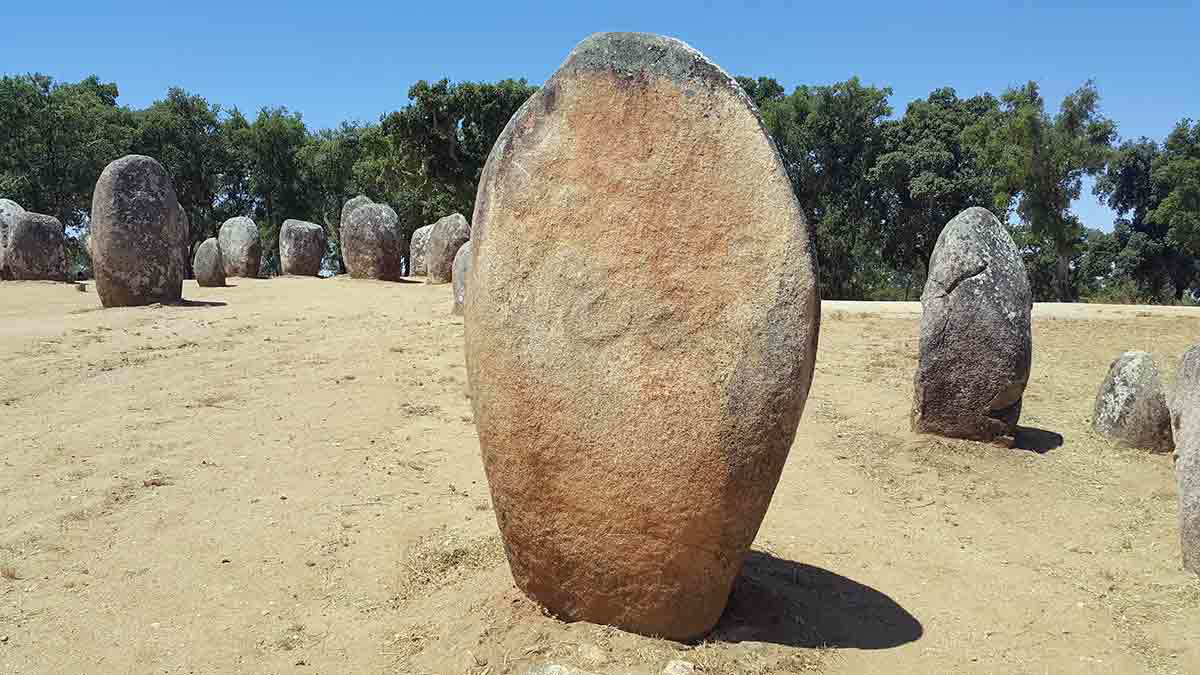
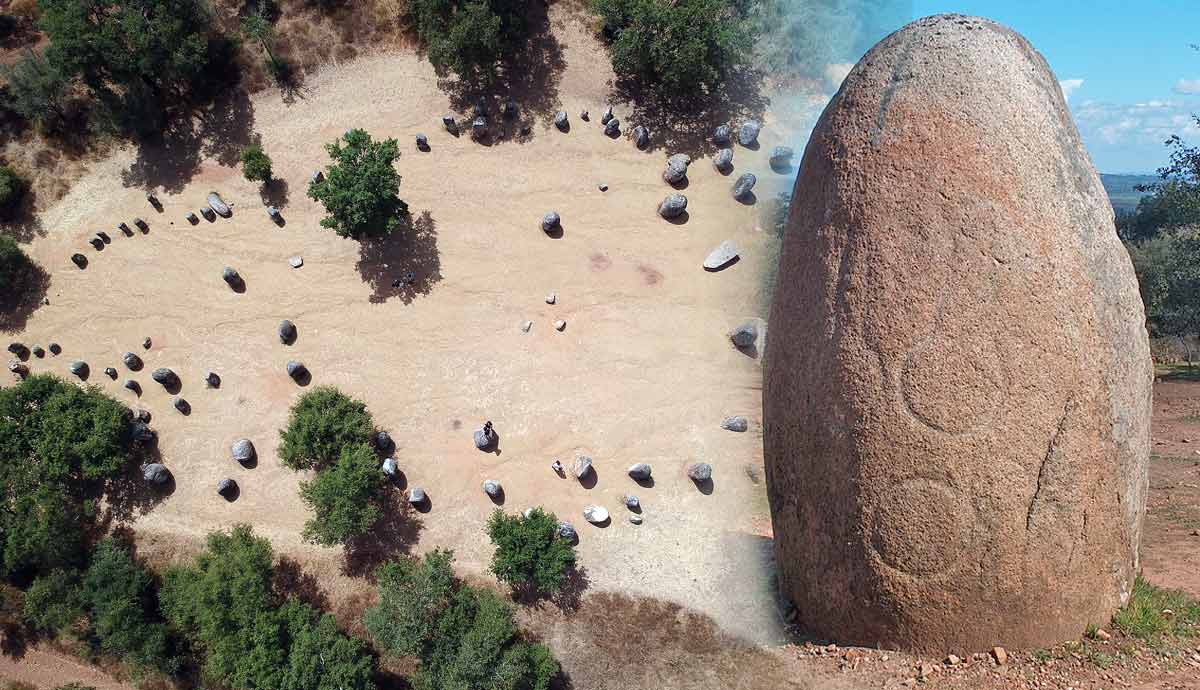
Cromeleque dos Almendres is an archaeological site 12 kilometers (7.5 miles) west of Évora in Alentejo. It is the largest and most important megalithic monument in the Iberian Peninsula. Due to its relevance, people sometimes refer to it as the “Portuguese Stonehenge.” Yet, this cromlech was built between the 7th and the 3rd millennium BCE, which makes it 2,000 years older than actual Stonehenge.
The Cromeleque dos Almendres is a circle of 95 stone monoliths carefully placed on a smooth hill at 413 meters (1,354 feet) altitude. Its construction matches a period when nomads started to settle here.
It was built in three different stages. The three concentric circles of ovoid-shaped monoliths date back to the Early Neolithic. The enclosure with two irregular ellipses was constructed during the Middle Neolithic. In the Late Neolithic, both enclosures were modified to the shape they still have today. Most monoliths show engravings in the form of a shepherd’s staff, showing a deep connection to plowing and cattle breeding.
Nearby is the Almendres Menhir, there is a large granite menhir 3.5 meters (11.5 feet) high above the ground, located 1 kilometer (0.6 miles) northeast of Cromeleque dos Almendres. Since its alignment matches the sunrise on the summer solstice and due to its proximity to the cromlech, archaeologists believe there is a deep connection between the two monuments.
The Cromeleque and the Menir dos Almendres are on private property granted to Évora City Council for public use. This means anyone can visit, and there is no need to make an appointment. However, you should only use the signed trails and avoid wandering the cork tree forest.
3. Citânia de Briteiros
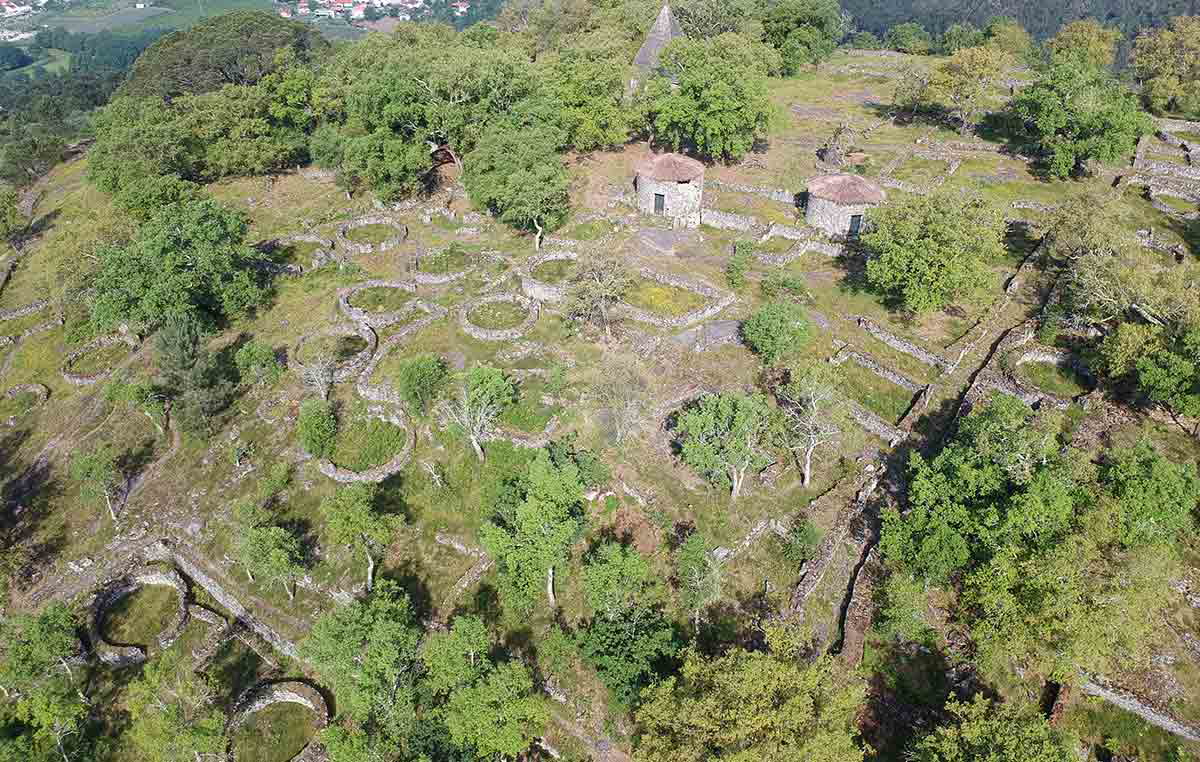
Citânia de Briteiros is a fortified settlement from the Iron Age, covering an area of 24 hectares. It includes a central urban nucleus on a hilltop at 336 meters (1,102 feet) high, with surrounding walls to defend the settlement. The complex urban organization holds a grid of streets limiting public and private areas, a group of residences, two baths, and a central meeting building.
Archaeologists believe the Citânia de Briteiros location was chosen because it offers a 360º view of its surroundings and easy access to the nearby river. Due to its size and features, Citânia de Briteiros is considered one of Portugal’s main archaeological sites from proto-history. This archaeological site has been classified as a National Monument since 1910.
Although this location has been inhabited since the Neolithic and the Chalcolithic, Citânia de Briteiros is more recent and only reached its peak between the 2nd and 1st centuries BCE. Following the arrival of the Roman Empire, the settlement declined and became abandoned in the 2nd century CE.
Citânia de Briteiros’ ruins have been known since the 16th century. However, the first archaeological works only took place in 1874. In the 20th century, various archaeologists resumed the excavation and restoration campaign. As a result, an extensive area of ruins is now visible, both on the acropolis and on the eastern slope.
At the Museu de Cultura Castreja, you can admire the artifacts retrieved from Citânia de Briteiros and learn more about this incredible archaeological site.
4. Silves Castle
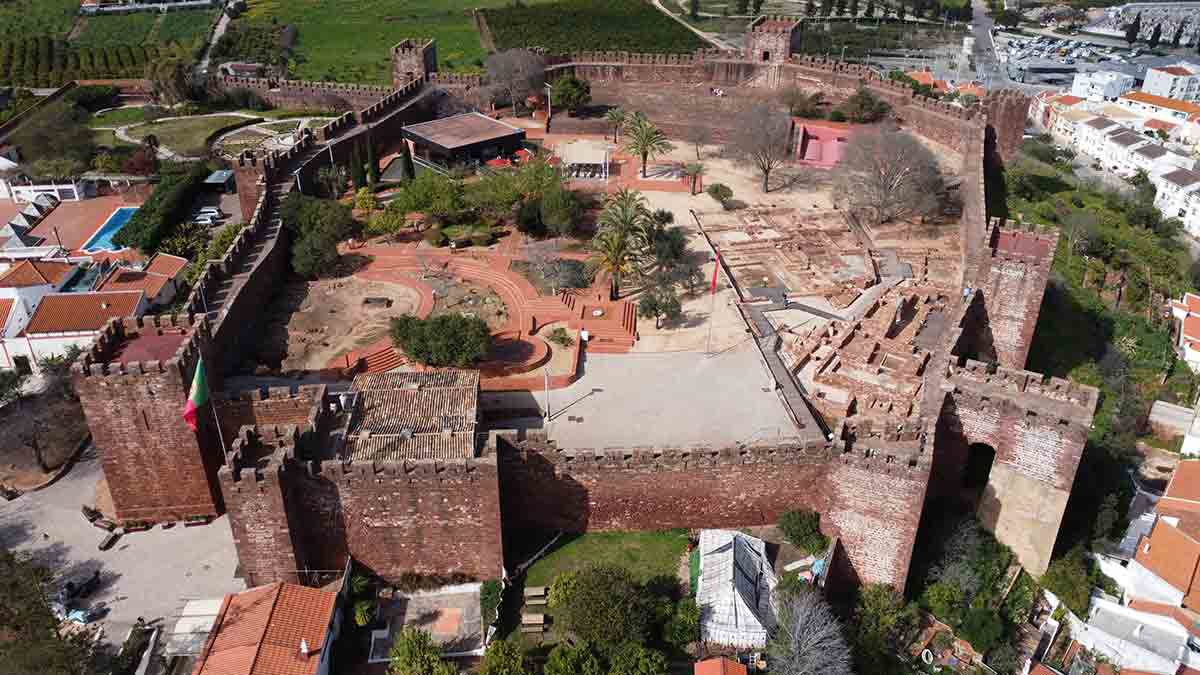
Silves Castle is an impressive Islamic castle from the 8th century. Covering an area of 12,000 meters sq. (approx. 130,000 feet sq.), this is one of the Iberian Peninsula’s largest and most well-preserved Islamic castles.
The Moors crossed the Gibraltar’s Strait in 711 and reached humble Silves in 714. They were drawn by the fertile agricultural lands, the abundance of water, and the easy access to the ocean. But most of all, Silves’s topography was the perfect defense mechanism: from the top of the hill, it was possible to enjoy a 360º view of the surrounding landscape and control ships sailing on the river.
That was why the Moors repurposed an existing Roman fortress and built the red-walled castle you can admire today. It was built with “taipa,” a construction material made from clay, pebbles, and sand, and “Grés de Silves,” a red-colored sandstone you can only find in this area.
Silves was organized into two distinctive areas: the “alcáçova” and the medina. The first refers to an ample area at the highest point inside the castle walls, where you can visit a cistern that supplied the city until the early 1990s. Here, you can also admire the remains of the Palace of Balconies, a palace fortress, which, according to archaeologists, is the only one of its kind. The medina was surrounded by the city’s outer walls consisting of a cluster of houses and labyrinthine streets.
The monument you see today results from several refurbishments over the centuries due to earthquakes and battles. Yet, Silves Castle remains a unique Islamic monument in Southern Portugal.
5. Alcobaça Monastery

Mosteiro de Alcobaça is an imposing monastery founded by King Afonso Henriques in the 12th century. Since 1989, it has been classified as a UNESCO World Heritage Site. The architectural features and the quality of the building materials make Mosteiro de Alcobaça a masterpiece of Cistercian Gothic art. In fact, this was the first Gothic construction ever made in Portugal during the Middle Ages.
This incredible landmark is deeply connected to the foundation of the Kingdom of Portugal.
Afonso Henriques achieved several victories against the Moors, leading him to refuse to pay the King of Leon vassalage. Afonso Henriques granted the conquered lands to religious orders to guarantee their support. It was a way of pleasing the Church and resettling these abandoned territories. The Cistercian Order received 40,000 hectares in Alcobaça. Shortly after this donation, Pope Alexander III legitimized the first Portuguese monarch.
Construction works began in 1178, and the monastery was consecrated in 1252. However, the construction and refurbishment works were never-ending. Over the next 600 years, the monastery was remodeled according to new architectural movements, and the monarchs’ needs to leave their mark. The result is a Gothic monastery featuring Manueline, Mannerist, and Baroque architecture styles.
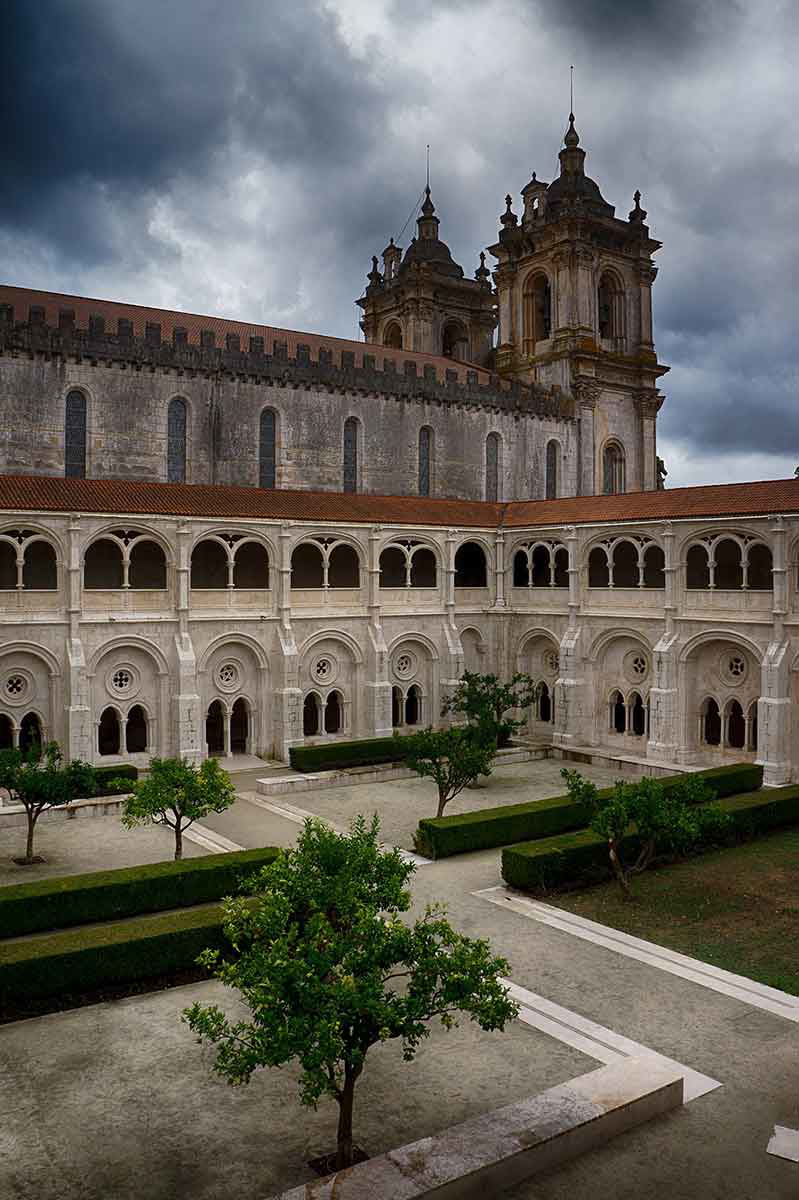
The monastery church follows the French Pontigny model. Along its imposing 100 meters (328 feet), robust construction material was applied to the central nave. Here, you will not find any adornments, giving you a feeling of elevation and spirituality.
On the church façade, only the Gothic portico is original. The likenesses of St. Benedict and St. Bernard contrast with the Baroque frontispiece and the bell towers added in the 18th century.
Mosteiro de Alcobaça also serves as a royal pantheon. At the monastery, you can admire the tombs of King Pedro I and Inês de Castro, the infamous couple whose love story ended tragically. Their tombs are located face-to-face on opposite sides of the transept so that they would meet again on Resurrection Day. Both tombs are considered masterpieces of medieval statuary.
While visiting Alcobaça Monastery, explore the refectory, the dormitory, the chapter room, the cloister of King Dinis, the kitchen, and the king’s room.
6. Convento do Carmo
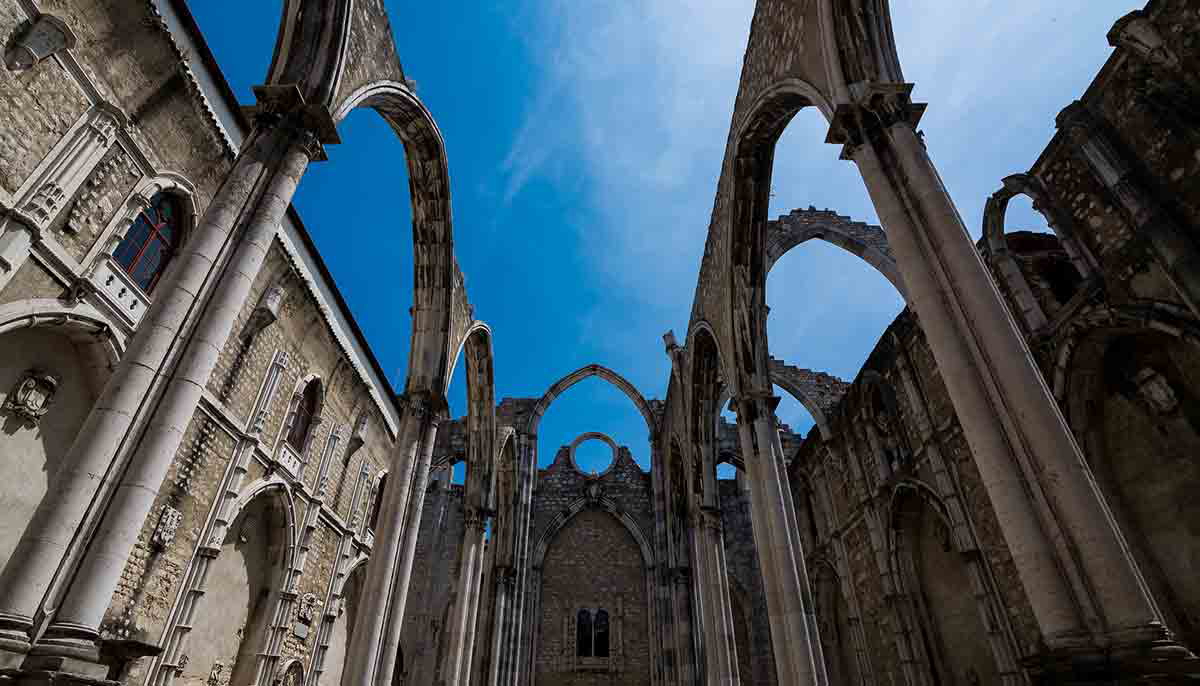
Founded in 1389, Convento do Carmo is an iconic landmark that withstood the test of time. D. Nuno Álvares Pereira, a knight who defended Portugal’s independence before becoming a friar, founded Convento do Carmo in a less-than-perfect location.
Regardless of the construction obstacles, D. Nuno chose this site because it was opposite São Jorge Castle and the Royal Palace. It was also associated with Mount Carmel in Palestine, the origin of the Carmelite Order.
The building was altered several times to adapt to new architectural styles and decorative preferences. However, when the 1755 earthquake hit Lisbon, Convento do Carmo was seriously damaged. Shortly after, a massive fire destroyed all of the convent’s contents.
Reconstruction began in 1756 in the neo-Gothic style but was definitively interrupted in 1834 due to religious orders’ extinction in Portugal.
The naves’ pillars and arches date back to the latest reconstruction and reflect experimental neo-Gothic architecture. In the mid-19th century, with a romantic taste for ruins and ancient medieval monuments, it was decided not to continue the reconstruction works, leaving the body of the church’s nave open to the public.

The habitable part of the convent was converted into military facilities in 1836. Here, in the Carmo Barracks, headquarters of the GNR General Command, President of the Council of the Estado Novo, Marcelo Caetano, took refuge from the rebellious military during the Carnation Revolution in 1974.
The church’s main body and choir, which survived the earthquake, were renovated. Today, it houses an archaeological museum. From the Paleolithic and Neolithic periods, you can admire artifacts retrieved from Azambuja, a prehistoric fortification from 3,500 BCE to 1,500 BCE.
At the museum, you can also find a group of Gothic tombs that includes the magnificent tomb of King Fernando I (1367-1383), transferred to the museum from a convent in Santarém. There is also a statue of a 13th-century king (perhaps Afonso Henriques) and Roman and Visigothic artifacts.
7. Buçaco Palace
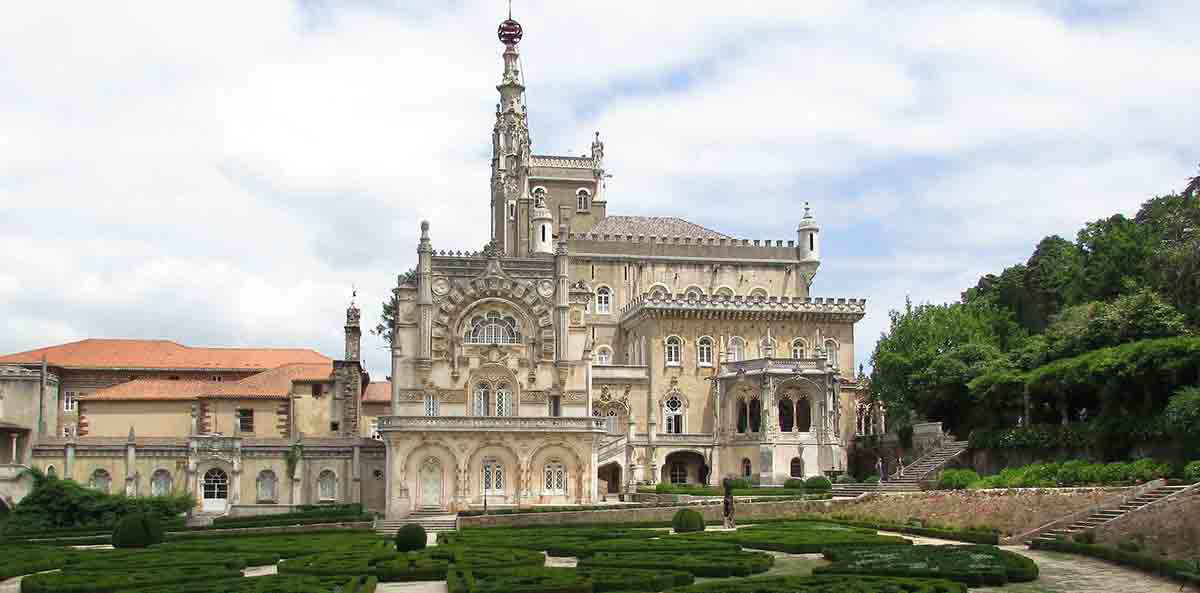
Palácio do Buçaco’s history can be traced back to the 17th century.
A group of hermit monks from the Order of the Discalced Carmelites settled in Buçaco to live in isolation. During their lifetime, the monks planted the dense green forest you can admire today, with species from around the world. In the forest, they built stunning water fountains, hermit chapels, and astonishing viewpoints. It is also due to the monks that today you can admire the Via Sacra and the Santa Cruz Convent.
King Carlos I, who was fascinated with Buçaco, gathered the best architects to build the most fascinating palace Portugal had ever seen. Built between 1888 and 1907, Palácio do Buçaco is a clear example of Castellar Romanticism (from the German word Burgenromantik). Simultaneously, it was also intended as an ode to the Portuguese Discoverers.
The idea behind this project was to build a romantic “Torre de Belém” overlooking a green ocean of trees. Eventually, the palace was built over the old convent. Architects Luigi Manini, Nicola Bigaglia, Manuel Joaquim Norte Júnior, and José Alexandre Soares contributed to this magnificent masterpiece.
Palácio do Buçaco was designed in a Neo-Manueline style. Yet, you will find several influences ranging from arabesques to Gothic motifs. Inside the palace, you can admire astounding blue and white tile panels depicting scenes from the epic poem The Lusiads. The furniture includes Portuguese and Chinese pieces accompanied by lavish tapestries.
King Carlos I inaugurated the palace in 1904 with several parties, balls, and concerts. Eventually, this was the location of the Portuguese monarchy’s last official ceremony, shortly before King Manuel II left for exile when the Portuguese Republic was proclaimed.
Today, Buçaco Palace is a five-star boutique hotel where you will feel you have traveled back in time.