
Egyptian art does not always get its due credit. It often gets overshadowed by its Greek successor. The classical Western narrative and the history of ideas tend to favor Greek cultures as the wellspring of civilization. Late twentieth-century French philosopher Gilles Deleuze offers a brand new way to think about Egyptian art; he invents a concept of the crystal. You might remember the images with flat two-dimensional surfaces. If you stare long enough at these cartoonish figures, you might feel an overwhelming sense of permanence. They refuse to budge even in our imagination.
Deleuze’s Conceptual Apparatus
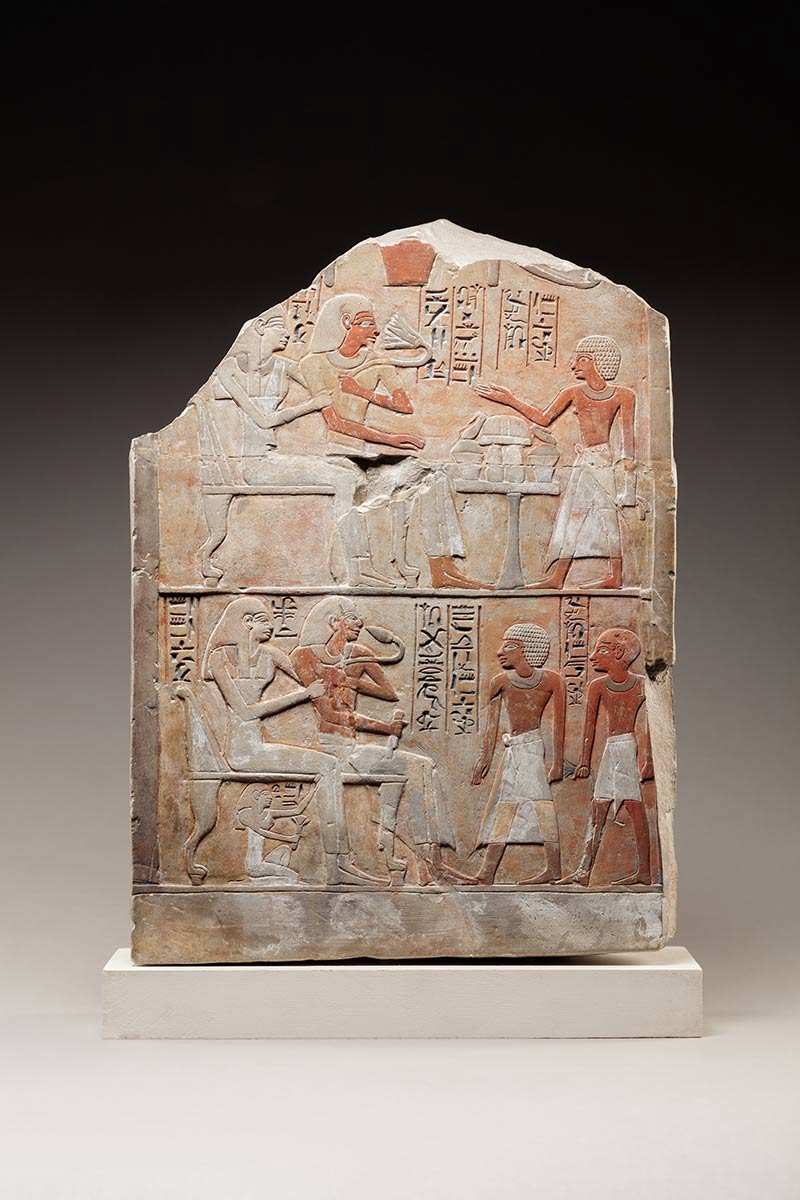
Preservation is perhaps the defining term for Egyptian painting. Over three millennia later, the eyes of a scribe or an Egyptian pharaoh still stare at us at the same exact angle. Undamaged by centuries of dust and strata between them and us. Some tend to read this stillness as a flaw, or a limitation: it is often interpreted as a failure to master perspective. It is a limitation that would be corrected, developed by the Greeks and later by Renaissance artists.
In contrast, Deleuze reads this as a triumph of the Egyptian crystalline technique, the attempt to immortalize the present. The purpose of Egyptian art is to identify and codify the essences, the invariable elements of reality and human experience. Deleuze refers to the process as molding.
I find that the easiest way into the Deleuzian ontology of painting is precisely through the notion of the mold. To mold something is to press it in from the outside, via some external source, a shape, a premade frame. The way a brickmaster forces wet clay into a wooden structure. Deleuze claims Egyptian artists were attempting to do something similar with the human body. Unlike some periods in the history of art that attempt to capture actions, processes, the dynamism of nature, like a person or animal mid-motion, Egyptians were instead trying to “press” the person or animal into an eternal form. The technique reflects their unique cosmological worldview.
Now Deleuze contrasts this with the Greek approach. In his 1981 Lectures on Painting, Deleuze draws on the work of the eighteenth-century French naturalist Buffon. Deleuze associates Greek forms of expression with the model rather than the mold.
Visual Mummification as Permanent Modulation
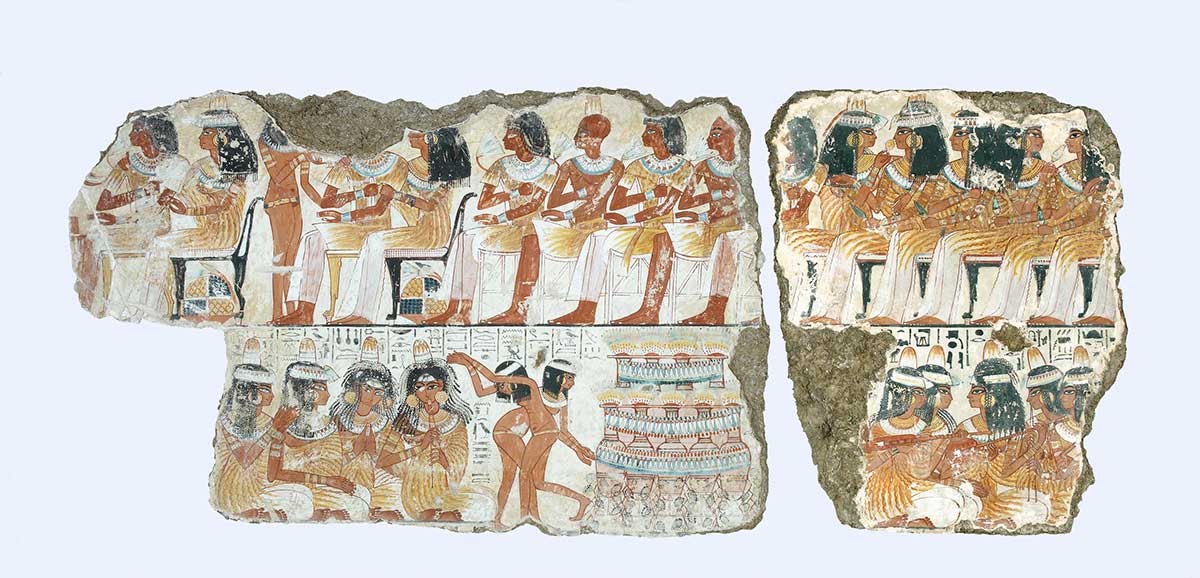
It is interesting how Deleuze employs a metaphor that is at once obvious, literal, and unexpected. It is quite characteristic of Deleuzian discourse to remain at the surface while manipulating it in novel and creative ways. The metaphor here is that of mummification. We are all familiar with the ancient ritual, but to take that idea and use it as a creative diagram to make sense of other aspects of Egyptian culture is a genius minimalist intervention.
Egyptian civilization treated time as a serious threat, a danger. Change implies decay and eventually, death. The purpose of art was to act as a protective measure. To rescue experience from the corroding effects of time. Flat contours, rigid postures, hieroglyphic stillness, these are tools for preserving people, things, rituals, for preserving essences.
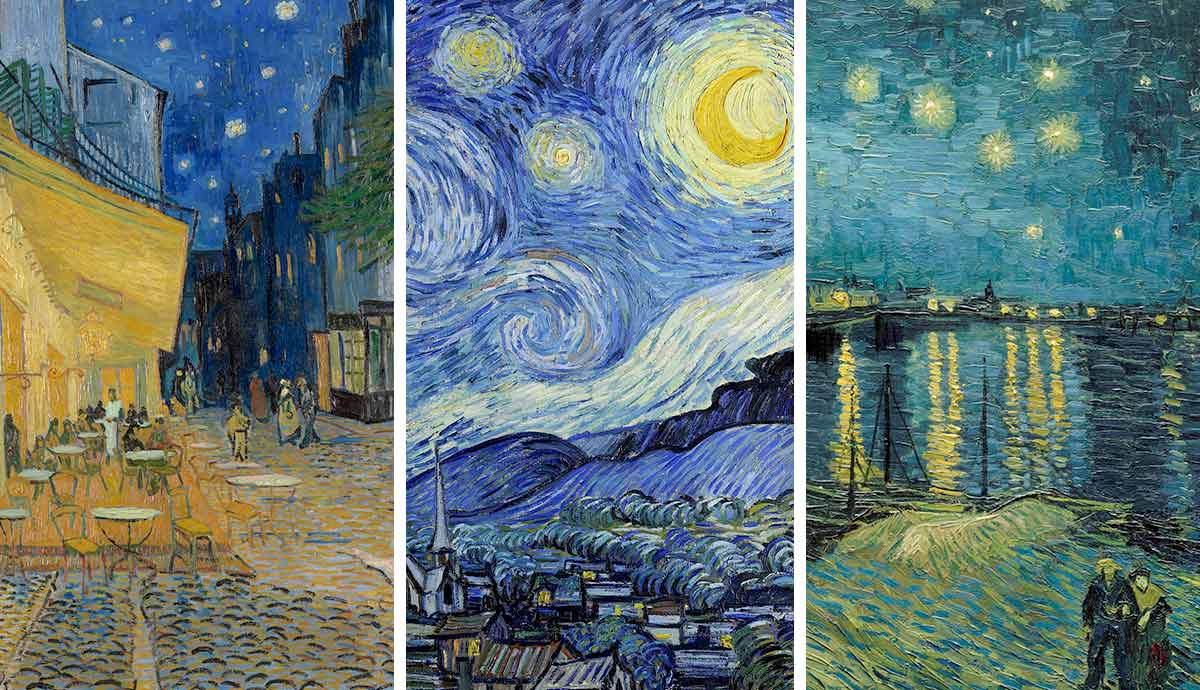
Mold and model are but two elements of the tripartite diagram offered by Deleuze. The third element is modulation. Deleuze borrows these concepts from the French philosopher Simondon. To illustrate the structure, we can think of mold and modulation (with modeling in the middle) as two extremes that characterize different painting styles. If Egyptian art rests at one end, the side of the mold, with hieroglyphs being an example, a painter like Van Gogh would reside on the other end, the side of modulation.
Modulation refers to a process of endless reshaping that never quite settles into a determinate form. It is, in a way, a technique of endless and continuous molding. Whereas a mold is just modulation frozen in time. A mold is a shape that was modulated only once. Conceptually, this is quite sophisticated, because the definition of each of the three elements in Simondon’s formula is dependent on the definition of the other two.
Egyptian Art as An Alternative Space of Touch
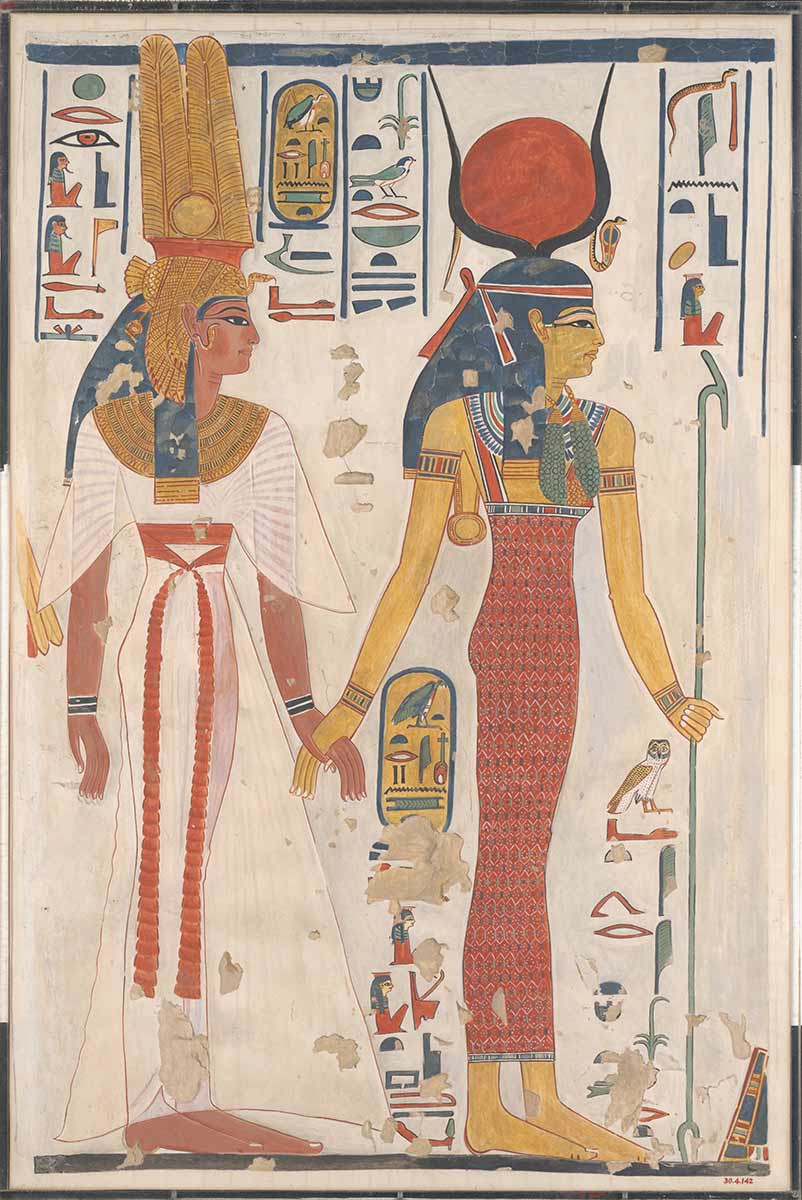
Another important term introduced by Deleuze is hapticity. Deleuze borrows the term haptic from the Greek word for touch. He uses the term to describe a way of looking that behaves like touching.
The eye can allegedly move through a painting as if it were a felt surface. This contrasts sharply with the idea of the canvas operating as a window. Classical representation tends to assume this position. A painting is typically understood as a window onto another world that it only mirrors or represents.
Hapticity offers an alternative interpretation. Instead of seeing Egyptian art as a stage of development that only later culminates in the model of classical representation, it carves out a unique place for it as an expression of flattened haptic sensibility. The distinction between foreground and background is eliminated, nothing recedes, and nothing protrudes. Deleuze refers to this as a “skin-deep” operation; it represents a new kind of depth that remains on the surface.
The contours that confine various gods, queens, servants, and deities have an important sacred function. They shelter their memory, their essence; indeed, they mummify them.
This is a different signal-space, as Deleuze refers to it. A signal-space that attempts to capture the force of permanence. The contour, the border, the outline, the straight line, this simple feature is the defining element of Egyptian art. The contour that shields and protects essences, the essences of man, woman, god, animal, king from dissipation and forgetting.
Essence Beyond Imitation
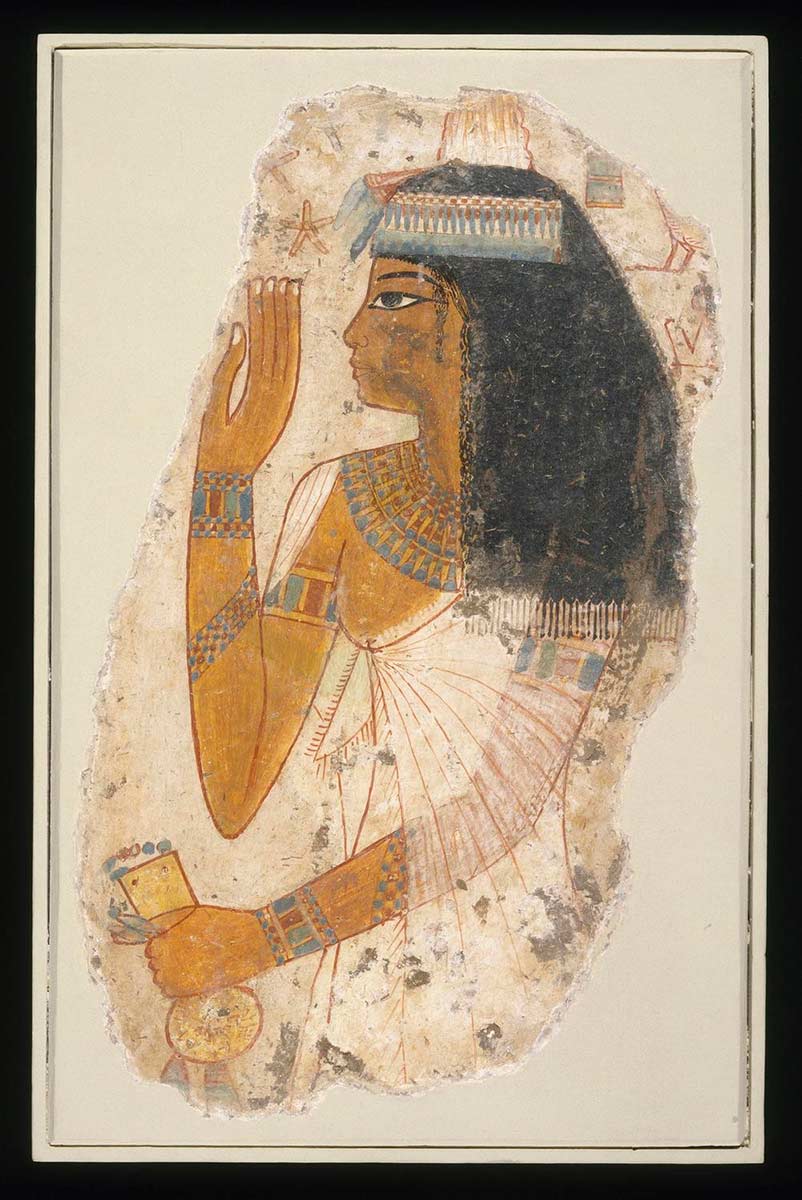
So the paradox that holds me captive whenever I contemplate the Deleuzian take on Egypt is the following. To achieve the truest resemblance, Egyptian artists had to abandon resemblance in the ordinary sense.
The true resemblance of man, for instance, offers the least actual resemblance to the human figure. Monochrome skin tones, rigid profiles, impossible postures, these are not human beings as we encounter them in everyday life. Nonetheless, no one has any trouble recognizing the figures exactly for what they are. Deleuze refers to this as resemblance through non-resembling means. This idea is another central concept in his seminars.
A body in motion is a body that is dying, dissipating, giving in to the temporal flux of becoming. It ages, sickens, falls apart. These dynamic features of experience are the enemy. The enemy is the world of turbulent change that needs to be kept at bay by the contour. This is the crystal.
Crystals grow only on surfaces; hence the choice of metaphor. The collapse of the foreground and the background is best captured by the idea of the crystalline law. Hence, the boundary, the separating line, is what brings the metaphors of crystallization and mummification together. The crystalline mold mummifies aspects of reality and thereby extracts immortal essences from them, preserving memory once and for all.
What Egyptian Art Teaches Us About Modern Space
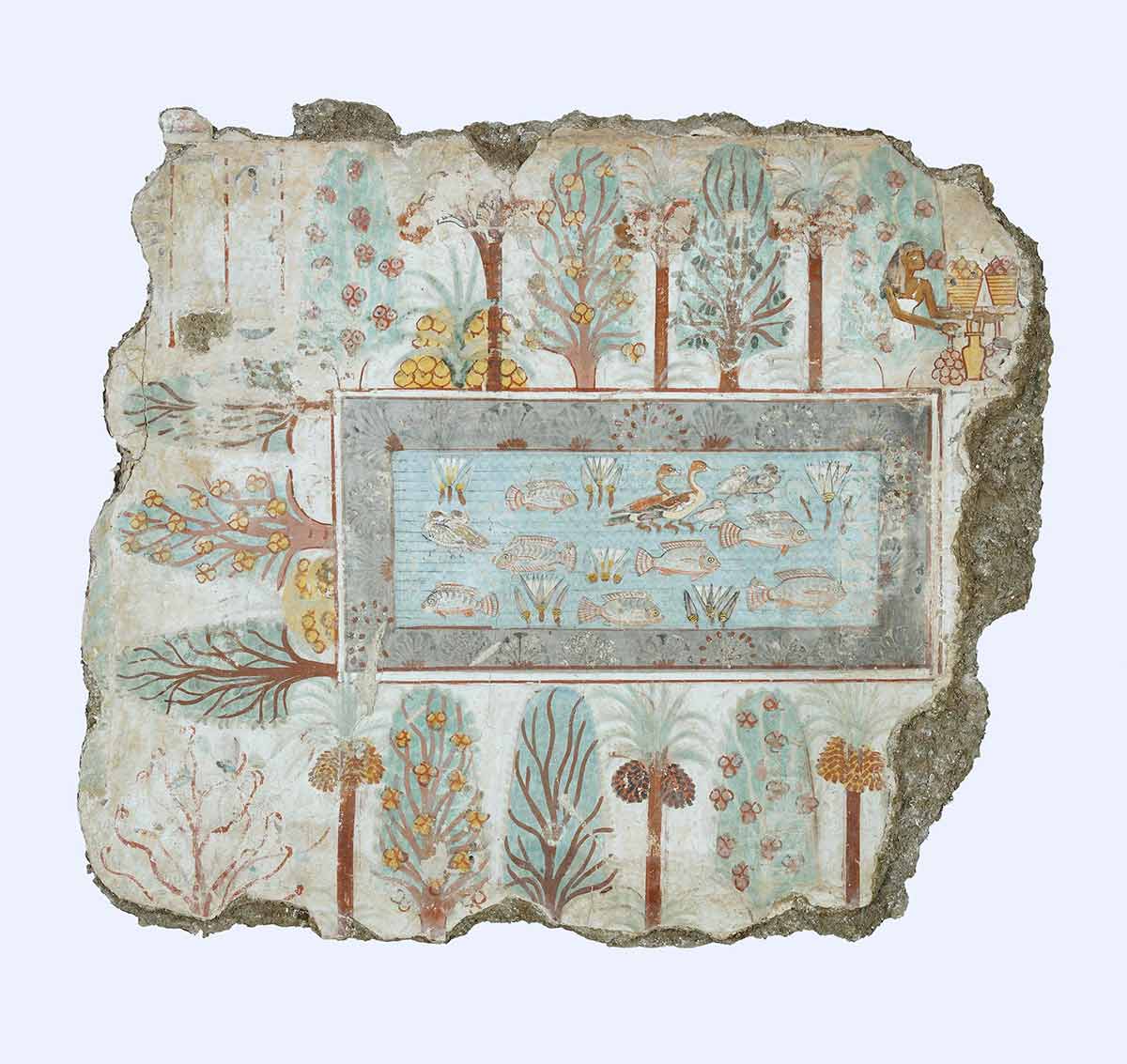
Even when writing about and discussing modern painters, Deleuze kept returning to the Egyptian signal-space. The same vocabulary of mold, model, modulation, crystal was redeployed in the analysis of, for instance, Francis Bacon’s work, Turner’s paintings, and Baroque art including Rubens. Egypt offers Deleuze the starting point for a genealogy that runs all the way to the present. In fact, there is no obvious chronology to the Deleuzian history of painting. During the lectures he often leaps from one epoch to another.
Our era is defined by the notion of modulation. We are modulatory subjects, so to speak, with creative modulatory forms of artistic expression. Speed and reinvention drive our perception and understanding of the world around us. The contrast with Egypt is obvious. Any depiction of stillness and permanence sounds like naive nostalgia or simple failure in our age.