
Ancient Greek sculptors transformed stone and bronze into some of the most influential artworks ever created. Celebrating gods, athletes, and the human body, their masterpieces defined ideals of beauty and balance that still shape art today. Here are ten ancient Greek sculptures everyone should know.
1. Kroisos Kouros
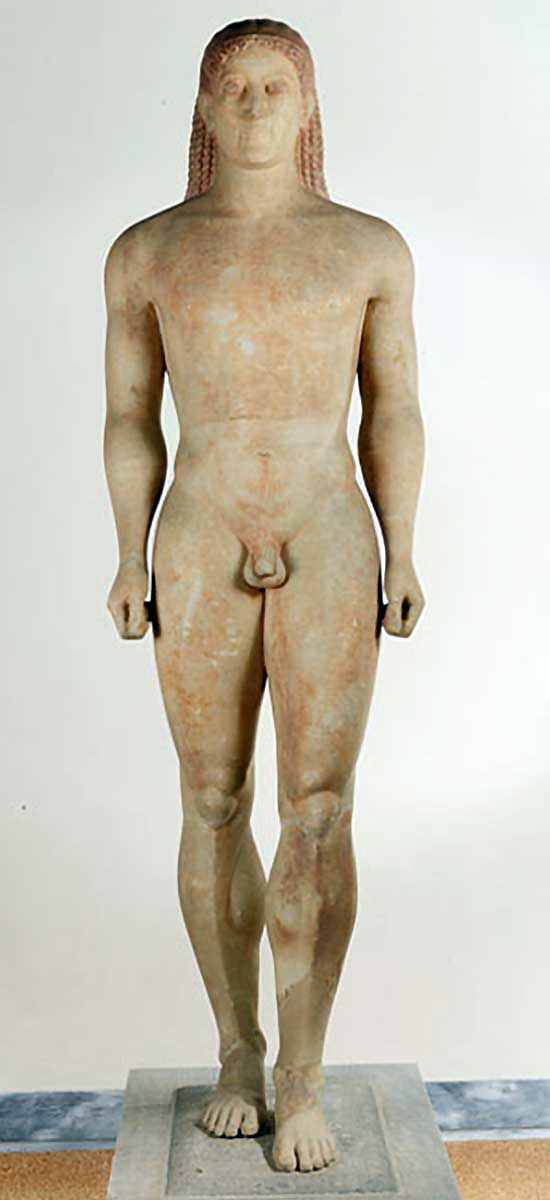
At first glance, this statue of a young man, Kroisos, might seem stiff and rigid. However, the significance of this piece lies in the little details, which indicate a transition from the much more limited style of the earlier Archaic period.
This sculpture still has some characteristics of the earlier Archaic sculptures of young men, known as “kouroi.” Even the facial expression is characteristically Archaic, with a slight smile. The head, however, is rounder, the muscles are more defined, and the hairstyle is more detailed. The stance is also different. The figure’s weight is slightly shifted onto one leg, a step toward a more lifelike, dynamic presentation of the male body.
The Kroisos Kouros dates to around 530 BC. It was a grave marker for a young man named Kroisos, who was killed in battle. The statue’s base says: “Stop and mourn beside the monument for Kroisos, whom Ares destroyed in the front line.” This marble statue is 6.4 feet (194 cm) tall. The Kroisos Kouros was excavated illegally at the beginning of the 20th century. Grave robbers sawed the sculpture in half to make it easier to transport.
2. Charioteer of Delphi
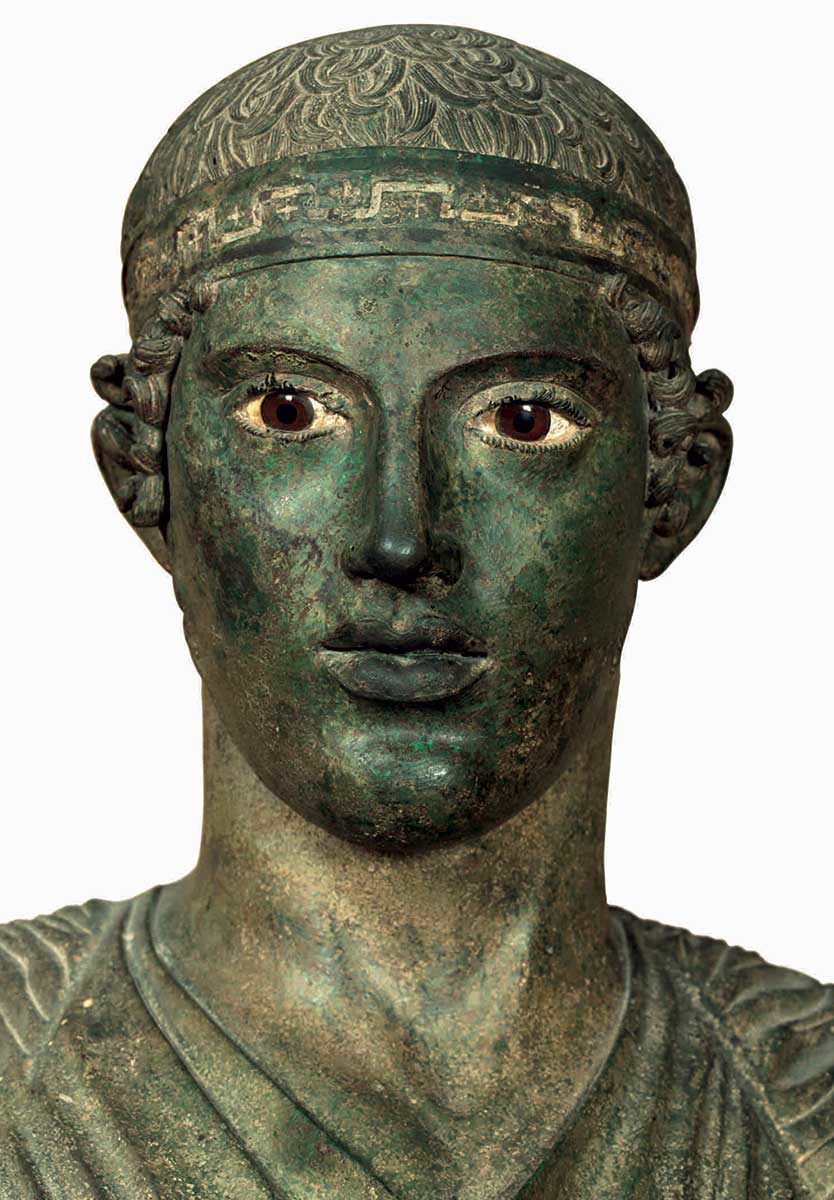
The Charioteer of Delphi was excavated near the Temple of Apollo at Delphi, along with two inscriptions. One includes the name of the dedicator, Polyzalos, who was the tyrant of Gela in Sicily. Inscribed is also the reason for erecting this statue: celebrating a chariot race victory in the Pythian Games at Delphi. It can be dated to 478–470 BC with reasonable precision.
The life-size sculpture was originally part of a much larger group. Standing in a chariot, the young man was holding the reins of four horses, now lost. A closer look reveals several details that make the sculpture personal. The stance, which first appears fully frontal, is slightly turned. The head is somewhat looking to the right, and one foot is stepping wider than the other, opening the pose a bit. The charioteer’s facial expression appears calm and focused, capturing the moment before a race begins.
3. Discobolus
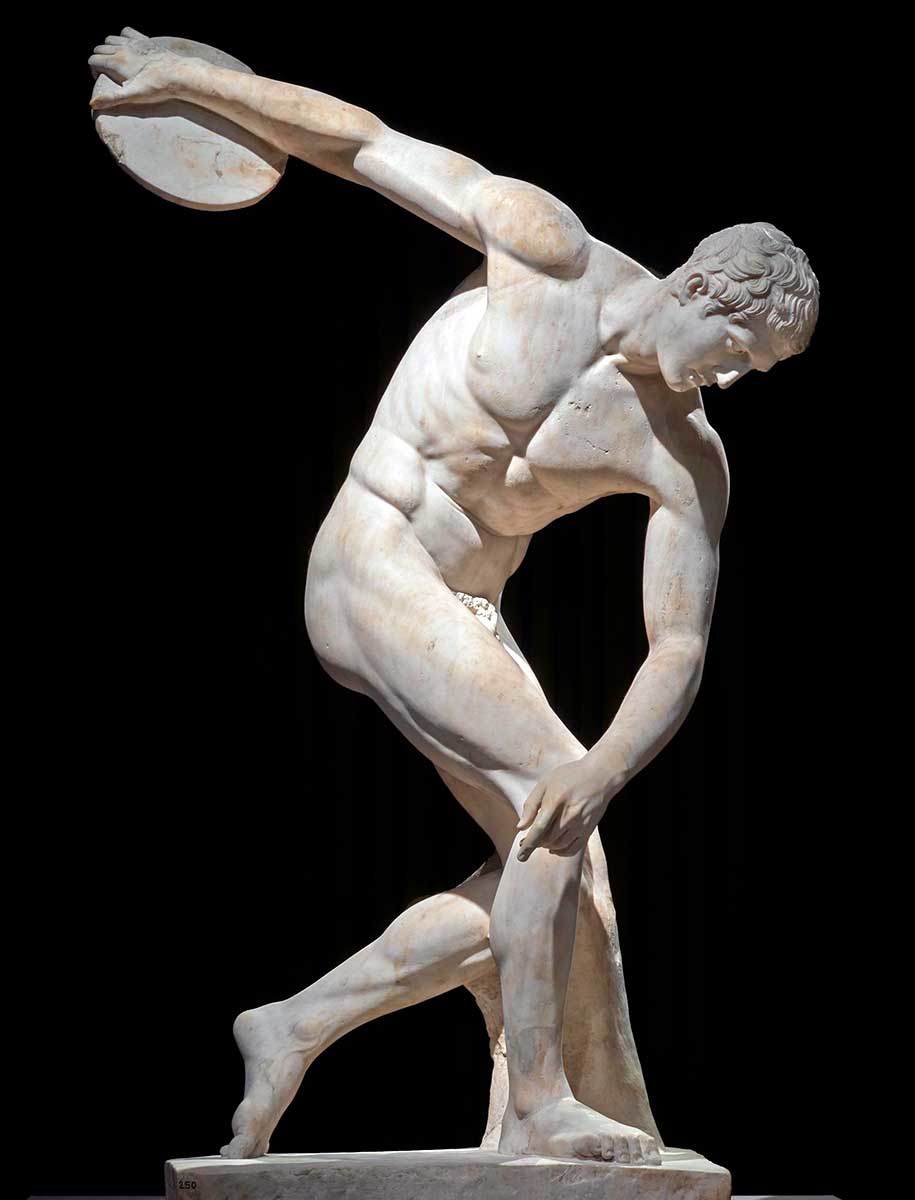
In ancient Greece, the concept of kallos—a combination of physical beauty, moral virtue, harmony, and balance—was central to art, often expressed through depictions of athletes. Greek male athletes from around the 7th century BC were depicted nude, embodying ideals of athleticism, beauty, and physical excellence.
The Discobolus, also known as the Discus Thrower, perfectly embodies this philosophy. It captures an athlete winding up to throw a discus, frozen in a dynamic pose that balances the symmetry and grace of his body with the raw power of his muscles. Every angle communicates energy, focus, and the beauty of human form in motion.
This sculpture is attributed to the Greek sculptor Myron, and while the original bronze from around 450 BC is lost, it survives in Roman copies. The above version is one such Roman copy, although it was incorrectly restored with the head facing backward. Even so, it allows us to appreciate Myron’s remarkable ability to convey movement, athletic skill, and idealized human form in marble.
4. Aphrodite of Knidos
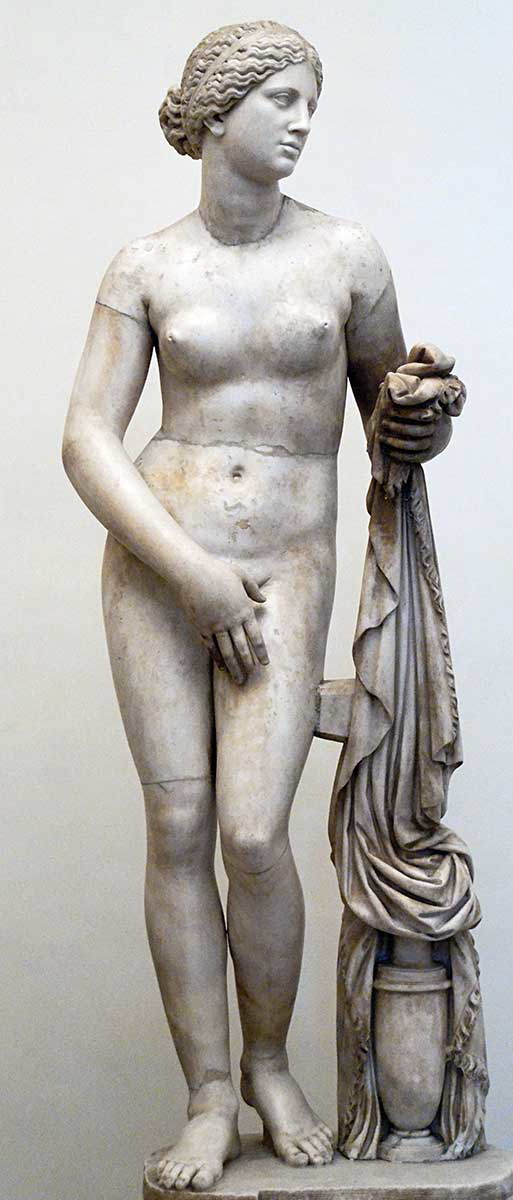
One of the most recognizable examples of the artist Praxiteles’ work is the sculpture Aphrodite of Knidos. It is known from about 60 copies, fragments, and small-scale versions in marble, terracotta, and bronze, proving how popular this piece was in ancient times. The original was created as a cult object, sculpted in marble, for the Temple of Aphrodite in Knidos, located on the southwest coast of modern-day Turkey. The sculpture remained there until it was sent to Constantinople in 393 AD. It was then soon lost. The full-scale copies are about 6.5 feet (2 meters) tall and have been found in various places in Italy, Spain, and Greece.
The slightly lowered head of Aphrodite, as she modestly lowers her gaze after being caught during her bath, has been highly influential in how women are depicted in Western art. The voyeuristic roleplay between eroticism and chastity has inspired artists to this day. As the first-ever depiction of a female without covering clothing, the work caused a scandal in the ancient Greek world. This was definitely not the way people were used to seeing Aphrodite.
5. Artemision Bronze
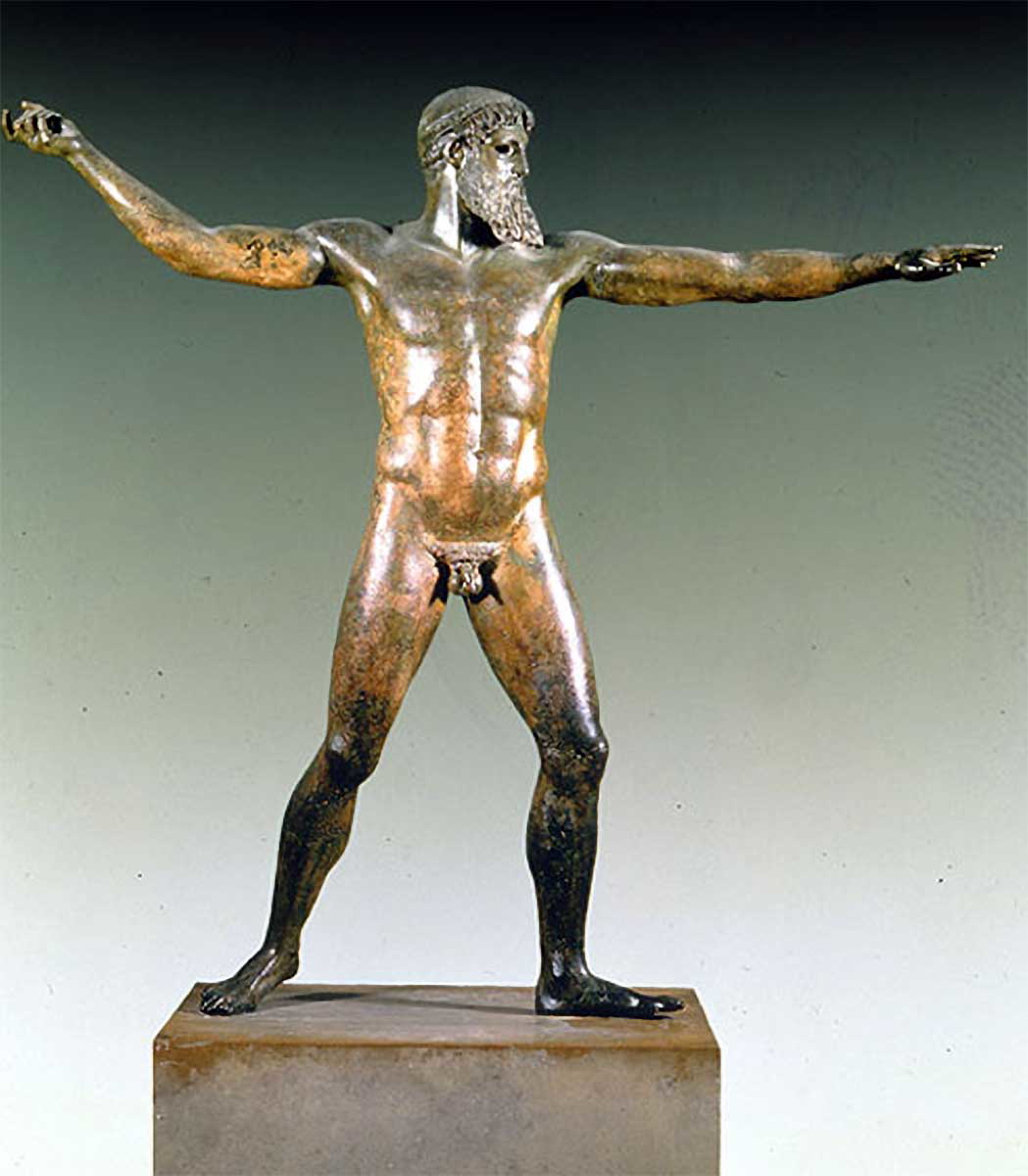
Entering the exhibition hall at the Archaeological Museum of Athens, the Artemision Bronze immediately commands attention. With a height and armspan of about 6.1 feet (209 cm), the statue captures the male form with striking precision and dynamic presence. The pose is naturalistic and powerful, even though the arms are slightly disproportionate, showing both artistry and the limits of Classical technique.
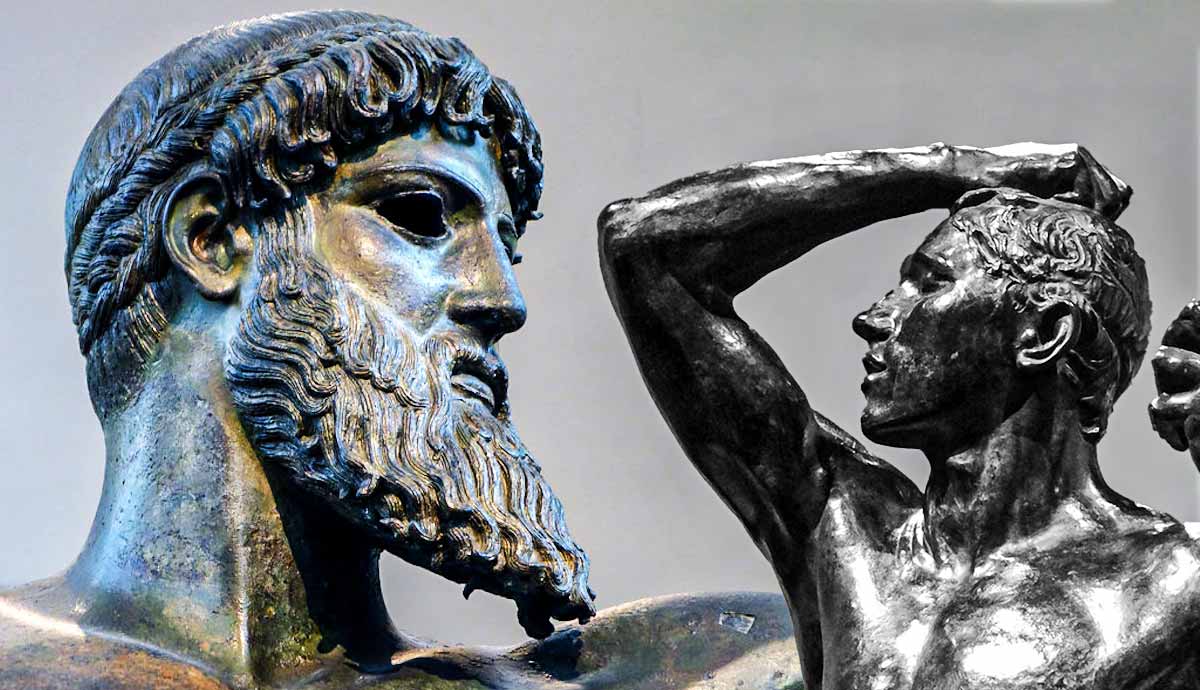
Dating back to 460–450 BC, the sculpture demonstrates the full potential of bronze during the Classical period, a feat impossible in marble. The sculpture was discovered in 1926 off the coast of Cape Artemision, on the island of Evia. It reflects the technical mastery and cultural significance of Greek temple dedications.
The figure’s identity remains debated: if Zeus, he would have held a thunderbolt; if Poseidon, a trident. Either way, the Artemision Bronze offers a vivid glimpse into the interplay of art, religion, and society in ancient Greece.
6. Venus de Milo
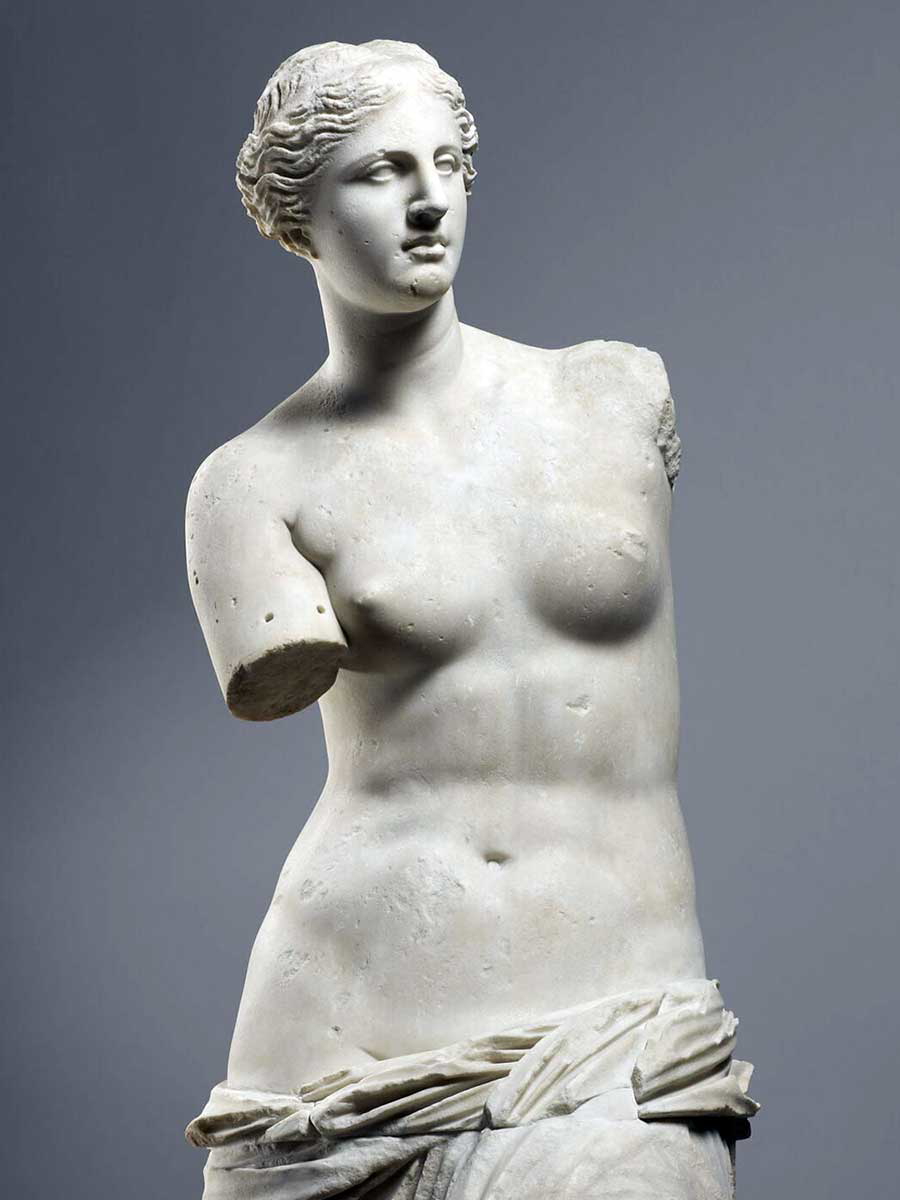
The Aphrodite of Melos, or Venus de Milo, was found in 1820 on the small Greek island of Melos. Yet it could have been at the center of a dynamic shift in style in sculpture, as the Venus de Milo confirms.
The Venus de Milo combines different styles of sculpture so cleverly that scholars were initially convinced it belonged to the Classical period. But the beautifully executed drapery is definitely Hellenistic. The Venus de Milo is an original creation. Interestingly, the sculpture was found inside a Hellenistic gymnasium. These were places for athletic or military training, but were also educational and cultural institutions where new subjects, such as philosophy, were taught.
The feminine Aphrodite is often referred to as the goddess of love. Still, in the context of the gymnasium, we gain a new perspective on the breadth of her influence in Hellenistic society.
7. Barberini Faun
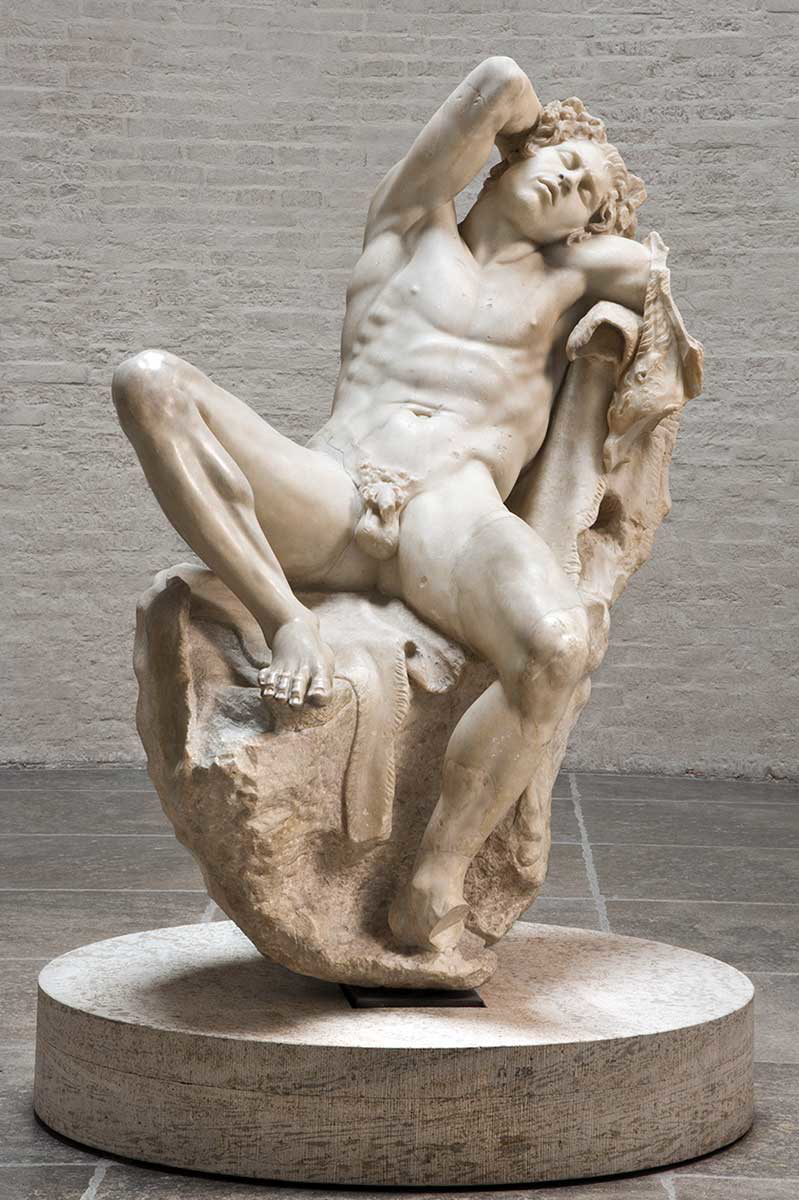
During the Archaic and Classical periods, sculpture was primarily displayed in religious or commemorative settings, such as temples or grave sites. But things changed during the Hellenistic period. Statues began to decorate private spaces, such as homes, gardens, clubhouses, and libraries.
This is obvious in the case of Aphrodite. But there is something new with the Barberini Faun, a sculpture of a drunken satyr sleeping. It is openly sexual, even vulgar. The piece dates to the 2nd century BC.
The sculpture was found in Rome in 1620 and was badly damaged, missing the right leg and part of the head. Although male nudity was nothing new in Greek art, the up-front sexuality of the pose was something not seen before. The pose of the satyr, lying in oblivion, straightforwardly invites the viewer to the role of the voyeur.
8. Laocoön Group
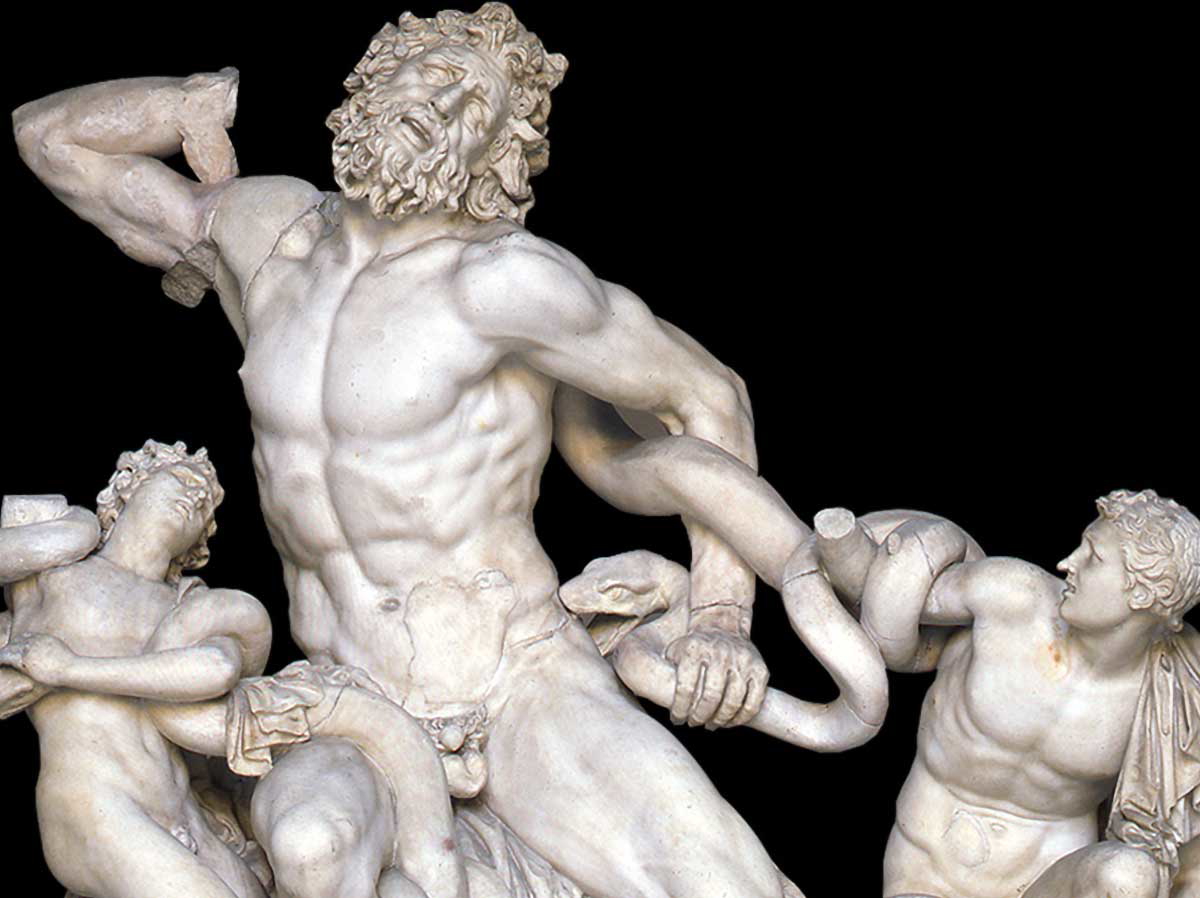
An ancient text by Pliny the Elder describes a powerful sculpture that captured the drama of myth like nothing else. The Laocoön Group depicts Laocoön, a Trojan priest, and his two sons struggling in the grip of snakes. In 1506, a magnificent marble group matching Pliny the Elder’s description was unearthed, created by three Rhodian sculptors. Its discovery immediately fascinated Renaissance artists, and Michelangelo himself was present at the excavation.
The sculpture showcases incredible mastery in capturing extreme emotion, provoking movement, and representing detailed human anatomy. The intertwined bodies of Laocoön and his sons convey agony and despair, expressed vividly in their facial expressions and tense, writhing forms. The sculpture tells the full story of their struggle while exemplifying the dramatic style of Hellenistic art.
Its influence has been far-reaching: the Laocoön Group has inspired countless writers, painters, and sculptors, and has become one of the most studied and celebrated examples of ancient Greek sculpture.
9. Nike of Samothrace
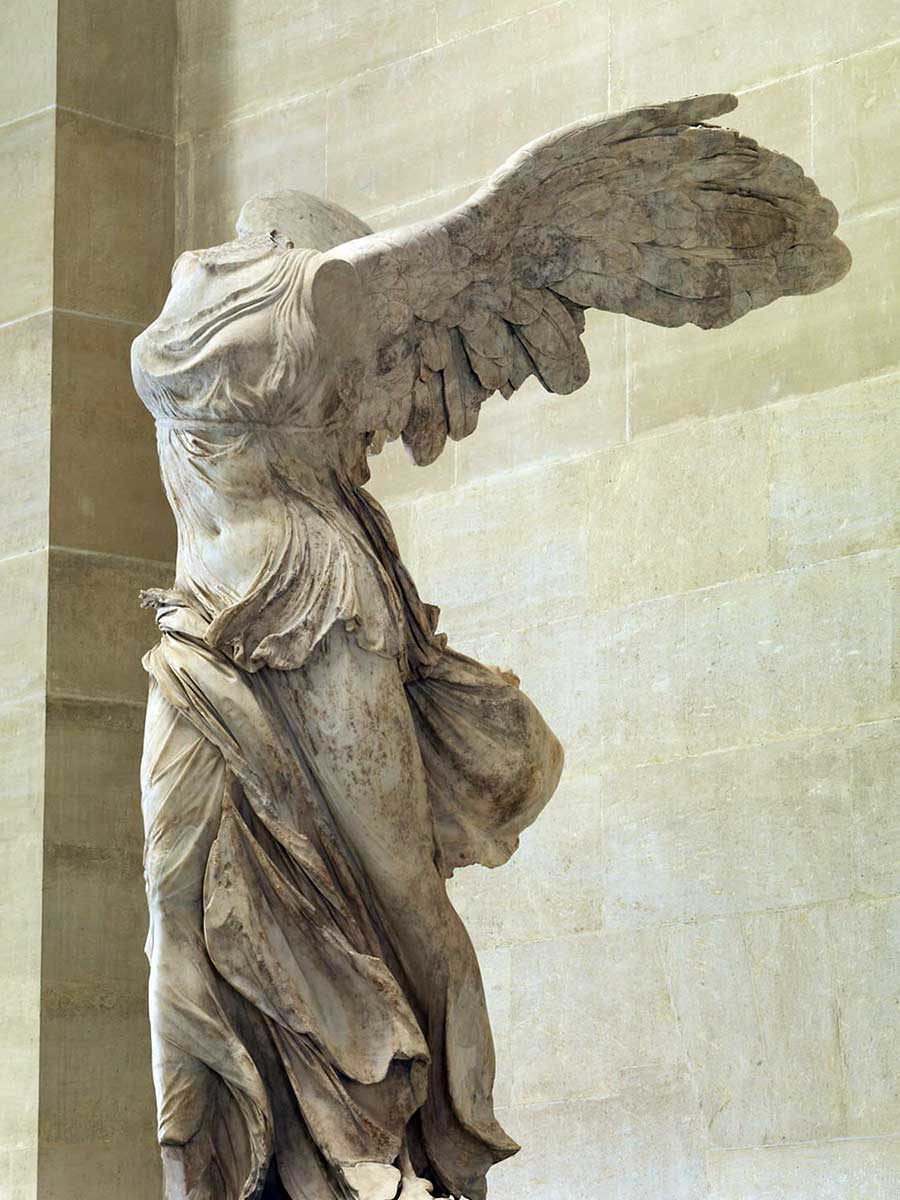
In the case of the Nike of Samothrace, the goddess of Victory is shown majestically alone. The sculpture is also known as the Winged Victory of Samothrace, reflecting the ethos of the moment it was created to commemorate. Nike has just landed gracefully, with wings still in mid-air, on the deck of a ship to announce a victory. The goddess is wearing a long, belted himation dress with the fabric clinging around her body, creating an effect that is both sensual and dramatic.
The Nike sculpture is 9 feet (275 cm) tall, and with its base, it is over 18 feet (550 cm) tall. It was discovered in 1863 on the island of Samothrace in the Northern Aegean Sea. Stylistically, the sculpture mixes traditional elements with newer ones. During the middle of the 2nd century BC, a revival of classicism became typical in sculpture and Hellenistic art in general. The Nike of Samothrace dates back to c. 200–190 BC.
10. Boxer at Rest
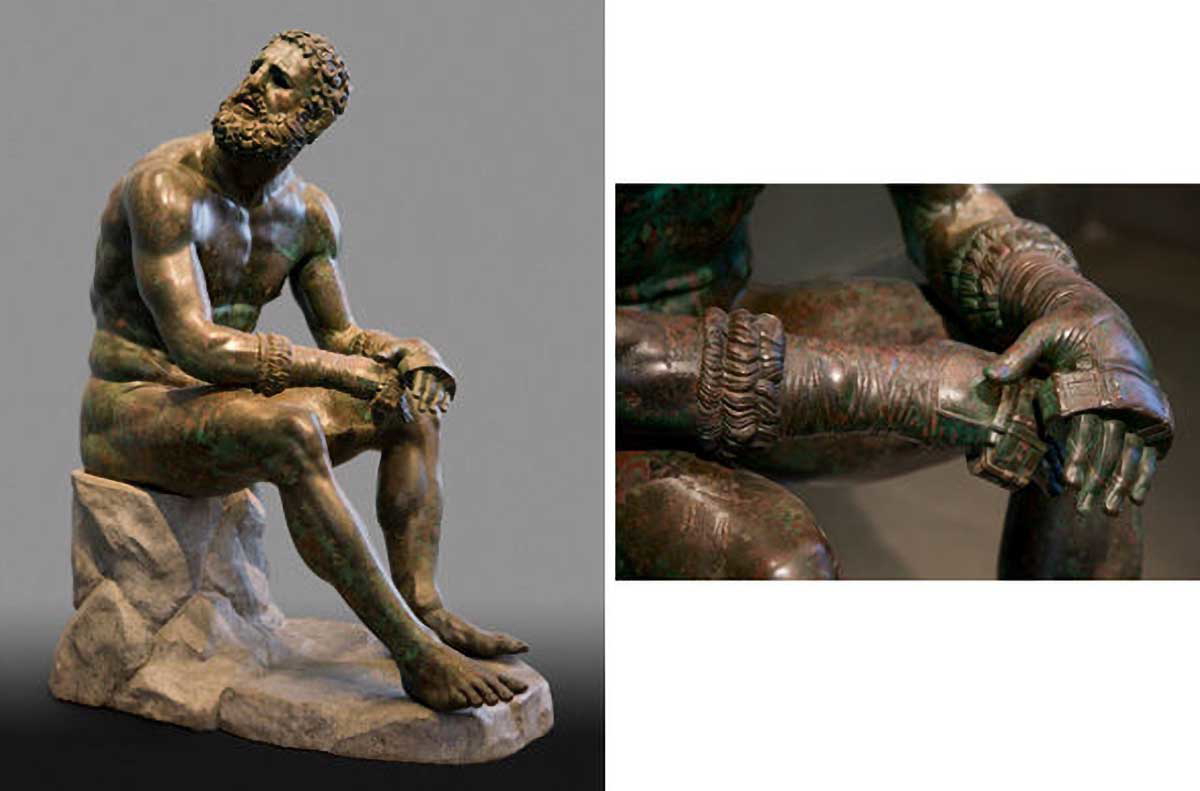
During the Hellenistic period, Greek art shifted from religious themes to focus more on human experiences and realistic portrayals. The Boxer at Rest, also known as the Terme Boxer or Boxer of the Quirinal, is a bronze sculpture dating to around the 4th or 3rd century BCE. It was discovered in 1885 during construction works near the Baths of Constantine on the Quirinal Hill in Rome, Italy. The statue is currently displayed at the Terme Museum in Rome.
The Boxer at Rest is a life-size representation of a weary and wounded boxer. He is seated, looking slightly up as if asking for mercy. His exhaustion and suffering are shown with incredible realism. He has a battered face and swollen ears and is covered in bruises. Along with his physical wounds, his psychological torture is clearly presented. Although muscular and powerful, he is also vulnerable. This was the complete opposite of the idealized beauty of the earlier athletic sculptures. It was likely created for a dramatic purpose, and even today, this piece can still provoke deep emotions.
10 Must-Know Ancient Greek Sculptures (Quick Reference)
| Sculpture | Date | Period | Current location | Why it matters |
| Kroisos Kouros | c. 530 BC | Archaic | National Archaeological Museum, Athens |
|
| Charioteer of Delphi | c. 478–470 BC | Early Classical | Archaeological Museum of Delphi |
|
| Discobolus | c. 450 BC (original) | Classical | Roman copies in several museums, including the British Museum |
|
| Aphrodite of Knidos | c. 4th century BC | Late Classical | Known from Roman copies in several museums |
|
| Artemision Bronze | c. 460–450 BC | Early Classical | National Archaeological Museum, Athens |
|
| Venus de Milo | c. 150–125 BC | Hellenistic | Louvre Museum, Paris |
|
| Barberini Faun | c. 220 BC | Hellenistic | GlyptotheMünichich |
|
| Laocoön Group | c. 40–30 BC | Hellenistic | Vatican Museums |
|
| Nike of Samothrace | c. 200–190 BC | Hellenistic | Louvre Museum, Paris |
|
| Boxer at Rest | c. 4th–3rd century BC | Hellenistic | Museo Nazionale Romano (Palazzo Massimo), Rome |
|