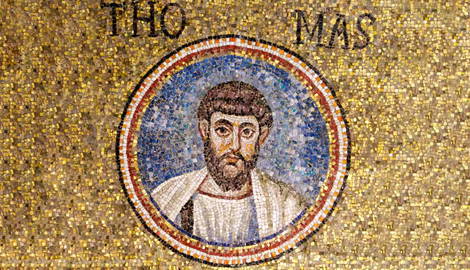
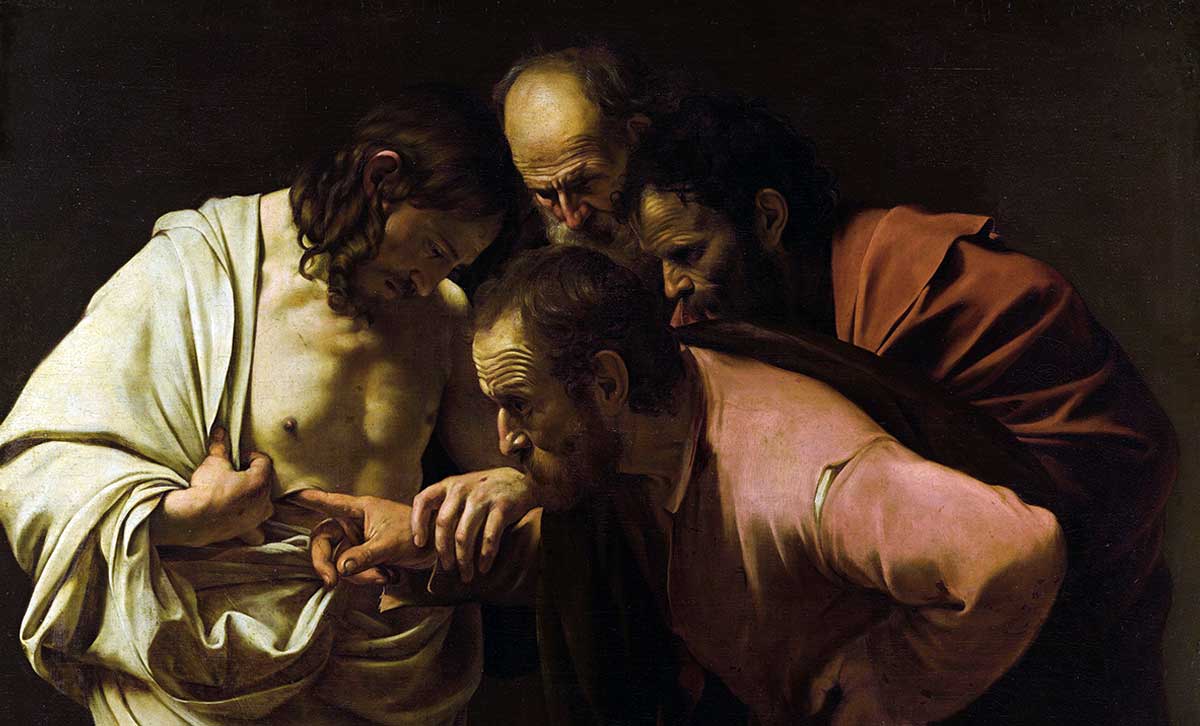
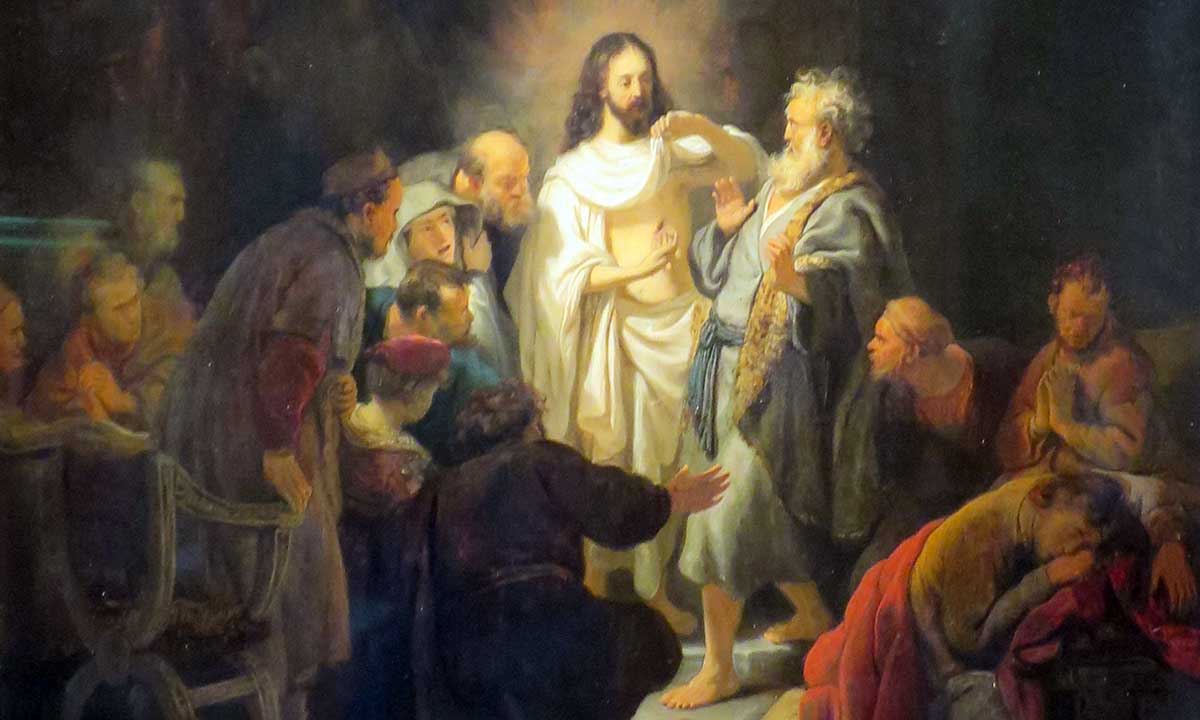
The New Testament’s depiction of Jesus’s disciple Thomas has given him the nickname “Doubting Thomas.” Yet, ironically, according to church tradition Thomas’s faith in the risen Christ drove him to evangelize a greater distance from Palestine than even the Apostle Paul reached in his storied missionary journeys in Anatolia and Europe. Thomas may have gone as far as South India with the Christian gospel, establishing multiple churches along the way and eventually dying as a martyr on Indian soil.
Various Sources Claim that Thomas Went to India
When reconstructing the histories of ancient Christian figures like Thomas, historians often must rely on sources that contain legendary material. This is partly why it is customary to qualify historical claims with phrases like “according to tradition.”
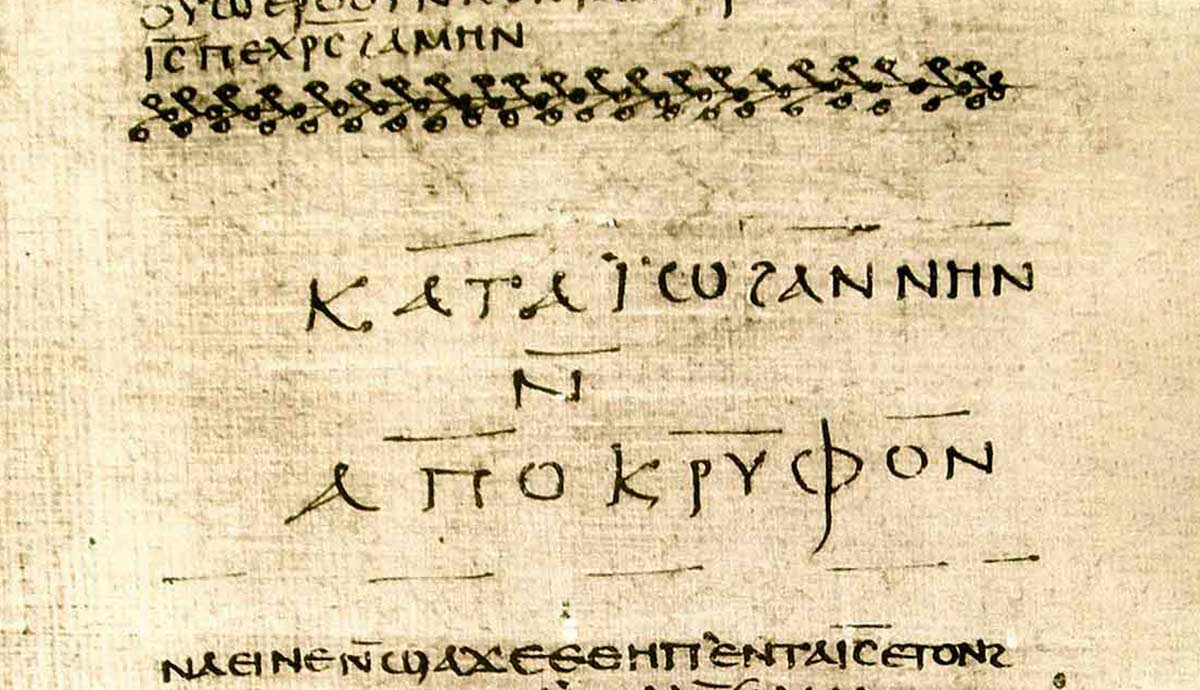
A key source for the life of Thomas is an early third-century work entitled The Acts of Thomas. This work is counted among the many pseudepigraphical narratives about the infancy years of Christianity, which tend to contain accounts deemed unreliable by modern historiographical standards. While The Acts of Thomas’s historical value is compromised as a result, the fact that a document about Thomas’s activities in India was being read in the third century suggests that both Thomas’s ministry and the backstory of the church in India were of interest to Christians in the early church. Ancient Christian writers from diverse areas also wrote of Thomas’s ministry in India.
Thomas May Have Journeyed Multiple Times to the Indian Subcontinent
Due to lack of detail, the textual sources on their own cannot establish that Thomas actually made it to modern South India. Still, some historians cautiously believe that Thomas may indeed have preached in this area.
It is possible that, like the Apostle Paul, Thomas made multiple missionary journeys. He may have first crossed the Parthian Empire, arriving in what is now northern Pakistan. Then, it is possible that he returned to Jerusalem, from whence he was then sent out again to the Malabar Coast on the southwestern shore of India in what is now the state of Kerala. A living tradition in this region claims that he planted seven churches before departing to the other side of the Indian Peninsula.
Tradition Says that He Died in India
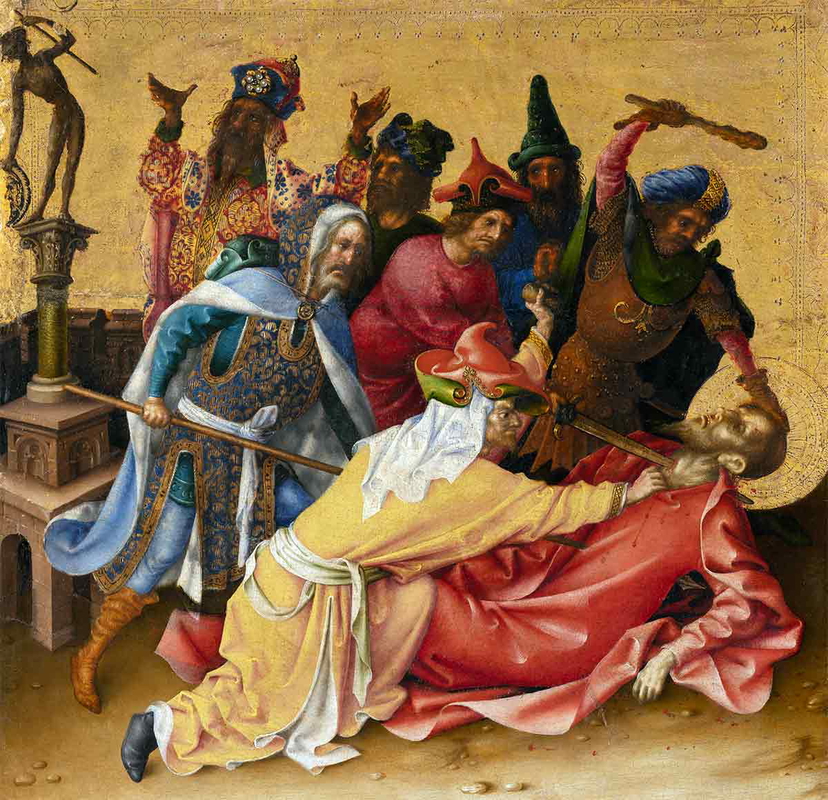
The hypothesis that Thomas went to the Indian Subcontinent (which includes modern Pakistan) more than once is derived by reconstructing the pieces from Eusebius’s Church History, The Acts of Thomas, and the living folk tradition in South India. However, it is difficult to corroborate details. Some traditions also have Thomas preaching in Africa.
According to folk tradition, Thomas is said to have continued from Kerala to Madras, now Chennai in the state of Tamil Nadu on India’s eastern coast, to evangelize further. There, however, he was forced to flee to a cave outside of the district of Mylapore to hide and pray. When local leaders send a posse in pursuit, Thomas runs to the top of a small mountain. But he is found, stoned, and then killed with a javelin.
Versions of this tale conflict in their details, but all end with Thomas’s execution. The mountain where this is said to have happened is now known by his name.
Santhome Basilica Marks St. Thomas’s Tomb in Chennai
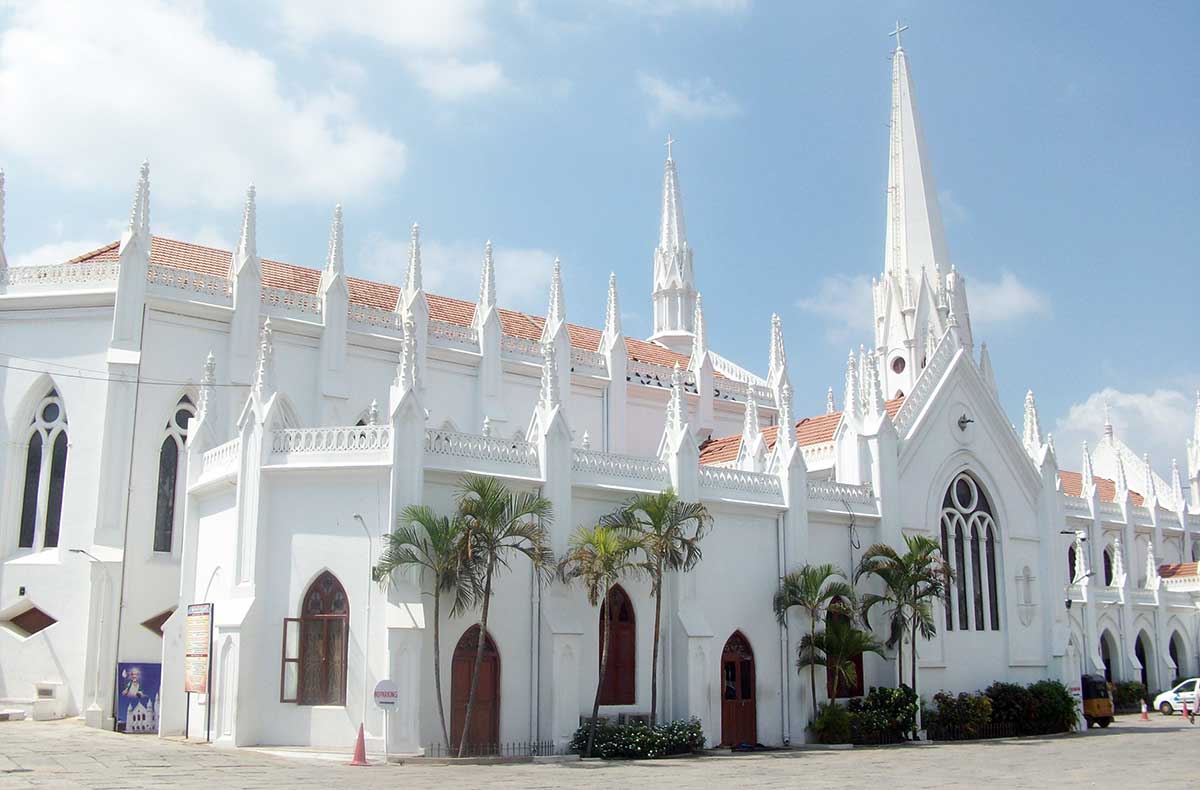
When Portuguese missionaries arrived in Madras in the 1520s, they requested sponsorship from the Portuguese King, John III, to build a church over Thomas’s tomb. Though an ancient church stood over Thomas’s tomb at that time, it had apparently been sorely neglected and was deteriorating beyond repair.
The new church, which was smaller than the old one, was finished in 1523 and called the Santhome (Saint Thomas) Basilica. Later in 1896, British colonists replaced the Portuguese building with a majestic Gothic-style cathedral.
Many “Thomas Christians” Still Worship in India Today
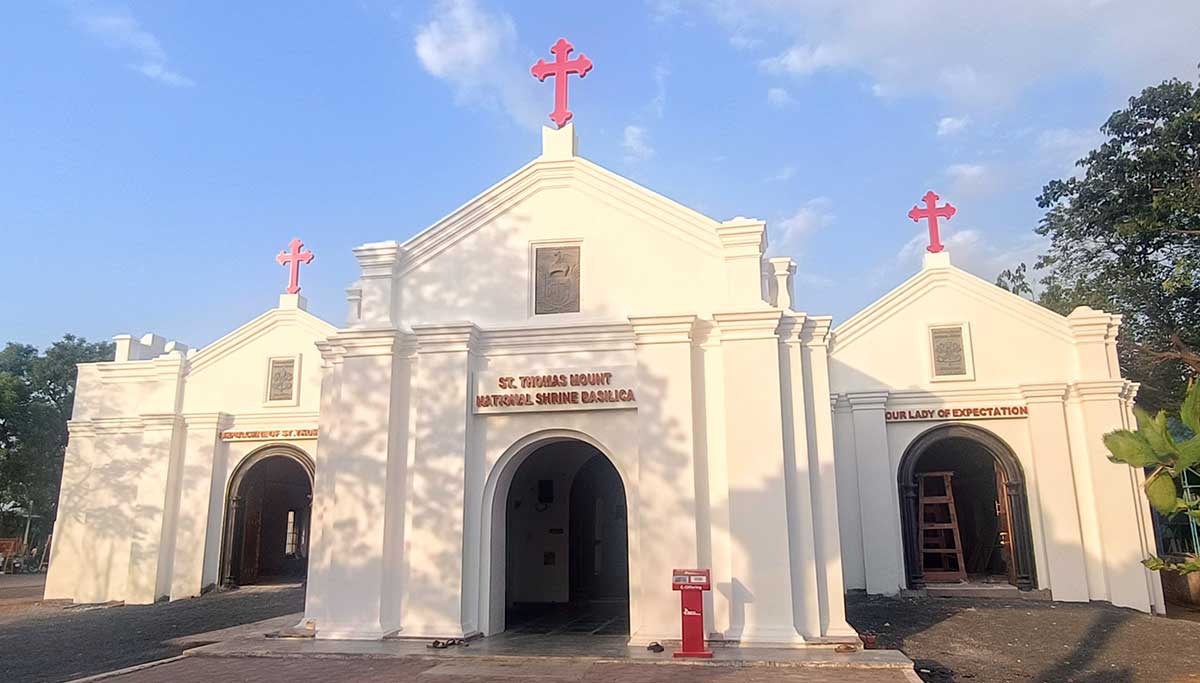
While the details of the story of St. Thomas in India cannot be proven historically, and while some historians think Thomas was actually killed in Central Asia without ever reaching as far as South India, it is possible that Christianity was brought to India within the first two centuries of Jesus’s lifetime.
Today, Indian Christians who trace their faith back to Thomas are often called simply “Saint Thomas Christians.” Though some Thomas Christians have joined other Christian groups, most still worship in the ancient Syriac tradition that it shares with Syrian churches from Anatolia and Mesopotamia. They thus regularly animate a language that both Thomas and Jesus himself spoke. Formally, this ancient church is called the Malankara Orthodox Syrian Church, but is popularly referred to as the Indian Orthodox Church. By some estimates, there are around two million followers of this tradition in the world, most of whom still live in Kerala.