
New Amsterdam was the main port in the Dutch colony of New Netherland in North America. The Dutch were pioneers of modern commerce and the wealth generated by businesses in the city helped boost the Dutch economy and laid the foundations of New York’s reputation as a major financial center. The descendants of the Dutch settlers have continued to play a prominent role in business and politics.
A Trading Outpost Becomes a Port City
Between 1624 and 1664, New Amsterdam saw a major evolution in its role in the Dutch Empire. When the Dutch first took control of Lower Manhattan, they set about building a small colony that was envisioned to be a trade post. Goods from outlying farms and fur trappers would be sent to Dutch ports. However, few officials in the Dutch States-General thought that the city would become a major colonial and financial powerhouse.
This started to change when the Dutch West India Company lost its monopoly on trade in the port. More settlers were arriving and private businesses in Europe began investing heavily in the colony. This influx of capital proved to be decisive in New Amsterdam’s shift from a minor outpost to becoming a wealthy Dutch colony. The growth of the settler population created a middle class that stimulated growth from within the colony.
The city became a critical junction where goods from the Hudson River (furs and lumber) and the Chesapeake (tobacco) were collected and processed for shipment to Europe. Additionally, New Netherland was located in a region of North America with an abundance of natural resources. This appeal extended to European businesses, even those from outside of the Netherlands. The woodlands provided plenty of material that was in high demand by the booming Dutch shipbuilding industry.
The Fur Trade and Atlantic Commerce
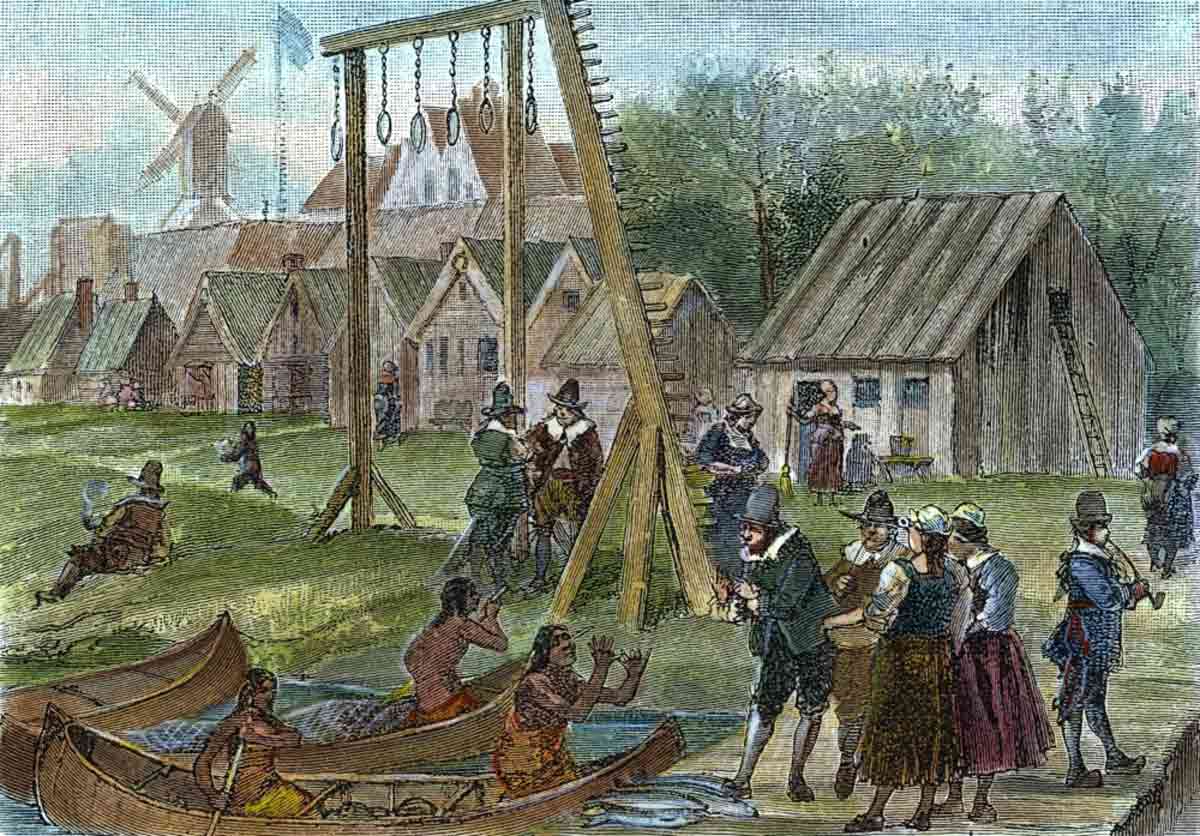
There was high demand for North American furs for winter clothing in 17th-century Europe. Beaver fur was uniquely prized for its short, barbed under-hairs, which locked together to create a durable, waterproof felt. Overhunting meant that beavers were almost extinct in mainland Europe and Russia. Therefore, supply of beavers from the Americas proved to be a boon to European fur traders.
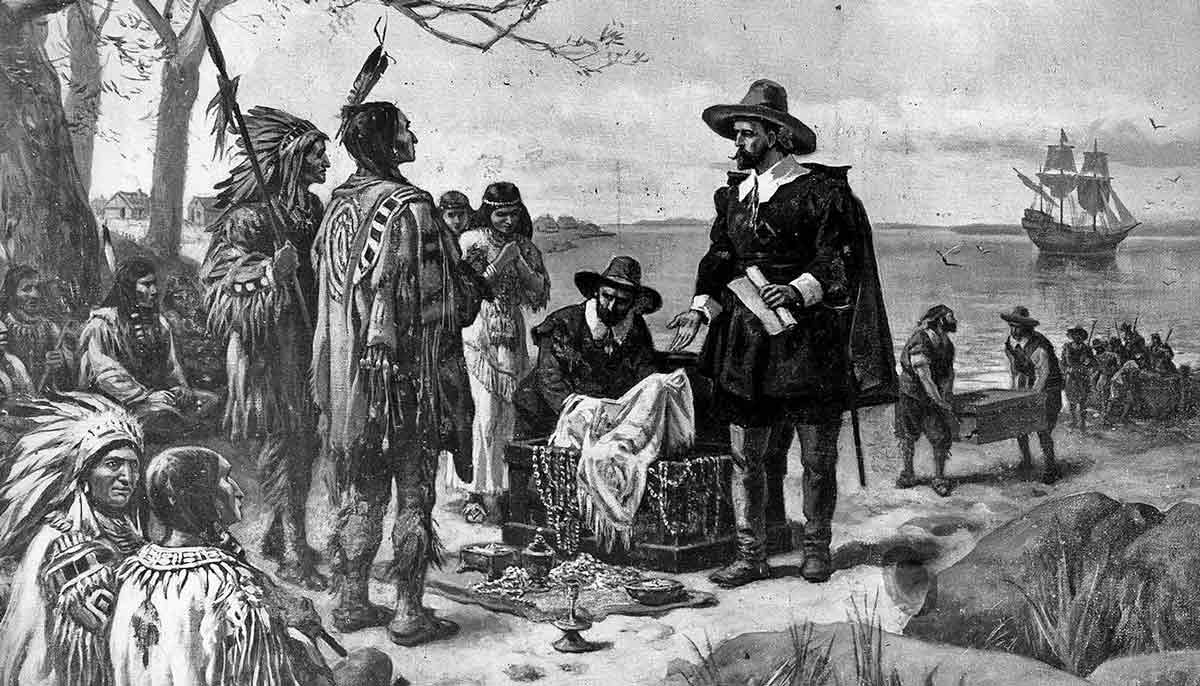
New Amsterdam proved to be a vital node in the global fur trade network. European settlers traded with Indigenous tribes in the New York area, especially the Mohawks and the Haudenosaunee. Furs were brought from the Great Lakes region to Fort Orange, now located in Albany. From there, they were transported down the Hudson River to New Amsterdam and then sent overseas.
The trade was immense for its time; between 1626 and 1632 alone, more than 52,000 pelts were shipped from New Amsterdam to the Netherlands. At its peak in 1657, over 38,000 pelts were traded in a single year, and at one point beaver pelts became local currency owing to a shortage of coins in the colony.
Dutch traders gave wampum beads to the tribes in exchange for the pelts, solidifying a dense trade network throughout the colony. While the trade fostered a mutual dependency, it also led to severe overhunting, the displacement of Indigenous societies, and the introduction of European diseases and weaponry into local power dynamics.
Dutch Commercial Institutions
The Dutch colonial government managed to set up commercial institutions fairly quickly when the colony was developing. The biggest company operating in New Netherland was the Dutch West India Company, which had been given a charter in 1621 by the States-General. The company held nearly absolute administrative, judicial, and military power. It appointed all governors and regulated all trade through its “staple port” policy in New Amsterdam.
In 1653, the Court of Burgomasters and Schepens was set up to regulate markets, oversee public finances, and maintain urban infrastructure. It created stability for international commerce to flourish beyond the Company’s direct control. This was done in response to the growing middle class in the city and the removal of the Company’s monopoly.
Several other institutions proved vital for the colony. A weigh house was set up where all goods were officially weighed and taxed, ensuring standardized and fair trade practices. The Broad Street Canal functioned as a logistical hub, allowing small boats to float into the heart of the city to unload goods directly into the warehouse district. These institutions made New Amsterdam one of the main commercial centers in colonial America and laid the groundwork for New York’s economic prosperity in later centuries.
The City’s Diversity and Its Economic Impact
While New Amsterdam was a Dutch colony, its population was very diverse by design. The Dutch government hoped that, by attracting talent from all over the world, they could turn New Amsterdam into an economic powerhouse. In the 1640s, observers noted that as many as 18 languages were spoken in the colony. This especially became the case after the Company’s monopoly on trade was lifted.
Different communities specialized in different areas of the economy. For instance, Walloon and German settlers often focused on farming and building the colony’s physical infrastructure, while Dutch and English merchants managed the export of beaver pelts and tobacco. Slaves imported from Africa helped construct much of the colony’s infrastructure and Indigenous peoples across the colony were vital in supplying the furs.
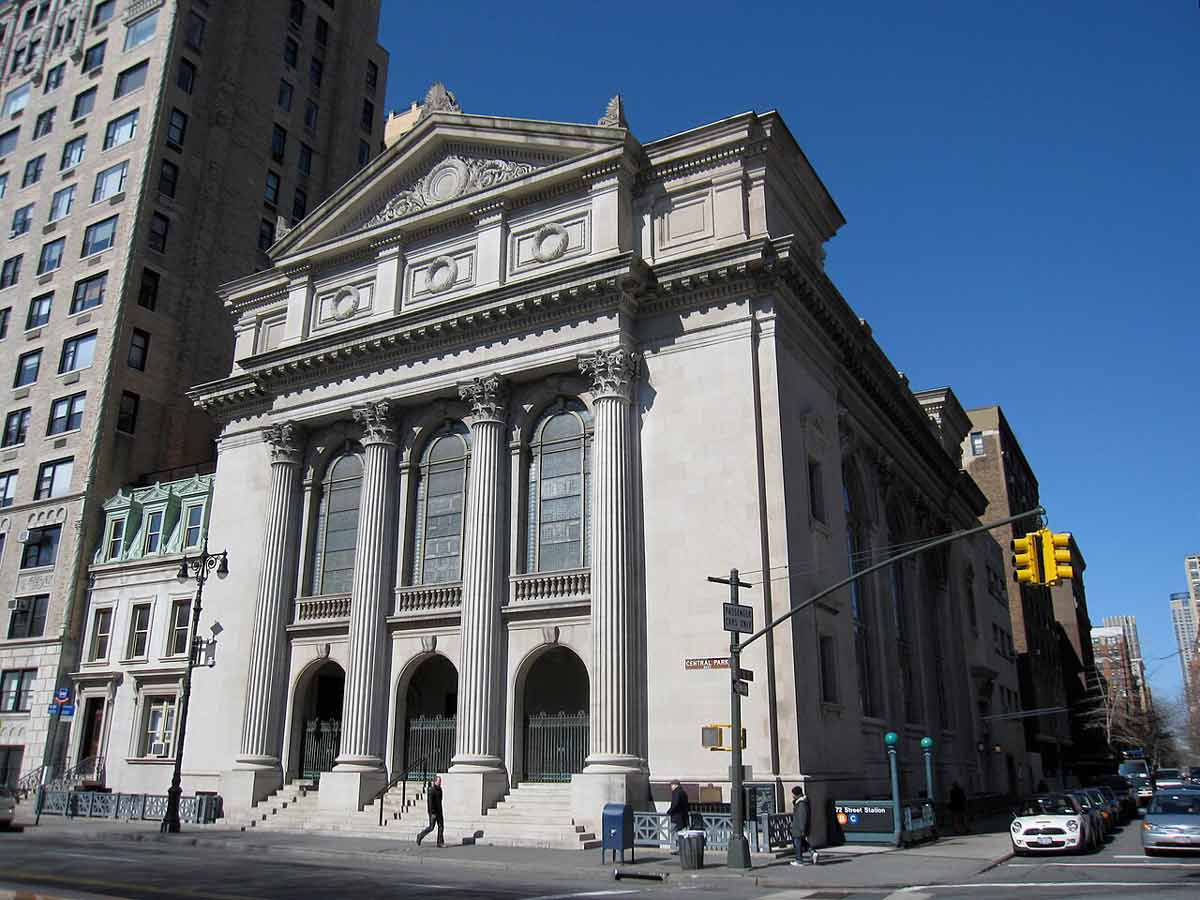
New Amsterdam also witnessed the arrival of a small contingent of Jews from Brazil in 1654. Initially, Director-General Peter Stuyvesant rejected their presence, claiming that they would undermine the Christian community. However, the Company ordered that they be admitted and, over time, they integrated into the city’s life. Most of them would set up their own small businesses or worked for the Company.
Urban Growth, Land, and Labor
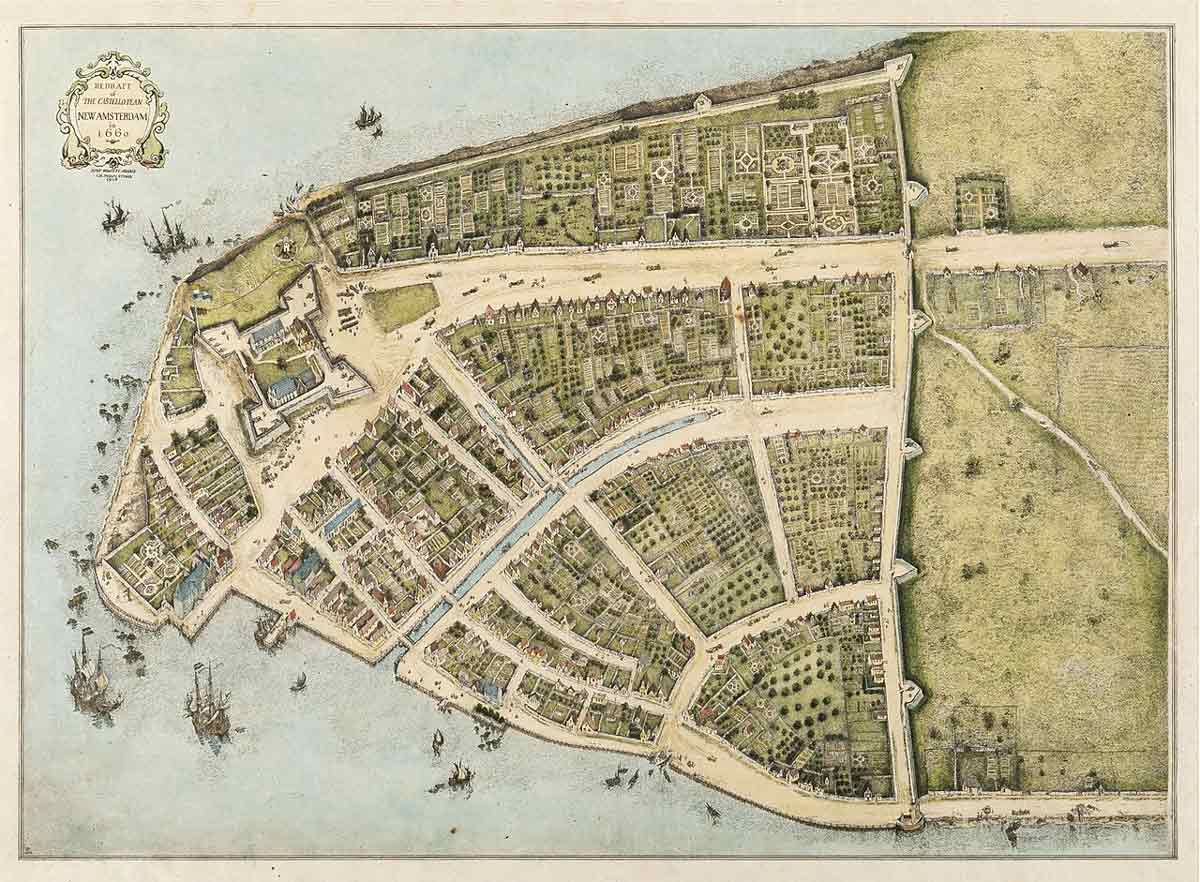
New Amsterdam’s growth followed a trajectory from a fortified town model to a more organic, commerce-driven urban landscape. Initially, the settlement was based around Fort Amsterdam because the ramparts could protect settlers from local tribes. It resembled the medieval-style walled towns common throughout the Low Countries. As the decades went on, population growth expanded the city and the Company established a regime of building codes and regulations.
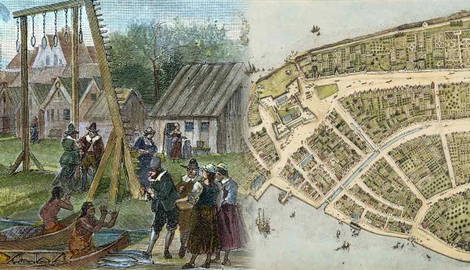
By 1660, the city had reached its peak Dutch density with approximately 300 houses serving a population of roughly 1,500 people. The surveyor Jacques Cortelyou created the Castello Plan, a map showing the layout of New Amsterdam in great detail. The development of the city fundamentally altered the landscape. Approximately 50% of Lower Manhattan south of City Hall is the result of land reclamation that began during the Dutch period.
Contrary to Manhattan’s famed grid pattern of streets, New Amsterdam’s roads followed the terrain. This can be seen in Lower Manhattan today, where the streets often curve and follow irregular patterns. This only changed after the English took over and began expanding the city. They did keep many of the Dutch regulations in place, such as the 25′ x 100′ lot size.
The Transition to English Rule
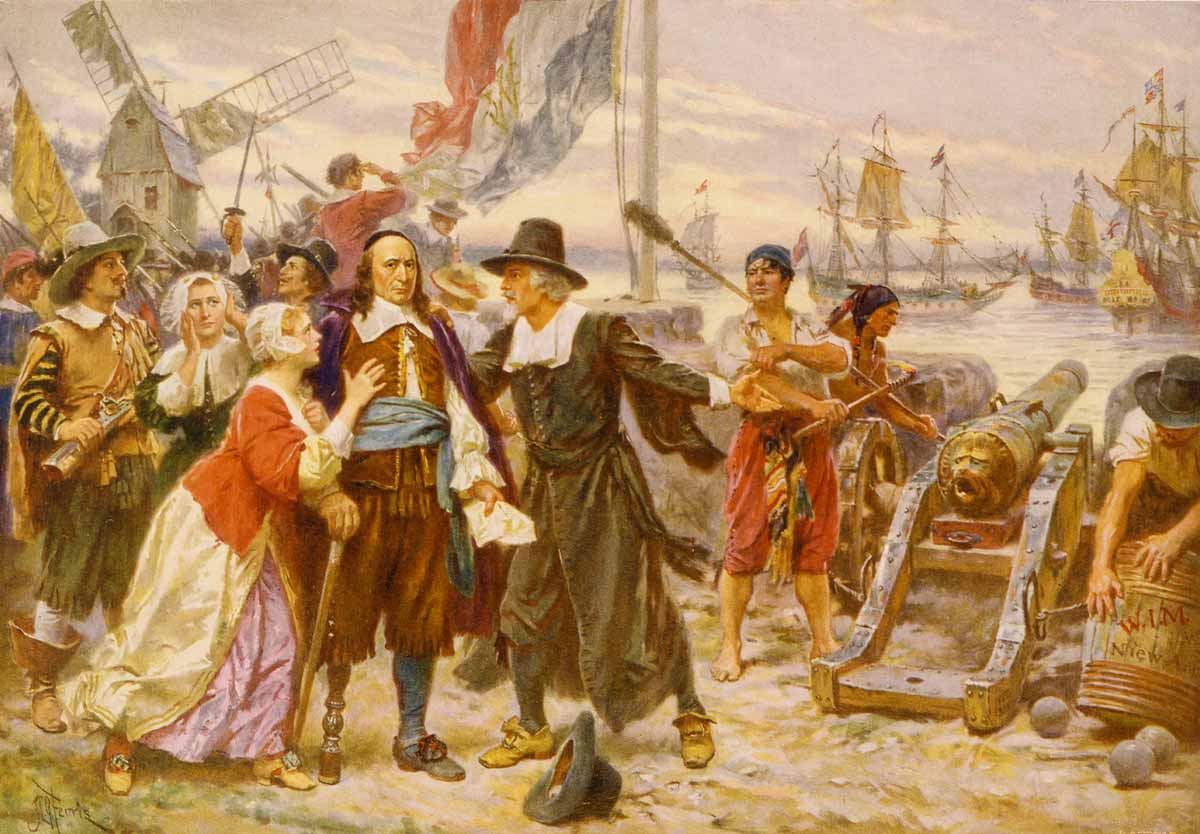
In 1664, King Charles II of England granted his brother, the Duke of York (the future King James II), a charter to claim all of the Dutch territory in North America by conquest. The English and Dutch were engaged in a fierce commercial rivalry and New Amsterdam was an attractive target because of its strategic location and the Dutch government did not allocate meaningful resources to its defense.
In August 1664, an English fleet arrived off the city’s shores with several hundred troops aboard. Stuyvesant hoped to fight, but the local merchants begged him to surrender the city, fearing that the warships’ guns would destroy their businesses. Stuyvesant was forced to capitulate on September 8, 1664, and New Amsterdam was renamed New York in honor of the Duke of York. The Dutch briefly retook the city in 1673 but relinquished it permanently under the terms of the Treaty of Westminster in 1674.
The English did not want civil unrest after seizing the colony, so they kept the economic infrastructure in place. Many of the Dutch merchant families remained there and were still the dominant class of society for many decades. The influx of Europeans in North America led to the further expansion of the city, stimulating further the future growth of New York’s economy. The main difference was that exports now went to England instead of the Netherlands. The commercial legacy of New Amsterdam was sustained beyond British rule to the independent United States all the way to the present day.