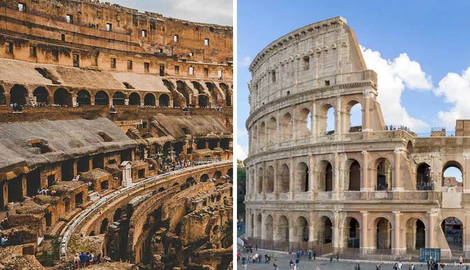

Also known as the Flavian Amphitheater, the Colosseum in Rome is far more than a gladiatorial arena. It is a monument of immense proportions beyond its physical size. In its heyday, it was a powerful propaganda symbol and an engineering marvel, featuring ingenious innovations.
With many high-tech innovations, the Colosseum served function as well as form, and helped maintain social order in the heart of the Roman Empire. Here are 7 of the Colosseum’s most incredible engineering marvels.
The Site: Erasing Nero
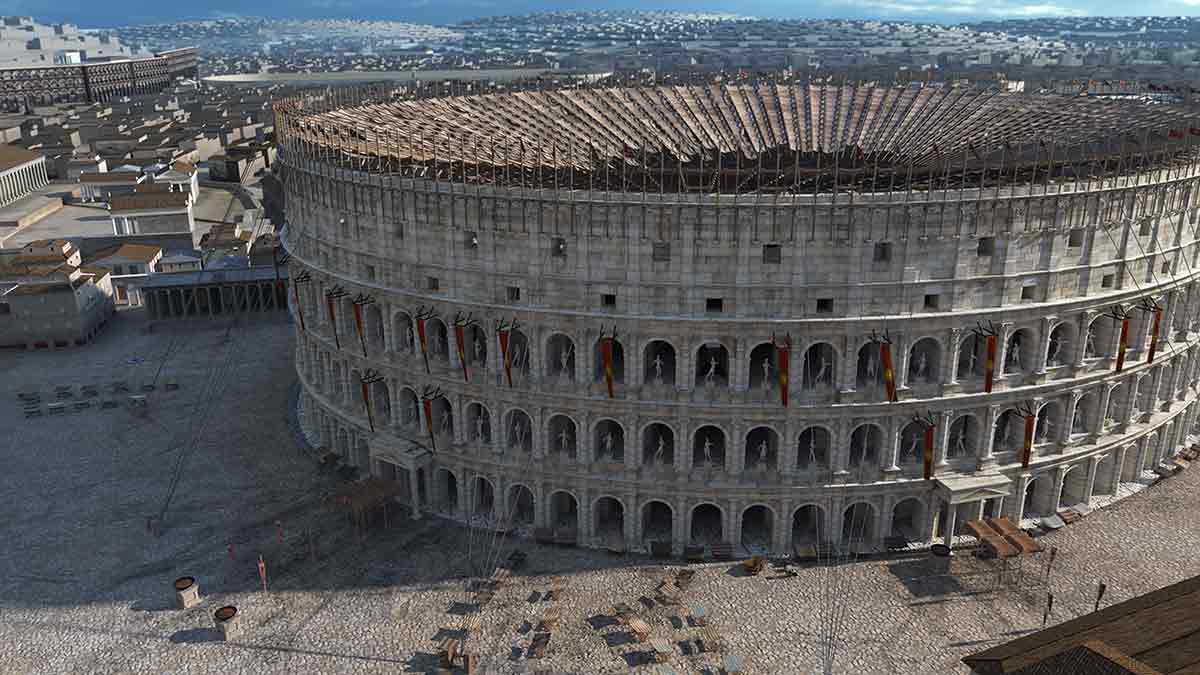
Deciding where to build the Colosseum was not merely a matter of pragmatism. It was a decision informed by propaganda, sending a direct message regarding the rule of Emperor Nero, whose tyrannical and debauched reign ended in 68 AD. In the heart of Rome, he had his palace, the Domus Aurea. The area it covered was once home to thousands of Roman citizens, and after it was destroyed in a fire, Nero seized it for his own pet project. When the misrule of Nero ended, much of the Domus Aurea was razed and its artificial lake filled in.
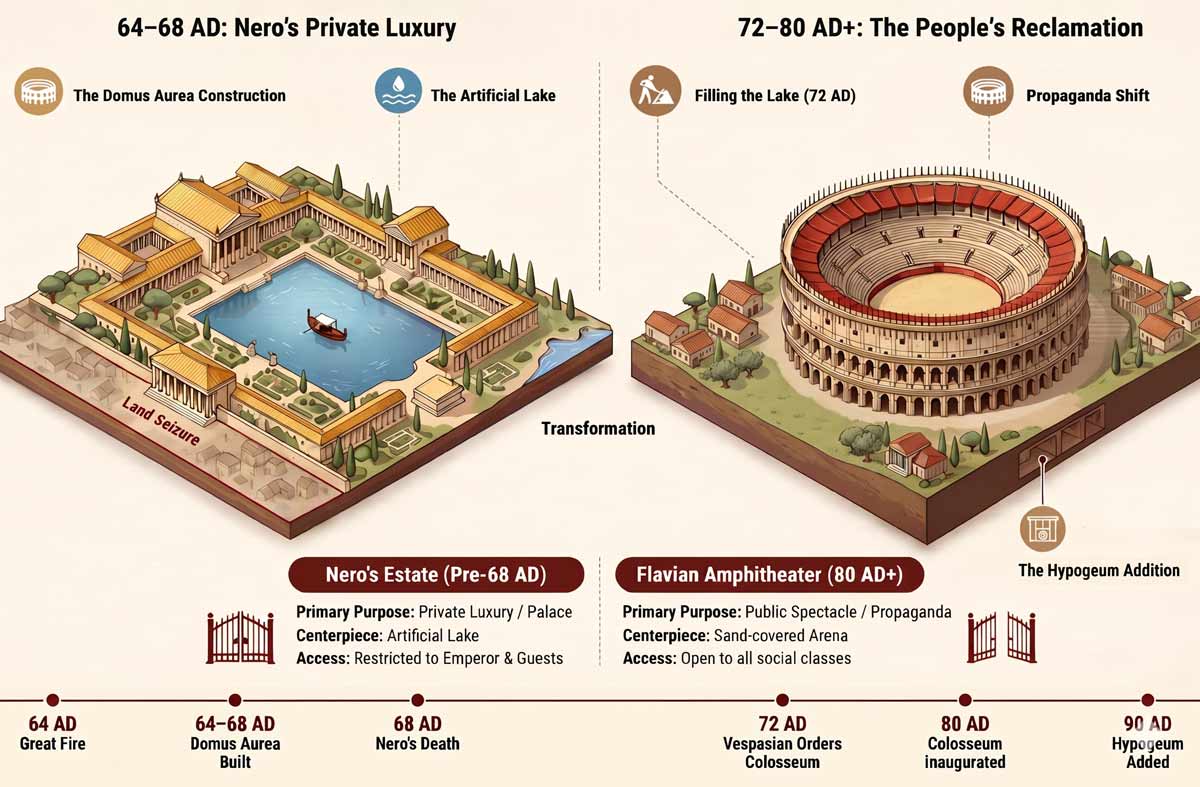
| Key Milestone | Historical Context |
| The Domus Aurea Construction | Following a fire in the heart of Rome, Emperor Nero seized land that once housed thousands of citizens to build his massive, opulent palace known as the Domus Aurea. |
| The Artificial Lake | As a centerpiece of this sprawling palace complex, Nero had a large artificial lake constructed for his personal enjoyment. |
| Erasing Nero’s Legacy | After Nero’s tyrannical reign ended in 68 AD, the Roman authorities razed much of the Domus Aurea and completely filled in the artificial lake. |
| A Powerful Propaganda Shift | Emperor Vespasian chose this exact site to build a massive new public stadium. Building over Nero’s private lake was a deliberate propaganda gesture intended to symbolically return the land to the Roman people. |
| The “People’s Palace” | About ten years later, under Emperor Titus, the stadium was completed and opened with over 100 days of extravagant games. It became known as the Flavian Amphitheater. |
| The Hypogeum Addition | Around 90 AD, the Colosseum underwent a major update with the construction of a two-level underground labyrinth of corridors and elevators for gladiators and animals. |
The Colosseum was built on top of it; a gesture of giving the land back to the people. A few years after Nero’s death, while his rule was still fresh in the memory of the Roman people, construction began on the stadium, ordered by Emperor Vespasian. Around 10 years later, under the rule of Vespasian’s son, Titus, the Colosseum, the “People’s Palace,” was completed, and over 100 days of games were hosted with fantastic spectacles of wild animals and gladiatorial combat.
After Titus’ death in 81 AD, his younger brother, Domitian, became emperor and continued work on the Colosseum. Together, the three emperors were known as the Flavian Dynasty, and it was for them that the Colosseum was later given the name, the “Flavian Amphitheater.”
The Hypogeum: The Colosseum’s Backstage
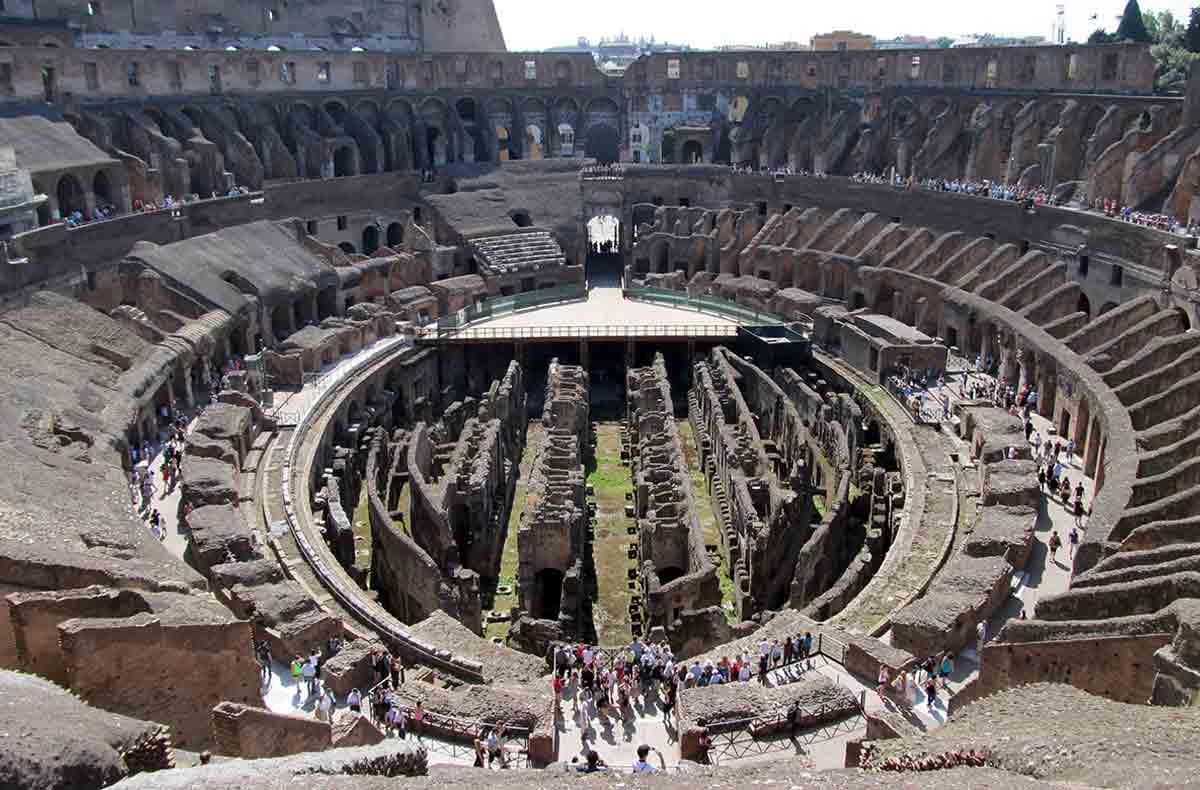
The sand beneath the feet of the gladiators of the Colosseum did not cover compacted dirt and stone, but the Hypogeum. This area was a two-level labyrinth of corridors and rooms that acted as a backstage for the spectacle above. The roof of this section (the floor of the arena) was wood covered in sand.
Dotted around the Hypogeum were around 80 vertical shafts, serving as elevators, which could hoist an imaginative array of things into the arena above, including gladiators and wild animals. The Hypogeum and the arena were also served by much bigger service elevators, which could handle set pieces and even elephants. All the inner workings were driven by teams of slaves working in the stuffy underground environment in near darkness, unseen by the roaring crowds above.
For the gladiators, the Hypogeum was connected via a tunnel to the Ludus Magnus, the primary gladiator training school in Rome, allowing fighters to enter the Colosseum unseen by the public. Elevators hoisted them into the arena and took them back down where the injured could be seen to in the Sanitarium, the Hypogeum’s field hospital.
Built around 90 AD, the Hypogeum replaced the ability of the Colosseum to be flooded, which was a unique feature in the early years which allowed for naval spectacles.
The Naumachia: Flooding the Arena for Naval Battles
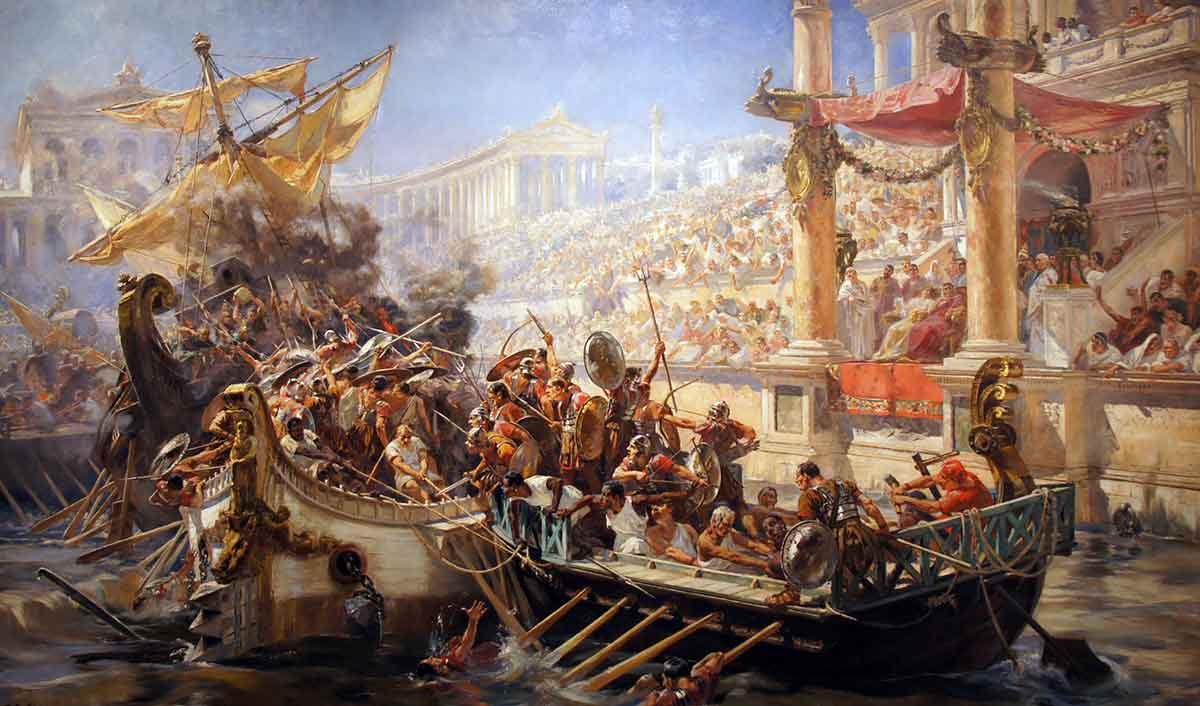
In the first few decades of the Roman Empire, mock naval battles called Naumachiae were held on specially prepared bodies of water, which, in later years, could be flooded arenas. The Colosseum hosted such events too, but the total area of the Colosseum provided a smaller spectacle than other venues. These battles were extremely costly and difficult to stage. They did not come close to the spectacle of staging the event on a lake, which allowed for far more ships and men to take part. Very few were held in the Colosseum before the construction of the Hypogeum precluded such events in favor of more elaborate land battles.
The Velarium: The Colosseum’s Retractable Roof
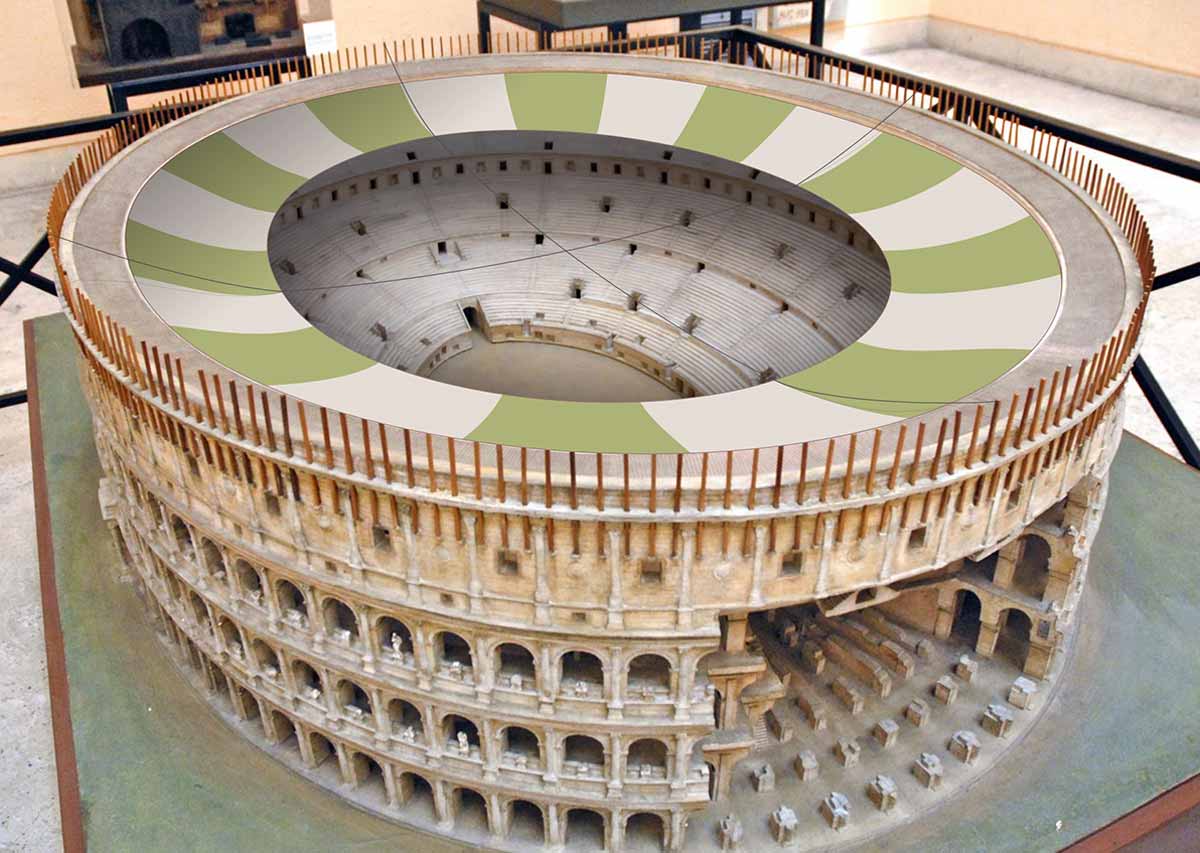
Providing shade for the spectators was a complex set of masts and sails, which could be extended and retracted. Exactly how is a matter of speculation, as it was a significant feat of engineering to provide shade for such a massive building, and the materials used have long since rotted away. Made from the same fabric as the sails on naval vessels, the awning was also operated by experienced sailors from the Classis Misenensis, the Roman imperial fleet based at Misenum. What hasn’t rotted away are the 240 corbels around the attic, which held the masts in place.
The Velarium didn’t extend across the entire arena, and combatants and performers were still under the spotlight of the sun; a design choice rather than a limitation. In hot weather, the opening at the top allowed for an updraft, providing much-needed ventilation. Due to its fragile nature, the awning was not used when there was heavy wind or rain, leaving everybody to suffer under the elements.
The use of velaria did not fade into obscurity. They are still used today, and many stadiums around the world have such sails supported by tension cables and rigging in a similar fashion to those used almost two millennia ago.
Concrete and Arches: Building With Strength and Scale
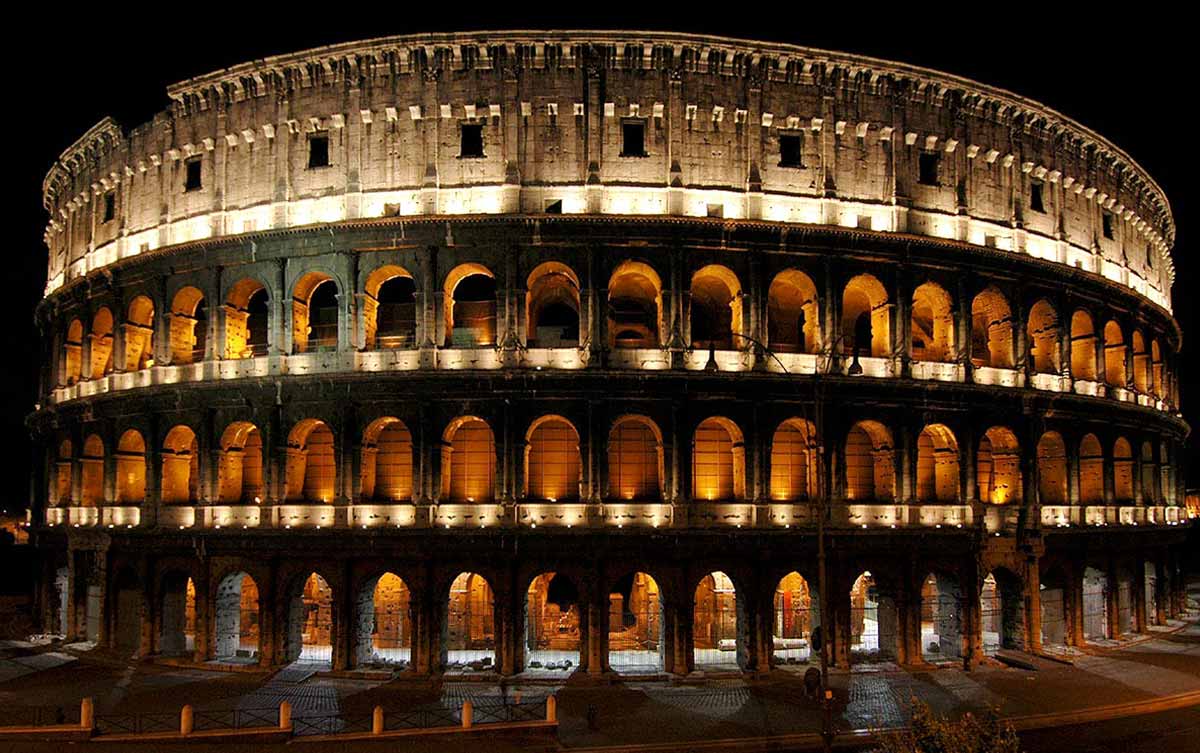
Building on such a grand scale required significant knowledge in architecture and construction materials. Multiple substances were used, such as travertine limestone, volcanic tuff, and brick. Of note was Roman concrete, which was an incredibly effective substance. Known as opus caementicium, it included volcanic ash, and like today’s concrete, it was a hydraulic-setting cement to which an aggregate of stone was added. The Roman buildings still standing today are a testament to its durability, a strength that allowed for the construction of the Colosseum’s vaulted arches.
Serving form and function, the Colosseum was built as an example of the pragmatism of arches. Lighter and stronger than a solid wall, arches channeled and distributed the weight of the structure, while the openings allowed for egress as well as sunlight and ventilation. The 80 arches on the ground floor served as an effective system for guiding and channelling spectators through multiple entrances and passageways to their designated seats.
Among the arches of the facade stand pillars, with each story representing a different architectural style. The first story has simple Doric columns, while the second has Ionic, and the third, Corinthian. The fourth story, added by Domitian, features flat Corinthian pilasters.
The Vomitoria: Organizing the Spectators
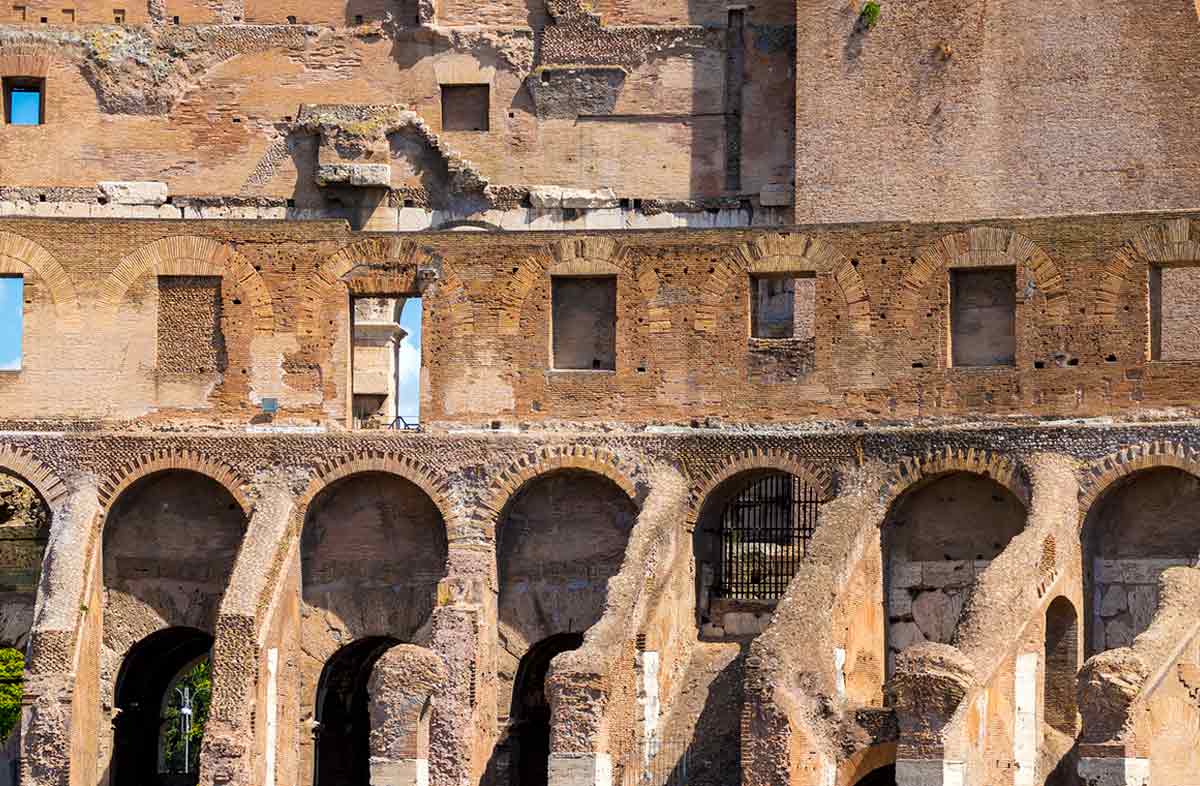
A word often misunderstood to refer to a place where Romans vomited after feasting, a vomitorium (pl. vomitoria) was a passage and set of stairs in an amphitheater where spectators could exit (and enter). It is derived from the Latin vomere, meaning to “spew forth.” With 80 arched vomitoria, 76 of which were for spectators, the Colosseum could fill with 50,000 people in just 15 minutes.
The vomitoria were also part of the system of social stratification, and led different classes of spectators to different parts of the stadium. Women and lower classes were relegated to the uppermost part of the stadium while senators and higher-ranking members of society sat in the lower parts, closer to the action.
The Architecture of Social Hierarchy
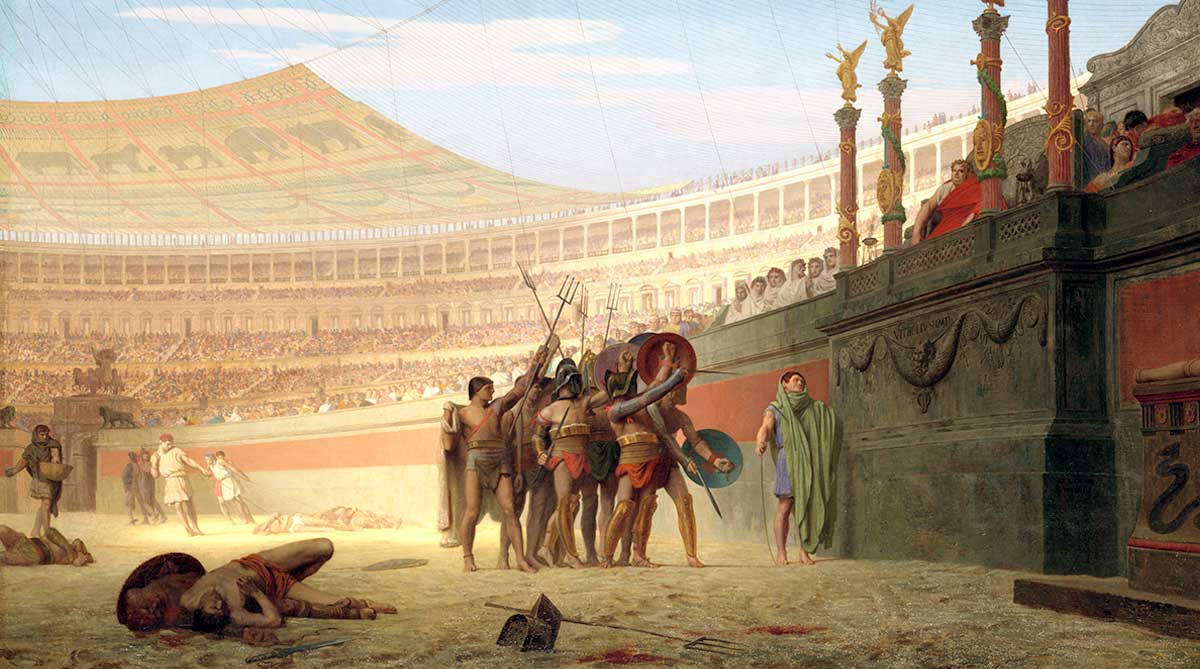
The Colosseum was carefully constructed to preserve and reinforce Rome’s social hierarchy, from slaves to commoners, and citizens to senators. Packed into a structure with a footprint of 620 by 513 feet (189 by 156 meters) and with a height of 12 to 15 stories, 50,000 to 80,000 people could be seated, representing the full gamut of Roman society. The cavea, the stepped seating plan, reflected the clear class divisions.
The first and lowest level was reserved for high society, with a box for the emperor and his family and guests, as well as a box for the Vestal Virgins. This level was filled with senators, the very pinnacle of Roman society. Seated above them were the equites, which included the business and administrative elite.
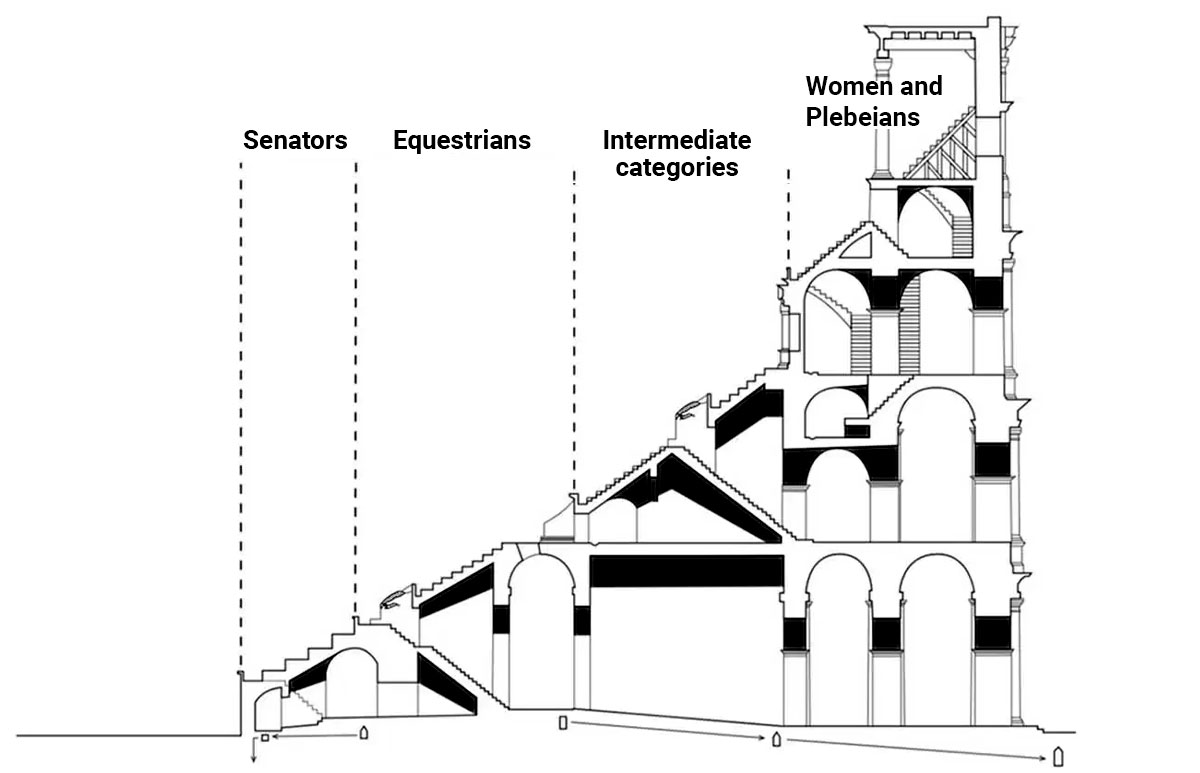
The seating area above the equites was known as the maenianum secundum imum, which sat the main body of society, further divided into subdivisions such as soldiers, married citizens, guild members, and many others. At the very highest level of the maenianum secundum summum, the fourth level, sat those who did not wear togas, known as the pullati. This group included slaves, freedmen, foreigners, and the poorest parts of society. Above them, still, were wooden bleachers reserved for women.
The Test of Time
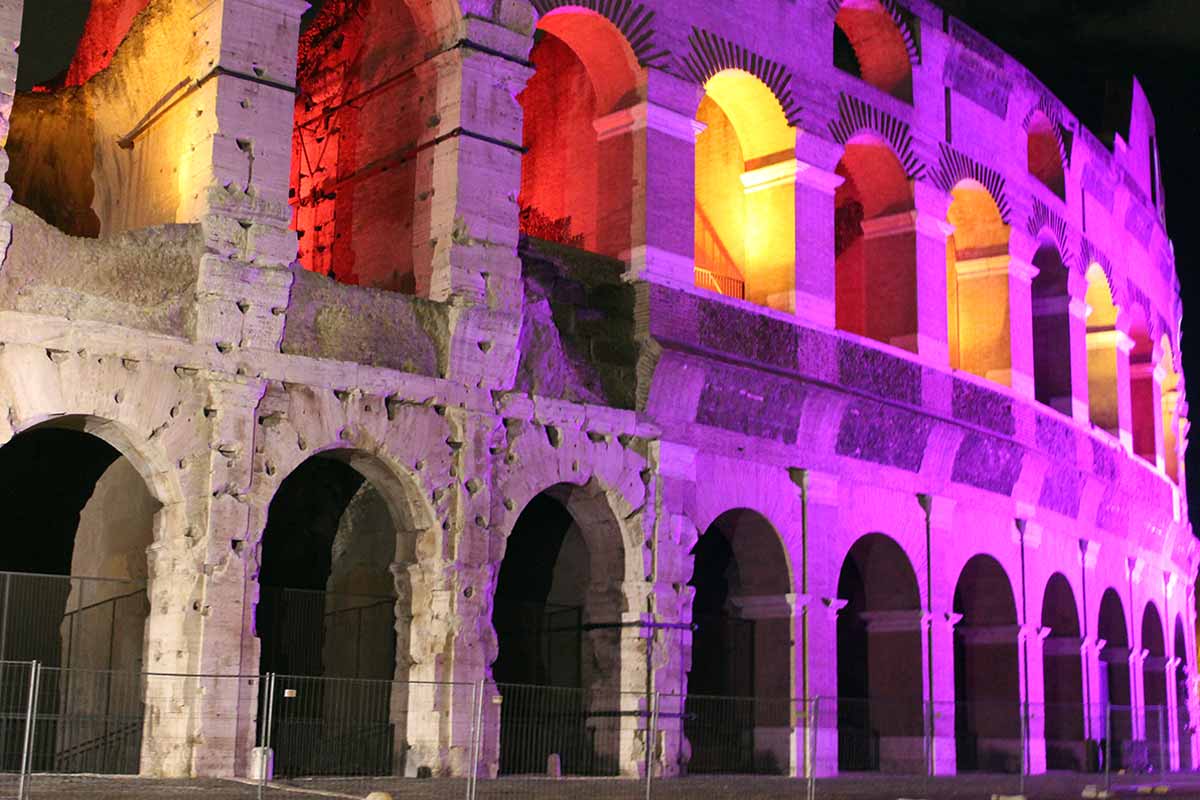
Built almost two millennia ago, the Colosseum is now a well-preserved ruin. Approximately one-third to a half of the original structure is still intact, having survived erosion, natural disasters, war, and pillaging. It was even used as a quarry, and much of its stone was pilfered to build other structures. Despite all this, it still stands in the center of Rome and is arguably the most famous landmark in the Eternal City. On occasion, it still serves as a spectator venue and has hosted several music concerts.