
Searching for the universal answers to the mysteries of life and existence, mankind has sought refuge in the arms of the divine for tens, possibly hundreds, of thousands of years. Over the last few millennia, beliefs have evolved into organized religions, shaping the world around them and guiding the course of human culture.
Here are some of the world’s oldest religions and the impact they had on history.
The Challenges of Defining the “Oldest” Religion

Defining facets of malleable concepts from human culture is a difficult proposition. More often than not, traditions don’t fit neatly into columns and boxes. They overlap and are subject to different definitions. Such is certainly true when deciding what constitutes the oldest religion.
Despite the blurry line, there are certain key elements that have to be present for a practice to be called a religion. Institutionalization is probably the biggest factor, and occurs when practices become solidified by a dedicated clergy and organized rituals that cross generations to become permanent fixtures.
There is no solid distinction separating the evolution of customs and traditions into what can be described as religion. And while some religions have traditional founding dates, others evolved over time from oral traditions and practices that cannot be traced to a single point in time. In such cases, founding dates are distinguished by educated archaeological guesswork.
One such religion with no distinct founding date is Hinduism, which shaped the history of the Indian subcontinent.
The Eternal Dharma of Hinduism
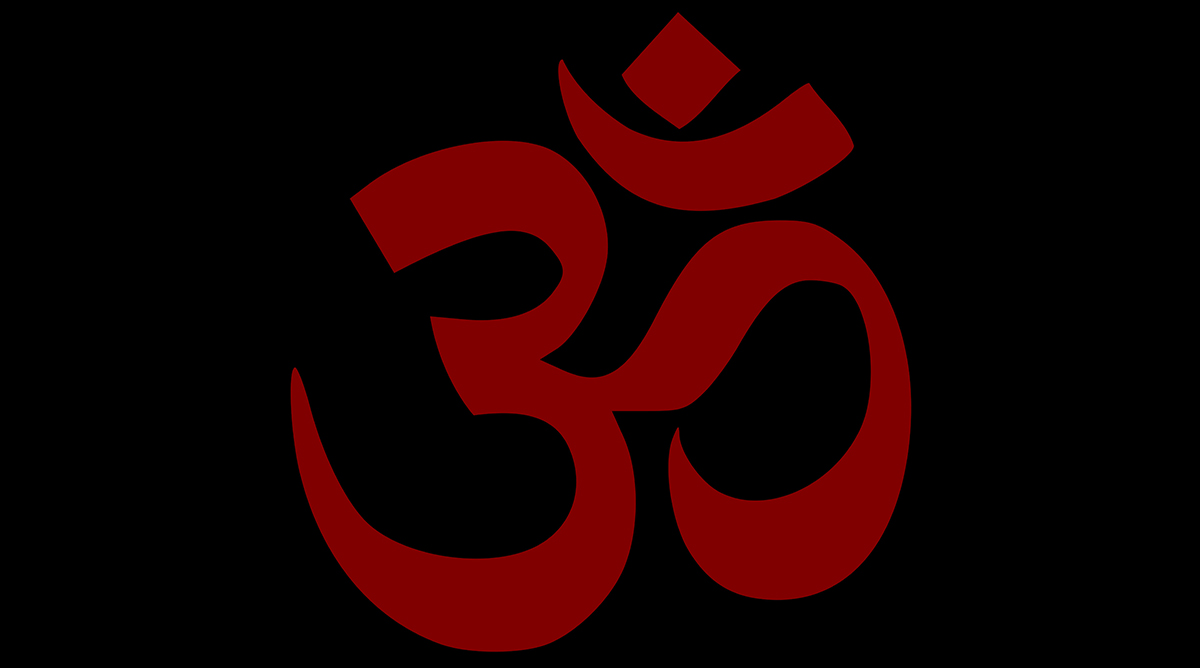
One of the oldest religions in the world, Hinduism can trace its roots back to the Bronze Age Indus Valley Civilization, which flourished in Pakistan and northwestern India from 3300 BC to 1300 BC, with its height being around 2600 BC to 1900 BC. While there is debate over the religion of this ancient civilization, it is strongly suggested that this is where some of the foundations of Hinduism arose.
The primary source for the foundations of Hinduism, however, was the Vedic tradition, which developed from around 1500 BC to 500 BC. The tradition is believed to have evolved from the Indus Valley Civilizations and the Aryan peoples who migrated into northern India from around 1800 BC to 1500 BC. The oldest of the Vedic texts, the Vedas, were composed between 1500 BC and 1200 BC, existing as oral traditions, and were written down only after the 6th century BC. The oral traditions are, however, considered to be more authoritative, as the written texts did not focus on exact pronunciation.
The Vedas are not the only Vedic texts in Hinduism. The Upanishads were created between 700 BC and 300 BC, and focus on the philosophical aspects of Hinduism, rather than the ritualism of the Vedas, while the Brahmanas, created between 900 BC and 700 BC, represent commentaries attached to the Vedas.

Like other major religions, there is no single distinct form of Hinduism. There are various traditions that follow the same basic structure and beliefs, but differ widely in how the beliefs are enacted. This diversity is an element that strengthens Hinduism in that it is a religion that promotes seeking the truth from multiple perspectives.
Despite the variations in practice, there are many core tenets that define Hinduism. One of the most prominent is the belief in a single Supreme Being from whom the sacred Vedas originate. Hindus also believe in an eternal cycle of creation, preservation, and dissolution.
Despite the belief in a single, all-powerful creator, the Hindus also believe in other powerful gods and devas that exist in unseen worlds, and who have the power to influence life in this world. Thus, Hinduism is not considered a monotheistic religion.
A common theme in many world religions, also found in Hinduism, is that of compassion. The Hindus practice ahimsa—non-violence in deeds, words, and thoughts. This extends to reverence for all life. It is one of the crucial facets of dharma—the religious and moral law guiding human conduct.
Zoroastrianism and the Birth of Monotheism

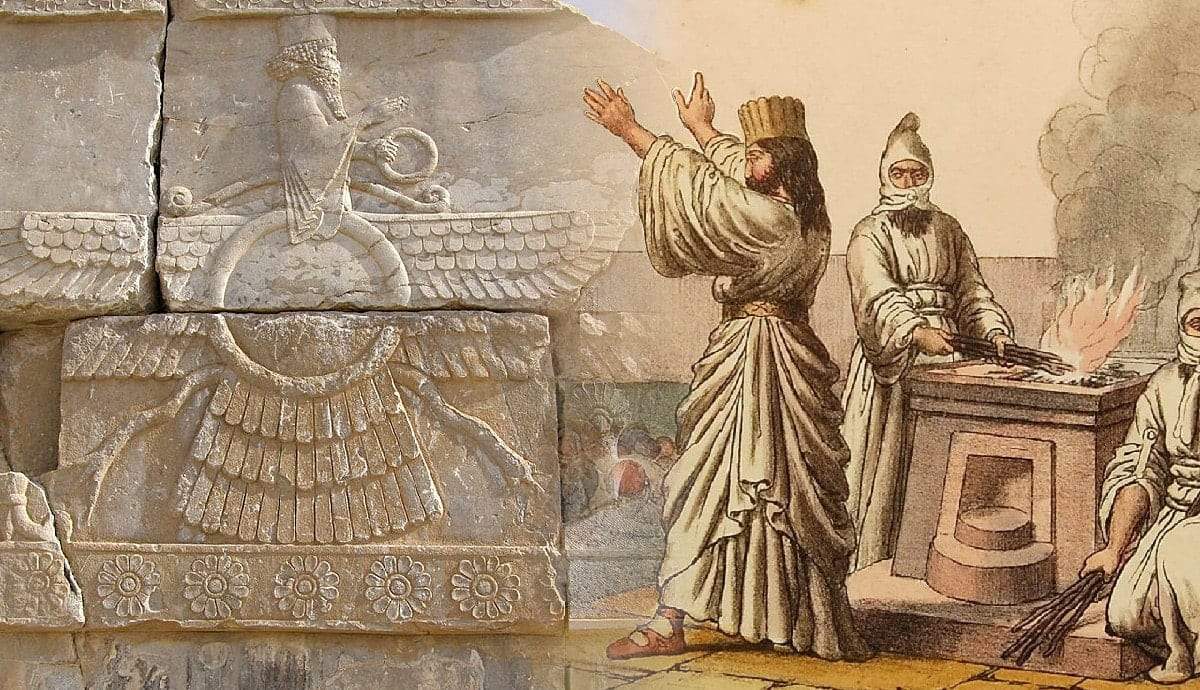
Undeniably one of the world’s oldest living religions, Zoroastrianism developed around 1500 BC to 900 BC from various beliefs shared by nomadic peoples in Persia and northern India. There is thus a connection between Zoroastrianism and the Vedic beliefs that evolved into Hinduism.
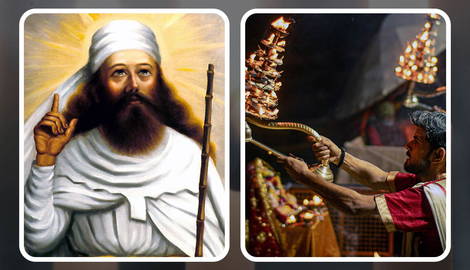
While the academic consensus tends towards the 1500 BC date, traditional accounts place the life of Zarathustra (or Zoroaster in Greek) around the 7th to 6th centuries BC. He is believed to have authored the Gathas—hymns which constitute the oldest Zoroastrian scriptures.
Zoroastrianism was the major religion of the Achaemenid, Parthian, and Sasanian empires until the Arab conquests spread Islam throughout the Middle East in the 7th century AD. The Zoroastrian religion, however, survived in small, rural pockets, and a sizable number of adherents migrated to India, where they became the Parsis.
Today, there is a Zoroastrian diaspora around much of the world, and the religion still claims around 120,000 followers, although higher numbers, such as 200,000, are also possible.
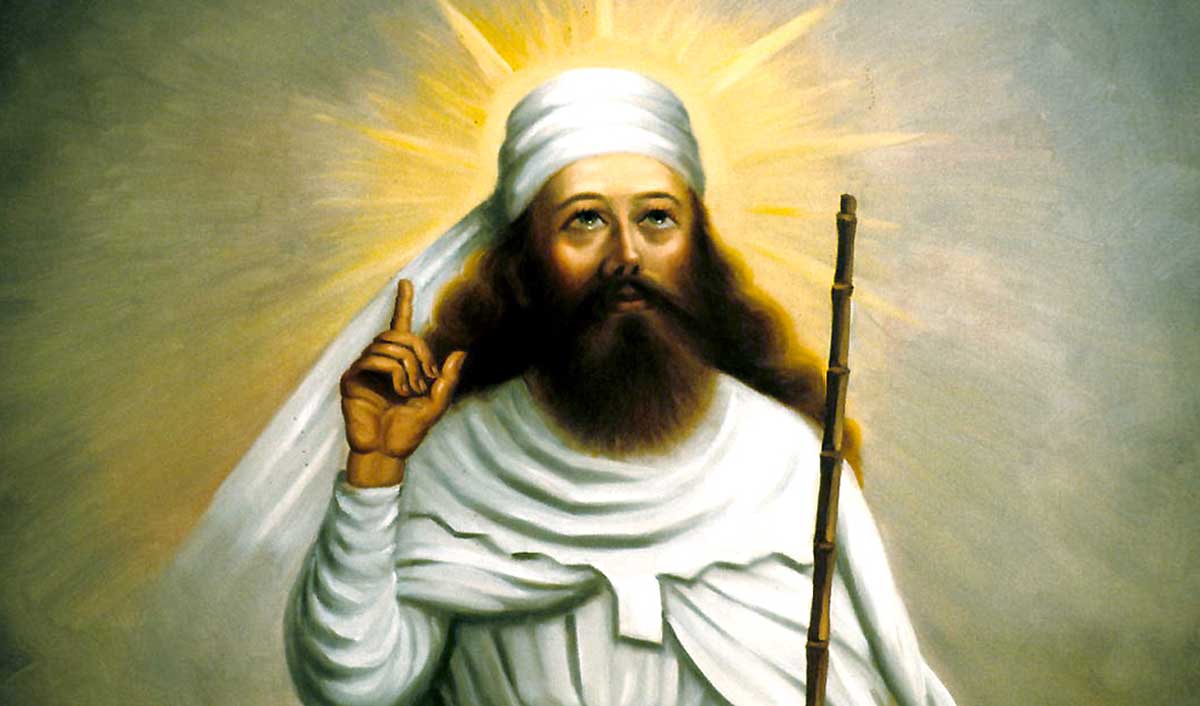
Zoroastrianism is the progenitor of several concepts that were also developed in later religions, most notably the Semitic religions of Judaism, Christianity, and Islam. Zoroastrians believe in a single supreme being known as Ahura Mazda, who represents light, goodness, and wisdom. His polar opposite is the evil Angra Mainyu (also known as Ahriman). As in many other religions, Earth constitutes a battleground between good and evil, and, in Zoroastrian belief, it was created as the theater in which the war could be waged.
The duality of existence is a prime concept in Zoroastrianism. It is believed that people are inherently good, and it is their duty, through their own free will, to avoid evil. Human beings have one life and one immortal soul. Their words, thoughts, and deeds are judged upon death, and those found to be good are granted a home in Heaven, while those found wanting are cast into Hell. This common theme is repeated in later religions.
It is believed that good will ultimately triumph over evil, and human beings, through their good or evil lives, help determine the course of the war.
The scripture constituting the main body of literature associated with Zoroastrianism is the Avesta, comprising hymns and liturgical texts, while the Vendidad is an ecclesiastical code that most consider part of the Avesta. Other important scriptures include the Denkard, a compilation of beliefs and customs, and the Bundahishn, which deals with cosmology.

Surprisingly, given the age of Zoroastrianism and the world in which it was created, it is traditionally a progressive religion. Women are considered spiritually equal to men and are regarded as equally competent in mental faculties. In antiquity, both men and women also served as priests and priestesses, and attended to the religious needs of their communities. And while this dynamic suffered as more patriarchal systems developed, modern efforts have seen the tradition of equality revived.
Judaism and the Covenant for a Chosen People

Like other religions of antiquity, the founding of Judaism can not be traced to a single point. Rather, it evolved contemporaneously with Zoroastrianism. Considered the earliest foundational point in Jewish tradition is the covenant between God and Abraham, generally dated to around 2100 BC to 1800 BC. This was several centuries before Israel’s time in Egypt.
The Covenant was an agreement where God promised to bless Abraham’s descendants and make them a great nation. Thus, the Israelites became God’s Chosen People.
Along with the Covenant, the core tenets of Judaism include the Torah, which is the first five books of the Hebrew Bible (the Tanakh)—Genesis, Exodus, Leviticus, Numbers, and Deuteronomy. It is seen as an instruction, as the name is derived from the Hebrew word meaning to “guide” or “teach.” It is thought to have originated around 1400 BC, although this is debated.
Other important religious texts include the Talmud, which is the central text of Rabbinic Judaism, and which is a principal source for Jewish law and authority.

Central to the concept of Judaism is that of ethical monotheism. The commandments given by God represent a moral law for the benefit of all humanity, and the Jewish people were chosen to be the principal upholders and exemplars of this law. The ethical tenets from the Covenant, and much of the beliefs of Judaism, had profound effects on the history of the world, influencing the subsequent Abrahamic religions of Christianity and Islam.
Despite the powerful influence on the world’s two biggest religions, Jewish people and their religion have been subjected to prejudice and genocide for many millennia. The Holocaust was a major catalyst for the creation of the Jewish state of Israel as a homeland for the Jewish people. This brought political ramifications and further challenges. Nevertheless, the Jewish faith has remained strong and widespread throughout much of the world, with more Jewish people living in the United States than in Israel.

The world’s oldest religions have had an enduring legacy on history, shaping civilization and guiding cultures for thousands of years. Some of these religions have grown larger, while others exist in the margins, yet still survive and are powerful in their own context.
Defining which is the oldest is debatable, but the claim can be reduced to Hinduism, Zoroastrianism, and Judaism—three religions that have had a monumental impact on world history.