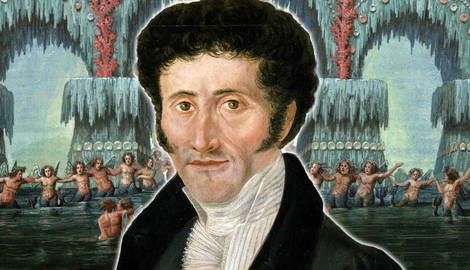
ETA Hoffmann was, like many Romantics, a polymath, excelling as an author, a composer, and an artist. His stories, often containing fairytale, supernatural, or uncanny elements, changed the landscape of literature in his native Germany and across the world. Although he lived in turbulent times and much of his writing describes how difficult it was to make it as a musician, he emerged as a representative figure of Romanticism’s ideals and its idiosyncrasies.
ETA Hoffmann: From Lawyer to Composer
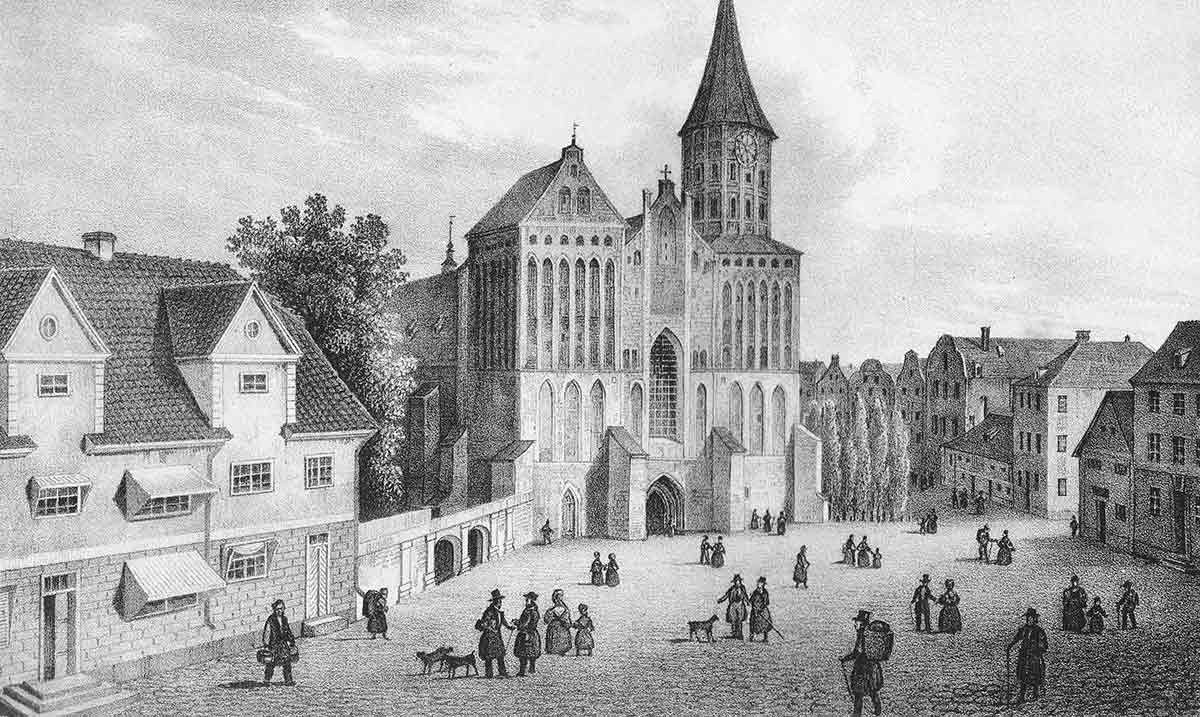
On January 24, 1776, Ernst Theodor Wilhelm (E.T.W. for now—E.T.A. was to come later) Hoffmann was born in Königsberg, a medieval port city and university town situated in what was then Prussia. Today, as part of Russia, the city is known as Kaliningrad. Hoffmann was born into a family of lawyers, though his father dabbled in both poetry and music, and it was into the legal profession that the young Hoffmann initially went.
At school, he had already identified the three passions that would define his adult life—music, literature, and art—but Königsberg, despite being the home of Immanuel Kant (whom Hoffmann saw giving lectures in 1792), was generally removed from artistic developments in the German states as a whole, and the prospects for an artist were not promising.
While continuing to work on his piano playing, composing, and artistic education, Hoffmann took on more reliable employment as a clerk. As he put it: “On weekdays, I am a jurist and somewhat of a musician at most; on Sundays I draw during the day and in the evening, I become a very witty author until late into the night.” His legal career took him to Glogau (now Głogów in Poland), Berlin, and Posen (now Poznań in Poland). Here, Hoffmann tried to establish himself as a composer, but his time in Posen was short-lived. After some caricatures he had drawn of military officers made the rounds, he was summarily moved elsewhere.
The Music Critic
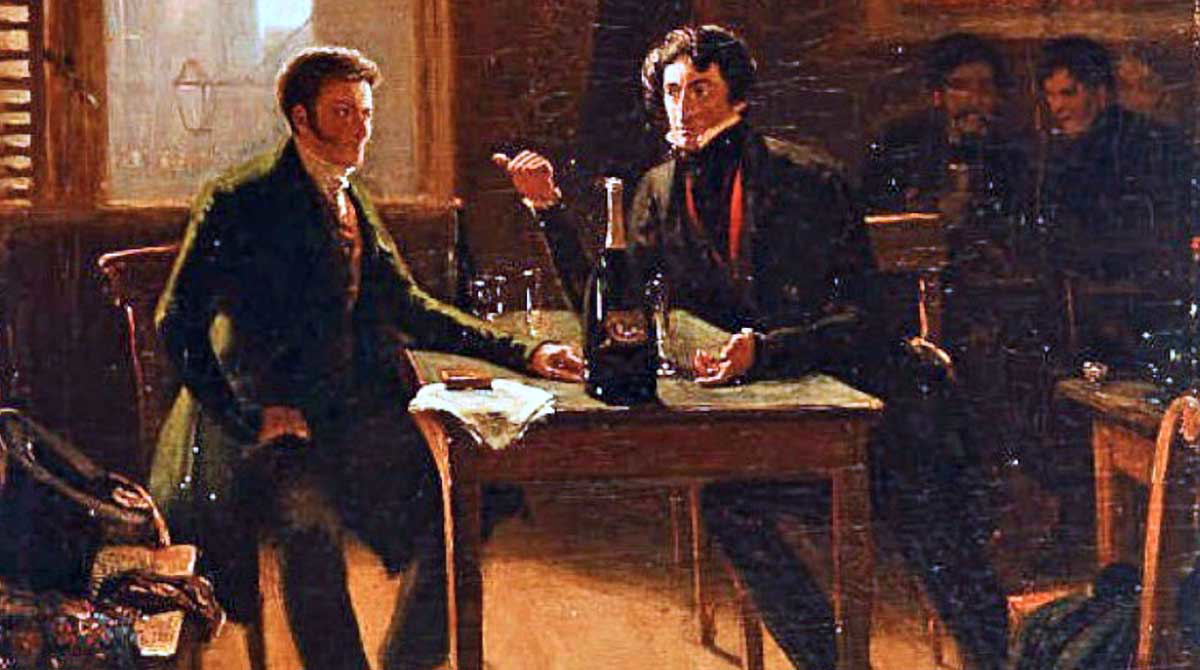
In 1804, Hoffmann gained a post in Warsaw, where the cultural life was more stimulating than in his previous places of residence. As well as the author Friedrich de la Motte Fouqué, whose story Undine Hoffmann would later adapt for the operatic stage, he met Julius Eduard Hitzig, who would publish the first biography of Hoffmann in 1822-23.
Hitzig (who had changed the spelling of his surname when he was baptized) was a member of the prominent Itzig family, which had married into the Mendelssohn family—Julius was great-uncle to the composers Felix and Fanny. His sister Lea would later contribute to the revival of J.S. Bach by giving Felix a manuscript of the St. Matthew Passion, which had its first Berlin performance under his baton in 1829.
Thus Hitzig, among other connections made in Warsaw, was an important figure in nurturing Hoffmann’s enthusiasm for Romantic literature and music. Around this time, E.T.W. Hoffmann changed his middle name, replacing Wilhelm with Amadeus in tribute to one of his favorite composers, Wolfgang Amadeus Mozart. As his passion for music and immersion in a rich and varied cultural life were brewing, Hoffmann was forced to move again when in 1806, Napoleon’s troops captured Warsaw, and all Prussian civil servants lost their jobs.
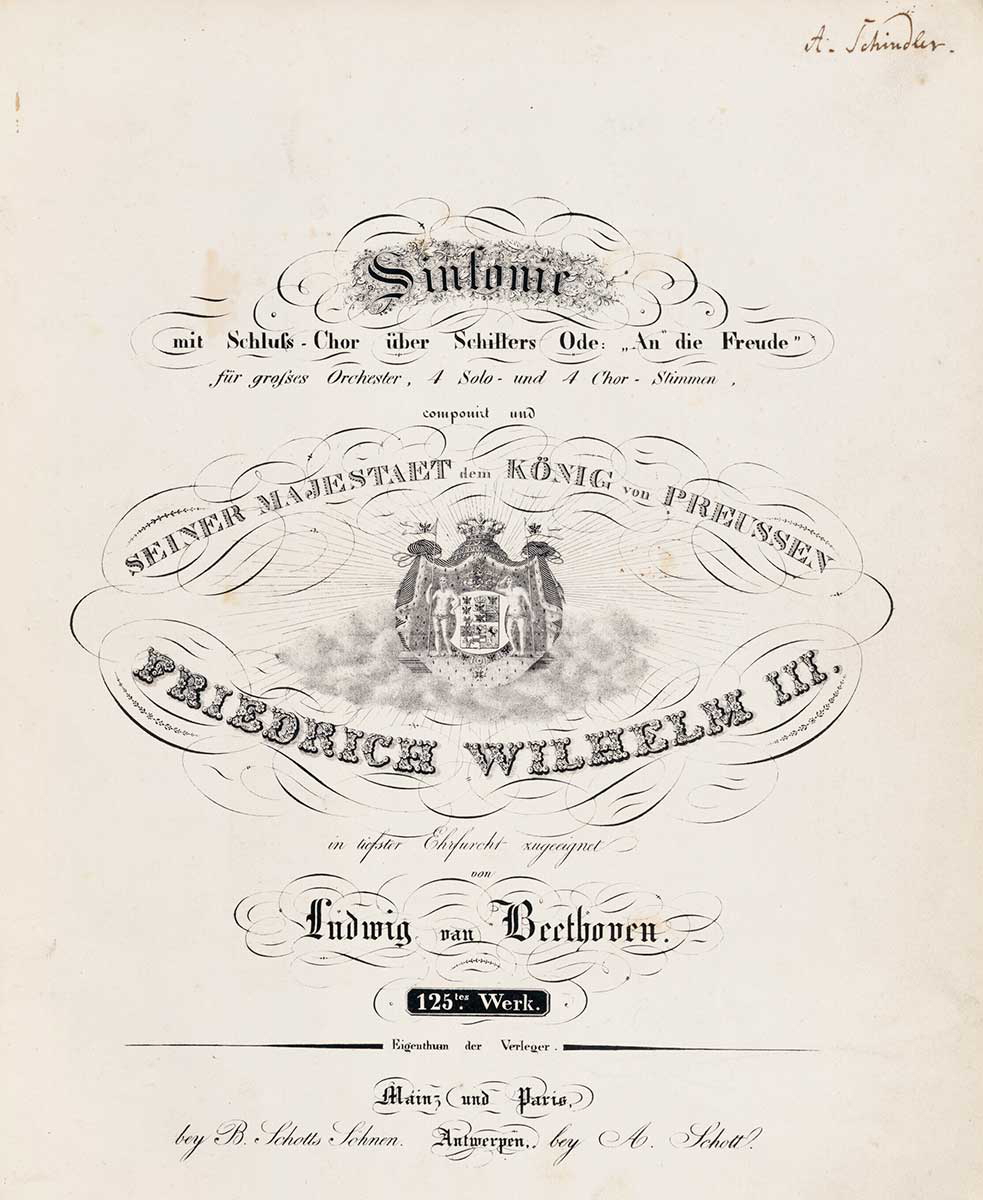
Eventually ending up in Berlin, Hoffmann was finally able to find work more closely related to his interests: writing music criticism for the newspaper Allgemeine musikalische Zeitung. Hoffmann began to make his mark on contemporary music and pen certain pieces that would cement his place in music history. His 1810 review of Ludwig van Beethoven‘s Fifth Symphony is considered a foundational work of Romantic criticism, typifying the ways early-19th-century audiences celebrated music’s ineffable power and offering one of the earliest theorizations of the term “romantic” in relation to music.
For Hoffmann, musical Romanticism is best exemplified by Beethoven, whose music is absolute—it does not need to rely on words or comparisons to images from the real world but takes for its subject “the infinite.” While Joseph Haydn is “comprehensible for the common man,” and Mozart captures the “marvelous that dwells in the inner spirit,” Beethoven’s music embodies “that eternal longing that is the essence of the romantic.” Hoffmann’s review bestowed the ideas of absolute music, the omnipotent genius composer, and music’s awe-inspiring incomprehensibility to the 19th century, as writers on music across Europe overwhelmingly took up his language.
The Peripatetic Life of the Musician
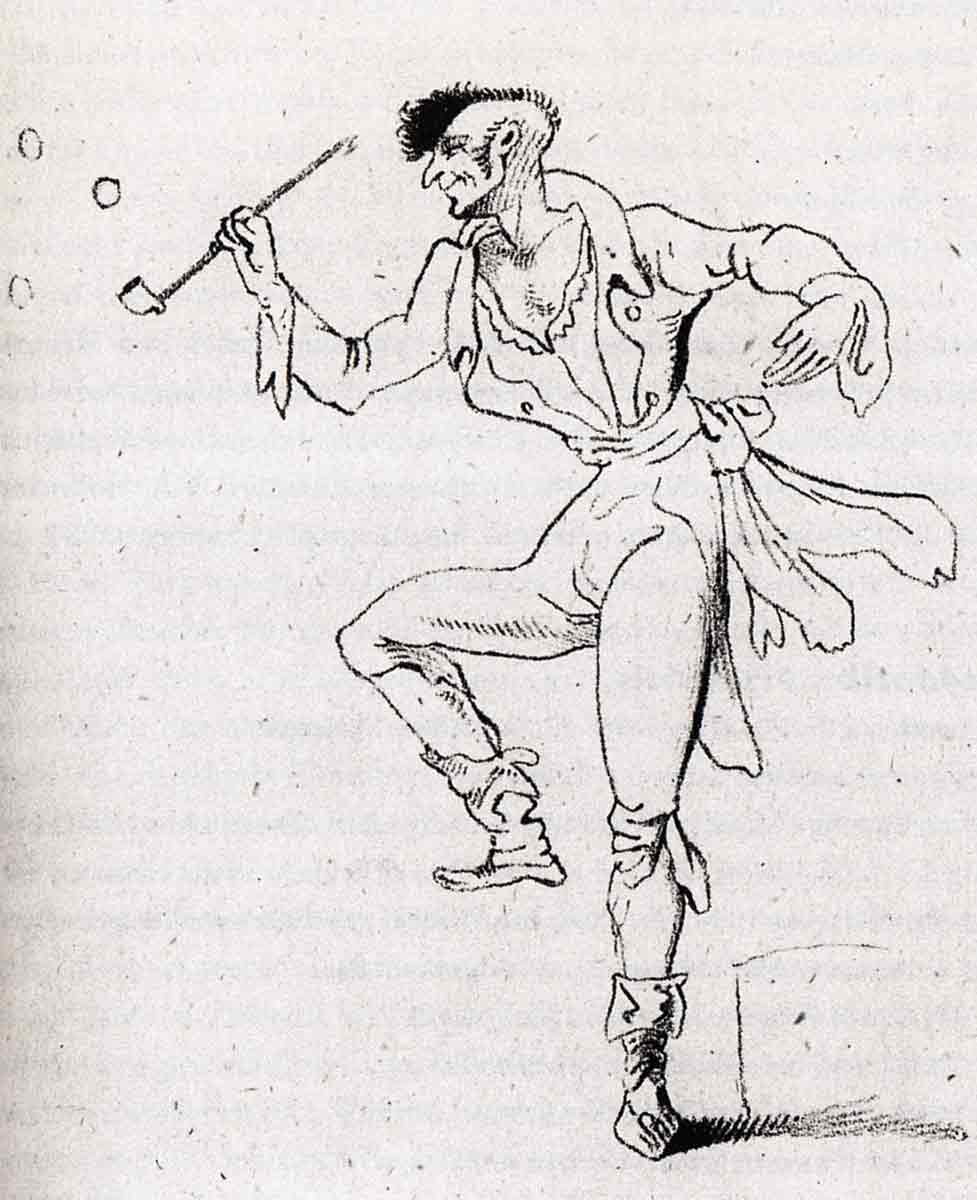
From this point onwards, Hoffmann wore many hats. In Bamberg and Dresden, he was employed as a Kapellmeister (literally chapel-master), a musician who runs the day-to-day musical life of a church or court, including supplying his own compositions. He also worked in the theater as a set designer and architect and continued to draw (especially caricatures) and write. His first published story, Ritter Gluck, which tells the adventures of a man who believes he meets the opera composer Christoph Willibald Gluck, appeared in 1809.
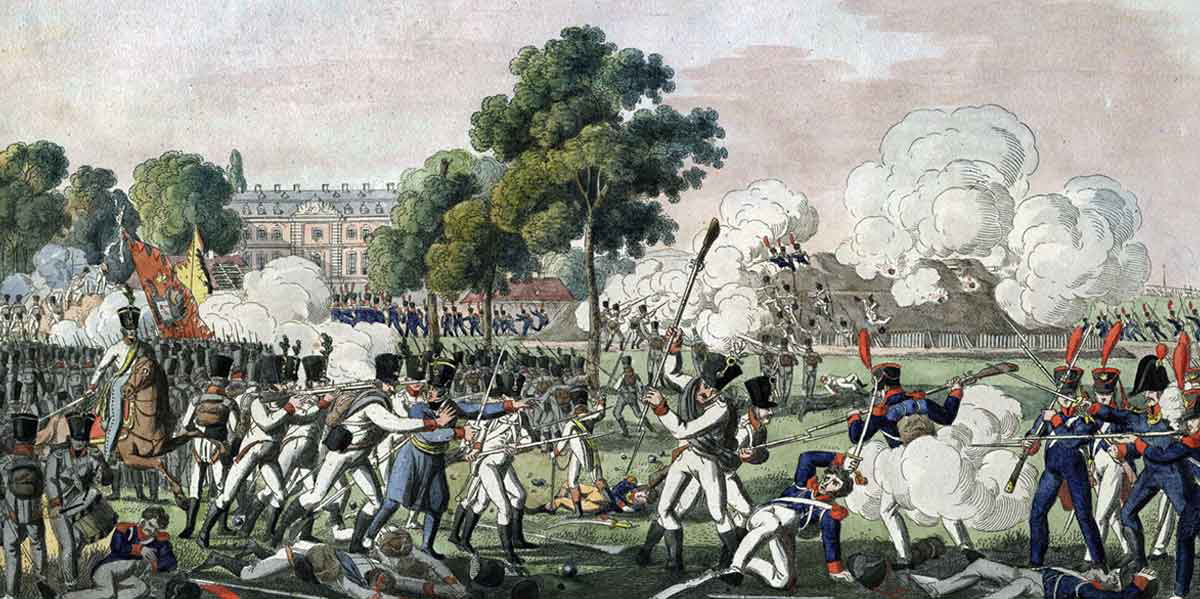
Part of the reason Hoffmann moved around so much was his historical and geographical circumstances. He had already had to leave Warsaw because he would not swear allegiance to Napoleon, who occupied what was then the capital of South Prussia. His time in Dresden was also disrupted by the Napoleonic Wars, with he and his wife temporarily fleeing to Leipzig early in 1813, returning just in time to witness the Battle of Dresden, a major victory for the French.
There were other reasons for Hoffmann’s peripatetic lifestyle. Before meeting his wife, way back in Königsberg, when he was only 18, Hoffmann fell in love with a married woman ten years his senior. This was one of the reasons his family found employment for him in Glogau, and it was not the only time his romantic and professional life were to become entangled. In Bamberg, working as a singing teacher, he fell in love with his student, Julia, whose mother soon arranged for her to be taught by someone else.
Hoffmann’s experience of falling in love unsuitably, his awareness of how hard it was to maintain lasting employment as any kind of artist, and his feeling that musicians, in particular, were undervalued by society all found their way into his writings. He developed an alter ego, a composer called Johannes Kreisler, who appeared in much of his music criticism, and whose experiences and traits—he is often penniless, often falling in love, and often raging against society—mirror Hoffmann’s own. Though fictional, Kreisler was an immensely influential figure in both literary and musical circles, embodying all the prized values of Romanticism: genius, emotion, and a constant striving for something beyond what the ordinary world can offer.
Success as Composer and Author
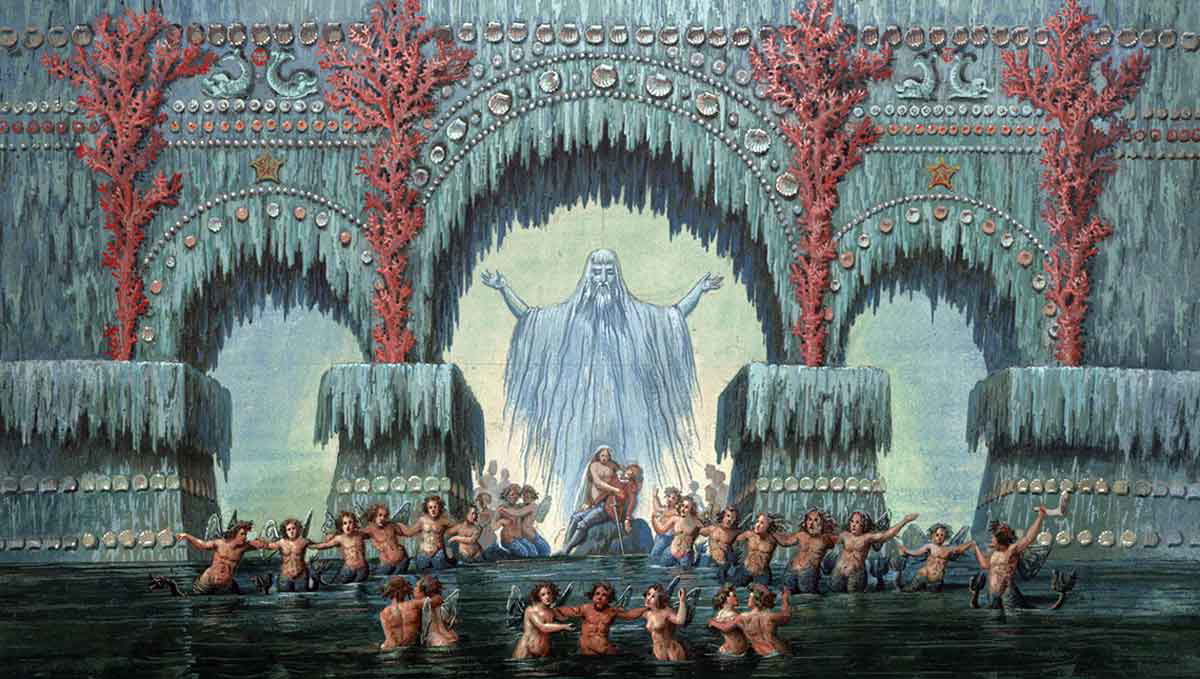
Some stability and success finally came Hoffmann’s way when he moved to Berlin in 1814. There, he wrote an opera based on Fouqué’s Undine, which was staged in 1816. Hoffmann’s work was favorably reviewed by the composer Carl Maria von Weber, whose own opera Der Freischütz (1821) similarly featured dreamy glens and forest spirits.
Hoffmann’s literary output also gathered pace: Fantasiestücke in Callots Manier in 1814-15 gathered various stories first published elsewhere, several of them featuring the composer Johannes Kreisler. He wrote two novels, Die Elixiere des Teufels (The Devil’s Elixirs, 1815) and Lebensansichten des Katers Murr (The Life and Opinions of the Tomcat Murr, 1820). The latter novel also featured Kreisler, to whom Hoffmann attributed one of his own compositions: the Six Canticles for a cappella choir. For good measure, Kreisler also spends much of the novel in turmoil because he, like Hoffmann some years earlier, is desperately in love with a singer named Julia.
Although still obliged to support himself financially by taking on work as a jurist in 1816, he found time to write the stories that have made him an enduring name in literary history: the terrifying tale of the uncanny Der Sandmann (The Sandman, 1817), the early detective story Das Fräulein von Scuderi (Mademoiselle de Scuderi, 1819), and most famously, Nußknacker und Mausekönig (The Nutcracker and the Mouse King, 1816).
ETA Hoffmann’s Influence
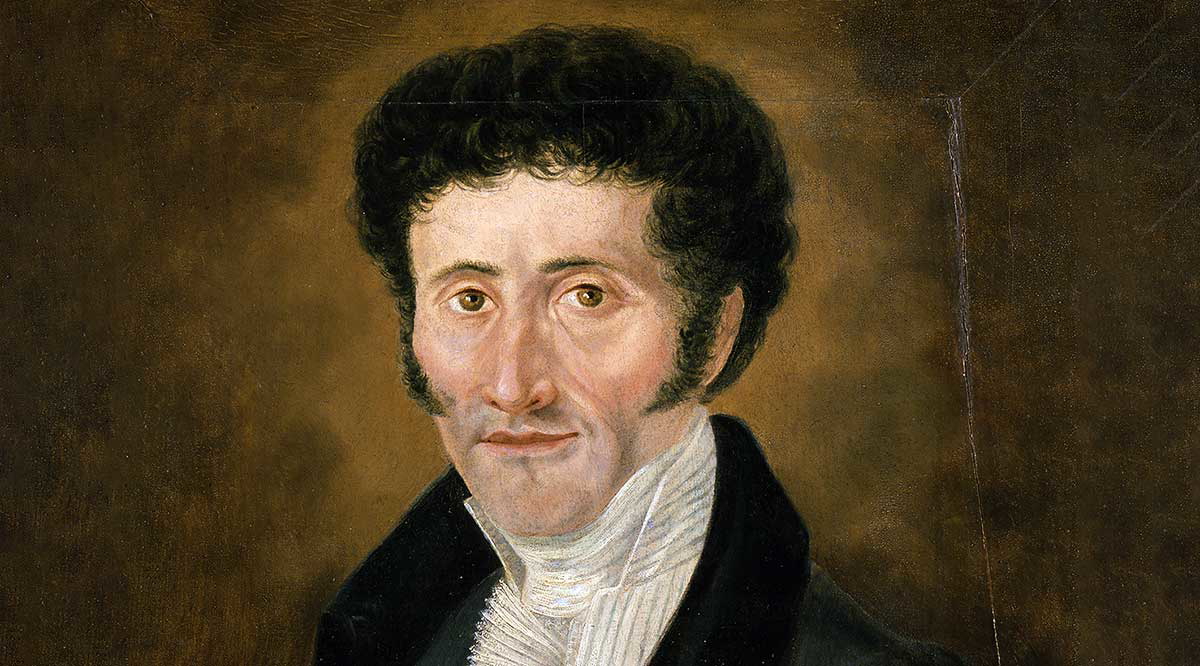
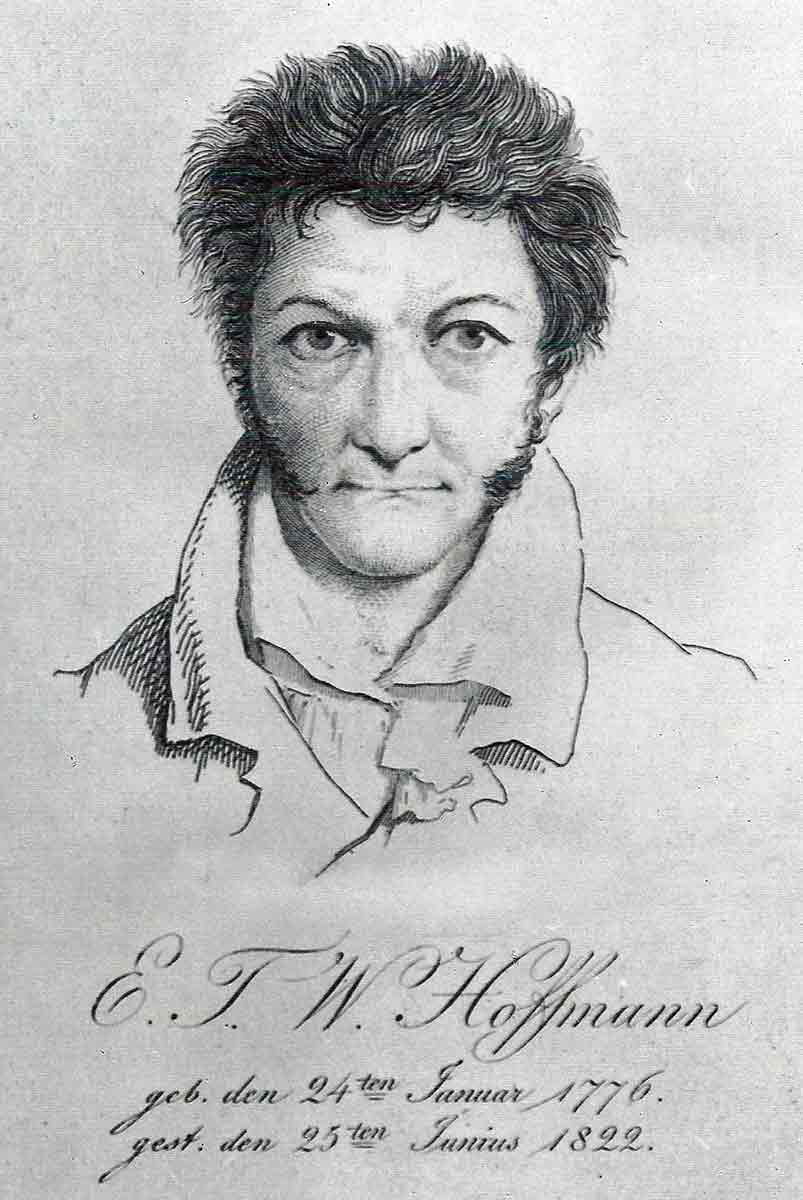
Aged only 46 when he died of syphilis in 1822, Hoffmann was remembered on his tombstone as a true polymath: councilor of the Court of Justice, poet, musician, and painter. His friend Hitzig recorded: “his most striking feature was his extraordinary mannerisms, which would reach a climax whenever he told a story. When he greeted people and bid farewell, his neck would make short, fast, repetitive flexing movements, while his head would remain completely still, which could appear somewhat grotesque and could easily come across as ironic if the impression made by this strange gesture wasn’t offset by his very friendly nature on such occasions.”
This mixture of the comic and grotesque, with an underlying current of warm-heartedness, captures Hoffmann’s legacy, as can be seen in the various adaptations of his work. Only a few decades after his death, three of his short stories (The Sandman, Councilor Krespel or The Cremona Violin, and The Lost Reflection) were brought together as a stage play in Paris, Les contes fantastiques d’Hoffmann.
Attending the play in 1851, the composer Jacques Offenbach deemed it ripe for operatic treatment, and it was finally premiered in 1881 (shortly after the death of Offenbach, who died with the manuscript in his hand). The most unusual feature of this opera is that it features Hoffmann himself as a character who is—true to the historical Hoffmann—prone to having his head turned by beautiful, musical women but who ultimately recognizes that each of the women in the play’s three acts is simply an idealized representation of his true love: the Muse of Poetry.
Composers and choreographers of ballet have also been inspired by Hoffmann’s writing. Léo Delibes’s Coppélia (1870) borrowed both names (Dr. Coppélius) and themes (an inventor creates a life-size doll with whom a swooning young man falls in love) from The Sandman. The Nutcracker and the Mouse King, meanwhile, was the inspiration for Pyotr Ilyich Tchaikovsky’s 1892 ballet The Nutcracker, with its enchanting visions of toy soldiers coming to life and a dreamland made up of gingerbread and sweets.
Hoffmann’s influence on literature was similarly extensive and continues to the present day. He was a near contemporary of the Brothers Grimm, folklore collectors who popularized some of the most enduring fairytales, such as Cinderella, Sleeping Beauty, and Little Red Riding Hood. While Hoffmann’s stories contain folkloric and fairytale elements, they are combined with touches from his own imagination, an appetite for innovative narrative style, and especially a relish for blending the everyday and the supernatural.
Writers of short stories in the mid-19th century, such as Edgar Allan Poe and Nathaniel Hawthorne, were influenced by Hoffmann’s transposition of supernatural phenomena into the ordinary world. Towards the end of the century, writers continued to draw on Hoffmann’s work, examining the uncanny in relation to art and the psychological implications of being haunted by a revenant or double: examples include Vernon Lee in her collection Hauntings (1890) and Henry James in The Turn of the Screw (1898) and The Jolly Corner (1908).
Into the 20th century, Hoffmann’s work provided fertile ground for theorization by Sigmund Freud (who wrote about The Sandman in his essay The Uncanny, 1919), and his influence can be detected in the Surrealists, the anthropomorphic and anti-bureaucratic writing of Franz Kafka, and the everydayness of the supernatural in magical realism. Although he was in many ways an archetype of how we now view Romanticism, Hoffmann has transcended time and place.
Reference List:
Hoffmann, E.T.A. “Beethoven’s Instrumental-Musik,” in E. T. A. Hoffmanns sämtliche Werke, vol. 1, ed. C. G. Von Maassen (Munich and Leipzig: G. Müller, 1908), translated by Bryan R. Simms.