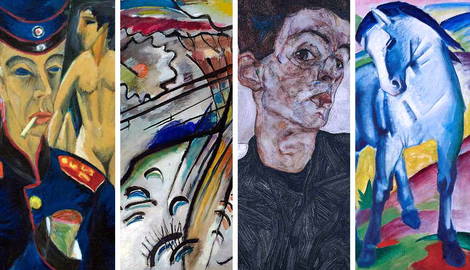

Expressionism is a movement that emerged in Germany and Austria in the early 20th century. The goals of the artists of this movement were to convey emotion, critique social values, and explore spirituality in art through bold colors and distorted forms. Expressionists rejected middle-class values. They simplified forms, clashed colors, and painted humanistic themes to challenge the art world and the social status quo. Continue reading to explore ten prominent figures of Expressionism.
1. George Grosz: The Expressionists’ Critique of Society
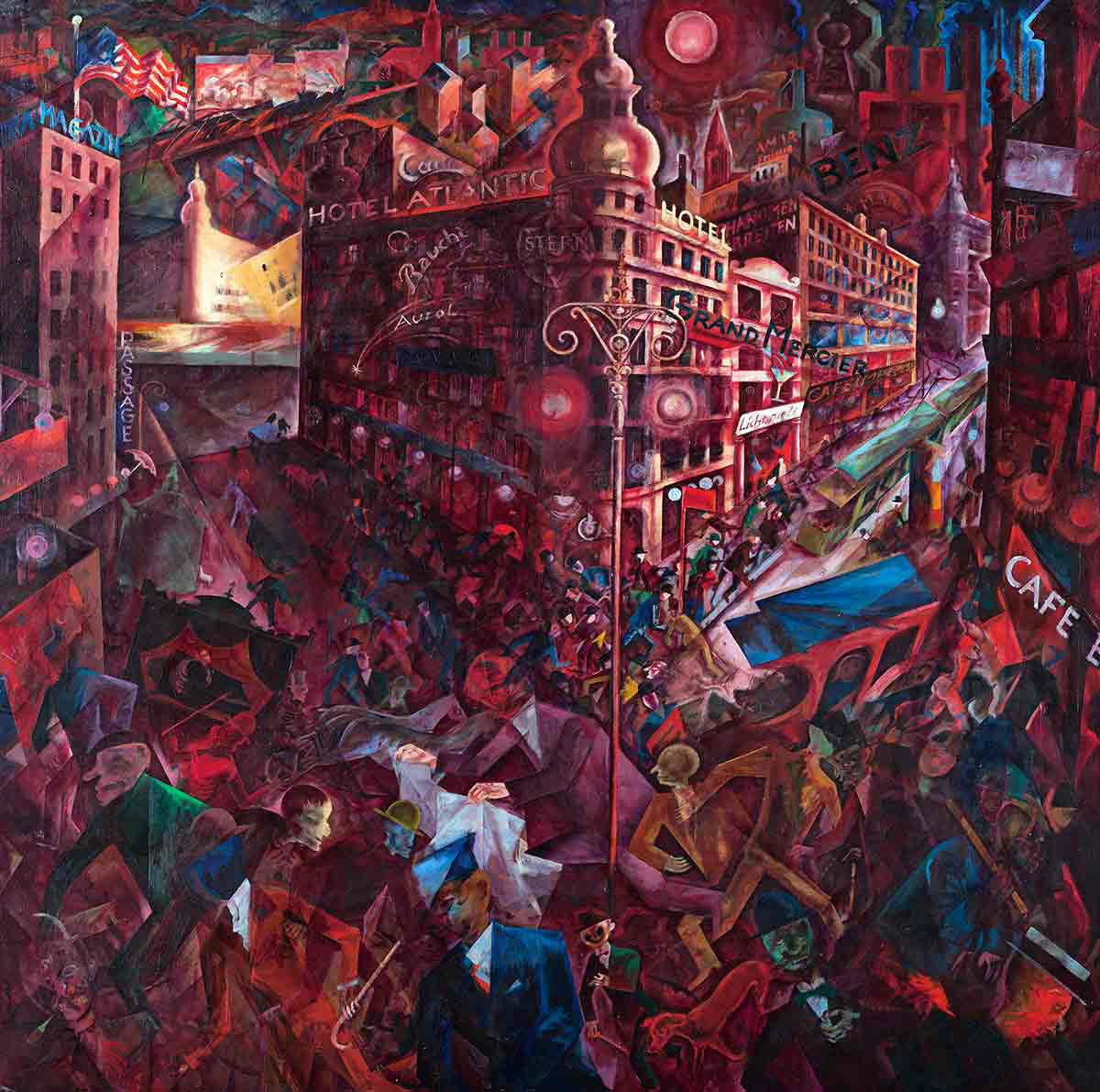
George Grosz (1893-1959) was a German artist whose provocative art made him one of the most prominent figures of the Expressionist movement. He grew up during the social and political disorder in Berlin, before and after World War I. Thus, he had plenty of themes to critique: corruption, moral decay, and chaos. He transformed everything into artistic commentary through exaggeration and distortion. Grosz conveyed emotional truth, not literal appearances. Besides, this was one of the most important principles of the Expressionist movement.
Grosz portrayed the alienation and brutality of modern life, reflecting the trauma of World War I. His early paintings are clearly Expressionist. Yet his later work crossed paths with movements such as Dada and the New Objectivity. The compositions picture grotesque and elongated figures with bold outlines. In works like The Pillars of Society (1926) and Metropolis (1916–17), Grosz focused on the mad pace of the city, exposing human imprudence and social hypocrisy.
Grosz’s style confronted reality through feeling, not form. His art embodied the movement’s moral urgency, forcing viewers to face discomforting truths. Even though he moved to the United States and changed his style, these early works remain among the most powerful indictments of societal corruption in modern art.
2. Otto Dix: From the Trenches to the Canvas
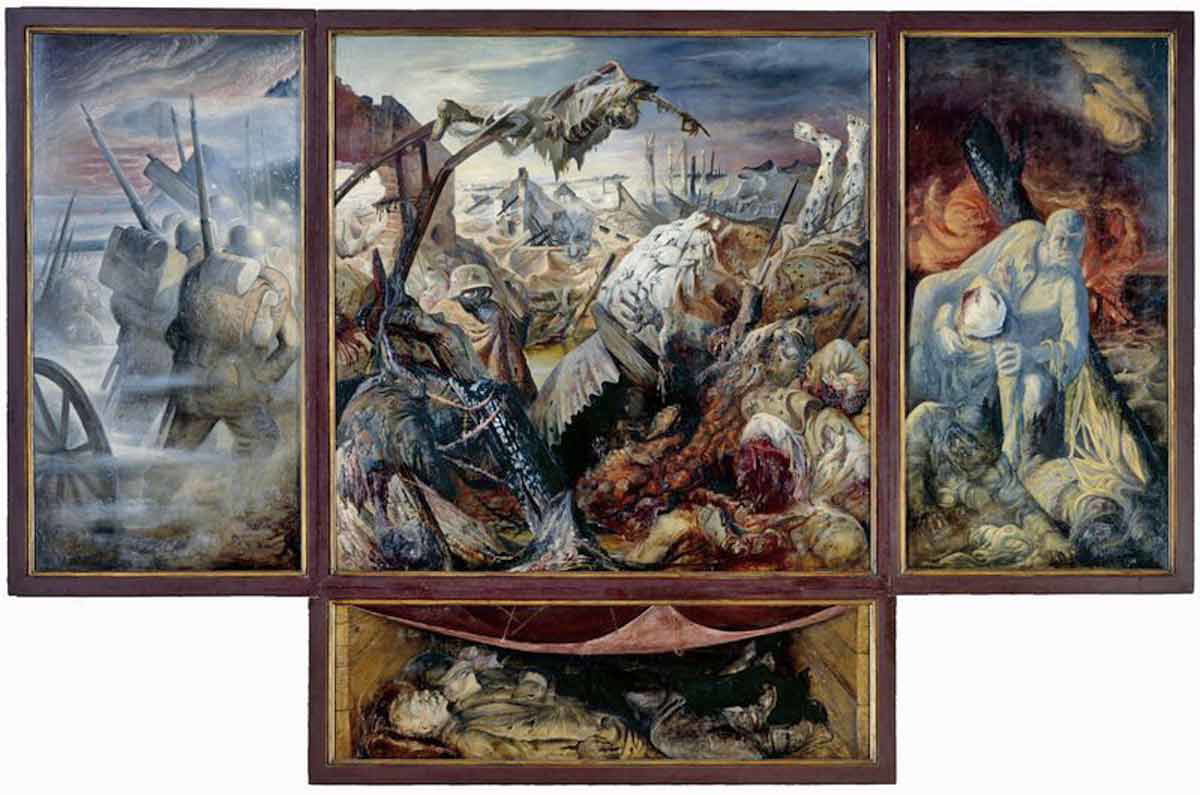
Otto Dix (1891–1969) experienced the horrors of World War I firsthand. Like many artists of his generation, he was initially excited about the war, as he believed it would undermine bourgeois values. Nevertheless, the grim reality of the battlefield shattered these illusions. His art became a powerful testament to this brutality. Known for his cruel war depictions, social decay, and human suffering, Dix captured the raw psychological intensity that lies at the heart of Expressionism.
Similar to Grosz, Dix’s early paintings are purely Expressionist. He, too, later crossed paths with the New Objectivity movement. To depict the trauma and chaos he experienced, Dix painted twisted forms, harsh lighting, and distorted perspectives. In The War (1929–32), he stripped the battlefield of heroism, showing the carnage the soldiers were exposed to.
Dix is renowned for his exploration of humanity’s darker dimensions. He tackled the war’s both physical and psychological effects on individuals and society. His deformed figures and grim compositions work as a reminder of a world of moral collapse and existential anxiety. Dix’s early Expressionist works, including his etchings, represent true records of personal and collective trauma. By converting torment into images of stark immediacy, he proved that Expressionism could serve as artistic rebellion, but it could also be evidence of the cost of modernity on humanity.
3. Gabriele Münter: Expressionism’s Subtleness
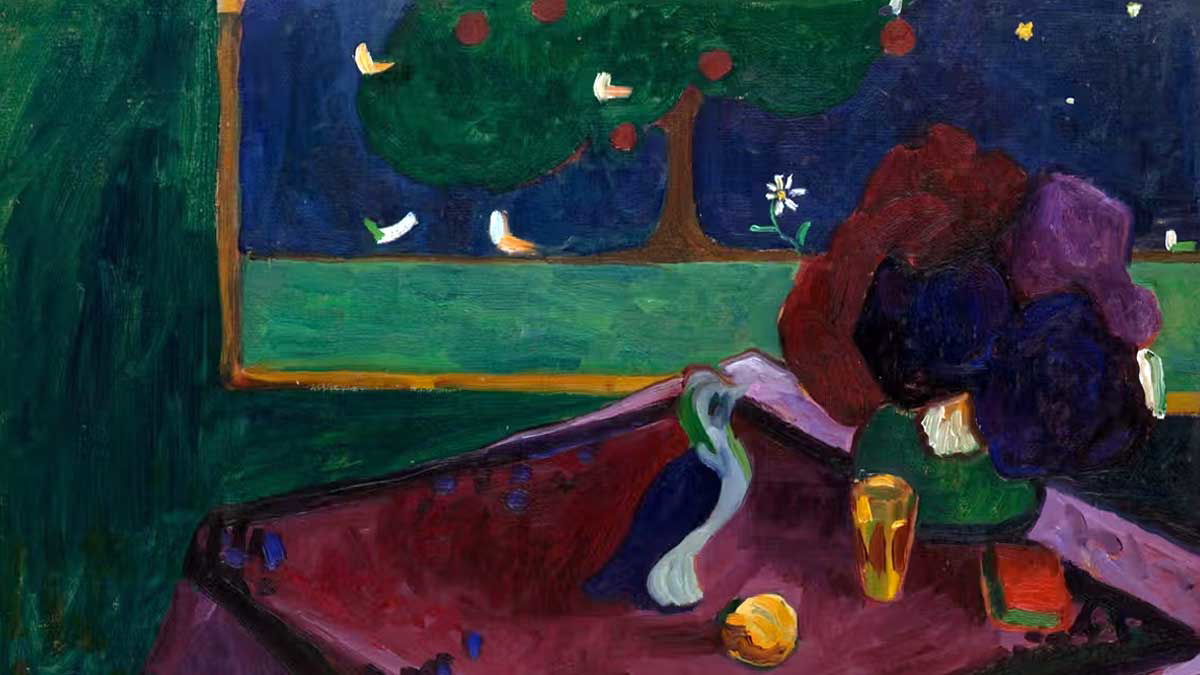
Gabriele Münter (1877–1962) was a German painter. She was also one of the founding members of the Blue Rider group. Her paintings captured emotion through color and simplified forms, and focused on personal inner experience rather than replicating reality. She was inspired by geometric ornamentation, decorative patterns, and flattened planes. Hence, her artworks feature bold and flat, colorful areas with strong outlines. The grotesque details of the movement appeared as Germany approached World War I. Yet, Münter maintained its softness and sense of intimacy. For example, in Interior (1908) and View of Murnau (1909), she used color to convey mood, demonstrating how landscapes, domestic scenes, and portraits could pulse with emotional resonance. Münter succeeded in showing that Expressionism did not have to be dramatic all the time. It could be subtle and lyrical, with even quiet scenes imbued with emotion and life.
Münter played a vital role in guiding artists within the Blue Rider group. The group was one of the two that shaped German Expressionism, alongside Die Brücke. She documented their work and preserved their ideas during challenging times. She was influential not only as an artist, but she also helped connect and inspire artists that pushed Expressionism to another level.
4. Wassily Kandinsky: The Spiritual Visionary of Expressionism
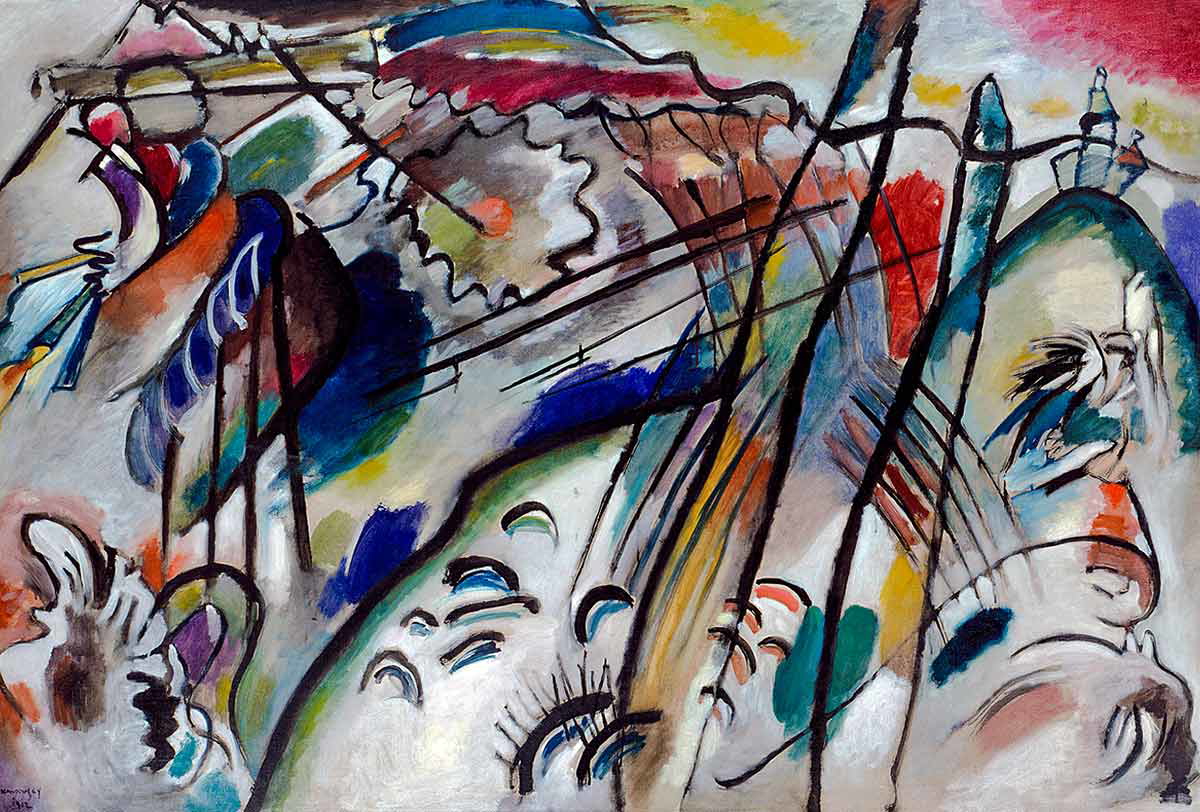
Wassily Kandinsky (1866–1944), a Russian painter and a pioneer of abstract art, had a different goal than the Expressionists we have looked at so far. He wanted to convey spiritual truths through color and form. Thus, he treated painting as a unique, separate language.
Kandinsky used vivid colors, geometric shapes, and dynamic compositions that give a sense of movement. In Improvisation 28 (1912), whirling shapes and vibrant colors suggest moods and feelings, not the physical world. Kandinsky was a central figure of the Blue Rider, alongside Münter. However, his input was different in the broader sense; he expanded Expressionism to abstraction. His theoretical writings, particularly Concerning the Spiritual in Art, inspired numerous artists to experiment beyond literal representation, linking artistic expression to spirituality and psychological depth. Kandinsky’s innovative approach showed that Expressionism could be something other than mere social critique or unfiltered emotion. His paintings turned art into a means to explore the unseen dimensions.
5. Ernst Ludwig Kirchner: Urban Energy of Expressionism
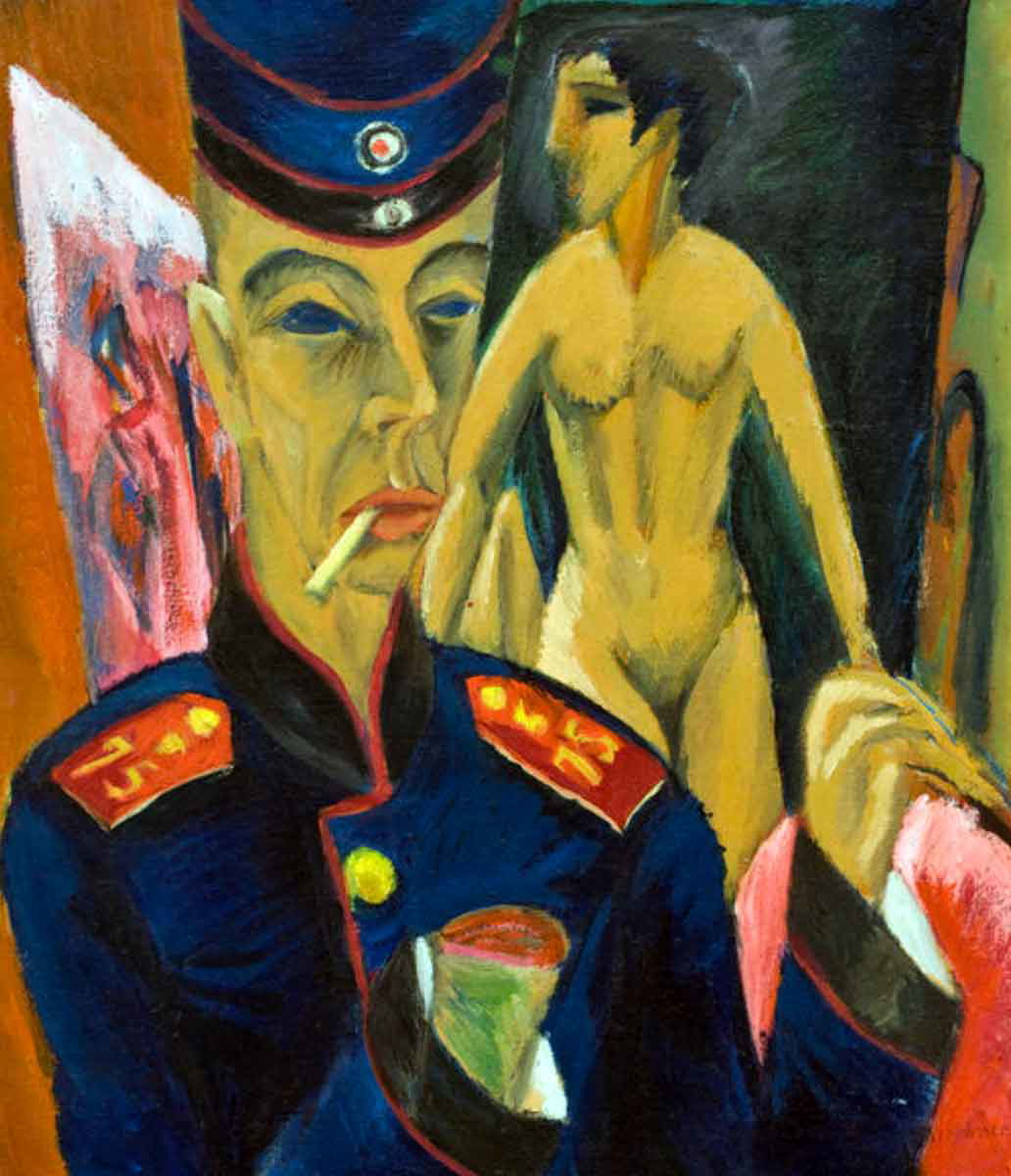
Ernst Ludwig Kirchner (1880–1938) was a German painter. He was a founding member of another important group of Expressionism, Die Brücke. This group wanted to move away from tradition and create a bridge to new artistic forms. Prior to the war, Expressionists’ street scenes depicted nightlife, social gatherings, and urban life, revealing loneliness and alienation. Kirchner expressed these exact concerns in his work. His paintings portray city streets and nudes, which capture the unease of the time. After the war, Expressionism turned to collective trauma and social turmoil. Consequently, Kirchner adapted his subjects and style. His angular and elongated figures dominate in works such as Self-Portrait as a Soldier (1915). His distortion and harsh contrasts reinforce the sense of anxiety.
The Blue Rider group leaned toward abstraction and spirituality. Die Brücke, on the other hand, focused on the present reality. For that reason, Kirchner painted the frenetic energy of modernity, using clashing colors and sharp lines. His compositions often feel restless, echoing the rapid social and cultural changes of early 20th-century Germany. The artist’s later years were marked by political persecution: he was denounced as degenerate by the Nazis. Yet his influence endured. Kirchner became one of the most distinctive voices of Expressionism for his ability to paint the pulse of the city and the overall anxiety of his time.
6. Egon Schiele: The Expressionists’ Obsession With the Human Psyche
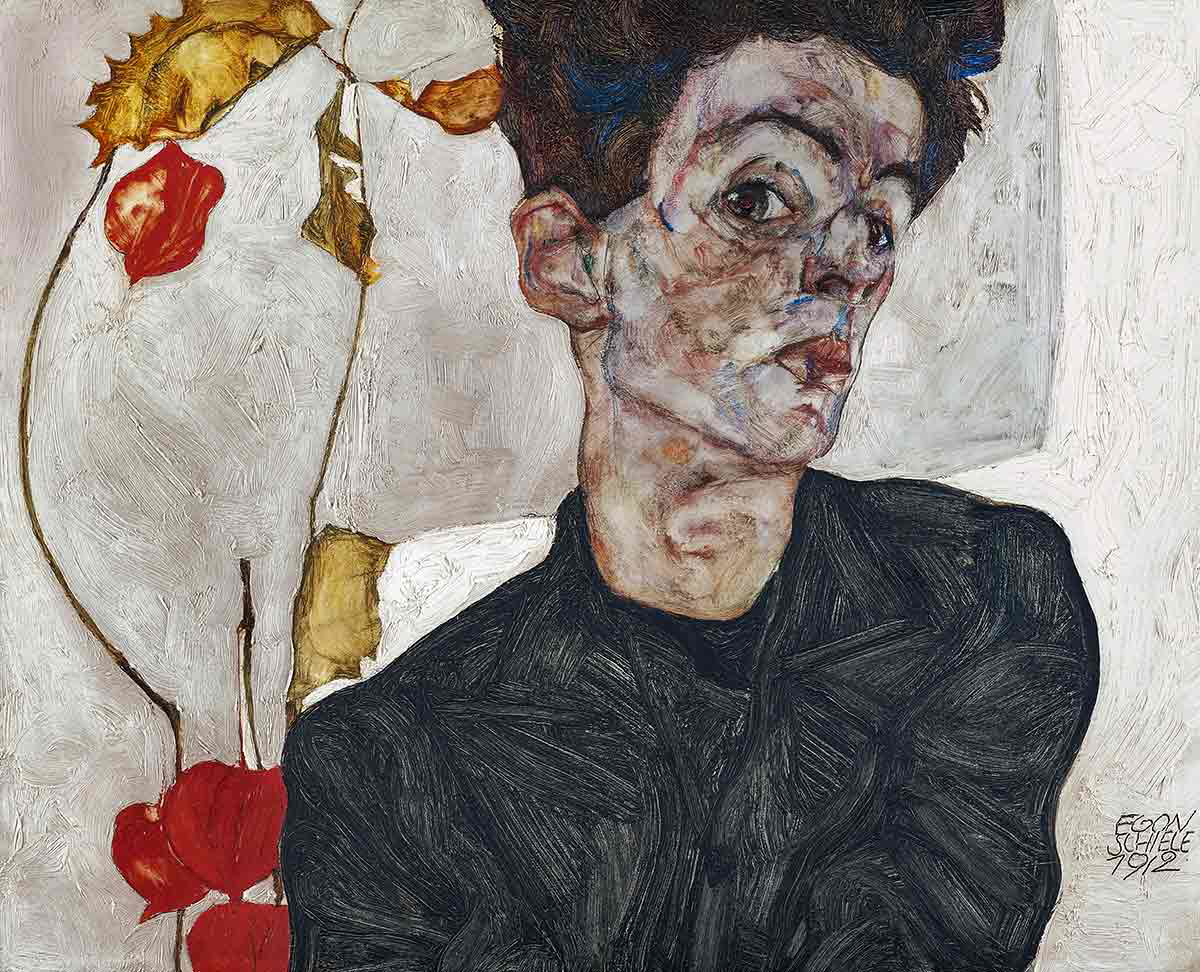
Expressionism is often associated with Germany. However, it also flourished in neighboring Austria, where artists, such as Egon Schiele (1890–1918), gave it their own personal touch. Schiele’s iconic imagery established him as one of the most distinct artists of the movement. One can immediately recognize his paintings. The figures are not just elongated and twisted; they are disturbing. In Self-Portrait with Chinese Lantern Plant (1912) and Seated Woman with Bent Knee (1917), he painted psychological tension and vulnerability, not beauty. Both paintings look like they are pulsing with anxiety and unease.
Schiele became known also for his erotic drawings and paintings. These pieces are not just sensual. They are studies of desire, intimacy, and even shame. The exposed, fragile bodies in Lovers (1913) and Reclining Woman with Green Stockings (1914) destroy the boundaries between passion and suffering, adding a very personal and introspective dimension to eroticism.
His use of distortion had nothing to do with social critique and everything to do with the restless human psyche. This is what makes his style so special after all. The jagged outlines, grim earthly tones, and crooked poses gave a sense of severe anxiety. As a result, the viewers become witnesses to the artist’s sense of desire, fear, and loneliness, all at the same time. Schiele’s career was cut short, as he passed away at the age of 28. Yet, he managed to live forever through his paintings. He proved that Expressionism could reveal the overall fragility of the human psyche, not just social injustices.
7. Oskar Kokoschka: Painting Emotion in Motion
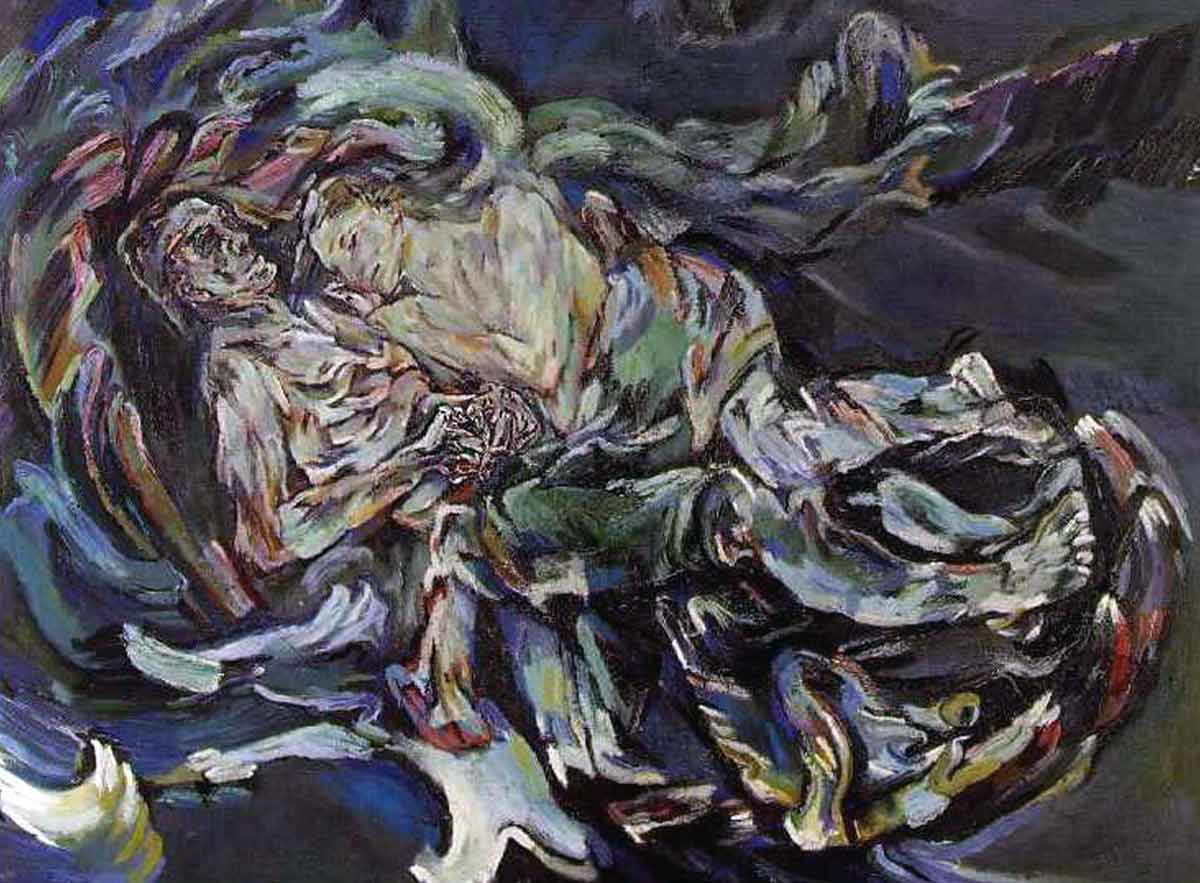
Oskar Kokoschka (1886–1980) was the second leading artist of Austrian Expressionism. His work blends emotion and psychological depth, and the result is an accurate reflection of the turbulence of early 20th-century Europe. Kokoschka is not as esoteric as Schiele. He preferred to paint the drama of relationships and politics he observed.
His paintings vibrate with energy. The brushwork is strong, energetic, nearly frenetic. The colors are bold and daring, showing emotional force. In The Bride of the Wind (1914), a portrait of himself and Alma Mahler, Kokoschka blurred their faces and merged their bodies. The result is a profusion of love, obsession, and loss. The painting is a great example of how the artist could transform his personal experiences into a universal language of longing and despair.
Kokoschka was also a writer and teacher. He encouraged younger artists and his students to prioritize emotion in their art, and not academic values. His career was long, allowing him to connect Expressionism with later generations. This established the movement as a philosophy, a way to perceive the world, not just a stylistic phase.
8. Käthe Kollwitz: Expressionism With a Social Conscience
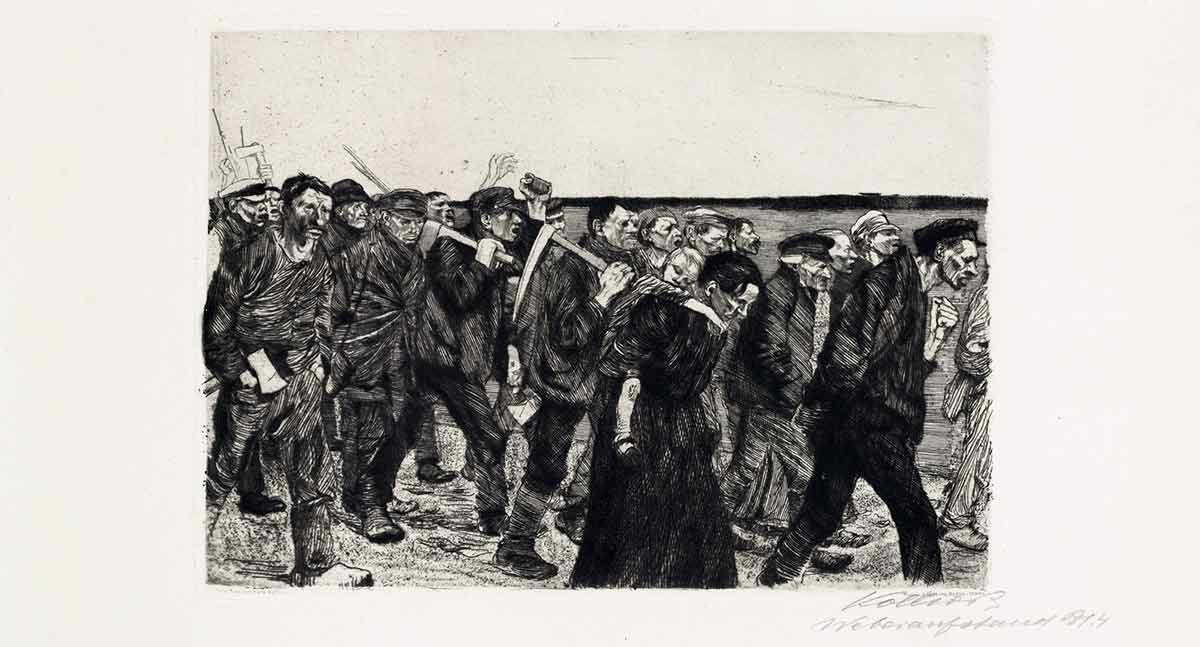
Käthe Kollwitz (1867–1945) brought a new component to Expressionism. Instead of vibrant colors and abstraction, she used black-and-white imagery to depict grief, poverty, and the resilience of people often overlooked by history. She used printmaking, a favored medium among Expressionists, to distribute her work to a wider audience and amplify its social and political impact.
In series such as The Weavers (1893–7) and The Peasants’ War (1902–08), she depicted collective struggle with compassion. Every line is deliberate, to show her empathy toward her subject and to provoke the viewers. While many Expressionists focused on inner emotion or spiritual abstraction, Kollwitz introduced social conscience. The faces she etched are weary and tired, reflecting both despair and humanity. Her self-portraits, particularly those created after the death of her son in World War I, are also impressive. They are true testaments of a devastated mother who lost her son in the vanity of the war.
Kollwitz demonstrated that Expressionism was also an act of solidarity. She channeled human vulnerability and courage into her work, a contribution that remains one of the most enduring and profound in the movement.
9. Marianne von Werefkin: The Philosopher of Expressionism
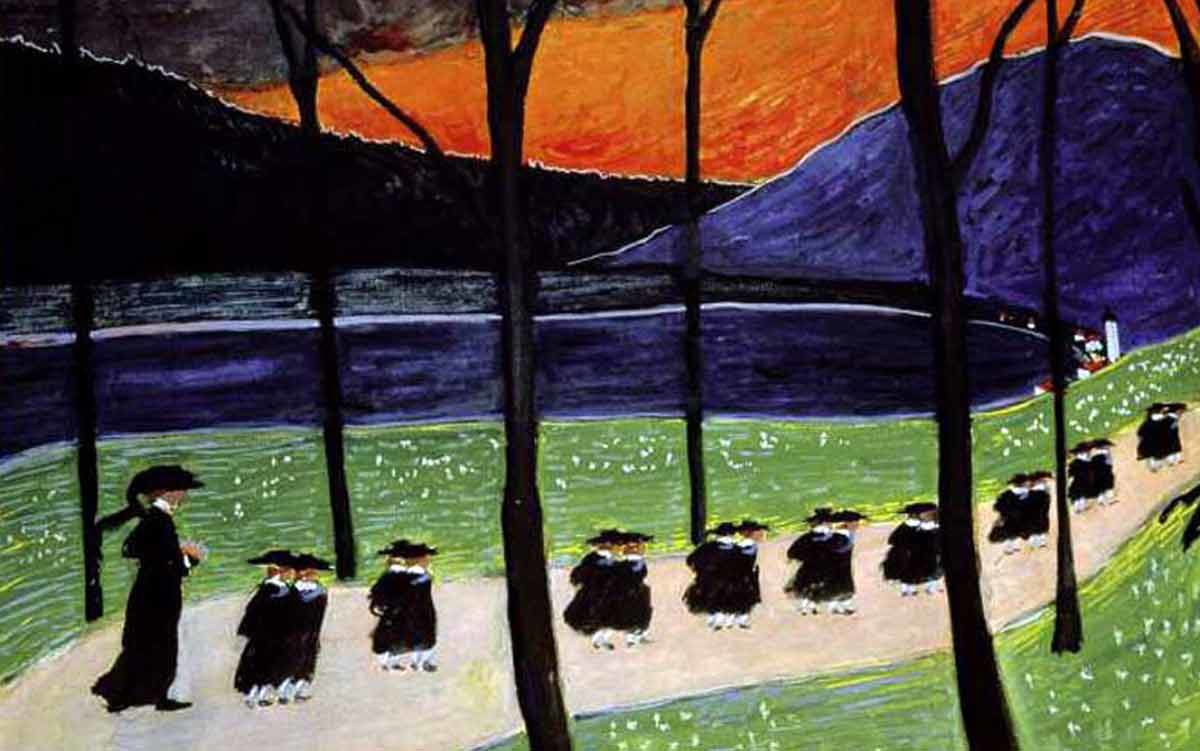
One of the central figures of early Expressionism, who helped set its foundations, was the Russian-born painter Marianne von Werefkin (1860–1938). Moreover, she was a member of the Blue Rider. Her philosophical approach towards art made her an important voice of her era. Werefkin’s paintings are quintessentially Expressionist. Through her use of bold colors and expressive brushwork, she put across inner experience in everyday scenes.
In works such as Autumn (School) (1907–10) and The Family (1929), figures are simplified in an almost theatrical manner. Nevertheless, their gestures make them clearly human. Some of her favorite colors to use were shades of orange, red, and blue. Her goal was never to imitate nature. Each color symbolized a different emotional state. The compositions were always carefully curated so that the result would be both harmonious and intellectual.
Although she often worked in the shadow of her partner, Alexej von Jawlensky, Werefkin had a significant influence on the movement. She organized exhibitions and mentored younger artists. Furthermore, she helped mold the intellectual backbone of the Blue Rider. Through her work, she achieved something unique for Expressionism. She proved that, as a movement, it could also explore inner peace and tranquility.
10. Franz Marc: The Expressionists’ Path to the Sacred in Nature
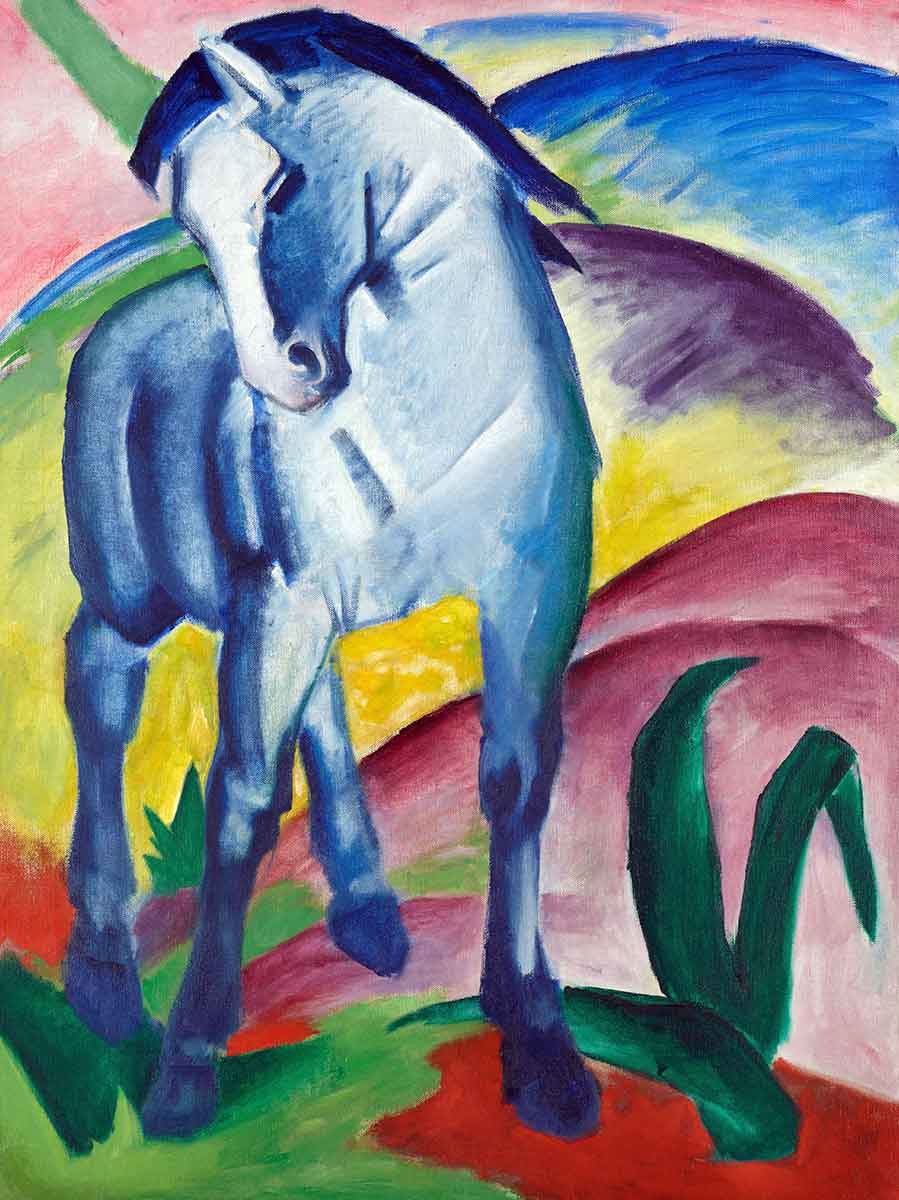
Franz Marc (1880–1916) was a central figure of the Blue Rider group. He was also one of the most visionary Expressionists of his generation. His work transformed the natural world into a symbolic language of color and emotion, reflecting his profound belief in the unity of humans, animals, and the divine.
Marc’s paintings are full of emotion and spirituality. In several works, such as Blue Horse I (1911), colors have a symbolic meaning, rather than descriptive purposes. Blue represents spirituality, yellow stands for joy, and red is life. Most of the time, he painted animals (like horses, deer, and foxes) in order to signify innocence and something that has not been touched by the corruption of modern civilization.
Generally, Expressionists believed in the purity of nature. Only there could the human truly be free. This is what Marc wanted to convey: this harmony and freedom of existing without civilization’s bounds. His forms were always simple and his colors bright. The paintings stand as his personal opinion or even spiritual vision that humans could reconnect with nature and the eternal.
Marc passed away during the war; hence, his career was cut short. However, his life’s work remained as a beacon of hope. Through him, Expressionism obtained a new identity. That is, a celebration of beauty, life, and hope, and not just an outcry against suffering.