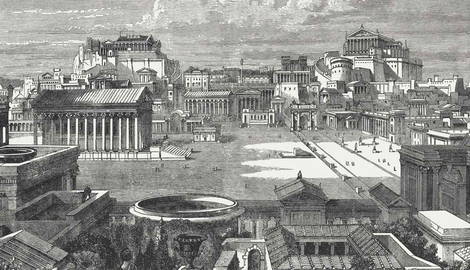
Among many other things, the Romans were known as skillful engineers, architects, and builders. One of the most enduring legacies is the vast number of structures they left behind. Through their innovative use of building materials and clever designs, the Romans left a lasting influence on Western architecture that endures to this day.
From grand temples to marvelous stadiums and enduring roads, here are 5 of the most famous buildings of ancient Rome.
1. The Colosseum
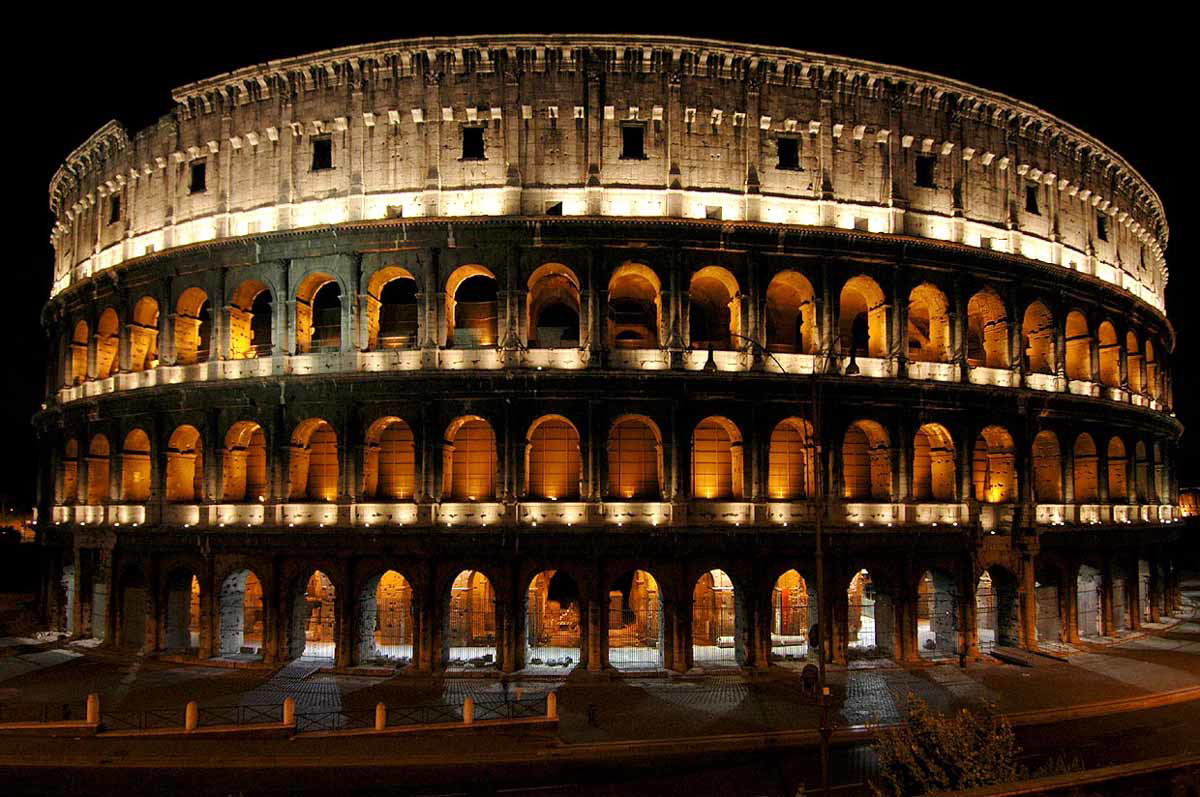
The Flavian Amphitheater, also known as the Colosseum, is one of the most recognized buildings in the world. The structure is almost 2000 years old and stands in the center of Rome, where it has exuded historic grandeur since it was completed in 80 CE. Much of its construction was funded by the spoils taken from Jerusalem in the First Jewish-Roman War in 70 CE.
The Colosseum was built of limestone, volcanic rock, and Roman concrete, and could hold somewhere in the region of between 50,000 and 80,000 people. It hosted myriad public spectacles, including executions, animal hunts, mock sea battles, reenactments of famous battles, and, of course, the infamous gladiatorial events for which it is most well-known.
Gladiatorial combat was banned in the 5th century CE, but the Colosseum survived physical damage from fire, as well as changing times, and was used as an arena after the fall of Rome. During Medieval times, however, the building underwent radical changes in use. It was used as a cemetery as well as a space for workshops and housing. Around the turn of the 13th century, it was converted into a castle, but a century later, it was abandoned and became a den for thieves and bandits.
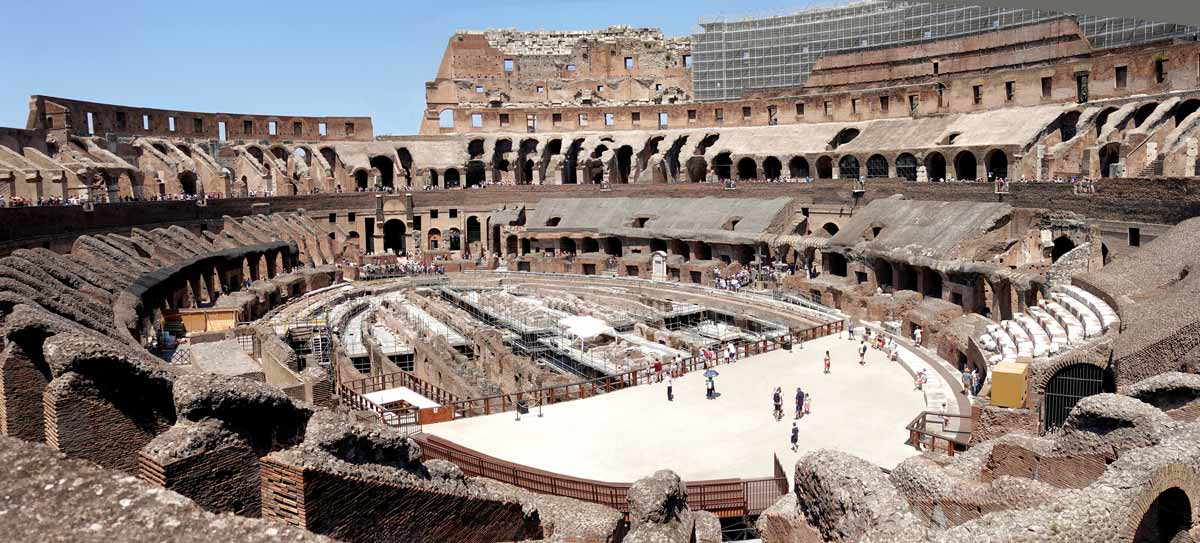
It was later damaged by an earthquake, and much of the rubble was used to build other projects in Rome. In the 18th and 19th centuries, the structure was maintained and preserved from further degradation.
Today, the Colosseum is a massive tourist attraction and one of the most visited places in Europe, drawing millions of tourists every year. In recent years, it has also been used as a focal point in the campaign against capital punishment—a fitting development given the site’s history of bloodshed and suffering.
2. The Pantheon
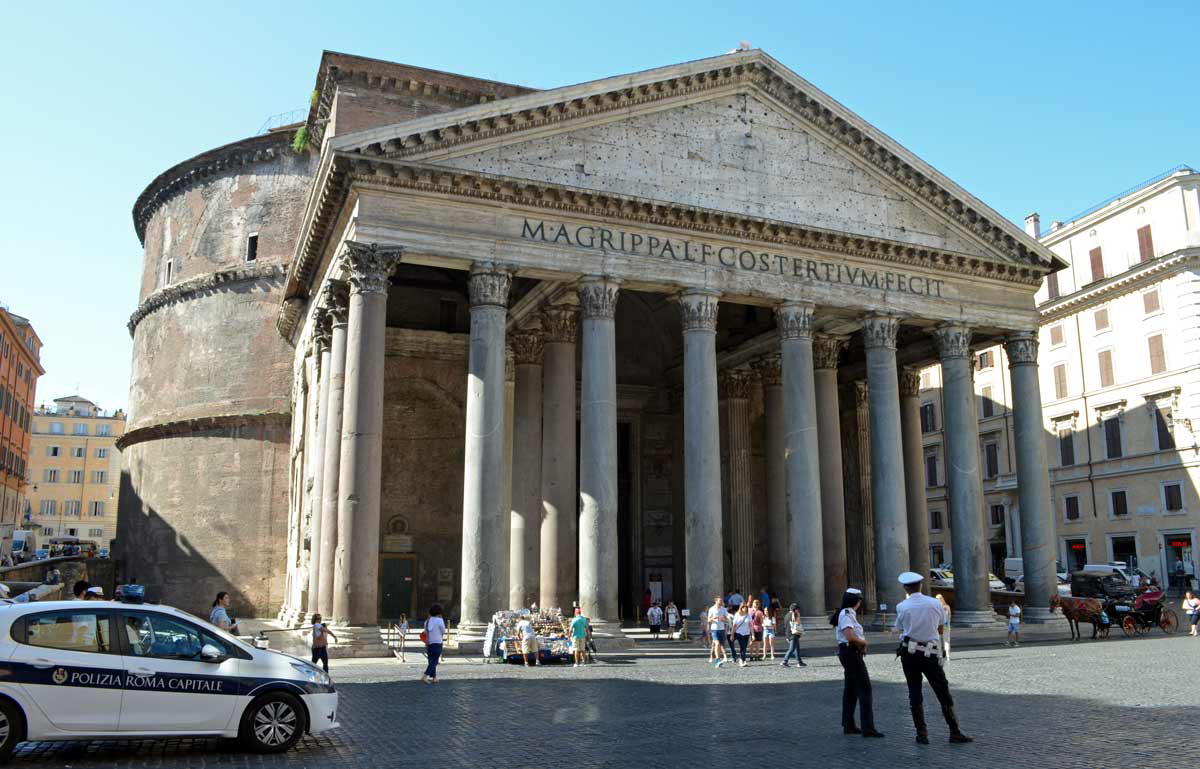
Built on the site of another temple that had burned down, the Pantheon was dedicated in 126 CE; however, the exact date of its original construction is unknown, likely between 27 and 25 BCE. It was rebuilt under Emperor Hadrian two centuries later. One of the most well-preserved buildings from Roman antiquity, the Pantheon is located in the Piazza della Rotonda in Rome.
It is easily recognizable and is fronted by a portico decorated with Corinthian columns, behind which is a large rotunda topped by a concrete dome. To this day, it still represents the largest unreinforced concrete dome in the world.
Originally used as a temple to the Roman gods, the building was reconsecrated as a church in the early 7th century CE and has remained in continuous use as such to the present day. Of course, as one of the best-preserved Roman buildings, it is also a great tourist attraction and receives millions of visitors every year.
Italian kings Vittorio Emanuele II and Umberto I are buried in the Pantheon, along with Umberto’s wife, Queen Consort Margherita. The building hosts Catholic Mass every Sunday, as well as the occasional wedding.
3. Circus Maximus
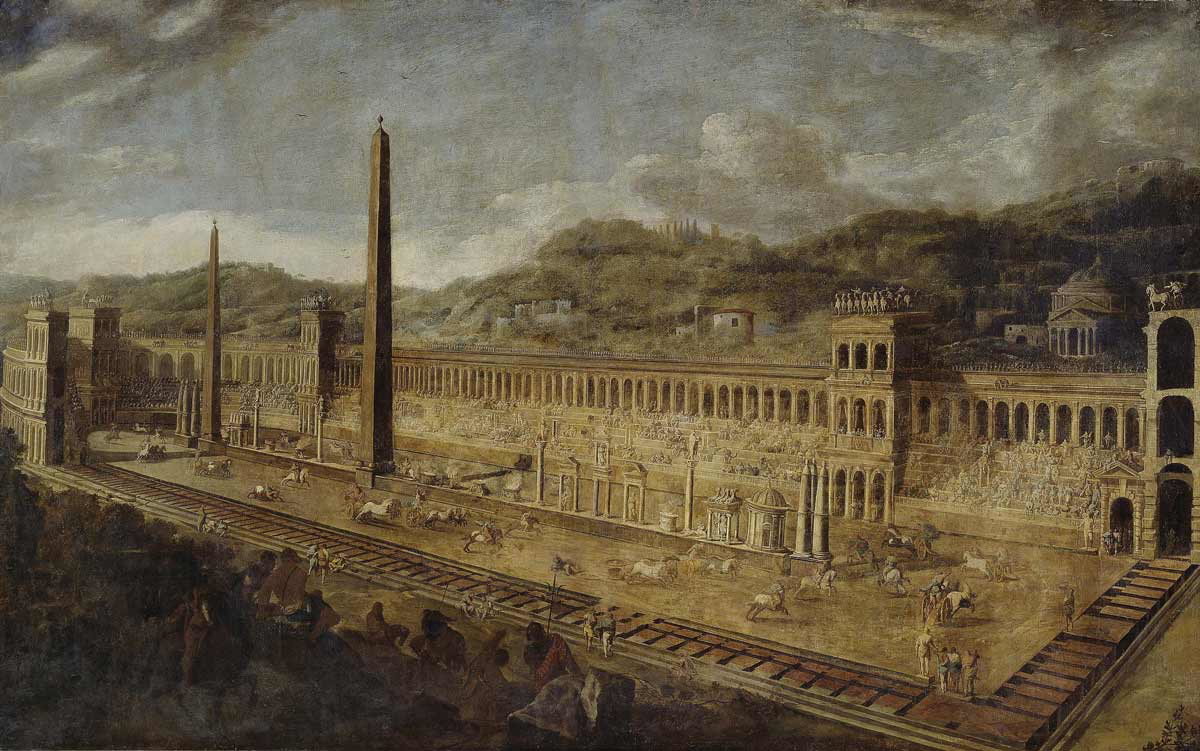
Hosting chariot-racing events, the Circus Maximus in Rome was the biggest stadium in the Roman world and could seat a massive number of people. Estimates suggest the crowd capacity was somewhere in the region of between 150,000 to 300,000, which is significantly more than the capacities of even the biggest stadiums in the world today.
The Circus Maximus measured 2,037 feet (621 meters) in length and 387 feet (118 meters) in width. The stadium’s history goes back at least to the 6th century BCE, when Rome was still a kingdom, and it underwent many reconstructions and alterations over the many centuries of its existence. The first iterations of the stadium were primarily made of wood, which would have been replaced frequently. It was only at the end of the 1st century CE and the beginning of the 2nd century CE that the entire structure was rebuilt in stone. This was likely a result of a great fire that gutted the former structure in 64 CE.
Games and festivals were held at the Circus Maximus until around the 6th century when it fell into disuse. Prone to flooding, the alluvial soil covered the original track, which is now buried many feet below the modern surface. In the centuries that followed, the site was a housing area, a market, a quarry, and later, a gas works, which was relocated in 1910. Throughout the 20th century, numerous excavations were conducted in the area, which is now a public park.
4. The Forum
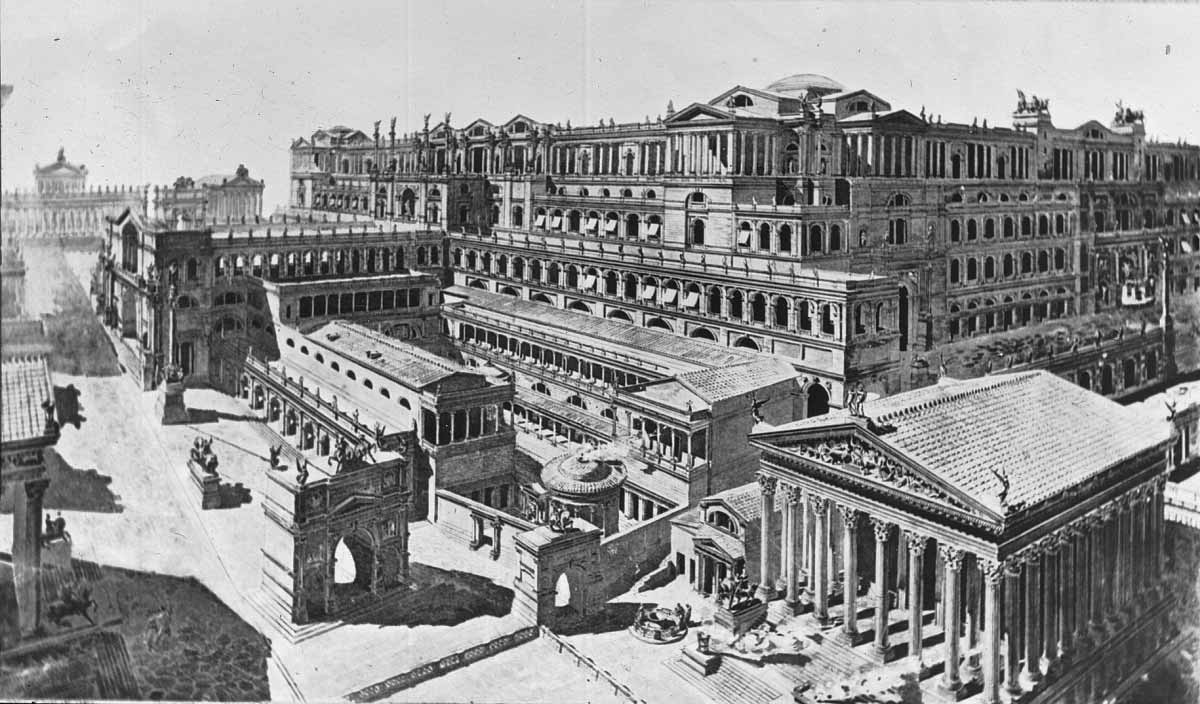
The Forum Romanum was the center of Roman life. It was here that the Romans discussed legal matters, made laws, and held games. It was the site of elections, triumphal processions, and home to many governmental buildings. Rather than being a single building, the Forum was a series of major buildings, each having a different function, all surrounding the Comitium, the open-air, central meeting place.
The history of the site goes back to the 8th century BCE when Rome was founded. Early shrines and temples from the Roman Kingdom were located on the site, while the Comitium was used as a marketplace. The Temple of the Vestal Virgins was built on the site in the 7th century BCE and is believed to have been a simple circular hut. During the era of the Roman Republic, the Comitium was a hub for all judicial and political life in Rome, and surrounding buildings and temples were built, adding to the Forum’s footprint. In the 5th century BCE, the Temple of Saturn was built, along with the Temple of Castor and Pollux, and in the following century, the Temple of Concord was built.
Improvements continued through the Republic Era and into the Imperial Era, increasing the size and grandeur of the Forum. After the fall of the Roman Empire, many of the buildings were converted into churches, and despite some preservation efforts, by the end of the 8th century CE, the temples had been abandoned and were in ruins.
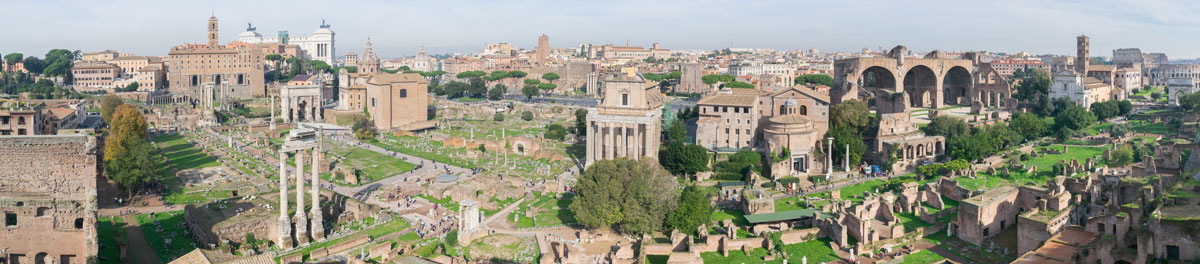
In the 16th century, the Forum suffered some of its worst damage when it was plundered for stone by Pope Paul III, who used the materials to build Saint Peter’s Basilica. The ruination of the Forum was not done without protest, however, and there were many who were appalled by the destruction.
Excavation and preservation efforts began in the 19th century and continue to this day. The recent discovery in 2020 of a sarcophagus from the 6th century BCE sparked debate as to whether it is a memorial to Rome’s legendary founder, Romulus.
5. The Baths of Caracalla
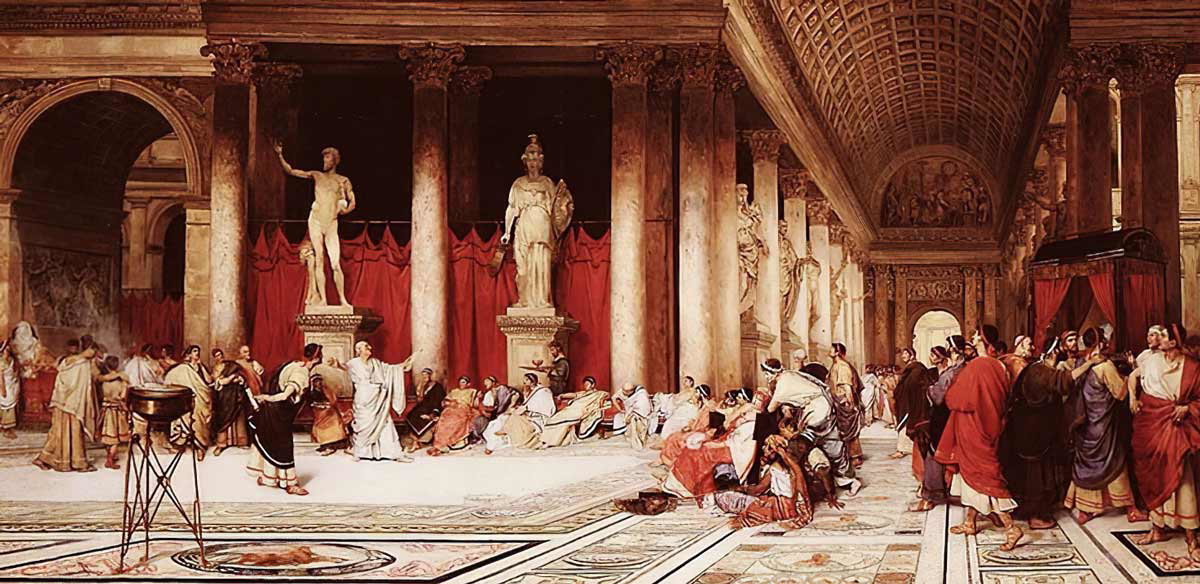
Built in the early 3rd century CE, the Baths of Caracalla was a central meeting point and a hub of social activity during the later centuries of the Roman Empire. They were the second largest baths in Rome after the Baths of Diocletian, which were built at the turn of the 4th century CE. Despite the latter being bigger and closer to the city center, the Baths of Caracalla are generally considered to be more famous due to the fact that they communicate a better sense of vastness and luxury, while the ruins are also better preserved.
The baths were built on the orders of Emperor Septimius Severus and completed by his son, Caracalla. They were inaugurated in 216 CE. Extra work on decorative features likely continued until 235 CE.
The main purpose of the baths was, obviously, bathing. There were hot, warm, and cold baths available. However, the Baths of Caracalla served many other social functions. It was a place to relax and socialize, where people could meet up and discuss various matters of importance (and unimportance). The site also had palaestrae, places where visitors could engage in wrestling or boxing. Visitors could also take long walks around the approximately 62 acres the site covered.
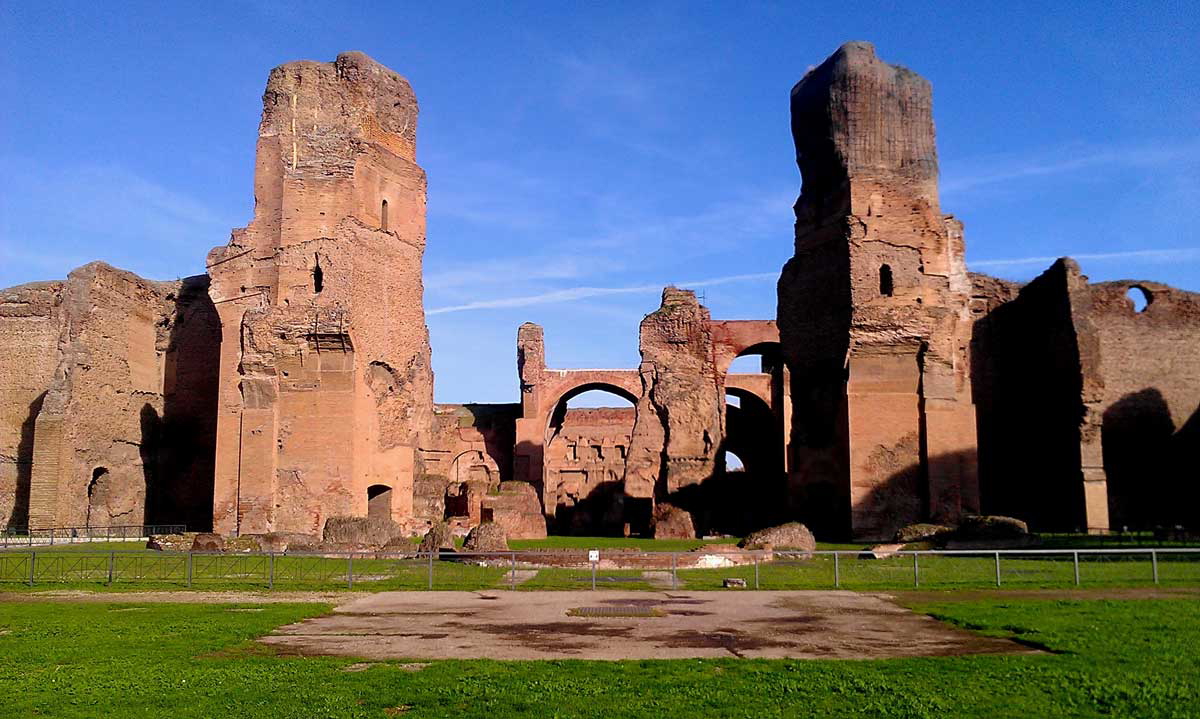
The baths continued to function until 537 CE when King Vitiges of the Ostrogoths laid siege to Rome and cut off the water supply. The site was abandoned and never saw use as baths again. It was damaged in an earthquake in 847 and was used for building material over the centuries that followed. Subsequent interest in the history of the site prompted excavations from the early modern period, which continued, along with restoration work, to the present day.
Many Other Buildings
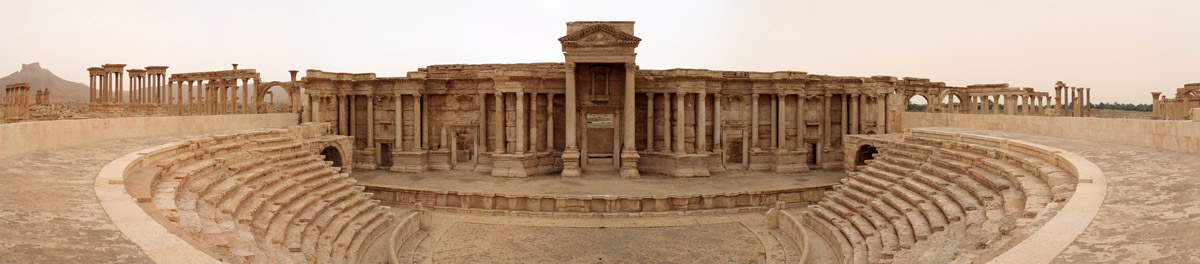
Rome was huge and consisted of numerous monumental works, and not just inside the Eternal City. The entire empire was a showcase for Roman ingenuity and building techniques from the Iberian Peninsula to the deserts of the Middle East. Roads, stadiums, aqueducts, monumental walls, and temples, all unique in their own way, were worthy of praise.
While some have crumbled to dust and ruined foundations, many others still stand in all their grandeur, testifying to the glory that was Ancient Rome.